Reviewed · BUDAPEST TOURS
Budapest Photo Walks
Budapest Photo Walks takes you beyond the usual sightseeing checklist and puts the camera in charge. With Zoltan guiding a maximum of two people, you can work on composition, camera settings, and city views without waiting for a large group to catch up. The route may include Gellért Hill, Liberty Bridge, Buda Castle, and Batthyány Square.
I like the small private format, which gives you room to ask basic questions or request specific photo locations. I also like the choice between day and night, plus the included tripod, a useful bonus for long exposures and steady city scenes.
The main consideration is fitness. Gellért Hill can involve walking and viewpoints at different heights, and the route changes with weather and your priorities. You should also arrange the exact time and meeting details in advance, since the listed operating hours do not tell the whole story for nighttime walks.
Key points at a glance
- A private outing for no more than two people, useful when you want personal photography help rather than a standard city tour.
- Day and night routes are available, with nighttime options especially suited to Budapest’s bridges, Parliament view, and illuminated hills.
- Gellért Hill offers four or five possible viewpoints, depending on your fitness, interests, and the weather.
- A tripod is included, so you do not need to bring one for steadier images or longer exposures.
- Beginners are welcome, with help available for composition and camera settings.
- The route is flexible, but private transportation is not included and the exact start time must be arranged directly.
Why a Budapest photo walk works
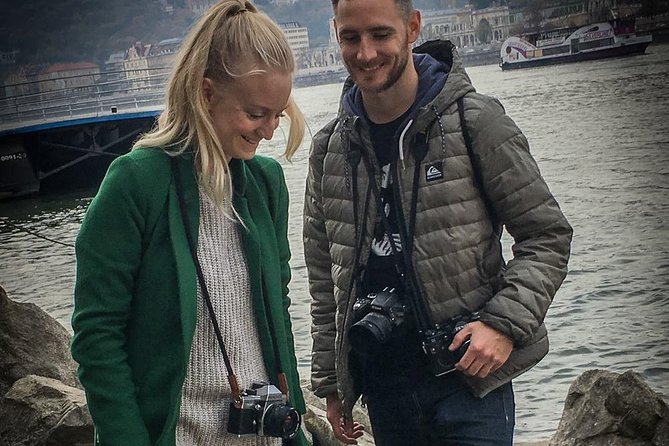
Budapest is unusually rewarding for a photography walk because the city is built around strong viewpoints. The Danube separates Buda from Pest, bridges create clean lines through the frame, and landmarks such as Parliament and Gellért Hill can be photographed from several directions.
A standard sightseeing tour may point out these places and move on. This experience asks a different question: where should you stand, what should you include, and what kind of light do you want? That change in pace matters. You can spend several minutes adjusting a composition instead of taking one quick picture and following the group.
The outing lasts about two to three hours. That is long enough to cover several major viewpoints, but not so long that photography becomes tiring for a casual camera user. Because the group is limited to two people, you can request more time at a favorite spot or ask to focus on a particular camera problem.
Zoltan also brings local history into the walk. That adds value if you want more than technical instruction. You are not simply being placed in front of a view and told to press the shutter. You can learn why a location matters while working out how to photograph it.
A few more Budapest half-days to weigh up
- Budapest: City Highlights Cruise with Welcome Drink
★ 4.6 · 35,610 reviews - Budapest: Unlimited Prosecco, Beer and Aperol Spritz Cruise
★ 4.8 · 25,310 reviews - Budapest: Széchenyi Spa Day Ticket with Optional Upgrades
★ 4.3 · 23,911 reviews
Gellért Hill: several angles instead of one quick stop
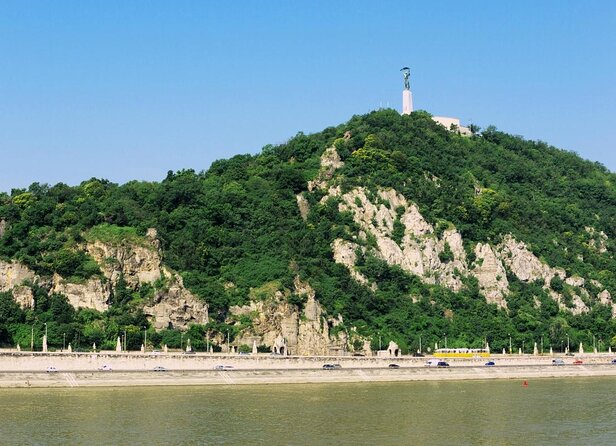
Gellért Hill is part of both the daytime and nighttime versions of the walk. The plan allows for four or five main viewpoints, though the number depends on your fitness and personal requests.
That flexibility is important here. A hilltop location is not the same as a flat city square, and the best use of your time depends on how much walking you want to do. You can ask for more viewpoints, agree on extra places, or keep the route shorter if the climb and walking are enough.
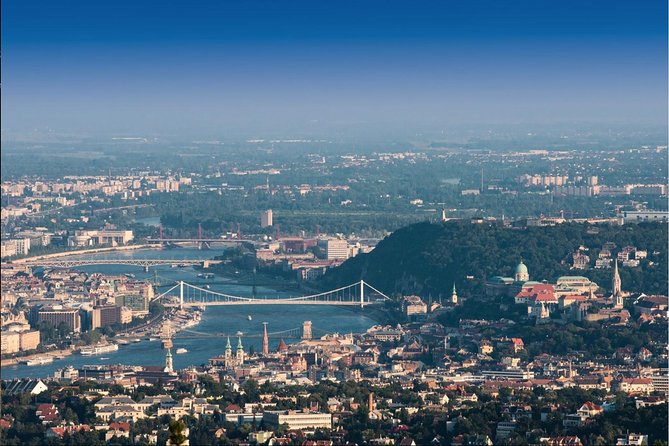
For photography, Gellért Hill gives you a broad view over Budapest. It is a useful place to work on framing because you can compare the river, bridges, hills, and city buildings in one scene. In daylight, the emphasis is likely to be on shape, distance, and the relationship between Buda and Pest. At night, the same area can offer a very different subject, with city lights and illuminated landmarks.
The included tripod is particularly helpful here if you are photographing at night. A tripod can help you keep the camera still during longer exposures, though the tour does not promise any specific camera model or technical setup. If you are new to photography, you can ask for help with settings before trying the shot.
Do not assume you will see every possible viewpoint. Weather and fitness affect the route, and the tour is designed to adjust rather than force a fixed circuit. If Gellért Hill is your main reason for booking, say so when arranging the walk.
Liberty Bridge and the river views
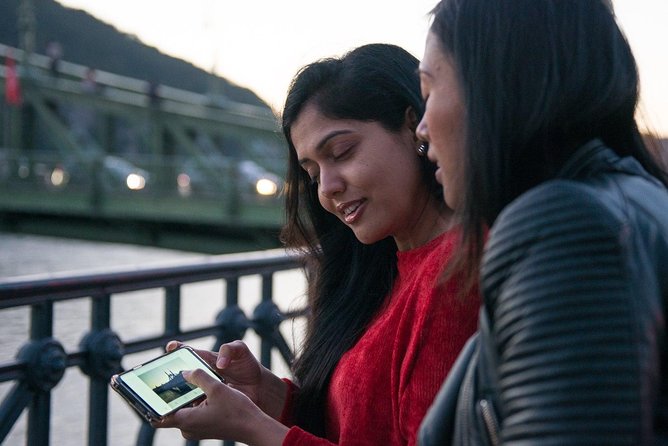
Liberty Bridge, or Szabadság híd, is included in both the day and night routes. The stop focuses on the bridge and the view toward Gellért Hill, giving you a more focused subject than the wide hilltop panorama.
A bridge is a good place to practice composition because its structure creates strong lines. You can work with the span, towers, and river direction, then compare the view with Gellért Hill in the background. At night, the bridge and surrounding city lights can give you a chance to use the tripod for steadier images.
The stated stop lasts about 20 minutes, making it one of the longer listed stops. That does not mean you are locked into exactly 20 minutes, since the route depends on requests and weather. Still, it gives you a sense of the tour’s rhythm: several concentrated photo locations rather than one long lecture.
Liberty Bridge is also a practical stop for people who want a recognizable Budapest image without spending the entire outing at a hilltop. If you prefer architecture and river scenes to distant panoramas, tell Zoltan early. The route can be shaped around that preference.
Batthyány Square and the Parliament view
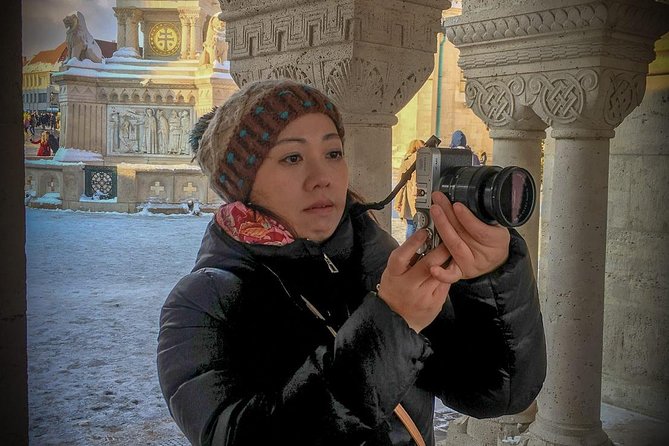
Batthyány Square is part of both the day and night tours. Its main appeal is the classic view across the Danube toward the Hungarian Parliament, one of Budapest’s most familiar scenes.
This stop is a good test of the tour’s value. You can easily take a Parliament photo on your own, but a photography guide can help you think about the balance between landmark, river, bridge, and open space. The goal is not simply to fit Parliament into the frame. It is to decide how much of the surrounding scene belongs in the picture.
The square is also the meeting point, in front of the M2 metro station. That makes it simple to reach by public transportation and easy to recognize. The tour ends there by default, although the final location is agreed with you at the start.
The listed visit lasts about 15 minutes. That is enough for a focused stop, but it may feel short if Parliament is your top priority and you want several different compositions. You can request more time, but it is best to make that clear before the walk begins.
A completely different kind of day out in Budapest:
- Budapest: Nighttime or Daytime Sightseeing Cruise
★ 4.2 · 21,062 reviews - Budapest: 1-Hour Evening Sightseeing Cruise with Drink
★ 4.5 · 8,330 reviews - Budapest Danube Cruise and Dinner Options, Live Music and Dance
★ 4.5 · 7,428 reviews - Budapest: Historic Cruise with Welcome Drink
★ 4.7 · 6,512 reviews
Buda Castle after dark
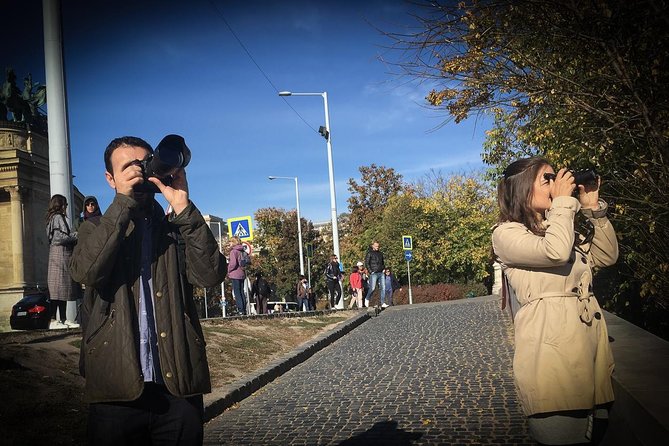
The Buda Castle stop is listed for the nighttime tour only. It includes the roundabout and a view toward Chain Bridge, giving the evening route a different feel from the daytime plan.
This section is useful if you want Budapest photographs after the sun goes down. Chain Bridge and the surrounding Buda area can provide illuminated subjects, while the higher position can help you frame the river corridor and city lights.
The route is not fixed, so the exact amount of time at Buda Castle depends on weather and your requests. You should not book the night option assuming every listed location will receive equal time. The tour is designed around conditions and priorities, not a guaranteed minute-by-minute schedule.
If you want Buda Castle included, confirm that when arranging your start time. It is part of the night itinerary, but the information provided does not list it as a daytime stop.
Daytime or nighttime: choosing the better route
The daytime option is the safer choice if you want to learn basic camera controls in clear conditions. You can work on composition without asking your camera to handle darkness, and the city’s structure may be easier to read.
The nighttime option is better suited to people drawn to illuminated Budapest, bridges, and long-exposure photography. The tripod becomes more useful, especially if you want to reduce camera shake. It also gives the walk a more specialized purpose than a general city photo stroll.
The schedule needs attention. The listed opening hours show Thursday through Sunday from 10:00 AM to 6:00 PM, but the experience also advertises nighttime walks. Contact the provider to arrange the exact time and meeting point rather than relying only on the general hours shown online.
Weather can change the best choice. A cloudy day may still be good for architecture and bridge details, while poor weather can affect hilltop views and walking comfort. Since the itinerary changes with conditions, keep your preferred date and photo subjects clear but allow some flexibility.
What the photography instruction is like
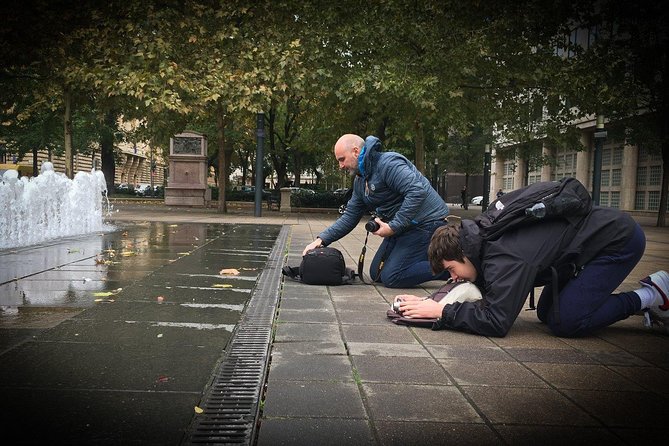
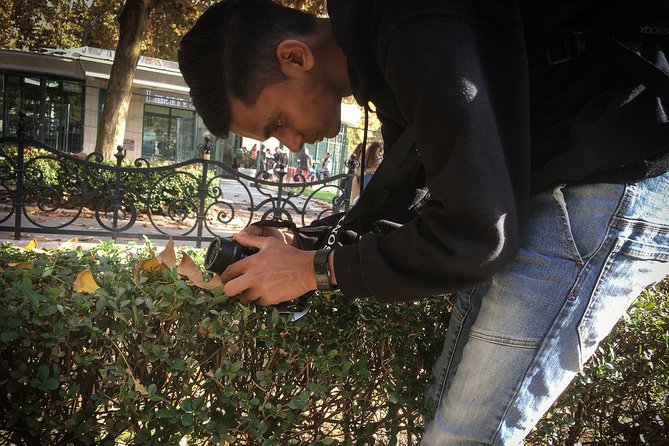
This is not only a sightseeing walk with a camera present. You can ask for help with composition and camera settings, making it suitable as a first photography lesson.
For beginners, that may mean learning how to frame a landmark, keep a horizon straight, or choose a setting for the available light. The supplied information does not promise a formal lesson plan, so you should tell Zoltan what you want to learn. Someone who needs basic guidance should say so. Someone who already knows the basics can request more attention to viewpoint and composition.
The private format is the real advantage. With only two participants, you do not have to hold back a question because a group is waiting. You can also request a particular balance between instruction, sightseeing, and making pictures.
Zoltan is described as patient when explaining photography and able to connect the camera work with Budapest’s history. That combination suits you if you want practical help without losing the sense of place. The walk is less suitable if you want a purely technical workshop with a detailed classroom-style curriculum.
Price and what you receive for $179.74
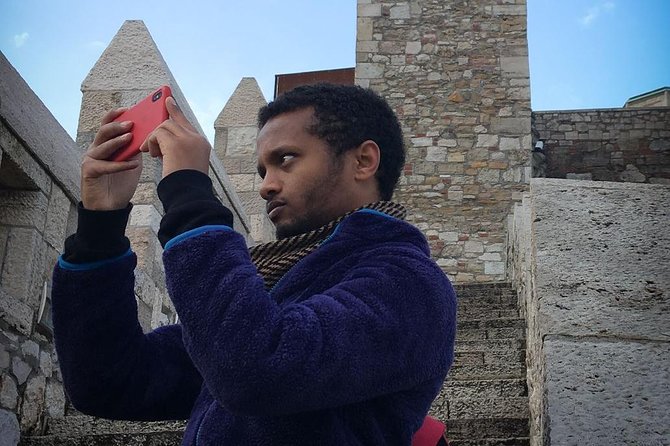
At $179.74 per person, this is not a budget city stroll. For one person, the cost pays for a private experience rather than a shared group tour. For two people, the price buys a maximum group of two, personalized route planning, photography guidance, and a tripod.
The value depends on your goal. If you simply want a few snapshots of Parliament and the bridges, you can get those without booking a specialist. If you want help producing better images, prefer a quiet pace, or need a private guide to adapt the route, the cost is easier to justify.
The flexible itinerary also matters. You can request extra places, adjust the walking level, and choose day or night. That makes the experience more useful than a fixed photo route for someone with a particular camera project.
Private transportation is not included. You will need to reach Batthyány Square or another agreed meeting point using Budapest’s public transportation or your own arrangements. Since the meeting point is in front of the M2 metro station, the starting location is practical, but you should allow time to arrive ready to walk.
Who should book this experience
I would recommend Budapest Photo Walks to:
- Beginners who want direct help with composition and camera settings.
- Couples or friends who want a private activity for two.
- Photographers who want day or night views rather than a general sightseeing tour.
- People who want to visit several viewpoints while adjusting the walking level.
- Visitors who value local history alongside practical photography advice.
It may not suit you if you want a large social group, a fixed itinerary, or included transportation. It also may not be ideal if hill walking is difficult and you do not want to discuss a shorter route in advance.
The experience is offered in English. Service animals are allowed, and most people can participate, but the itinerary varies with fitness. That last point deserves attention. Tell the provider what kind of walking you can manage so the route can be planned sensibly.
Booking, timing, and cancellation
The activity is often reserved well ahead, with an average booking time of 46 days in advance. That does not prove you must book that early, but it is a useful reason to plan ahead if your Budapest dates are fixed.
Confirmation is provided at booking. You should still contact the provider to arrange the exact starting time and meeting point, especially if you want a nighttime walk or a particular viewpoint.
The standard cancellation terms are friendly: you can cancel for a full refund up to 24 hours before the start time. Changes or cancellations inside that 24-hour window are not accepted for a refund, and the cut-off follows local Budapest time.
Should you book Budapest Photo Walks?
Book it if you want a private, flexible way to photograph Budapest and you value help from a guide who can explain both the camera and the city. The combination of a two-person maximum, day or night scheduling, tripod use, and adaptable viewpoints gives it a clear purpose.
I would choose the nighttime version if bridges, Parliament, and city lights are your priority. Choose daytime if you are new to photography or want the simplest conditions for learning. In either case, confirm the time, walking expectations, and must-see stops with Zoltan before you begin.
For a casual sightseeing photo, the price may be too high. For a focused private lesson with Budapest views built into the route, it offers a more personal experience than a standard tour.
FAQ
How long does Budapest Photo Walks last?
The walk lasts approximately 2 to 3 hours.
How many people can join the tour?
The maximum group size is two travelers.
Is the tour offered during the day and at night?
Yes. You can choose between daytime and nighttime itineraries. Buda Castle is listed as part of the nighttime route, while Gellért Hill, Liberty Bridge, and Batthyány Square are part of both day and night options.
Where does the tour start?
The usual starting point is Batthyány Square, in front of the M2 metro station in Budapest.
Where does the tour end?
The listed end point is Batthyány Square, but the actual end location is agreed with you at the beginning of the tour.
Is transportation included?
No. Private transportation is not included.
Is a tripod provided?
Yes. A tripod is included with the experience.
Can beginners join?
Yes. You can receive help with composition and camera settings, making the walk suitable for beginners.
What is the cancellation policy?
You can cancel up to 24 hours before the experience starts for a full refund. Cancellations or changes made less than 24 hours before the start time are not accepted for a refund.
Recently added around Budapest
- Budapest: Private Walking Tour with a Local Guide★ 3.6 · 6 reviews
- From Budapest: Guided Tour of Eger with Wine Tasting★ 4.5 · 6 reviews
- Budapest: City Bike Tour with Coffee Stop★ 5.0 · 37 reviews
- Budapest: Danube River Views Bike Ride★ 4.8 · 23 reviews
- Budapest: Vacation Photographer to collect great memories★ 5.0 · 49 reviews
- Walk to recent and aged spiritual sanctuaries near Budapest★ 5.0 · 5 reviews
- Trash Art Museum: Hungary’s First Scrap Metal Exhibition★ 4.3 · 72 reviews
- Budapest: Multilingual Highlights Tour★ 4.8 · 89 reviews
Budapest Tours, compared.
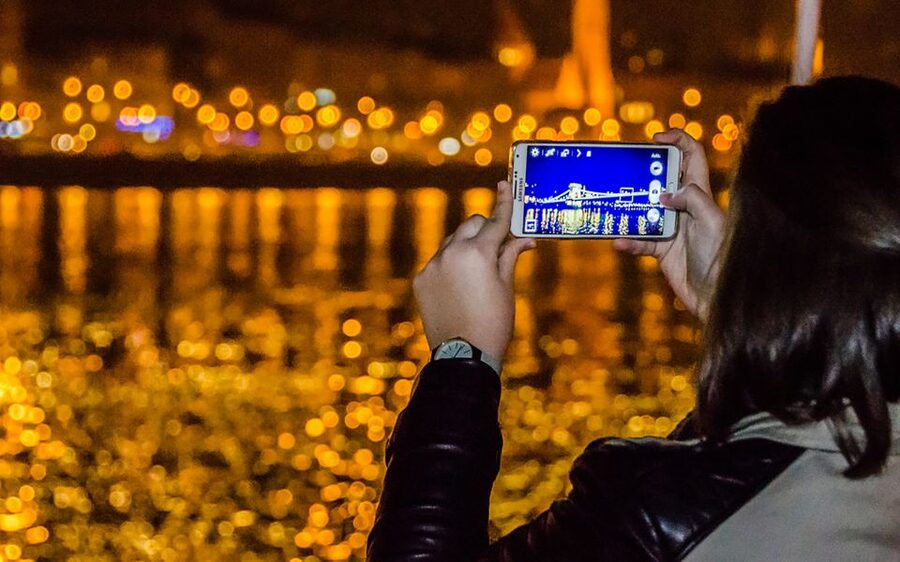

Unlimited Prosecco, Beer and Aperol Spritz Cruise
Read our review →
Széchenyi Spa Day Ticket with Optional Upgrades
Read our review →
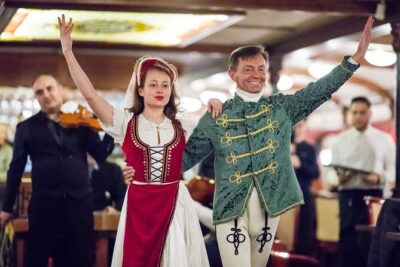
Budapest Danube Cruise and Dinner Options, Live Music and Dance
Read our review →