
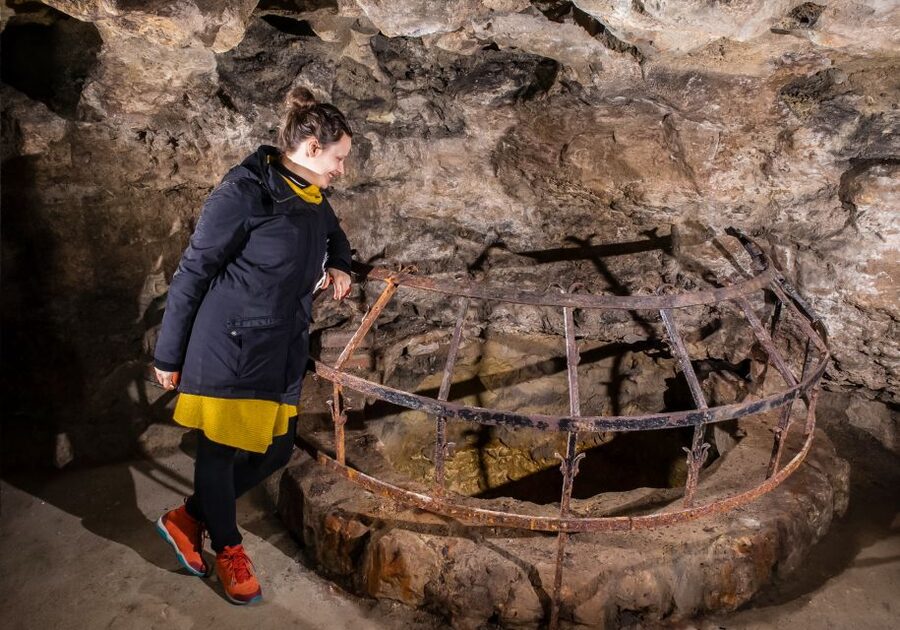
Reviewed · BUDA CASTLE TOURS
Budapest: Buda Castle Cave Tour
Beneath Budapest’s polished Castle District lies a cool, twisting world of natural limestone caverns and hand-cut cellars. This tour connects geology with human history, taking you through spaces used for wine storage, shelter, imprisonment, and wartime survival.
I like the way the guide gives meaning to otherwise plain tunnels, and I like the steady mix of natural rock and 800-year-old masonry. Guides such as Vicky and Eva are known for clear storytelling, humor, and a firm grip on the cave’s long story. The main drawback is practical: the route is not suitable for wheelchairs, people with serious mobility limits, or anyone uncomfortable underground.
Key Points at a Glance
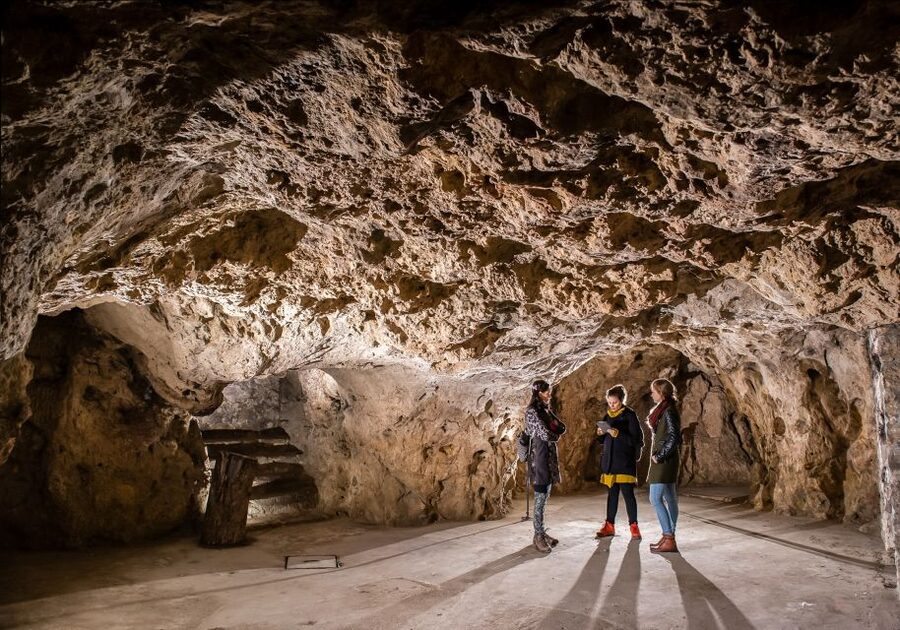
- A hidden world below Castle Hill: See the cave network beneath one of Budapest’s most visited historic districts.
- Two tour lengths: Pick a 40-minute visit or a longer route of about 1.5 kilometers, lasting up to 90 minutes.
- History in layers: The caves have served as wine cellars, medieval spaces, bomb shelters, and other working areas.
- A cool 12°C inside: Bring a warm layer even in summer, and wear shoes that can handle a little mud.
- Strong guiding is central: English-speaking guides, including Vicky and Eva, bring humor and clear explanations to the route.
- A real walking tour: Expect paved, lit paths, but no phone signal, stroller access, or wheelchair access.
What Lies Beneath Buda Castle
The Buda Castle District is usually associated with grand buildings, church towers, and views over the Danube. The cave tour gives you a different picture of Castle Hill, one that is cooler, darker, and much less polished.
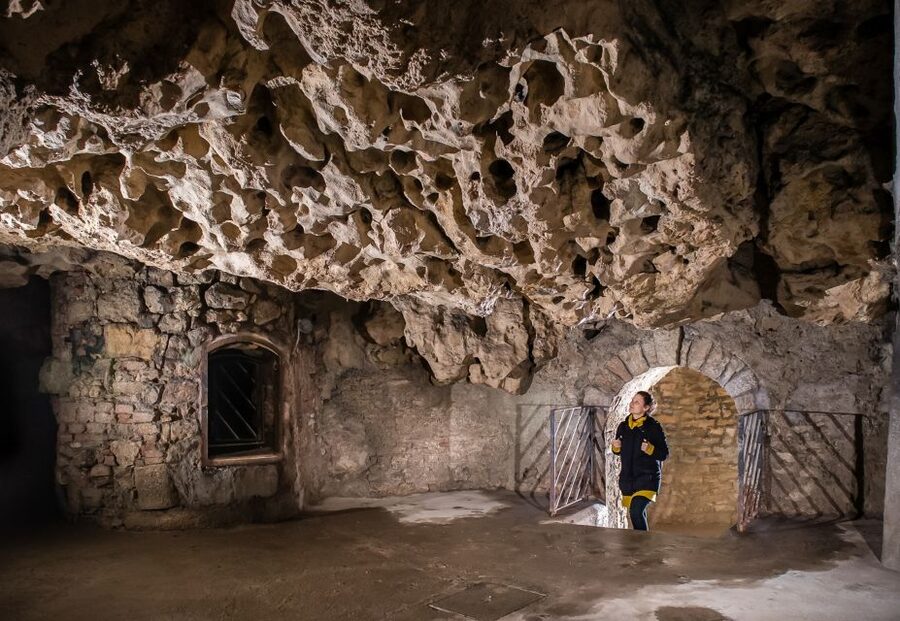
The underground system formed in limestone, then changed as people cut, widened, connected, and reused the natural spaces. You are not simply walking through a wild cave. You are moving through a place shaped by both geology and human labor.
That combination is the main reason I recommend the tour. A natural cavern can be beautiful, and an old cellar can be interesting, but the mixture creates something more unusual. One section may show rough limestone, while another reveals a carefully shaped chamber or a passage altered for practical use.
The cave network also helps explain why Castle Hill mattered beyond its palaces and churches. Underground rooms offered storage, shelter, and privacy. Over many centuries, the same spaces changed purpose as the needs of the people above them changed.
More ways to see Buda Castle:
- Budapest: Buda Castle District Vampires and Myths Night Tour
★ 4.6 · 3,830 reviews - Budapest: Buda Castle Walk with Saint Stephen’s Hall
★ 4.5 · 3,012 reviews - Budapest: Buda Castle District Walking Tour
★ 4.6 · 2,108 reviews
Choosing Between 40 Minutes and 90 Minutes
The shorter tour lasts about 40 minutes. It is a sensible choice if you have a packed day in the Castle District, are traveling with limited time, or simply want a quick look below the city.
The longer option lasts up to 1.5 hours and covers a regular route of roughly 1.5 kilometers. If the caves are a main reason you are booking, I would choose this version. The extra time gives the guide more room to explain the geology, the old cellars, and the many roles the tunnels have played.
Several details make the longer route worthwhile. You get a better sense of the cave system’s scale, and the walk can connect medieval spaces with later wartime use. The longer visit feels less like a quick peek and more like a proper lesson in how Castle Hill developed underground.
Book ahead if you have your heart set on the longer option. There may be only one longer departure on a given day, and availability can be limited. The exact starting times can also be announced only some weeks or days before the tour, so check the current schedule rather than planning around an assumed departure.
Starting at Trinity Square or Dárda Street
The meeting point depends on the option you book. The full tour may begin at Trinity Square, or Szentháromság tér, in the center of the Castle District. The shorter option may meet at Dárda Street, where you enter the underground system.
Read the meeting instructions closely. Finding the right place matters here because the Castle District has several squares, lanes, and underground attractions. Clear directions from the guide and an identifiable meeting point make the start easier, but you should still allow time to reach the entrance.
The route may not finish at exactly the same place where it begins. If you are meeting companions who are not on the tour, agree on a flexible meeting plan rather than relying only on the address in your booking information. This small detail can save a surprising amount of stress after leaving the caves.
The Opening: Geology Before Story
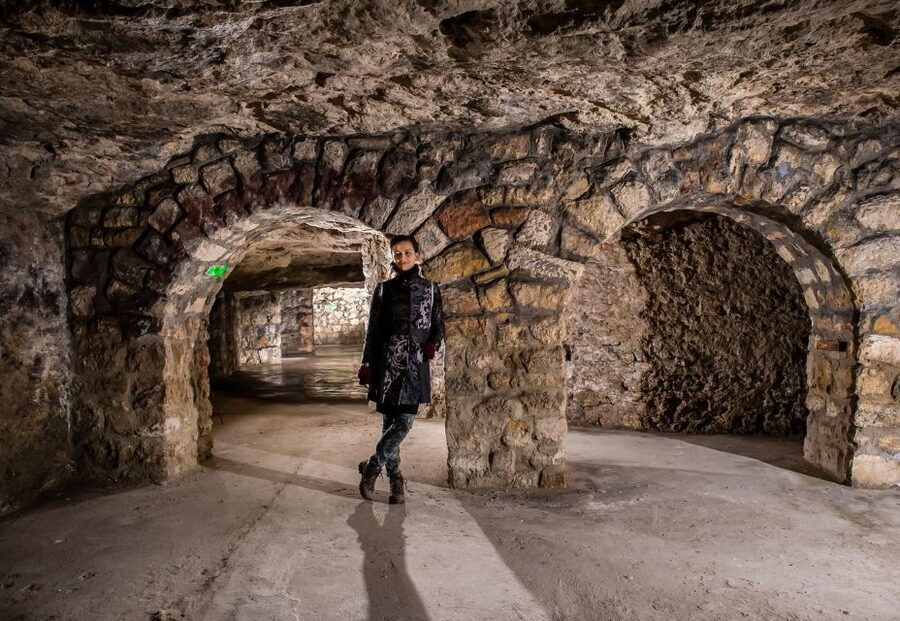
The tour begins with a short introduction, then moves into the cave system. Your guide explains how the limestone formed and how natural cavities were changed by people over the centuries.
This opening gives you something useful to watch for. Instead of seeing every rough wall as a random cave surface, you can begin to separate natural rock from areas shaped by cutting, storage, construction, or later repair.
The geology is not treated as a dry science lecture. It forms part of the wider story of Castle Hill. The ground beneath the district helped determine where people could build, store goods, seek shelter, and create passages. That link between rock and daily life is one of the tour’s strongest features.
A good guide also keeps the pace lively. Vicky has been praised for combining clear information with jokes and a friendly manner. Eva has been described as strong at explaining both the natural cave features and the human uses of the tunnels. Guide assignments can change, but the best version of this tour depends heavily on that personal storytelling.
More cave tours under Budapest:
- Budapest: Adventure Caving Tour with Guide
★ 4.9 · 978 reviews - Budapest: Semlő-hegyi & Pál-völgyi Caves Guided Walking Tour
★ 4.8 · 343 reviews - Adventure Caving Experience in Budapest
★ 5.0 · 339 reviews - Walk in Buda with Hospital in the Rock Underground Cave Visit
★ 4.5 · 18 reviews
Natural Caverns and 800-Year-Old Cellars
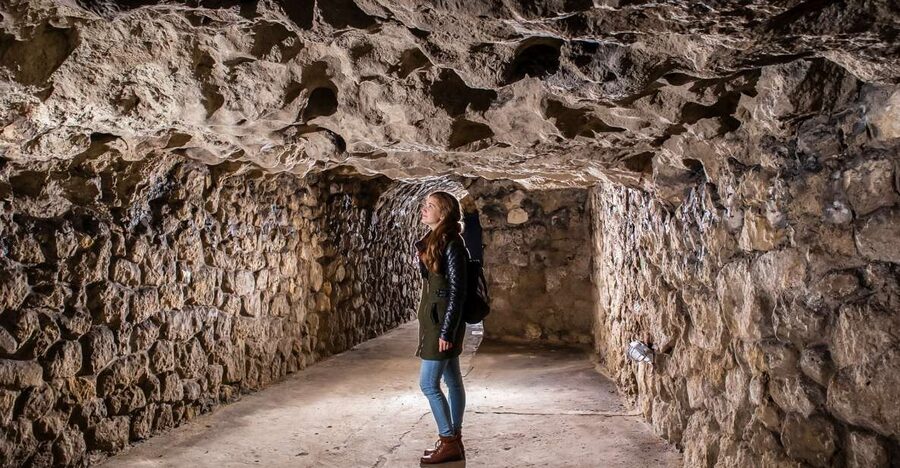
The most memorable part of the route is the contrast between the natural caverns and the man-made spaces. Some chambers retain the character of limestone caves, while others show the marks of people who expanded or adapted them.
The 800-year-old cellars give the underground walk a strong medieval connection. These are not just old rooms preserved for display. They help you picture Castle Hill as a working settlement, with storage areas below the homes and public buildings above.
Wine cellars were one historic use of the tunnels. The cool, stable temperature would have made underground storage practical. Today, the cave remains at about 12°C, or 54°F, so the reason for that steady underground climate is easy to understand.
Bring a jacket, even if Budapest is hot above ground. The cold is not extreme, but you will feel it during a slow guided walk. A light sweater or warm layer is enough for most people, and it is far better than spending the tour wishing you had packed one.
Medieval Prison, Wartime Shelter, and Other Uses
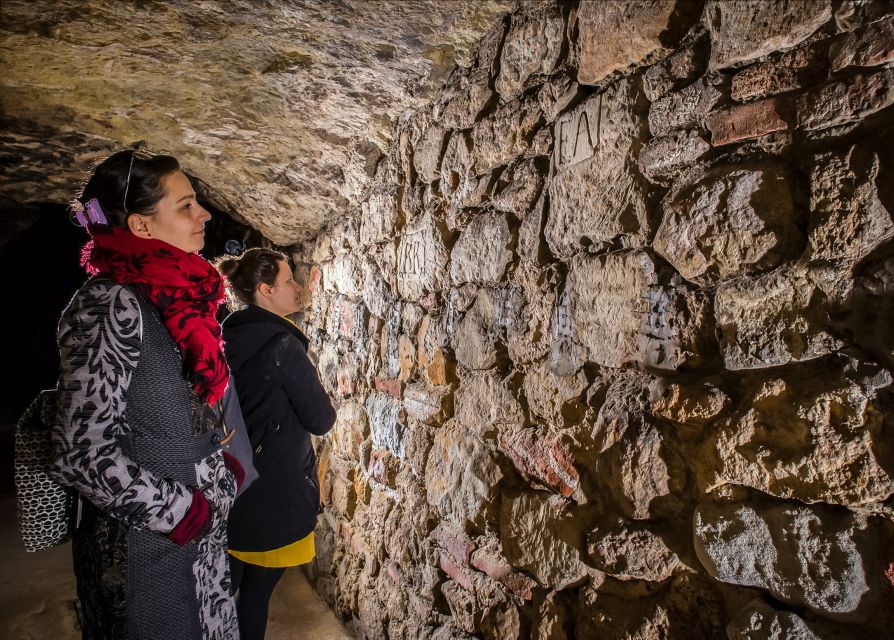
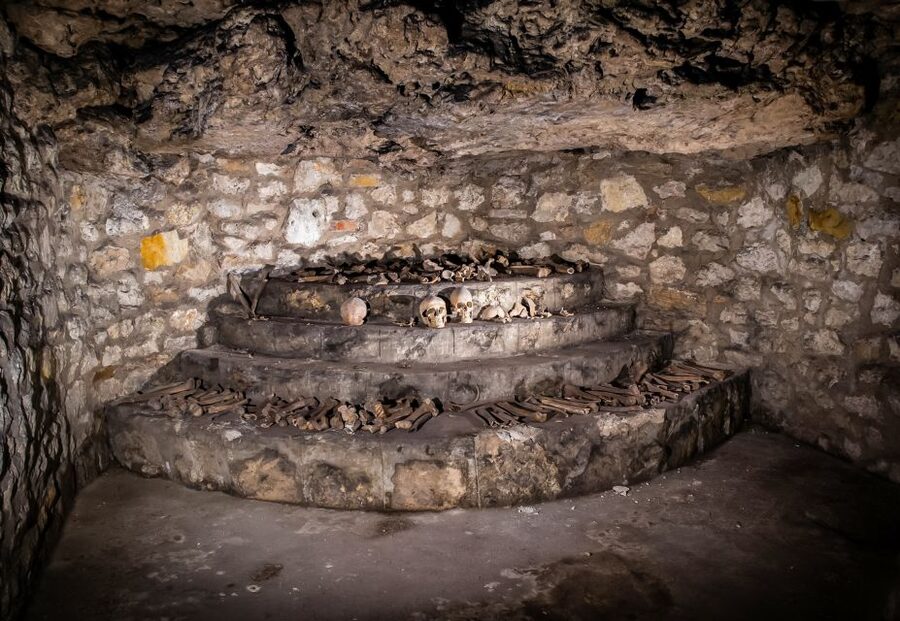
The history becomes darker as the tour covers the less comfortable roles of the caves. The tunnels have been used as a medieval prison and as bomb shelters. These stories give the underground route emotional weight without needing dramatic scenery in every chamber.
The wartime sections are especially useful for understanding Budapest’s experience during the Second World War. Rather than treating the caves as an isolated attraction, the guide connects them to the dangers faced by people living above and below the Castle District.
The tour can also touch on later periods, including changes into the late twentieth century. The result is a long timeline that reaches from natural formation and early human use through medieval life, wartime protection, and more recent history.
Some stories may be grisly. That is worth knowing before you book, especially if you are traveling with young children. Children under three cannot join, and the tour is not designed as a soft, child-focused attraction. Older children who enjoy unusual places and historical stories may find it fascinating, particularly when the guide uses humor to keep the material accessible.
The Walking Conditions Underground
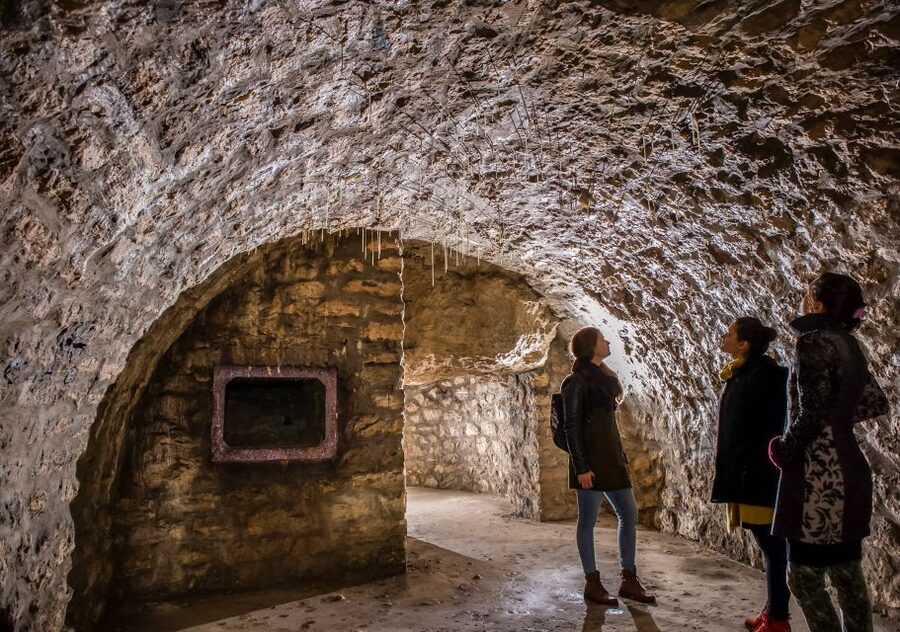
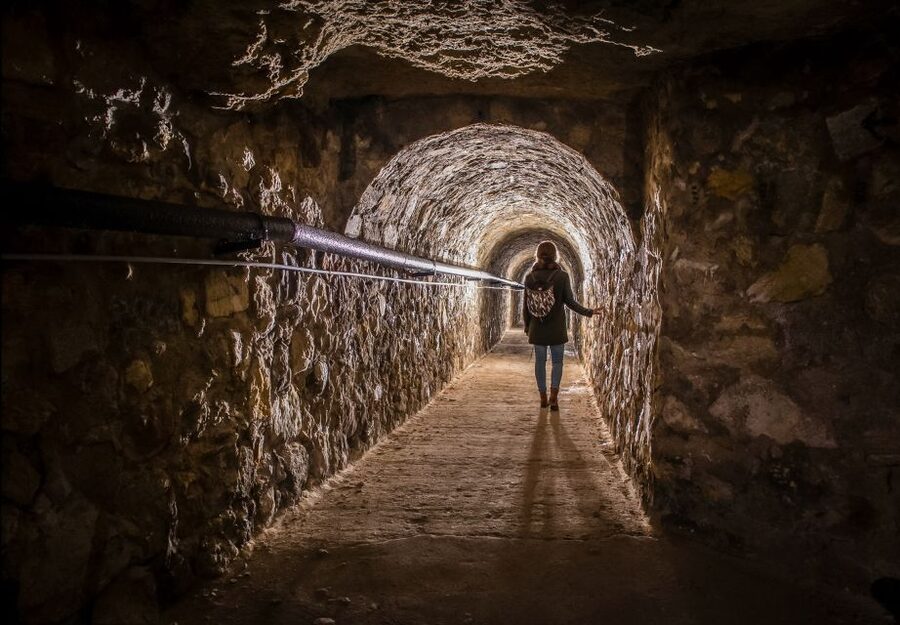
The caves have paved paths and lighting, so this is not a technical caving trip. You will not need climbing gear or special outdoor equipment. Still, it is a walking tour in an uneven underground setting, not a museum corridor.
Wear closed-toe shoes with a dependable sole. The route can become muddy in places, and your clothes or shoes may pick up dirt if you lean against a wall. Dress for comfort rather than style. This is one Budapest activity where a clean pair of white trainers may not be the best choice.
The full route covers about a mile. That distance is manageable for many people, but the cave setting can make the walk feel more demanding than a similar distance on a city sidewalk. If you have mobility issues, ask yourself honestly whether you can manage the full route before booking.
The tour is not wheelchair accessible, and baby strollers and carriages are not allowed. People with visual impairments are also listed as unsuitable for this activity. Claustrophobia is another serious consideration. The caves are described as fairly spacious in several sections, so they may not feel cramped to everyone, but this remains an underground route with enclosed passages.
What the Guide Adds
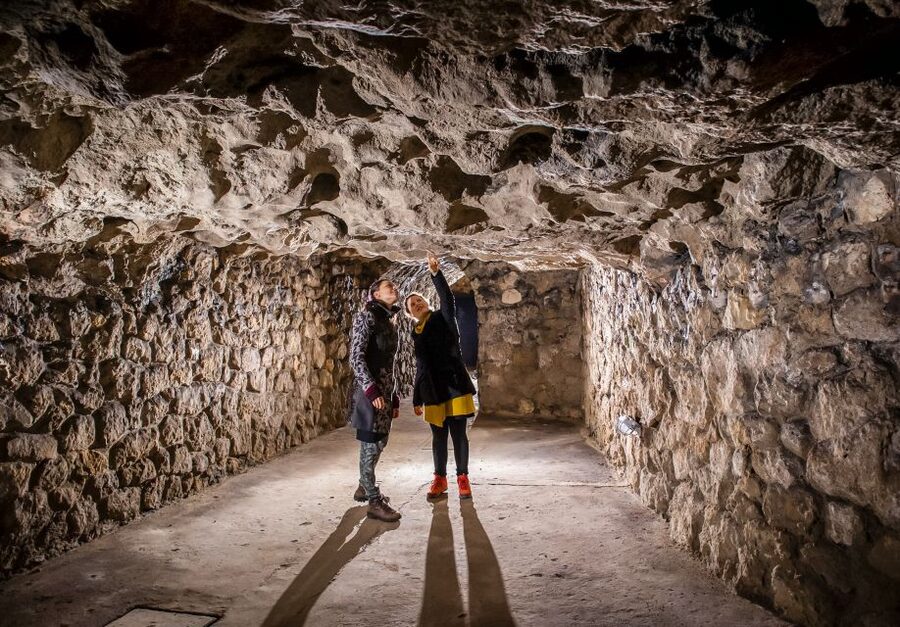
The cave walls are interesting, but the guide is what turns the walk into a coherent experience. Without explanations, you would see dark passages, rock surfaces, and old chambers. With the right guide, you understand why the spaces exist and how their purpose changed.
The strongest guiding style here is conversational. Guides use stories, humor, objects, and visual explanations to make the past easier to picture. The tour is not simply a list of dates and technical facts.
Vicky has received repeated praise for her timing, warmth, humor, and clear delivery. Eva has also been singled out for explaining both the geology and the historical uses of the cave system. Other guides may lead your departure, but these examples show the tone to expect: informed, personable, and engaged with the group.
This matters because much of the cave system may look similar at first glance. Good narration helps you notice the difference between a natural chamber, a cellar, a shelter, and a passage shaped for a particular purpose.
Price and Overall Value at $19
At $19 per person, the tour is reasonably priced for a guided attraction lasting 40 minutes to 1.5 hours. The value depends on which option you choose. The short tour gives you an unusual experience at a modest cost, while the longer tour offers better value if you want the full historical and geological picture.
You are paying for access to a place you could not properly understand on your own, along with an English-speaking guide who explains the route. There is no audio guide included, but that is not a major weakness here. A live guide can adjust the pace, answer questions, and point out details that a recording might overlook.
I would see the tour as a good addition to a day at Buda Castle rather than a replacement for the district’s main sights. You can visit the churches, courtyards, and viewpoints above ground, then use the caves to see how the same hill worked below ground.
Small Practical Details That Matter
There is no cell phone service inside the caves. Tell your companions where you will meet before entering, and do not depend on sending messages from underground.
Food, drinks, smoking, alcohol, and drugs are not allowed. Video recording is also prohibited, and you must follow the guide’s instructions and the written rules inside the cave.
Free cancellation is available up to 24 hours before the tour for a full refund, and you can reserve now while paying later. That flexibility helps if your Budapest schedule depends on weather, museum reservations, or changing arrival plans.
The tour is conducted in English. If English is not comfortable for you, consider how much you want to absorb from the historical explanations. The sights can still be interesting, but the guide’s story is a large part of the experience.
Who Should Book the Buda Castle Cave Tour?
I would recommend this tour to anyone who likes unusual historical sites, geology, and places that reveal a less obvious side of a city. It is also a smart pick if you have already explored the Castle District above ground and want something different from another church or museum.
Families with older children may enjoy the sense of discovery, though the dark setting and occasional grim stories are not right for every child. The 40-minute option is easier to fit into a busy itinerary, while the longer route suits people who want the cave system itself to be a major part of the day.
I would skip it if you need step-free access, dislike enclosed spaces, cannot walk the route comfortably, or want a polished attraction with no chance of mud. I would also avoid booking at the last minute if you specifically want the 1.5-hour tour.
Should You Book It?
Yes, if you want to see Budapest from an angle that most Castle District sightseeing misses. The combination of limestone, medieval cellars, prison stories, and wartime shelters gives the tour real variety, and the $19 price is fair for the access and live explanation.
Choose the longer tour when possible, wear warm clothes and sturdy shoes, and keep your schedule flexible around the meeting point and departure time. If you have limited time, the 40-minute visit still offers a worthwhile look below Castle Hill. Just know that this is a walking tour in a cool, enclosed cave, not an accessible attraction for everyone.
FAQ
How long does the Buda Castle Cave Tour last?
The available options last about 40 minutes or up to 1.5 hours. The regular walking route is roughly 1.5 kilometers long.
How much does the tour cost?
The listed price is $19 per person.
What temperature is it inside the caves?
The cave temperature is about 12°C, or 54°F. Bring warm clothing.
Where does the tour meet?
The meeting point depends on the option booked. It may be at Trinity Square, also called Szentháromság tér, or at Dárda Street for the shorter tour.
Is the tour available in English?
Yes. The tour includes a live English-speaking guide.
What should I wear?
Wear warm clothing, closed-toe shoes, and clothes that can get dirty. Parts of the route may be muddy, and your clothes or shoes may touch the cave walls.
Is the tour suitable for wheelchair users or people with mobility issues?
No. The tour is not wheelchair accessible and is not recommended for people with mobility issues, claustrophobia, or visual impairments. Children under three are not permitted.
Recently added around Budapest
- Budapest: Private Walking Tour with a Local Guide★ 3.6 · 6 reviews
- Budapest: City Bike Tour with Coffee Stop★ 5.0 · 37 reviews
- Budapest: Danube River Views Bike Ride★ 4.8 · 23 reviews
- From Budapest: Guided Tour of Eger with Wine Tasting★ 4.5 · 6 reviews
- Budapest: Vacation Photographer to collect great memories★ 5.0 · 49 reviews
- Walk to recent and aged spiritual sanctuaries near Budapest★ 5.0 · 5 reviews
- Trash Art Museum: Hungary’s First Scrap Metal Exhibition★ 4.3 · 72 reviews
- Budapest: Multilingual Highlights Tour★ 4.8 · 89 reviews
Buda Castle Tours, compared.

Buda Castle District Vampires and Myths Night Tour
Read our review →

Buda Castle District Dark History, Legends and Vampire Night Tour
Read our review →
Buda Castle District Walking Tour with a Historian
Read our review →
1.5 Hour Budapest Segway Tour – To The Castle Area
Read our review →Browse the lists this tour appears in