
Reviewed · WALKING TOURS
Classic Walk in Budapest Historical Center
Budapest’s Pest district unfolds well on foot, and this tour gives you a useful route through its grandest streets, squares, and political landmarks. You begin on Váci Street, cross Elizabeth Square, pass St. Stephen’s Basilica, and finish at the Hungarian Parliament Building beside the Danube.
I like the clear two-hour format and the chance to ask a local guide about what you are seeing. I also like the final stretch through Liberty Square and Kossuth Lajos Square, where Budapest’s twentieth-century story comes into sharper focus. The main consideration is the pace: one guide may spend a long time explaining each stop, while another may cover more ground, so this is not the best pick if you want a brisk walk with minimal commentary.
Key points to know before booking
- The route ends at Parliament: You finish at Kossuth Lajos Square rather than returning to the starting point, which is handy for continuing your day in central Pest.
- The history is a major part of the walk: Expect an introduction to Hungary’s key historical events, including the Nazi and Soviet occupations and the 1956 revolution.
- The Danube views come early: The walk includes views toward Buda Castle, the river, and Budapest’s historic bridges.
- The guide can shape the experience: Oliver is specifically noted as a friendly guide who asked about interests and offered food and drink advice.
- Most admission fees are separate: You see St. Stephen’s Basilica, Pesti Vigadó, and Parliament from outside unless you arrange entry yourself.
- The price is unusually low: At $3.60 per person, the tour offers a very inexpensive introduction, though the small price reflects a basic walking format rather than a ticketed sightseeing package.
A low-cost introduction to central Budapest
At $3.60 per person, this is priced as a simple orientation walk, not a full attraction package. You are paying for live guiding and a structured route, while church and museum admissions remain separate.
That can be good value on your first day. Two hours with a guide can help you understand how Pest fits with Buda, where the main central sights are, and which parts of the city deserve more of your time. You also get a chance to ask questions instead of trying to sort out Budapest’s complicated past from a guidebook alone.
The low price comes with a few limits. The tour does not include entry to St. Stephen’s Basilica, Pesti Vigadó, or the Hungarian Parliament Building. You also should not expect a long interior visit or a small private tour as standard. The group can reach 30 people, although one booking had a very small group.
The tour is offered in English and includes a mobile ticket. Confirmation arrives when you book, and the activity is generally suitable for most participants. It runs for about two hours, so it fits neatly into a morning or afternoon without taking over your day.
More history tours in Budapest:
- Budapest: Historic Cruise with Welcome Drink
★ 4.7 · 6,512 reviews - Budapest Historical Sightseeing – Free Walking Tour
★ 5.0 · 1,302 reviews - Buda Castle District Dark History, Legends and Vampire Night Tour
★ 4.5 · 1,240 reviews
Starting on Váci Street and reaching the Danube
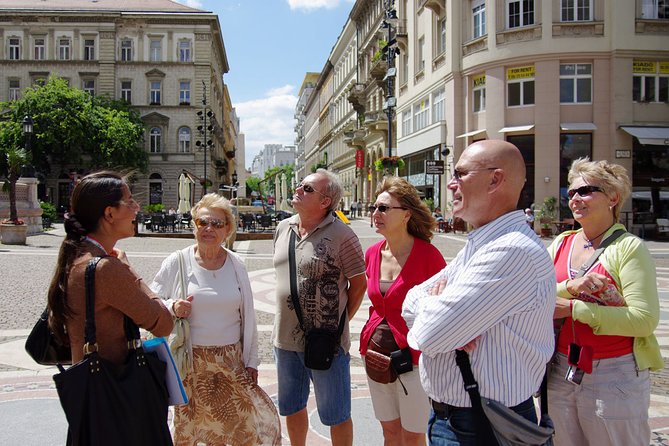
The meeting point is Molnár’s kürtőskalács at Váci u 31. Váci Street is one of Budapest’s best-known pedestrian shopping streets, lined with cafés, shops, and foot traffic. It is a sensible place to begin because you are immediately in the heart of central Pest.
The opening stop is short, about five minutes, so do not expect a full tour of the street. Instead, use it as your first orientation point. Your guide can help explain where you are in relation to the river, the main squares, and the Buda side of the city.
The walk then reaches the Danube, described here as the Blue Danube. The river is the visual prize of the early route. Across the water, you can look toward Buda Castle, while the historic bridges frame one of Budapest’s most memorable city views.
This part is especially useful for first-time visitors because Budapest can feel divided into two different cities. The river explains the geography at a glance. You see the flatter Pest side underfoot and the hillier Buda side across the water, with the bridges tying the two together.
Pesti Vigadó and the end of the pedestrian street
Pesti Vigadó is a handsome nineteenth-century building in the Hungarian Romantic style. It was built in the 1860s as a dance palace for the Hungarian aristocracy, giving your guide a natural opening to discuss the city’s social and cultural life.
The listed stop lasts about ten minutes. You see the building from the outside, and admission is not included. That is worth keeping in mind if you hope to explore the interior. This walk is about context and exterior sights rather than museum visits.
From here, you reach the end of the pedestrian street. The nearby square is surrounded by pastry shops and café terraces, so it is a useful place to note for later. One of the appealing parts of having a local guide is the chance to ask what to eat or drink after the walk.
Oliver, one of the named guides, is specifically noted for asking about personal interests and tailoring the information along the way. The tour also includes practical suggestions about food and drinks. Those tips may be more useful than another list of monuments, especially if this is your first time in Budapest.
Elizabeth Square, the Danube Fountain, and the city’s modern side
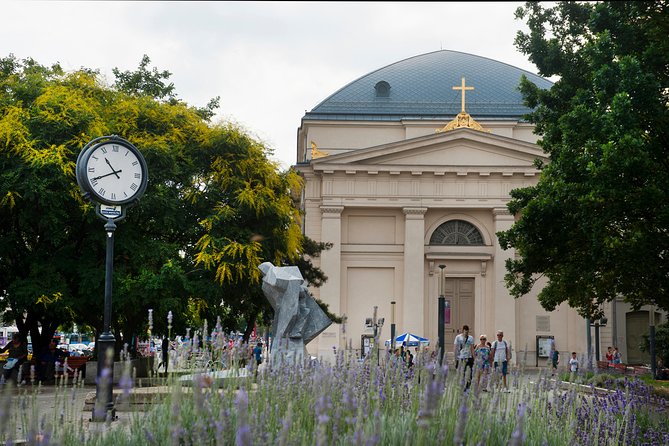
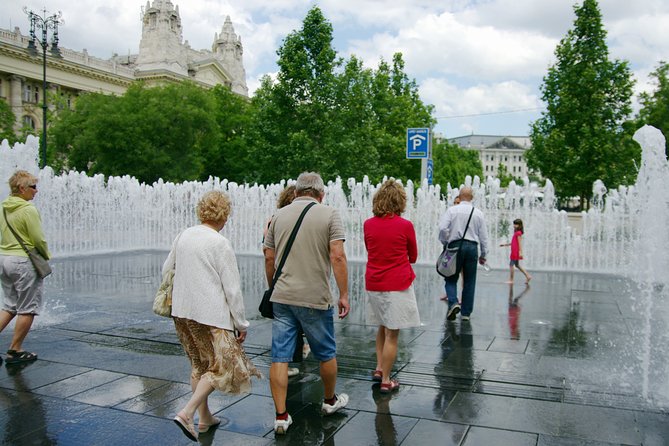
Elizabeth Square gives the route a change of pace. You walk across a central park and see the Danube Fountain monument and the giant Ferris wheel. The stop lasts around 15 minutes and is free to view.
This is not the most old-world section of the walk, and that is part of its value. It shows central Budapest as a living city rather than a string of preserved monuments. The Ferris wheel and park add a modern public space to a route otherwise centered on grand buildings and political memory.
The guide’s commentary matters here because the square can otherwise feel like a quick crossing between larger sights. If you enjoy hearing how landmarks fit into the city around them, this stop should help connect Budapest’s present-day center with its older streets.
The walk involves standing and moving between stops. A small-group booking had a guide who made a point of finding shade and keeping a comfortable pace for everyone. That is a useful sign for warm days, though you should still expect a normal urban walking tour with outdoor exposure.
More walking tours in Budapest:
- Budapest: Buda Castle Walk with Saint Stephen’s Hall
★ 4.5 · 3,012 reviews - Big Bus Budapest Hop-On Hop-Off Bus and Walking Tour
★ 3.5 · 2,206 reviews - Budapest: Buda Castle District Walking Tour
★ 4.6 · 2,108 reviews - Budapest City Landmarks Walking Tour in 2 Hours
★ 5.0 · 2,048 reviews
St. Stephen’s Basilica and the story behind the building
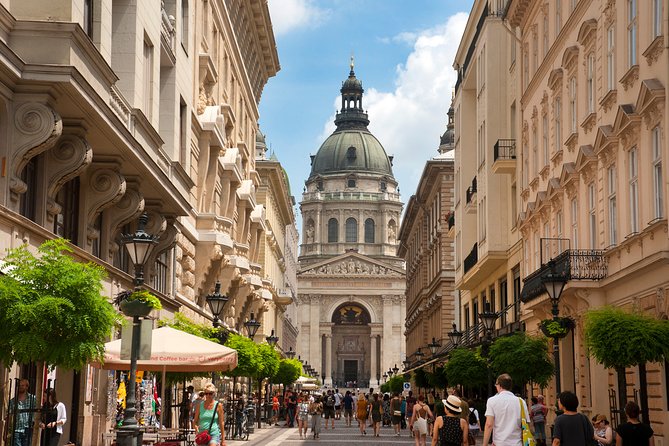
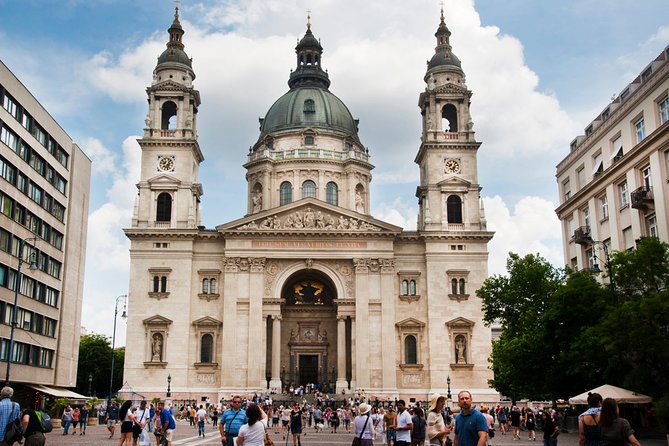
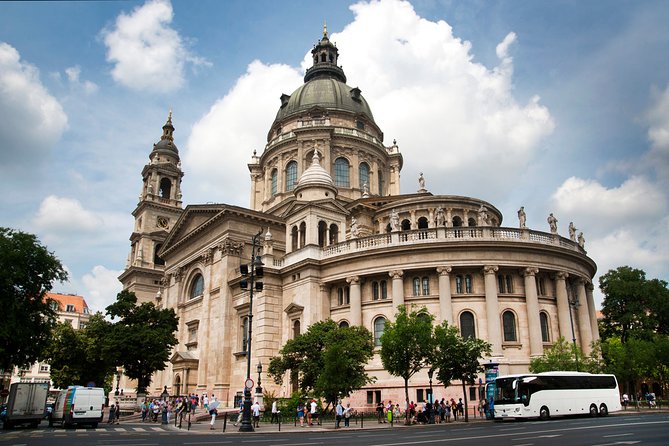
St. Stephen’s Basilica is one of the route’s largest architectural sights. You stop for about 20 minutes to admire the building and hear about its construction and symbolism.
The basilica is free to view from outside, but entry is not included. If you want to see the interior, you will need to handle that separately, and the tour schedule may not leave time for a full visit. The guide’s role here is to explain the building and its meaning rather than lead an included church admission.
This is a good place to ask questions about the symbolism you notice. The tour summary promises an explanation of the basilica’s construction and meaning, so the stop is more than a photo break. Still, the amount of detail will depend on the guide and the group.
One rating criticized the walk for spending too long at some stops and not walking enough. That is the clearest drawback in the available feedback. If you prefer constant movement, you may find the basilica discussion slower than expected. If you like having time to look closely and ask questions, the longer pauses may suit you.
Liberty Square and Budapest’s difficult twentieth century
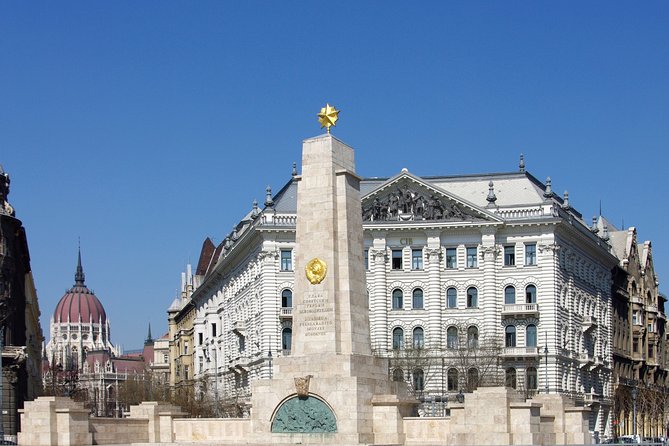
Szabadság tér, or Liberty Square, is one of the most serious sections of the walk. You see monuments connected with the Nazi and Soviet occupations, along with reminders of dictatorship. In the warm season, you may also see the square’s miraculous fountain.
This stop lasts about 25 minutes, the longest scheduled pause on the route. That timing tells you something important about the experience. The walk is not only about pretty façades and river views. It gives real attention to the political forces that shaped modern Hungary.
For many visitors, this is where the city’s past becomes easier to understand. A grand central square can look calm and polished, yet its monuments point to occupation, repression, and competing memories. The guide’s historical overview can help you connect those events rather than seeing each memorial as an isolated object.
The tone may also become heavier here. That is appropriate, but it means this tour is not simply a light sightseeing stroll. You should choose it if you want some historical substance alongside the architecture.
Kossuth Lajos Square and the final approach to Parliament
Kossuth Lajos Square continues the story of Hungarian political life. The stop focuses on freedom heroes and the 1956 revolution against the Communist dictatorship. You spend about 15 minutes in the square before reaching Parliament.
This section gives the tour a strong finish. Instead of ending after a general city introduction, the route moves toward one of Budapest’s defining buildings through a place tied to national identity and protest.
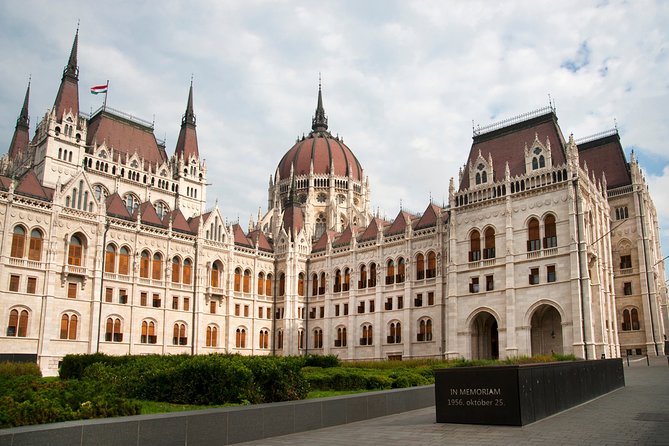
The Hungarian Parliament Building is the final stop, and the tour ends there. You get time to admire its striking exterior and hear about its history. Admission is not included, so the scheduled ten-minute stop is best understood as an outside visit.
Ending at Parliament is practical. You do not need to retrace your steps to Váci Street, and you can continue exploring the riverfront or Kossuth Lajos Square afterward. Since the end point is Budapest, Kossuth Lajos tér 1-3, check the route before booking if you need to return to your starting area.
How the guide and group size affect the walk
The experience includes a live English-speaking guide, and the quality of the walk depends heavily on that person’s style. Oliver is described as friendly and attentive, with a habit of asking about interests and adding useful food and drink suggestions.
Another guide handled a small group with care, making sure people could walk at a comfortable pace and find shade. That matters in summer, when a route through open squares can become tiring.
The official maximum is 30 people. That is large enough for the group to feel less personal, especially around busy central sights. At the same time, the actual group may be much smaller. A small group makes it easier to ask questions and hear the historical explanations.
You should also allow for some variation in pacing. One person may give a fuller explanation at each stop, while another may move more quickly. The strongest feedback praises the mix of history, personal attention, and practical recommendations. The main negative point is that long stops can reduce the sense of walking through the city.
Who will get the most from this experience
I would choose this tour for a first visit to Budapest, especially if you want a quick map in your head before exploring alone. The route covers the main central sights without requiring a full day.
It also suits you if you want history in plain language. The walk moves from royal-era architecture and religious symbolism to occupation, dictatorship, and the 1956 revolution. That range gives you more context than a simple photo walk.
The tour may work well for couples, families, and small groups who want to ask questions. Group discounts are available, and most participants can take part. Service animals are allowed, and the meeting point is near public transportation.
I would be more cautious if you want extended interior visits. No church or museum entries are included, and the tour only allows short viewing periods at some major buildings. I would also think twice if you dislike pauses for historical explanation or prefer a fast route with little commentary.
The walk is offered in English only, so it is best suited to people comfortable following spoken English outdoors. Since the booking average is 67 days in advance, you may want to reserve early if your dates are fixed, even though the official group limit is 30.
Cancellation and practical booking notes
You can cancel for a full refund up to 24 hours before the local start time. Changes or cancellations made less than 24 hours before the tour are not accepted for a refund.
The meeting point is Molnár’s kürtőskalács, Váci u 31. The finish is the Hungarian Parliament Building, Kossuth Lajos tér 1-3. You receive confirmation at booking, and the mobile ticket makes the reservation easy to keep on your phone.
Wear shoes suitable for two hours of city walking. The route includes open squares and riverside views, so shade and pace may vary. If you book during warm weather, the guide’s attention to shade and walking speed can make a real difference.
Should you book the Classic Walk in Budapest Historical Center?
Book it if you want an inexpensive, English-language introduction to central Pest with a strong dose of Hungarian history. The combination of Váci Street, Danube views, St. Stephen’s Basilica, Liberty Square, Kossuth Lajos Square, and Parliament gives you a useful first look at the city.
The best reasons to choose it are the very low price, the convenient Parliament ending, and the chance to ask a local guide for both historical context and food advice. The main tradeoff is that you may spend more time listening than walking, and major interiors cost extra.
For $3.60, this is an easy choice for a first-day orientation. Just book it for the guide’s stories and the route, not for included admissions or a fast-paced sightseeing sprint.
FAQ
How long does the walking tour last?
The tour lasts approximately two hours.
Where does the tour start?
It starts at Molnár’s kürtőskalács, Váci u 31, 1052 Budapest, Hungary.
Where does the tour end?
The tour ends at the Hungarian Parliament Building, Kossuth Lajos tér 1-3, 1055 Budapest, Hungary.
What language is the tour offered in?
The tour is offered in English.
Is admission to St. Stephen’s Basilica included?
No. Entry to the church is not included.
Is admission to the Hungarian Parliament Building included?
No. The tour includes an outside visit and guiding, but Parliament admission is not included.
What is included in the price?
Live tour guiding is included. The listed price is $3.60 per person.
How many people can join the tour?
The maximum group size is 30 travelers. Actual groups may be smaller.
Can I cancel the booking for a refund?
Yes. You can cancel at least 24 hours before the experience start time for a full refund. Cancellations or changes made less than 24 hours before the start time are not accepted for a refund.
Recently added around Budapest
- Budapest: Private Walking Tour with a Local Guide★ 3.6 · 6 reviews
- From Budapest: Guided Tour of Eger with Wine Tasting★ 4.5 · 6 reviews
- Budapest: City Bike Tour with Coffee Stop★ 5.0 · 37 reviews
- Budapest: Danube River Views Bike Ride★ 4.8 · 23 reviews
- Budapest: Vacation Photographer to collect great memories★ 5.0 · 49 reviews
- Walk to recent and aged spiritual sanctuaries near Budapest★ 5.0 · 5 reviews
- Trash Art Museum: Hungary’s First Scrap Metal Exhibition★ 4.3 · 72 reviews
- Budapest: Multilingual Highlights Tour★ 4.8 · 89 reviews
Walking Tours, compared.

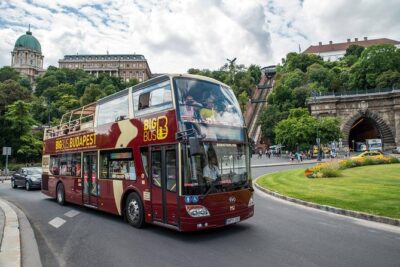
Big Bus Budapest Hop-On Hop-Off Bus and Walking Tour
Read our review →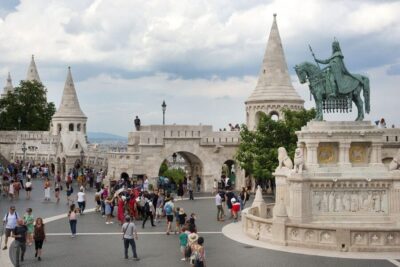
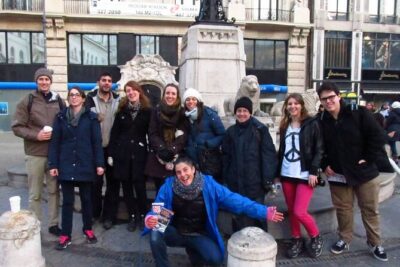
Budapest City Landmarks Walking Tour in 2 Hours
Read our review →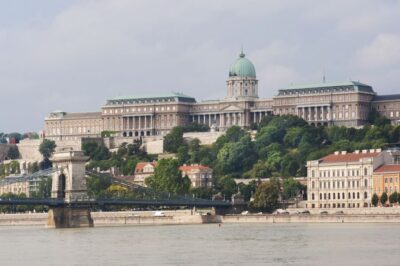
3-Hour Orientation Walking Tour of Buda and Pest
Read our review →
Budapest Historical Sightseeing – Free Walking Tour
Read our review →
Budapest All in One Small Group Walking Tour with Strudel Stop
Read our review →Browse the lists this tour appears in