
Reviewed · WALKING TOURS
Private Downtown Pest Walking Tour
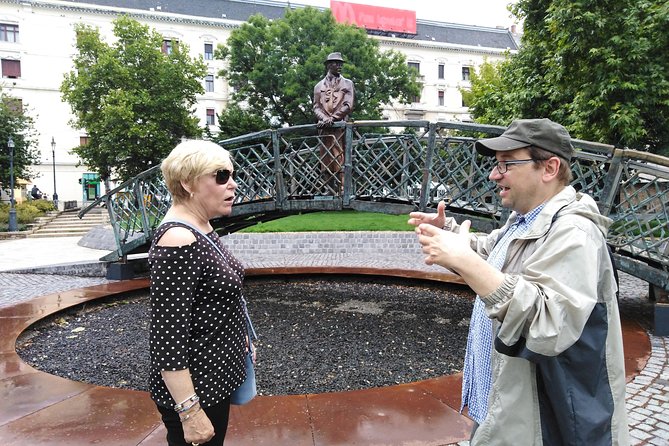
Budapest’s Pest side makes a strong first classroom for the city. On this private walk, you move from the Great Synagogue to Parliament, Kossuth Square, Heroes’ Square, and Andrassy Avenue while a historian explains how Budapest grew, fractured, and changed. I like the one-guide-for-your-group format and the chance to ask real questions instead of waiting for a large group to catch up.
I also like the range of subjects. You get architecture, Jewish history, Hungarian nationalism, Cold War politics, and the story of Budapest’s 19th-century rise in one outing. The main drawback is the price: $393.17 per group is good value for a larger party of up to 10, but costly for one or two people. Also, the route covers several major areas, so ask how the guide plans to handle movement between stops.
Key points to know before booking
- Private attention: Only your group takes part, so the guide can adjust the pace and answer detailed questions.
- Historian-led context: Guides may be professors, doctoral students, historians, journalists, or trained local hosts.
- Big Pest landmarks: The walk includes the Great Synagogue, Parliament, Kossuth Square, Heroes’ Square, and Andrassy Avenue.
- Useful guide names: Andras, Kata, and Balint have led this experience, though your assigned guide may differ.
- Best value for groups: The flat group price becomes much more reasonable when shared by several people.
- Plan for a real walk: A moderate level of fitness is recommended, and the tour lasts about three hours.
Why a private Pest walk works well
Pest is the flatter, more urban half of Budapest, but it is not simply a collection of grand buildings. Its streets tell the story of a city that gained confidence during the 19th century, became a major European capital, suffered war and dictatorship, and then rebuilt its public identity.
That is why I find a guide useful here. You can look at Parliament and admire the size of it on your own. A good guide helps you connect that building to Hungary’s political ambitions, the Austro-Hungarian period, the country’s later struggles, and the role the square still plays today.
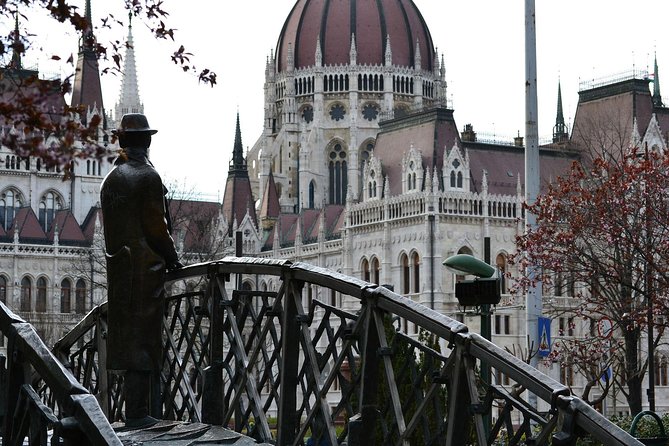
The private setup changes the tone. You are not locked into a fixed lecture. If you care about architecture, you can ask about facades and city planning. If Jewish Budapest interests you, you can spend more time at the Great Synagogue. If Cold War history catches your attention, the Ronald Reagan statue offers a natural opening.
The company uses guides with academic and professional backgrounds. Andras is described as strong on dates, sites, and historical detail. Kata has led walks that combine history, culture, architecture, food, and present-day communities. Balint is noted for quickly identifying a group’s interests and reshaping the walk around them. Those examples suggest the most important strength here is not only information, but conversation.
Still, the experience is only about three hours. You cannot fully explore every district or enter every major building in that time. Think of it as a focused introduction to Pest, not a complete survey of Budapest.
More walking tours in Budapest:
- Budapest: Buda Castle Walk with Saint Stephen’s Hall
★ 4.5 · 3,012 reviews - Big Bus Budapest Hop-On Hop-Off Bus and Walking Tour
★ 3.5 · 2,206 reviews - Budapest: Buda Castle District Walking Tour
★ 4.6 · 2,108 reviews
Starting at the Great Synagogue
The Great, or Central, Synagogue on Dohány Street is a fitting first stop. Its scale and ornate design immediately show that Budapest’s Jewish community was a major part of 19th-century city life.
The stop is scheduled for about 10 minutes, so expect an introduction rather than a full visit. The tour information lists no admission ticket charge for the stop, but you should not assume that this means a full interior tour is included. If entering the synagogue matters to you, ask the provider before booking.
I would use this opening to ask about the Jewish community before the Second World War, its place in the city, and how the synagogue fits into Budapest’s wider architectural story. A historian can turn a quick look at the building into a clearer picture of the people and institutions behind it.
This is also a good point to tell your guide what you want from the next three hours. The private format is most useful when you speak up early. You are paying for attention, so use it.
Parliament and the meaning of Kossuth Square
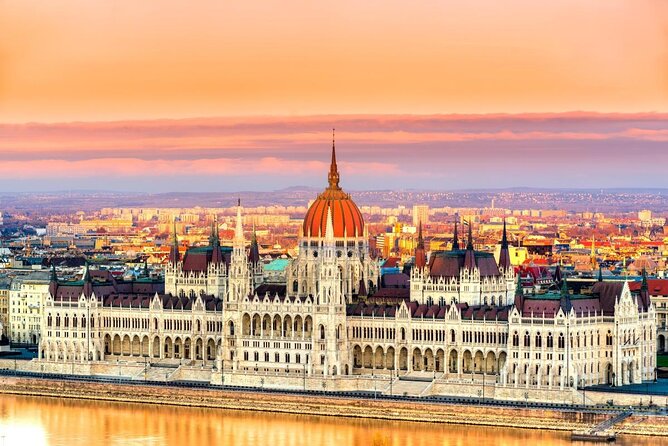
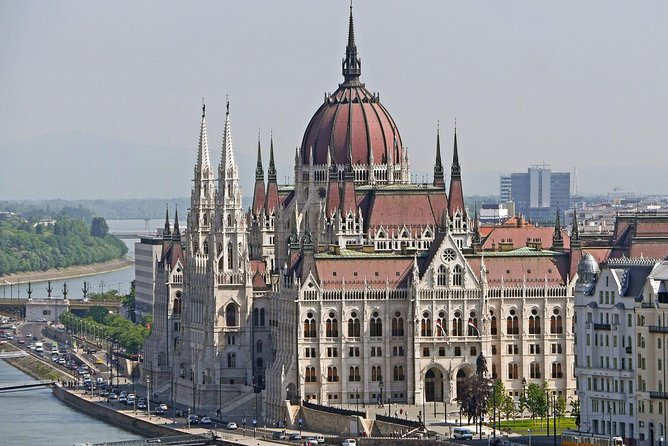
The Hungarian Parliament Building is the visual high point of the route. Set beside the Danube at Kossuth Lajos Square, it represents the confidence and wealth of Hungary at the height of its 19th-century development.
The building was the most expensive structure ever built in Hungary when it opened. That fact gives the guide an easy way into the politics of the period, but the better questions concern what the expense was meant to communicate. Grand public buildings are never just decoration. They tell you how a country wanted to see itself.
The planned stop lasts about 20 minutes. You will have time to take in the exterior, the square, and the building’s role in the city. The tour does not include a stated interior Parliament visit, so do not book this walk expecting a guided look inside the chambers.
Kossuth Square appears again later in the route, with another 20-minute stop. That duplication is worth noticing. It may allow the guide to return to the square after discussing other parts of Pest, but it also means the written route is not a perfectly linear list of separate sights. Ask at the start whether the two Parliament and square entries are intended as one extended visit or two parts of the same stop.
For photography, this is likely one of the tour’s strongest settings. I would also listen for the less obvious details: how the square works as a public space, why Parliament occupies such a prominent position, and how Budapest’s two sides relate across the river.
Heroes’ Square and the national story
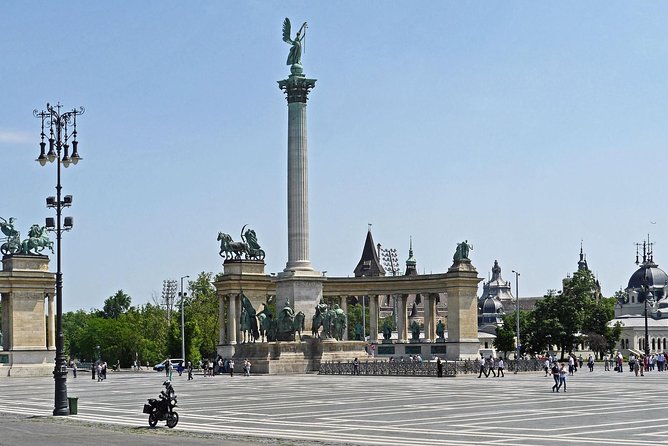
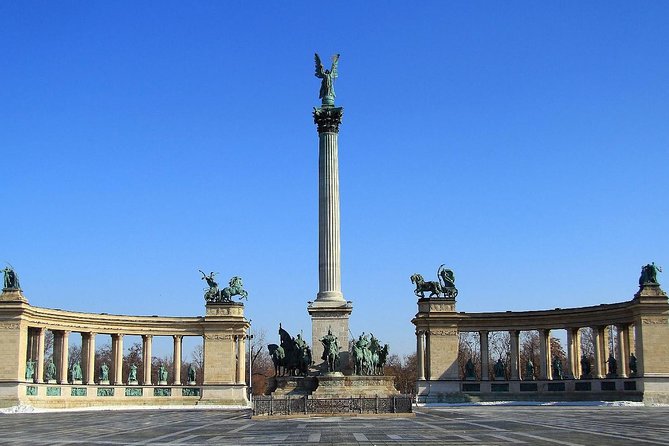
Heroes’ Square shifts the tone from urban power to national memory. Its statues feature the Seven chieftains of the Magyars along with other important Hungarian leaders.
You get about 20 minutes here. That is enough for an explanation of the main figures and the square’s purpose, but not enough for a long examination of every statue. The value lies in learning how Hungary presents its origins and important leaders in a single monumental setting.
This is a place where a guide can add needed care. National monuments often simplify the past. A historian can explain what the statues emphasize, what they leave out, and how ideas about Hungary changed over time.
If you have questions about Hungarian identity, the country’s relationship with Europe, or the way public monuments shape memory, this is one of the best stops to use your private access. You can ask without worrying that the rest of a large group is waiting.
A few more Budapest half-days to weigh up
- Budapest: City Highlights Cruise with Welcome Drink
★ 4.6 · 35,610 reviews - Budapest: Unlimited Prosecco, Beer and Aperol Spritz Cruise
★ 4.8 · 25,310 reviews - Budapest: Széchenyi Spa Day Ticket with Optional Upgrades
★ 4.3 · 23,911 reviews - Budapest: Nighttime or Daytime Sightseeing Cruise
★ 4.2 · 21,062 reviews
Walking Andrassy Avenue
Andrassy Avenue is described as Budapest’s answer to the Champs-Élysées. That comparison tells you what the avenue was meant to project: wealth, order, style, and a modern capital’s confidence.
The scheduled 30 minutes make this the longest stop on the route. That seems sensible. An avenue is not a single monument. Its importance comes from the buildings, scale, street plan, and the way it links parts of the city.
I would ask the guide to explain how the avenue fits into Budapest’s growth and why it mattered to the city’s upper classes and political leaders. This is also where architectural questions can add a lot. The walk gives you time to look at more than one facade rather than rushing from one famous object to the next.
The route description compares Andrassy Avenue with Paris, but you do not need to accept the comparison at face value. Ask what Budapest borrowed, what it changed, and what feels specifically Hungarian. That sort of discussion is where a private historian guide can offer more than a standard sightseeing script.
The avenue also gives you a chance to notice the contrast between grand planning and everyday city life. Quality shops and central streets can make Budapest feel more expensive than first expected. One piece of practical advice from the supplied information is to watch the exchange rate carefully. Prices may be similar to, or higher than, those in Italy, and converting forints by dividing by 400 was suggested as a rough mental guide at the time of that comment. Exchange rates change, so treat that only as a reminder to check current values.
The Ronald Reagan statue and Cold War memory
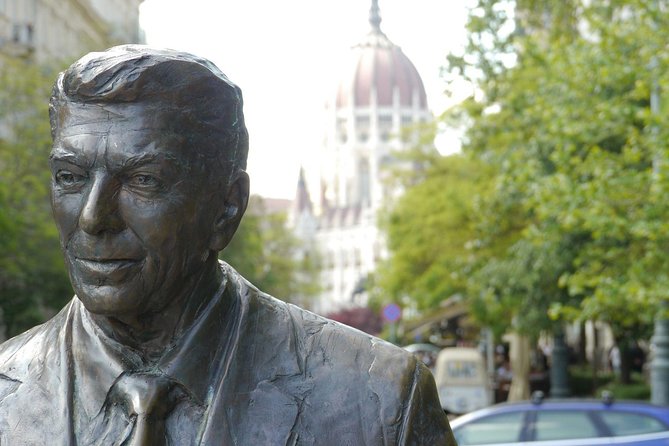
The Ronald Reagan statue is a small stop, listed at about 10 minutes, but it brings a different political era into the walk. The subject is Hungary’s sense of obligation to Reagan for his efforts to bring down the Iron Curtain.
This is not one of the grand architectural stops. That is exactly why it can be useful. After ancient origins, national leaders, and 19th-century ambition, the statue points toward the 20th century and the political changes that reshaped Central Europe.
Use the stop to ask how Hungarians remember the end of the Cold War and why an American president has a place in Budapest’s public spaces. The guide’s approach will matter here. A good explanation should give you the local view rather than turning the stop into a simple political slogan.
The short timing means this is an introduction, not a full lesson in the Cold War. Still, it adds range to the route and keeps the tour from being only about pretty buildings.
What the three-hour schedule really means
The listed stop times add up to roughly 110 minutes, leaving part of the three-hour session for walking, transitions, questions, and the guide’s broader explanations. Since the sights are spread across central Pest, you should expect the movement between them to be part of the experience.
The tour is described as a walking tour, and a moderate level of physical fitness is recommended. Wear comfortable shoes and bring water, especially if you are taking it in warmer weather. The information does not promise food or drinks, so plan to eat before or after the walk.
Pickup may be offered if arranged. Otherwise, you meet the guide 15 minutes early at Café Smúz, Kossuth Lajos tér 18. The location is near public transportation, which makes it practical for reaching the start.
The meeting point also makes sense for a route centered on Parliament and central Pest. Confirm the exact meeting details after booking, since confirmation is issued within 48 hours and remains subject to availability.
The price and who gets the best value
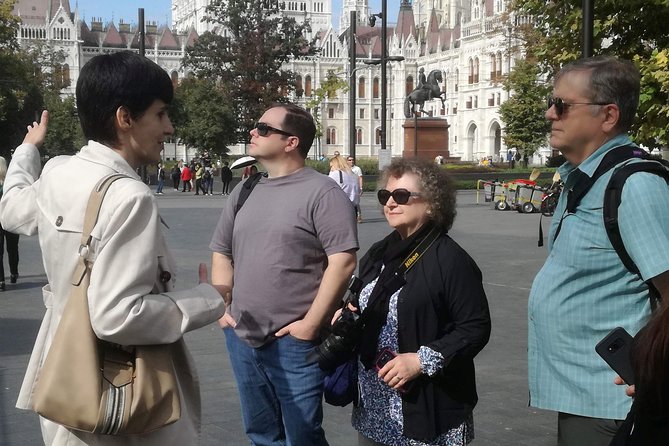
The listed price is $393.17 for a group of up to 10 people. That is a large upfront cost for a couple, but the calculation changes if you are traveling with family or friends. Split among 10 people, it comes to about $39 per person. For four people, it is about $98 per person, and for two, about $197 per person.
I see the value in the guide’s time, not in the number of attractions checked off. You are paying for a private historian who can answer detailed questions, adjust the pace, and connect architecture with politics and society. That can be worthwhile if you have limited time in Budapest or want a strong orientation at the beginning of your stay.
The price is harder to justify if you only want quick photographs or a simple list of facts. You can see many of these public sights without a paid tour. The case for booking is the explanation and flexibility.
Food, drinks, and any separately arranged admissions are not included. The tour information lists the main stops without admission charges, but ask if you want interior access to any building.
Who should book this experience
I would recommend this walk to first-time visitors who want to understand Budapest rather than simply collect photographs. It also fits returning visitors who have seen the main sights but want to connect them through politics, architecture, Jewish life, and national memory.
It suits people who enjoy asking questions. The guide network includes academics, doctoral students, historians, journalists, and local storytellers, so the experience is built around explanation and discussion.
Families and mixed-interest groups may also benefit from the private format. One person can ask about architecture, another about modern politics, and another about local life without forcing everyone into the same narrow subject.
I would hesitate if you dislike walking, have only a short window, or want extensive interior visits. I would also compare the cost carefully if your group is only one or two people.
Should you book the private Pest walk?
Book it if you want a thoughtful orientation to Budapest and can share the cost with several people. The route covers the city’s major symbols, while the private guide gives you room to ask about the subjects that matter to you.
The strongest reason to choose it is the quality of the conversation. Andras, Kata, and Balint are examples of guides who bring dates, architecture, culture, and personal attention to the walk, though no particular guide is guaranteed.
Skip it if your main goal is independent sightseeing at the lowest possible cost. In that case, visit the public squares and avenues on your own and spend your budget on an interior tour or another activity. For a group that values context and personal guidance, this is a useful, well-focused way to get to know Pest.
FAQ
How long does the Private Downtown Pest Walking Tour last?
The tour lasts approximately three hours.
How many people can join the private tour?
The price covers one private group of up to 10 people.
Where does the tour begin?
Unless hotel pickup has been arranged, meet 15 minutes before the start at Café Smúz, Kossuth Lajos tér 18, Budapest, 1055, Hungary.
Which sights are included?
The route includes the Great or Central Synagogue, the Hungarian Parliament Building, Heroes’ Square, Andrassy Avenue, the Ronald Reagan statue, and Kossuth Lajos Square.
Is food or drink included?
No. Food and drinks are not included unless specifically stated.
Can I cancel for a full refund?
Yes. You can cancel at least 24 hours before the experience’s start time for a full refund. Cancellations or changes made less than 24 hours before the start are not accepted for a refund.
Recently added around Budapest
- Budapest: Private Walking Tour with a Local Guide★ 3.6 · 6 reviews
- From Budapest: Guided Tour of Eger with Wine Tasting★ 4.5 · 6 reviews
- Budapest: City Bike Tour with Coffee Stop★ 5.0 · 37 reviews
- Budapest: Danube River Views Bike Ride★ 4.8 · 23 reviews
- Budapest: Vacation Photographer to collect great memories★ 5.0 · 49 reviews
- Walk to recent and aged spiritual sanctuaries near Budapest★ 5.0 · 5 reviews
- Trash Art Museum: Hungary’s First Scrap Metal Exhibition★ 4.3 · 72 reviews
- Budapest: Multilingual Highlights Tour★ 4.8 · 89 reviews
Walking Tours, compared.
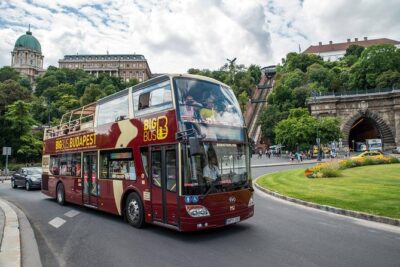
Big Bus Budapest Hop-On Hop-Off Bus and Walking Tour
Read our review →
Budapest City Landmarks Walking Tour in 2 Hours
Read our review →
3-Hour Orientation Walking Tour of Buda and Pest
Read our review →
Budapest Historical Sightseeing – Free Walking Tour
Read our review →
Budapest All in One Small Group Walking Tour with Strudel Stop
Read our review →Browse the lists this tour appears in