
Reviewed · WALKING TOURS
Historical and Cultural Walking Tour in Budapest
Budapest reveals itself in layers: grand imperial avenues, medieval Buda, communist-era memories, thermal baths, and the daily life between the famous sights. This private tour links those pieces in one long morning, with guide György Rashad Salamon providing the stories that turn statues and buildings into a readable portrait of Hungary.
I like the wide sweep of the route, which covers both Pest and Buda instead of keeping you in one district. I also like the personal format: hotel pickup is offered, and the itinerary can be adjusted to your interests. The main drawback is the pace. Four hours is a lot of walking, and the route covers major sights rather than allowing a long interior visit at each one.
Key points at a glance
- Heroes’ Square and Vajdahunyad Castle give you a fast introduction to Hungary’s origins and architectural traditions.
- Széchenyi Bath and Andrássy Avenue connect Budapest’s thermal-water culture with its grand urban style.
- The Opera House and St. Stephen’s Basilica add two of Pest’s finest interiors and important national stories.
- Liberty Square and Parliament provide a useful explanation of dictatorship, communism, and modern democracy.
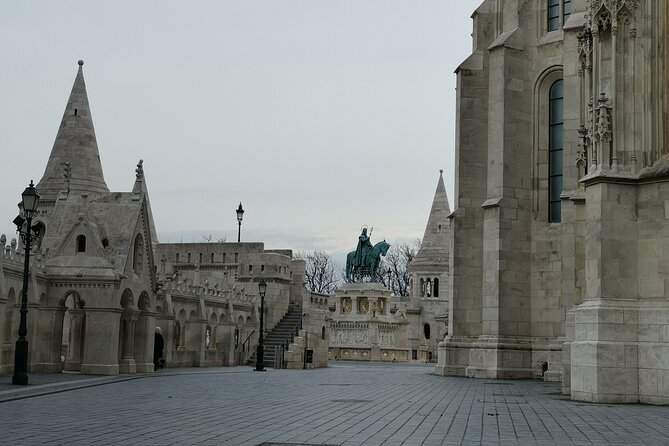
- Chain Bridge and Buda Castle finish the route with Budapest’s most memorable crossing and hilltop district.
- Private guiding matters here, since the day can focus on history, architecture, customs, daily life, or cuisine.
A four-hour introduction to Budapest’s two halves
This is a good choice if you want your first morning in Budapest to answer basic questions quickly. Why is the city called Budapest? How did Hungary’s rulers shape the capital? Why are baths part of ordinary city life? What changed during dictatorship and communism?
The route begins at 9:00 a.m. from Deák Ferenc tér, although hotel pickup is offered on foot. It ends back at the meeting point. The tour is described as a walking experience, but the guide may use Budapest’s subway, bus, or tram system as needed. That detail matters because the route spans a large part of the city, and public transport tickets are not included.
The price is $277.64 per group, not per person. For a small family or group of friends, that can be fair value, especially when you divide it among several people. The information lists a maximum of 10 participants in one place and up to 15 in the group price description, so confirm the exact group limit before booking. Either way, the private format gives you more say than a large scheduled walk.
More history tours in Budapest:
- Budapest: Historic Cruise with Welcome Drink
★ 4.7 · 6,512 reviews - Budapest Historical Sightseeing – Free Walking Tour
★ 5.0 · 1,302 reviews - Buda Castle District Dark History, Legends and Vampire Night Tour
★ 4.5 · 1,240 reviews
Heroes’ Square and the roots of Hungary
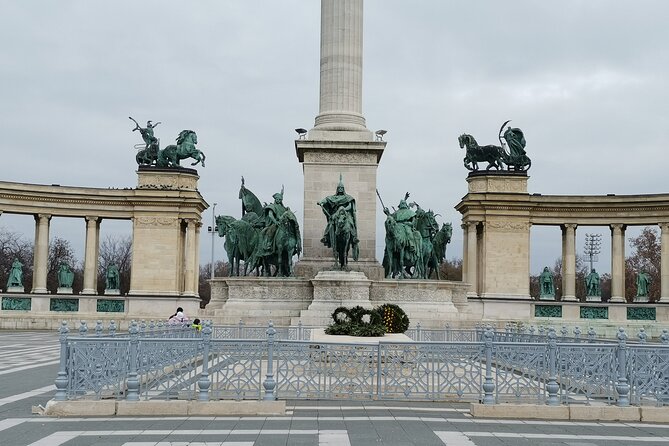
Heroes’ Square is a strong place to begin because it presents Hungarian national history in monumental form. Its statues commemorate important figures from Hungary’s past, and the guide uses the square to explain the roots of the Hungarian people.
You should expect about 20 minutes here. That is enough to understand the layout, identify the main figures, and ask questions, but not enough for a slow study of every statue. The square is also an easy place to get your bearings before the route moves into City Park.
This opening stop works best with a guide because the statues are not self-explanatory. A line of stone figures can blur together when you see it alone. A clear explanation of who they were and why they matter gives the rest of the day a useful frame.
City Park, Vajdahunyad Castle, and the bath tradition
From Heroes’ Square, you walk into City Park, described as one of the early public parks created for public relaxation. The setting changes quickly from formal monument to open green space, and the walk offers a gentler stretch before the city streets return.
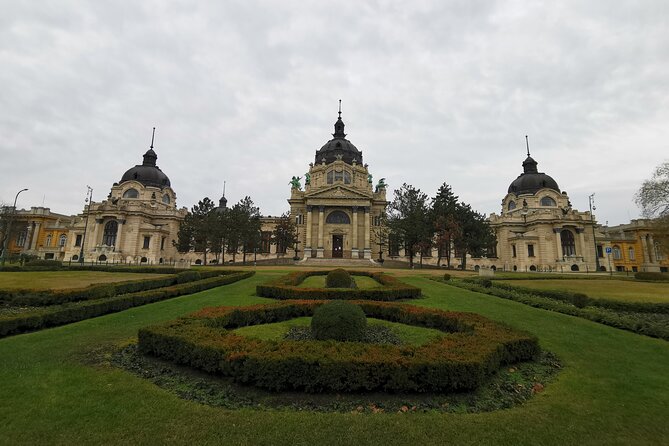
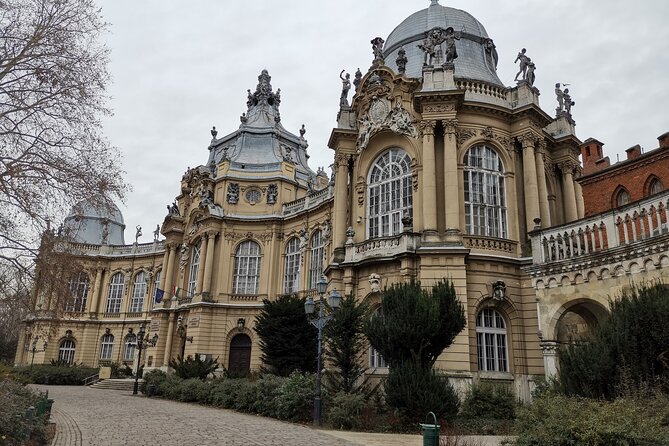
Vajdahunyad Castle receives about 45 minutes. Its design brings together examples of roughly 1,000 years of Hungarian architecture, so it is less a single-period fortress than a visual lesson in changing styles. The guide takes you inside, though no separate admission charge is listed.
I like this stop because it helps you see Hungarian architecture as a story rather than a collection of isolated buildings. You get a sense of how medieval, Renaissance, Baroque, and later influences were used to express national identity. The castle is also one of the more relaxed stops on the route, with time to look around rather than simply pause for a photograph.
During the walk through City Park, you also see the famous Széchenyi Bath. The visit is for explanation rather than bathing. Hungary is one of Europe’s richest countries in thermal water, and bath culture is an important part of local life. The guide can explain why these grand bathing halls matter beyond sightseeing.
Do not book this tour expecting a soak at Széchenyi Bath. The information does not include bath entry or time for bathing. Think of it as a useful introduction to a major part of Budapest culture, with the option to return on your own later if you want the full experience.
Andrássy Avenue and Budapest’s grand urban style
The route continues along Andrássy Avenue, often compared with the Champs-Élysées. Its Neo-Renaissance mansions and townhouses, elegant shops, restaurants, and coffee houses show Budapest at its most polished.
The planned stop lasts about 30 minutes, although the exact walking time may depend on the day’s pace and any itinerary changes. This is a good place to look upward. The avenue’s character comes from its facades, balconies, entrances, and long perspective, not just from one famous building.
A guide adds value here by explaining how the avenue fits into Budapest’s growth and social life. You can ask about local customs, food, shopping, and how the city uses these grand public spaces today. That personal exchange is one of the private tour’s main strengths.
The tradeoff is that a broad city route cannot offer much time for browsing boutiques or sitting in a café. If you want a leisurely architecture walk, you may need to slow the tour and drop another stop. The flexible itinerary makes that possible, but only if you discuss your priorities at the start.
More walking tours in Budapest:
- Budapest: Buda Castle Walk with Saint Stephen’s Hall
★ 4.5 · 3,012 reviews - Big Bus Budapest Hop-On Hop-Off Bus and Walking Tour
★ 3.5 · 2,206 reviews - Budapest: Buda Castle District Walking Tour
★ 4.6 · 2,108 reviews - Budapest City Landmarks Walking Tour in 2 Hours
★ 5.0 · 2,048 reviews
Inside the Hungarian State Opera House
The Hungarian State Opera House is the main stop along Andrássy Avenue, with about 25 minutes set aside for a visit and its story. It is widely regarded as one of Budapest’s finest buildings, and it gives you a chance to move from the avenue’s outdoor facades to a more detailed interior setting.
This is a compact visit, so you should expect an introduction rather than a full performance experience. The guide can explain the building’s importance and place it within Budapest’s cultural life. If opera is a major interest, mention that early and ask how much time can be devoted to the building.
The route does not list a separate admission charge, and the package includes a professional guide rather than event tickets. That distinction is worth noting. You are booking a guided city experience, not a concert or opera performance.
St. Stephen’s Basilica and the Holy Right Hand
St. Stephen’s Basilica is dedicated to Hungary’s first king and is the largest church in Budapest. The planned visit is about 15 minutes, making it one of the shorter stops.
The basilica’s key historical detail is the Holy Right Hand, the preserved hand of St. Stephen. That relic connects religious tradition with Hungarian national identity, and it gives the visit a specific focus beyond the building’s size and decoration.
Fifteen minutes can feel brief, especially if you want to study the interior quietly. Still, the stop works well in a half-day route because the guide can point out the main features and explain the relic without turning the morning into a church tour. If religious art or sacred sites matter greatly to you, ask whether the itinerary can give the basilica more time.
Liberty Square and the story of modern Hungary
After the basilica, the route crosses Liberty Square on the way to Parliament. This is one of the most useful transitions of the day because the guide shifts from kings and grand buildings to political memory.
The square has interesting monuments, and the guide uses them to discuss Hungary’s political life through dictatorship, communism, and democracy. That context helps you read Budapest beyond its attractive facades. The city’s recent past is not as easy to grasp from a quick photograph, so this part of the tour may be especially helpful if you have little background on Hungary.
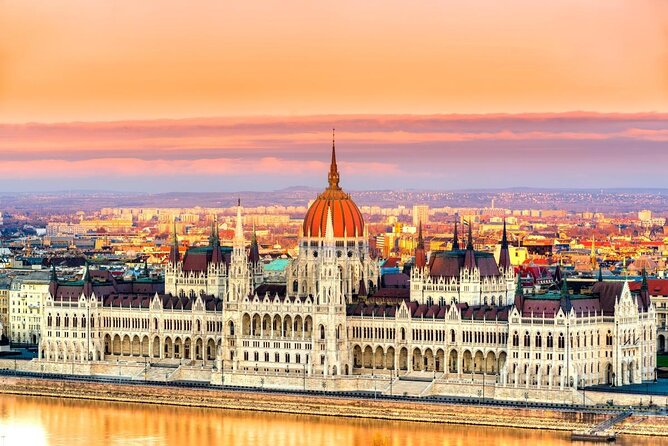
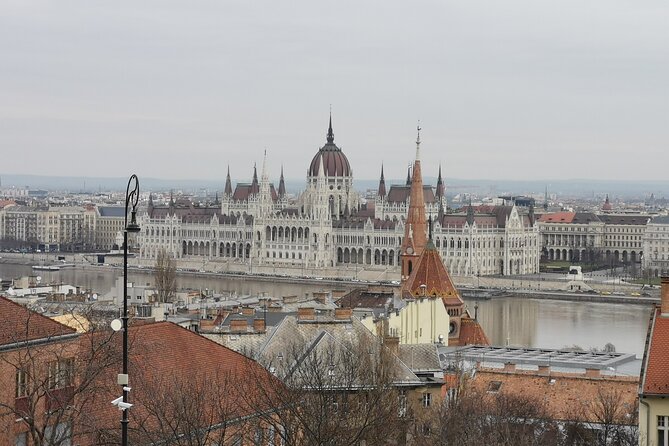
The Hungarian Parliament is presented as one of the world’s most beautiful parliament buildings. The route emphasizes its appearance and political meaning, rather than promising a full interior visit. You should therefore expect to see and discuss the building as part of the city walk, not assume that parliamentary admission is included.
This is a place where a private guide can adjust the level of detail. You might want a simple overview, or you might prefer to ask about the shift from communist rule to democracy. The tour is designed to accommodate that kind of conversation.
Crossing Chain Bridge toward Buda Castle
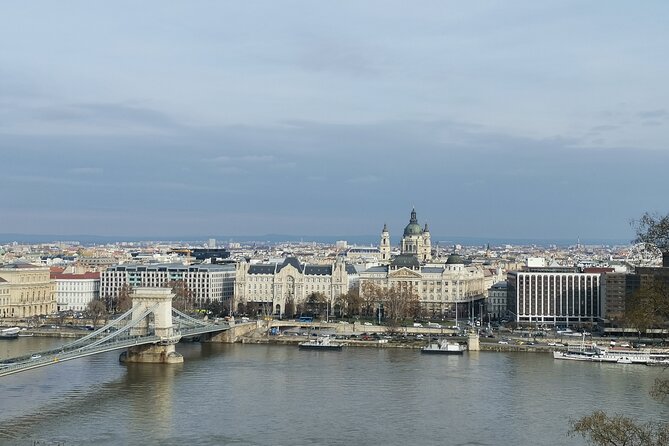
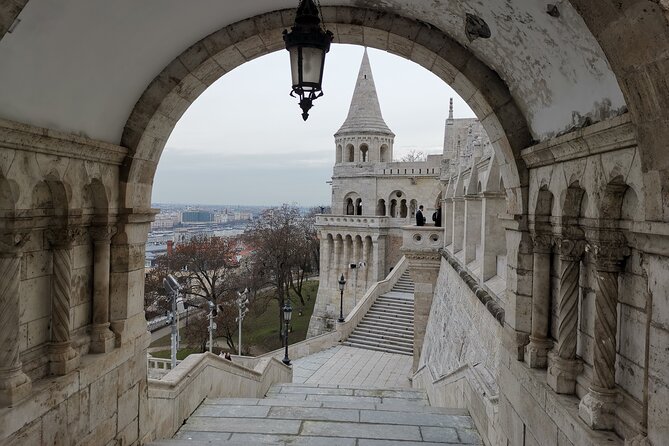
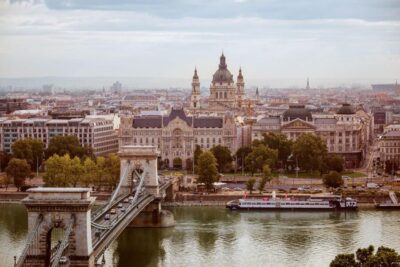
The route then crosses the historic Chain Bridge toward Buda Castle. This is the point where the two halves of Budapest come together most clearly. Pest spreads out on one side of the Danube, while Buda rises toward the medieval castle district on the other.
Buda Castle receives about an hour, the longest scheduled stop. It was the residence of Hungarian kings from the 14th century onward, so the hilltop district adds a medieval chapter to the morning’s earlier political and architectural themes.
The bridge crossing and uphill setting also make this the most physically demanding part of the route. The tour asks for moderate physical fitness, and comfortable shoes are sensible. You should be prepared for several hours on your feet, changing surfaces, and possibly public transport between distant areas.
The hour at Buda Castle gives the guide room to explain the royal setting and the district’s place in Budapest. It also provides a strong finish because you have moved from national origins at Heroes’ Square to royal power in Buda. The tour ends back at the meeting point, so ask the guide about the return arrangements if you are unsure whether the final transfer is on foot or by public transport.
What the guide adds to the experience
The strongest part of this experience is the human connection. The guide is not simply leading you from one landmark to the next. The goal is to explain Hungarian customs, daily life, cuisine, political change, and the stories behind the buildings.
One particularly useful detail comes from the way the tour has been delivered in practice: György, also identified as George Rashad, has taken the route by subway, bus, and tram as well as on foot. That suggests the day can function as both a walking tour and a practical introduction to getting around Budapest.
If you have a specific interest, say so early. The itinerary can be shaped around you, and the route contains more material than four hours can cover in equal depth. You might ask for extra attention to thermal baths, royal history, architecture, food, or the communist period.
The guide’s role is also important because the tour has only a small number of published ratings, despite its top score. That makes it sensible to focus on the stated format and the specific strengths of the route rather than assume that every group will have the same experience. A good guide can make this full morning flow naturally; a rushed guide could make it feel like a checklist.
Who should book this Budapest tour?
I would recommend it most to first-time visitors who want a broad introduction before exploring Budapest on their own. It suits families and groups of friends particularly well because the price is charged per group and the itinerary can be adjusted.
It is also a good fit if you care about context. You will hear about Hungarian origins, royal power, religious tradition, bath culture, architecture, dictatorship, communism, and democracy in one connected route. That range is more valuable than simply collecting photographs of famous buildings.
You may want a different format if you prefer slow museum visits, long café breaks, or a single neighborhood explored in depth. The four-hour schedule is ambitious. You see many major sights, but several stops are brief, and food and drinks are not included.
Hotel pickup is offered, but the listed start point is Deák Ferenc tér. Confirm the pickup arrangement when booking. Public transport tickets are also extra, and the route may use them to connect widely separated sights.
Free cancellation is available if you cancel at least 24 hours before the 9:00 a.m. start time. Cancellations or changes made later are not refunded or accepted, based on the stated policy.
Should you book it?
Book this tour if you want a big-picture introduction to Budapest with a private guide, flexible priorities, and a route that covers both Pest and Buda. The best reasons are the range of sights, the explanation of political change, the bath-culture context, and the chance to travel with a guide such as György Rashad Salamon.
Skip it if your main goal is a leisurely visit inside each landmark or a bathing session at Széchenyi. For most first visits, though, this is a practical way to get oriented, learn how the city fits together, and decide what deserves a longer return visit.
FAQ
How long is the Historical and Cultural Walking Tour in Budapest?
The tour lasts approximately four hours.
What time does the tour start?
The listed start time is 9:00 a.m.
Where does the tour begin?
The meeting point is Deák Ferenc tér in Budapest. Hotel pickup is also offered on foot.
Where does the tour end?
The activity ends back at the meeting point.
Which sights are included?
The route includes Heroes’ Square, Vajdahunyad Castle, City Park, Széchenyi Bath from the outside, Andrássy Avenue, the Hungarian State Opera House, St. Stephen’s Basilica, Liberty Square, the Hungarian Parliament, Chain Bridge, and Buda Castle.
Is the tour private?
The price is listed per group, with a maximum of 10 participants stated in the additional information. The group pricing description says up to 15, so confirm the exact limit before booking.
Are transportation tickets included?
No. Transportation tickets are not included. The guide may use the subway, bus, or tram during the route.
Are food and drinks included?
No. Food and drinks are not included in the tour price.
Can I cancel for a full refund?
Yes, if you cancel at least 24 hours before the experience start time. Cancellations or changes made less than 24 hours in advance are not accepted, and the amount paid is not refunded.
Recently added around Budapest
- Budapest: Private Walking Tour with a Local Guide★ 3.6 · 6 reviews
- From Budapest: Guided Tour of Eger with Wine Tasting★ 4.5 · 6 reviews
- Budapest: City Bike Tour with Coffee Stop★ 5.0 · 37 reviews
- Budapest: Danube River Views Bike Ride★ 4.8 · 23 reviews
- Budapest: Vacation Photographer to collect great memories★ 5.0 · 49 reviews
- Walk to recent and aged spiritual sanctuaries near Budapest★ 5.0 · 5 reviews
- True Crime Walking Tour in the Buda Castle district★ 5.0 · 26 reviews
- Trash Art Museum: Hungary’s First Scrap Metal Exhibition★ 4.3 · 72 reviews
Walking Tours, compared.
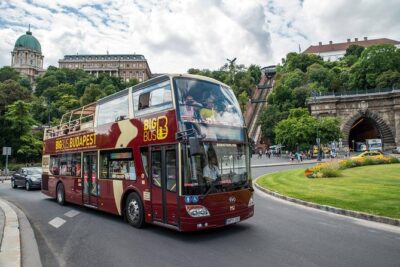
Big Bus Budapest Hop-On Hop-Off Bus and Walking Tour
Read our review →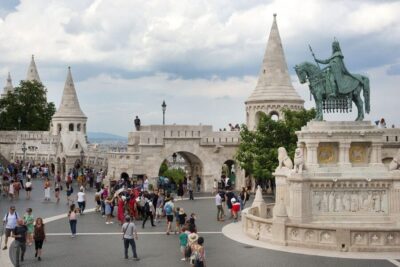
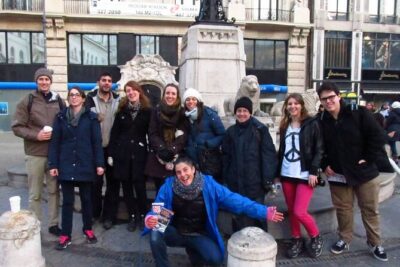
Budapest City Landmarks Walking Tour in 2 Hours
Read our review →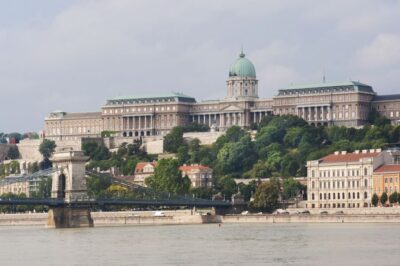
3-Hour Orientation Walking Tour of Buda and Pest
Read our review →
Budapest Historical Sightseeing – Free Walking Tour
Read our review →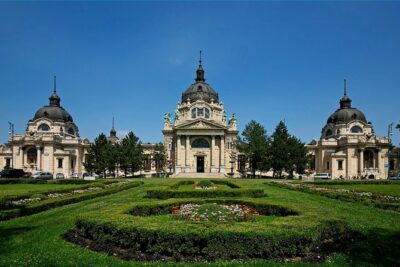
Budapest All in One Small Group Walking Tour with Strudel Stop
Read our review →Browse the lists this tour appears in