Reviewed · TOURS
Café Wandering: An Excursion through Budapest’s Belle Epoque
Budapest’s old cafés were much more than places to drink coffee. They were offices, salons, newsrooms, lecture halls, and meeting places for writers and artists. This three-hour walk shows you that world through Gerbeaud, Central Cafe, Astoria, Művész, and New York Palace, while an art historian explains how the buildings and interiors reflect Budapest’s Belle Epoque.
I especially like two things here: the small group, limited to eight, and the focus on design details that are easy to miss on your own, including the Asian motifs used by Budapest architects. I also like that the tour links café culture with intellectual life, from poets and journalists to public lectures and early cinema.
The main consideration is cost. At $123 per person, your coffee, cake, and other refreshments are not included, so this makes the most sense if you want an informed architectural and cultural walk rather than a casual café crawl. The exact route also deserves confirmation, since the full description names the Urania Café and Kazinczy Street Synagogue in addition to the cafés listed in the formal itinerary.
Key points to know before you book
- Gerbeaud begins the story in Vörösmarty Square: You start at one of Budapest’s best-known historic cafés, where the setting introduces the social world of Imperial Budapest.
- The guide is an art historian: Guides may be professors, doctoral students, historians, journalists, art critics, or published authors. One especially praised guide is named Kota.
- The stops cover more than coffee: You look at architecture, interior decoration, literature, public lectures, cinema, and religious design.
- Asian motifs are part of the lesson: The tour points out how designers used Asian-inspired elements in Budapest buildings and interiors.
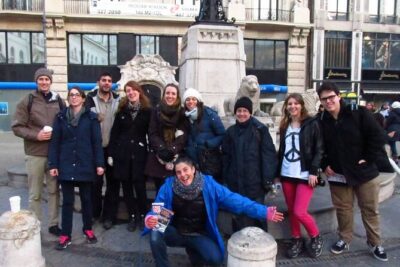
- The group stays small: With no more than eight participants, you should have a better chance to ask questions and see details without being lost in a crowd.
- Café purchases cost extra: The tour fee covers the walk and guide, not drinks, desserts, or cakes at the cafés.
Starting at Gerbeaud in Vörösmarty Square
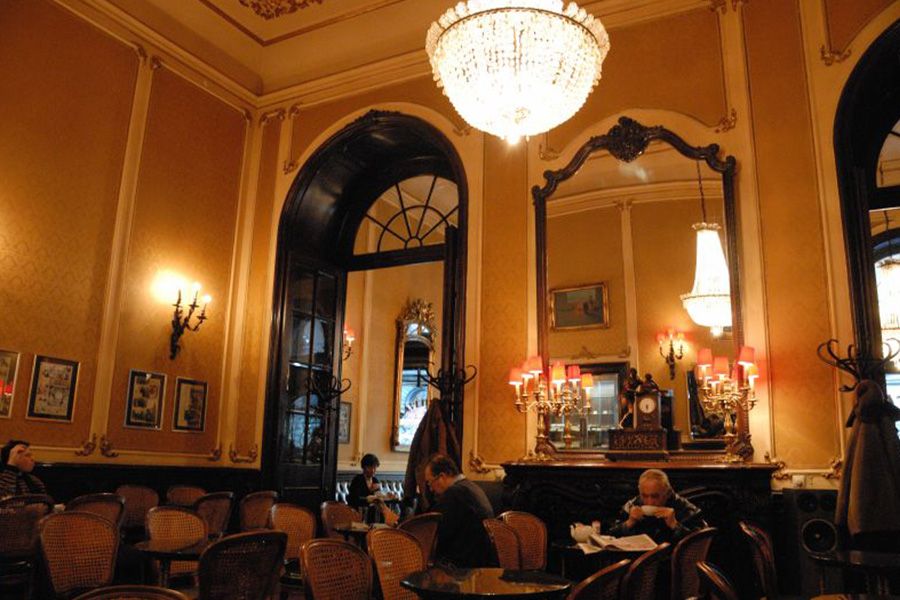
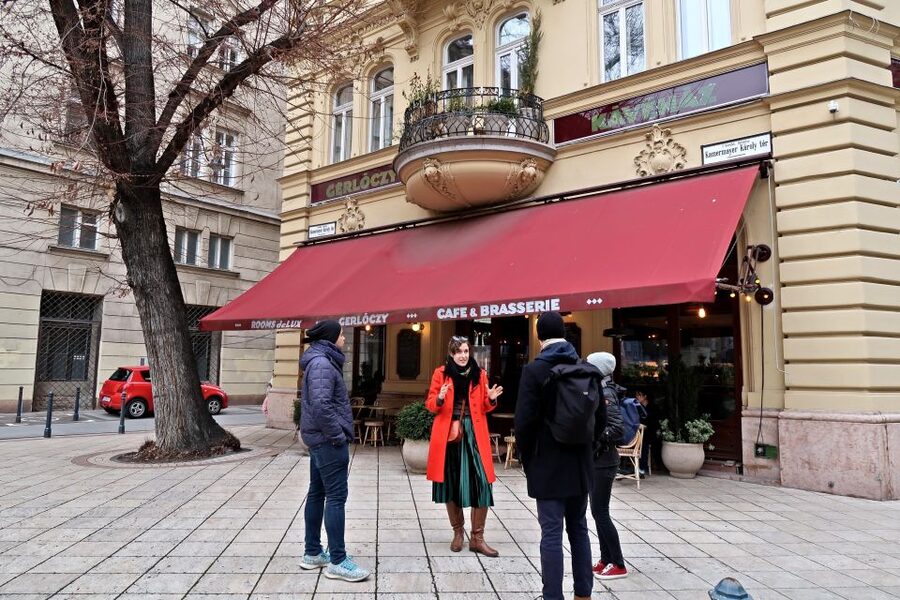
The meeting point is Café Gerbeaud at Budapest’s Vörösmarty tér 7 to 8, in the center of the city. This is a practical starting place because the square is easy to identify and the café immediately gives you the right setting for the tour.
Gerbeaud is presented as your first look at Imperial Budapest, when cafés became central social spaces for both local people and visitors. Its more than 100 years of operation and carefully finished interior make it a useful introduction to the city’s café tradition.
You are not simply stopping for a pastry. The guide uses the café to explain how the room itself shaped social life. Décor, service, food, and conversation all mattered. A café could function as a place to read, write, meet friends, conduct business, or watch the city pass by.
This is also the first point where the price needs some thought. A coffee or cake here is not included, so you should expect to pay separately if you choose to order. That is not necessarily a flaw. Sitting down can help you appreciate the setting, but you should know that the tour fee is for interpretation, not a bundled tasting experience.
A few more Budapest half-days to weigh up
- Budapest: City Highlights Cruise with Welcome Drink
★ 4.6 · 35,610 reviews - Budapest: Unlimited Prosecco, Beer and Aperol Spritz Cruise
★ 4.8 · 25,310 reviews - Budapest: Széchenyi Spa Day Ticket with Optional Upgrades
★ 4.3 · 23,911 reviews
Riding toward Central Cafe and Restaurant 1887
From Gerbeaud, the route continues by tram along the Danube toward Central Cafe. The tram ride breaks up the walking and gives the tour a sense of movement through Budapest rather than keeping you inside one small historic district.
Central Cafe and Restaurant 1887 is tied to the height of Habsburg-era cultural and economic life. The description emphasizes its dignified atmosphere, along with the role played by meals, desserts, drinks, and decoration. Together, these details show how café culture operated as a complete social setting.
I like this stop because it adds context to the phrase café culture. You are not only looking at a pretty interior. You are considering why cafés mattered so much to writers, artists, and intellectuals during the 19th century.
The mood here is more formal than a quick modern coffee stop. That can be part of the appeal, especially if you enjoy historic interiors and social history. If you prefer a tour built around eating and drinking, though, you may find the café visits more observational than culinary.
The grand rooms of Café Astoria
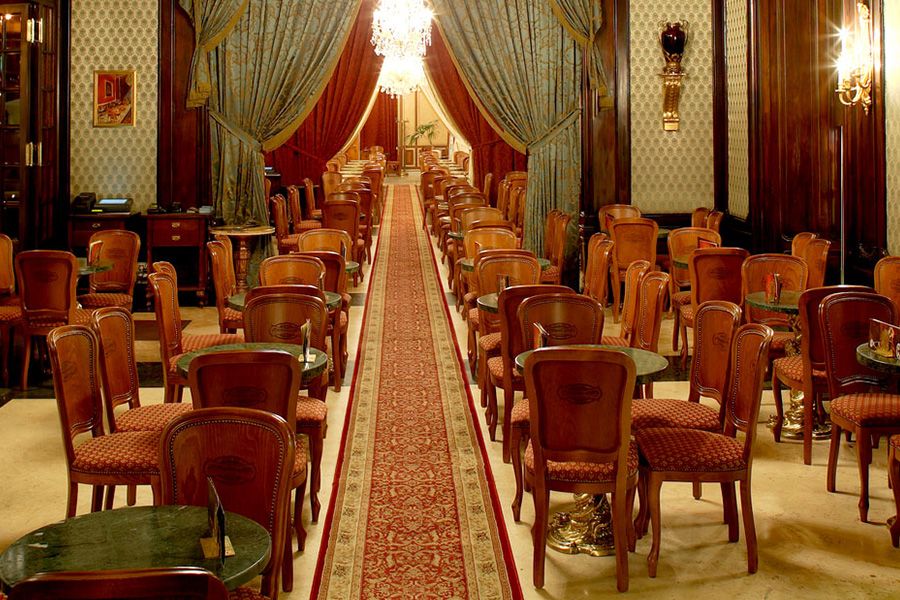
Café Astoria is described as more than a century old and connected with the grandeur of classic European coffee houses. The stop gives you another chance to compare Budapest’s café interiors rather than treating the city’s coffee tradition as one uniform style.
That comparison matters. A good architecture tour helps you notice how rooms differ in scale, ornament, mood, and intended use. Astoria lets you consider the formal side of café life, while Gerbeaud introduces the tour through a more famous and central setting.
The guide’s role is especially important here. You may recognize a large historic room, but an art historian can help explain the design choices and the people who used the space. The supplied guide information lists professors, doctoral students, historians, journalists, art critics, and published authors, so this is not a standard script delivered without context.
The tour description does not promise a reserved table or a full sit-down service at each stop. Plan on seeing the interiors and hearing the stories, with any food or drink purchased separately.
Művész Coffee House and Budapest’s artist tradition
Művész Coffee House, also called the Artist Cafe, appears in the formal visit list. Its name fits the larger theme: Budapest cafés provided working space and meeting points for people connected to art and literature.
This stop should appeal to you if you enjoy the connection between buildings and the people who used them. The point is not only that artists visited cafés, but that cafés helped support a public culture in which writers, critics, journalists, and performers could meet and exchange ideas.
The available information does not specify a particular dessert, room, or artist connected with Művész, so I would not book this expecting a fixed tasting menu or a single famous anecdote. The value is in the guide’s explanation of the café tradition and in seeing another historic setting within the same three-hour route.
A completely different kind of day out in Budapest:
- Budapest: Nighttime or Daytime Sightseeing Cruise
★ 4.2 · 21,062 reviews - Budapest: 1-Hour Evening Sightseeing Cruise with Drink
★ 4.5 · 8,330 reviews - Budapest Danube Cruise and Dinner Options, Live Music and Dance
★ 4.5 · 7,428 reviews - Budapest: Historic Cruise with Welcome Drink
★ 4.7 · 6,512 reviews
New York Palace and the height of café glamour
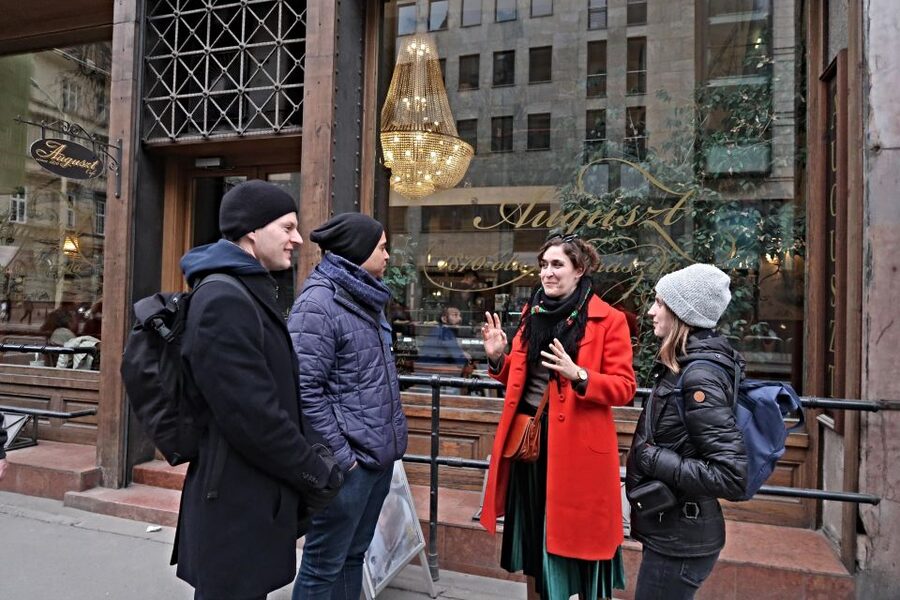
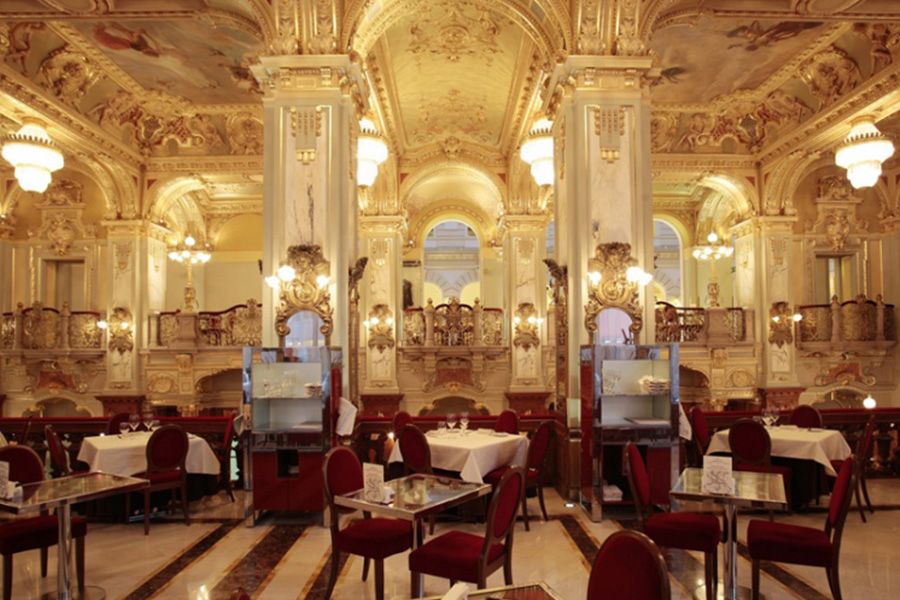
New York Palace Café is listed as a guided stop and is likely to be one of the tour’s biggest visual moments. The name is closely tied to grand Budapest café culture, and the tour places it within a broader look at Belle Epoque architecture.
Here, pay attention to the walls, ceiling, columns, and decorative details rather than rushing straight to the menu. The tour’s central idea is that the café was an important public interior, and New York Palace helps show how much care went into creating that atmosphere.
The description also highlights lavish walls at the Museum Cafe. Because the supplied details name both New York Palace and the Museum Cafe, you should confirm the exact stops and order when booking. The formal itinerary lists New York Palace, while the longer route description refers to additional cafés and the Museum Cafe. That difference may reflect a route variation, but the published information does not explain it.
Urania, lectures, and early film culture
The longer route description includes Urania Café on Rákóczi Street. This stop adds a different layer to the tour because the building houses Budapest’s oldest film theater and is associated with lectures by prominent intellectuals before large audiences.
That makes Urania more than another ornate coffee room. It connects café culture with public education, film, and large-scale intellectual events. You get a sense of how Budapest’s cultural life moved between private conversation in cafés and formal presentations before an audience.
The information does not place Urania in the formal five-stop itinerary, so treat it as a possible part of the route rather than a guaranteed stop unless the provider confirms it. Still, its inclusion explains why this experience is broader than a parade of historic interiors.
Asian design details and the final synagogue
One of the more distinctive promises is a look at Asian motifs and elements used by Budapest designers. This is the kind of detail you may miss if you simply walk past the façades or order coffee inside. The guide points your attention toward design influences that may not be obvious at first glance.
The longer description ends at the art nouveau Orthodox Kazinczy Street Synagogue. This gives the walk a strong architectural finish. It also broadens the subject beyond café culture, showing how Budapest’s designers applied decorative ideas across religious and civic buildings.
The wording presents the synagogue as the conclusion of the experience, while the formal itinerary ends with New York Palace Café. Since both versions are supplied, confirm the final stop before you go. If Kazinczy Street Synagogue is included, it adds a particularly interesting contrast to the grand cafés: one is a place of social exchange and public culture, the other a religious building shaped by art nouveau design.
What the three-hour format means for you
Three hours is long enough to build a connected story without taking up an entire day. You move between several locations, hear about the people who used them, and look at architecture in more than one neighborhood.
The pace should suit you if you like walking with regular stops for explanation. It may feel less satisfying if you want extended time to sit in every café, order several courses, or take long independent photo sessions. The tour has a lot to cover, so some stops will be viewed as part of the overall story rather than treated as full visits.
The tram segment along the Danube is useful because it reduces some of the walking and connects the opening café with the central cultural district. The available details do not say whether transportation tickets are included, so check that point before departure.
Groups are capped at eight people. That is a real advantage for architecture, since a smaller group can gather around a detail and ask questions without blocking a large public space. It also makes the guide’s expertise more useful to you. You can ask about a decorative motif, a café custom, or a building’s cultural role instead of simply listening from the back.
The guide makes or breaks this experience
This tour depends heavily on the person leading it. A basic guide can point out ornate walls. A strong art historian can explain why those walls matter, how the café system worked, and what design choices reveal about Budapest at the height of the Habsburg era.
The guide pool includes academics and writers, and a past booking specifically names Kota as an excellent guide. You cannot assume Kota will lead your departure, but the detail gives you a useful sense of the kind of guide the experience aims to provide.
The tour is offered in English only. That makes the guide’s storytelling and clarity especially important for English-speaking visitors. The small group should help, but the subject includes architecture, literature, religious design, and social history, so you should be comfortable following a fairly content-heavy walk.
Is $123 a fair price?
At $123 per person, this is not a cheap coffee tour. You pay for a three-hour private-feeling experience in a group of no more than eight, led by an art historian, with access to a carefully planned cultural theme.
The price makes better sense if you would otherwise spend hours trying to identify the important buildings and understand their connections on your own. It also suits you if you value specialist interpretation more than included food. The fee does not cover coffee, cakes, desserts, or other refreshments, so add that cost if you plan to order at the cafés.
For a visitor who wants a quick introduction to Budapest’s café interiors, the price may feel high. For someone interested in architecture, Belle Epoque society, writers, and design, the focused subject and small group offer stronger value.
The activity allows cancellation up to 24 hours before the start for a full refund, and you can reserve now and pay later. Those policies help if your Budapest schedule is still changing, but the main booking decision remains the same: are you paying for drinks, or are you paying for expert interpretation? Here, it is clearly the latter.
Who should book this café walk?
I would recommend it to you if you enjoy:
- Historic interiors and decorative architecture
- Literary and artistic connections
- Habsburg-era Budapest
- Small-group walking tours
- Art nouveau and unusual design details
- Guided cultural experiences rather than food tastings
It is less suited to you if you want a relaxed café breakfast, a guaranteed tasting menu, or long free time at each venue. It is also worth checking the final route if you have your heart set on Urania, the Museum Cafe, or Kazinczy Street Synagogue, since the supplied route descriptions do not list every stop in the same way.
Should you book Café Wandering?
Book this experience if you want Budapest’s grand cafés explained as part of the city’s cultural life, not just photographed as pretty rooms. The strongest features are the small group of eight, the art historian guide, and the attention to details such as Asian design motifs and the connection between cafés, writers, lectures, and film.
At $123, it asks for a serious budget, especially since refreshments cost extra. I would choose it for a first or second Budapest visit when you want a focused architecture lesson and a guide who can connect several historic places into one clear story. Before paying, confirm the exact route and whether your departure includes Urania, the Museum Cafe, and Kazinczy Street Synagogue.
FAQ
Where does the tour begin?
The tour begins at Café Gerbeaud, Budapest Vörösmarty tér 7 to 8, 1051.
How long does the experience last?
The guided walk lasts three hours.
What language is the tour offered in?
The tour is offered in English.
What type of guide leads the walk?
The guide is an art historian. Guides may be professors, doctoral students, historians, journalists, art critics, or published authors.
How large is the group?
The group is limited to eight participants.
Is Café Gerbeaud included in the tour?
Yes. Café Gerbeaud is the starting point and the first café described in the route.
Which cafés are listed as formal itinerary stops?
The formal itinerary lists Central Cafe and Restaurant 1887, Café Astoria Restaurant, Művész Coffee House, and New York Palace Café, along with Café Gerbeaud as the starting point.
Are drinks, cakes, and desserts included?
No. Refreshments, cakes, coffees, and other items selected at the cafés are not included.
Is transportation included?
The route includes a tram ride along the Danube, but the supplied activity details do not state whether a tram ticket is included.
Can I cancel the booking for a refund?
Yes. You can cancel up to 24 hours in advance for a full refund.
Recently added around Budapest
- Budapest: Private Walking Tour with a Local Guide★ 3.6 · 6 reviews
- Budapest: City Bike Tour with Coffee Stop★ 5.0 · 37 reviews
- Budapest: Danube River Views Bike Ride★ 4.8 · 23 reviews
- From Budapest: Guided Tour of Eger with Wine Tasting★ 4.5 · 6 reviews
- Budapest: Vacation Photographer to collect great memories★ 5.0 · 49 reviews
- Walk to recent and aged spiritual sanctuaries near Budapest★ 5.0 · 5 reviews
- Trash Art Museum: Hungary’s First Scrap Metal Exhibition★ 4.3 · 72 reviews
- Budapest: Multilingual Highlights Tour★ 4.8 · 89 reviews
Tours, compared.

City Sightseeing Hop-On Hop-Off Bus Tour & Extras
Read our review →
Buda Castle District Vampires and Myths Night Tour
Read our review →
Big Bus Hop-On Hop-Off Tour & Danube River Cruise
Read our review →
Big Bus Budapest Hop-On Hop-Off Bus and Walking Tour
Read our review →