
Reviewed · DANUBE RIVER CRUISES
Budapest: Danube River Views Bike Ride
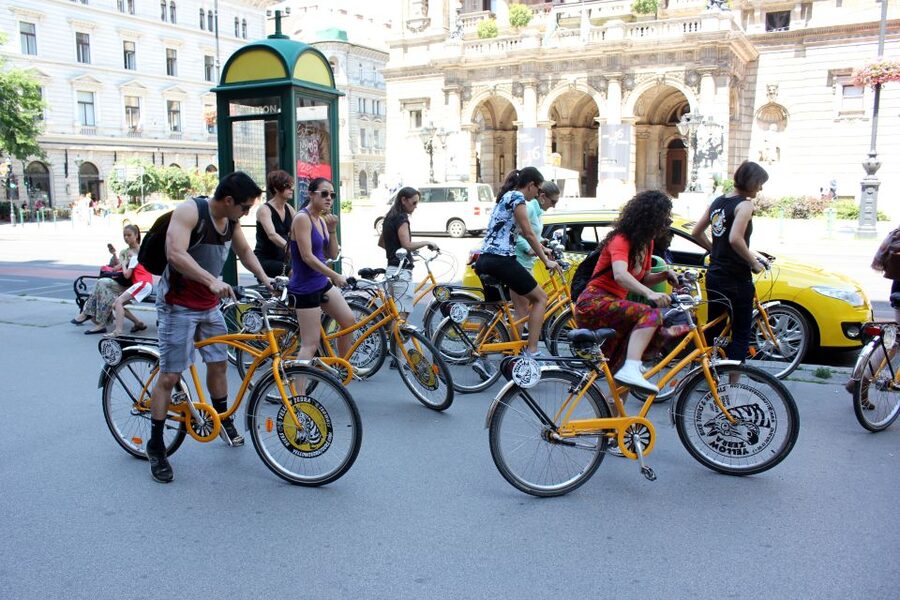
Budapest makes sense from a bicycle seat. In 2.5 hours, you cross the Danube, ride both Buda and Pest, and connect grand sights that can feel scattered when you explore only on foot. The route takes in Parliament, Chain Bridge, and St. Stephen’s Basilica, along with the Opera House and the Danube promenades.
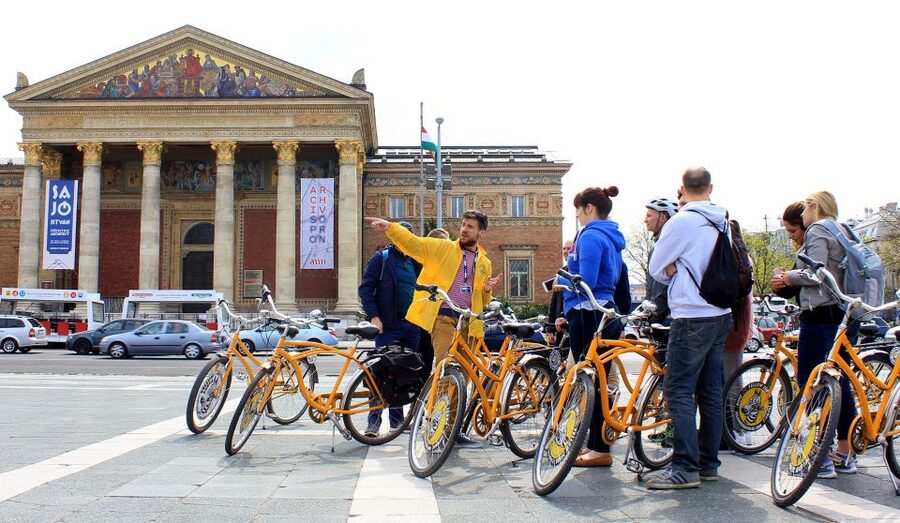
I like the small group limit of 10, which gives you a better chance to hear the guide and ask questions. I also like the human touch: guides Beka and Becker have been singled out for their stories, humor, and clear grasp of Budapest’s past. The main caution is that this is light but mostly continuous cycling, with some uphill sections, and the tour runs in all weather.
Key points at a glance
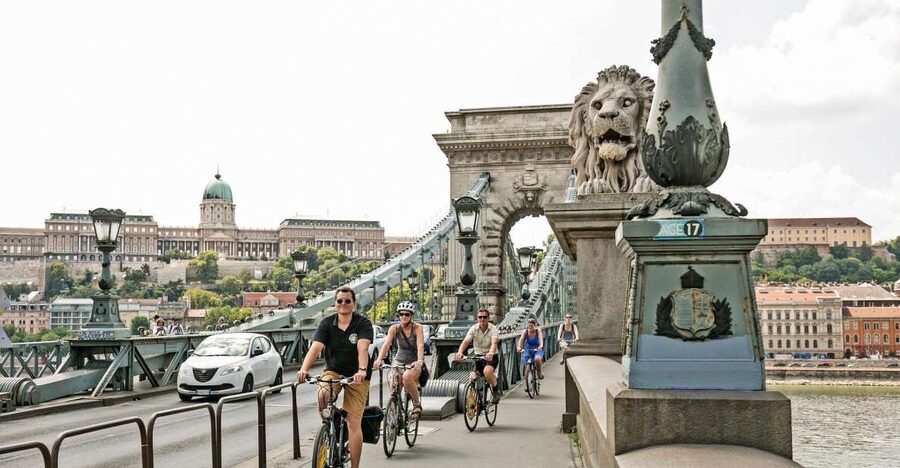
- Crosses the Danube twice: Ride over Margit Bridge to Buda, then return to Pest across Elisabeth Bridge.
- Covers both sides of Budapest: See riverfront paths, central Pest, Buda viewpoints, bridges, squares, and thermal baths.
- Includes famous architecture: Pass the Opera House, Parliament, St. Stephen’s Basilica, the Great Synagogue, and Chain Bridge.
- Small English-speaking group: The maximum group size is 10, with room for questions and guide-led stories.
- Good first look at the city: The route links many major sights before you spend more time at the ones you want to enter.
- Requires steady pedaling: Expect short breaks, some hills, and riding in changing weather.
Why a bicycle works so well in Budapest
Budapest is divided by the Danube, but the city’s major sights are not all lined up neatly on one side. Pest spreads across the flatter eastern bank, while Buda rises on the west. A bicycle lets you see the contrast without spending your first day figuring out trams, bridges, and walking routes.
This ride is not a race. The description calls it leisurely, though you should expect mostly continuous movement with short breaks. That makes it a good orientation tour rather than a stop-and-stare museum visit. You will hear the guide explain what you are seeing, then keep moving toward the next landmark.
The small group matters here. A group capped at 10 is easier to manage on city streets than a large procession of bikes. It also gives you a fair chance to catch the guide’s comments, especially when the road noise rises near bridges and central streets.
The route is designed for sightseeing, not athletic training. Still, it is not completely flat. One earlier rider specifically noted uphill sections, so I would not book this if you want a gentle pedal with long rests. If you are comfortable riding for up to three hours, the effort should be manageable. The operator can also arrange a more strenuous ride for people seeking extra exercise.
More Danube sightseeing cruises:
- Budapest: Nighttime or Daytime Sightseeing Cruise
★ 4.2 · 21,062 reviews - Budapest: 1-Hour Evening Sightseeing Cruise with Drink
★ 4.5 · 8,330 reviews - Budapest Danube Cruise and Dinner Options, Live Music and Dance
★ 4.5 · 7,428 reviews
Starting near Karoly korut in central Pest
You meet at Yellow Zebra Bikes & Segways, at Karoly korut 16, inside the courtyard. Look for doorbell 6. This location puts you in central Pest, close to the city’s main sights and a practical place to begin a route that soon reaches the Danube.
Your bike hire is included, and a helmet is optional. Wear shoes you can pedal in comfortably, along with clothing suited to the weather. The tour goes ahead in all weather, so rain or a cool breeze is not normally a reason for a refund or a change of date.
Food and drinks are not included. Neither are museum or attraction tickets, or public transport to and from the meeting point. That keeps the $41 price focused on the bike, guide, and route, but budget separately if you plan to visit the Opera House, museums, or baths after the ride.
Andrassy Avenue, the Opera House, and central Pest
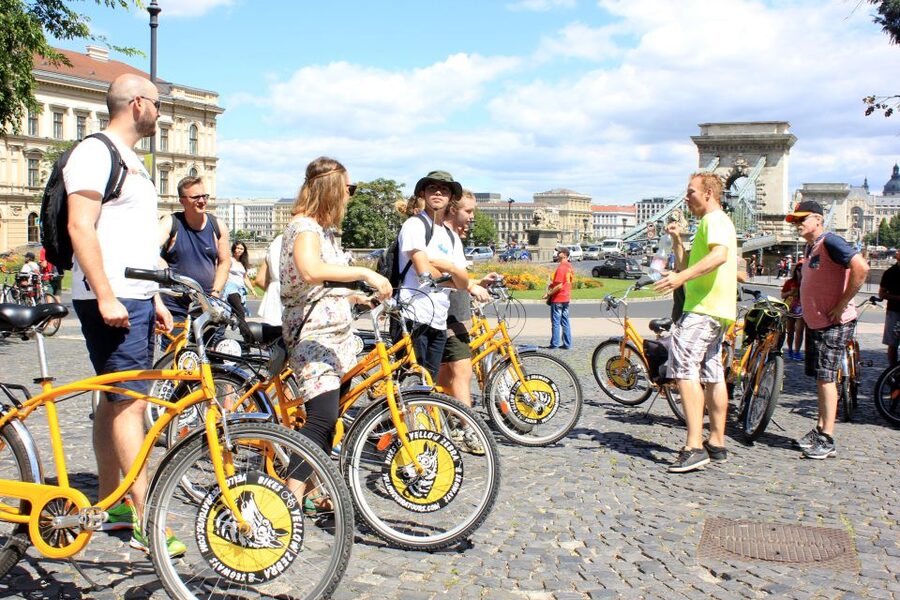
One of the early or later highlights is Andrassy Avenue, Budapest’s grand boulevard and a UNESCO World Heritage Site. It is a fitting place to begin understanding the city’s old imperial ambitions. The avenue leads toward the Hungarian State Opera House, a 19th-century building known for its ornate European design.
The tour concludes back near Andrassy Avenue, so you can return to the Opera House afterward if you want more than an exterior view. Entrance is not included, and the ride itself does not function as an Opera House tour. Think of it as a useful preview that helps you decide where to spend your own time.
The route also passes the Great Synagogue and St. Stephen’s Basilica. These are not minor sights to fill space between stops. They help show the range of Budapest’s architecture and religious history. You will see the city’s grand scale without having to commit to an indoor visit during the bike ride.
St. Stephen’s Basilica is especially useful as a landmark because it sits in the heart of Pest. From the bike, you get the setting and exterior impression. If you want to go inside, climb, or spend time studying the building, plan a separate visit.
Liberty Square and Parliament by the Danube
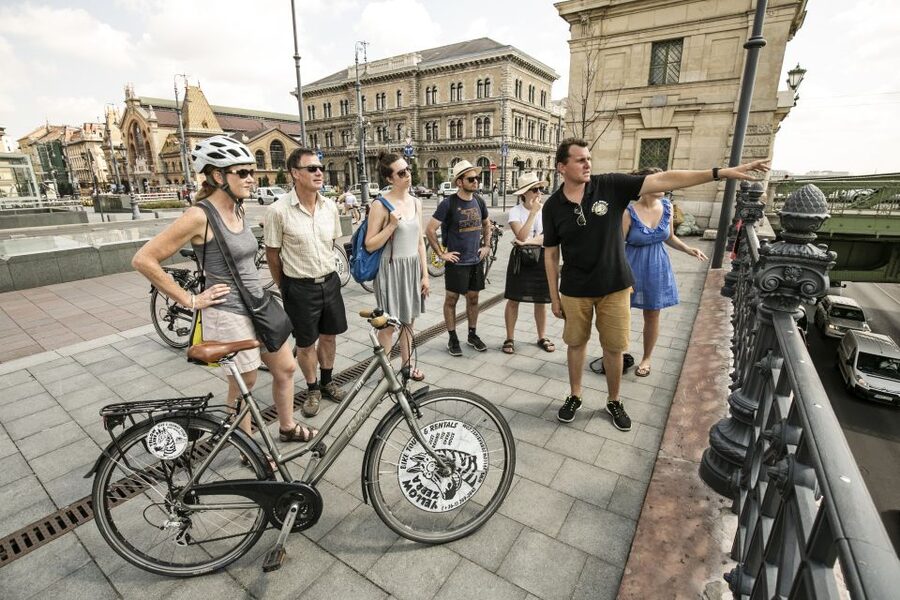
The ride continues toward Liberty Square and the Parliament building. Liberty Square gives the guide room to explain political events and changing power in Hungary, while Parliament supplies one of the city’s most memorable riverfront views.
This is one of the places where cycling saves time. You can approach the area, hear the essential story, and continue along the river rather than spending much of your short tour locking bikes and waiting for a long walking group to gather.
You should not expect an interior Parliament visit. Entrance fees are not included, and the experience is built around seeing the building from the city streets and riverfront. That is still valuable, especially early in your stay, because you will learn where Parliament sits in relation to the bridges, promenades, and Buda bank.
More bike tours in Budapest:
- Budapest: Grand Sightseeing Bike Tour
★ 4.8 · 984 reviews - Budapest Highlights Bike Tour
★ 5.0 · 770 reviews - Budapest: Guided City Discovery Bike Tour
★ 4.7 · 702 reviews - Budapest: Guided Downtown Electric Bike Tour
★ 4.9 · 595 reviews
Crossing Margit Bridge into Buda
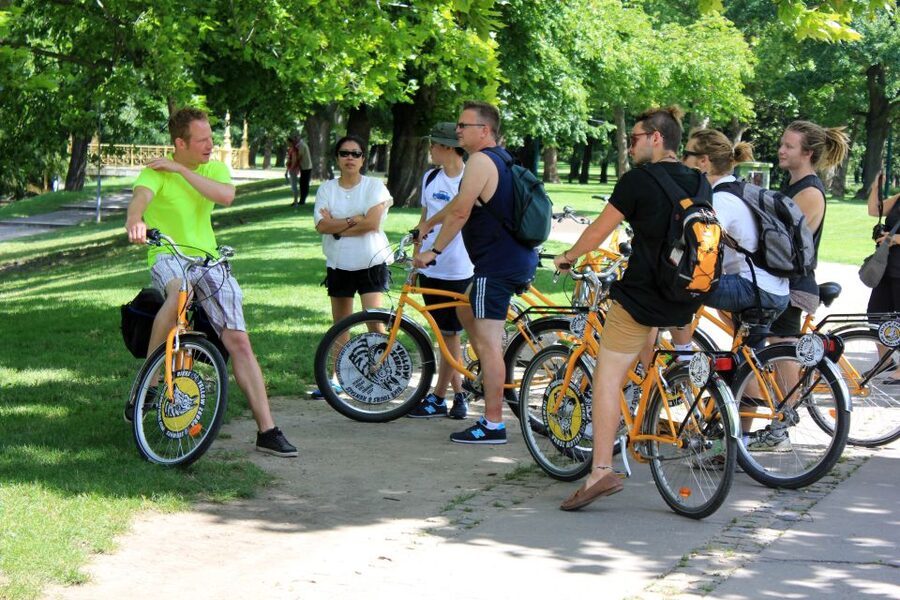
The route crosses Margit Bridge to Buda. This is more than a convenient connection between sightseeing stops. It gives you the classic Budapest experience of moving from the broad, level streets of Pest to the western bank, where the city rises toward its historic districts.
The guide uses the crossing to explain Buda’s long record of sieges and conquests. The area was shaped by Ottoman expansion and repeated battles, and the city suffered severe population loss during those periods. That background adds meaning to the old bridges and riverfront views. You are not just pedaling past attractive buildings. You are following the line along which armies, merchants, and residents moved for centuries.
The route does not promise an extended visit inside Buda Castle or its museums. Instead, it gives you a broad introduction to Buda and its place in the city. If the hill sections are a concern, remember that the ride is described as light but continuous, not effortless.
Chain Bridge, Elisabeth Bridge, and the river crossings
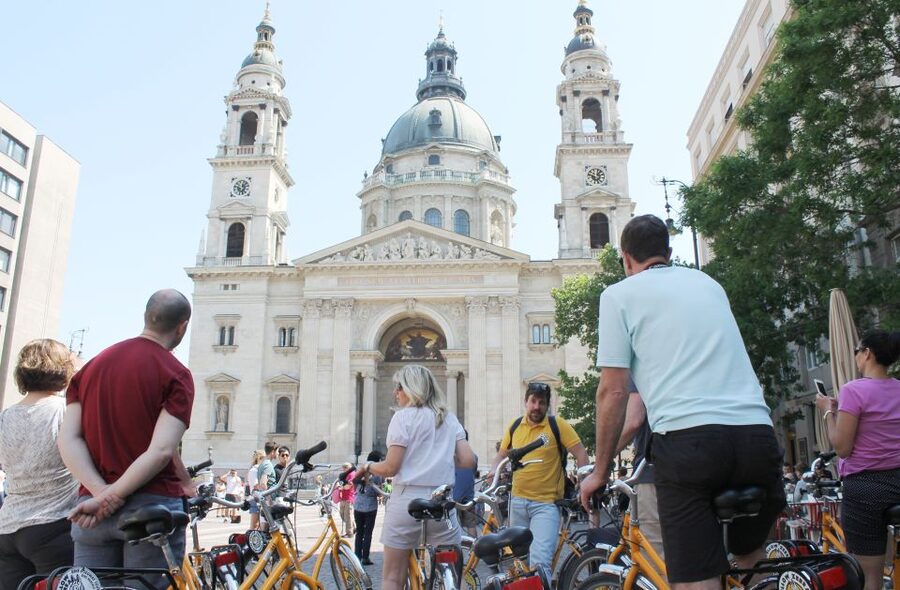
Budapest’s bridges are part of the tour’s main appeal. You pass the Széchenyi Chain Bridge and later cross Elisabeth Bridge back to Pest. Each crossing changes your view of the Danube and helps you understand how the two halves of the capital fit together.
Chain Bridge is the city’s best-known crossing, with a story tied closely to Budapest’s development and identity. From the bike, you experience it as working city infrastructure as well as a landmark. That is often more useful than seeing it only from a distant lookout.
Elisabeth Bridge offers a different angle on the river and the hills beyond. The two crossings make the route feel like a proper city ride rather than a short loop around one neighborhood. You see the water, the opposite bank, and the changing relationship between the city and its bridges.
The practical drawback is traffic and movement. Bridges and central streets are not quiet parks. Pay attention to the guide and road conditions, and expect the pace to adjust to the city around you.
Clark Adam Square, Hotel Gellert, and Rudas Baths
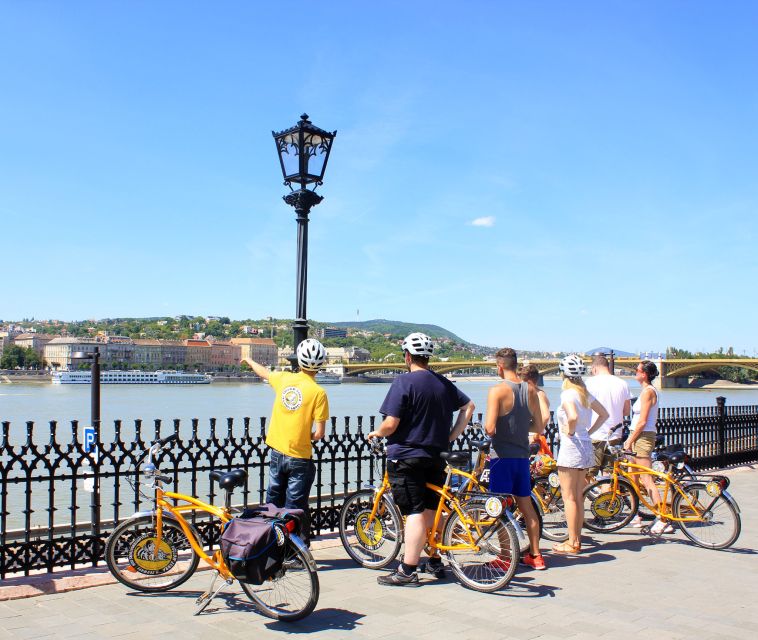
On the Buda side, the ride reaches Clark Adam Square, a key point near the Chain Bridge and the route toward the castle district. The square helps tie together the bridge, river, and hill in one view. It is a useful stop for orientation even if you do not go farther into Buda during this tour.
The route also passes the Hotel Gellert and Rudas Thermal Baths. These stops introduce two different sides of Budapest. The hotel represents the city’s grand historic character, while the baths point to the everyday pleasure of thermal bathing that is part of Budapest culture.
Again, this is a viewing tour, not a spa visit. Bath entrance is not included, and the schedule does not allow for a soak during the ride. If Rudas or another bath interests you, note it as a separate activity for later.
The combination of bridges, squares, hotels, and baths is one of the route’s strengths. You get a broader picture than a list of monuments alone. Budapest is not only Parliament and old churches. It is also a river city with a strong bathing tradition and a history shaped by movement across the water.
Returning to Pest and the final sights
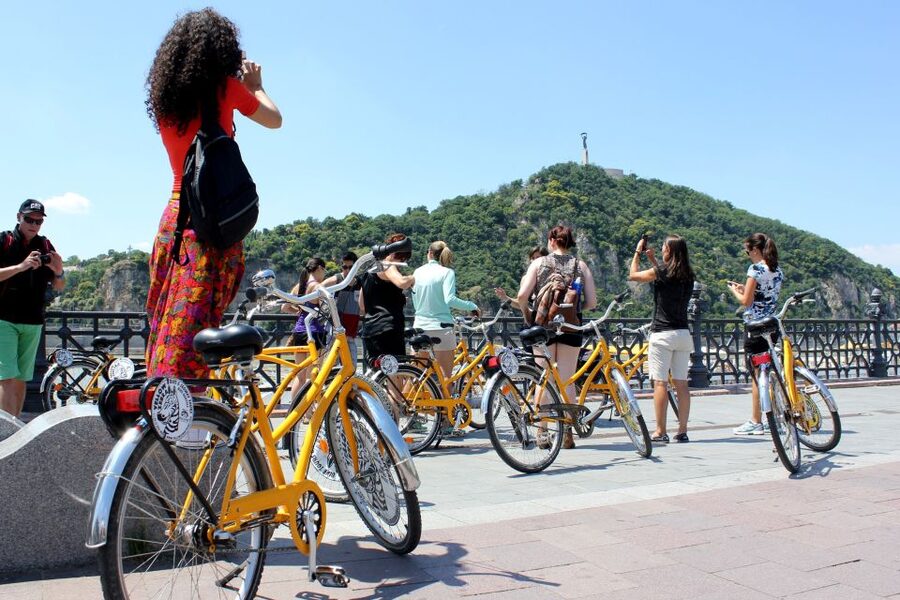
After Buda, you cross Elisabeth Bridge and return to Pest. The final section brings you back through the downtown area and toward Andrassy Avenue, completing a loop across both halves of Budapest.
This return is useful because it leaves you near places you may want to revisit on foot. You can continue to the Opera House, explore central Pest, or use the ride’s orientation to plan the rest of your visit. The tour does not include transport afterward, so make sure you know where you want to go next.
The route also helps you judge distances. A map can make Parliament, the basilica, the bridges, and the Opera House look close together. Cycling between them shows how the city actually connects. You will have a better sense of which areas deserve a relaxed walk and which are easier to reach by public transport.
The guides make the difference
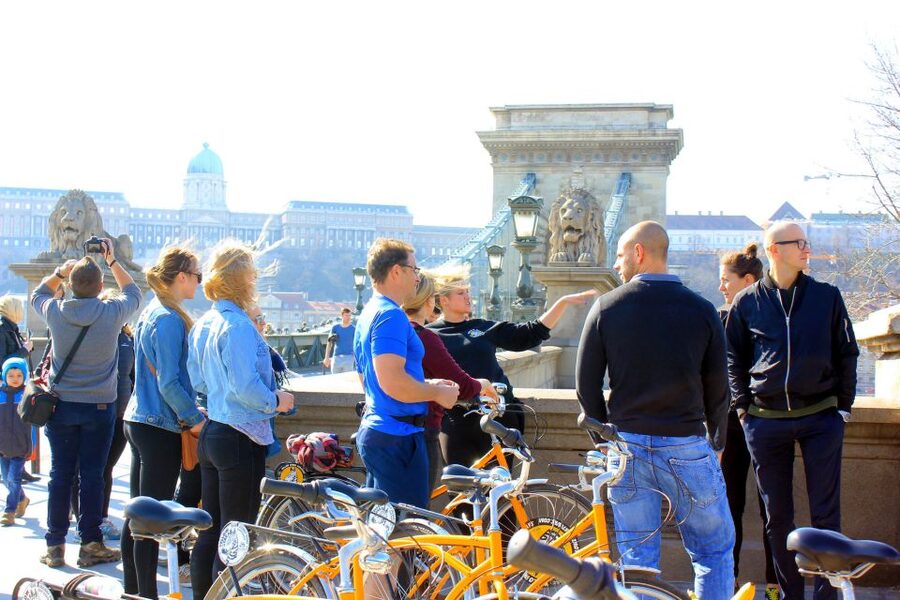
A city bike route succeeds or fails on the guide. The strongest comments about this experience focus on Beka and Becker, both praised for making the ride informative, funny, and easy to follow. That is important because the tour covers a lot of ground in a short time.
The guide’s job is not just to name buildings. The route includes sieges, Ottoman expansion, bridge stories, political history, architecture, and local culture. A good explanation turns a sequence of sights into a connected story.
Names and guide assignments can change, so you should not assume Beka or Becker will lead every departure. Still, the available feedback gives you a useful sense of what the company aims to provide: a personable English-speaking guide who keeps the history lively instead of turning the ride into a string of dates.
One practical note: a scheduling mix-up once resulted in an e-bike tour instead of a standard bike tour. The rider still enjoyed the outing but found the change unexpected. If the type of bicycle matters to you, confirm it at the start. The included offer is bike hire with an optional helmet, but the exact bike can be worth checking before you set off.
Is $41 a good value?
At $41 per person, this is a fair price for a 2.5-hour guided ride with bike hire and a small group. You are paying for the route design as much as for the bicycle. Connecting both banks, several bridges, Andrassy Avenue, the Parliament area, central Pest, Buda, and the thermal baths would take more planning on your own.
The value is strongest if you are new to Budapest or have limited time. In one outing, you can identify the areas you want to revisit and hear enough background to make later sightseeing more rewarding.
The value is weaker if you already know the city well, dislike guided schedules, or want long visits inside attractions. No food, drinks, entrance fees, or public transport are included. The tour is an overview, not a substitute for a full day at the Opera House, Parliament, a museum, or a thermal bath.
Free cancellation is available up to 24 hours before the start, and you can reserve now and pay later. Those terms make it easier to fit the ride into a changing Budapest schedule, though bad weather does not bring a refund or exchange.
Who should book this bike ride?
I would choose this for a first or second day in Budapest, especially if you want to get your bearings quickly without spending hours underground or on foot. It suits adults and anyone aged 12 or older who can ride steadily and handle short uphill sections.
It is also a good match for visitors who enjoy history but do not want a lecture. The best part is the link between movement and story: you cross the river while learning why the bridges matter, ride into Buda while hearing about sieges, and return to Pest with a clearer sense of the city’s shape.
I would think twice if you need frequent rests, dislike riding near city traffic, or are hoping for a relaxed photo stop at every landmark. The ride proceeds in all weather, and the schedule covers a lot of ground. It is active sightseeing, even if the pace is described as leisurely.
Should you book the Budapest Danube bike ride?
Book it if you want a compact, useful introduction to Budapest with an English-speaking guide, a maximum group of 10, and a route that crosses both sides of the Danube. The combination of Parliament, the bridges, Buda, the baths, Andrassy Avenue, and the Opera House gives you a broad first look for $41.
Skip it if you want interior visits, a flat and restful ride, or complete control over your timing. For most reasonably fit visitors, though, this is a practical way to see the city’s major framework before exploring the individual sights on your own.
FAQ
How long is the Budapest Danube bike ride?
The tour lasts 2.5 hours. The activity information also notes that participants should be prepared for light but mostly continuous biking with short breaks for up to three hours.
What language is the tour conducted in?
The live tour guide speaks English.
How large is the group?
The group is limited to 10 participants.
What sights are included on the route?
The route includes views of the Opera House, the Great Synagogue, St. Stephen’s Basilica, Liberty Square, Parliament, Margit Bridge, Chain Bridge, Elisabeth Bridge, Clark Adam Square, Hotel Gellert, and Rudas Thermal Baths.
Does the ride cross the Danube?
Yes. You cross Margit Bridge from Pest to Buda, then return to Pest across Elisabeth Bridge.
Is bike hire included?
Yes. Bike hire is included, and a helmet is available as an option.
Are attraction entrance fees included?
No. Entrance fees to sights and museums are not included. Food, beverages, and public transport to and from the start and end points are also excluded.
What is the minimum age?
Children under 12 are not suitable for this tour. Participants should also be fit and able to manage light, mostly continuous biking with short breaks.
Recently added around Budapest
- Budapest: Private Walking Tour with a Local Guide★ 3.6 · 6 reviews
- From Budapest: Guided Tour of Eger with Wine Tasting★ 4.5 · 6 reviews
- Budapest: City Bike Tour with Coffee Stop★ 5.0 · 37 reviews
- Budapest: Vacation Photographer to collect great memories★ 5.0 · 49 reviews
- Walk to recent and aged spiritual sanctuaries near Budapest★ 5.0 · 5 reviews
- Trash Art Museum: Hungary’s First Scrap Metal Exhibition★ 4.3 · 72 reviews
- Budapest: Multilingual Highlights Tour★ 4.8 · 89 reviews
- True Crime Walking Tour in the Buda Castle district★ 5.0 · 26 reviews
Danube River Cruises, compared.
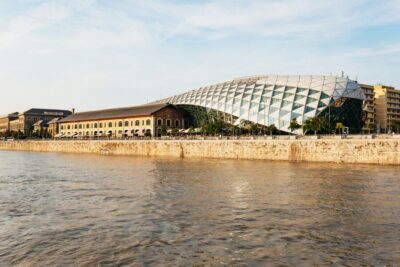
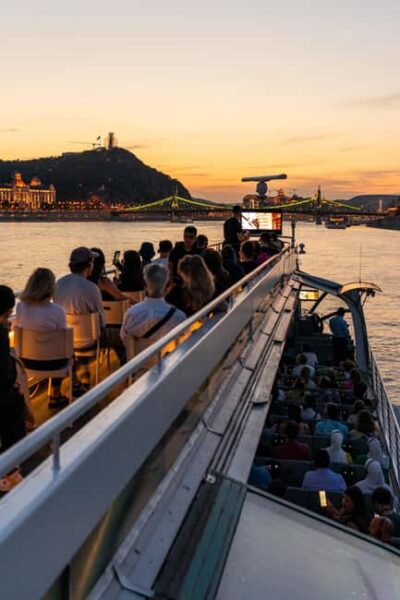

Budapest Danube Cruise and Dinner Options, Live Music and Dance
Read our review →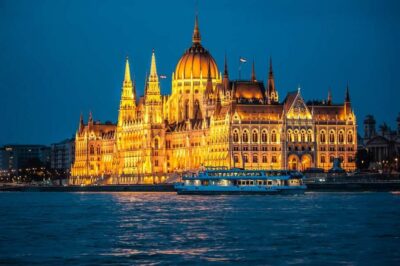

Evening Cruise including Drinks and Live Music
Read our review →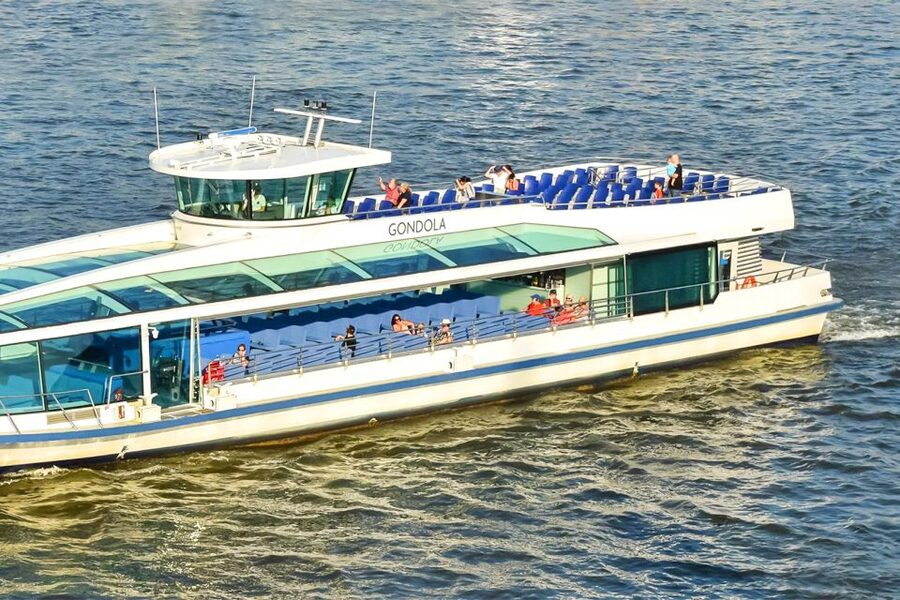
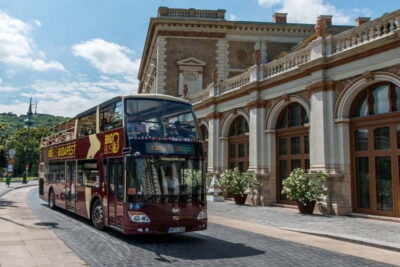
Big Bus Hop-On Hop-Off Tour & Danube River Cruise
Read our review →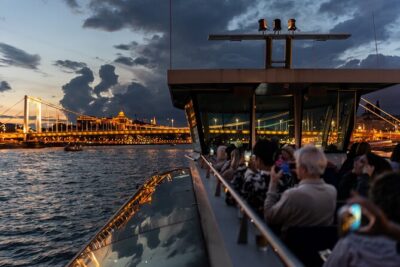
Budapest Danube River Sightseeing Night Cruise with Drink
Read our review →Browse the lists this tour appears in