

Reviewed · BUDA CASTLE TOURS
Budapest: Castle District Walking Tour
Buda Castle Hill packs royal power, Ottoman rule, wartime destruction, quiet lanes, and some of Budapest’s best views into one uphill walk. This tour helps you make sense of it all without wasting time deciding which courtyard, terrace, or church to find next. Matthias Church and Fisherman’s Bastion are the headline sights, but the smaller details give the walk its character.
I like the way the route mixes big landmarks with less obvious stops, including the medieval Jewish Prayer House, public art mini monuments, and the underground caves beneath the hill. I also like the guides’ practical touch. Gary, Rita, Dora, Boulash, Andras, and others are praised for clear explanations, humor, patience, and restaurant tips. The main drawback is the climb: stairs and a 10-minute uphill walk make this a poor fit for wheelchair users and anyone who dislikes hills.
Key points to know before you book
- The meeting point is easy to find: Look for the royal-blue flag at the Batthyány tér metro exit, about 15 to 30 meters from St. Anna Church.
- The route covers the major sights: Expect the Royal Palace, Matthias Church, Fisherman’s Bastion, Maria Magdalena Church Tower, terraces, monuments, and more.
- The history goes beyond kings: You’ll hear about German, Jewish, and Hungarian residents, Ottoman rule, World War II destruction, and the district’s military role.
- The walk is uphill: Comfortable shoes, water, and weather-ready clothing matter. The route includes stairs and uneven effort.
- The price is a booking fee, not the whole payment: The advertised $2.27 reserves your place, but the guide relies on tips, with €10 per person suggested as a common amount.
- The group has limits: Up to 30 people can join, but parties of eight or more cannot book, even if they reserve separately.
Starting beside the Danube at Batthyány tér
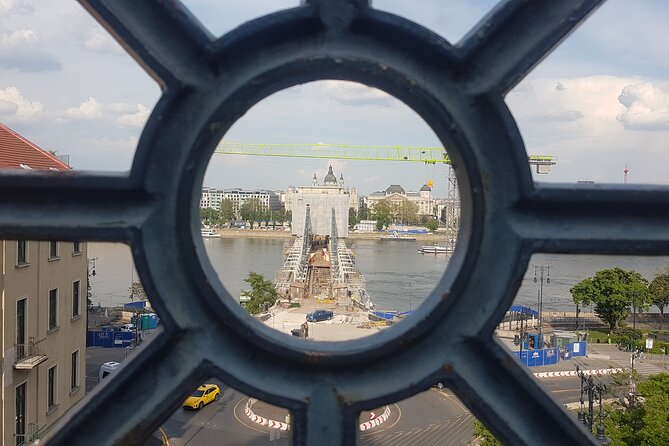
The tour begins at the Batthyány tér metro exit, close to St. Anna Church. This is a useful starting point because you are already on the Buda side of the river, with the castle hill rising nearby. Look for the guide carrying a blue flag. Public toilets and a food market are available around the meeting area, which is handy before a two-hour walk.
The first practical matter is the climb. You should expect about ten minutes of uphill walking, followed by more steps and slopes during the route. One guide, Andras, reportedly allowed the group to catch up before continuing his explanations, and that is the right pace for this kind of tour. The walk works best when nobody feels rushed.
Wear proper walking shoes. This is not a polished, flat-city-center stroll. The route takes you through a historic hilltop district, and the effort is part of the experience. If you use a stroller, think carefully before booking. Stairs can make carrying both child and stroller difficult, and wheelchair users should choose another activity.
More ways to see Buda Castle:
- Budapest: Buda Castle Cave Tour
★ 4.7 · 5,677 reviews - Budapest: Buda Castle District Vampires and Myths Night Tour
★ 4.6 · 3,830 reviews - Budapest: Buda Castle Walk with Saint Stephen’s Hall
★ 4.5 · 3,012 reviews
The Castle District in one connected story
Buda Castle Hill is easier to understand when its pieces are linked together. Instead of seeing a church, a palace, and a viewpoint as separate photo stops, you learn how the hill changed through centuries of royal rule, invasion, occupation, and rebuilding.
Your guide covers roughly 800 years of local history. That does not mean a long lecture full of dates. The strongest part of the walk is the way historical facts connect with the streets around you. A residential building can lead to a discussion of wealthy Hungarian families. A religious site can open a window onto the German, Jewish, Hungarian, and Ottoman communities that lived here.
The guides use stories to keep the material moving. Dora is praised for her humor and command of the subject. Rita is noted for clear explanations, patience, and useful advice about other places to visit and restaurants. Odea and Udit are also praised for organizing a large amount of Hungarian history into an understandable walk.
You should still keep your expectations realistic. Two hours can give you a strong introduction, but it cannot explain every century or take you inside every building. This is an orientation tour, not a full museum visit.
Matthias Church and the symbols of the hill
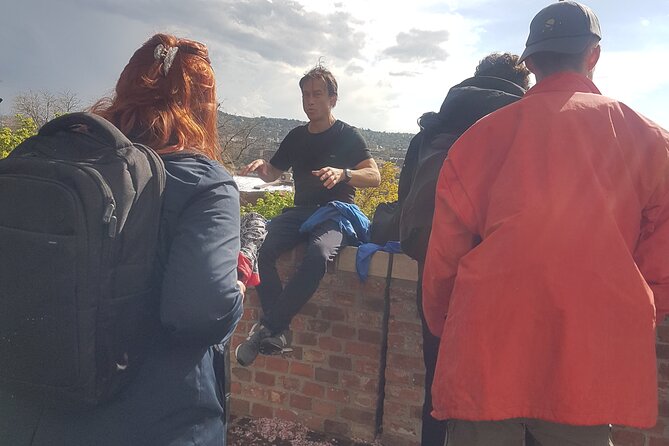
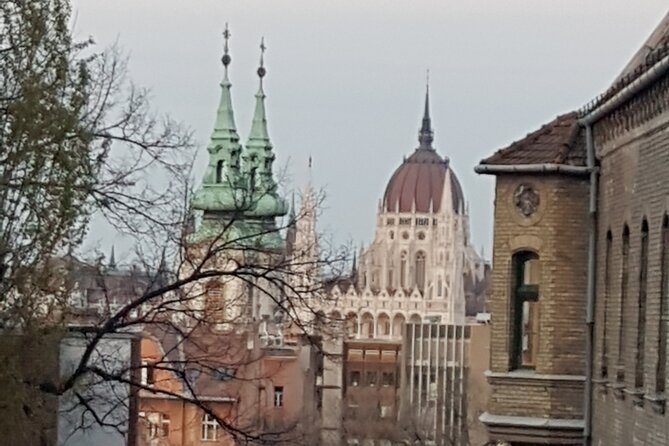
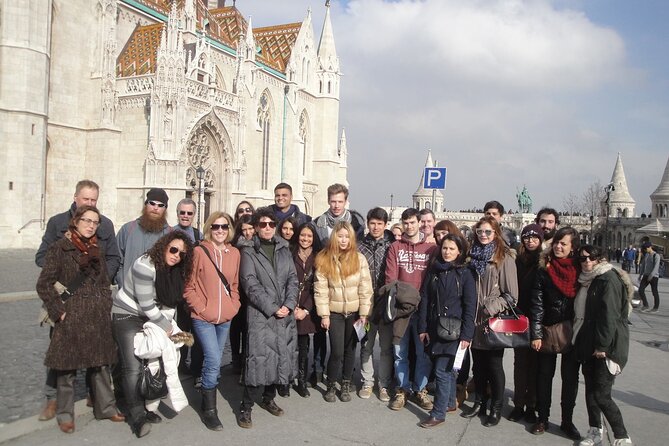
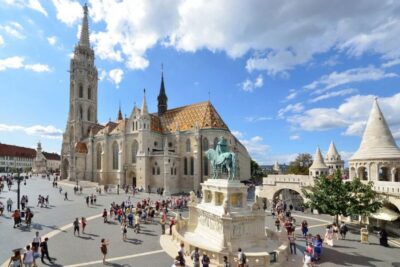
Matthias Church is one of the district’s essential stops. Its location makes it a natural point for discussing Hungarian royal life, religious change, and the many layers of the Castle District.
The guide also explains details that are easy to miss if you walk through the square alone. You may learn the meaning of crosses with one, two, or three horizontal strips, as well as the story of the mythical bird associated with Hungary. These are small points, but they help you read the symbols around Budapest instead of seeing them as decoration only.
The tour focuses on the exterior sights and the surrounding area. If you want a detailed interior visit, allow separate time for the church. The walking tour is designed to show you how the church fits into the hill’s wider story.
Fisherman’s Bastion and the best Pest views
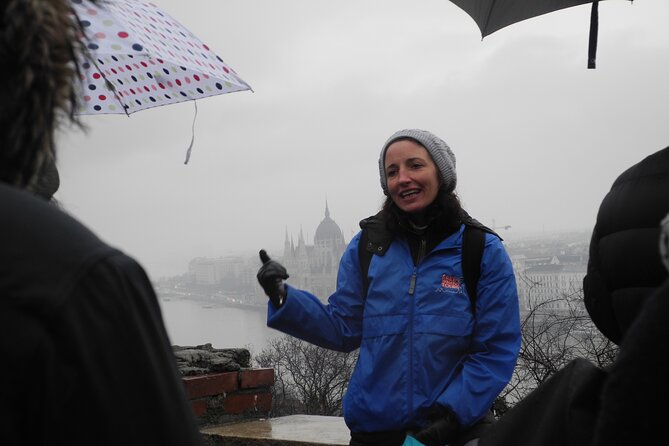
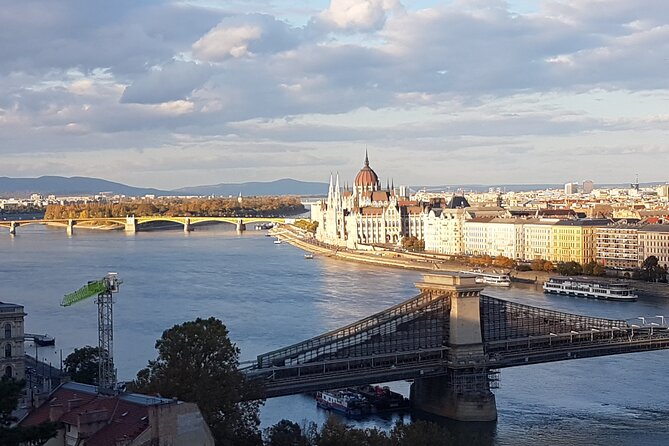
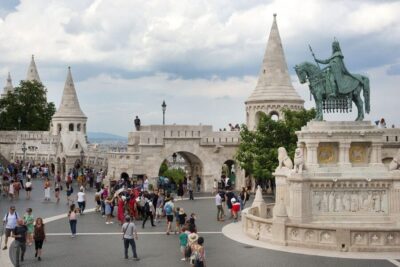
Fisherman’s Bastion supplies the famous panorama across the Danube toward Pest. From its terraces, you can take in the river and the city beyond it. This is one of the clearest reasons to include the tour early in your Budapest plans: you learn the city’s layout while looking directly at it.
Your guide also adds context to the architecture and explains the connection between Fisherman’s Bastion and Walt Disney. That detail is a good example of the tour’s approach. You get the major view, but you also receive a story that gives the place a stronger memory.
The terraces are excellent for photographs, though the area can be busy and exposed to changing weather. Keep your phone or camera ready, but listen closely before moving on. The guide may point out free viewpoints from Castle Hill, which helps you avoid paying for every attractive outlook in the city.
More walking tours in Budapest:
- Big Bus Budapest Hop-On Hop-Off Bus and Walking Tour
★ 3.5 · 2,206 reviews - Budapest: Buda Castle District Walking Tour
★ 4.6 · 2,108 reviews - Budapest City Landmarks Walking Tour in 2 Hours
★ 5.0 · 2,048 reviews - 3-Hour Orientation Walking Tour of Buda and Pest
★ 4.8 · 1,834 reviews
The Royal Palace and the marks of war
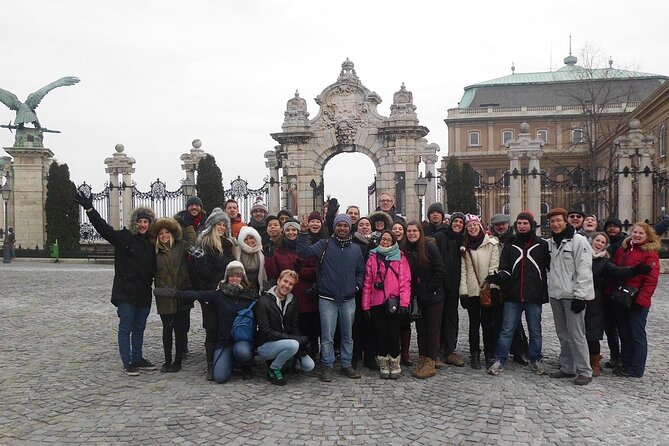
The massive former residence of the Hungarian kings is another major stop. The palace has been rebuilt many times because of wartime destruction, so its present form is part of a longer story rather than a single preserved royal period.
This is where the tour’s wartime focus becomes especially useful. You learn about the destruction of World War II, the location of the Nazi stronghold, and the way the district changed after conflict. The subject is serious, but it explains why the hill can contain grand facades beside buildings that feel newer or heavily restored.
You also see where the offices of the president and prime ministers are located. That gives the district a living political role, not just a museum-like one. The former royal center remains connected to present-day Hungary.
The palace area can feel spread out, so having a guide point out what you are seeing saves time. You may otherwise spend your visit admiring the scale without understanding which parts are royal, rebuilt, political, or defensive.
Quiet streets, Jewish heritage, and baroque homes
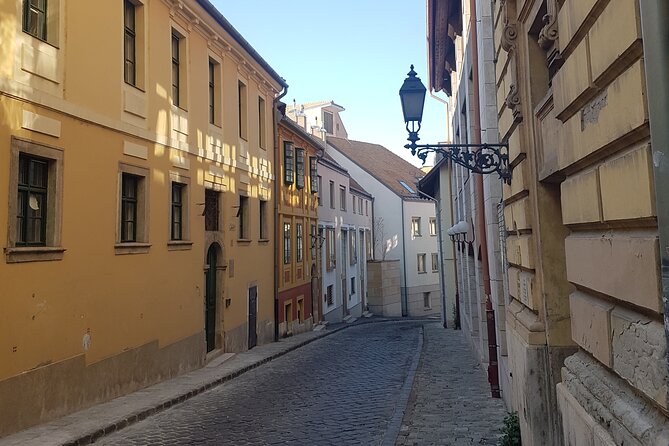
One of the tour’s most valuable features is its attention to ordinary life. The medieval Jewish Prayer House and the baroque residential buildings around it show that the Castle District was not only a place for rulers and soldiers.
Your guide discusses the German, Jewish, and Hungarian populations who lived in the area. That broader view keeps the tour from becoming a parade of kings, battles, and official monuments. You begin to see the hill as a neighborhood shaped by different communities.
The baroque homes are especially useful for readers who enjoy architecture but do not know how to interpret it. Your guide can point out the character of the facades and explain who lived in this part of the district. These residential details also make a good contrast with the palace and ceremonial viewpoints.
This section rewards attention. The buildings may not have the instant recognition of Matthias Church, but they help explain how the district functioned between major historical events.
Ottoman connections and Gül Baba
The walk also reaches the part of the story connected with Ottoman rule and Gül Baba, an Ottoman Turkish monk and soldier. You learn where the Muslim pilgrimage site associated with him is located and how Ottoman presence fits into the history of Buda.
This is an important addition because Budapest’s past is often reduced to royal Hungary and twentieth-century politics. The Ottoman period adds another layer to the city’s identity. Your guide can place the district’s religious and military changes in a wider timeline.
The tour does not treat the Castle District as a single national story. German, Jewish, Hungarian, Ottoman, royal, and military connections all appear along the route. That makes the walk more useful than a simple list of monuments.
Below the streets: caves, defenses, and hidden passages
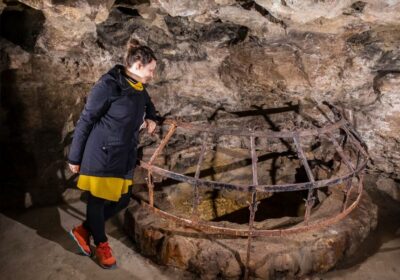
Castle Hill has an underground side, too. The tour explains the cave system and the labyrinths beneath the streets, along with their role in defense over the centuries.
You should understand that seeing the underground world on this tour does not necessarily mean entering every cave or labyrinth attraction. The supplied details describe learning about the underground system and its history, so check the exact route and starting time if underground access is essential to you.
Even from street level, the subject adds meaning to the hill. The Castle District was valuable because of its height, walls, buildings, and ability to protect key areas. The caves remind you that the visible streets are only part of the settlement.
The same applies to the military stories, including the huszar cavalry fighters. The guide explains these light cavalry soldiers and their reputation as womanizers, one of the tour’s more playful details. This sort of anecdote breaks up the heavier material and makes the past easier to remember.
Public art and lighter moments

The tour includes small public art monuments and some of Budapest’s funnier statues. These stops help keep the pace varied. After a discussion of wartime destruction or royal succession, a humorous statue gives you a lighter way to experience the city.
This is also where guides such as Boulash and Zsolt seem particularly well suited to the format. Their approach combines facts with jokes and personal interaction. The guides may ask tricky questions about major Castle Hill landmarks and Hungarian life, so you are not simply following a speech.
The interactive approach works best if you like asking questions. You can ask about architecture, symbols, local customs, or what to see after the walk. The tour ends with time for remaining questions and practical information, which makes it useful as a first activity in Budapest.
What the $2.27 price really means
The advertised price is unusually low because it is a booking and administration fee paid through GetYourGuide. It is not the full cost of the guiding service. The guide works for tips, and €10 per person is given as a common amount, with the final amount left to you.
That changes the value calculation. If you pay the suggested tip, the experience costs much more than $2.27, but it can still be good value if you want a structured introduction to Buda Castle Hill. You are paying for two hours of local explanation, route planning, historical context, and practical advice, not just access to a viewpoint.
I would book it if you want to get oriented quickly, especially at the beginning of a Budapest stay. You can then return to Matthias Church, Fisherman’s Bastion, the palace area, or another museum with a clearer idea of what deserves your time.
The group can include up to 30 people, which is large enough to affect how easily you hear and ask questions. Parties of eight or more cannot book, even if they split reservations. Solo visitors, couples, and smaller groups are the intended audience.
The guides and the pace of the walk
The guide makes a major difference on a history-heavy walking tour. The named guides associated with particularly strong experiences include Gary, Dora, Boulash, Andras, Rita, Udit, Odea, Judith, Sofie, Charlotte, and Zsolt.
The strongest qualities to look for are clear storytelling, patience on the hills, humor, and practical local advice. Gary is praised for detailed explanations and recommendations after the walk. Rita is noted for waiting while people caught up and for offering restaurant suggestions. Judith is described as personable, funny, and welcoming.
The tour is in English. The guide may ask questions, teach a few Hungarian words, and invite you to take part. If you prefer to walk quietly and study each sight alone, this format may feel too active. If you like a guide who explains what you are seeing as you go, it should suit you well.
When this tour makes the most sense
Book this walk early in your Budapest visit if you want a map in your head before exploring alone. The meeting point is easy to reach by metro, and the tour ends back where it starts, so you can continue around Buda or use public transport afterward.
It also suits anyone who wants more than postcard views. You will see major landmarks, but you will also hear about residents, religious communities, military defenses, public art, palace offices, and wartime damage.
This is not the best choice for a flat, relaxed stroll. It is also not suitable for wheelchair users, and anyone with limited mobility should consider the uphill route and stairs carefully. The information says visitors should have moderate physical fitness and be able to manage the climb.
Bring water, comfortable shoes, and clothing suited to the weather. Rain does not stop the route, and one guide kept the energy up in wet conditions, but the terraces and open streets are far more pleasant in good weather.
Should you book the Buda Castle District walk?
Book it if you want an efficient first look at Castle Hill, enjoy history told through stories, and can handle a hill with stairs. The tour gives you the big sights plus the smaller details that are easy to miss alone, from the medieval Jewish Prayer House to public art, underground defenses, and Ottoman connections.
Skip it if you need step-free access, dislike group walks, or want long free time at the palace and church. The tour keeps moving, and one practical criticism is that there is not much time to linger at the top.
For most able walkers, the low booking fee and strong guide-led format make this a sensible introduction to Buda. Just budget for the expected tip, wear good shoes, and treat the two hours as an orientation rather than a full visit to every attraction.
FAQ
Where does the tour begin?
It begins at the Batthyány tér metro exit, about 15 to 30 meters from St. Anna Church. Look for the local guide holding a royal-blue flag.
How long does the walking tour last?
The tour lasts two hours. Starting times vary, so check availability when booking.
What language is the tour in?
The live tour is conducted in English.
Which major sights are included?
The route includes Buda Castle, the Royal Palace, Matthias Church, Fisherman’s Bastion, Maria Magdalena Church Tower, lookout terraces, and other important buildings.
Is the tour suitable for wheelchair users?
No. The activity is listed as unsuitable for wheelchair users. It also includes a 10-minute uphill walk, stairs, and a moderate level of physical effort.
What should I bring?
Bring comfortable shoes, water, and clothing suitable for the weather.
How much does the tour cost?
The advertised booking fee is $2.27 per person. This fee reserves your place and covers administration and marketing. The guide relies on tips, and €10 per person is given as a common amount.
Can a group of eight or more people book?
No. Groups of eight or more cannot book this tour, even if they make separate reservations. The total activity capacity is up to 30 people.
Recently added around Budapest
- Budapest: Private Walking Tour with a Local Guide★ 3.6 · 6 reviews
- Budapest: Danube River Views Bike Ride★ 4.8 · 23 reviews
- From Budapest: Guided Tour of Eger with Wine Tasting★ 4.5 · 6 reviews
- Budapest: City Bike Tour with Coffee Stop★ 5.0 · 37 reviews
- Budapest: Vacation Photographer to collect great memories★ 5.0 · 49 reviews
- Walk to recent and aged spiritual sanctuaries near Budapest★ 5.0 · 5 reviews
- Trash Art Museum: Hungary’s First Scrap Metal Exhibition★ 4.3 · 72 reviews
- Budapest: Multilingual Highlights Tour★ 4.8 · 89 reviews
Buda Castle Tours, compared.

Buda Castle District Vampires and Myths Night Tour
Read our review →

Buda Castle District Dark History, Legends and Vampire Night Tour
Read our review →
Buda Castle District Walking Tour with a Historian
Read our review →
Browse the lists this tour appears in