Reviewed · TOURS
Tiny Sculptures, Big Stories: Kolodko mini statue tour
Budapest’s smallest monuments tell some of its biggest stories. On this 2.5-hour tour, you hunt for Mihail Kolodko’s tiny bronze sculptures, then hear the local legends, political jokes, pop-culture references, and neighborhood tales packed into each one. I like the treasure-hunt format and the way guide ET, also known as Etele, uses each statue to open a window onto Budapest. I also like that the route crosses the city by foot, tram, metro, and sometimes bike, rather than keeping you on the usual sightseeing track.
The main thing to consider is that this is an active city tour, not a seated art talk. You may walk quite a bit, cross busy streets, and ride public transport between statues. The number of sculptures you see can vary, too, since ET adjusts the route to the group and may tailor it around places you have already visited.
Key points at a glance
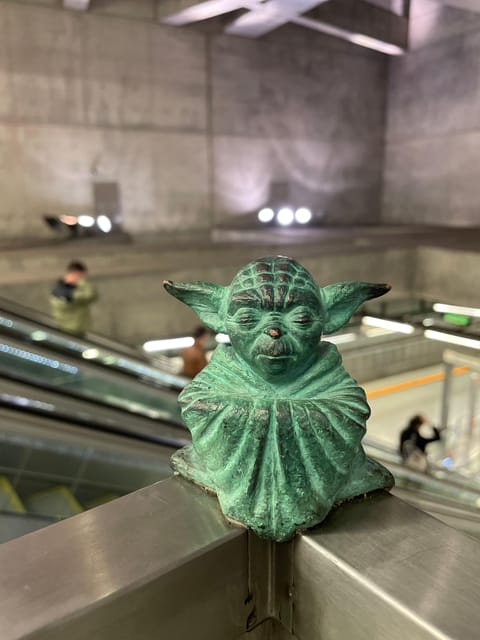
- Tiny statues with local meaning: Each Kolodko sculpture connects to a legend, person, event, neighborhood, or piece of popular culture.
- A real Budapest route: Start at the New York Café on the Pest side and finish near Szent Gellért tér on the Buda side.
- ET’s personal guiding style: Expect short stories, humor, local knowledge, and plenty of chances to ask about Budapest’s art, politics, and daily life.
- Public transport is part of the adventure: Tram, metro, train, and other city connections help you cover more ground, with tickets included.
- Small-group setting: The group is limited to 10 people, and the tour may feel almost private when numbers are low.
- Wear comfortable shoes: You will see more statues the more willingly you walk.
Why these tiny bronze figures make a fine Budapest tour
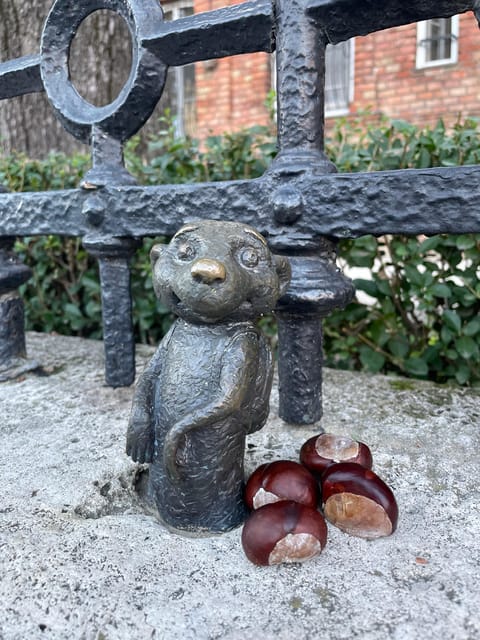
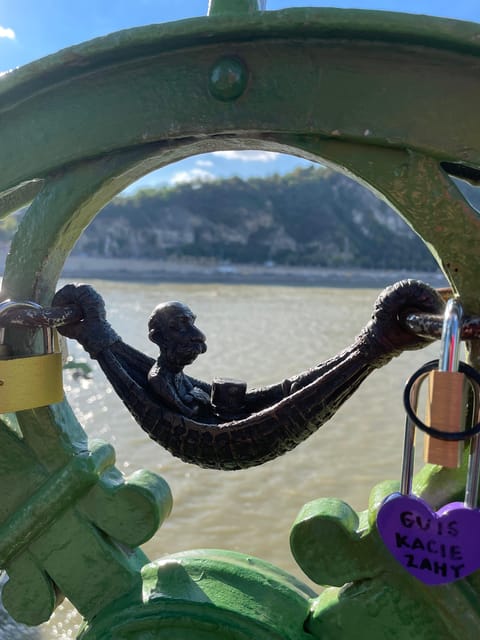
Kolodko’s statues are easy to miss. Some are tucked beside a riverside path, fixed to a wall, placed near a station, or set low enough that you might walk past without noticing. Their size is part of the joke. You have to pay attention.
That makes this tour feel less like a standard march from one major sight to another. You are not simply told where to look. ET encourages you to spot the statue yourself, then explains why it is there and what it means. That small change turns the outing into a hunt.
I especially like this format for a first or second day in Budapest. You get your bearings across both sides of the Danube while learning how the city uses humor and public art to talk about its past and present. By the end, you may start looking down at street corners and ledges on your own.
The statues also provide a useful way into subjects that can feel heavy in a normal history lecture. A small bronze figure can lead to a conversation about politics, local identity, changing neighborhoods, alternative culture, or a familiar Hungarian story. ET’s skill is in keeping those subjects lively and understandable.
A few more Budapest half-days to weigh up
- Budapest: City Highlights Cruise with Welcome Drink
★ 4.6 · 35,610 reviews - Budapest: Unlimited Prosecco, Beer and Aperol Spritz Cruise
★ 4.8 · 25,310 reviews - Budapest: Széchenyi Spa Day Ticket with Optional Upgrades
★ 4.3 · 23,911 reviews
Starting at the New York Café on the Pest side
The meeting point is in front of the New York Café, one of Budapest’s best-known historic cafés. You do not begin with a long introduction or a formal art lecture. The focus quickly shifts to the city around you and the first search for Kolodko’s work.
Beginning on the Pest side makes practical sense. Pest is flatter and more spread out, and the tour can build momentum before crossing toward Buda. From the start, you should expect a route that combines walking with public transport rather than a single straight line.
The exact sequence of statues is not presented as a fixed public route. ET can change the order based on the group, the weather, and what you have already seen elsewhere in Budapest. That flexibility is useful if you have already visited the main sights and want new streets, or if you have only a short stay and want the route to add places you would not reach alone.
One particularly good feature is the search itself. ET may point out an area and let you look for the sculpture before explaining it. This works well for children, curious adults, and anyone who enjoys puzzles more than passive sightseeing.
Finding the stories behind Kolodko’s sculptures
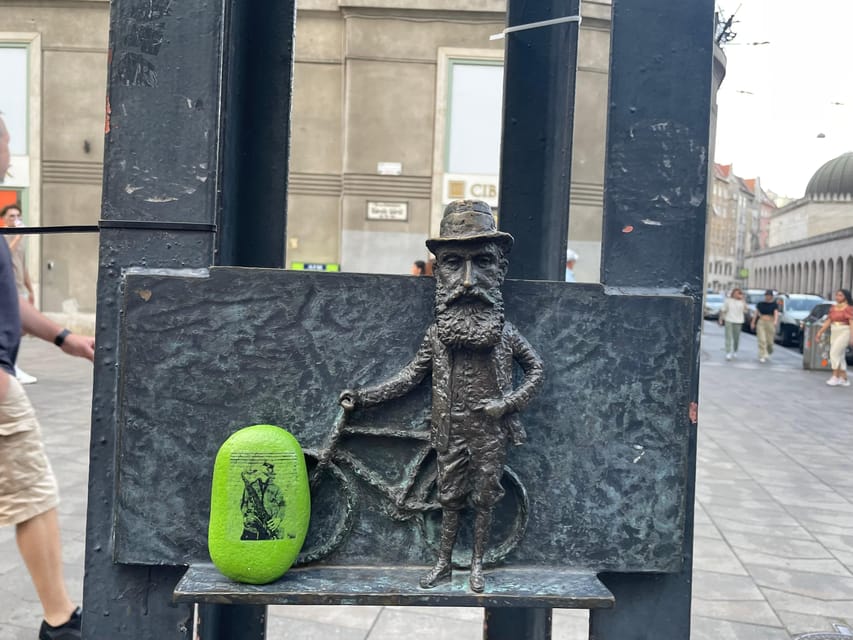
The statues are not valuable simply because they are small or cute. Their real appeal comes from the reason each one exists. A figure may refer to a local legend, a well-known cultural character, an unusual piece of city history, or a subject tied to the neighborhood where it appears.
ET explains those links in short, clear stories. That matters because the sculptures often make little sense if you see them without context. A tiny figure beside the Danube is easy to photograph, but the story behind its placement is what gives it weight.
The tour also gives you a view of Budapest’s street-art culture beyond Kolodko. ET has discussed other artists and artworks during the route, so you may begin noticing the city’s wider alternative art scene. The focus remains on the mini statues, but the conversation can widen naturally.
I would not book this as a substitute for Budapest’s major historic sights. It will not give you a full account of the Parliament, Buda Castle, or the city’s museums. Instead, it adds the informal, witty layer that a large sightseeing tour often misses.
That balance is one of the experience’s strengths. The statues provide the thread, while the surrounding streets provide the setting. You learn about Budapest without spending the whole afternoon indoors or following a standard postcard route.
Moving between neighborhoods by tram, metro, and foot
Public transport is not just a practical detail here. It allows the tour to connect statues in different parts of the city and gives you a better feel for how Budapest works day to day.
Tickets are included, and ET handles the transport during the activity. That removes one common source of stress, especially if you are still learning the city’s tram and metro system. You can focus on the search instead of working out which ticket to buy next.
The route may use the metro, tram, train, and other forms of city transport. Some tours may also include bikes, depending on the group and the route. Since the experience is flexible, you should expect the exact mix to change.
I like this approach because the journeys between stops become part of the tour. You see more than a chain of isolated artworks. You move through different parts of Budapest and hear how neighborhoods connect to the larger city.
There is a trade-off. Public transport adds movement and can make the timing less predictable than a compact walking tour. You should be ready to board, walk to the next stop, and keep up with a changing route. The experience is best for people who enjoy active exploring rather than a slow stroll around one square.
A completely different kind of day out in Budapest:
- Budapest: Nighttime or Daytime Sightseeing Cruise
★ 4.2 · 21,062 reviews - Budapest: 1-Hour Evening Sightseeing Cruise with Drink
★ 4.5 · 8,330 reviews - Budapest Danube Cruise and Dinner Options, Live Music and Dance
★ 4.5 · 7,428 reviews - Budapest: Historic Cruise with Welcome Drink
★ 4.7 · 6,512 reviews
The Danube, the synagogue, and the changing city
The Danube and a synagogue are listed among the tour’s main highlights, but this is not presented as a dedicated religious or riverside sightseeing tour. Instead, these places form part of a broader route that links major Budapest settings with smaller pieces of public art.
The Danube gives the tour a strong sense of place. Budapest’s two halves, Pest and Buda, face each other across the river, and finishing on the Buda side helps you understand that physical divide. The river also gives the small statues a dramatic setting, even when the artwork itself is no bigger than your hand.
The synagogue adds another important layer. Around Budapest, public art can touch on memory, identity, culture, and the city’s many historical changes. ET uses the surroundings to connect the small sculptures with larger local stories, without turning the whole experience into a formal historical lecture.
The route finishes at Szent Gellért tér, a central point on the Buda side. This is a useful ending because you are not left in an isolated spot. You can continue exploring Buda, return across the river, or make your way elsewhere by public transport.
How much walking should you expect?
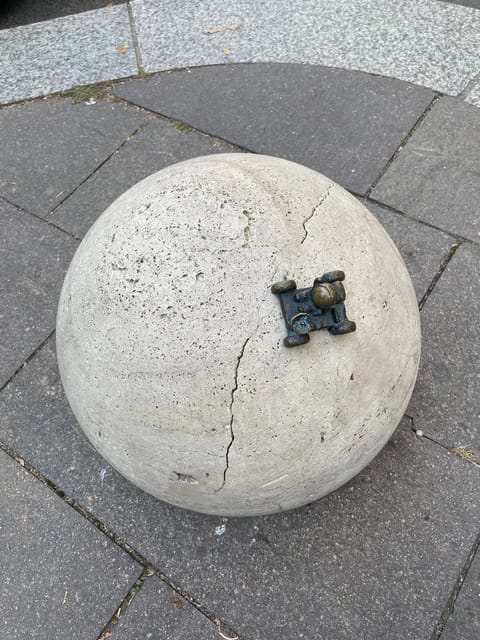
You should bring comfortable shoes. One local participant described the experience as a treasure hunt and gave the clearest practical tip: the more you walk, the more statues you see.
The route lasts about 2.5 hours, though the supplied details also describe the guided outing as lasting three hours in one place. For planning purposes, allow at least 2.5 hours and avoid scheduling a tight appointment immediately afterward.
The walking is broken up by public transport, but this is not a low-mobility sightseeing ride. You may search around streets, stations, public spaces, and less familiar neighborhoods. Some statues are small or partly hidden, so you may spend time looking closely rather than simply moving from one obvious stop to the next.
Weather also matters. A winter outing can still work well, and the tour has run in cold and snowy conditions, but you will enjoy it more with suitable clothing. In warm weather, bring water and be ready for a fair amount of time outdoors.
A small group that can feel almost private
The group is limited to 10 people. That is large enough to bring a social feel, but small enough for ET to answer questions and adjust the pace.
When only one or two people book, the tour can become almost private. In that setting, ET has tailored routes around a person’s interests, avoided places they had already visited, and made room for questions about local culture, politics, street art, and everyday life.
A full group will naturally feel less personal, but the small size still helps. You can hear the stories clearly, see the statues without a crowd around you, and take part in the search.
This format suits solo visitors, couples, families with older children, and small groups of friends. It is also a good match if you want to meet other people without joining a large coach-style outing.
Is $35 a fair price?
At $35 per person, the value depends on what you want from a city tour. If you are looking only for a list of statues and a few quick facts, you may find it expensive. You could search for some of Kolodko’s works yourself, especially after receiving a sense of where they are located.
But the paid experience includes more than the objects. You are paying for a route across Budapest, the public transport tickets, the local stories, the time saved locating sculptures, and ET’s ability to connect each work with its surroundings.
The strongest value comes from the interpretation. A map can show you where a statue is. It cannot easily explain why it was placed there, how it fits the neighborhood, or how it connects with Hungarian culture and city life.
The price also compares well with a conventional small-group walking tour, especially if you want something specific rather than a general introduction. You should book it for the stories and the route, not just for the number of statues photographed.
Who should book this experience?
I would choose this tour if you like street art, local folklore, unusual city details, or tours that feel more personal than rehearsed. It is particularly useful early in a Budapest visit because it helps you get a feel for the city and points you toward areas you might later revisit.
It also works well near the end of a trip. After several days of major monuments, the small sculptures offer a lighter way to notice the city’s odd corners and everyday character.
Families with children can enjoy the hunt, and adults interested in politics or popular culture will have plenty to ask about. English is the tour language, and ET has been praised for communicating clearly and keeping the mood friendly and energetic.
You may want to choose another activity if you dislike walking, prefer a fixed route, need a fully predictable schedule, or want a formal survey of Budapest’s art museums. The flexible structure is a strength for curious people, but it is less suitable for anyone who wants every stop announced in advance.
Practical details before you book
Meet ET in front of the entrance to the New York Café. The tour ends at Szent Gellért tér, and public transport tickets are included.
The price is $35 per person, the duration is about 2.5 hours, and the language is English. The group limit is 10 people.
You can cancel up to 24 hours before the activity for a full refund. A reserve-now, pay-later option is also available, which helps if your Budapest schedule is still changing.
Bring comfortable shoes and dress for the weather. Keep your eyes open between stops, too. Once you learn how small and easy to miss the sculptures can be, you may start spotting more of them on your own. One useful extra is that ET has provided a map showing additional statues after the tour, giving you a way to continue the hunt independently.
Should you book the Kolodko mini statue tour?
Book it if you want Budapest told through small, witty works of public art rather than only through grand buildings. The combination of statue hunting, local stories, public transport, the Danube, and ET’s flexible guiding style gives you a personal look at the city.
Skip it if you want a short, stationary activity or a strict route with no walking between stops. For most curious visitors, though, $35 is a fair price for a tour that can show you parts of Budapest you would probably overlook and teach you how to notice the city’s quieter details.
FAQ
Where does the Kolodko mini statue tour start?
The tour starts in front of the entrance to the New York Café in Budapest.
Where does the tour finish?
The tour finishes at Szent Gellért tér on the Buda side of the city.
How long does the tour last?
The advertised duration is 2.5 hours. The activity details also refer to a three-hour guided tour, so allow at least 2.5 hours when planning your day.
How much does the tour cost?
The price is $35 per person.
What language is the tour in?
The live tour is conducted in English.
Are public transport tickets included?
Yes. Public transport tickets are included, and the tour may use transport such as trams, the metro, and trains.
How many people can join the tour?
It is a small-group activity limited to 10 participants.
Can I cancel for a refund?
Yes. You can cancel up to 24 hours in advance for a full refund. A reserve-now, pay-later option is also available.
Recently added around Budapest
- Budapest: Private Walking Tour with a Local Guide★ 3.6 · 6 reviews
- From Budapest: Guided Tour of Eger with Wine Tasting★ 4.5 · 6 reviews
- Budapest: City Bike Tour with Coffee Stop★ 5.0 · 37 reviews
- Budapest: Danube River Views Bike Ride★ 4.8 · 23 reviews
- Budapest: Vacation Photographer to collect great memories★ 5.0 · 49 reviews
- Walk to recent and aged spiritual sanctuaries near Budapest★ 5.0 · 5 reviews
- True Crime Walking Tour in the Buda Castle district★ 5.0 · 26 reviews
- Trash Art Museum: Hungary’s First Scrap Metal Exhibition★ 4.3 · 72 reviews
Tours, compared.
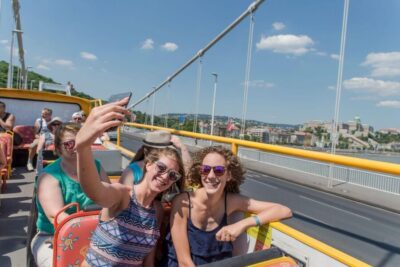
City Sightseeing Hop-On Hop-Off Bus Tour & Extras
Read our review →
Buda Castle District Vampires and Myths Night Tour
Read our review →
Big Bus Hop-On Hop-Off Tour & Danube River Cruise
Read our review →
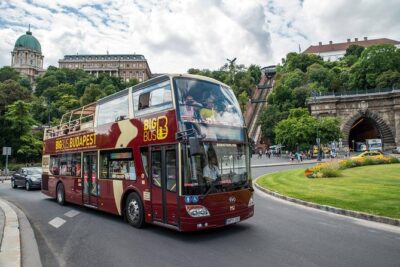
Big Bus Budapest Hop-On Hop-Off Bus and Walking Tour
Read our review →