
Reviewed · BUDA CASTLE TOURS
Buda Castle Walking Tour: A Kingdom of Many Nations
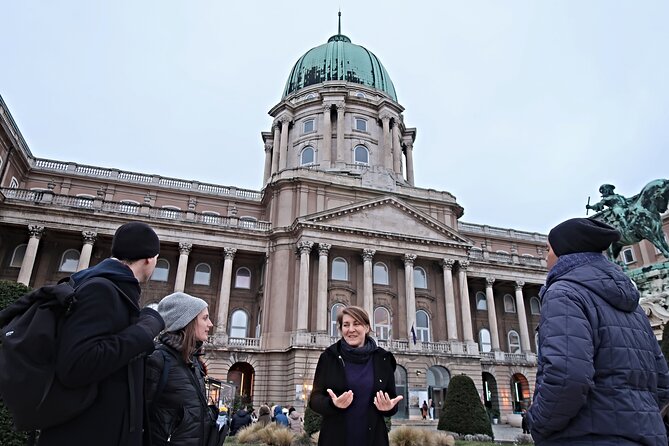
Buda Castle Hill is less about entering one grand palace than about walking through Budapest’s oldest quarter, where medieval lanes, rebuilt baroque houses, royal power, Ottoman rule, and modern government all share the same hill. This three-hour walk takes you from the former royal palace to Matthias Church, Fisherman’s Bastion, and Vienna Gate.
I like the small group size, with bookings capped at six people and the total group limited to eight. I also like the guides’ strong storytelling. Guides such as Peter, Kata, Gregory, Veronica, and Marianna are praised for linking Hungarian history to family stories, daily life, and the city you see today.
The main drawback is cost: $126.15 per person is a serious price for a walking tour, and admission to Matthias Church and Fisherman’s Bastion is extra. You also need to know that the experience focuses on the Castle District, not a full interior tour of the royal palace.
Key points to know before you book

- A small group changes the experience: The maximum group size is eight, so you can ask questions and keep pace with the guide.
- Castle Hill is an old town, not just a castle: Expect narrow streets, cobbles, reconstructed buildings, churches, government residences, and palace history.
- Matthias Church is the interior highlight: Its patterned roof and ornate Neo-Gothic interior are worth the separate admission fee.
- Fisherman’s Bastion delivers the big view: You’ll look across the Danube toward Pest, Margaret Island, and Gellért Hill.
- The tour covers many centuries: King Béla IV, King Matthias, Ottoman rulers, Habsburg emperors, World War II, and modern Hungary all enter the story.
- Plan for a real three-hour walk: Wear comfortable shoes and check the departure time, since morning and afternoon options vary by day.
Why Castle Hill deserves a full morning or afternoon
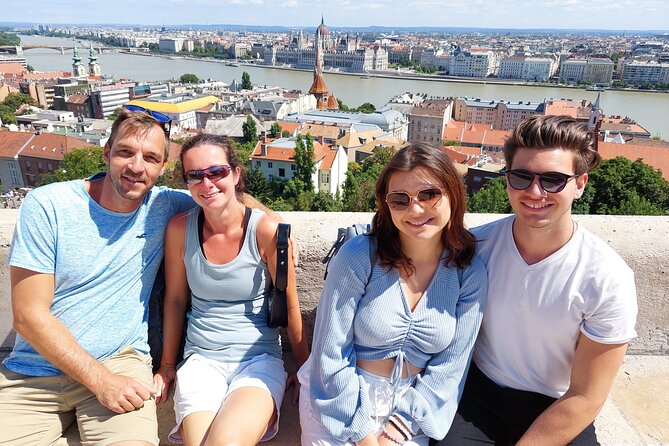
Budapest is often introduced through the grand boulevards and riverfront of Pest. Buda feels different. Castle Hill rises above the Danube and holds the city’s oldest surviving quarter, with winding streets and buildings that reflect repeated destruction and rebuilding.
This tour is useful because it gives the hill a clear order. Instead of looking at a church, palace, and viewpoint as separate photo stops, you follow the story of a place repeatedly reshaped by war and power.
The title, A Kingdom of Many Nations, fits the subject. Hungarian kings ruled here, Ottoman officials later governed the city, Habsburg rulers changed its political role, and the modern Hungarian state still uses part of the district. Your guide’s job is to connect those layers without turning the walk into a list of dates.
The group size matters here. With only a handful of people, a guide can adjust the pace and answer questions about architecture, family history, or Hungarian life. Guides named Peter, Kata, Gregory, Veronica, Marianna, and others are associated with an especially personal style, using anecdotes rather than delivering one fixed speech.
More ways to see Buda Castle:
- Budapest: Buda Castle Cave Tour
★ 4.7 · 5,677 reviews - Budapest: Buda Castle District Vampires and Myths Night Tour
★ 4.6 · 3,830 reviews - Budapest: Buda Castle Walk with Saint Stephen’s Hall
★ 4.5 · 3,012 reviews
Starting near Országh Street
The listed meeting point is Budapest, Országh u. 31, in the Castle District. The tour ends at Vienna Gate, so this is not a loop that returns you to the starting point. That is helpful if you plan to continue toward Óbuda or explore another part of Buda afterward.
You should allow time to find the meeting point. The tour does not include hotel pickup or drop-off, and the practical details supplied for the experience do not specify a private transfer. Public transportation is nearby, but you will need to arrange your own way to the start.
Once the walk begins, expect a steady tour through the hill’s streets and squares. The route is not simply a parade of famous buildings. You’ll hear about changing building use, historic residents, house names, architecture, and the way the district was damaged and rebuilt.
The royal palace and the long story of power
The first major focus is Buda Castle, the massive palace at the southern end of Castle Hill. Its size makes sense once you understand its role as the old seat of royal power, but its present appearance can be misleading. The palace was rebuilt, extended, altered, burned, and rebuilt again.
King Béla IV began the fortress tradition here around 1250, after Mongol forces devastated Hungary. Later, King Matthias turned Buda into one of Europe’s leading Renaissance courts in the late 15th century. The Ottoman period followed, lasting more than 150 years, and Habsburg rule reshaped the hill again.
World War II brought another round of severe destruction. The palace you see today gained its current eclectic appearance mainly through rebuilding after the war. That makes this stop less about viewing a perfectly preserved medieval residence and more about understanding how Budapest repeatedly reconstructed its symbols of power.
The itinerary gives roughly two hours to the Castle District, with about 15 minutes specifically devoted to the palace’s history and changing function. That distinction is important. You’ll spend substantial time in the district, but you should not expect an interior visit to the palace itself.
For me, this is where a good guide earns the fee. A bare walk around the palace can feel vague because the building is so large and its history so layered. The strongest guides, including Peter and Gregory in the supplied guide feedback, are praised for explaining not only what happened but also how the building’s purpose changed over time.
Sándor Palace and Hungary today
A short stop at Sándor Palace adds a modern political note. The Neo-Classical palace was commissioned by Count Vincent Sándor in 1806, when he was an aristocrat and philosopher of the Austro-Hungarian Empire.
Since 2003, it has served as the official residence of Hungary’s president and the home of the Office of the President. You get only about five minutes here, so this is not a long architectural inspection. Its value is the contrast: the route moves from medieval royal authority to a present-day state institution.
This brief stop also helps you see that Castle Hill is not a museum frozen in the past. It remains part of Hungary’s working civic life. Your guide may also help you place the palace within the larger story of how Buda’s political importance shifted across the centuries.
More walking tours in Budapest:
- Big Bus Budapest Hop-On Hop-Off Bus and Walking Tour
★ 3.5 · 2,206 reviews - Budapest: Buda Castle District Walking Tour
★ 4.6 · 2,108 reviews - Budapest City Landmarks Walking Tour in 2 Hours
★ 5.0 · 2,048 reviews - 3-Hour Orientation Walking Tour of Buda and Pest
★ 4.8 · 1,834 reviews
Matthias Church: the fee is worth considering

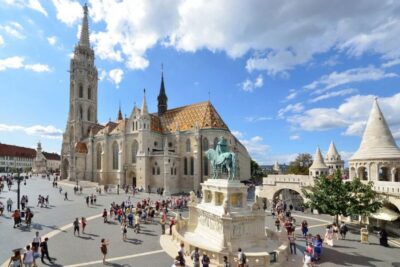
Matthias Church is the visual centerpiece of the walk. Its colored roof catches your eye before you reach the entrance, while the tall steeple gives the church a strong vertical presence among the lower buildings of the district.
The current building is a highly finished Neo-Gothic reconstruction from the late 19th century. That means it is not a completely untouched medieval interior, but it is still an impressive work of architecture. The decoration is generous, and the interior has a very different feel from the restrained stone churches you may know from elsewhere in Europe.
Matthias Church served as the coronation site for Hungarian kings, giving the building a political role as well as a religious one. The guide can explain why it matters in the story of the kingdom, not just point out the roof pattern and steeple.
The stop lasts about 20 minutes, and admission is not included. This is one of the key costs to plan for. The tour price covers the guided walk, but you pay separately for Matthias Church and Fisherman’s Bastion.
A useful choice is to take the guide inside with you if that option is available on your departure. One account of the experience specifically found the guided church visit well worth adding. If you care about art, architecture, coronations, and Hungarian identity, I would budget for the ticket rather than treating the church as an optional glance from the outside.
Fisherman’s Bastion and the Danube panorama

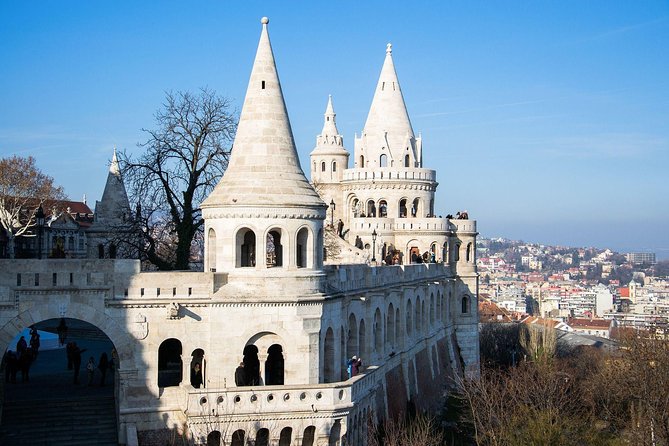
Fisherman’s Bastion is a short stop, about 20 minutes, but it supplies the tour’s best visual payoff. Designed in Neo-Gothic and Neo-Romanesque styles and built between 1895 and 1902, it is more architectural fantasy than medieval defensive fortification.
Its seven towers represent the seven Magyar tribes that settled in the Carpathian Basin at the end of the ninth century. From the terraces, you can look over the Danube toward Pest, Margaret Island, and Gellért Hill.
This is the place to bring your camera, but do not let the photographs replace the explanation. The bastion’s style and date reveal how Budapest used historic imagery during a period of national building and identity-making. Your guide can put the towers into that larger setting.
Admission is extra here too. Since the experience does not include the ticket, ask your guide or check the current arrangements before the visit. The supplied information confirms that the stop is included but the entrance fee is not.
The viewpoint can also be busier than the quieter streets elsewhere on Castle Hill. The tour’s small size helps you stay connected to your guide, but you should still expect this to be a popular part of the district.
Vienna Gate and the view toward Óbuda
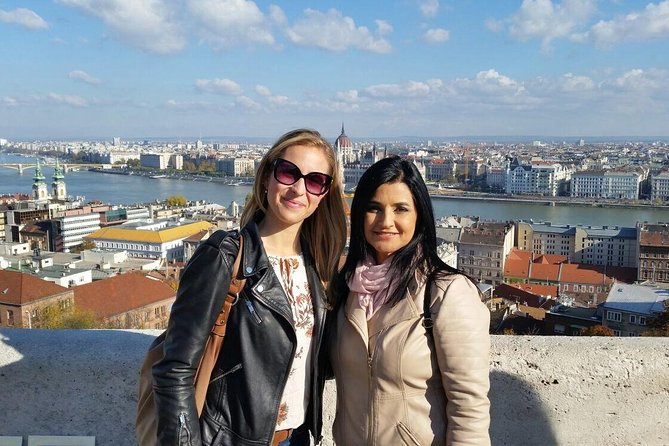
The tour finishes at Vienna Gate, near the northern end of the Castle District. From here, you can see toward Óbuda, or Old Buda, where the Romans founded the settlement known as Aquincum.
This ending makes geographic sense. You begin near the royal center and move through the historic quarter before looking beyond the hill toward the older Roman roots of the city. It also gives you a natural point from which to continue exploring instead of retracing your steps.
The final stop lasts about 10 minutes. It is not as dramatic as Fisherman’s Bastion, but it completes the historical frame. Budapest is not only a royal and Habsburg city. Its story reaches back to Roman settlement and forward to the modern capital you see today.
How the guides shape the walk

The strongest reason to choose this experience is the guide. A three-hour walk through Castle Hill can either feel like a long list of names or like a conversation about why the place looks as it does.
Kata is described as energetic, friendly, and especially good at connecting Hungarian history to present-day life. She is also praised for answering questions patiently and adjusting the pace. Peter is associated with detailed knowledge of the Castle District and an ability to adapt the route to the group’s interests.
Marianna brings personal insight into Hungary’s Soviet period, while Veronica is noted for making the rebuilt district engaging and easy to understand. Gregory is described as able to discuss not only Budapest and Hungary but wider subjects that help place the city in context.
That range matters because the tour is not designed as a fully scripted audio guide. You can ask about family heritage, architecture, political history, or the meaning of a building. One guide even showed a participant a family home in the district and explained its story, a reminder that Castle Hill is also a place where people lived, not only a collection of monuments.
Is $126.15 a fair price?
At $126.15 per person, this is not a budget walk. You also pay separately for Matthias Church and Fisherman’s Bastion, and food, drinks, transportation, and hotel transfers are not included.
The value comes from the small group and the guide rather than from included attractions. You are paying for three hours of focused explanation in a district where the history is easy to miss. A large public group may cost less, but it will usually offer less room for questions and less flexibility.
The price makes the most sense for you if Castle Hill is a priority and you want context instead of a quick photo stop. It is also a good fit before a river cruise or early in a Budapest visit, since the walk gives you a clear framework for later sightseeing.
If you only want to see the exterior of the palace, take a few photos at Fisherman’s Bastion, and move on, the cost is harder to justify. You can explore the district independently. The tour earns its keep when the guide’s stories and explanations matter to you.
Timing, walking, and practical planning
The experience lasts about three hours and is offered in the morning or afternoon depending on the day. Pick a time that leaves room afterward, since the route ends at Vienna Gate rather than at the original meeting point.
Wear comfortable shoes. Castle Hill has narrow streets and cobbled surfaces, and the tour involves continuous walking. Most people can participate, but the supplied details do not promise a fully step-free route.
The maximum is six people per booking, with a total activity limit of eight. That is small enough for direct conversation and far more personal than a large coach excursion. English is the listed tour language.
You receive confirmation when booking. Free cancellation is available up to 24 hours before the scheduled start time. Changes or cancellations inside that window are not accepted for a refund.
Who should book the Buda Castle walk?
I would choose this tour if you want Hungarian history explained by a local English-speaking guide, especially if you enjoy questions, stories, and small architectural details. It suits first-time visitors, people with Hungarian family connections, and anyone who wants more than the standard Pest highlights.
It is also a smart choice for a short Budapest stay. In three hours, you cover the royal palace, Sándor Palace, Matthias Church, Fisherman’s Bastion, and Vienna Gate while learning how the district changed under Hungarian, Ottoman, Habsburg, and modern rule.
I would hesitate if your main goal is to tour the royal palace interior, since that is not what this experience provides. I would also check the total cost carefully, because entrance tickets are extra and the starting price is high for a walk.
For the right audience, the small group and guide quality make the difference. Book it if you want Castle Hill to make sense, not just look pretty in photographs.
FAQ
How long is the Buda Castle walking tour?
The guided walk lasts approximately three hours.
What language is the tour offered in?
The tour is offered in English.
Where does the tour begin?
The meeting point is Budapest, Országh u. 31, 1014 Hungary.
Where does the tour end?
The walk ends at Vienna Gate in the Buda Castle District.
Is the royal palace interior included?
No. The experience focuses on the Castle District and the history and changing function of Buda Castle. It does not promise an interior tour of the royal palace.
Are entrance tickets included?
No. Tickets for Buda Castle, Matthias Church, and Fisherman’s Bastion are listed as not included. Food, drinks, and hotel transfers are also excluded.
How many people can join the tour?
A booking can include a maximum of six people, and the total activity limit is eight travelers.
Can I cancel for a full refund?
Yes. You can cancel at least 24 hours before the experience start time for a full refund. Cancellations or changes made less than 24 hours before the start are not accepted for a refund.
Recently added around Budapest
- Budapest: Private Walking Tour with a Local Guide★ 3.6 · 6 reviews
- From Budapest: Guided Tour of Eger with Wine Tasting★ 4.5 · 6 reviews
- Budapest: City Bike Tour with Coffee Stop★ 5.0 · 37 reviews
- Budapest: Danube River Views Bike Ride★ 4.8 · 23 reviews
- Budapest: Vacation Photographer to collect great memories★ 5.0 · 49 reviews
- Walk to recent and aged spiritual sanctuaries near Budapest★ 5.0 · 5 reviews
- Trash Art Museum: Hungary’s First Scrap Metal Exhibition★ 4.3 · 72 reviews
- Budapest: Multilingual Highlights Tour★ 4.8 · 89 reviews
Buda Castle Tours, compared.

Buda Castle District Vampires and Myths Night Tour
Read our review →

Buda Castle District Dark History, Legends and Vampire Night Tour
Read our review →
Buda Castle District Walking Tour with a Historian
Read our review →
Browse the lists this tour appears in