
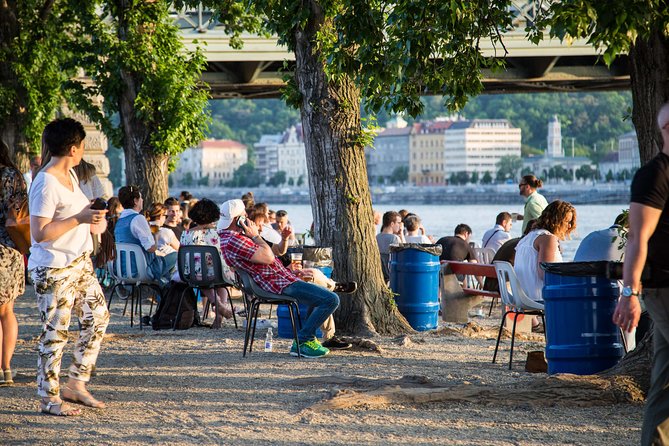
Reviewed · WALKING TOURS
Budapest Grand Walk
Budapest reveals itself best on foot, and this tour covers an impressive stretch of the city in one afternoon. You move from the Palace district and the 1956 Revolution to grand Andrássy Avenue, the Jewish Quarter, and the Danube, with a local guide tying the pieces together. A glass of Hungarian sparkling wine at the start and a coffee break later keep the pace pleasant.
I like the small-group format, with a maximum of eight people on the shared option, and I like the way public transport is folded into the walk rather than treated as an afterthought. You also get useful first-day bearings, from the Pest side of Chain Bridge to the route toward Buda Castle. The tradeoff is clear: this is a long, fast-moving walk, and you will see many places from outside rather than touring their interiors.
Key points to know before booking
- A four-hour introduction to Pest: The route links the Palace district, Andrássy Avenue, the Jewish Quarter, and the Danube.
- A local guide gives the city context: Expect stories about kings, dictators, freedom fighters, writers, architects, and the 1956 Revolution.
- The tour begins with Hungarian sparkling wine: A short aperitif at Tasting Table Budapest gives the afternoon a relaxed start.
- Historic transport is part of the experience: You ride continental Europe’s oldest metro line, along with a few other short public transport trips.
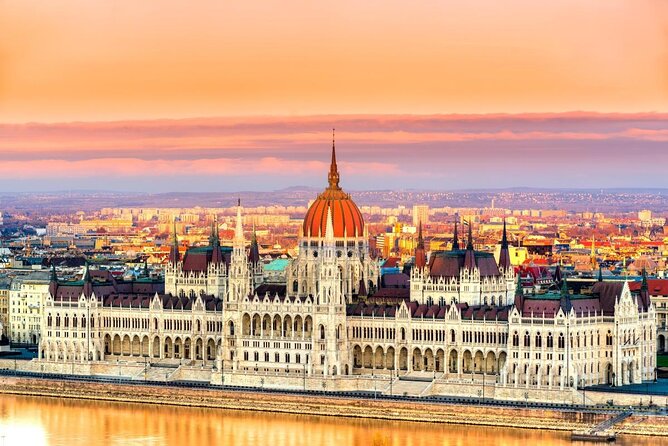
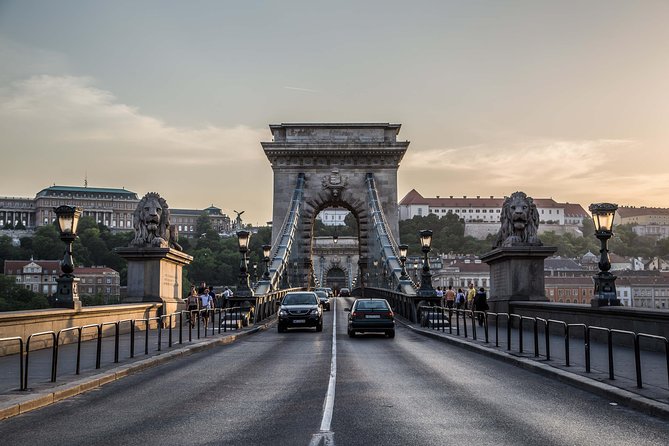
- The Danube finale is excellent for orientation: The end point near Chain Bridge gives you views of Parliament, Buda Castle, and the bridges linking Buda and Pest.
- Comfortable shoes matter: Four hours of walking can stretch beyond the advertised time if the group is not in a hurry.
Why this walk works well on a first day
Budapest can feel like several cities stitched together. Pest has grand boulevards, cafés, political monuments, Jewish heritage sites, and the Danube waterfront. Buda, across the river, brings the Castle district and hilltop views. A first-time visitor can easily spend days seeing these areas separately.
This walk gives you a useful framework. You begin in the Pest Palace district, move through central streets, reach Heroes Square, use the metro, pass through the former Jewish Quarter, and finish beside the river. I like this sequence because it shows both the formal Budapest of public buildings and boulevards and the more lived-in city of courtyards, cafés, old apartment blocks, and memorials.
The guide is the main reason to book this rather than simply following a map. Guides such as Aniko and Angela have led this experience, and the tour is built around explanation rather than a quick list of photo stops. Aniko, in particular, has been described as a Budapest local with an excellent command of English and a gift for answering detailed questions about dates, events, and competing versions of Hungarian history.
If you enjoy history, say so at the beginning. The tour can be adapted to your interests, and the guide may spend more time on politics, architecture, daily life, or the stories behind particular memorials. One useful detail from the tour description is that you should mention any time limit when you meet your guide. The walk can run longer than four hours when nobody is in a hurry.
More walking tours in Budapest:
- Budapest: Buda Castle Walk with Saint Stephen’s Hall
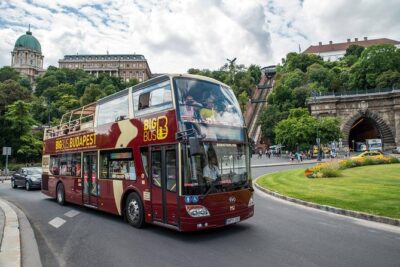
★ 4.5 · 3,012 reviews - Big Bus Budapest Hop-On Hop-Off Bus and Walking Tour
★ 3.5 · 2,206 reviews - Budapest: Buda Castle District Walking Tour
★ 4.6 · 2,108 reviews
Starting with wine in the Palace district
Meet at Tasting Table Budapest, a wine shop and cellar at Bródy Sándor utca 22. The tour opens with a glass of Hungarian sparkling wine, giving you a chance to meet the guide and settle into the afternoon before the walking begins.
This is a good starting point for the tone of the experience. It is not a formal lecture followed by a rigid march. The drink creates a little breathing room, and the guide can explain what you are about to see. The first 15 minutes are included in the stated tour time.
The Palace district contains striking buildings, though some have clearly seen better days. That contrast is part of Budapest’s appeal. Grand façades sit beside worn surfaces, reminders that the city’s past was shaped by war, political upheaval, changing borders, and long periods of economic strain.
You pass the Hungarian National Radio Building, an important site during the 1956 Revolution. This is the kind of stop that benefits from a guide. The building itself may not look like a classic sightseeing attraction, but its role in the uprising gives the surrounding streets a sharper meaning.
The Hungarian National Museum is another major landmark in this part of the route. You should not expect a full museum visit during the walk. Instead, the guide uses the building and its setting to explain Hungary’s political and cultural development.
Grand Pest along Andrássy Avenue
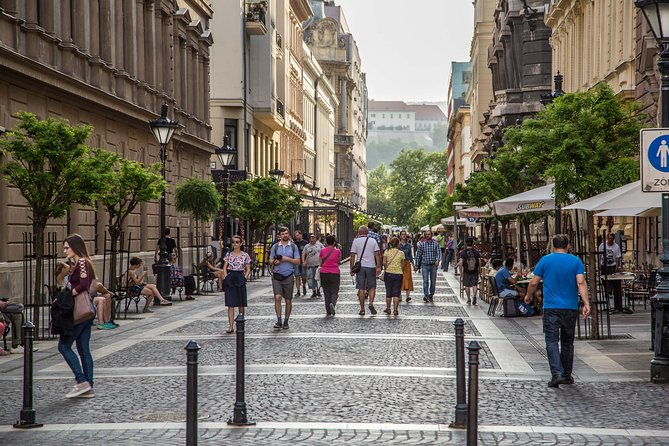
From the Palace district, the route moves toward some of central Pest’s best-known streets and buildings. The Hungarian State Opera House appears along Andrássy Avenue, a grand boulevard lined with important architecture.
The Opera House is a neo-Renaissance building designed by Miklós Ybl. Even without an interior visit, it is a worthwhile pause because the façade reflects the confidence of Budapest during the period when the city was developing into a major European capital.
You also pass St. Stephen’s Basilica, named for Stephen, Hungary’s first king. His mummified right hand is kept inside the church. The tour allows about 15 minutes at the basilica, with admission listed as free, so you can appreciate the exterior and hear the story without spending a large part of the afternoon inside.
I find this section useful because it places Budapest’s public monuments in a wider story. You are not just looking at ornate buildings. You are seeing how religion, monarchy, national identity, art, and urban planning shaped Pest.
The route continues to Heroes Square, one of the city’s most recognizable open spaces. The monuments honor important figures from Hungarian history, and the square provides a broad, formal counterpoint to the narrower streets you have already walked.
There is a lot packed into this section. You should expect short stops, explanations, and photo opportunities rather than long periods at any single attraction. If you prefer a slower visit with time to study every façade, a private tour may suit you better.
Riding Budapest’s historic metro
A short ride on continental Europe’s oldest metro line adds variety to the afternoon. This is more than a practical way to save your feet. It gives you a sense of how Budapest’s older central districts connect beneath the grand streets above.
The metro ride also helps keep the itinerary realistic. Covering the Palace district, Andrássy Avenue, Heroes Square, the Jewish Quarter, and the Danube entirely on foot would make an already demanding walk even longer. The public transport sections break up the route without taking you away from the city.
A coffee or other drink is included at a favorite local café. Coffee drinkers can use this as a genuine rest stop, while non-coffee drinkers are not left out. One guide has provided dessert and lemonade for visitors who did not drink coffee, showing that the break can be adjusted within reason.
This is a small but useful part of the outing. Four hours is a long time to stay on your feet, and the café stop gives you a chance to ask questions in a quieter setting. It also brings the tour closer to everyday Budapest, rather than keeping you only among monumental buildings.
A few more Budapest half-days to weigh up
- Budapest: City Highlights Cruise with Welcome Drink
★ 4.6 · 35,610 reviews - Budapest: Unlimited Prosecco, Beer and Aperol Spritz Cruise
★ 4.8 · 25,310 reviews - Budapest: Széchenyi Spa Day Ticket with Optional Upgrades
★ 4.3 · 23,911 reviews - Budapest: Nighttime or Daytime Sightseeing Cruise
★ 4.2 · 21,062 reviews
The former Jewish Quarter and Gozsdu courtyards
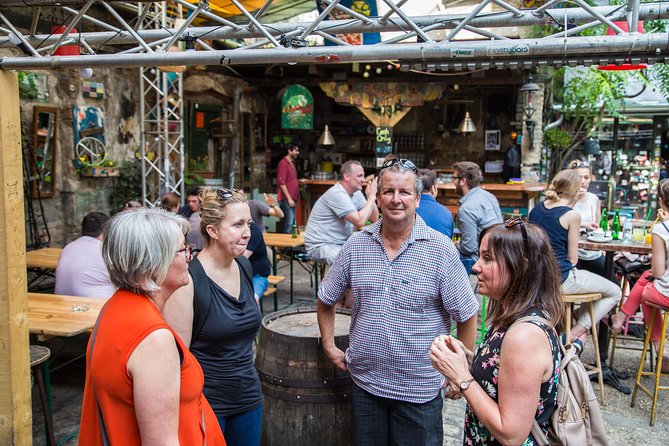
The route then reaches the former Jewish Quarter in the seventh district. You see the Grand Synagogue, described as the largest in Europe, along with Király utca and the Gozsdu udvar complex.
Gozsdu udvar is made up of seven buildings and connected courtyards. The passages contain shops and restaurants, and their layout gives you a sense of how this part of Pest developed around shared inner spaces rather than only broad avenues.
This section deserves attention because the Jewish Quarter is not simply another pretty neighborhood. It carries the weight of Budapest’s Jewish history, the destruction and persecution of the Holocaust, and the district’s later changes. The guide’s explanation helps connect the visible streets with events that are not obvious from architecture alone.
The pace here may feel quick if you want to explore the synagogue interior or spend time in the courtyards. The tour is designed as a city overview, not as a dedicated Jewish heritage visit. If that subject is your main reason for coming to Budapest, ask about a private, customized option.
The route also passes monuments and political reminders in central Pest, including the Soviet Monument and a memorial connected with an American major. You will hear about why Budapest contains tributes to figures such as Ronald Reagan. These stops show how public memory in the city has been shaped by occupation, liberation, Cold War politics, and later attempts to reassess the past.
Liberty Square and the political heart of Budapest
Liberty Square is surrounded by handsome buildings, including the former stock exchange. It is one of the places where Budapest’s architecture and twentieth-century politics meet in a compact area.
The Hungarian Academy of Sciences occupies an elegant neoclassical palace built in 1865. The building adds another layer to the route, showing the role of education and scholarship in the city’s national development.
I like the way this part of the walk shifts your attention from royal and religious landmarks to institutions and political symbols. Budapest is not only a city of cafés and grand churches. Its streets also tell the story of changing governments, national independence, foreign influence, and contested memory.
The guide’s role is especially important here. Without explanation, a visitor may see an attractive square and a collection of monuments. With context, the same place becomes a lesson in how Hungary has understood its own past at different times.
The Danube finale: Parliament, memorials, and Chain Bridge
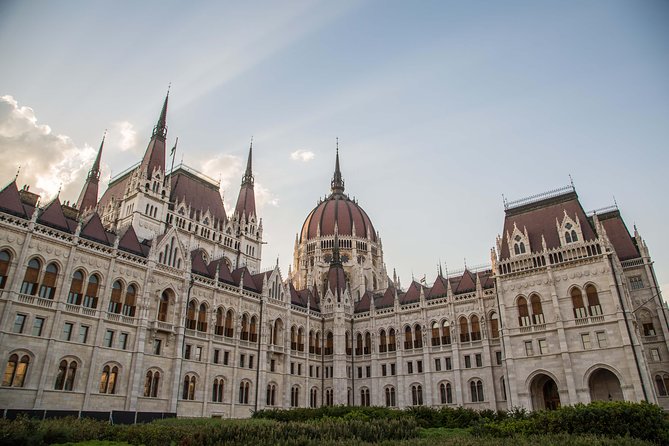
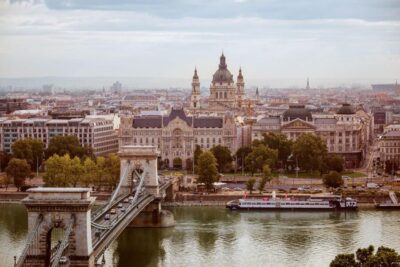
The final stretch takes you to the Danube promenade. Here you see the neo-Gothic Parliament building across or along the river, depending on your exact position, along with the Chain Bridge and Buda Castle beyond the water.
The views are one of the strongest parts of the tour. The river gives you a clear sense of the relationship between Buda and Pest, and the bridges explain why the two sides function as one capital while retaining different characters.
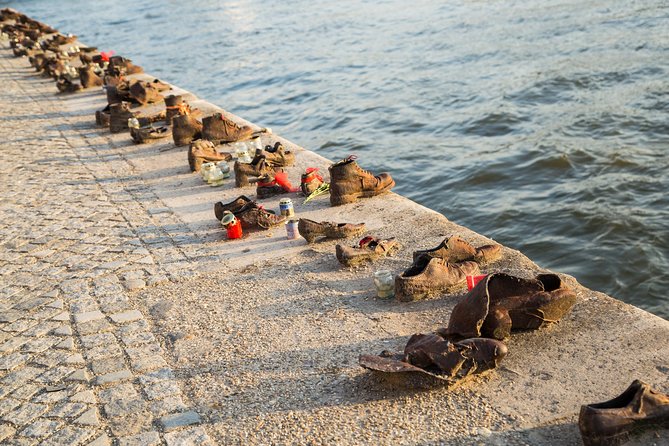
You also stop at the Shoes on the Danube Memorial, a moving tribute to Jewish people who were killed during the Holocaust. The iron shoes along the riverbank are simple and powerful. This is not a place for a rushed photo and a quick joke. Give yourself a quiet moment, and listen carefully to the guide’s explanation.
The Hungarian Academy of Sciences and the surrounding riverfront add architectural scale, while the bridges show how daily life and city design are tied together. You can look toward Buda Castle and plan a later visit across the river.
The tour ends near Chain Bridge on the Pest side. Your guide departs there, so this is not a guided continuation into Buda Castle. That can be a benefit if you want freedom afterward, but you should understand the arrangement. You can cross the bridge and continue on your own, yet the route up to the castle is not included as part of this walk.
What the $125 price gets you
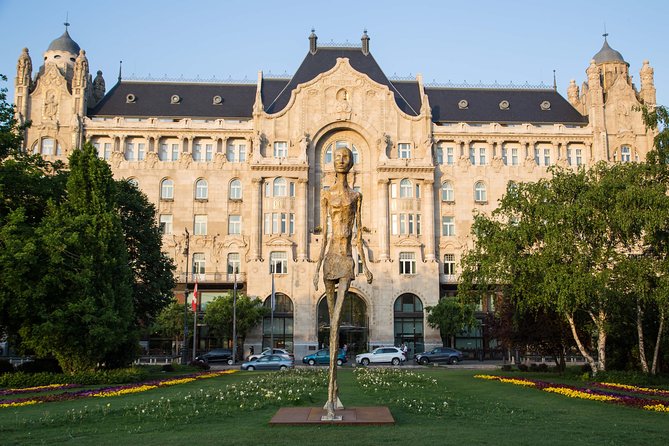
At $125 per person, this is not a budget stroll. The value depends on how much you want from the guide.
You receive about four hours with an English-speaking local guide, a sparkling wine aperitif, a coffee or other drink, short public transport rides, and a route that covers a large part of Pest. You also get help interpreting buildings and memorials that would otherwise be easy to pass without understanding.
The price makes the most sense for a first visit, especially if you have limited time in Budapest or enjoy asking questions. A private tour can be customized, but the cost and exact format depend on the option you choose. The shared tour keeps the group small, although the stated maximum is eight rather than six. Larger group options are also available.
I would not choose this tour if your main goal is extensive interior sightseeing. The National Museum, Opera House, Basilica, Grand Synagogue, Parliament, and Buda Castle are primarily encountered from the outside or as brief stops. The value lies in the connected story, local commentary, and efficient route.
The tour is offered in English. Confirmation is provided at booking, and the minimum is two people. If the minimum is not reached, the operator may cancel and offer another date or a full refund. The experience is otherwise non-refundable, so book only when your plans are firm.
Walking demands and who will enjoy it
You need comfortable shoes. The route includes a moderate to substantial amount of walking, several standing stops, and a metro ride. The description says four hours, but it can run longer when the group has time and questions.
Most people can participate, but the format is not designed for a slow, stop-and-start pace. If you have mobility concerns or a strict appointment afterward, tell the guide at the beginning. If you simply want more control over the rhythm, the private option is the better choice.
I would recommend this walk to:
- First-time visitors who want a strong orientation to Pest
- People who enjoy political and cultural history
- Couples or small groups who want a personal guide
- Visitors arriving after a long flight who need an active way to stay awake
- Anyone who wants to combine famous sights with less obvious streets and memorials
One visitor used the tour on the first day after a long overnight flight and found that the walking helped with the time change. That is a practical point. The afternoon schedule gives you a reason to stay awake while learning the city’s layout.
Should you book the Budapest Grand Walk?
Book it if you want a lively, history-focused introduction rather than a series of museum admissions. The combination of sparkling wine, local commentary, public transport, café time, and the Danube finale gives you a useful first look at Budapest.
You should also book it if you value a guide who can answer detailed questions and adjust the discussion to your interests. Guides such as Aniko and Angela bring a local perspective, and the experience is strongest when you treat it as a conversation rather than a fixed checklist.
Skip it if four hours of walking sounds tiring, if you need long visits inside each landmark, or if you already know Pest well. For most first-time visitors who want to understand how the city fits together, the tour offers a solid use of an afternoon and a clear place to continue exploring: Chain Bridge.
FAQ
How long is the Budapest Grand Walk?
The tour lasts about four hours. It may run longer if the group is not in a rush, so tell your guide at the start if you need to finish by a specific time.
Where does the tour begin?
It begins at Tasting Table Budapest, a wine shop and cellar at Bródy Sándor u. 22 in Budapest’s Palace district.
Where does the tour end?
The walk ends near Chain Bridge on the Pest side of the Danube. The guide departs there, and you can continue independently toward Buda Castle if you wish.
What is included in the price?
The tour includes an English-speaking local guide, a glass of Hungarian sparkling wine, one coffee or other drink during the café break, and several short public transport trips.
How many people are in the shared group?
The shared tour has a minimum of two and a maximum of eight participants. A larger group option and a private option are also available.
Does the tour enter the major buildings?
The route includes stops at places such as St. Stephen’s Basilica, the Opera House, the Grand Synagogue, the National Museum, Parliament, and Buda Castle views. The experience is primarily a walking tour of the city, so extensive interior visits are not part of the stated itinerary.
Is the tour suitable for people who do not drink coffee?
Yes. A coffee or another drink is included during the break. The experience also begins with a glass of sparkling wine, and non-coffee drink options are available.
Recently added around Budapest
- Budapest: Private Walking Tour with a Local Guide★ 3.6 · 6 reviews
- From Budapest: Guided Tour of Eger with Wine Tasting★ 4.5 · 6 reviews
- Budapest: City Bike Tour with Coffee Stop★ 5.0 · 37 reviews
- Budapest: Danube River Views Bike Ride★ 4.8 · 23 reviews
- Budapest: Vacation Photographer to collect great memories★ 5.0 · 49 reviews
- Walk to recent and aged spiritual sanctuaries near Budapest★ 5.0 · 5 reviews
- Trash Art Museum: Hungary’s First Scrap Metal Exhibition★ 4.3 · 72 reviews
- Budapest: Multilingual Highlights Tour★ 4.8 · 89 reviews
Walking Tours, compared.
Big Bus Budapest Hop-On Hop-Off Bus and Walking Tour
Read our review →
Budapest City Landmarks Walking Tour in 2 Hours
Read our review →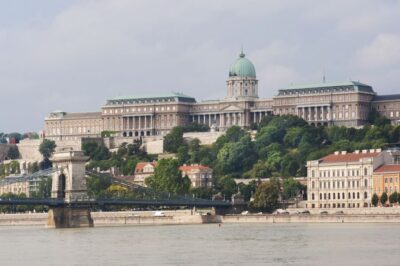
3-Hour Orientation Walking Tour of Buda and Pest
Read our review →
Budapest Historical Sightseeing – Free Walking Tour
Read our review →
Budapest All in One Small Group Walking Tour with Strudel Stop
Read our review →Browse the lists this tour appears in