Reviewed · TOURS
Accessible Budapest Tour
Budapest’s best feature for visitors with mobility needs is not a single monument, but a guide who can adjust the day when steps, steep ground, or crowded routes get in the way. This private tour links major sights with practical access planning, including an elevator at St. Stephen’s Basilica and an accessible public bus to Buda Castle. The guide can also arrange an accessible minibus on request.
I especially like the one-to-one attention and the chance to see Budapest’s grandest views without trying to solve every access problem alone. The guide can tailor timing and skip awkward spots, and hotel pickup and drop-off make the day easier. The main caution is that several famous places are only partly accessible, and the tour’s long list of stops may feel rushed if transfers take longer than expected.
Key points to know before booking
- Private and adaptable: Your group has its own guide, so timing and route choices can be adjusted around mobility needs.
- St. Stephen’s Basilica has an elevator: The main church visit is included, but the tower, treasury, and panoramic terrace are not accessible by wheelchair.
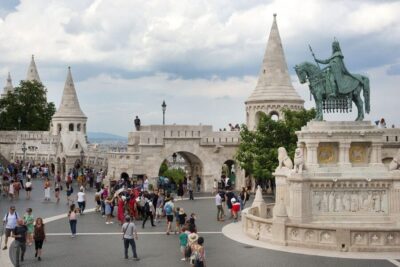
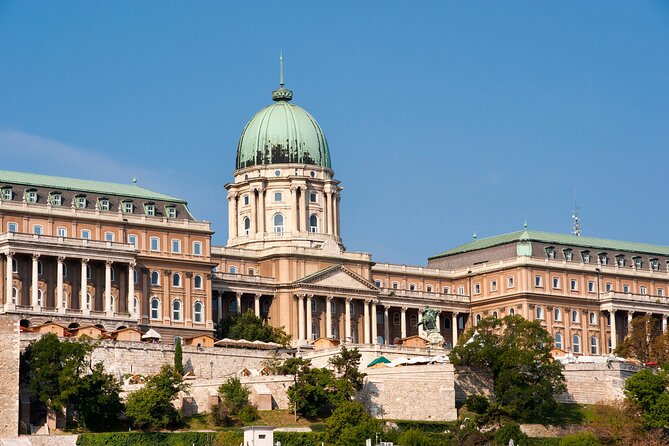
- Buda’s big views come without a castle interior visit: You visit the Royal Palace terrace, Matthias Fountain, Sándor Palace, and Fisherman’s Bastion.
- Matthias Church is an outside stop for wheelchair users: An interior visit can be arranged for walkers on request, but it is not accessible inside for wheelchair users.
- Transport needs planning: The tour may use public buses or an accessible minibus, and public transport tickets are not included.
- The listed price is $142.97 per person: That can be fair for a private, access-focused half-day, but value depends on group size and how much time is lost to transfers.
A private Budapest day built around access
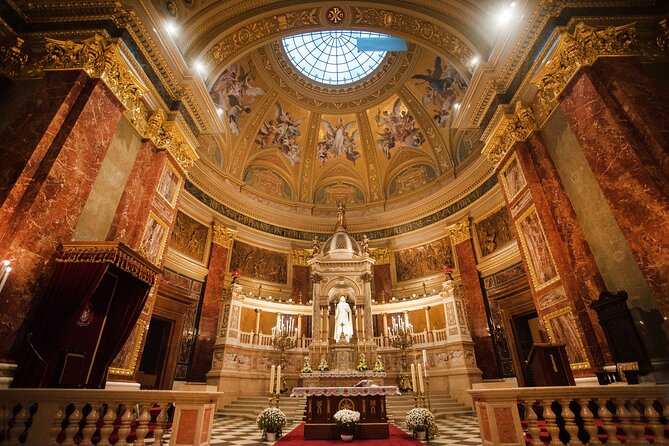
This is not a standard bus loop with a fixed script. It is a private sightseeing outing for wheelchair users and people who have trouble with stairs, levels, or long stretches of walking. The guide can alter the route, slow the pace, or leave out a difficult stop.
That matters in Budapest. The city’s major sights are spread across Pest, Buda, and the City Park, with the Danube between them. A route that looks simple on a map can involve steps, uneven surfaces, slopes, or a transport change. Having one person responsible for sorting through those details can save energy for the sights themselves.
The tour lasts about four to six hours. An optional one-hour lunch break can be added, though that time may not count toward the stated tour length. You can begin at the meeting point near St. Stephen’s Basilica, or request pickup at your hotel or accommodation. Afterward, the guide can return you to your hotel or another selected point in the city.
The experience is offered in English, and only your group participates. That private format is the strongest reason to choose it over a larger sightseeing tour.
A few more Budapest half-days to weigh up
- Budapest: City Highlights Cruise with Welcome Drink
★ 4.6 · 35,610 reviews - Budapest: Unlimited Prosecco, Beer and Aperol Spritz Cruise
★ 4.8 · 25,310 reviews - Budapest: Széchenyi Spa Day Ticket with Optional Upgrades
★ 4.3 · 23,911 reviews
St. Stephen’s Basilica and the first access test
The tour begins at St. Stephen’s Basilica, one of central Budapest’s most imposing churches. It was built in memory of Hungary’s first king, Stephen, who died in 1038. Inside, you can expect statues, frescoes, and the mummified right hand of the king, a curious and solemn relic that gives the visit more character than a quick look at the facade.
For wheelchair users, the important detail is the accessible elevator. It allows entry into the church, making this one of the more reliable interior visits on the route. The tower area, treasury, and panoramic terrace are exceptions. You should not expect to reach those sections by wheelchair.
Admission to the basilica is included, except during Sunday morning religious service, when the sightseeing visit is not available. Covering your legs and shoulders is required in church areas, so dress with that in mind. The scheduled visit takes about 45 minutes, enough time to see the interior without making the church the whole day.
This stop also shows how the tour handles access: it does not promise every part of every building. It identifies what you can see and keeps the difficult sections clear.
Crossing to Buda by accessible public bus
From the central traffic junction, the route moves toward Buda. The plan is to use an accessible public bus across the river, though the exact transport depends on the tour option selected. Public transport tickets are not included, so keep that small extra cost in mind.
The bus connection is practical, but it can also be the least predictable part of the day. Boarding conditions, traffic, and waiting time can affect the schedule. That is one reason the listed four to six hours should be treated as an estimate rather than a tight promise.
An accessible minibus can be organized if you request one. This may be the better choice for a group that needs more control over boarding, seating, or door-to-door travel. Ask about this option before booking rather than assuming it is automatically included.
Buda Castle’s terrace, Matthias Fountain, and Sándor Palace
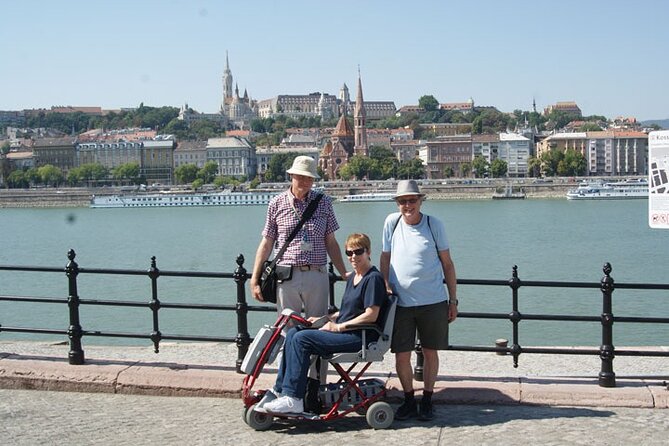
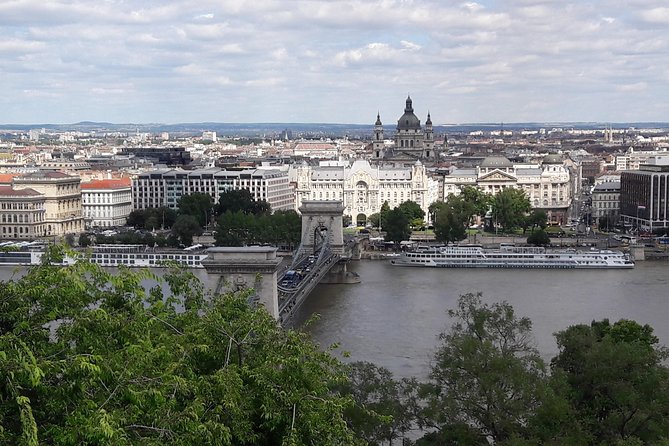
At Buda Castle, the focus is the panoramic terrace of the Royal Palace rather than a full interior museum visit. From here, you get one of Budapest’s classic views across the Danube toward Pest. The river, bridges, Parliament area, and dense central city create the kind of broad city view that helps you understand Budapest’s layout.
The scheduled time is about 45 minutes, which gives you room to enjoy the outlook and take photographs. It may not allow a slow exploration of every corner, especially if the bus transfer has taken time.
The next stop is the Fountain of King Matthias, a decorative 19th-century fountain. It is a short ten-minute visit, best treated as a pleasant detail rather than a major attraction. You then move toward Sándor Palace, the president’s palace, where guards in historical uniforms add a formal touch. Admission to Sándor Palace is not included, and the stop is also listed for about ten minutes.
The strength here is the way the tour gathers several Buda highlights without asking you to negotiate the entire hill alone. The limitation is that brief stops leave little room for lingering.
A completely different kind of day out in Budapest:
- Budapest: Nighttime or Daytime Sightseeing Cruise
★ 4.2 · 21,062 reviews - Budapest: 1-Hour Evening Sightseeing Cruise with Drink
★ 4.5 · 8,330 reviews - Budapest Danube Cruise and Dinner Options, Live Music and Dance
★ 4.5 · 7,428 reviews - Budapest: Historic Cruise with Welcome Drink
★ 4.7 · 6,512 reviews
Fisherman’s Bastion and the Matthias Church limitation
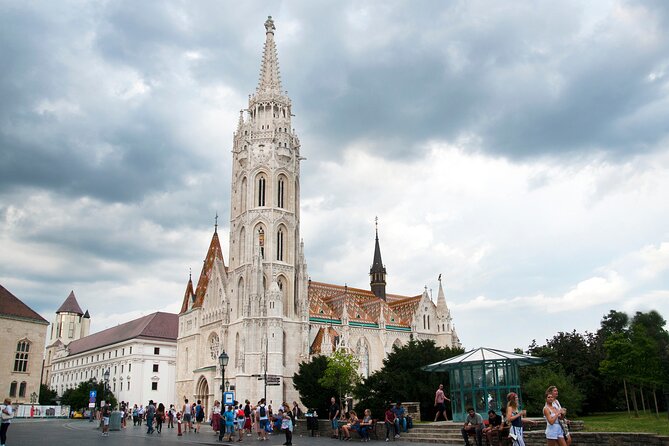
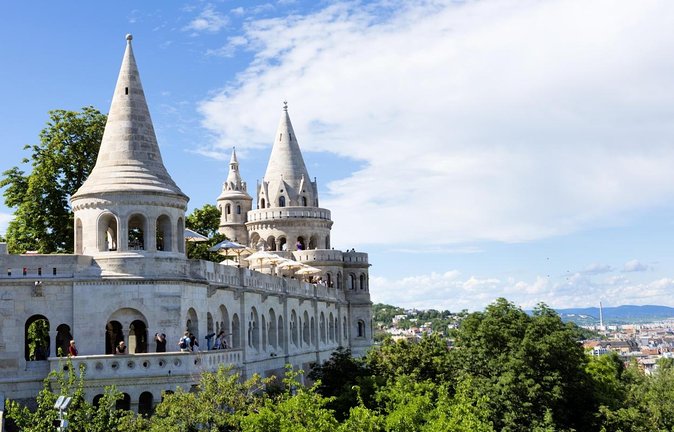
Fisherman’s Bastion is one of the tour’s major photo stops. Its terraces look over the Danube and toward the Hungarian Parliament building, giving you a memorable view of both the river and Pest. The stop is planned for about 15 minutes.
You should clarify which sections are accessible before setting expectations. The tour is designed to avoid steps and levels where needed, but Fisherman’s Bastion is not presented as a completely barrier-free visit. Your guide can direct you toward the usable areas and help decide how much of the stop makes sense for your group.
Matthias Church is viewed from the outside for wheelchair users. The medieval Gothic church is visually important, with its patterned roof and prominent position beside Fisherman’s Bastion, but the interior is not accessible for wheelchair users. Walkers can request an interior visit, but admission is not included.
This is a key point to understand before paying. The tour covers the Buda Castle area and its major viewpoints, but that does not mean every historic building includes full interior access. If entering Matthias Church is essential, ask about the available option when arranging the tour.
Andrassy Avenue and Heroes’ Square
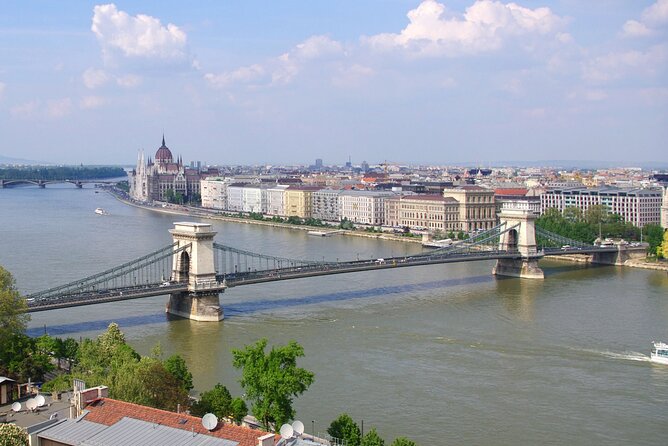
The route then returns toward Pest and follows Andrassy Avenue by accessible public bus. This two-mile historic thoroughfare links the central city with Heroes’ Square and the City Park. Riding along it gives you a useful sense of Budapest’s formal city plan without requiring a long walk along the full avenue.
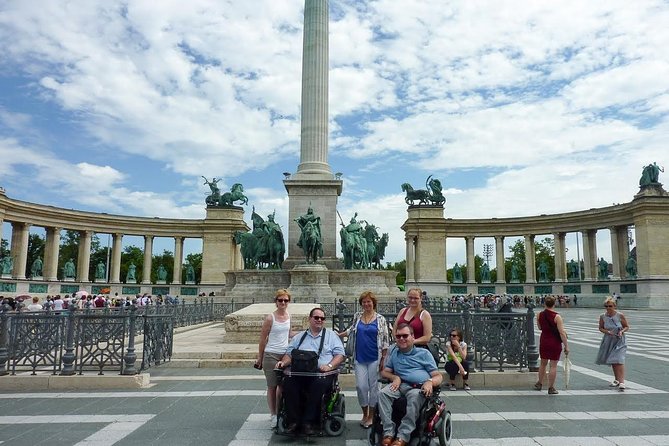
Heroes’ Square is the largest square in Budapest. Its Millennium Monument commemorates 1,000 years of Hungarian history, while the Fine Arts Museum and Arts Hall frame the open space on either side. The visit is free and takes about ten minutes.
The Millennium Monument receives another ten-minute stop. The memorial includes statues of major Hungarian kings and leaders in its colonnades, along with the grave of the unknown heroes in front. You may find the two entries feel like one continuous visit, since the monument is the heart of the square. That is not a problem, but it explains why the schedule lists them separately.
The square is broad and exposed, so weather can affect comfort. The tour runs in all weather, and suitable clothing is your responsibility.
Vajdahunyad Castle and the Anonymus statue
The final stretch takes you into Budapest City Park, described as the city’s oldest public park. A bridge leads to an island in the lake, where Vajdahunyad Castle creates one of Budapest’s most unusual architectural scenes.
The castle is not a single historic residence in the usual sense. Its courtyard includes copies of buildings representing different Hungarian architectural periods and styles. That mixture gives the stop a playful quality, with Gothic, Romanesque, and other forms gathered in one place.
The planned visit lasts about 15 minutes. Inside the courtyard, you will also see the statue of Anonymus, identified as Hungary’s first history writer, who lived in the 12th century. The statue is a ten-minute stop and one of the more distinctive small details on the route.
This section may require more outdoor movement than the basilica or bus rides. If walking distance, bridges, or uneven paths are concerns, tell the guide early. The private format should make it possible to shorten or adjust this part.
What $142.97 per person really buys
At $142.97 per person, the price is not aimed at budget sightseeing. You are paying for a private guide, access-aware planning, hotel pickup and drop-off when selected, and the ability to adjust the day around your group.
For one person or a very small group, the price may feel high. For several people sharing a private tour, it can compare more favorably with booking separate accessible transport and trying to coordinate Budapest’s major sights on your own.
The value depends heavily on the transport arrangement. Public transport is part of the route, but tickets are extra. An accessible minibus can be organized, but you should confirm the cost and exact vehicle arrangements before booking. Lunch is also extra, as are food and drinks.
The included basilica entry helps, but other paid attractions are not covered. Matthias Church admission is not included, and wheelchair users do not enter it under the standard accessible plan. The Castle of Buda stop focuses on the terrace, with no general castle admission listed.
Timing, flexibility, and the risk of a rushed route
The scheduled stops add up quickly: 45 minutes at the basilica, 45 minutes at Buda Castle, then a series of ten- to 15-minute visits. Add bus transfers, boarding time, photographs, and access needs, and the day can become tight.
One booking account described a good guide who understood specific disabilities and adjusted the itinerary and pace with care. That is exactly what this tour needs to work well. Another booking account found the experience did not match expectations about castle and church access and felt that poor timekeeping meant some sights were missed.
The practical lesson is simple: treat the route as a menu of priorities, not a guarantee that every stop will receive equal attention. Tell the guide your three most important sights. If St. Stephen’s Basilica, the Buda panorama, and Heroes’ Square matter most, say so. If Vajdahunyad Castle is less important than a longer stop at Fisherman’s Bastion, ask for that change.
A private tour should be flexible, but flexibility works best when you state your needs clearly at the start.
Who should book this Budapest tour?
I would recommend it most strongly to a wheelchair user or person with mobility limitations who wants to see a wide range of Budapest without arranging every transfer alone. It also suits families or small groups where one person needs a slower pace, a private vehicle option, or help identifying accessible entrances.
It is less suitable if you want long, detailed interior visits at every monument. The route is broad and efficient, with several short stops and outdoor viewpoints. It is also not the best choice if entering Matthias Church, the castle interior, or the basilica tower is your main goal.
Service animals are allowed, and the tour is near public transportation. Most people can participate, but the guide needs clear information about the group’s mobility requirements before the day begins.
Free cancellation is available if you cancel at least 24 hours before the start time. Changes made inside that period are not accepted, so confirm your transport choice and access needs early.
Should you book it?
Book this tour if access planning and private attention matter more to you than a rigid sightseeing checklist. The guide can help you reach Budapest’s big views, major squares, and best-known landmarks while avoiding some of the city’s harder steps and levels.
Before paying, confirm four points: the exact pickup arrangement, public bus versus accessible minibus, which Buda Castle areas you will visit, and how the guide will handle Matthias Church. If those details match your needs, the tour offers a sensible way to see a lot of Budapest with less strain. If you need full interior access at every stop, choose a shorter route with fewer monuments and more time at each accessible site.
FAQ
Is this a private tour?
Yes. Only your group participates, with a professional licensed English-speaking guide.
How long does the tour last?
The tour lasts approximately four to six hours. An optional one-hour lunch break can be added, and that break may be excluded from the tour duration.
Is hotel pickup available?
Yes. Pickup can be arranged at your hotel or accommodation. After the tour, drop-off is available at your hotel or another selected point in the city.
Is an accessible minibus included?
An accessible minibus can be organized on request. Transportation may otherwise use public transport or a minivan, depending on the selected tour option.
Is St. Stephen’s Basilica wheelchair accessible?
The basilica has an accessible elevator for wheelchair users. The tower area, treasury, and panoramic terrace are not accessible by wheelchair.
Can wheelchair users enter Matthias Church?
No. Matthias Church is not accessible inside for wheelchair users. Walkers may request an interior visit, but admission is not included.
Are transport tickets and lunch included?
No. Public transport tickets, lunch, and other food and drinks are not included. Entry to St. Stephen’s Basilica is included, except during Sunday morning religious service.
Recently added around Budapest
- Budapest: Private Walking Tour with a Local Guide★ 3.6 · 6 reviews
- From Budapest: Guided Tour of Eger with Wine Tasting★ 4.5 · 6 reviews
- Budapest: City Bike Tour with Coffee Stop★ 5.0 · 37 reviews
- Budapest: Danube River Views Bike Ride★ 4.8 · 23 reviews
- Budapest: Vacation Photographer to collect great memories★ 5.0 · 49 reviews
- Walk to recent and aged spiritual sanctuaries near Budapest★ 5.0 · 5 reviews
- Trash Art Museum: Hungary’s First Scrap Metal Exhibition★ 4.3 · 72 reviews
- Budapest: Multilingual Highlights Tour★ 4.8 · 89 reviews
Tours, compared.
City Sightseeing Hop-On Hop-Off Bus Tour & Extras
Read our review →
Buda Castle District Vampires and Myths Night Tour
Read our review →
Big Bus Hop-On Hop-Off Tour & Danube River Cruise
Read our review →
Big Bus Budapest Hop-On Hop-Off Bus and Walking Tour
Read our review →