
Reviewed · WALKING TOURS
Budapest: 3-Hour Walking Tour of Pest with a Historian
Pest is the side of Budapest where grand avenues, cafés, political landmarks, and everyday city life meet. This three-hour walk gives you a clear route through central Pest, from the Danube Promenade and Gresham Palace to St. Stephen’s Basilica, Andrássy Avenue, and Heroes’ Square. I like the mix of major sights and local explanation, especially the ride on the Millennium Underground, the oldest underground railway on the European continent.
I also like that you can ask direct questions about Hungary’s past and present, rather than simply stand in front of buildings and hear dates. Guides such as Judit, Greg, Andrea, Monica, and Barbara have brought personal stories and modern political context into the walk. The main consideration is pace: three hours covers a lot of ground, and much of it is outdoors, so poor weather or tired feet can affect the experience.
Key points at a glance
- A compact introduction to Pest: Cover the Danube Promenade, Gresham Palace, the Academy of Sciences, Zrínyi Street, the Basilica, Andrássy Avenue, the Opera, and Heroes’ Square.
- St. Stephen’s Basilica inside: Your entrance ticket is included, so you see Budapest’s largest church rather than only its exterior.
- A short ride on the Millennium Underground: The subway ticket is included, adding a useful piece of city history to the walking route.
- History with room for questions: The guide discusses Hungary from its early kingdoms through the Austro-Hungarian period, World War II, communism, and present-day life.
- Small group setting: With no more than 10 people, it is easier to ask questions and keep the discussion personal.
- A practical first-day choice: The central meeting point at Deák Ferenc tér makes this a handy way to get your bearings early in a Budapest visit.
Why Pest makes a good first walking tour
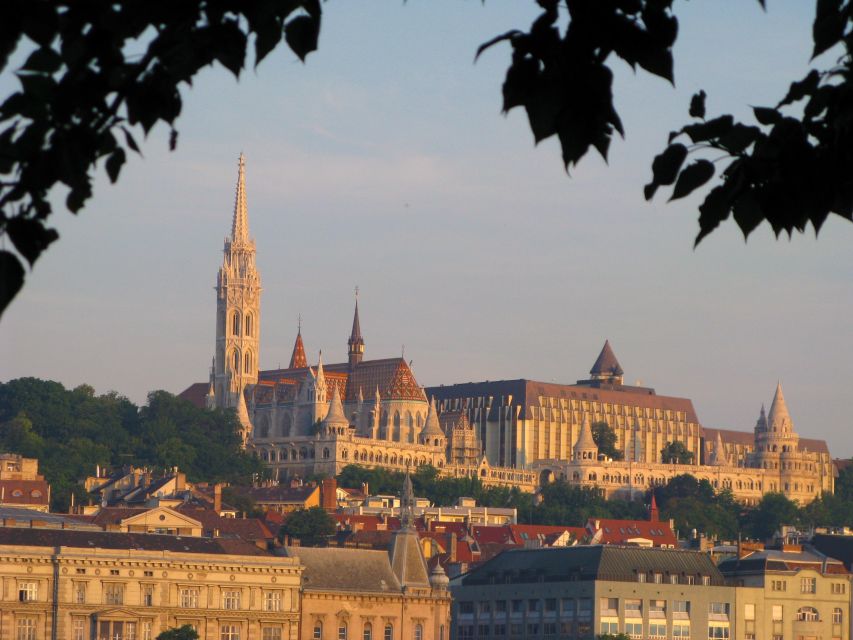
Budapest is divided by the Danube, with Buda on the western hills and Pest on the flatter eastern side. This tour concentrates on Pest, the younger and more urban half of the city. That focus matters because Pest is not simply a collection of grand buildings. It is where government, commerce, culture, hotels, restaurants, and much of daily city life come together.
The walk also introduces the different character traditionally associated with Buda and Pest. You hear about how residents of the two sides view each other, as well as what it is like to live in Budapest today. That gives the buildings a human setting. Instead of treating the city as a museum, the guide can explain how history still affects local attitudes and public life.
I especially value this kind of conversation early in a trip. Hungary’s past can be hard to follow in a short visit because the country has moved through medieval kingdoms, Ottoman rule, Habsburg power, the Austro-Hungarian Empire, World War II, and the Communist period. A good guide gives you a framework, then points out where those chapters appear in the streets around you.
The small group limit of 10 is important here. This is not a large crowd being marched from one photo stop to another. You can ask why a building matters, how a Hungarian name is pronounced, or what a particular political symbol means. Several guides have also adjusted the discussion to individual interests, with some people receiving suggestions for food and places to visit later in the day.
More walking tours in Budapest:
- Budapest: Buda Castle Walk with Saint Stephen’s Hall
★ 4.5 · 3,012 reviews - Big Bus Budapest Hop-On Hop-Off Bus and Walking Tour
★ 3.5 · 2,206 reviews - Budapest: Buda Castle District Walking Tour
★ 4.6 · 2,108 reviews
Starting at Erzsébet Square and the Danube
The meeting point is in front of Kempinski Hotel Corvinus Budapest, facing the Ferris wheel on Erzsébet Square. This is one of the easiest parts of central Budapest to reach. Deák Ferenc tér, served by the M1, M2, and M3 subway lines, is nearby, with buses and trams also serving the area.
From here, the route moves through the inner city toward the Danube Promenade. This opening section helps you place Budapest on the map. You see how central Pest relates to the river, Buda, and the major public spaces around the city center.
The Danube views are useful, but this is not presented as a scenic cruise or a long riverside stroll. The value comes from the guide’s explanation of the setting and the buildings around it. You may look across toward Buda while learning how the two sides developed different identities.
The route also passes Gresham Palace, an Art Nouveau landmark with elaborate decoration. The historic Academy of Sciences is another important stop. These buildings help show the cultural and economic ambition of nineteenth-century Budapest, when the city was changing quickly and taking on a major role within the Austro-Hungarian Empire.
Zrínyi Street and St. Stephen’s Basilica
Zrínyi Street brings the walk into a more intimate urban setting. Its cobblestones lead toward St. Stephen’s Basilica, with the church becoming a strong visual anchor as you approach. This contrast between a narrow historic street and a large monumental square is one of the pleasures of walking Pest.
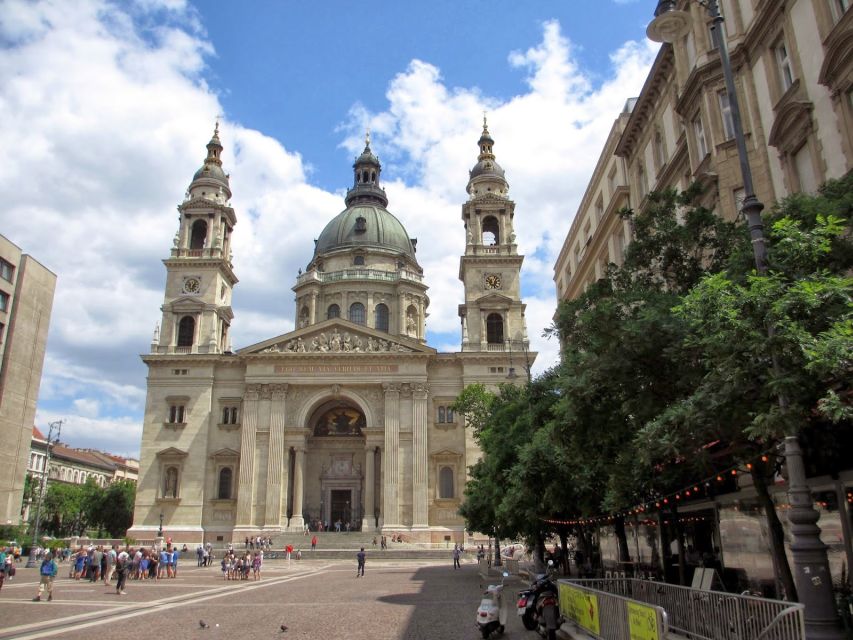
The Basilica is the one interior visit included in the price. St. Stephen’s is Budapest’s largest church, and going inside gives the tour a needed change of rhythm after the outdoor city walk. You are not limited to looking at the façade while the guide explains what lies beyond the doors.
The church is also a good place to connect national history with religious history. The building is named for Stephen, Hungary’s first king, a figure central to the country’s early Christian identity. Your guide can place the church in the broader story of Hungary and explain why its name carries such weight.
I would not treat the Basilica stop as a quick photo opportunity. Take time to look upward and notice the scale of the interior. Since the entrance ticket is included, this is one of the clearest value points in the tour. You do not have to organize a separate visit immediately afterward.
Andrássy Avenue and the Hungarian State Opera
From central Pest, the route continues along Andrássy Avenue, one of Budapest’s grandest streets and a UNESCO World Heritage site. The avenue was built to create a formal connection between the city center and the area around Heroes’ Square. Walking it helps you understand the scale of Budapest’s nineteenth-century ambitions.
Andrássy Avenue is more than a broad street lined with impressive façades. It reflects the period when Budapest was being reshaped as a modern European capital. The guide can point out how the avenue’s design, buildings, and cultural institutions fit into that plan.
The Hungarian State Opera is among the major sights along the way. Even if the tour does not include an opera performance or interior admission, the exterior gives you another example of the city’s investment in music and architecture. Your guide’s explanation is useful here because a quick look at the façade alone tells you little about its role in Hungarian culture.
This part of the walk may be especially appealing if you prefer architecture and city planning to a string of isolated monuments. You travel through a connected urban setting, seeing how one district leads into another. The drawback is that the route remains a walking tour, not a private sightseeing vehicle. You should be ready to spend much of the three hours on foot.
A few more Budapest half-days to weigh up
- 3-Hour Orientation Walking Tour of Buda and Pest
★ 4.8 · 1,834 reviews - Budapest: 3-Hour Grand City Tour and Castle Walk
★ 4.3 · 1,437 reviews - Budapest: 3-Hour Live Guided Sightseeing Tour
★ 4.4 · 1,041 reviews - 3 Hours Budapest Segway Grand City Tour Buda, Margaret and Pest
★ 5.0 · 255 reviews
The Millennium Underground: a short ride with real purpose
The tour includes tickets for the Millennium Underground, Budapest’s historic M1 line. It is described as the oldest underground railway on the European continent, and the ride adds variety to the afternoon. After walking through the center, you use the same transport system that helped connect nineteenth-century Budapest.
This is not merely a convenient way to save a few steps. The railway belongs to the same period of modernization represented by Andrássy Avenue. The guide can explain how transportation, city planning, and national pride came together as Budapest prepared for its millennium celebrations.
I like this inclusion because many walking tours keep you entirely above ground. Here, you see part of the city’s infrastructure and experience a practical piece of local transport. The subway ticket is covered, so you do not need to work out the fare during the tour.
The ride itself is only one part of the experience, and the tour is not built around extended subway travel. If you want a long underground transport tour, this will feel brief. If you want a smart connection between central Pest and Heroes’ Square, it works well.
Heroes’ Square and 1,000 years of Hungary
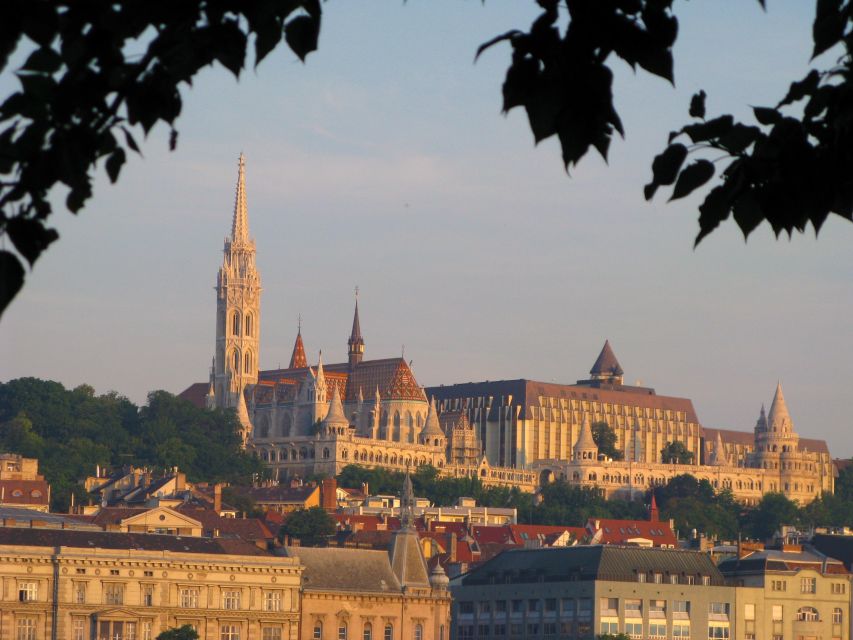
Heroes’ Square is the grand historical finish to the route. Its monuments present major figures from roughly 1,000 years of Hungarian history, making it an ideal place for the guide to connect earlier stories with the buildings and streets you have already seen.
This is also where a historian’s explanation earns its keep. A row of statues can be difficult to understand without context, especially when names and political periods are unfamiliar. The guide identifies influential figures and explains why they matter to Hungarian identity.
You will hear about the major turns in Hungary’s past, including the Austro-Hungarian Empire, World War II, and the Communist era. One guide began with a short overview of Hungarian history before the walk, which can make the later stops much easier to follow. Another guide condensed thousands of years of history into a brief introduction, then used the city itself to fill in the details.
That approach suits me better than an endless lecture. You receive enough background to understand the monuments, then return to the present through questions and conversation. Some guides have discussed modern Hungarian politics and everyday life as well, which can be useful if you want more than architectural sightseeing.
The guides make or break this kind of tour
A walking tour covering this much history depends heavily on the guide. The guide assigned to your departure may vary, but the experience has included Judit, Greg, Andrea, Barbara, Monica, Raymond, Gergely Molnár, Noemi, and others from the Budapest Explorers team.
The strongest pattern across the experience is the guide’s ability to explain history in an approachable way. Judit has been described as both personable and open to questions about current affairs. Greg has led tours at a steady pace while giving clear context about Pest. Andrea has connected major events with small street-level details, and Monica has added personal memories of growing up in Hungary.
Those personal details are valuable when they clarify what history feels like in modern Hungary. They should not replace the historical material, and they do not need to. The best moments come when a guide moves from an empire or political system to a simple explanation of how it shaped life in Budapest.
One guide even included two popular Hungarian sweets during a private-feeling outing. That is not listed as a standard part of the tour, so you should not book expecting a food tasting. It does show how a small group can leave room for human touches when time and circumstances allow.
The tour is in English. Since the subject matter can include sensitive periods and current politics, you should feel comfortable asking questions directly. The experience is designed for conversation, not just prepared narration.
What the $57 price includes
At $57 per person, this is not the cheapest way to walk around Pest. You can see several exterior landmarks on your own for little or no cost. The price makes more sense if you want a historian to connect those sights, take you inside St. Stephen’s Basilica, and handle the included subway tickets.
The three-hour duration is also a useful part of the value. You cover a broad central route without committing a full day. If you have only a short stay in Budapest, the tour gives you a strong overview and leaves time for an evening meal or another attraction.
A group of up to 10 makes the price easier to justify than a large group tour. You are paying for access to a guide who can answer questions and adjust the conversation. On some departures, the group may be smaller, even a private-feeling one-person tour, but you should not assume that will happen.
Free cancellation up to 24 hours before the start and the option to reserve now and pay later add useful flexibility. Check the available starting time when booking because the exact departure schedule is not fixed in the general description.
Pace, weather, and practical comfort
Three hours on city streets calls for comfortable shoes. The route includes cobblestones on Zrínyi Street, long stretches of pavement, outdoor squares, and the ride on the Millennium Underground. The tour does not require special equipment, but you should dress for the forecast.
Rain does not necessarily ruin the experience. One participant still enjoyed the walk in poor weather because the guide kept the stories engaging. Even so, bad weather can reduce the pleasure of the Danube Promenade and Heroes’ Square, where you spend time outside.
The pace has been suitable for covering the planned sights without feeling rushed, according to the supplied experience details. Still, the tour has a lot to accomplish. If you want to linger inside every church, stop for long photo sessions, or shop along the way, you may prefer to return to the area on your own afterward.
I would book this early in your Budapest stay. The meeting point is central, the route introduces major landmarks, and the guide can suggest what to see and where to eat afterward. It works especially well as a first orientation before you tackle separate visits to the Parliament, Castle District, museums, or the thermal baths.
Who should book this Pest walk
I would recommend it to first-time visitors who want the city to make sense quickly. It also suits people with limited time, history fans who prefer conversation to audio guides, and anyone who wants a local explanation of Hungary’s political past and present.
The tour is a good fit if you enjoy asking questions. You will get more from it if you are curious about why Pest and Buda feel different, how Budapest changed under the Habsburgs, or what daily life is like in Hungary now.
It may be less suitable if you dislike walking, want a food-focused outing, or prefer a tour built around interiors. Only St. Stephen’s Basilica is specifically included as an interior visit, and the experience remains a broad city introduction rather than a specialist architecture tour.
Should you book it?
Book this tour if you want a focused, human introduction to Pest, with enough history to make the monuments meaningful and enough flexibility for questions. The best features are the small group, the included Basilica admission, the Millennium Underground ride, and the chance to hear modern Hungarian context from guides such as Judit, Greg, Andrea, or Barbara.
Skip it if you already know Budapest well or want a slow, unstructured walk. For a first visit, though, $57 is reasonable when you factor in the three-hour route, entrance ticket, subway fares, and a historian who can turn a grand avenue or statue into part of a larger story.
FAQ
Where does the tour meet?
The meeting point is in front of Kempinski Hotel Corvinus Budapest, facing the Ferris wheel on Erzsébet Square. The address is Erzsébet tér 7, 1051 Budapest.
How can I reach the meeting point?
You can reach the meeting point by the M1, M2, or M3 subway lines, getting off at Deák Ferenc tér. Several buses and trams also serve the area.
How long does the tour last?
The walking tour lasts three hours.
What language is the tour in?
The tour is conducted in English with a live English-speaking guide.
How large is the group?
The group is limited to 10 participants.
Is St. Stephen’s Basilica included?
Yes. The entrance ticket to St. Stephen’s Basilica is included, and the tour visits the inside of Budapest’s largest church.
Is public transportation included?
Yes. Subway ticket or tickets for the Millennium Underground are included.
Which places does the tour visit?
The route includes the Danube Promenade, Gresham Palace, the Academy of Sciences, Zrínyi Street, St. Stephen’s Basilica, Andrássy Avenue, the Hungarian State Opera, the Millennium Underground, and Heroes’ Square.
What historical periods does the guide discuss?
The tour covers Hungary’s history across roughly 1,000 years, including the Austro-Hungarian Empire, World War II, the Communist era, and present-day Hungary.
Can I cancel for a full refund?
Yes. You can cancel up to 24 hours in advance for a full refund. You can also reserve the tour and pay later.
Recently added around Budapest
- Budapest: Private Walking Tour with a Local Guide★ 3.6 · 6 reviews
- From Budapest: Guided Tour of Eger with Wine Tasting★ 4.5 · 6 reviews
- Budapest: City Bike Tour with Coffee Stop★ 5.0 · 37 reviews
- Budapest: Danube River Views Bike Ride★ 4.8 · 23 reviews
- Budapest: Vacation Photographer to collect great memories★ 5.0 · 49 reviews
- Walk to recent and aged spiritual sanctuaries near Budapest★ 5.0 · 5 reviews
- True Crime Walking Tour in the Buda Castle district★ 5.0 · 26 reviews
- Trash Art Museum: Hungary’s First Scrap Metal Exhibition★ 4.3 · 72 reviews
Walking Tours, compared.

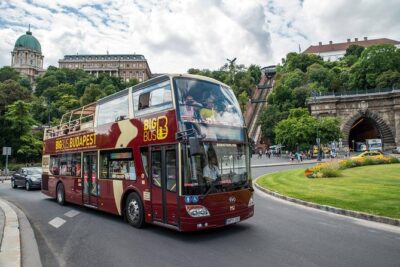
Big Bus Budapest Hop-On Hop-Off Bus and Walking Tour
Read our review →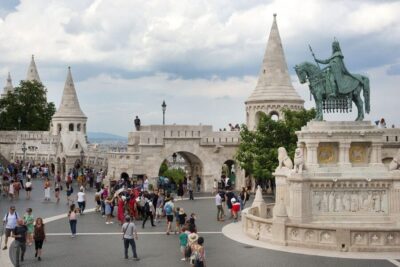
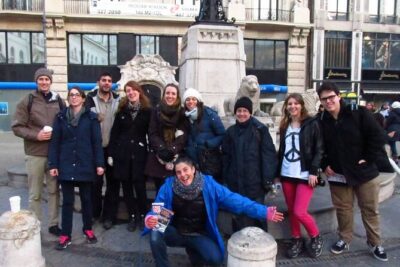
Budapest City Landmarks Walking Tour in 2 Hours
Read our review →
3-Hour Orientation Walking Tour of Buda and Pest
Read our review →
Budapest Historical Sightseeing – Free Walking Tour
Read our review →
Budapest All in One Small Group Walking Tour with Strudel Stop
Read our review →Browse the lists this tour appears in