Reviewed · TOURS
Explore Budapest from the Local’s Perspective – Public Transportation Tour
Budapest makes much more sense once you know how to move through it. This private three-hour outing turns the city’s trams, metro lines, bridges, boat routes, and hillside connections into the main attraction. You see major sights along the way, but the real prize is learning how to get around on your own afterward.
I especially like the 24-hour transport pass, which lets you continue exploring after the guide leaves, and the chance to use several kinds of transport in one morning. You also get a useful route map and public-transport booklet. The main consideration is time: three hours goes quickly, and several stops are brief photo and orientation visits rather than full museum or castle tours.
Key points to know before booking
- Five ways to move through Budapest: Expect a hands-on introduction to the city’s tram, metro, boat, funicular, and other public transport options.
- A private tour for your own group: The guide can make minor route changes and tailor the outing to your interests.
- A 24-hour pass is included: You can keep using Budapest’s public transport after the three-hour tour ends.
- Top sights come as part of the route: Heroes’ Square, Margaret Bridge, Buda Castle, Liberty Bridge, and Gellért Hill all feature.
- Pickup starts at your accommodation: Provide the full address when booking so the guide knows where to meet you.
- The focus is orientation, not museum entry: Admission tickets, food, and drinks are not included.
Why public transport is the best way to understand Budapest
Budapest is not hard to visit, but it can feel spread out on a first day. Pest is mostly flat and filled with broad avenues, squares, cafés, and metro stations. Buda rises across the Danube, with the Castle District and Gellért Hill requiring a different approach.
A guide who teaches you the system can save you time for the rest of your stay. You learn where major lines meet, how bridges connect the two sides of the river, and how a single transport pass can cover much of your sightseeing. That is more useful than simply being driven from one monument to the next.
The tour is also a good fit if you like seeing ordinary city life. You ride with people going to work, school, shops, and appointments. The transport network becomes part of the local experience rather than a hurdle between attractions.
The price is $118.58 per person. That is not a cheap sightseeing ride, but the value improves if you are traveling as a private group and plan to use public transport for the rest of your visit. The pass, guide, route map, and booklet are included, and the guide spends time showing you how the network works instead of only pointing at buildings from a vehicle.
A few more Budapest half-days to weigh up
- Budapest: City Highlights Cruise with Welcome Drink
★ 4.6 · 35,610 reviews - Budapest: Unlimited Prosecco, Beer and Aperol Spritz Cruise
★ 4.8 · 25,310 reviews - Budapest: Széchenyi Spa Day Ticket with Optional Upgrades
★ 4.3 · 23,911 reviews
Starting along Andrássy Avenue and Heroes’ Square
The route begins around Andrássy Avenue, one of Budapest’s grandest streets. It dates from 1872 and is lined with Neo-Renaissance mansions, embassies, theaters, cafés, luxury shops, and restaurants. The avenue itself is a useful introduction to Budapest’s formal Pest side, where long boulevards lead toward large public squares.
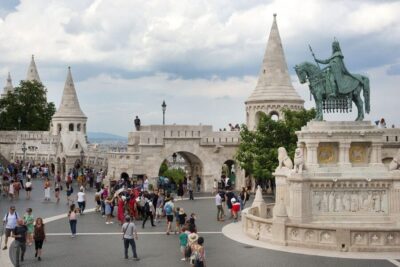
At Heroes’ Square, you have about 15 minutes. The square is dominated by a sweeping monument to important Hungarian leaders and the Seven chieftains of the Magyars. The Memorial Stone of Heroes is often called the Tomb of the Unknown Soldier, though that name is not technically correct.
This stop is best for orientation and photographs. You will not have time for a detailed study of every statue, so listen closely if national history interests you. The square also gives you a clear sense of how Budapest uses monumental public spaces to tell its story.
Around the square are the Museum of Fine Arts and the Hall of Art. The Museum of Fine Arts holds international European art from many periods, while the Hall of Art focuses on temporary contemporary exhibitions. Neither museum admission is part of this experience, but you can return later if the buildings or collections catch your attention.
City Park, Vajdahunyad Castle, and the ice rink

From Heroes’ Square, the route takes in Budapest’s City Park. Vajdahunyad Castle was built for the 1896 Millennial Exhibition, marking one thousand years since the Hungarian conquest of the Carpathian Basin. Its design borrows from several important buildings from across the former Kingdom of Hungary, including Hunyad Castle in Transylvania.
The result is deliberately varied. The castle is less a single piece of medieval architecture than a built history lesson, with different styles gathered in one place. Today it houses the Museum of Hungarian Agriculture, described as the largest agricultural museum in Europe. Again, this tour does not include entry, so consider the stop a chance to see the setting and decide if you want to return.
The nearby City Park Ice Rink opened in 1870 and is one of Europe’s oldest and largest. Depending on the season and operating schedule, you might see the rink as an active public space or simply appreciate its place in the park. These short visits add variety to the morning, though anyone hoping for long museum time should book a separate visit.
Crossing Margaret Bridge from Jászai Mari tér
Jászai Mari tér is a transport and social hub at the Pest end of Margaret Bridge. It is named for Mari Jászai, an influential Hungarian stage actor. You have about 10 minutes here, enough to understand the junction and prepare for the bridge crossing.
Margaret Bridge is unusual because it connects Buda and Pest while also linking Margaret Island to the riverbanks. It is Budapest’s second-oldest public bridge and one of the city’s key Danube crossings.
The bridge itself gets only about five minutes, but that can be enough to appreciate the river views and understand Budapest’s geography. The short timing is a limitation if you want a leisurely walk or extended photographs. The benefit is that the tour keeps moving, giving you a wider picture of the city in a limited amount of time.
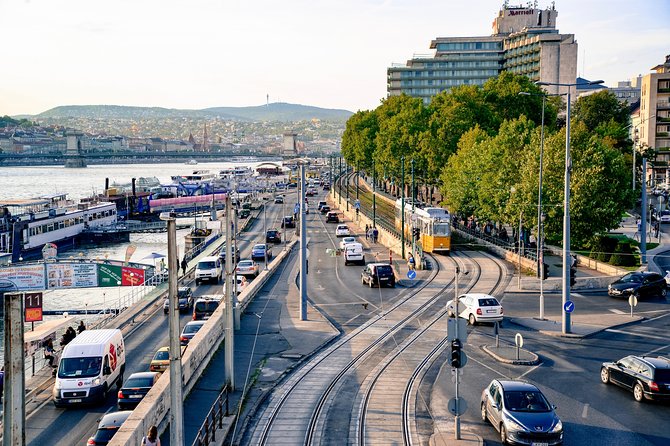
The route also uses the tram lines along the city’s great ring road. The 4 and 6 lines are famous for their frequent service and carry large numbers of passengers. During busy periods, they can run only a few minutes apart. This is one of the most practical lessons of the experience: you see how a local transport corridor can connect several districts without relying on taxis.
A completely different kind of day out in Budapest:
- Budapest: Nighttime or Daytime Sightseeing Cruise
★ 4.2 · 21,062 reviews - Budapest: 1-Hour Evening Sightseeing Cruise with Drink
★ 4.5 · 8,330 reviews - Budapest Danube Cruise and Dinner Options, Live Music and Dance
★ 4.5 · 7,428 reviews - Budapest: Historic Cruise with Welcome Drink
★ 4.7 · 6,512 reviews
Nyugati Station and the city’s transport rhythm
Budapest Western Railway Station, or Nyugati, is one of the city’s three principal railway terminals. It is served by tram lines 4 and 6 and the M3 metro line, making it a useful place to understand how different parts of the system connect.
The stop lasts about 10 minutes. You can look at the station and the surrounding area, which includes restaurants, bars, and many shops. It is also a busy meeting point, so the guide can show you how a major transport node feels in everyday use.
This is not a grand sightseeing stop in the same way as Buda Castle or Heroes’ Square. Its value is practical. If you plan to take a train, use the metro, or ride the ring-road trams, recognizing Nyugati can make later journeys less confusing.
Deák Ferenc Square and Elizabeth Square
Deák Ferenc Square is Budapest’s main metro interchange. All three metro lines meet beneath the square, and tram lines 47 and 49 begin there. Several bus routes also use the area, making it one of the most useful places in the city to learn how routes overlap.
You have around 10 minutes at the square. The guide can help you understand it as a transfer point rather than just another open space. This is where the tour’s practical purpose becomes clear: you learn not only what to see, but how to reach it.
Next comes Elizabeth Square, a popular park beside Deák Ferenc tér. The stop is brief, about five minutes. It is a common gathering place for young people, with grassy areas and cafés or drink service nearby. You may not spend long here, but it gives you a quick look at how central Budapest residents use public space after work and into the evening.
Buda Castle and the optional funicular ride
The Buda Castle area gets the longest stop, about 45 minutes. That makes sense. Across the river, Buda feels different from central Pest, and the Castle District offers some of the city’s strongest views over the Danube and the opposite bank.
The experience includes an option to explore the Buda Castle area instead of Gellért Hill, with the possibility of riding the funicular. The supplied details do not say that a funicular ticket is included, so ask the provider about the current arrangement before booking if that ride matters to you.
The castle stop is still an overview rather than a complete visit to every palace room or museum. Forty-five minutes gives you time to see the setting, take in the views, and get a sense of the district. If you want a full Castle District visit, you will need to return with more time.
The funicular option is especially useful for anyone who wants to understand Budapest’s hills without making the outing too strenuous. It also adds another transport type to the day. The route is designed to teach you how the city works, and this is one of its most memorable examples.
Gellért Square, the thermal baths, and Liberty Bridge
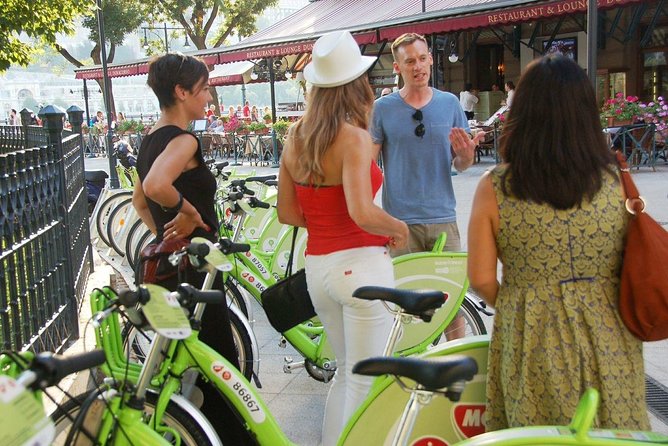
The route then reaches Szent Gellért Square, where the metro station has a water-themed design with wavy benches and a small fountain and pond at its entrance. You have about 10 minutes to look around.
The square is beside the Gellért Thermal Baths, part of the Hotel Gellért complex. The baths are one of Budapest’s best-known thermal attractions, but admission is not included, and this experience does not provide a bathing session. If soaking in historic thermal water is one of your priorities, plan a separate visit.
Gellért Hill rises above the Danube and is one of the city’s best panorama points. It is 235 meters high and takes its name from Bishop Gellért, who came from Italy around the year 1000 to help convert Hungarians to Christianity. The hill’s name is tied to the story of his death, when resisting pagans rolled him down the slope in a barrel into the Danube.
Depending on the chosen route, you may see Gellért Hill or spend more time in the Buda Castle area. The details allow for personalization, so tell the provider which view matters more to you. Castle history and funicular travel suit one kind of visitor, while a hilltop panorama may suit another.
The group then crosses Liberty Bridge, also called Szabadság híd, on foot. The walk takes about five minutes and leads toward the foot of Gellért Hill. It is a compact but worthwhile bridge crossing, giving you another angle on the Danube and the city’s two sides.
Finishing at Kálvin Square
Kálvin Square is the final listed stop, with about 10 minutes. It is a major city-center intersection named after the French Protestant reformer John Calvin, because of the large Reformed Church nearby.
The square links tram, bus, and trolleybus routes and sits close to the Hungarian National Museum. It is a fitting finish because you end with another useful transport hub rather than a remote monument. From here, you can continue into central Pest using the pass supplied for the day.
The tour covers a lot of ground in three hours. Some stops are only five minutes, so you should treat the experience as a guided introduction to Budapest rather than a slow sightseeing walk. The reward is range: grand avenues, public squares, bridges, a historic railway station, the Castle District, thermal baths, and several transport connections all fit into one compact outing.
What you receive and how to prepare
The guide supplies a 24-hour pass for any means of public transportation, a route map, and a Rider’s Booklet explaining Budapest’s system. You also receive a notebook and souvenir pen. The practical items may seem small, but the map and booklet are the pieces most likely to help you after the tour.
Pickup is offered from your accommodation. You need to provide the address in the special requirements field. Since the route can be changed slightly to personalize the outing, tell the provider in advance if you care more about Buda Castle, Gellért Hill, public boats, or learning a particular metro or tram connection.
Food and drinks are not included. Children must be accompanied by an adult. Service animals are allowed, and the tour is near public transport. The activity is private, so only your group participates, which makes it easier to ask questions and adjust the pace.
The tour has a free cancellation policy when you cancel at least 24 hours before the start time. Changes or cancellations inside that window are not accepted for a refund. Confirmation is provided at booking.
Who will get the most from this tour
I would choose this for a first visit to Budapest, especially if you want to keep exploring independently afterward. It is also a smart choice if you feel unsure about ticketing, transfers, or the difference between the metro, trams, buses, and river transport.
It suits families and small private groups because the guide can adapt the route. It also works well for visitors with limited time who want a broad introduction instead of committing half a day to one museum.
You should look elsewhere if your main goal is interior access to the Museum of Fine Arts, the Hall of Art, the Hungarian Agricultural Museum, the thermal baths, or the Castle museums. Those places appear along the route, but entry is not included and the schedule does not allow a full visit.
One especially useful feature is the help with onward plans. The guide has assisted with airport departure planning and finding a particular destination, and a public boat ride may be included when the route and conditions allow. That kind of practical advice can be worth more than another monument on a checklist.
Should you book it?
Book this tour if you want Budapest to feel easier by the end of your first day. The combination of a private guide, a 24-hour pass, several transport types, and major sights gives you both orientation and local city life for $118.58 per person.
Go in with the right expectation. You are not buying museum entry or a slow historical walking tour. You are learning the city’s transport habits while seeing its major districts, and you can continue practicing with the included pass after the tour ends. The provider response is signed Miklós, but a specific guide is not guaranteed, so ask if you hope to meet him by name.
FAQ
How long does the public transportation tour last?
The experience lasts approximately three hours.
What is the price?
The listed price is $118.58 per person.
Is the tour private?
Yes. Only your group participates.
Is pickup available?
Yes. Pickup is offered from your accommodation. Provide the address in the special requirements field when booking.
What language is offered?
The tour is offered in English.
Is a public transportation pass included?
Yes. You receive a 24-hour pass for any means of transportation.
How many types of transportation will I try?
The experience is designed around five different means of transportation. The route includes public transport such as trams, metro connections, and may include a public boat or the funicular option.
Are food and drinks included?
No. Food and drinks are not included.
Are museum or attraction admission tickets included?
No. The listed stops at places such as Heroes’ Square, Buda Castle, the Museum of Fine Arts, and the thermal baths are outside visits or orientation stops. Admission is not included.
Can the route be changed?
Yes. The basic route may change, and minor alterations can be made to personalize the experience and keep the tour running smoothly.
Is cancellation free?
Yes, if you cancel at least 24 hours before the experience starts. Cancellations made less than 24 hours before the start time are not refunded.
Recently added around Budapest
- Budapest: Private Walking Tour with a Local Guide★ 3.6 · 6 reviews
- From Budapest: Guided Tour of Eger with Wine Tasting★ 4.5 · 6 reviews
- Budapest: City Bike Tour with Coffee Stop★ 5.0 · 37 reviews
- Budapest: Danube River Views Bike Ride★ 4.8 · 23 reviews
- Budapest: Vacation Photographer to collect great memories★ 5.0 · 49 reviews
- Walk to recent and aged spiritual sanctuaries near Budapest★ 5.0 · 5 reviews
- Trash Art Museum: Hungary’s First Scrap Metal Exhibition★ 4.3 · 72 reviews
- Budapest: Multilingual Highlights Tour★ 4.8 · 89 reviews
Tours, compared.
City Sightseeing Hop-On Hop-Off Bus Tour & Extras
Read our review →
Buda Castle District Vampires and Myths Night Tour
Read our review →
Big Bus Hop-On Hop-Off Tour & Danube River Cruise
Read our review →
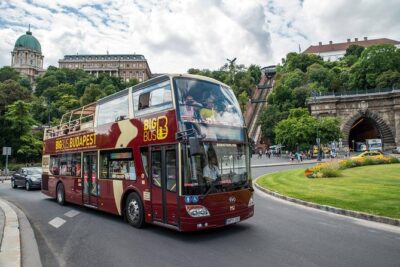
Big Bus Budapest Hop-On Hop-Off Bus and Walking Tour
Read our review →