

Reviewed · STREET ART TOURS
Alternative Street Art Free Walking Tour of Budapest
Budapest’s street art is not just decoration. On this walk through the old Jewish District, murals and small pieces open the door to stories about Hungarian politics, post-communist life, local identity, and the neighborhood’s changing social scene. Guides such as Victoria bring plenty of historical context, while the route also points out art you could easily miss on your own.
I like two things in particular: the mix of graffiti and commissioned murals, and the small-group limit of 15 people, which leaves room for questions. Ending around a ruin bar adds a useful Budapest ritual to the walk. The main drawback is that this is an outdoor tour, so bad weather can cancel it, and the exact meeting details deserve a careful check before you set out.
Key points to know before you book
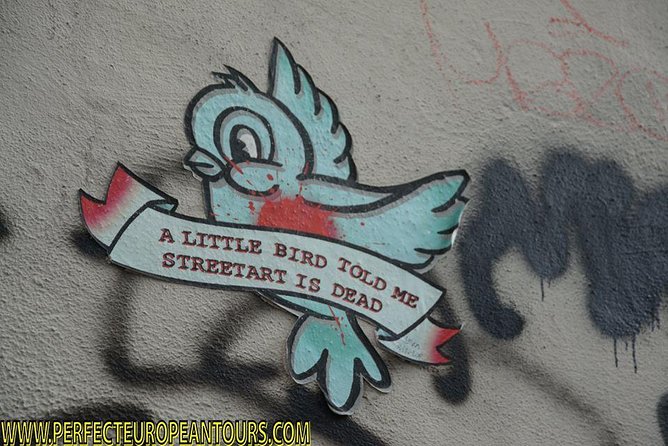
- Street art with substance: Learn how public art connects to Hungary’s social and political past.
- A close look at the Jewish District: The route explores an area shaped by war, communism, youth culture, and recent change.
- Guides with different strengths: Victoria is praised for her history and clear explanations, while Peter and Alexandria also lead engaging versions of the walk.
- A very low starting price: The $3.62 booking cost covers the reservation, but this is a tip-based tour, so budget a tip for the guide.
- Small groups help: The stated maximum is 15 people, a comfortable size for stopping at murals and hearing the guide.
- A ruin bar finish: The advertised route ends at or near Szimpla Kert, with the meeting information also listing Aurora Street, so confirm the precise finish point.
Why Budapest street art tells a bigger story
A standard sightseeing walk can show you grand buildings and famous squares. This tour takes a different route. It uses murals, graffiti, and other public art as clues to the city’s recent past and present-day culture.
That approach matters in Budapest. The Jewish District is not simply a place to photograph colorful walls. It carries difficult memories, social changes, and a strong alternative culture. The art gives your guide a way to explain those layers without turning the walk into a formal lecture.
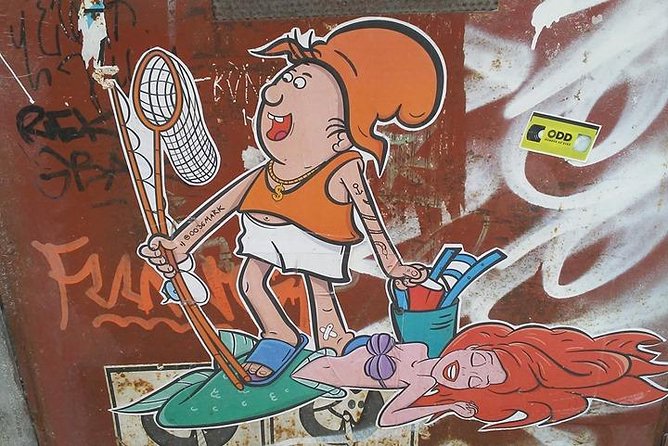
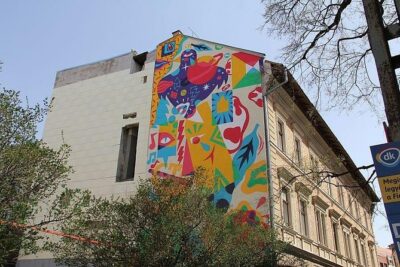
You can expect a mixture of small works by local artists, large commissioned murals, and urban pieces that comment on society. This is useful if you like street art but do not want a walk focused only on taking pictures. The best parts of the experience appear to come when the guide explains why a work was made, how it fits the neighborhood, and what it says about Hungary.
Victoria receives especially strong praise for linking the art to Hungarian and Budapest history. She is described as direct, witty, and clear, with the ability to explain both older events and life in Hungary today. Her background as an English guide who has lived in Hungary for more than 25 years also gives the walk a personal angle, although you should not assume she will lead every departure.
Peter and Alexandria are also named as guides. The key point is that the experience depends partly on who leads your group, but each guide is presented as able to connect the artwork with local culture and history.
More street art walks in Budapest:
- Budapest: Street Art and Underground Movements Walking Tour
★ 5.0 · 238 reviews - Street Art and Alternative Tour in Budapest
★ 5.0 · 52 reviews - Budapest: Alternative Street Art & Jewish Tour
★ 4.8 · 49 reviews
Walking through the Jewish District
The Jewish District is the heart of the experience. You are not simply led from one mural to the next. The route explains why this neighborhood became associated with art, nightlife, and youth culture, while also addressing the forces that shaped it.
The supplied route details do not provide a full list of street names or every artwork, so you should not book this expecting a fixed catalog of famous murals. Instead, think of it as a guided reading of the district. The guide chooses pieces along the route and explains what you are seeing.
That format has a real advantage. Street art changes. A painted wall may be covered, repaired, or altered. A walk built around the neighborhood’s ideas rather than a rigid checklist can remain useful even as individual works change.
You will likely spend time looking at how public art reflects social and political questions. One especially useful aspect is the inclusion of both small local works and corporate or commissioned pieces. That contrast helps you think about who controls public space, what counts as street art, and how a city presents itself.
The walk also gives you a chance to see parts of Budapest you might skip if you stayed near the major monuments. Several people who took the tour found the district more interesting because the guide moved beyond the obvious tourist route. I would choose this walk early in your Budapest stay if you want ideas for later independent exploring.
More than art on a wall
The strongest feature here is the amount of context packed into a short walk. The guide may discuss historical events, the effects of communism, social change after the pandemic, and present-day Hungarian life. That makes the experience suitable even if you are only mildly interested in graffiti.
I like this balance. A visitor who already follows urban art will get help identifying different kinds of work. Someone more interested in history will still find a clear reason to stop at each piece.
One account of the walk describes it as an academic and backstreet look at Budapest at the same time. That is a useful description of the tone to expect. The guide does not appear to treat the district as a simple photo backdrop. You get a closer look at how public art can reflect local concerns and changing attitudes.
The historical material may also challenge simple ideas about Budapest. The walk can show a city with a layered past and an active present, rather than a place preserved only for sightseeing. You may hear personal observations about living in Hungary, particularly if Victoria leads the tour, but the exact content will depend on the guide and the questions your group asks.
This is also why I would not reserve the tour only for art specialists. The art is the entry point. The wider subject is Budapest itself.
What happens during the 1 hour 40 minute walk
The experience lasts approximately 1 hour and 40 minutes. That is long enough to visit a useful number of pieces without taking up an entire morning or afternoon.
Expect to walk between stops in the Jewish District while the guide explains the area and points out art along the way. The information provided names no additional admission sites, so the tour is primarily an outdoor walking experience rather than a series of paid indoor visits.
Because the route is on foot, wear comfortable shoes and dress for the weather. This is practical rather than glamorous advice, but it matters more here than on a bus tour. You will be standing outside while listening, and the experience requires good weather.
The group limit is 15 people. That is a strong size for this kind of tour. A much larger crowd can make it hard to gather around a wall, hear an explanation, or ask about a detail. A group of 15 still has energy, but the guide can give people individual attention.
The walk may be even smaller on some dates. One departure had only one booking, resulting in a private-style experience. You cannot count on that, but the limited capacity gives you a better chance of a personal exchange than a large city tour.
More walking tours in Budapest:
- Budapest: Buda Castle Walk with Saint Stephen’s Hall
★ 4.5 · 3,012 reviews - Big Bus Budapest Hop-On Hop-Off Bus and Walking Tour
★ 3.5 · 2,206 reviews - Budapest: Buda Castle District Walking Tour
★ 4.6 · 2,108 reviews - Budapest City Landmarks Walking Tour in 2 Hours
★ 5.0 · 2,048 reviews
The ruin bar finish
The advertised route finishes at Szimpla Kert, Budapest’s best-known ruin bar. This is a fitting ending because ruin bars are closely tied to the Jewish District’s alternative culture and nightlife.
You should think of the stop as an introduction, not a full bar tour. The guide may point out other ruin bars and explain how this type of venue fits into the district. You can then stay for a drink if you wish, but the cost of drinks is not included.
That optional finish is one of the tour’s most useful touches. The walk does not simply drop you at a random corner. It leaves you in a place where you can continue thinking about the neighborhood’s creative culture. If you want to stay, you already have a natural next stop. If you are tired, you can leave after the guided portion.
There is one logistical wrinkle. The information supplied for the end point lists Budapest, Auróra u. 11, 1084 Hungary, described as a grassroots community ruin bar, while the itinerary specifically says the tour finishes at Szimpla Kert. Since these are not the same listed address, check the confirmation message or ask the operator which finish applies to your departure.
That inconsistency is not a reason to reject the tour, but it is worth clearing up. It affects where you arrange your next activity and how you get back to your accommodation.
Meeting the guide and finding the group
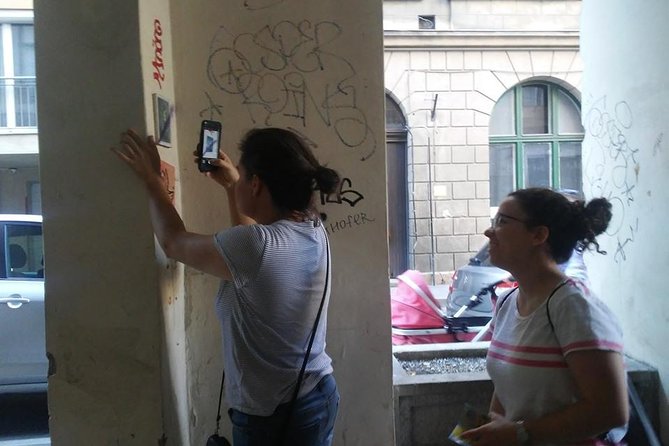
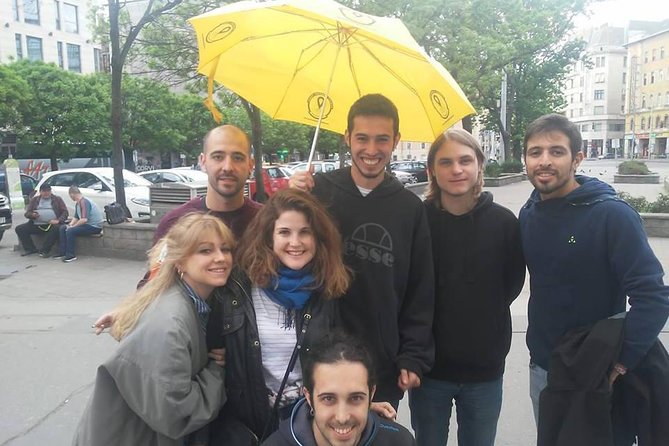
The listed starting point is Rákóczi tér in Budapest’s 1084 district. Another description says to find the guide under a yellow umbrella at central Blaha Lujza Tér. Those details do not match exactly, so confirm the meeting location before leaving.
This matters because Budapest’s central squares and public transport stops can be busy, and you do not want to spend the first part of the tour searching for a guide. The confirmation you receive at booking should be your first reference. If it still shows conflicting information, contact Perfect European Tours before the day of the walk.
The tour is near public transportation, which makes it practical to reach without a car. Parking is not included, and I would not plan to drive unless you have a strong reason. The walk ends in a central cultural area, where public transportation is likely more useful than trying to find a parking space, though the supplied details do not specify a particular route.
The yellow umbrella is a helpful visual marker if that is the sign used on your departure. Look for it, but do not rely on it alone. Have the precise meeting address available on your phone.
Is the $3.62 price really good value?
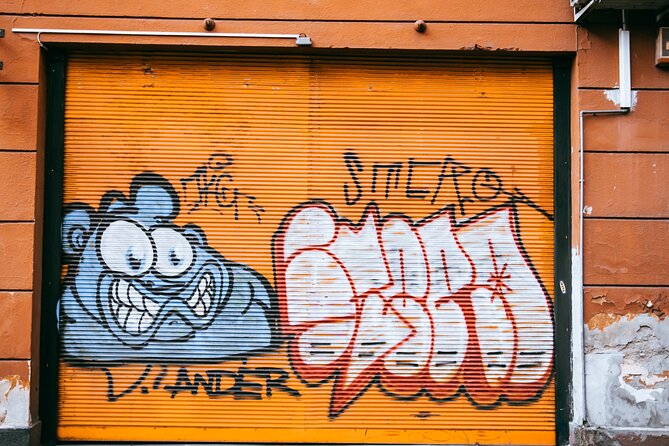
At $3.62 per person, this is unusually inexpensive. The amount is best understood as a booking fee for a complimentary, tip-based walking tour rather than the full cost of a traditional paid excursion.
You should plan to tip the guide. The tip is not included, and the quality of your experience depends heavily on the guide’s preparation, storytelling, and time. The low upfront price does not mean the walk has no value. It means you decide what the guiding was worth at the end.
For this price, the tour offers a strong return if you want local context and an introduction to a part of Budapest’s culture that is easy to miss. You are not paying admission to a museum or receiving transport, meals, drinks, or private access. The value lies in having someone point out art you might walk past and explain the district in a way you could not easily recreate from a guidebook.
I would also factor in the time. At under two hours, the walk fits neatly into a day that includes other sightseeing. You can schedule it before an evening in the ruin bars or use it to get a first look at the Jewish District before returning on your own.
Who should take this walk?
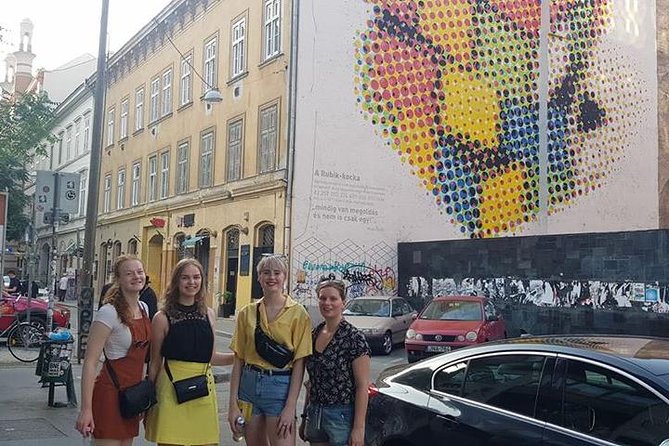
I would recommend it most strongly to people who want an alternative to Budapest’s usual monuments. It suits you if you enjoy modern culture, urban art, social history, or hearing how a neighborhood changed over time.
It is also a good choice if you are not especially interested in street art but want a different way to understand Budapest. The historical explanations appear to be a major part of the experience, not an afterthought.
Families can take part, and most people can participate. Service animals are allowed. Still, remember that this is a walking tour with outdoor stops, so anyone who finds extended walking or standing difficult should consider that before booking.
The tour is offered in English. The group maximum is 15, which should help you hear the guide and take part in discussions. If you prefer a silent, fast-paced route focused on photographs, this may feel too talkative. The art is used as a starting point for explanation, not simply as a series of quick photo stops.
Weather, cancellation, and other practical limits
The experience requires good weather. If poor conditions force a cancellation, you are offered another date or a full refund. The operator may also cancel if the minimum number of people is not reached, with a different date, another experience, or a full refund offered.
You can cancel for a full refund up to 24 hours before the start time. Cancellations or changes made less than 24 hours before the start are not refundable. The cut-off follows local Budapest time.
The basic booking includes a professional guide. Parking, public toilet costs, drinks, and the guide’s tip are not included. No special admission ticket is listed for the street art stops.
I would keep the day’s schedule flexible around the walk, especially if rain is possible. Since the route is outdoors, this is not the best activity to squeeze between two fixed reservations with no spare time.
Should you book the Alternative Street Art Free Walking Tour?
Book it if you want Budapest explained through its walls, side streets, and alternative culture rather than only through major landmarks. The strongest reasons are the historical context, the mix of local and commissioned art, the small group size, and the chance to finish around a ruin bar.
Victoria appears to be an especially strong guide when she leads, with clear explanations of Hungarian history and current life. Peter and Alexandria are also named as guides, so check who is scheduled if that matters to you.
I would skip it only if you dislike outdoor walking, need a fully fixed route with no meeting-point uncertainty, or want a tour devoted solely to art technique. For most curious visitors, the low booking cost and short duration make it an easy addition to a Budapest itinerary. Just confirm the starting address, clarify the finish point, and bring a tip.
FAQ
How much does the Alternative Street Art Free Walking Tour cost?
The listed price is $3.62 per person. The experience is described as complimentary apart from the booking fee, and a guide’s tip is not included.
How long does the tour last?
The walk lasts approximately 1 hour and 40 minutes.
What language is the tour offered in?
The tour is offered in English.
Where does the tour start?
The meeting information lists Rákóczi tér, Budapest, 1084 Hungary. Another description refers to a guide with a yellow umbrella at Blaha Lujza Tér, so check your booking confirmation for the exact meeting point.
Where does the tour finish?
The route description says it finishes at Szimpla Kert. The end-point information also lists Budapest, Auróra u. 11, so confirm the precise finish location with the operator.
What happens if the weather is poor?
The experience requires good weather. If it is canceled because of poor weather, you will be offered a different date or a full refund.
Recently added around Budapest
- Budapest: Private Walking Tour with a Local Guide★ 3.6 · 6 reviews
- From Budapest: Guided Tour of Eger with Wine Tasting★ 4.5 · 6 reviews
- Budapest: City Bike Tour with Coffee Stop★ 5.0 · 37 reviews
- Budapest: Danube River Views Bike Ride★ 4.8 · 23 reviews
- Walk to recent and aged spiritual sanctuaries near Budapest★ 5.0 · 5 reviews
- Budapest: Vacation Photographer to collect great memories★ 5.0 · 49 reviews
- Trash Art Museum: Hungary’s First Scrap Metal Exhibition★ 4.3 · 72 reviews
- Budapest: Multilingual Highlights Tour★ 4.8 · 89 reviews
Street Art Tours, compared.
Street Art and Underground Movements Walking Tour
Read our review →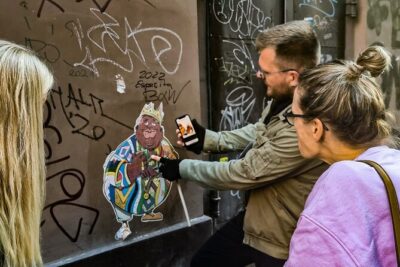


Budapest Vibe: Ruin Bars, Street Art and Culture Tour
Read our review →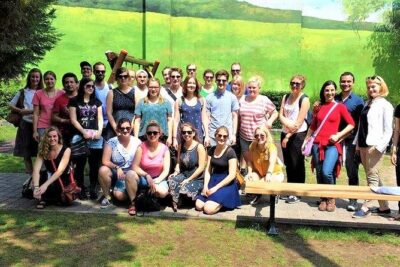
Original Budapest Alternative Street Art & Jewish Tour
Read our review →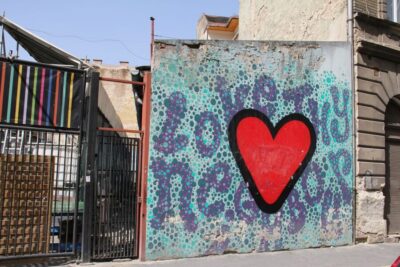
Browse the lists this tour appears in