

Reviewed · BUDA CASTLE TOURS
Buda Castle Walking Tour: Fishermans Bastion – Royal Palace
The best part of this two-hour Buda Castle walk is the mix of grand views and everyday streets. You move from Fisherman’s Bastion and Matthias Church to small 1800s houses, royal buildings, cafés, and viewpoints over Parliament, the Chain Bridge, and the Buda Hills. It gives you both the postcard Budapest and the lived-in Castle District.
I like the low $3.40 price, which makes this an easy first look at Buda, and I like the guides’ friendly, story-led approach. Guides including Kitti, Sou, Claudia, Béla, Sourav, and Ignácio are praised for clear explanations, humor, and useful restaurant and museum tips. The main drawback is that two hours goes quickly, so this is an introduction rather than a full visit to the castle museums.
Key points to know before you go
- The views are the main event: Fisherman’s Bastion offers broad sights toward Parliament, the Danube, Chain Bridge, and the Buda Hills.
- You stay outside the main paid sights: The tour visits the landmarks, but museum tickets are not included.
- The route mixes monuments with local life: Expect royal and government buildings alongside small historic homes and the Ruszwurm Confectionery.
- The guides add personality: English-speaking guides explain history, legends, Hungarian culture, and present-day life.
- The price is unusually modest: At $3.40 per person, the tour is a strong value if you want orientation and photo stops.
- Wear proper shoes: This is a walking tour through the hilly Castle District, and it runs in wet weather as well as fair weather.
Starting at Holy Trinity Square
Meet at the Holy Trinity statue in the middle of Szentháromság tér. Look for the purple umbrella. This matters because the square can feel busy with people heading toward Fisherman’s Bastion and Matthias Church, so the umbrella is your useful visual marker.
The tour begins in one of the Castle District’s most impressive open spaces. Rather than rushing straight to a single monument, your guide sets the scene for the neighborhood, explaining how Buda Castle developed and how royal, military, religious, and residential uses overlap here.
You will want comfortable shoes and clothes suited to the weather. Bring water or a snack if you need one, since the walk includes several stops but is not designed as a meal tour. The route is described as wheelchair accessible, though the Castle District’s slopes, paving, and crowded viewpoints may still make conditions worth checking for your own needs before booking.
More Fishermans Bastion walks:
- Walking tour in the Buda Castle incl. Fisherman’s Bastion
★ 5.0 · 467 reviews - Private photography photo session at Fisherman Bastion
★ 5.0 · 269 reviews - Buda Castle Tour: Fisherman’s bastion and hidden gems
★ 5.0 · 251 reviews
Fisherman’s Bastion and the UNESCO panorama
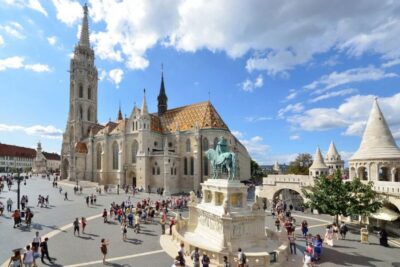
Fisherman’s Bastion is the first major sightseeing stop, with about 15 minutes set aside. Its pale stone towers and terraces frame one of Budapest’s most famous views, looking across the Danube toward Parliament and across the bridges and hills beyond.
This is the place to bring your camera. The tour is built around viewpoints, so your guide should help you understand what you are seeing rather than simply point out a nice skyline. The UNESCO World Heritage panorama is a key part of the experience, and the short stop gives you time for photos without turning the walk into a long architectural lecture.
The trade-off is simple: 15 minutes is enough for an introduction and pictures, but not enough for a slow look at every terrace. If you want detailed architectural study or quiet photography, plan to return on your own.
Matthias Church and the Castle District’s religious story
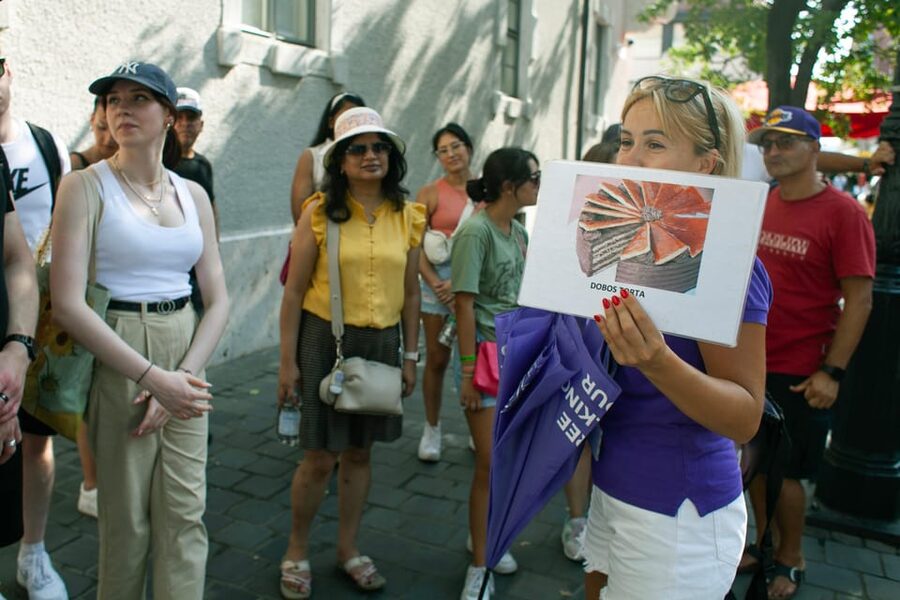
Next comes Matthias Church, with about 15 minutes for sightseeing. Its patterned roof and ornate exterior make it one of the Castle Hill landmarks you will remember long after the tour. The church also helps explain why this part of Budapest is more than a scenic overlook. It is a place where religion, monarchy, war, and national identity meet.
The tour does not include museum tickets, so do not assume that this walk covers interior admission. The guide’s role here is to explain the site, its place in Hungarian history, and the stories tied to the surrounding district. If you want to go inside any paid museum or attraction, you will need to arrange that separately.
This stop is especially useful if you are new to Hungarian history. The guide can connect the buildings to larger questions about the country’s past and present, while keeping the discussion conversational. Several guides are praised for making complicated subjects clear without making the walk feel like a classroom.
Ruszwurm Confectionery and a taste of old Buda
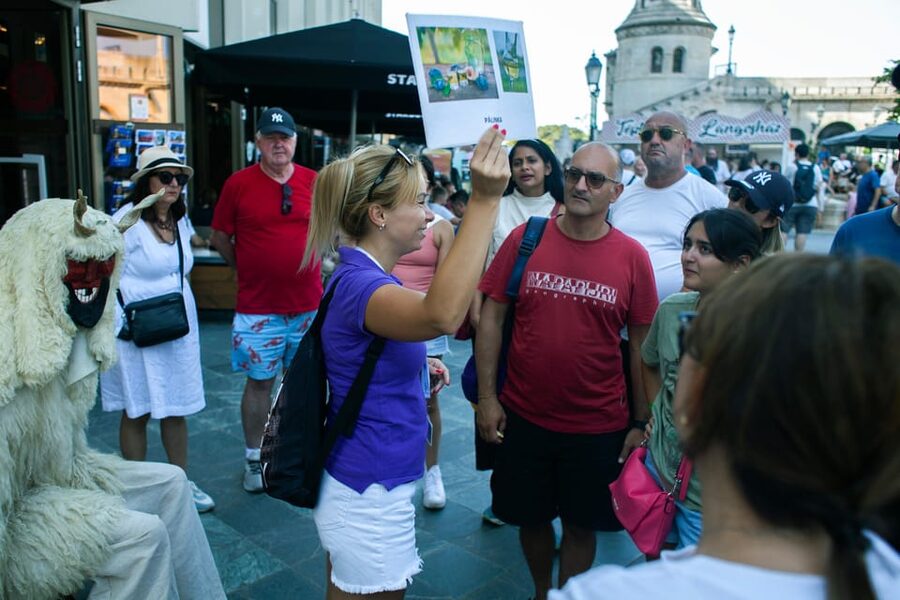
The stop at Ruszwurm Confectionery lasts about 10 minutes. The information provided does not promise a food tasting, so treat this as a stop for context and sightseeing rather than a guaranteed included snack.
Still, the confectionery adds a welcome change of pace. After stone walls, churches, and viewpoints, you see one of the Castle District’s long-running café traditions. The tour also includes current recommendations for cafés and restaurants, which makes this stop more useful than a quick photo opportunity if you are deciding where to eat later.
One particularly helpful detail is the local advice that can follow the tour. Kitti is praised for giving recommendations and following up on them, a small but valuable touch when you want practical help rather than a list of famous names. Food-minded visitors may want to return to this area after the walk, but any purchase is your responsibility.
More ways to see Buda Castle:
- Budapest: Buda Castle Cave Tour
★ 4.7 · 5,677 reviews - Budapest: Buda Castle District Vampires and Myths Night Tour
★ 4.6 · 3,830 reviews - Budapest: Buda Castle Walk with Saint Stephen’s Hall
★ 4.5 · 3,012 reviews - Budapest: Buda Castle District Walking Tour
★ 4.6 · 2,108 reviews
Castle Hill, small homes, and royal buildings
The Castle Hill section receives about 15 minutes. This is where the walk moves beyond the headline sights and into the district’s character. You see small houses dating from the 1800s alongside royal and government buildings, creating the little treasure box effect described in the experience.
That contrast is one of the strongest reasons to choose a walking tour instead of visiting only Fisherman’s Bastion. The grand monuments get attention, but the residential streets show how the hill functions as a neighborhood. Your guide also discusses everyday life and what it means to be Hungarian, adding a cultural layer to the stones and façades.
The short time allocation means you will not inspect every lane. Instead, you get a guided sample of the area and a better sense of how to explore it later. I would pay close attention here if you are interested in architecture, local life, or the difference between a ceremonial district and an ordinary residential one.
Chain Bridge from the Buda side
The Chain Bridge stop lasts about 10 minutes. From the Buda side, the bridge helps you read Budapest as two historic halves joined by the Danube. It also provides another strong photo setting, with the river, city center, and hills working together in one view.
The tour does not present this as a full bridge crossing, so think of it as a viewpoint and history stop. Your guide can place the bridge within the story of Budapest and explain why it matters to the city’s identity.
Because the route includes several viewpoints in quick succession, you may notice a pattern: listen first, then take pictures. If you stop for long photo sessions at every location, you may miss part of the explanation or fall behind the group.
The Castle Hill Funicular and a change in perspective
The Budapest Castle Hill Funicular gets about 10 minutes as a photo stop. The funicular is an important part of the hill’s transport story and gives you another way to understand the steep connection between the riverside and the Castle District.
The tour does not state that a funicular ride is included. Plan on seeing and photographing it, not on assuming that your ticket is covered. This is a useful distinction because the $3.40 price covers the guided walk, not every attraction or transport option along the route.
The stop also helps you orient yourself. After seeing Budapest from above, the funicular shows the physical rise of Castle Hill and explains why access has always mattered here.
Buda Castle and the long photo stop
Buda Castle receives the longest stop, about 30 minutes. That extra time makes sense. The castle complex is the central subject of the walk, and your guide can tie together the royal story, the surrounding buildings, the viewpoints, and the changing role of the district.
Expect a combination of photo stops and sightseeing rather than a museum tour. You will learn about the past and present of Buda Castle and hear legends connected with the area. The experience specifically allows for open discussion, including topics that more polished sightseeing tours may avoid.
This is where the guide’s personality matters most. The strongest feedback centers on guides who keep the group interested, answer questions, and use humor without losing the historical thread. Béla is praised for responding to all sorts of questions, while Ignácio is noted for explaining the area in a simple, engaging way. Sourav and Sou are also singled out for energy and clear recommendations.
If you want to enter a museum, see interior collections, or spend a long time with one exhibition, add a separate visit. This walk gives you the framework first. That can be a smart order because you will understand the buildings better once you return on your own.
Sándor Palace and the walk to Savoyai Terrace
The route then passes Sándor Palace, with about 15 minutes of walking. The palace adds a government and civic dimension to the Castle District. It also shows that the hill is not only a preserved royal quarter or a backdrop for tourists. It remains tied to national institutions and public life.
The final destination is listed as Savoyai Terrace. The activity information also describes the tour as ending back at the meeting point, so check the exact end point shown when you reserve. Either way, allow a few minutes after the official finish to orient yourself, ask for café or museum suggestions, and decide what to see next.
The supplied information describes the route as taking place every day and continuing in all weather. That is useful, but it also means you should not treat rain as an automatic reason to expect a cancellation. Bring suitable clothing and shoes, and consider a small umbrella if the forecast looks poor.
What the guides add to the walk
The guide is the main reason this experience can feel personal rather than mechanical. You are not only shown monuments. You hear about legends, Hungarian culture, everyday life, and key turning points in the country’s story.
The strongest guide names attached to the experience include Kitti, Sou, Claudia, Béla, Sourav, Ignácio, Egnasios, Sophie, Nacho, and Ignacio. The spelling varies in the supplied information, but the common qualities are clear: friendly delivery, humor, enthusiasm, and an ability to answer questions.
Claudia is praised for keeping explanations clear even in wet weather. Sophie is remembered for making Hungarian history approachable. Nacho is noted for sharing a personal family connection with Hungary, which can give the talk a more human feel. One group also found a microphone helpful, especially for hearing every word during the walk.
Group size is not specified, though one assessment describes the group as not too big. Do not book on the assumption that every departure will have the same number of people. The practical question is whether you want a social group walk with a live guide, not a private tour.
Price, timing, and who gets the best value
At $3.40 per person, this is hard to fault as a short orientation walk. You receive two hours with an English-speaking guide, several major landmarks, photo stops, historical context, and current suggestions for cafés, restaurants, and museums.
The low price matters most if you are visiting Budapest for the first time. You can use the walk to decide where you want to spend more time later, then return to Fisherman’s Bastion, Matthias Church, Buda Castle, or the museums with a clearer sense of place.
The value is less obvious for someone who already knows the Castle District well or wants a full interior tour. Tickets to museums are not included, and the schedule gives each stop a limited window. Think of this as a guided introduction, not a complete Castle Hill day.
The two-hour length suits a morning or afternoon gap. It is also a sensible choice on a first day in Budapest because the viewpoints help you understand the city’s layout. Afterward, you can plan your riverfront walk, museum visit, or restaurant stop with better bearings.
Free cancellation is available up to 24 hours before the activity for a full refund, and you can reserve now while paying later. Those terms are useful if your schedule is still shifting.
Should you book the Buda Castle walking tour?
I would book this if you want a short, inexpensive introduction to Buda Castle with a guide who can connect the major sights to Hungarian culture and daily life. It is especially good for first-time visitors, photographers, history fans who prefer stories to formal lectures, and anyone who wants practical café and museum suggestions.
I would skip it if your main goal is to spend hours inside the castle museums or take an unhurried architectural tour. In that case, use the walk only as an orientation, or plan a separate return visit.
For most visitors, the price makes the decision easy. You get the major viewpoints, Fisherman’s Bastion, Matthias Church, the funicular, Buda Castle, Sándor Palace, and a taste of the residential hill in two hours. Wear good shoes, meet the purple umbrella at Holy Trinity Square, and let the guide handle the complicated parts of Budapest’s story.
FAQ
How long is the Buda Castle walking tour?
The tour lasts two hours. Starting times vary, so check availability when booking.
Where does the tour meet?
Meet at the Holy Trinity statue in the middle of Szentháromság tér. Look for the purple umbrella.
What language is the tour in?
The live guided tour is conducted in English.
Are museum tickets included?
No. Tickets to museums are not included in the tour price.
Is the tour wheelchair accessible?
The activity is listed as wheelchair accessible.
What should I bring?
Bring comfortable shoes, comfortable clothing, and food and drinks. The tour runs every day and is not affected by weather conditions, so dress appropriately for the forecast.
More Walking Tours in Budapest
- Big Bus Budapest Hop-On Hop-Off Bus and Walking Tour
★ 3.5 · 2,206 reviews - Budapest City Landmarks Walking Tour in 2 Hours
★ 5.0 · 2,048 reviews - 3-Hour Orientation Walking Tour of Buda and Pest
★ 4.8 · 1,834 reviews - Budapest: 3-Hour Grand City Tour and Castle Walk
★ 4.3 · 1,437 reviews
Recently added around Budapest
- Budapest: Private Walking Tour with a Local Guide★ 3.6 · 6 reviews
- From Budapest: Guided Tour of Eger with Wine Tasting★ 4.5 · 6 reviews
- Budapest: City Bike Tour with Coffee Stop★ 5.0 · 37 reviews
- Budapest: Danube River Views Bike Ride★ 4.8 · 23 reviews
- Budapest: Vacation Photographer to collect great memories★ 5.0 · 49 reviews
- Walk to recent and aged spiritual sanctuaries near Budapest★ 5.0 · 5 reviews
- Trash Art Museum: Hungary’s First Scrap Metal Exhibition★ 4.3 · 72 reviews
- Budapest: Multilingual Highlights Tour★ 4.8 · 89 reviews
Buda Castle Tours, compared.

Buda Castle District Vampires and Myths Night Tour
Read our review →

Buda Castle District Dark History, Legends and Vampire Night Tour
Read our review →
Buda Castle District Walking Tour with a Historian
Read our review →
Browse the lists this tour appears in