Reviewed · FULL-DAY
Budapest All In – Full Day Tour with Lunch & Metro Pass
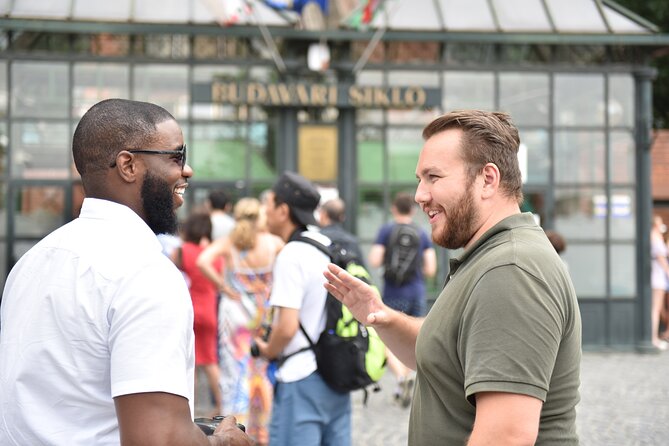
Budapest All In tries to solve a common first-day problem: how do you see both Buda and Pest without spending a week learning the city’s transit system? In about seven and a half hours, you move from Heroes’ Square and City Park to Parliament, the Danube, the Castle District, and the Central Market Hall. Guides such as Zoltan, Fanni, Emese, and Odea are praised for clear history, friendly company, and good route planning.
I like two things right away. First, the route gives you a useful city overview, not just one neighborhood. Second, lunch is a proper traditional Hungarian meal with dessert, drinks, and a welcome break in a long day. The main catch is simple: this is a walking tour with short public-transit rides, not a private vehicle tour, and the major buildings are viewed from outside unless you pay for entry.
Key points to know before booking
- Expect a full day on your feet: Reports range from more than five miles to roughly nine and a half miles of walking.
- See both sides of the Danube: The route covers Pest’s grand avenues and Parliament, then crosses to Buda Castle, Matthias Church, and Fisherman’s Bastion.
- Public transport is part of the plan: You may use the metro, trams, and buses to reach sights too far apart to walk comfortably.
- Lunch is more than a snack: The meal includes traditional Hungarian food, dessert, alcoholic beverages, and other drinks.
- Sightseeing is mostly outdoors: Entry to the Opera House, Basilica, Parliament, Great Synagogue, and other paid sites is not included.
- Small-group feel, but not private by default: The maximum group size is 20, with group discounts available.
A fast, useful introduction to Budapest

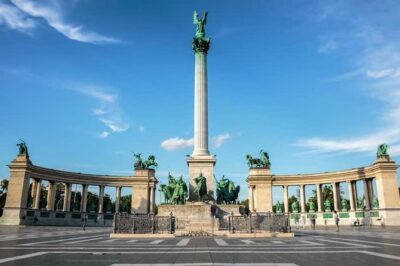
I see this tour as a city orientation with a meal attached, rather than a collection of full museum visits. You get the major visual markers quickly: the millennium monument at Heroes’ Square, the grand sweep of Andrássy Avenue, Parliament on the river, the Castle District above Buda, and the market hall’s colorful interior.
That broad reach is the real value. If you have only one day in Budapest, you can use the tour to decide where you want to return. If you have three or four days, it helps you place the city’s neighborhoods and understand how Buda and Pest fit together.
The pace is brisk. The listed stops add up to nearly four hours, but much of the seven-and-a-half-hour day goes to walking, transit, explanations, and lunch. You will not have time for a relaxed visit inside every landmark.
A few more Budapest half-days to weigh up
- Budapest: Full-Day Gellért Spa Ticket
★ 4.2 · 3,340 reviews - Budapest Gellert Thermal Spa Full Day Ticket with Cabin or Locker
★ 3.5 · 432 reviews - Budapest Private Full Day City Sightseeing Tour Walking or by Car
★ 5.0 · 299 reviews
Starting at the Opera House and Andrassy Avenue
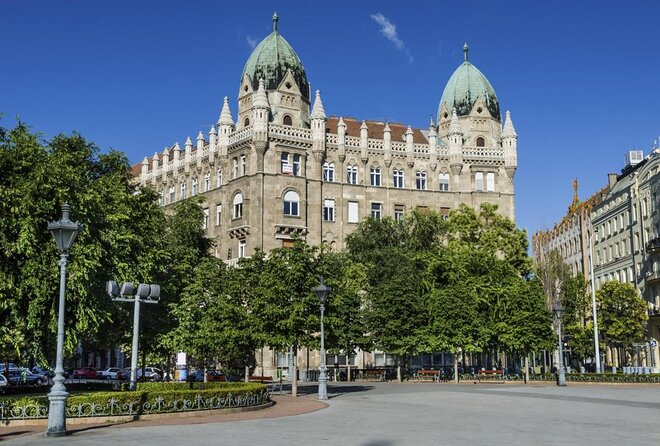
The meeting point is outside the Hungarian State Opera House on Andrássy út at 9:00 a.m. This is a sensible starting place. The Opera House anchors one of Budapest’s grandest avenues, lined with Neo-Renaissance buildings and townhouses.
You get about 10 minutes at the Opera House. That is enough for an exterior introduction and photographs, not a performance or building tour. Admission is not included, so plan on seeing it from the street unless you arrange a separate visit.
From here, the route reaches Heroes’ Square and City Park. Andrássy Avenue itself is part of the story. It links central Budapest with Városliget and has been recognized as a World Heritage site. Your guide can help connect the polished facades to Budapest’s late 19th-century growth, rather than treating the avenue as just a pretty road.
Heroes’ Square, Széchenyi Baths, and Vajdahunyad Castle
Heroes’ Square is one of the day’s clearest history lessons. Its statue complex honors the Seven Chieftains of the Magyars and other major Hungarian leaders. The Memorial Stone of Heroes is also here, though it is often incorrectly called the Tomb of the Unknown Soldier.
The scheduled 10 minutes goes quickly. You can take in the broad plaza and statues, but this is not a slow photography stop. Go in knowing that you are getting the setting and explanation, not an extended visit to each monument.
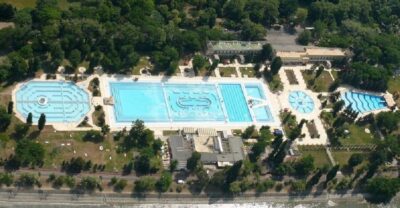
Nearby, you see the exterior of Széchenyi Baths, one of Europe’s largest medicinal bath complexes. Its thermal water comes from two springs with temperatures of 74 and 77 degrees Celsius. The tour does not give you a bathing session. If soaking in the yellow outdoor pools is on your must-do list, you will need a separate visit and more time in Budapest.
Vajdahunyad Castle receives about 20 minutes. It was built for the 1896 Millennial Exhibition, marking 1,000 years since the Hungarian Conquest of the Carpathian Basin in 895. The castle’s mixed architectural references make it an enjoyable stop, but the short time means you should expect an exterior look and a walk through the surrounding park rather than a full palace visit.
Basilica, Liberty Square, and Parliament
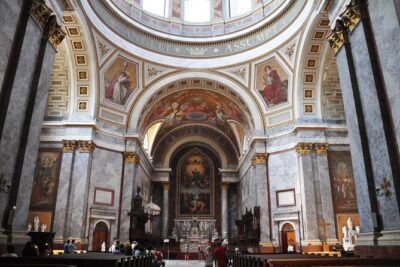
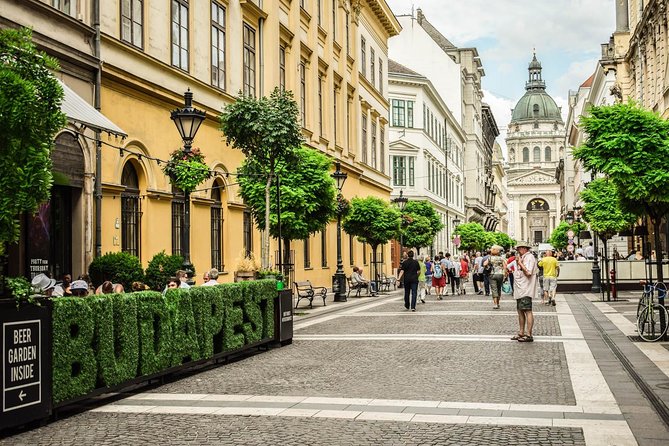
Back in central Pest, the route pauses at St. Stephen’s Basilica for about 15 minutes. The church honors Stephen, Hungary’s first king, and its reliquary contains his right hand. Entry is not included, so the stop focuses on the outside and the surrounding square.
Liberty Square is a quieter, more politically charged stop. The United States Embassy and the Hungarian National Bank sit around the square, along with monuments that invite questions about Hungary’s 20th-century past. The 25-minute stop gives your guide more room to explain the setting than the quick photo stops earlier in the day.
Parliament is the visual centerpiece of Pest. The building is the seat of Hungary’s National Assembly and one of Budapest’s most recognizable sights, especially from the Danube side. You get about 15 minutes here. That is enough to appreciate its size, Gothic Revival details, and riverside position, but Parliament admission is not included.
This distinction matters. If you want to see the debating chamber or interior halls, you need a separate ticket and a different schedule. On this tour, Parliament is an exterior landmark, presented as part of the city’s larger story.
A completely different kind of day out in Budapest:
- Budapest: City Highlights Cruise with Welcome Drink
★ 4.6 · 35,610 reviews - Budapest: Unlimited Prosecco, Beer and Aperol Spritz Cruise
★ 4.8 · 25,310 reviews - Budapest: Széchenyi Spa Day Ticket with Optional Upgrades
★ 4.3 · 23,911 reviews - Budapest: Nighttime or Daytime Sightseeing Cruise
★ 4.2 · 21,062 reviews
The Chain Bridge and the Buda Castle District
The Széchenyi Chain Bridge connects Pest with Buda across the Danube. The crossing is an important geographic moment because the tour shifts from the flat, urban center of Pest to the hilltop Castle District.
The bridge stop lasts about 10 minutes. Depending on the exact route and conditions, public transport may help with the longer connections, but you should still prepare for stairs, slopes, and extended walking around Buda.
Matthias Church sits in Holy Trinity Square, in front of Fisherman’s Bastion. The church is also called the Church of the Assumption of the Buda Castle and has served as a coronation church. The allotted 15 minutes is enough to see its colorful roof and exterior setting. The itinerary lists no included admission, so do not count on an interior visit.
Fisherman’s Bastion is the best short stop for broad city views. Its Neo-Romanesque terraces look across the Danube toward Pest and Parliament. You get about 10 minutes, which is enough for photos and a quick look from the terraces. It is a compact stop, not a leisurely sunset viewpoint.
Buda Castle follows with another 10 minutes. The complex was first completed in 1265, while the large Baroque palace seen today dates mainly from 1749 to 1769. The name can be confusing because Buda Castle refers to both the historic castle area and the palace complex. Your guide can help you understand the district as a whole, but there is no extended palace tour included.
Lunch and the Central Market Hall
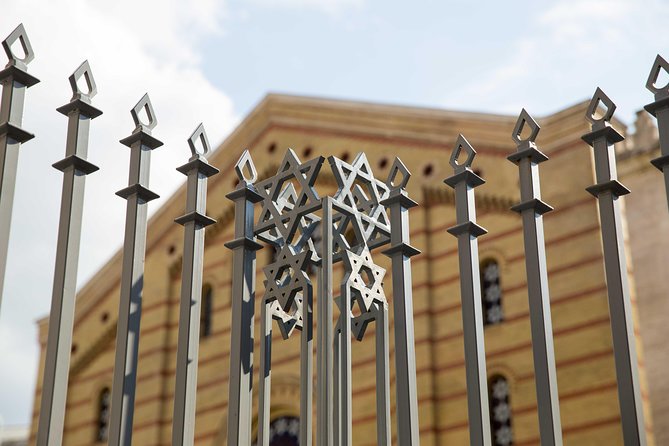
Lunch is one of the strongest practical features of this experience. You receive a traditional three-course Hungarian meal, dessert, and drinks, including alcoholic beverages. The meal creates a real pause in a day that can otherwise feel like a long sequence of monuments.
The menu is preset, so substitutions are not promised. If you have dietary restrictions, contact the operator before the tour rather than hoping the restaurant can change the meal on the spot. The lunch has been described as delicious and traditional, but the exact restaurant and menu can vary.
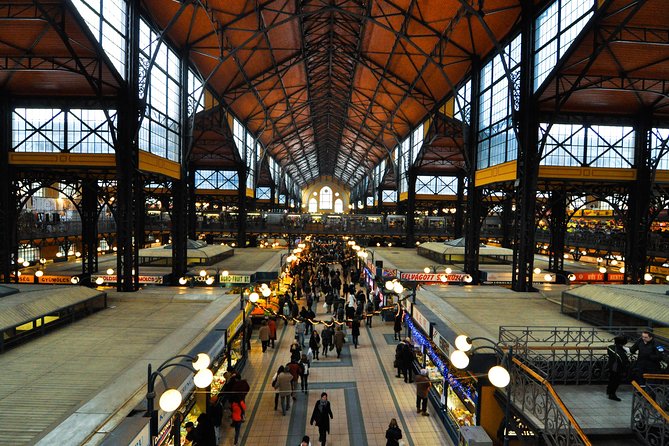
The Central Market Hall gives you a different side of Budapest. Opened in 1897, it is the city’s oldest and largest indoor market hall. The 30-minute visit lets you look at the iron structure, stalls, food products, and local shopping scene. It is a useful change of pace after churches, government buildings, and memorials.
Half an hour is not enough for a serious shopping trip. If paprika, sweets, or market browsing are on your list, note what interests you and return later. The hall works best here as a first look.
Shoes on the Danube Bank and the day’s emotional weight
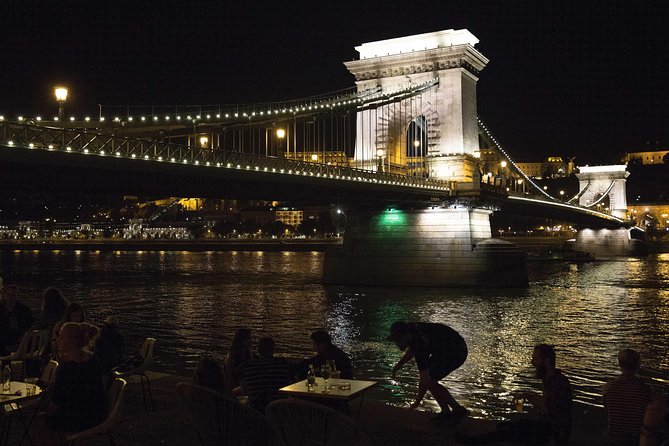
The final listed stop is Shoes on the Danube Bank, a Holocaust memorial honoring Jewish people murdered by the Arrow Cross militia during the Second World War. The simple metal shoes along the river are among Budapest’s most affecting memorials.
The stop lasts about 10 minutes. That is short, but the site does not need elaborate decoration to make its point. Your guide’s explanation is important, and you should expect a quieter moment than at the photo stops.
The tour returns to the original meeting point at the Opera House. The route packs a lot into one day, but the sequence also moves through different moods: national legends at Heroes’ Square, civic power at Parliament, royal history in Buda, everyday food at the market, and remembrance at the river.
Walking, metro, trams, and buses
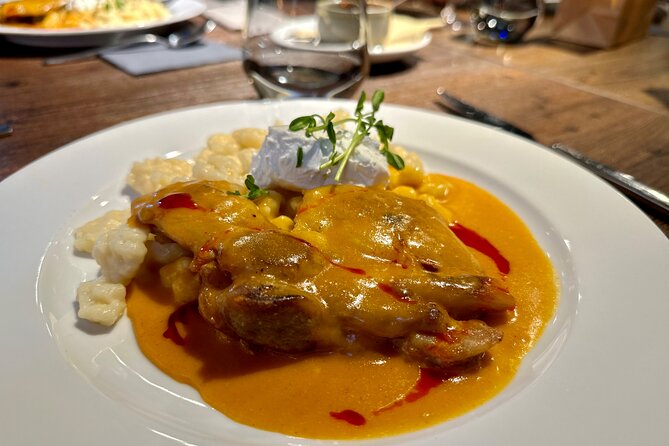
Do not book this expecting a van to carry you from landmark to landmark. The day uses public transport and walking. Specific reports range from more than five miles to about nine and a half miles, so the exact distance depends on the guide, group, route, and walking pace.
The transit rides are a plus. They show you how Budapest works and prevent the day from becoming an endless road march. Metro, tram, and bus connections also make it possible to cover far more ground than a walking-only route.
The title refers to a metro pass, but the listed inclusions do not clearly spell out a separate transit pass. One practical approach is to ask your guide at the start how tickets will be handled. A 24-hour pass was recommended by one guide at about 2,500 forints, but that price can change. Do not assume the tour price covers every public-transport ticket unless confirmed before departure.
Comfortable shoes are essential. Dress for the forecast because the tour operates in all weather. Rain does not cancel the experience, but wet pavement, stairs, and a long day outside can make the route harder.
What the $204.04 price includes
At $204.04 per person, this is not a cheap sightseeing walk. You are paying for a guide, route planning, public-transit navigation, a substantial lunch, dessert, drinks, and the convenience of seeing a wide sweep of Budapest in one booking.
The price looks better if you have only one free day and would otherwise need to arrange several separate visits, meals, and transit connections. A guide can also save time when you are trying to connect City Park, central Pest, the river, and Buda Castle.
The value drops if you mainly want interior visits. Admission is not included for St. Stephen’s Basilica, Parliament, the Great Synagogue, or the Opera House. Buda Castle and Matthias Church are also treated as exterior or brief sightseeing stops. Add those costs separately if entering major buildings matters to you.
A group can be as large as 20 people, though smaller departures may occur. Group discounts may improve the price for larger parties. The tour is offered in English and uses a mobile ticket.
Guides who shape the experience
The guide matters a great deal on a day this packed. Zoltan is described as friendly, funny, attentive, and strong on local history. He also handled the route through public transport and adjusted the pace for an older participant.
Fanni is praised for excellent English, easy conversation, and a personal approach. She has also helped with onward plans, including arranging a Danube boat tour after the sightseeing day. Emese is noted for adapting the pace and explaining both Hungarian history and present-day life.
Odea is described as friendly and clear when explaining different eras of Hungarian history. These details point to an important booking truth: the guide is not just there to point at buildings. A good guide can help you decide which places deserve a return visit and which exteriors are enough for your interests.
You can help by saying early what you want from the day. If the Great Synagogue, Parliament, or Basilica interior is a priority, ask how much time remains and what separate tickets would be needed. The route is broad, so clear communication prevents disappointment.
Who should book this Budapest day tour?
I would choose it for a first visit, a short stay, or a cruise stop when you want a strong overview in one day. It is also useful if public transport feels confusing or if you want history explained while moving through the city.
It suits people who enjoy walking, outdoor landmarks, local food, and a lively pace. An older participant managed the day by taking it at a personal pace, but that does not remove the need for stamina. If nine miles of walking sounds unpleasant, ask about the route and transit plan before booking.
I would choose another format if you want museum interiors, long visits at Parliament, a full bath session, or a relaxed afternoon at each landmark. This is a sampler with substance, not a slow architectural study.
Should you book Budapest All In?
Book it if your priority is seeing the main Budapest sights efficiently, eating a Hungarian lunch, and learning how to move between Buda and Pest. The guide quality appears to be a major strength, with Zoltan, Fanni, Emese, and Odea each bringing warmth and strong local explanations.
Skip it if you dislike long walks or would feel frustrated by standing outside the major buildings. Before paying, confirm how public-transport tickets are handled and price the admissions you may want. For a first day in Budapest, the route is ambitious, useful, and full of good orientation value. Just bring good shoes and realistic expectations about what you will enter.
FAQ
How long does the Budapest All In tour last?
The tour lasts approximately 7 hours and 30 minutes, beginning at 9:00 a.m. and ending back at the meeting point.
Where does the tour start?
The meeting point is the Hungarian State Opera House at Andrássy út 22, 1061 Budapest.
Where does the tour end?
The activity ends back at the original meeting point near the Hungarian State Opera House.
Is lunch included?
Yes. Lunch, a traditional Hungarian dessert, alcoholic beverages, snacks, and drinks are included.
Is the tour conducted in English?
Yes. The experience is offered in English.
Is public transportation used during the tour?
Yes. The route uses public transportation, including the metro, trams, and buses, along with substantial walking.
Is a metro pass included?
The tour title refers to a metro pass, but the stated inclusions do not clearly list a separate transit pass. Confirm the ticket arrangement with the provider or guide before departure.
Are admission tickets to the attractions included?
No. Admission is not included for several major sites, including St. Stephen’s Basilica, Parliament, the Great Synagogue, and the Opera House. The tour mainly provides exterior visits at these locations.
How much walking should I expect?
You should expect a lot of walking. Reports connected with the route range from more than five miles to about nine and a half miles, depending on the route and pace.
What happens if it rains?
The tour operates in all weather conditions, so dress appropriately for rain, cold, or heat.
What is the maximum group size?
The tour can have a maximum of 20 participants. Group discounts are available.
Can children join the tour?
Yes. Children must be accompanied by an adult.
What is the minimum drinking age?
The minimum drinking age for the included alcoholic beverages is 18.
Can I cancel for a full refund?
Yes, if you cancel at least 24 hours before the experience start time. Cancellations made less than 24 hours in advance are not refunded.
Recently added around Budapest
- Budapest: Private Walking Tour with a Local Guide★ 3.6 · 6 reviews
- From Budapest: Guided Tour of Eger with Wine Tasting★ 4.5 · 6 reviews
- Budapest: City Bike Tour with Coffee Stop★ 5.0 · 37 reviews
- Budapest: Danube River Views Bike Ride★ 4.8 · 23 reviews
- Walk to recent and aged spiritual sanctuaries near Budapest★ 5.0 · 5 reviews
- Budapest: Vacation Photographer to collect great memories★ 5.0 · 49 reviews
- Trash Art Museum: Hungary’s First Scrap Metal Exhibition★ 4.3 · 72 reviews
- Budapest: Multilingual Highlights Tour★ 4.8 · 89 reviews
Full-Day, compared.
Budapest Gellert Thermal Spa Full Day Ticket with Cabin or Locker
Read our review →
Budapest Private Full Day City Sightseeing Tour Walking or by Car
Read our review →