Reviewed · GUIDED
Budapest: Guided Tour of the House of Music, Hungary
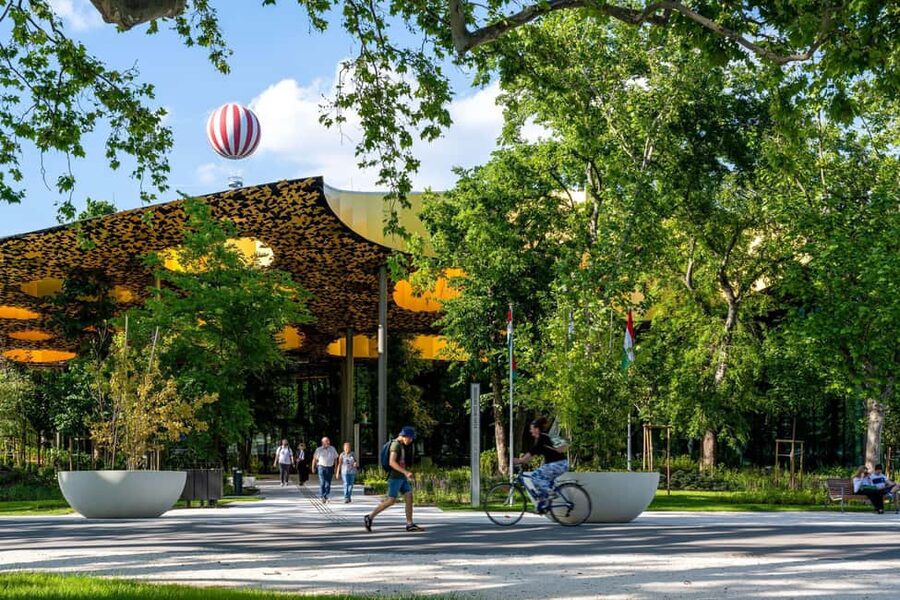
The House of Music Hungary looks like a building caught between earth and sky. Its undulating roof, pierced by circular openings and covered with thousands of leaf-like metal elements, seems to float above the glass walls. The one-hour guided tour explains how this unusual structure works, rather than simply asking you to admire it.
I like the way the tour connects architecture with music, especially the explanation of how the roof, shape, and materials affect sound. I also like the building’s easy relationship with City Park, where trees, daylight, and open views become part of the experience. The main limitation is clear: this is an architectural tour, not a full museum visit. Exhibitions, the Sound Dome, and Creative Sound Space require separate entry.
Guides such as Dora bring extra life to the hour. She has been praised for her clear explanations, friendly manner, and evident enjoyment of the building. The tour is also wheelchair accessible, but it is not intended for children under 15, and pets are not allowed except assistance dogs.
Key points to know before you book
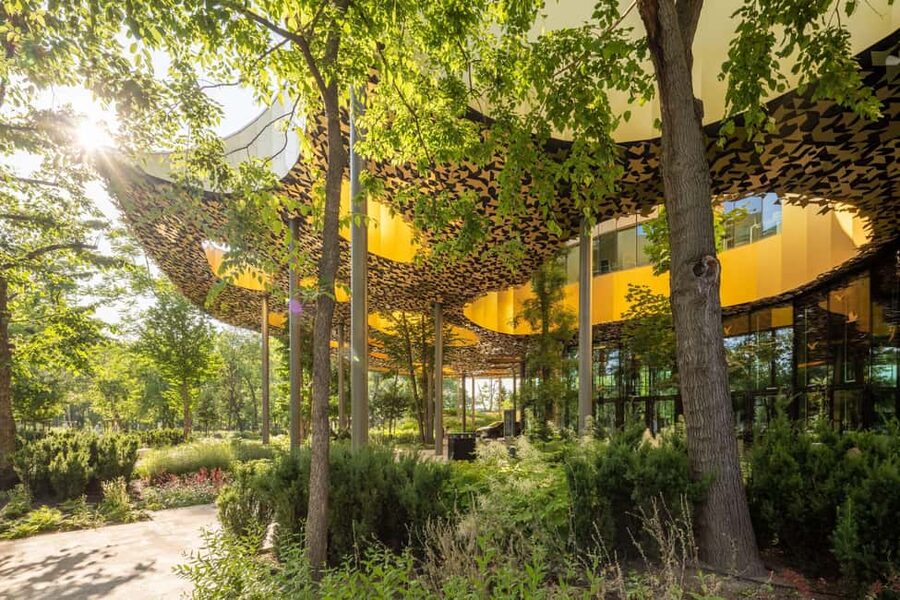
- A floating roof with a practical purpose: The leaf-like canopy provides shade, daylight, and acoustic benefits as well as visual drama.
- City Park becomes part of the design: Extensive glass walls make the building feel connected to its trees and paths.
- The spiral staircase is a highlight: It is both a working route through the building and a striking piece of design.
- You see more than the entrance hall: The tour includes the concert hall, library and archives, outdoor spaces, café area, and gift shop.
- This is not an exhibition ticket: The Sound Dome, Creative Sound Space, and exhibitions are not included.
- The one-hour format keeps the visit focused: At $13 per person, it offers a fairly low-cost look at one of Budapest’s boldest new cultural buildings.
Why the House of Music catches your eye first
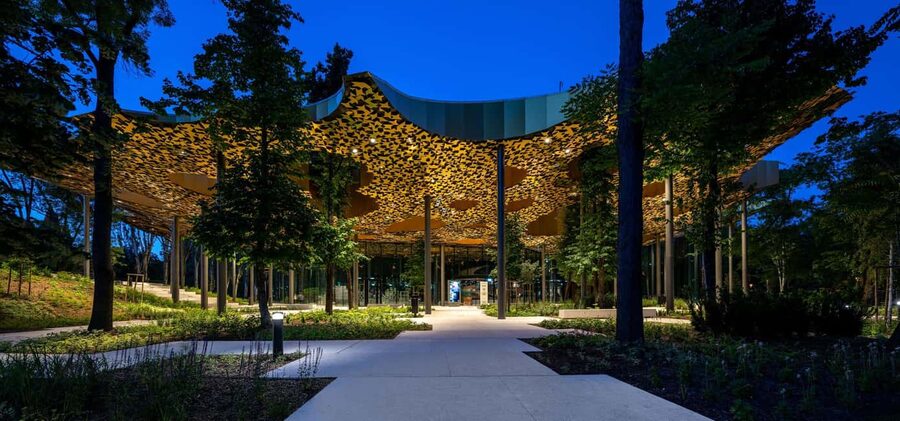
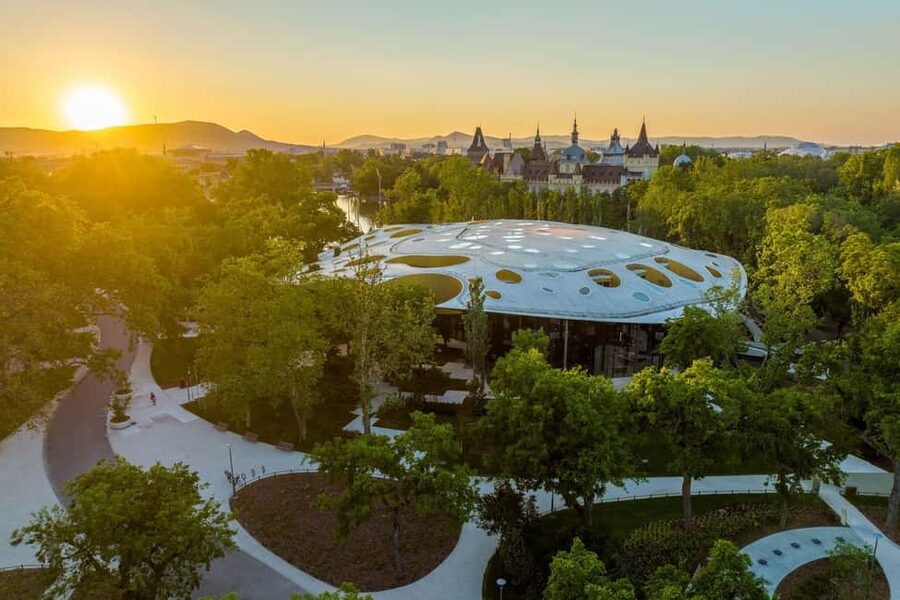
The best part of the visit begins before you enter. From outside, the House of Music presents a broad, irregular roof that rises and dips like a gentle wave. Circular openings cut through it, allowing trees to reach upward and daylight to filter down.
The canopy is made from thousands of leaf-like metal elements. That detail matters because the roof is not decoration added after the fact. It helps shape the building’s light, shade, and sound. Your guide explains how the architects treated the roof as part of the musical experience, not just a dramatic silhouette for photographs.
The building was designed by Japanese architect Sou Fujimoto. His approach here is organic and open. Instead of making a heavy block that separates itself from the park, the design aims to continue the park indoors.
That idea is easiest to understand through the glass walls. As you move through the building, you keep seeing City Park outside. The boundary between cultural center and public park becomes pleasantly fuzzy. You are still inside, but the trees and changing daylight remain present.
I find this more interesting than architecture that only looks bold from one angle. The House of Music changes as you walk around it. The roof looks different from the entrance, from the side, and from inside the foyer. A guided explanation helps you notice why those changes happen.
A few more Budapest half-days to weigh up
- Budapest: City Highlights Cruise with Welcome Drink
★ 4.6 · 35,610 reviews - Budapest: Unlimited Prosecco, Beer and Aperol Spritz Cruise
★ 4.8 · 25,310 reviews - Budapest: Széchenyi Spa Day Ticket with Optional Upgrades
★ 4.3 · 23,911 reviews
Starting in the foyer and looking up
The tour begins inside the foyer, a sensible meeting point because it gives you an immediate view of the building’s main ideas. The space is broad, open, and filled with natural light. Glass brings the park close, while exposed concrete and wooden details keep the interior from feeling cold.
Your guide uses the foyer to explain how the different levels and open areas support community life and music education. This is useful context because the building is not designed only for ticketed performances. It also makes room for people who come to learn, gather, browse, or simply sit in an attractive public space.
The foyer includes a café area, giving you a practical place to pause before or after the tour. You can also see the gift shop. Neither is the main reason to book, but both help make the visit feel like a look at a working cultural center rather than a quick architectural photo stop.
Pay attention to the mix of materials. Exposed concrete provides structure, while wood adds warmth. The glass keeps the park visible. Together, these choices give the interior a calm character that contrasts with the roof’s more energetic shape.
This opening section is especially helpful if you do not normally read architectural plans or follow design theory. The guide turns abstract ideas into things you can see: open sightlines, different floor levels, natural light, and routes that encourage people to move through the building.
The spiral staircase and the building’s open levels
The spiral staircase is one of the easiest features to remember. It is a functional part of the building, but its curves give it the feel of a large sculpture. As you look up and around it, the staircase helps you understand how the House of Music links its levels.
The tour does not treat the staircase as an isolated photo opportunity. Instead, it fits into the larger explanation of movement and public use. The House of Music is arranged so that people can circulate through open spaces, look toward the park, and encounter music-related activity along the way.
You might find that the staircase is more rewarding for its relationship to the surrounding space than for its own shape. From different points, it frames the foyer and reveals more of the building’s wooden and concrete details. If you enjoy modern architecture, this is a point where the $13 fee begins to feel worthwhile.
The open design also has a trade-off. A building with broad public areas and large glass surfaces can feel less intimate than an old concert hall with enclosed rooms and heavy ornament. If your main interest is historical interiors, this tour may feel more like a design lesson than a traditional cultural visit.
Concert hall, library, and archives
The guided route includes the concert hall, along with the library and archives. These spaces show that the House of Music is more than a striking shell in City Park. Its purpose is tied to performance, research, learning, and public access to music.
The concert hall is important even when no performance is taking place. Your guide explains how the building’s shape and materials are used to support sound quality. You do not get the full effect of a concert during this tour, so you should not book it expecting a live musical event. Still, seeing the performance space and hearing about its acoustic planning gives the building a clearer purpose.
The library and archives add another layer. They point to music as something to study and preserve, not only something heard on stage. The tour’s focus remains on the architecture, but these spaces help you see how the building serves different kinds of music lovers.
The guides also discuss acoustics in public areas. The roof structure, wall surfaces, and overall form were planned with sound in mind. This is one of the tour’s strongest themes because it links what you see with what the building is meant to do.
A completely different kind of day out in Budapest:
- Budapest: Nighttime or Daytime Sightseeing Cruise
★ 4.2 · 21,062 reviews - Budapest: 1-Hour Evening Sightseeing Cruise with Drink
★ 4.5 · 8,330 reviews - Budapest Danube Cruise and Dinner Options, Live Music and Dance
★ 4.5 · 7,428 reviews - Budapest: Historic Cruise with Welcome Drink
★ 4.7 · 6,512 reviews
How architecture serves music and nature
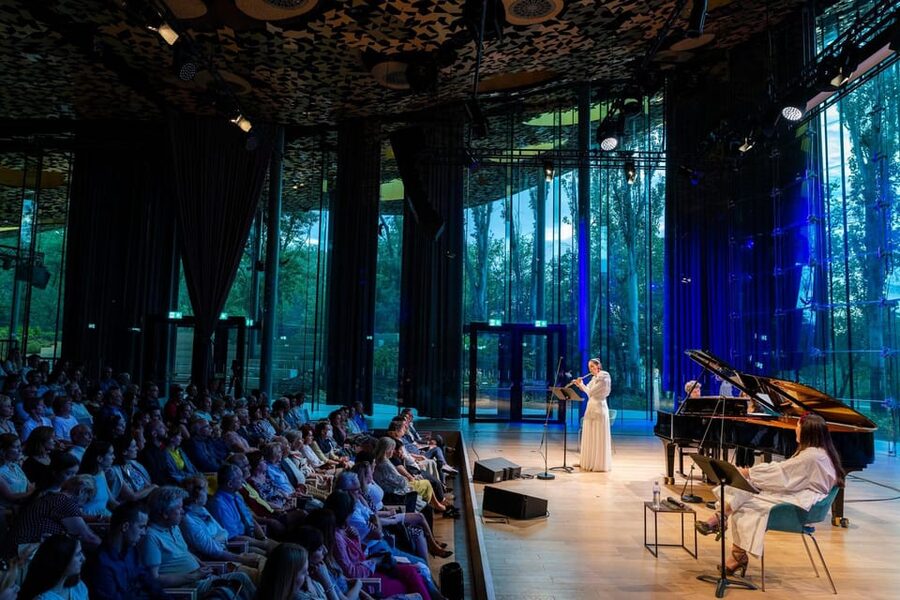
The House of Music aims to blend cultural life with its park setting. The extensive glass makes that goal visible, but the concept goes further. The building’s open areas are intended for community engagement and music education, even when you are not visiting an exhibition.
Your guide explains how the roof, shape, and materials influence the building’s sound. You also hear about sustainability features, including geothermal energy and rainwater harvesting. These points add substance to the design story. The building is not only trying to look natural. It also uses systems that connect its operation to environmental concerns.
I like this part because it gives you a useful way to judge ambitious modern architecture. Dramatic form can be expensive and impractical if it has no purpose. Here, the unusual roof and glass walls are presented as tools for light, shade, sound, and connection with the park.
That does not mean every visitor will be equally interested in the technical explanation. If you mainly want music history or hands-on activities, the tour may leave you wanting more. If you enjoy understanding how a building works, these details give the hour real substance.
What is included, and what is not
The guided visit includes the building’s main architectural features, the concert hall, library and archives, outdoor spaces, and gift shop. You begin and end in the foyer, so the route is compact and easy to follow.
It does not include entry to the exhibitions, Sound Dome, or Creative Sound Space. This is the most important booking detail. The House of Music offers more than this tour covers, so check what you want to see before paying for additional activities.
For many people, the architectural tour works well as a first visit. You learn how the building is organized and gain a better sense of its purpose. You can then decide if the exhibitions or sound-focused spaces deserve a separate visit.
For others, the exclusions may be a drawback. If you want interactive music displays or a longer museum experience, the $13 tour is only one part of the building’s offer. It is best understood as a focused introduction, not an all-access ticket.
Guide quality and the one-hour pace
The guide makes a real difference in a building like this. Without explanation, you might notice the roof and glass but miss the reasons behind them. With a good guide, the tour links the visual details to acoustics, sustainability, public use, and the park.
Dora has received especially warm praise for her friendly energy, clear answers, and strong grasp of the building. Another highly praised guide was described as a white-haired woman with colorful highlights, remembered for kindness and professionalism. Since guide assignments can change, you should not assume Dora will lead every departure, but her approach shows the level of personal explanation you can hope for.
One hour is enough to cover the main design story without making the visit feel heavy. It is also short enough to fit into a Budapest sightseeing day. The trade-off is that you will not have time for every corner or a long independent look at each space.
The tour is offered in English and has a 4.8 rating from 23 reviews. That is a strong result, though the small number of ratings means I would treat it as a useful signal rather than a guarantee. The repeated praise for the guides is more helpful than the number alone.
Is $13 a fair price?
At $13 per person, this is a modestly priced guided look at a major contemporary building. You are paying for access to parts of the structure plus an English-language explanation of design choices that would be easy to miss on your own.
The value is strongest for architecture fans, photographers, design students, and visitors curious about how cultural buildings work. The tour also suits anyone already planning to spend time in City Park. You can combine the House of Music with the park rather than making a special trip for a one-hour activity.
The value is weaker if you expect exhibitions, interactive displays, or a concert. None of those are included. You should also consider the age rule, since the activity is not suitable for children under 15.
Cancellation is flexible: you can cancel up to 24 hours before the tour for a full refund. You can also reserve now and pay later, which is useful when your Budapest plans are still moving around. The tour is wheelchair accessible, but pets are not allowed except assistance dogs.
Who should book this House of Music tour?
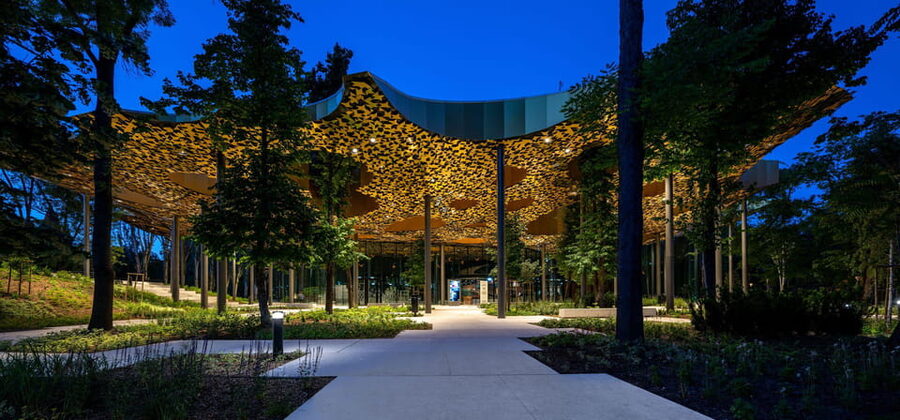
I would book this tour if you like modern architecture and want more than a quick look at an unusual façade. The explanations of the floating roof, acoustics, open levels, and environmental systems give you a better understanding of what you are seeing.
It is also a good pick if you want a short, clearly focused activity in City Park. The central foyer, café, outdoor views, and one-hour duration make it easy to fit between other plans.
I would skip it if your priority is music exhibitions, interactive sound experiences, or a live performance. Those interests require more than this tour provides. In that case, check the separate entry options for the exhibitions, Sound Dome, and Creative Sound Space.
For most architecture-minded visitors, the low price and strong guide feedback make this a sensible booking. Go in expecting a guided building tour, not a full museum day, and the House of Music should give you an unusual and worthwhile hour.
FAQ
How long does the House of Music guided tour last?
The tour lasts one hour. Starting times vary, so check availability when booking.
What language is the tour offered in?
The live guided tour is offered in English.
Where does the tour begin and end?
The tour begins inside the foyer and ends back at the same meeting point.
Are exhibitions included in the tour?
No. Entry to the exhibitions, Sound Dome, and Creative Sound Space is not included.
Is the House of Music tour wheelchair accessible?
Yes, the activity is wheelchair accessible.
Can children or pets join the tour?
The activity is not suitable for children under 15. Pets are not allowed, although assistance dogs are permitted.
Recently added around Budapest
- Budapest: Private Walking Tour with a Local Guide★ 3.6 · 6 reviews
- From Budapest: Guided Tour of Eger with Wine Tasting★ 4.5 · 6 reviews
- Budapest: City Bike Tour with Coffee Stop★ 5.0 · 37 reviews
- Budapest: Danube River Views Bike Ride★ 4.8 · 23 reviews
- Budapest: Vacation Photographer to collect great memories★ 5.0 · 49 reviews
- Walk to recent and aged spiritual sanctuaries near Budapest★ 5.0 · 5 reviews
- Trash Art Museum: Hungary’s First Scrap Metal Exhibition★ 4.3 · 72 reviews
- Budapest: Multilingual Highlights Tour★ 4.8 · 89 reviews
Guided, compared.
Parliament Building Entry Ticket and Audio Guide
Read our review →

Budapest Small-Group Guided Tour on MonsteRoller e-Scooter
Read our review →
Guided Tour of the Parliament Building in Spanish
Read our review →


Budapest Danube Cruise with Drink, Audio Guide, Margaret Island
Read our review →