
Reviewed · CYCLING TOURS
Budapest Historic Downtown Bicycle Tour in small groups
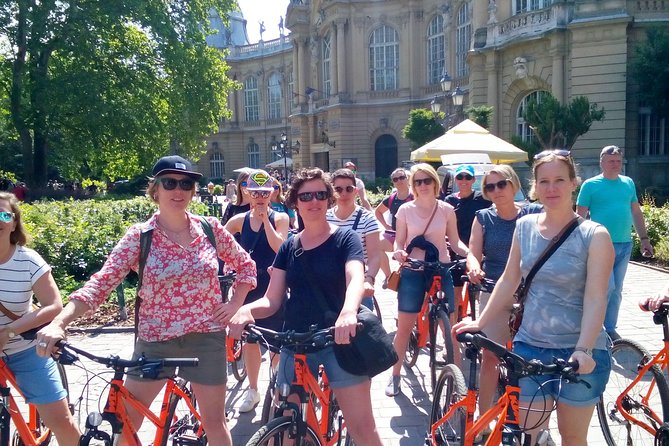
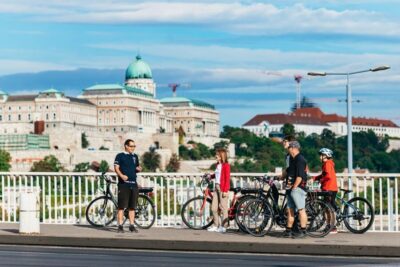
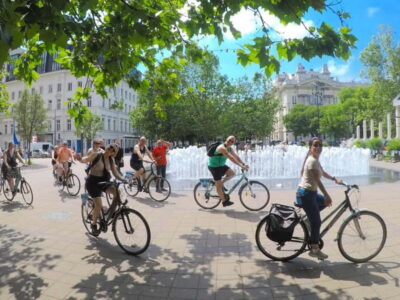
Budapest reveals itself quickly from a bicycle. In three and a half hours, you roll from the Jewish Quarter to Heroes’ Square, through City Park, along the Danube, and past Parliament. I like the wide range of sights and the chance to hear the story behind them instead of simply collecting photos.
I also like the small-group format, with the advertised group capped at 14 and the additional tour information listing a maximum of 10. Guides such as Oliver, Thomas, Dori, Katalin, and Valentin have been praised for clear history, safe pacing, and useful restaurant suggestions. The main caution is traffic: some cycling lanes share space with cars, so this is better for a confident rider than a complete beginner.
Key points before you book
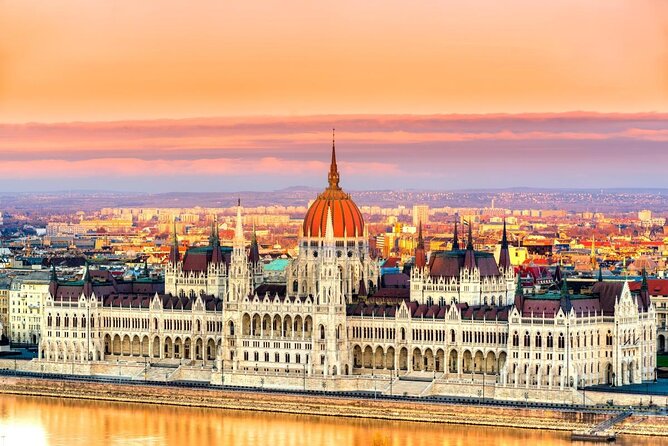
- See a large slice of Budapest in one ride: The route links the Opera, Heroes’ Square, City Park, Parliament, the Danube, Liberty Bridge, and the Great Synagogue.
- Expect a small group: The group is capped at 14 in the tour description, while the additional information gives a maximum of 10.
- Most of the route is fairly flat: The ride suits many ordinary cyclists, but traffic and city riding still require attention.
- The guide provides the historical thread: Expect commentary on Hungary’s kings, fascism, communism, Jewish heritage, architecture, and the changing city.
- The ride is mainly an outside tour: Buildings are viewed from the street. Entry to museums, churches, synagogues, baths, Parliament, and the Opera is not included.
- E-bikes may be available: Several riders received an upgrade when numbers were low, and some specifically praised the wooden-frame e-bikes for making hills easier.
Why this three-hour route works well
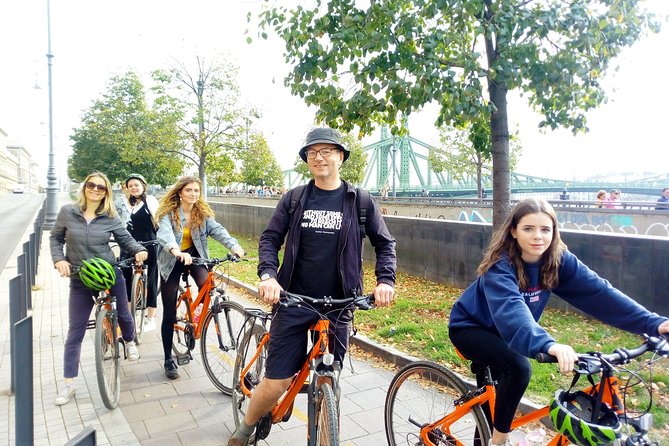
At $41.13 per person, this is priced as a midrange half-day activity rather than a simple bicycle rental. You receive the bike, helmet, bottled water, luggage storage, and a live English-speaking guide. The real value is the amount of ground covered without spending the day on foot or piecing together Budapest’s sights by tram and metro.
The route is busy with landmarks, but it is not a stop-and-go photo sprint. Stops usually last five to fifteen minutes. That gives you time to hear the explanation, look around, and take a few pictures, though it does not give you enough time to visit the interiors.
I would use this ride early in a Budapest stay. It gives you a useful city map in your head. Afterward, you can return to the Parliament, a bath, a synagogue, or City Park with a better sense of where everything fits.
The guides are a large part of the experience. Oliver is repeatedly praised for his historical explanations, safe riding, and ability to keep a group together. Thomas, Dori, Katalin, Karol, Bálint, and Valentin are also named for friendly, well-paced guiding. The exact guide varies, but the pattern is clear: the best part of the tour is not merely the bicycle. It is having someone connect the monuments to Budapest’s complicated past.
More bike tours in Budapest:
- Budapest: Grand Sightseeing Bike Tour
★ 4.8 · 984 reviews - Budapest Highlights Bike Tour
★ 5.0 · 770 reviews - Budapest: Guided City Discovery Bike Tour
★ 4.7 · 702 reviews
From Madách Imre út to the Jewish Quarter
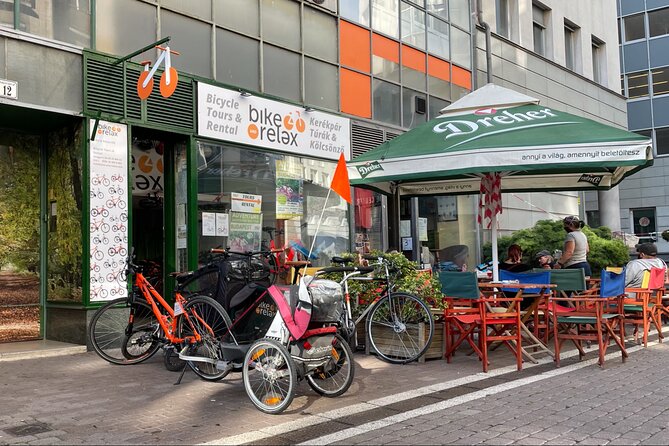
The tour begins at Budapest, Madách Imre út 12, at 10:30 in the morning. Bike & Relax provides the bicycle and helmet, and free luggage storage is available during the ride. You return to the same point at the end.
The opening section moves through the Jewish Quarter, beginning near Rumbach Street Synagogue. The Art Deco synagogue and nearby street art make a sharp visual contrast. You will see the building from outside, not enter it, and admission is not included.
The route then passes the Liszt Academy, a handsome music school with two concert halls. This is a good early stop because it shows Budapest as a living cultural city, not only a collection of old imperial buildings. Students still study classical music there, and the building helps explain why music and architecture are so closely linked in the city.
You then reach Andrassy Avenue, Budapest’s grand central boulevard. The avenue connects the city center with Heroes’ Square and City Park, passing Liszt Square, Nagymező Street, and the Ring Roads. Nagymező is often called the Broadway of Budapest because of its theaters and entertainment venues.
This stretch also introduces the House of Terror Museum. The former headquarters of the Gestapo and later communist security forces now holds a museum about dictatorship and imprisonment. A section of the Berlin Wall sits outside. You do not enter, so treat this as a short historical briefing and a reason to return later if the subject interests you.
Heroes’ Square and the changing City Park
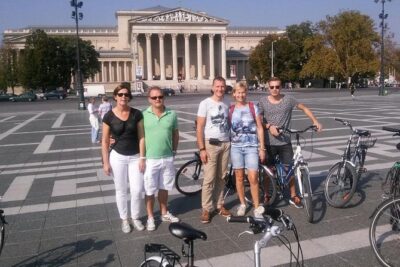
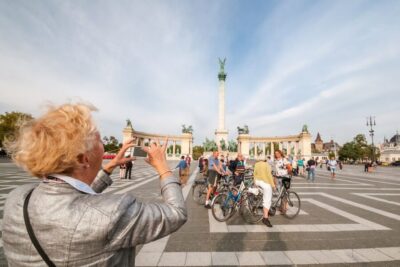
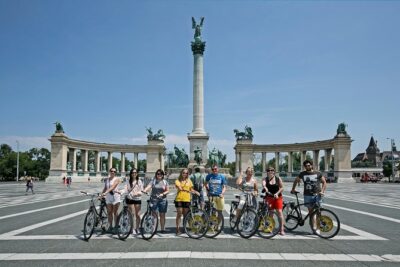
Heroes’ Square is one of the route’s longer stops, at about 15 minutes. Its monumental colonnade and statues were designed for Hungary’s millennium celebration in 1896. The figures range from early rulers such as King Stephen to later national leaders, including Lajos Kossuth.
A guide can make this more useful than a quick picture stop. The square offers a compact introduction to Hungary’s national story, though that story is not simple. It reflects shifting ideas of kingship, independence, revolution, and national identity.
From there, you cycle into Városliget, or City Park. The park covers about one square kilometer and is used for recreation, sport, and leisure. Redesign work may affect parts of the area, but the open space provides a welcome break from city traffic.
You pass the City Park ice rink and boating lake. In winter, the rink is a major Budapest attraction. In warmer months, the artificial lake offers boating. The tour only passes these areas, so do not expect time for either activity.
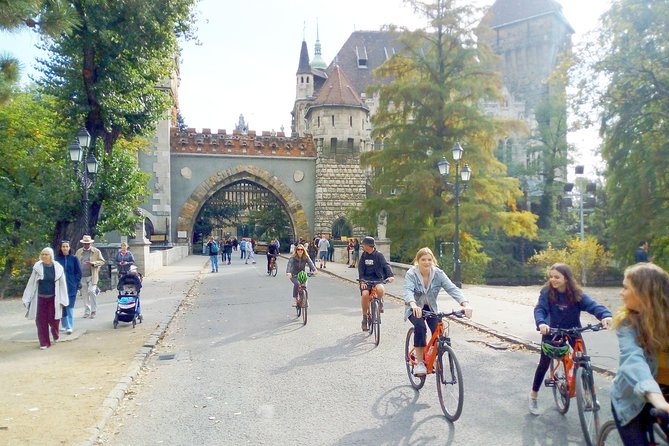
Vajdahunyad Castle is one of the park’s most entertaining sights. It looks medieval, but it was created as a kind of architectural display, combining styles from different periods and regions. The guide explains why this apparently old castle is not quite what it seems. You also see the statue of Anonymous, a seated writer whose covered face has inspired plenty of local folklore.
The newer side of the park comes next. The House of Music Hungary provides a sharp contrast to the castle, with modern architecture and concert facilities. The Museum of Ethnography adds another contemporary building at the park’s edge, with a distinctive shape and views across the surrounding area.
These stops show two different Budapests side by side: historic styles borrowed and reworked for national display, and new cultural buildings designed for the present day. You will not enter either building, but the contrast is worthwhile.
The Opera, Basilica, and political memory
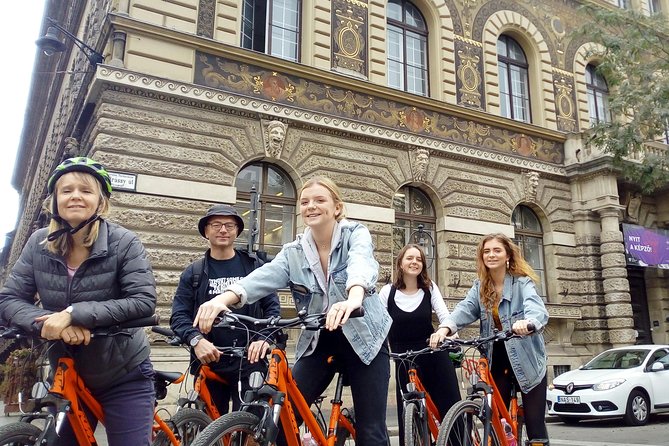
The ride returns along Andrassy Avenue toward the Hungarian State Opera. Designed by architect Miklós Ybl, the Opera is one of the city’s most important late nineteenth-century buildings. The guide discusses its architectural style and the historic M1 metro, which runs beneath Andrassy Avenue.
The Opera is viewed from outside. If you want a performance or interior visit, plan that separately. The same applies to St. Stephen’s Basilica, the largest Catholic church in Budapest. You see its impressive exterior and learn about the preserved right hand of St. Stephen, displayed inside under glass, but you do not go into the church on this ride.
Next comes Szabadság tér, or Liberty Square. It is a useful place to discuss Budapest’s twentieth-century politics. The square combines financial institutions, memorials, and reminders of wartime violence. It includes controversial and ironic monuments, so the guide’s explanation matters here. This is one of the route’s strongest history stops because it asks you to look at how a city remembers, argues, and sometimes jokes about painful events.
More history tours in Budapest:
- Budapest: Historic Cruise with Welcome Drink
★ 4.7 · 6,512 reviews - Budapest Historical Sightseeing – Free Walking Tour
★ 5.0 · 1,302 reviews - Buda Castle District Dark History, Legends and Vampire Night Tour
★ 4.5 · 1,240 reviews - BloodThirsty Hungary: Walking tour & Dark Historical Stories
★ 4.9 · 633 reviews
Parliament and the Danube riverfront
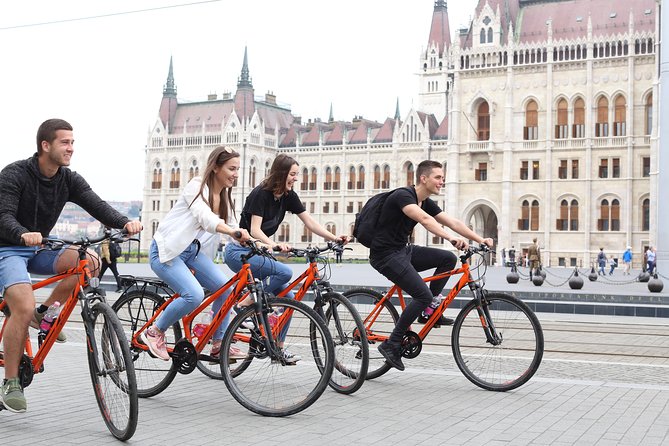
The Hungarian Parliament Building is the visual prize of the downtown portion. Its Gothic Revival exterior stretches along the Danube and remains an active seat of government. The ride circles around the building, giving you several angles and a broad view across the river toward Buda.
This is a place where the bicycle helps. On foot, seeing the full riverfront and then continuing to the next district takes more time. From the bike, you can pause for pictures, hear the background, and move on without losing half a day.
You also pass the Shoes on the Danube Bank memorial. The metal shoes honor Jewish people who were ordered to remove their shoes before being killed beside the river during the Second World War. Direct access to the memorial is not always possible because of traffic, so do not count on a long, quiet visit. Even a brief pass is meaningful, but return on foot if you want time to read and reflect.
The route continues past the Chain Bridge, the oldest bridge across the Danube in Budapest. It is a short pass-by rather than a dedicated visit. You then follow the river toward Rudas Baths, one of the city’s old Turkish baths. The tour does not include bathing, and the bath has separate men’s and women’s days for its hammam, so check the schedule before planning a visit.
Further along, you pass Gellért Baths, known for its Art Nouveau and Art Deco details and its prominent position beside the river. Again, the building is an exterior sight on this tour. If Budapest’s bath culture is high on your list, save a separate block of time for one of these baths.
Liberty Bridge, the market, and the final synagogue
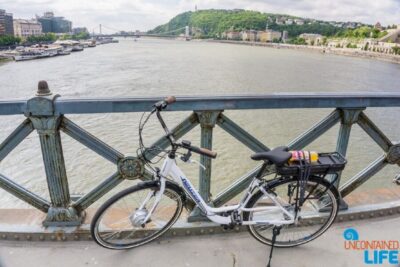
Liberty Bridge is a compact but attractive crossing with a strong local feel. It was originally named for Emperor Franz Joseph and took its current name after the end of the monarchy. Students and young people often gather here to enjoy the river views.
The route passes the Central Market Hall, one of the best places to return after the ride for Hungarian food and a look at everyday market life. You also pass the Hungarian National Museum. It is worth a separate visit if you want a fuller account of the region and the many peoples who have lived here.
The final major stop is the Great, or Central, Synagogue at the edge of the Jewish Quarter. Its Moorish-style exterior is one of Budapest’s most recognizable religious buildings. You see it from outside and then return toward the starting point.
This ending works well because it brings you back to the district where the ride began. It also leaves you close to restaurants, bars, and city transport for the rest of the afternoon.
Riding conditions, bikes, and group size
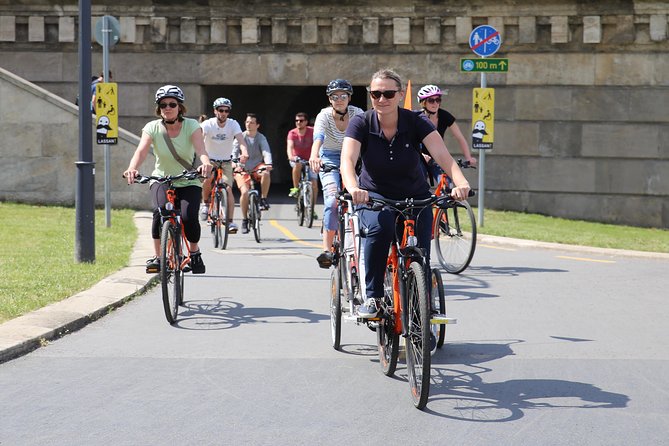
You should be comfortable riding a bicycle in an urban setting. The route is described as mostly flat, and several riders found the pace suitable even when they were not expert cyclists. Still, the tour is not recommended for beginners, and one slow rider can affect the pace of the whole group.
Traffic is the main practical issue. Some cycle lanes overlap with car lanes, and busy sections can feel tense if you are not used to city riding. Weekend departures may offer less car traffic, according to the practical advice shared after the ride, but conditions can change.
The supplied information lists both a 110-kilogram weight limit and a warning that the tour is not recommended for people with visual impairment. Children must be accompanied by an adult. Most people who meet those conditions can take part, but ask yourself honestly if you can control a bike around traffic for several hours.
Helmets are included, though not mandatory. I would wear one. Bring layers, since you warm up while riding but can feel wind at stops. Gloves and a hat are useful in cooler weather.
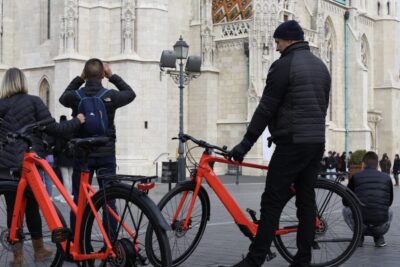
E-bikes are not clearly guaranteed with every booking. Some people received an upgrade when the group was small, and the wooden-frame electric bikes made the climb toward Buda Castle easy on longer variations. Do not book this standard downtown ride assuming an e-bike is included unless the operator confirms it.
What the price includes, and what it does not
The $41.13 price is fair if you want orientation, history, and transport between major sights in one package. A self-guided rental may cost less, but it will not provide the same historical context or the comfort of following someone who knows the streets.
You are paying for a bike, helmet, bottled water, luggage storage, and a live English-speaking guide. The small group also matters. A guide can keep an eye on the back of the group, adjust the pace, and answer questions more easily than on a large coach tour.
The tradeoff is that the tour covers a lot but enters nothing. Parliament, the Opera, the Basilica, the synagogues, the museums, and the baths all require separate planning and payment. Think of this ride as a well-organized overview, not a collection of interior visits.
The cancellation terms are friendly if your plans change at least 24 hours before the 10:30 start. Poor weather or an insufficient number of bookings can cancel the ride, in which case you are offered another date or a full refund.
Who should book this Budapest bike ride?
I would recommend it to a first-time visitor who wants to understand Budapest’s layout quickly. It also suits anyone who finds long walking days tiring, wants a guide rather than an audio app, or enjoys moving through a city at street level.
It is a good match for confident casual cyclists, couples, solo riders, and small groups. Solo participants can meet other people naturally because the group stays together for the whole route. The ride also works well for history-minded visitors, since the commentary links architecture to royal Hungary, Jewish Budapest, fascism, communism, war memorials, and the post-monarchy city.
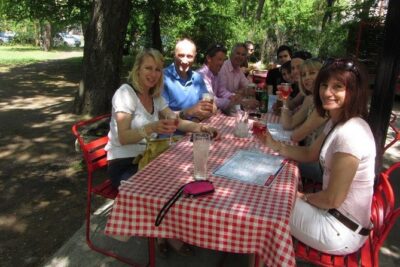
I would choose something else if you are a complete beginner, dislike traffic, or want long visits inside museums and monuments. This is also not the right activity if you want a relaxed food tour. There are no planned meal, drink, or restroom breaks, and one rider specifically noted that extra stops would have improved the experience.
Should you book it?
Book this tour if your priority is seeing the shape of Budapest and learning its story in one morning. The route is packed, the pace is generally sensible, and the small group gives you a better chance of hearing the guide and staying safe.
Skip it if you want a slow ride, guaranteed e-bikes, or interior access to the city’s famous buildings. For most visitors who can ride confidently in traffic, the $41.13 fee buys a useful first look at Budapest, with enough history and practical orientation to make the rest of your stay easier.
FAQ
How long is the Budapest Historic Downtown Bicycle Tour?
The tour lasts approximately 3 hours and 30 minutes and begins at 10:30 am.
Where does the bicycle tour start and finish?
It starts at Budapest, Madách Imre út 12, 1075 Hungary, and finishes back at the same meeting point.
Is the tour offered in English?
Yes. The experience includes a live English-speaking guide.
How many people can join the tour?
The tour description lists a group cap of 14 people. The additional tour information gives a maximum of 10, so the exact group size may vary by booking date but is intended to remain small.
Are museum and monument entry fees included?
No. The ride views the attractions from outside. Entry to places such as Parliament, the Opera, the synagogues, museums, churches, and baths is not included.
Is the tour suitable for beginner cyclists?
It is not recommended for beginners. The route is mostly flat, but parts of Budapest use bike lanes that overlap with car traffic, so you should be comfortable riding in an urban setting.
What happens if the weather is bad?
The experience requires good weather. If the operator cancels because of poor conditions, you are offered a different date or a full refund.
Recently added around Budapest
- Budapest: Private Walking Tour with a Local Guide★ 3.6 · 6 reviews
- From Budapest: Guided Tour of Eger with Wine Tasting★ 4.5 · 6 reviews
- Budapest: City Bike Tour with Coffee Stop★ 5.0 · 37 reviews
- Budapest: Danube River Views Bike Ride★ 4.8 · 23 reviews
- Budapest: Vacation Photographer to collect great memories★ 5.0 · 49 reviews
- Walk to recent and aged spiritual sanctuaries near Budapest★ 5.0 · 5 reviews
- Trash Art Museum: Hungary’s First Scrap Metal Exhibition★ 4.3 · 72 reviews
- Budapest: Multilingual Highlights Tour★ 4.8 · 89 reviews
Cycling Tours, compared.
Browse the lists this tour appears in