
Reviewed · MUSEUMS
Budapest: Light Art Museum – Immersive New Media Experience
Budapest’s Light Art Museum turns a former farmers’ market into a dark, colorful playground for art and science. Instead of walking past paintings in quiet rooms, you move among projection mapping, optical illusions, and site-specific installations that change how you see the building around you.
I like the mix of serious modern art and hands-on fun, especially the pieces connected with László Moholy-Nagy and Victor Vasarely. I also like the relaxed two-hour format and controlled entry, which helps keep the halls from feeling packed. The main caution is that the quality varies, and a few exhibits may feel vague if you prefer art with a clear explanation.
Key points to know before you go
- A farmers’ market with a second life: The museum occupies a repurposed historic marketplace, giving the art a large, unusual setting.
- Plan on about two hours: That is enough time to see the works carefully, read the English information, and return to favorite installations.
- The air-locked dome is a highlight: Lie down inside it for the strongest visual effect.
- This is self-guided: An English or Hungarian host can greet you and help with the ticket line, but no tour guide is included.
- Good for families, with one age note: Children can enjoy many interactive works, but one section is specifically for visitors over 18.
- The $18 price is reasonable for a special-interest museum: It works best if you enjoy contemporary art, visual effects, and unusual city attractions.
Entering Budapest’s former farmers’ market
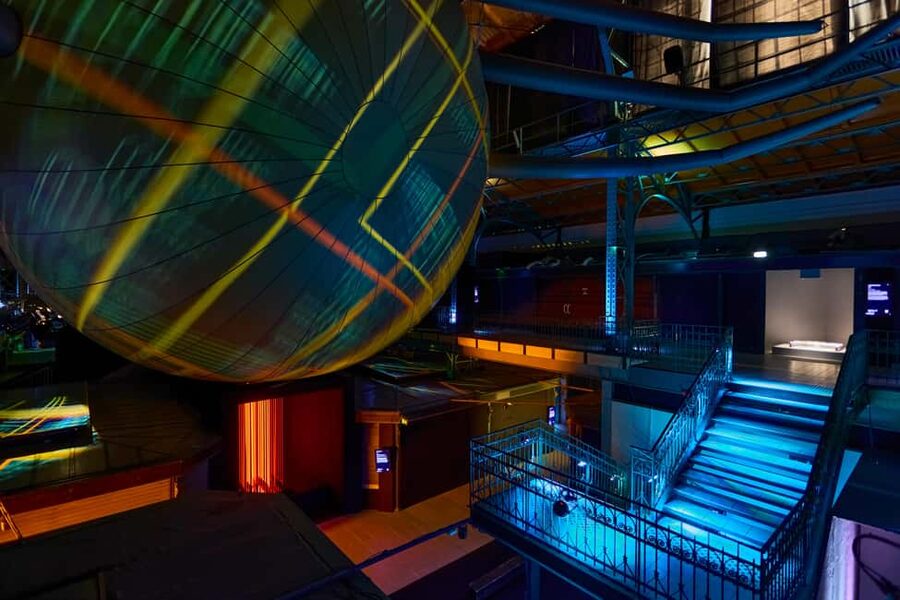
The setting gives the Light Art Museum its first surprise. You are not entering a purpose-built gallery with white walls and predictable rooms. You are entering a historic marketplace that has been adapted for large-scale light art, projection work, and new media.
That matters because the building becomes part of the experience. Some pieces sit against walls, some fill open areas, and others use darkness and space to change your sense of scale. A marketplace is a fitting home for this kind of art: both the building and the installations ask you to look at familiar things in a new way.
An English or Hungarian host is available at the meeting point. If you want the skip-the-line option, let the host know. After that, you explore on your own. There is no guide leading a timed group, so you can stop for a few minutes at a favorite work or move on quickly from one that does not speak to you.
The museum’s entry system also helps with crowd levels. Admission is limited at times, which can make a real difference when you are standing in front of projections or trying to take photographs. You may still find other people around, but the controlled flow is intended to prevent the rooms from becoming too crowded.
More museums in Budapest:
- Budapest: Cat Museum Budapest Entry Ticket
★ 4.4 · 2,210 reviews - Budapest: Budapest Retro Interactive Museum Ticket
★ 4.4 · 373 reviews - Star Wars story Museum Ticket Pass
★ 5.0 · 249 reviews
A two-hour route through light, color, and optical effects
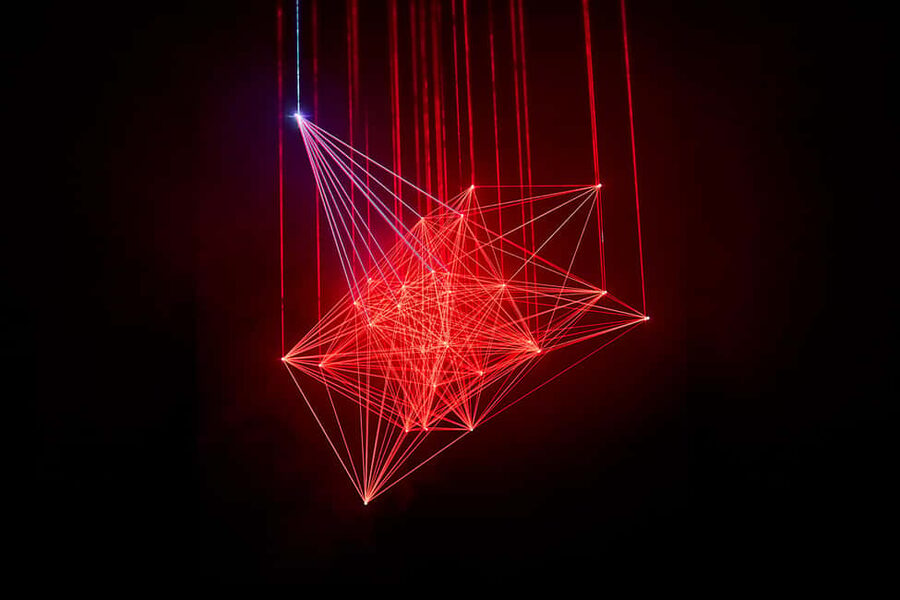
There is no spoken itinerary with fixed stops. Instead, you walk through a series of rooms and installation areas, each using light in a different way.
You might begin with a work that uses colored light and simple forms, then move into projection mapping or a space built to distort your sense of depth. The variety is part of the appeal. One installation may be quiet and geometric, while the next is playful, theatrical, or built for interaction.
The museum presents contemporary art, modern art, art and science, and new media side by side. That mix can be useful for visitors who are curious about how light works as an artistic material, rather than simply as a way to illuminate a sculpture.
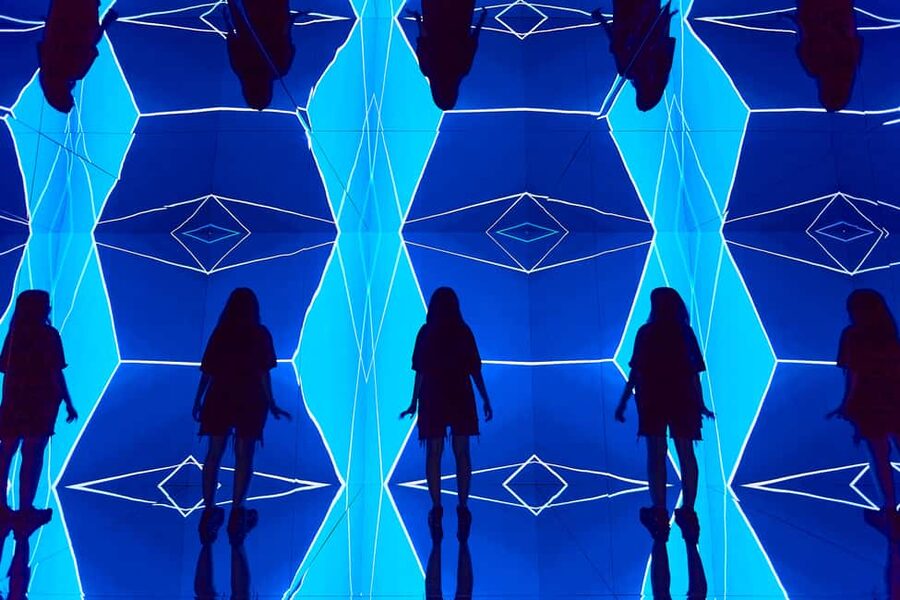
Some works invite you to move around them. Others ask you to stand still and watch changes in color, shadow, or projection. A few reward repeated visits from different angles. You should not rush through just because the museum is compact. The best use of your time is to pause when an installation catches your attention and read its information before moving on.
The museum provides information in English, which is helpful if you want context rather than a quick photo stop. One practical issue is that some information screens switch between languages, so you may need to wait for English to appear again. If you care about the ideas behind the work, allow extra time instead of assuming every explanation will be available immediately.
The air-locked dome and other memorable installations
The air-locked dome is one of the museum’s most talked-about features, and it is easy to understand why. It creates a separate visual environment from the surrounding galleries, with light and space working together to produce an unusual effect.
Here is the key tip: lie down inside the dome. The experience is more effective from that position than when you remain standing. It changes your view and lets the installation fill your field of vision instead of appearing as a small object in a room.
Other installations include interactive works, unusual projected forms, and large-scale pieces that invite photographs. A blimp-shaped work has also become a favorite stop for some visitors, partly because it is so unexpected within a contemporary art museum. The exact exhibition can change, so you should treat individual works as temporary highlights rather than permanent fixtures.
Not every piece will work for every person. You might find one installation fascinating and another too abstract. A few works rely on broad ideas such as space, emptiness, perception, or color, and their meaning may not be obvious. That is normal for an exhibition built around experimental art, but it is worth knowing before you pay the admission fee.
Moholy-Nagy, Vasarely, and the art behind the effects
The Light Art Museum is not only a room of colorful effects. Its program also connects to important figures in modern and optical art.
László Moholy-Nagy is especially relevant. The Hungarian artist was a pioneer in using light, movement, machines, and industrial materials as art. His work helps explain why light can be treated as the subject itself, rather than simply a tool for showing another object.
Victor Vasarely gives you another useful reference point. His geometric patterns and optical effects made the eye part of the artwork. Even if you do not know the history of op art, you can recognize the basic idea: shapes and colors can appear to shift, bend, or move when arranged in a precise way.
Seeing works associated with these artists adds context to the newer installations. It shows that today’s projections and interactive spaces did not appear from nowhere. They grow from earlier experiments with geometry, machinery, movement, and perception.
You do not need an art-history background to enjoy the museum. Still, a little patience helps. Instead of asking only what a piece represents, ask what your eyes are doing as you look at it. That approach fits this museum better than searching for a single correct meaning.
A few more Budapest half-days to weigh up
- Budapest: City Highlights Cruise with Welcome Drink
★ 4.6 · 35,610 reviews - Budapest: Unlimited Prosecco, Beer and Aperol Spritz Cruise
★ 4.8 · 25,310 reviews - Budapest: Széchenyi Spa Day Ticket with Optional Upgrades
★ 4.3 · 23,911 reviews - Budapest: Nighttime or Daytime Sightseeing Cruise
★ 4.2 · 21,062 reviews
How interactive is the experience?
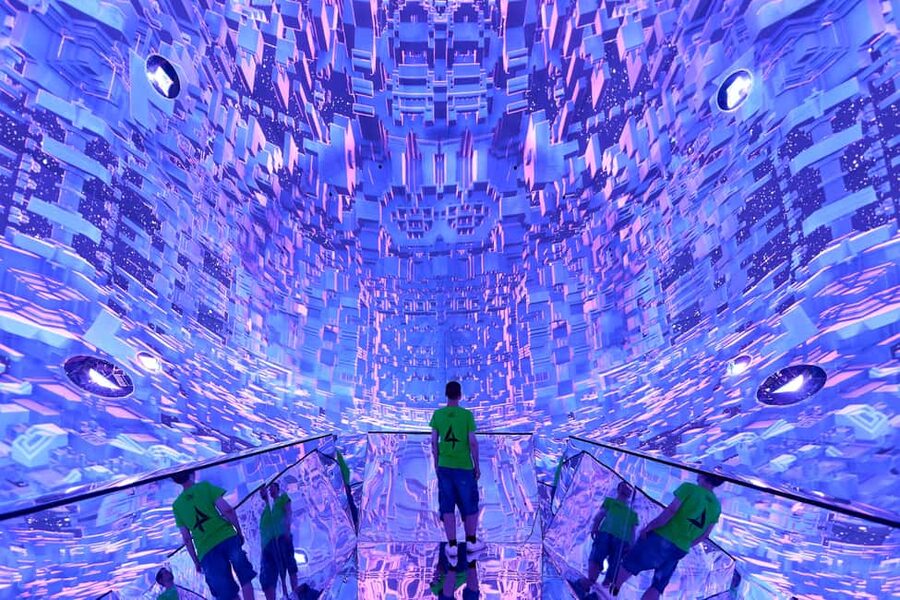
The word interactive covers a range of experiences here. Some installations respond to your presence or encourage you to move through the space. Others are more traditional displays that use light, color, and projection but do not require much physical participation.
That distinction matters if you are booking this specifically for hands-on entertainment. The museum has enough interactive material to keep the visit active, but it is not an amusement park, and not every room invites you to touch or control something.
For children, the unusual shapes, changing light, and open visual spaces can be more engaging than a standard art museum. A two-year-old can enjoy the sensory side of the visit, though young children may not understand the ideas behind every piece. Keep in mind that one section is specifically for visitors over 18, so the entire experience is not designed for very young children.
Adults who enjoy photography, design, technology, or contemporary art will have the most to discuss afterward. The museum also works well for a rainy morning or a short break from Budapest’s outdoor sights. It gives you something different from the city’s churches, thermal baths, and grand historic buildings.
What the $18 admission delivers
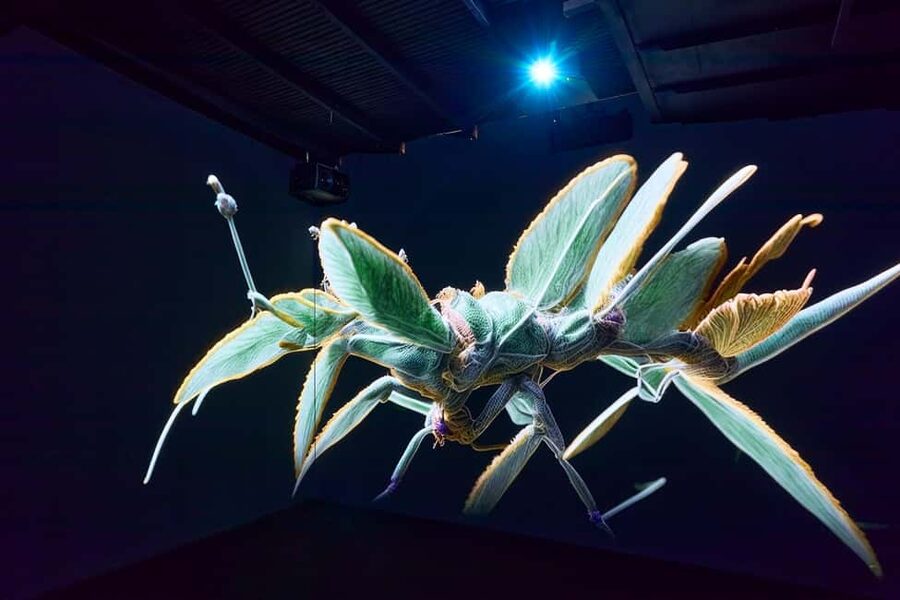
At $18 per person, the ticket is fairly priced if you spend close to the suggested two hours inside. You are paying for a special exhibition format, a distinctive building, and a collection that combines visual art with technology.
The value drops if you expect a large conventional museum with hundreds of objects. Some people can move through the open works quickly, especially when an installation is closed or when they do not connect with abstract art. In that case, the visit may feel short.
The best way to judge the price is by your interests. If you enjoy contemporary art, optical effects, unusual interiors, and photo-friendly installations, the admission is a sensible Budapest add-on. If you mainly want traditional paintings or clearly explained historical objects, another museum may suit you better.
Limited admission can improve the value. You have a better chance to view popular works without a crowd pressing behind you, and you can spend time inside the dome or return to a favorite piece. Just remember that controlled entry does not guarantee every installation will be operating during your visit.
Timing, ticket details, and practical planning
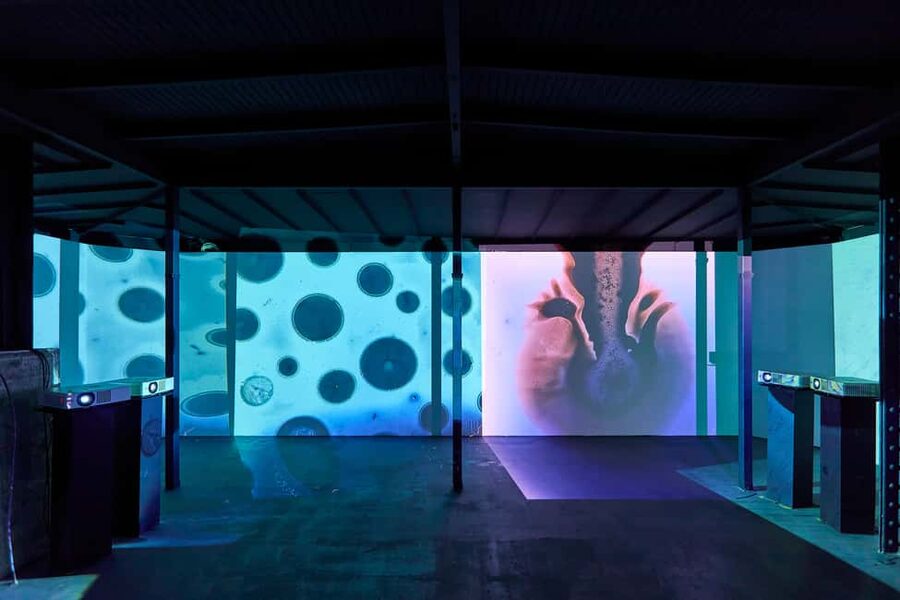
The ticket is valid for one day, with available starting times shown when you book. Plan for roughly two hours, though your pace may shorten or extend that visit.
You can reserve now and pay later, which is useful if your Budapest schedule is still changing. Free cancellation is available up to 24 hours in advance for a full refund. The ticket includes admission and the skip-the-line option, but you should tell the host at the meeting point if you want to use that option.
This is not a guided tour. The host or greeter speaks English or Hungarian and can help you enter, but the art is explored independently. That arrangement suits people who like setting their own pace, though you should not expect a curator to explain each installation in person.
The activity ends back at the meeting point because the museum visit takes place there. No transport, food, or guide is included, so plan the museum as one stop within your own Budapest day.
Who will enjoy this museum most?
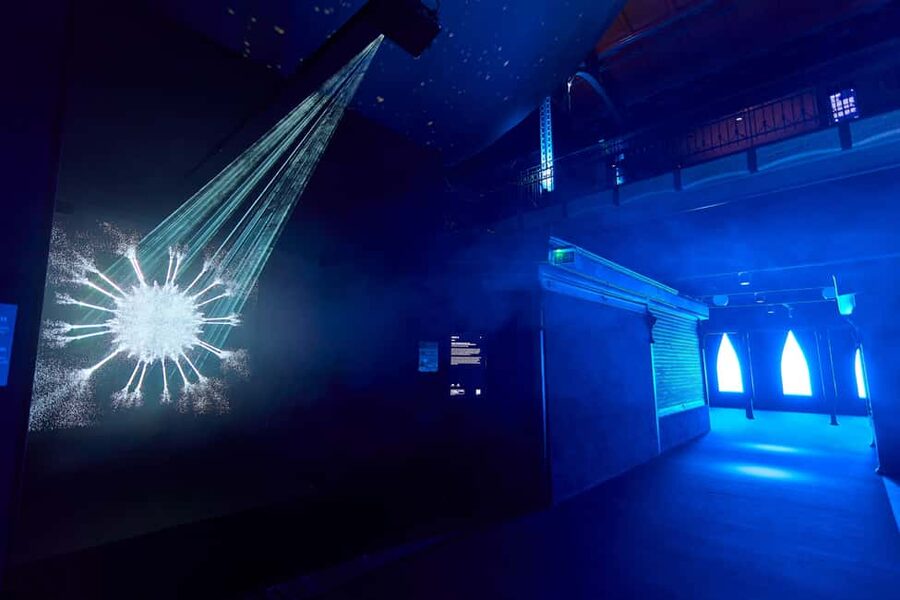
I would recommend the Light Art Museum to you if you like:
- Contemporary or experimental art
- Optical illusions and geometric design
- Projection mapping and new media
- Interactive exhibitions
- Unusual photography locations
- Short, flexible cultural visits
- Family activities that do not require a long guided explanation
It is also a good choice when you want a change of pace. Budapest has plenty of grand architecture and historic attractions. This museum gives you a modern, sensory contrast without asking you to spend an entire day inside.
I would be more cautious if you need every artwork to have a clear subject, a realistic style, or an obvious practical purpose. A few installations may look too simple or too vague for your taste. The exhibition is strongest when you accept that some pieces are about perception and mood rather than storytelling.
Is the Light Art Museum worth booking?
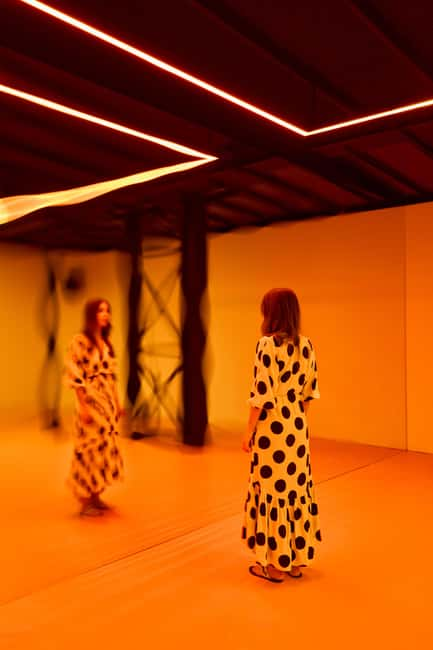
Book it if you want a distinctive two-hour museum visit built around light, color, optical effects, and new media. The former marketplace, the air-locked dome, and the works linked to Moholy-Nagy and Vasarely give the visit more substance than a basic photo attraction.
Go early in your available time if you prefer quieter rooms, and lie down inside the dome. Give the information screens a moment to return to English, and do not judge the whole museum by one abstract installation that leaves you cold.
Skip it if your Budapest plans are already full of traditional museums and you have little interest in contemporary art. For everyone else, the $18 ticket offers a memorable change from the city’s usual sightseeing menu, with enough family appeal and visual variety to make a couple of hours worthwhile.
FAQ
Where is the Light Art Museum located?
It is in central Hungary, in Budapest, inside a historic marketplace that has been repurposed as a contemporary art museum.
How long does the visit last?
The admission includes about two hours of exploration, although you can move through the exhibits at your own pace.
How much does admission cost?
The listed price is $18 per person.
Is the visit guided?
No. A tour guide is not included. An English or Hungarian host or greeter is available at the meeting point.
What languages are available?
The host or greeter is available in English and Hungarian. Information is also available in English, though some screens switch between languages.
Can I skip the ticket line?
Yes. The ticket includes a skip-the-line option. Let the host know at the meeting point if you want to use it.
Is the ticket valid for more than one day?
No. The ticket is valid for one day, and you should check availability for the available starting times.
Can I cancel the booking?
Yes. You can cancel up to 24 hours in advance for a full refund.
Can I reserve now and pay later?
Yes. The reserve-now-and-pay-later option lets you book your place without paying on the day of reservation.
Is the museum suitable for children?
Many of the light and interactive installations are suitable for families, but one section is specifically for visitors over 18. Consider this if you are visiting with younger children.
Recently added around Budapest
- Budapest: Private Walking Tour with a Local Guide★ 3.6 · 6 reviews
- From Budapest: Guided Tour of Eger with Wine Tasting★ 4.5 · 6 reviews
- Budapest: City Bike Tour with Coffee Stop★ 5.0 · 37 reviews
- Budapest: Danube River Views Bike Ride★ 4.8 · 23 reviews
- Budapest: Vacation Photographer to collect great memories★ 5.0 · 49 reviews
- Walk to recent and aged spiritual sanctuaries near Budapest★ 5.0 · 5 reviews
- Trash Art Museum: Hungary’s First Scrap Metal Exhibition★ 4.3 · 72 reviews
- Budapest: Multilingual Highlights Tour★ 4.8 · 89 reviews
Museums, compared.


Budapest Card: Free Public Transport, Spa & Museums with Delivery
Read our review →
Budapest Dohany Synagogue & Hungarian Jewish Museum & free extras
Read our review →
Travelling Galaxy Star Wars Interactive Exhibition
Read our review →
Skip the Line: Budapest Pinball Museum Admission Ticket
Read our review →Browse the lists this tour appears in