Reviewed · BUDAPEST TOURS
Pest side stories with a Historian
Budapest’s Pest side is best understood on foot, where a former Stalin square, a grand basilica, a castle built for a millennium celebration, and Europe’s oldest continental metro line fit into one long afternoon. This small-group history walk links the city’s showpiece sights with the political and social stories behind them.
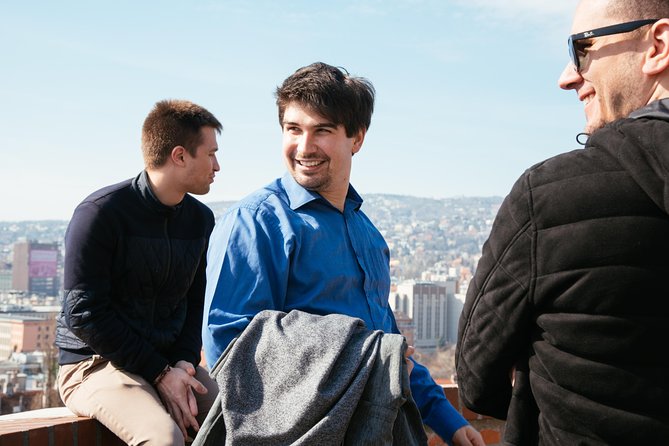
I like the limit of 10 people, which gives you a far better chance to hear the guide and ask questions than on a coach tour. I also like the practical inclusions: refreshments and metro tickets are covered, and the route uses public transport as part of the city experience.
The main drawback is the amount of walking. You cover a large stretch of Pest in about three hours, so this suits you best if you can keep moving, especially on a hot afternoon.
Key points before you book
- A broad Pest route: Elizabeth Square, St. Stephen’s Basilica, Heroes’ Square, Vajdahunyad Castle, Andrassy Avenue, Vorosmarty Square, and the Millennium Underground all fit into one tour.
- History comes first: The guide explains more than buildings, including Hungary’s changing rulers, wars, political eras, and national identity.
- Small group of up to 10: You get a more personal format than a bus tour, with room for questions and conversation.
- A lot of ground in three hours: The pace is described as easy, but the distance is still considerable.
- English-language guiding: Guides named in the tour team include Andrew, Greg, and Steven, also called Istvan.
- Useful inclusions: The guide, refreshments, and metro tickets are included in the $58.94 price.
Why this Pest walk is different
Many Budapest sightseeing tours treat Pest as a string of grand facades. This one tries to explain how the city changed over time. You move from a former market area and former Stalin square to a royal-looking castle that is much younger than it appears, then ride the oldest underground railway on mainland Europe.
That mix gives the afternoon a clear purpose. You are not simply collecting photographs. You are watching Budapest shift from imperial capital to modern city, with political history, architecture, commerce, and public memory all appearing along the way.
The historian-led format matters here. Budapest has plenty of attractive buildings that can seem unrelated at first glance. A guide can connect them to Hungary’s long story, including the effects of invading powers and the wars of the last century.
The tour is offered in English and begins at 2 p.m. at the Kempinski Hotel Corvinus Budapest, beside Elizabeth Square. It runs for about three hours and is capped at 10 people. That is small enough to feel personal, but still large enough to make the outing social.
The current score is 4.9 from 14 ratings, with 100 percent recommending the experience. The strongest praise focuses on the guides’ historical explanations, the easy walking pace despite the distance, and the more personal feel compared with large cruise-ship bus tours.
A few more Budapest half-days to weigh up
- Budapest: City Highlights Cruise with Welcome Drink
★ 4.6 · 35,610 reviews - Budapest: Unlimited Prosecco, Beer and Aperol Spritz Cruise
★ 4.8 · 25,310 reviews - Budapest: Széchenyi Spa Day Ticket with Optional Upgrades
★ 4.3 · 23,911 reviews
Elizabeth Square and the changing face of central Pest
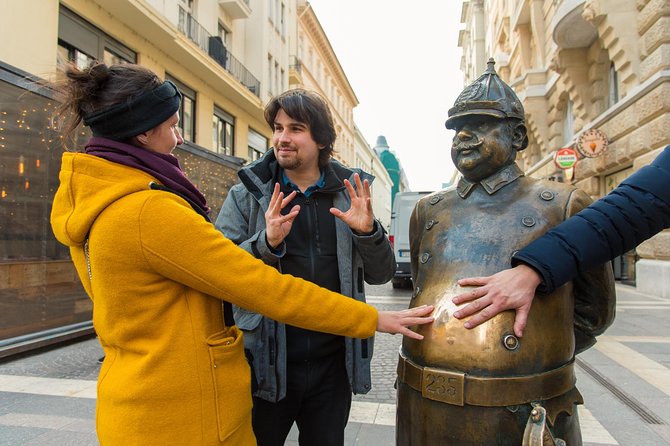
Elizabeth Square is a smart place to begin because it has worn several very different identities. It was once a market square, later a Stalin-era public space, and then a bus station. Today it is a popular meeting area for younger residents, with statues and other points of interest around it.
You spend about 20 minutes here. That is enough time to set the tone without getting stuck in one square. The value of the stop is not just what you see now. It is the contrast between the square’s former political roles and its present-day social life.
A historian can make this kind of location more useful than a purely visual stop. The square helps you understand that Budapest is not a preserved museum. Its public spaces have been renamed, redesigned, and repurposed as governments and generations changed.
Because the tour begins here, arrive ready to walk. The start point is at Erzsébet tér 7-8, near the Kempinski Hotel Corvinus. The provided meeting information gives a 2 p.m. start.
St. Stephen’s Basilica and the heart of Pest
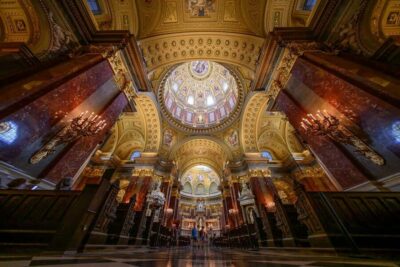
St. Stephen’s Basilica is described as the largest church in Budapest and is one of the tour’s central landmarks. You spend about 20 minutes here, with entry possible if the group is interested.
That last point is worth noting. Going inside is not presented as an absolute part of the plan, so you should expect some flexibility. If interior access matters greatly to you, ask the guide at the start about the day’s arrangement.
Even a short stop can be useful because the basilica anchors this part of central Pest. It also gives the guide a natural setting for discussing religion, state power, architecture, and national identity. You get a major sight without spending the entire afternoon indoors.
The tour is not built around long interior visits. Its strength is the wider story told between landmarks. If you want a slow architectural inspection of the basilica, a separate visit would give you more time.
Heroes’ Square: Hungary in one wide view
Heroes’ Square receives about 30 minutes, and this is where the historical focus becomes most obvious. The square introduces more than 1,100 years of Hungarian history through its monumental figures and layout.
You do not need to memorize every name to benefit from the stop. The important thing is learning how Hungary presents its past, including the leaders and events chosen for public honor. A historian can explain why the square matters and how national memory is shaped through monuments.
This is also one of Budapest’s main photo stops, but the story gives the view more weight. Look beyond the scale of the colonnades and statues. The square is meant to tell a national story in stone, and the guide helps you read it.
Thirty minutes is a sensible amount of time. It allows for explanation and photographs while keeping the group moving toward Vajdahunyad Castle. If you prefer a slow, unhurried morning at each sight, this schedule may feel brisk.
A completely different kind of day out in Budapest:
- Budapest: Nighttime or Daytime Sightseeing Cruise
★ 4.2 · 21,062 reviews - Budapest: 1-Hour Evening Sightseeing Cruise with Drink
★ 4.5 · 8,330 reviews - Budapest Danube Cruise and Dinner Options, Live Music and Dance
★ 4.5 · 7,428 reviews - Budapest: Historic Cruise with Welcome Drink
★ 4.7 · 6,512 reviews
Vajdahunyad Castle and the 1896 surprise
Vajdahunyad Castle may be the tour’s most useful correction to first impressions. It looks medieval, but it was built in 1896. The guide explains why and how this happened, turning an attractive stop into a lesson in national pride and historical design.
You spend about 30 minutes here. The castle’s appearance invites the obvious question: is this a genuine medieval fortress? The answer is more interesting than the question. Its construction reflects the way Hungary used historic styles to present its national story during the millennium celebrations.
This is a good example of why a historian adds value. Without explanation, you might simply see a picturesque castle and move on. With context, you can look for the different architectural ideas gathered into one place and understand why an 1896 project would borrow from the medieval past.
The stop is also described as less visited than some of Budapest’s headline sights. That does not mean it is empty or secret, but it may feel less predictable than the city’s best-known monuments. Bring a camera, but keep enough attention for the explanation.
Andrassy Avenue and Budapest’s grand route
Andrassy Avenue gets about 30 minutes and provides a long, elegant connection between the city center and Heroes’ Square. It has been a UNESCO World Heritage Site since 2002 and is described as a source of pride for Budapest residents.
The avenue works best as part of the walking route rather than as a single stop. As you move along it, the guide can discuss the city’s ambitions, its public architecture, and the role of grand urban planning.
This section also helps break up the monument stops. You are not standing in one square after another. You are walking through the city itself, seeing how the major sights connect.
The practical point is simple: wear comfortable shoes. The route covers a large area, and several participants have found the overall walking substantial even though the pace is kept easy. On a hot day, the distance can feel greater, so use the included refreshments and take the chance to drink when offered.
Vorosmarty Square and the commercial center
Vorosmarty Square is allotted about 15 minutes. It is one of central Pest’s best-known public spaces and is presented here through the lens of commerce, expensive goods, and the historic center of the city.
This is a shorter stop, so do not expect a long historical lecture or extended shopping time. Instead, use it to notice how the square functions as a commercial heart. The contrast with Heroes’ Square is useful: one presents national memory, while the other shows central-city business and public life.
The stop also brings you back toward the core of Pest after the longer route toward the City Park area. That helps the afternoon feel like a connected walk rather than a series of disconnected attractions.
The Millennium Underground, a ride with real historical weight
The Millennium Underground receives about 30 minutes and is one of the tour’s most distinctive inclusions. It is the oldest underground railway on the European continent.
The metro ticket is included, which is practical, but the ride is more than a way to save your feet. It shows how Budapest presented itself as a modern European capital. Public transport becomes part of the history lesson rather than a gap between sights.
You should expect a short urban transit experience, not an extended railway tour. The guide uses the system to help explain the city’s development and to move the group efficiently through Pest.
This is one reason the tour offers more than a standard walking circuit. You get a small taste of how Budapest’s infrastructure supported its growth, while also taking a break from the pavement.
What the $58.94 price gets you
At $58.94 per person, this is not the cheapest way to see Pest. The value depends on how much you want historical interpretation rather than a quick list of landmarks.
The price includes the English-speaking guide, refreshments, and metro tickets. The small group is the main added benefit. With no more than 10 people, you can usually expect a closer exchange with the guide than on a large city tour, and the format is better suited to follow-up questions.
You are also covering a wide route in one afternoon. Visiting all these places independently would require planning, route decisions, and a separate metro fare. The tour handles the structure and gives the sights a common story.
Still, be clear about what you are buying. This is not a private tour, and the basilica entry is not guaranteed as a fixed part of the schedule. You are paying for a guided historical walk with selected transit, not a full admission package to every attraction.
For a first afternoon in Budapest, the price can be sensible if you want orientation and context. If you already know Pest well and prefer to explore at your own speed, you may find the fixed route less useful.
Pace, group size, and the real practical details
The group limit is 10 people, and most participants can take part. Service animals are allowed, and the start is near public transport. The tour is offered only in English.
Expect to walk a lot. The route reaches from central Pest toward Heroes’ Square and Vajdahunyad Castle, then returns through the city center. Several hours on foot can be tiring, even with an easy pace.
The guide team includes Andrew, Greg, and Steven, also known as Istvan. The available feedback gives special attention to clear explanations, friendly guiding, and the ability to cover a large area without rushing the group excessively.
The end point is listed as St. Stephen’s Basilica, though the tour may finish at another central Pest location near the starting point. Treat the finish as flexible when planning dinner or a timed booking afterward.
Free cancellation is available if you cancel at least 24 hours before the 2 p.m. start. Changes or cancellations inside that window do not qualify for a refund.
Who should book this tour
I would choose this tour if you want a strong first look at Pest and enjoy learning why places matter. It suits history-minded visitors, first-time Budapest visitors, and anyone who would rather ask a guide questions than read several separate plaques.
It is also a good match if you dislike large coach groups. The 10-person limit, refreshments, and metro ticket make the afternoon feel more personal and practical.
You should think twice if you have limited walking ability, want long indoor visits, or prefer a very slow pace. The route covers plenty of ground, and the basilica visit depends on group interest rather than being a guaranteed extended stop.
Should you book Pest Side Stories with a Historian?
Book it if you want Budapest’s Pest side explained through politics, national memory, architecture, commerce, and public transport. The route is unusually broad for three hours, and the historian-led format gives the castle, squares, avenue, and metro line a shared meaning.
Skip it if you want a relaxed photo walk with little commentary or a tour focused mainly on interior admissions. For most first-time visitors who can manage a long afternoon on foot, this is a useful and well-priced introduction to Pest, especially when you prefer a small group to a busload.
FAQ
How long does the Pest Side Stories tour last?
The tour lasts approximately three hours.
What time does the tour start?
It starts at 2 p.m.
Where does the tour begin?
The meeting point is Kempinski Hotel Corvinus Budapest, at Erzsébet tér 7-8, 1051 Budapest.
Where does the tour end?
The stated end point is St. Stephen’s Basilica. The tour may instead finish at another central Pest location close to the starting point.
What sights are included?
The route includes Elizabeth Square, St. Stephen’s Basilica, Heroes’ Square, Vajdahunyad Castle, Andrassy Avenue, Vorosmarty Square, and the Millennium Underground.
Is entry to St. Stephen’s Basilica guaranteed?
No. The group may enter if there is interest, so interior access is not presented as a fixed part of every tour.
How many people can join the tour?
The tour has a maximum of 10 participants.
Is the tour offered in English?
Yes. The tour is offered in English.
Are metro tickets included?
Yes. Metro tickets are provided as part of the experience.
Can I cancel for a full refund?
Yes, if you cancel at least 24 hours before the local start time. Cancellations made less than 24 hours before the tour are not refunded.
Recently added around Budapest
- Budapest: Private Walking Tour with a Local Guide★ 3.6 · 6 reviews
- Budapest: Danube River Views Bike Ride★ 4.8 · 23 reviews
- From Budapest: Guided Tour of Eger with Wine Tasting★ 4.5 · 6 reviews
- Budapest: City Bike Tour with Coffee Stop★ 5.0 · 37 reviews
- Budapest: Vacation Photographer to collect great memories★ 5.0 · 49 reviews
- Walk to recent and aged spiritual sanctuaries near Budapest★ 5.0 · 5 reviews
- Trash Art Museum: Hungary’s First Scrap Metal Exhibition★ 4.3 · 72 reviews
- Budapest: Multilingual Highlights Tour★ 4.8 · 89 reviews
Budapest Tours, compared.

Unlimited Prosecco, Beer and Aperol Spritz Cruise
Read our review →
Széchenyi Spa Day Ticket with Optional Upgrades
Read our review →

Budapest Danube Cruise and Dinner Options, Live Music and Dance
Read our review →