
Reviewed · COOKING CLASSES
Premium Hungarian Home Cooking Experience with Chef Marti
The best part of this Budapest experience is that you do not simply watch a chef cook. You chop, stir, shape, taste, and eat a full Hungarian meal with Chef Marti, usually in a group of no more than eight. The evening moves from a farmer’s plate and local ingredients to three courses, wine, palinka, and recipes to take home.
I like the hands-on format, which gives you a real feel for paprika, dumplings, stuffed cabbage, pancakes, and Hungarian desserts. I also like the home-style kitchen in central Budapest, where the setting feels more personal than a restaurant demonstration. The main consideration is the four-person minimum, so the class may not run if enough places are not booked.
Key things to know before booking
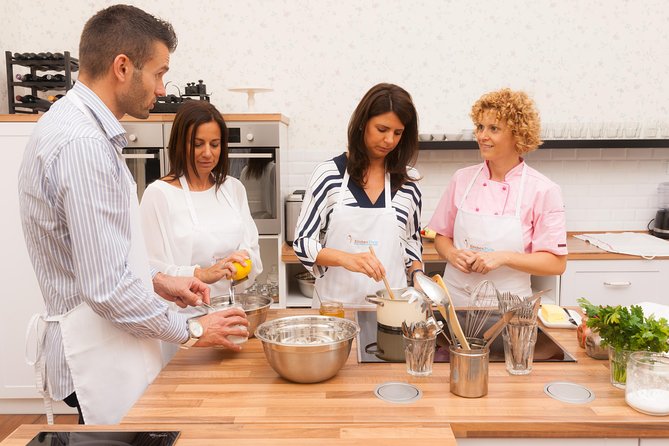
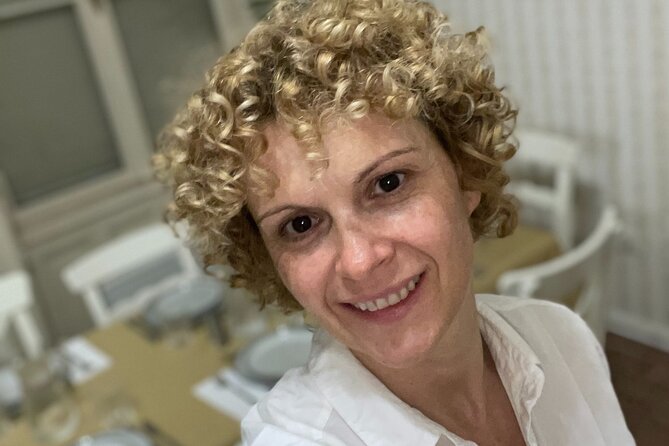
- Chef Marti leads the entire evening, combining cooking instruction with stories about Hungarian food, customs, and family traditions.
- You choose one menu in advance, with options such as chicken paprikas, goulash soup, stuffed cabbage, Gundel pancakes, and Gerbeaud cake.
- The meal includes more than three courses, since a farmer’s plate, drinks, and tastings are part of the experience.
- The group is limited to eight people, making it easier to get involved at the stove and ask questions.
- Vegetarian cooking is available, but you need to request it when booking.
- Book early if your dates are fixed, since the class is often reserved well ahead of time.
Four hours of cooking instead of four hours of sightseeing
Budapest is easy to fill with grand buildings, thermal baths, and long walks along the Danube. This class gives you a different kind of evening. You spend roughly four hours in a kitchen studio at Király u. 77, working as part of a small cooking team and then eating the results together.
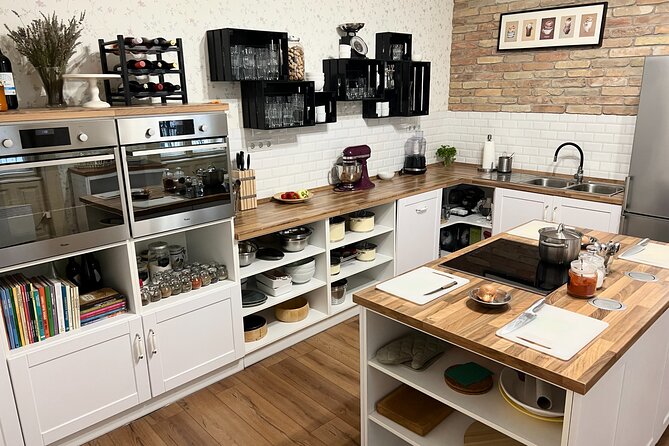
The setting matters. This is described as a cozy kitchen studio in a central location, not a basement room or a formal cooking school. That helps explain the warm, social feel. You are there to cook and share a meal, not sit behind a counter while somebody else does all the work.
Chef Marti guides the group from start to finish. Everyone prepares the same menu, so the class has a clear rhythm. You are not choosing separate dishes for individual orders. Instead, the group builds one Hungarian meal together, which makes the cooking more social and keeps the evening moving.
The class is capped at eight people. That is a useful limit for a hands-on activity. In a much larger group, you might spend most of the time watching someone else slice onions or stir a pot. Here, you should have a better chance to take part, although the exact amount of work depends on the group and the dish.
More cooking classes in Budapest:
- Budapest Cooking Class & Market Tour with Local Guide & Wines
★ 5.0 · 553 reviews - Hungarian Cooking and optional Local Market Tour
★ 4.5 · 98 reviews - Budapest: Hungarian Cooking Class and Market Walk
★ 5.0 · 91 reviews
Starting with a Hungarian farmer’s plate
The evening begins with a farmer’s plate of local ingredients. This is more than a snack while you wait for dinner. It gives you a quick introduction to the flavors that shape Hungarian cooking, including different kinds of paprika, sausage, and cheese.
Paprika is central to many Hungarian dishes, but it is not one single flavor. Tasting several types helps you understand why cooks use it with care. You can compare color, sweetness, and heat before you add it to a soup or sauce.
The starter also gives Chef Marti a natural way to talk about Hungarian food, customs, and history. That conversation is one of the class’s strongest features. You learn not only what to do with an ingredient, but also why it matters in Hungarian kitchens.
The included drinks add to this part of the evening. Palinka, the traditional fruit brandy, is offered along with Hungarian wine, soft drinks, and coffee. Palinka can be potent, so take a small taste and pace yourself. You are here for a long meal, not a drinking challenge.
Choosing your menu: three useful examples
You choose one menu rather than making all the dishes listed. The booking information refers to five menu choices, while three are specifically described. The selection gives you a useful range of Hungarian home cooking, from soup and poultry to pork, cabbage, pancakes, and layered cake.
Menu A: sour cherry soup, chicken paprikas, and Gundel pancake
This is a good choice if you want several classic Hungarian flavors in one meal. Cold sour cherry soup gives the menu a fresh, sweet-tart opening. It is a memorable dish because it does not fit the usual idea of a soup served hot and savory.
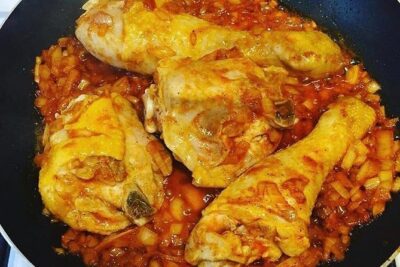
Chicken paprikas brings the familiar paprika-based main course, served with dumplings. The dish is comforting and practical, the sort of cooking that shows how a simple combination of poultry, seasoning, and a soft accompaniment becomes a national favorite.
Gundel pancake finishes the menu. It is a Hungarian dessert with a festive feel, and the process of making pancakes adds an enjoyable hands-on element. One especially useful part of the class is the chance to practice flipping them yourself.
A few more Budapest half-days to weigh up
- Budapest: City Highlights Cruise with Welcome Drink
★ 4.6 · 35,610 reviews - Budapest: Unlimited Prosecco, Beer and Aperol Spritz Cruise
★ 4.8 · 25,310 reviews - Budapest: Széchenyi Spa Day Ticket with Optional Upgrades
★ 4.3 · 23,911 reviews - Budapest: Nighttime or Daytime Sightseeing Cruise
★ 4.2 · 21,062 reviews
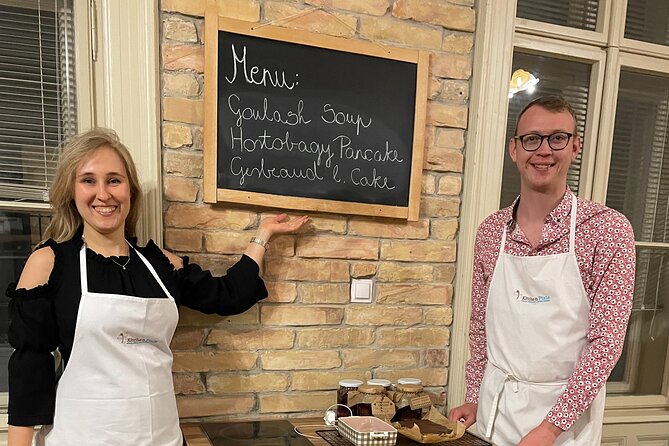
Menu B: goulash soup, Hortobagy-style savory pancake, and Gerbeaud cake
Menu B begins with goulash soup made with beef and root vegetables. It is a well-known Hungarian dish, but preparing it yourself gives you a closer look at the balance of meat, vegetables, and paprika.
The main course is a savory chicken pancake in the Hortobagy style. It is lighter than some of the heavier dishes associated with Hungarian cooking, and it shows how traditional food can be presented in a less rustic form.
Gerbeaud layered cake, also called Zserbó, is the dessert here. It combines chocolate and walnut flavors in a layered pastry. If you have a strong sweet tooth, this menu gives you the most dessert-focused finish.
Menu C: creamy potato soup, stuffed cabbage, and poppy-seed dumplings
Menu C leans toward hearty home cooking. The creamy potato soup includes smoked sausage, which adds a savory, smoky note to an otherwise gentle soup.
Stuffed cabbage with pork is a classic comfort dish. It takes more attention than a simple grilled main course, which is exactly why it works well in a cooking class. You get to see how a familiar Hungarian staple comes together rather than encountering it only on a restaurant plate.
Dessert is poppy-seed bread dumplings with vanilla custard. Poppy seed is a distinctive ingredient in Central European sweets, and this dish offers something different from the more familiar pancake and cake options.
A vegetarian option is available. You should mention it at the time of booking, not after the class begins. Since the group prepares one shared menu, this request needs to be planned in advance.
What you actually do during the class
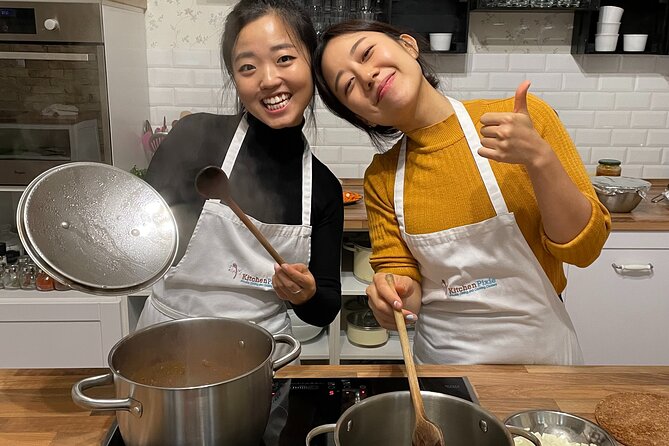
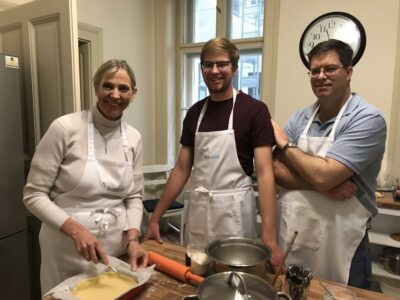
The cooking is designed as teamwork. Chef Marti supplies the ingredients, pots, and kitchen equipment, then helps the group prepare the selected menu from the opening course to dessert.
You can expect to taste ingredients during the process and learn basic techniques along the way. The exact tasks will vary by menu, but the experience includes practical work such as preparing soup, handling pancake batter, making dumplings, working with cabbage, and assembling dessert.
That structure suits you if you want to learn by doing. It also works well for people with different levels of kitchen experience because Chef Marti adjusts her help to the group. You do not need to arrive as a trained cook. The class is built around guidance, conversation, and shared work.
The pace is part of the pleasure. Four hours sounds long when you first book, but a full meal takes time to prepare, especially when the group is learning as it goes. The schedule leaves room for questions, tasting, drinks, and conversation instead of forcing the class into a rushed demonstration.
Sitting down to eat what you made

At the end, the group sits down together to eat the meal. This is the payoff, but it is also an important part of the experience. You taste the difference between reading a recipe and making the food yourself.
The meal includes a starter and three courses, along with Hungarian wine and other drinks. Several dishes are substantial, so arrive hungry. The farmer’s plate comes before the cooked meal, and the class can leave you very full by the end.
One small point is worth knowing: Chef Marti may not sit and eat with you for the entire meal. Her role is host, teacher, and cook, but she may have eaten earlier. If you are expecting a long, formal dinner with the chef at the table, adjust your expectations. The focus is on preparing and sharing the food, not on a restaurant-style service.
You also receive the recipes to take home. That adds real value. A cooking class is far more useful when you can repeat at least one dish after returning home, and the recipes give you a way to keep the Budapest experience going in your own kitchen.
Why the food stories matter
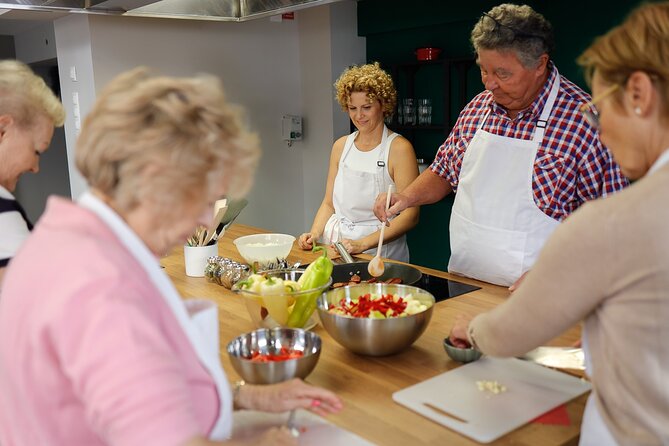
A good cooking class teaches more than a set of instructions. Chef Marti brings in personal stories about Hungarian cooking and family food traditions, along with explanations of local customs and the role of ingredients such as paprika.
This context helps you understand the food you see elsewhere in Budapest. After making chicken paprikas or tasting several kinds of paprika, you will notice those flavors more clearly in restaurant dishes and market stalls.
The class also offers a look at both rural and urban Hungarian life through food. That makes it useful early in a Budapest visit, when you want a quick cultural introduction, or at the end of a trip, when you can place the dishes you have already sampled into a wider context.
It is also a good choice if you enjoy conversation. The format encourages people to work together, taste together, and compare results. Solo visitors can join as individuals, and the small group setup helps avoid the awkwardness that can come with arriving alone at a social activity.
The price and what you receive for $131.87
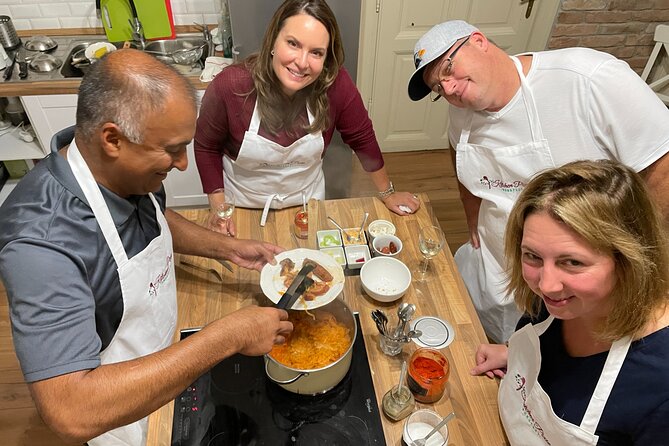
At $131.87 per person, this is not a budget dinner. You are paying for about four hours of instruction, ingredients, kitchen use, a full meal, drinks, tastings, and recipes.
The value depends on what you want from a Budapest evening. If you only want a cheap plate of goulash, restaurants offer less expensive choices. If you want a meal plus a personal cultural activity, the price is easier to justify.
The small group matters here. A maximum of eight people gives the class a more personal feel than a large demonstration. You are also receiving more than food: you get direct guidance, explanations of ingredients, and a chance to repeat the dishes later.
I would consider it particularly good value for couples, families with older children, solo visitors, and food-focused people who want an activity with a clear result. It may be less appealing if you dislike cooking, have a very tight evening schedule, or prefer to spend your money on several separate restaurant meals.
Timing, location, and planning advice
The meeting point is Budapest, Király u. 77, 1077 Hungary. The activity begins and ends there, and hotel pickup and drop-off are not included. Plan your own way to the central meeting point and leave enough time to arrive before the start.
The experience is offered in English. Confirmation is provided at booking, and it is often reserved around 81 days in advance. That average is a useful warning if your Budapest dates are fixed. Do not assume you can wait until the last day of your trip.
The class requires at least four participants to run. If that minimum is not met and the activity is canceled, you are offered another date or experience, or a full refund.
You can cancel for a full refund up to 24 hours before the start time. Changes or cancellations inside that 24-hour window are not accepted for a refund, and all cut-off times use local Budapest time.
Who should book this Hungarian cooking class?
I would choose this for you if food is one of the main reasons you travel. It is also a smart pick if you want an evening that combines a meal with conversation and cultural context.
It suits:
- Solo visitors who want a friendly small-group activity
- Couples looking for a shared evening beyond sightseeing
- Families with older children who enjoy practical activities
- Home cooks who want recipes they can repeat
- Visitors who want to understand Hungarian dishes beyond restaurant menus
You may want to skip it if you dislike group activities or do not want to spend four hours indoors. You should also be ready for a substantial meal, several courses, and a social setting. This is not a quick cooking demonstration.
Should you book Chef Marti’s class?
Yes, if you want to do more than eat Hungarian food. The combination of hands-on cooking, a central home-style kitchen, local drinks, recipes, and Chef Marti’s personal stories gives you a useful connection to Budapest’s food culture.
Choose your menu carefully, request a vegetarian version early if needed, and book ahead because the class is often reserved well in advance. If you prefer a relaxed evening where you can learn a few techniques, share a full meal, and leave with recipes, this is a strong use of four hours in Budapest.
FAQ
Where does the cooking class take place?
The class meets at Budapest, Király u. 77, 1077 Hungary. It begins and ends at the meeting point, and hotel pickup and drop-off are not included.
How long does the experience last?
The cooking experience lasts approximately four hours.
How many people can join the class?
The maximum group size is eight people. At least four participants are required for the class to run.
What food will I prepare?
You choose one menu in advance. Listed choices include sour cherry soup with chicken paprikas and Gundel pancake; goulash soup with Hortobagy-style chicken pancake and Gerbeaud cake; or creamy potato soup with smoked sausage, stuffed cabbage, and poppy-seed bread dumplings with vanilla custard.
Is a vegetarian menu available?
Yes. A vegetarian option is available, but you must request it when booking.
Are drinks included?
Yes. The experience includes palinka, Hungarian wine, soft drinks, and coffee, along with tastings from the farmer’s plate.
Can I cancel for a refund?
Yes. You can receive a full refund if you cancel at least 24 hours before the experience starts. Cancellations or changes made less than 24 hours before the start time are not accepted for a refund.
Recently added around Budapest
- Budapest: Private Walking Tour with a Local Guide★ 3.6 · 6 reviews
- From Budapest: Guided Tour of Eger with Wine Tasting★ 4.5 · 6 reviews
- Budapest: City Bike Tour with Coffee Stop★ 5.0 · 37 reviews
- Budapest: Danube River Views Bike Ride★ 4.8 · 23 reviews
- Budapest: Vacation Photographer to collect great memories★ 5.0 · 49 reviews
- Walk to recent and aged spiritual sanctuaries near Budapest★ 5.0 · 5 reviews
- Trash Art Museum: Hungary’s First Scrap Metal Exhibition★ 4.3 · 72 reviews
- Budapest: Multilingual Highlights Tour★ 4.8 · 89 reviews
Cooking Classes, compared.
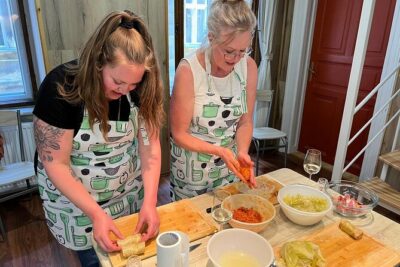
Budapest Cooking Class & Market Tour with Local Guide & Wines
Read our review →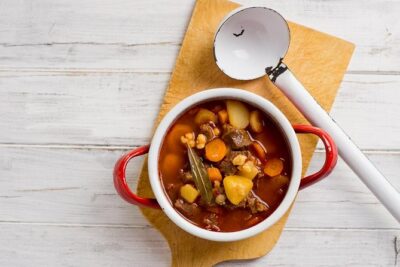
Hungarian Cooking and optional Local Market Tour
Read our review →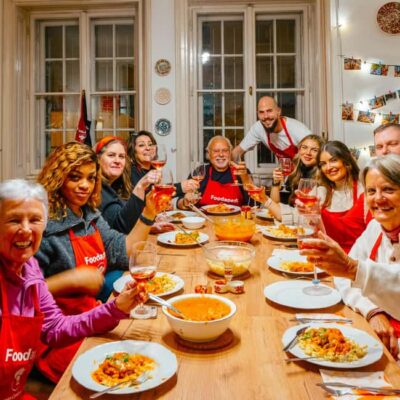
Easy Cooking Class Budapest – with Market Walk (local wine & pálinka included)
Read our review →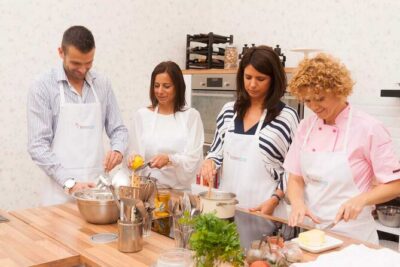
Budapest Market Tour & Home Cooking Class with local Chef & Guide
Read our review →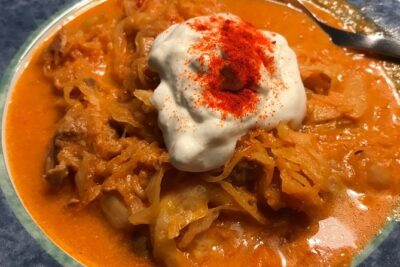
Hungarian Premium Cooking Class with 4-course meal
Read our review →Browse the lists this tour appears in