
Reviewed · FOOD & DRINK
Flavors of Budapest: Guided Food & Drink Tour
Budapest’s food story comes alive in the Jewish Quarter, where a synagogue introduction leads into street food, ruin bars, local wine, and old Hungarian recipes. That mix makes this more than a meal with a walk attached. It gives you a useful map of how the city eats.
I like the four-stop format, which lets you sample soup, street food, a proper Hungarian dish, and dessert without committing to one restaurant. I also like the guides’ personal touch. Peter, Kitti, Laura, Eszti, Nika, and others have been praised for adding family stories, restaurant tips, and bits of Hungarian culture along the way.
The main caution is value. At $83.27, the tour needs to deliver both a filling meal and a strong walking lesson, and one participant felt it did not. Vegans and anyone needing gluten-free food cannot be accommodated, and the exact dishes and drink portions can vary.
Key points at a glance
- Jewish Quarter first: Begin at the Budapest Orthodox Synagogue on Kazinczy Street and learn how Jewish culture shaped local cooking.
- Four places, four courses: Expect soup, street food, a Hungarian main dish, and dessert at different eateries.
- Drinks are part of the meal: Local wine, beer, pálinka, and sometimes Tokaji dessert wine are included.
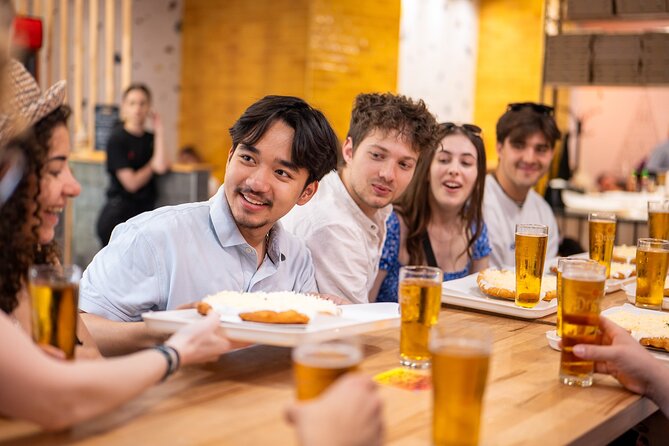
- Small-group feel: The maximum is 15 people, with many departures described as relaxed and social.
- Come hungry: Portions can add up quickly, especially when the route includes langos, soup, stew, and sweets.
- Not for every diet: Vegetarian and alcohol-free choices are available, but vegan and gluten-free requests cannot be handled.
Why the Jewish Quarter is the right place to start

The tour begins at the Budapest Orthodox Synagogue, at Kazinczy u. 29-31. You get a short introduction to the synagogue and to the Jewish roots of Hungarian cuisine before the eating begins.
That opening matters. Hungarian food is often reduced to paprika, goulash, and heavy stews. The Jewish influence adds another layer, especially in Budapest’s District 7. The guide connects food with the district’s past, so you are not simply walking from one snack to another without context.
The first section lasts about an hour, though the full experience is roughly three hours. Admission to the listed stops is included, and the focus is on the guide’s explanation rather than a formal museum visit.
I would pay close attention here, especially if you know little about Budapest’s Jewish heritage. The point is not to turn the tour into a long history lecture. It is to give the dishes a setting and explain why certain foods became part of the city’s everyday cooking.
The meeting point is near public transportation, which helps if you are staying elsewhere in Budapest. Check the location before setting out, since one booking party arrived late after receiving incorrect directions and another had not realized the meeting point had changed. The group waited in that case, but you should still confirm the details on the day.
More food and drink experiences in Budapest:
- Budapest: Unlimited Prosecco, Beer and Aperol Spritz Cruise
★ 4.8 · 25,310 reviews - Budapest: Unlimited Prosecco, Beer & Aperol Spritz Cruise
★ 4.5 · 3,371 reviews - Budapest: Wine, Cheese, and Charcuterie Tasting
★ 4.9 · 647 reviews
District 7 turns history into street food
After the synagogue, you walk through Budapest’s former Jewish neighborhood. District 7 is now packed with restaurants, nightlife, and famous ruin bars, yet the route keeps returning to the area’s Jewish identity and its effect on food.
This is where the tour feels most informal. You may eat something from a street counter, perhaps with no utensils, before moving on to sit-down places. The wording of the experience makes the point clearly: bring an open mind and be ready to eat like a local.
Street food is useful on a first visit because it shows you how Budapest eats outside the dining room. A review of the food stops described soup at Bors, langos with cold beer, and several other dishes. The exact businesses and menu can change, so consider the published menu a guide rather than a fixed promise.
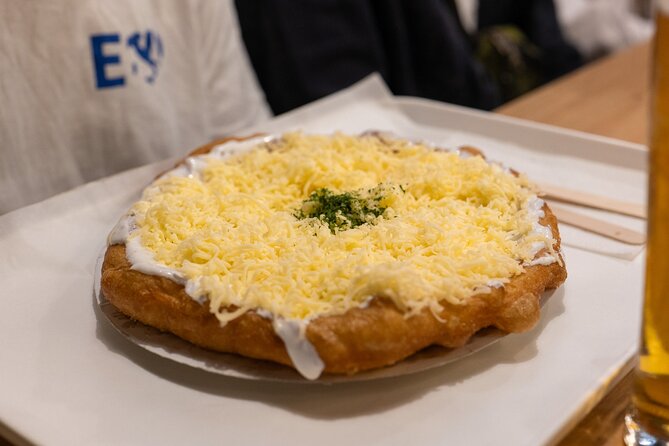
Langos is one of the dishes many people hope to try. It is a simple, filling Hungarian street food, and one account described it as light despite its reputation. You might also receive goulash soup, though the tour notes make clear that soup is not always goulash.
The walk between stops gives your stomach a little time to catch up. One useful detail is the pace: the walking can be brisk, while the time at each eating stop is more relaxed. That balance works well, but anyone with limited mobility should be comfortable walking between venues over the three-hour route.
The ruin bars are part of the scenery and social character of District 7. You are not promised a full ruin-bar evening, but guides have sometimes shown participants inside one. For a solo woman who might not want to enter alone, that guided glimpse can be a helpful extra. Still, the tour is a food and culture experience, not a dedicated nightlife crawl.
Four eateries keep the meal varied
The strongest practical feature is the structure. You visit four local eateries rather than sitting in one restaurant for three hours. Each stop has a different purpose, and the meal builds from lighter food toward a fuller main course and dessert.
A typical progression looks like this:
- Soup, sometimes goulash soup
- Street food such as langos
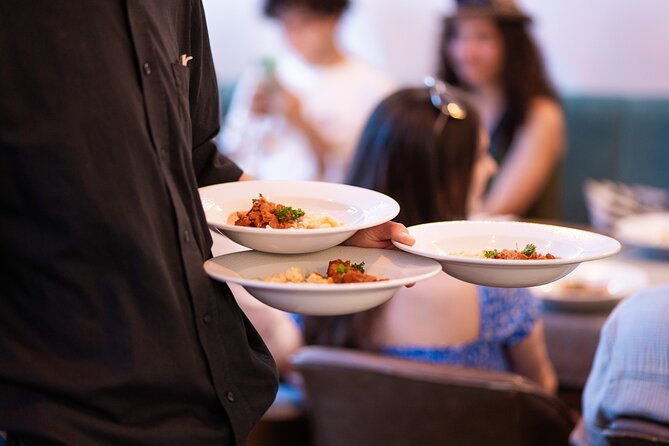
- Hungarian stew or chicken paprikash, with a small shot of pálinka
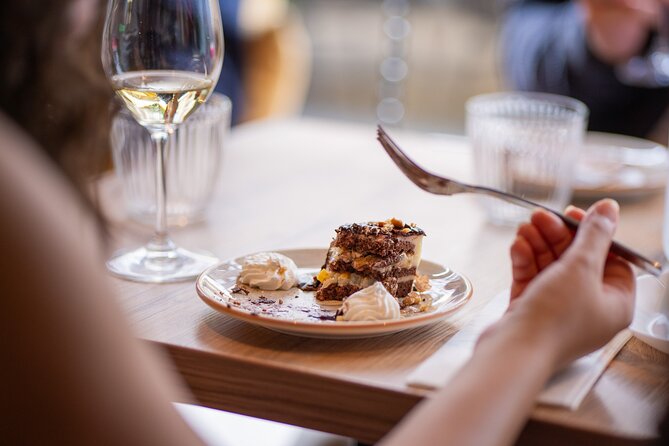
- Dessert such as somlói, flódni, or rakoczi turos
The menu is not locked. You may get a different soup or dessert, and a specific review described a chocolate and walnut sponge with chocolate sauce instead of one of the listed sweets. That flexibility can be good for the kitchen and the season, but it means you should not book expecting one exact dish.
The main course is the point where the tour shifts from tasting snacks to explaining Hungarian comfort food. A stew shows off the country’s love of paprika and slow-cooked flavors. Chicken paprikash offers another familiar route into the cuisine. The small pálinka shot adds a strong local note, though it is not the same as an open-ended drinks package.
Portions appear generous enough that you should not eat a full meal beforehand. One participant specifically suggested skipping breakfast for an early afternoon departure, and another advised coming very hungry. I would treat this as a proper meal, not a light sampler.
At the same time, appetite and value are personal. The $83.27 price covers four food stops, the guide, the neighborhood walk, and alcoholic drinks such as wine, beer, and shots. That is a reasonable package if you would otherwise pay for several meals and want the local explanation. It feels less attractive if you mainly want a large dinner or if you do not drink.
Hungarian drinks add useful context

The drink side is not just decoration. Pálinka, local wines, beer, and possibly Tokaji Aszú help show how Hungarians pair food and drink.
Pálinka is served as a small shot with the main dish. Expect fruit brandy with a strong character, though one account found plum pálinka smoother than expected. The amount is limited. If you want a full evening of drinking, this is not the right product. One person enjoyed the tour but wished there had been more alcohol and was not tipsy by the end.
Wine seems to play a larger role at some departures. Local reds may accompany the main course, and Tokaji Aszú can appear with dessert. Tokaj is one of Hungary’s best-known wine regions, so a sweet wine alongside a Hungarian pastry is a fitting way to finish.
The drinks are also useful if you are unsure what to order later in your trip. You can taste a few local choices in a guided setting rather than guessing from a long menu. Alcohol-free options are available, so you can still take part in the food and cultural side without drinking.
Only people aged 18 and over are served alcohol. That is worth checking when booking for a mixed-age group. The tour itself may suit most participants, but the alcoholic pairings are restricted.
A few more Budapest half-days to weigh up
- Budapest: City Highlights Cruise with Welcome Drink
★ 4.6 · 35,610 reviews - Budapest: Széchenyi Spa Day Ticket with Optional Upgrades
★ 4.3 · 23,911 reviews - Budapest: Nighttime or Daytime Sightseeing Cruise
★ 4.2 · 21,062 reviews - Budapest: 1-Hour Evening Sightseeing Cruise with Drink
★ 4.5 · 8,330 reviews
Andrassy Avenue brings a different side of Budapest
The final part moves toward Andrassy Avenue, Budapest’s grander, more expensive stretch. This changes the mood after the scruffier streets and casual counters of District 7.
Here you visit atmospheric restaurants for traditional dishes, then finish with something sweet. The contrast is one of the tour’s better ideas. You see how Hungarian food can appear in informal street settings and in more polished dining rooms, without treating one as more authentic than the other.
The dessert may be somlói, flódni, rakoczi turos, or another local sweet depending on the stop. You might also receive a chocolate and walnut dessert with sauce, as one menu experience described. Tokaji dessert wine can accompany the final course.
For me, the last stop is important because dessert often gets ignored on short food tours. Here it gets its own place in the meal. It also leaves you with a practical choice for later: continue into Budapest’s evening or use the guide’s restaurant recommendations.
Several guides have sent follow-up notes listing the food, drinks, and places visited, along with suggestions for the rest of the stay. That is especially helpful if you book this early in your visit. One person wished they had done the tour on the first day so they could use the recommendations longer.
The guides shape the whole experience
The route is fairly simple on paper. The guide determines how much you gain from it.
Names associated with departures include Peter, Kitti, Laura, Eszti, Nika, Agnes, Flavia, Kelly, and others. Peter has been described as funny, patient, and articulate, and he has helped people practice Hungarian. Kitti has been praised for personal stories and for checking on food sensitivities. Laura is known for bringing energy to the group, while Eszti has been appreciated for explaining food, history, and culture in clear English.
That range matters because the tour depends on conversation. You can ask what a dish means, how a ruin bar fits into the neighborhood, or where to eat later. The best guides do not merely point out the next restaurant. They connect the plate in front of you to Budapest’s customs and daily life.
The group maximum is 15. That is small enough for questions and introductions without guaranteeing a private-tour feel. Several descriptions of the experience point to a friendly mix of people from different countries, which can make the walking and eating more sociable.
If you are traveling alone, this is one of the better formats for meeting people without signing up for a late-night pub crawl. If you are a couple, you will still have enough structure and guide attention, though larger groups can make conversation less even.
Dietary limits and comfort considerations
Vegetarians can be accommodated, and alcohol-free choices are available. You should state those needs when booking or as soon as you meet the guide so the food stops can be handled properly.
Vegan and gluten-free diets cannot be accommodated. This is a firm limitation, not a minor inconvenience. If either applies to you, choose another food tour rather than hoping a last-minute substitution will work.
The tour lasts about three hours and includes walking through District 7 and toward Andrassy Avenue. Most people can participate, but the brisk pace between stops may not suit everyone. Comfortable shoes are sensible, especially since you are eating several times and walking between venues.
The tour ends back at the meeting point. It is offered in English, and confirmation is provided at booking. Free cancellation is available up to 24 hours before the start time. Changes or cancellations inside that window are not refunded.
Who will get the most from this food tour?
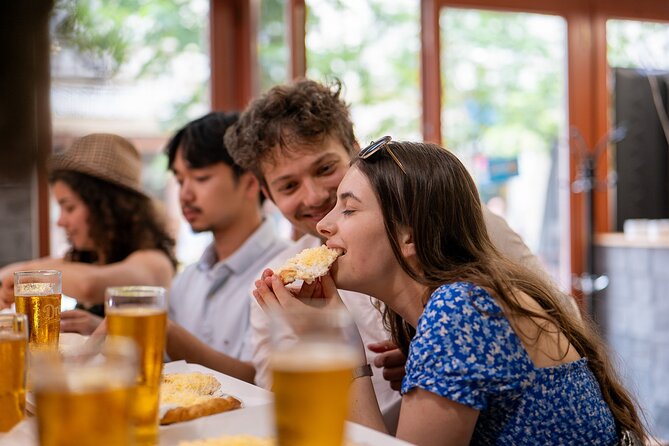
I would choose this tour if you are new to Hungarian food and want a guided introduction rather than a single restaurant meal. It is also a good pick if you enjoy learning the story behind a dish and want to see District 7 while you eat.
It suits solo visitors, couples, and small groups who like a social evening. The small-group limit, multiple food stops, and guide recommendations give it more purpose than simply ordering a tasting menu.
You should think twice if you want a quiet, formal dinner, a heavy drinking experience, or a completely fixed menu. The tour is lively and flexible. Food and drink portions vary, and the one negative account suggests that not everyone will find the price equally convincing.
Should you book Flavors of Budapest?
I would book it, especially near the beginning of a Budapest stay. The strongest reasons are the four-stop meal, the Jewish Quarter context, the mix of street food and restaurant dishes, and the chance to leave with specific places to try later.
At $83.27, the value depends on how you use it. If you count the food, drinks, guide, and neighborhood walk as one evening out, the price is defensible. If you are vegan, gluten-free, or mainly shopping for a cheap dinner, skip it.
Come hungry, wear comfortable shoes, and confirm the meeting point before leaving. If you do that, this is a practical way to get your first taste of Hungarian cooking, local drinks, and Budapest’s District 7 without spending your first few days guessing what to order.
FAQ
How long does the Budapest food and drink tour last?
The experience lasts approximately three hours.
Where does the tour begin and end?
It begins at the Budapest Orthodox Synagogue at Budapest, Kazinczy u. 29-31, 1075 Hungary, and ends back at the meeting point.
How many food stops are included?
You visit four local eateries and receive authentic Hungarian food at each one.
What food might be served?
The sample menu includes soup, Hungarian stew or chicken paprikash, and a dessert such as somlói, flódni, or rakoczi turos. The exact dishes can vary, and goulash soup is not served every time.
Are drinks included?
Yes. Included drinks can include local wine, beer, pálinka, shots, and possibly Tokaji dessert wine. Alcohol is served only to people aged 18 and over, and alcohol-free choices are available.
Can the tour accommodate vegan or gluten-free diets?
No. Vegetarian options are available, but vegan and gluten-free diets cannot be accommodated.
Recently added around Budapest
- Budapest: Private Walking Tour with a Local Guide★ 3.6 · 6 reviews
- From Budapest: Guided Tour of Eger with Wine Tasting★ 4.5 · 6 reviews
- Budapest: City Bike Tour with Coffee Stop★ 5.0 · 37 reviews
- Budapest: Danube River Views Bike Ride★ 4.8 · 23 reviews
- Budapest: Vacation Photographer to collect great memories★ 5.0 · 49 reviews
- Walk to recent and aged spiritual sanctuaries near Budapest★ 5.0 · 5 reviews
- Trash Art Museum: Hungary’s First Scrap Metal Exhibition★ 4.3 · 72 reviews
- Budapest: Multilingual Highlights Tour★ 4.8 · 89 reviews
Food & Drink, compared.
Unlimited Prosecco, Beer and Aperol Spritz Cruise
Read our review →
Unlimited Prosecco, Beer & Aperol Spritz Cruise
Read our review →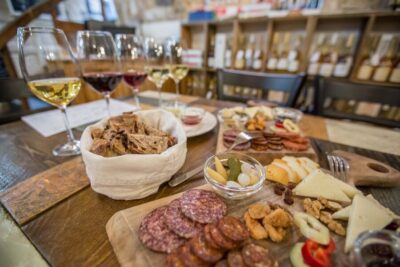

Hungarian Wine Tasting (with Cheese and Charcuterie) in Budapest
Read our review →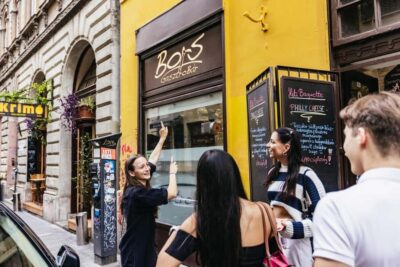
Guided Foodie Walking Tour with Food and Drinks
Read our review →
Budapest Food Tour: Market to Tavern with 14+ Tasters & Wines
Read our review →
Budapest BeerSpa with Unlimited Beer and Optional Széchenyi Bath
Read our review →Browse the lists this tour appears in