
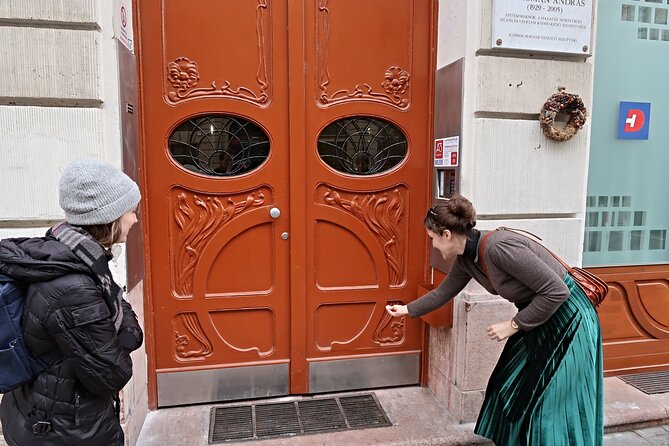
Reviewed · ART NOUVEAU TOURS
Budapest Art Nouveau Walking Tour
Budapest’s Art Nouveau is not confined to one grand avenue. It appears in palace facades, colorful roof tiles, banks, shops, and even a synagogue. This three-hour walk gives you a clear look at how the style shaped the city, with an historian guide explaining the ideas behind the curves, patterns, ceramics, and ornament.
I like the focus on Ödön Lechner, Hungary’s best-known Art Nouveau architect, and the chance to see buildings that are easy to pass without understanding. I also like the small group, which is listed as a maximum of eight people and may be as small as six. The main drawback is the price, $126.16 per person, especially since public transport and possible synagogue admission cost extra.
Key points to know before booking
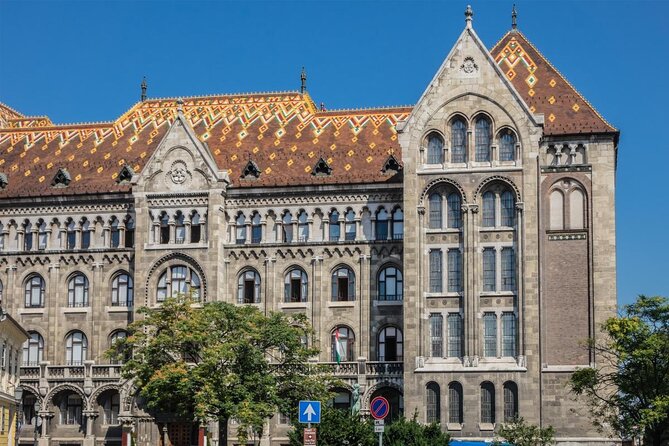
- Lechner’s Royal Postal Savings Bank is the architectural centerpiece, with bold Hungarian motifs and a close look at its entrance hall.
- Gresham Palace offers a grand opening stop, including a look at the building’s facade and interior design.
- Thonet House shows how Zsolnay ceramics helped make Hungarian Art Nouveau famous for colorful tiled exteriors.
- Kazinczy Street Synagogue provides a striking final stop, though interior access is unavailable on Saturdays and admission may cost extra.
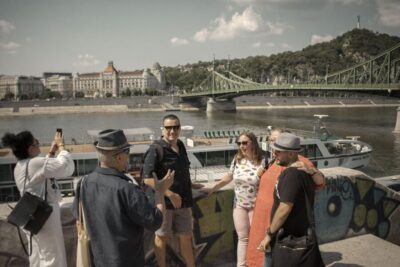
- The group is small, with a stated maximum of eight people, so you can ask questions and keep the pace personal.
- You will walk and use some public transport, so wear comfortable shoes and budget separately for transport passes.
Why Budapest is such a good city for Art Nouveau
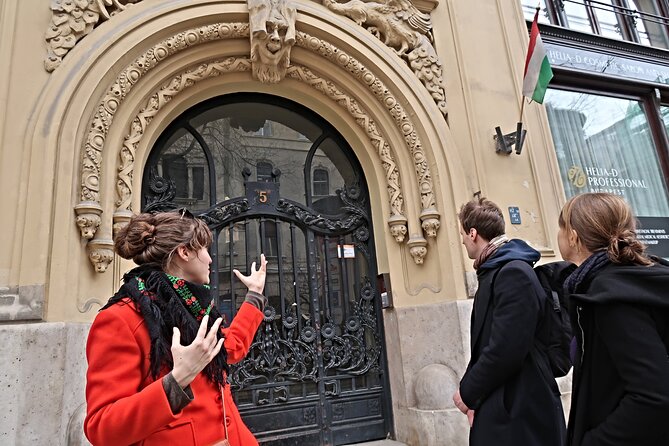
Budapest rewards anyone who looks up. A plain street can suddenly reveal a patterned cornice, a curved balcony, a ceramic roof, or a plant-like detail around a doorway. Art Nouveau in Budapest is especially interesting because Hungarian architects did not simply copy French or Belgian examples. They developed a local version with strong folk references and a fondness for color and ceramics.
This tour helps you read those details. Instead of only hearing that a building is attractive, you learn what to notice: the use of tiles, the treatment of entrances, the movement of a facade, and the way decoration connects a building to Hungarian identity.
The experience also gives you a useful contrast between different building types. You see a former office and apartment complex, a financial institution, a commercial building, and a religious building. That variety matters. It shows Art Nouveau as a broad design language rather than a single look reserved for palaces.
The pace is suited to people who prefer explanation over a quick photo stop. Each listed stop takes roughly 20 to 25 minutes, while the full outing lasts about three hours. That leaves room for walking between sights, questions, and some use of public transport.
More art nouveau walks in Budapest:
- Private Art Nouveau Tour Budapest
★ 5.0 · 21 reviews - Art Nouveau Tour in Budapest: 3-Hour Private Tour
★ 4.6 · 21 reviews - Art Nouveau Treasures of Budapest – Exclusive Private Tour
★ 5.0 · 18 reviews
Beginning at Madal Cafe and Gresham Palace
The tour starts at Madal Cafe on Alkotmány utca. The meeting point is near public transportation, but it can be busy, so arrive early and keep an eye out for your guide. One person nearly missed the group because of the crowded meeting area, a useful warning if you are not familiar with the street.
Gresham Palace is the first major stop. The building began as offices and luxury apartments and is now Budapest’s most luxurious hotel. You can admire its facade and interior design, though the visit does not include a separate admission ticket.
This is a smart opening because Gresham Palace gives you an immediate sense of the movement’s ambition. It is large, decorative, and designed to impress. Your guide can use it to explain how Art Nouveau worked on several levels at once, from the overall shape of a building down to the smallest ornamental detail.
Do not expect a long hotel tour. The planned stop is about 20 minutes. The value comes from learning how to look at the building, not from spending a long time inside. If you are hoping to inspect every room, this will feel brief. If you want a strong introduction before moving into less obvious examples, it works well.
Ödön Lechner at the Royal Postal Savings Bank
The Royal Postal Savings Bank, also called Postatakarék Bank, is likely to be the intellectual center of the walk. It was designed by Ödön Lechner, often compared to Antoni Gaudí because of his inventive approach and distinctive ornament.
Lechner is the name to remember. His work helped give Hungarian Art Nouveau its own character. Rather than treating decoration as a layer added after the main design, he made the building’s structure, surface, color, and patterns work together.
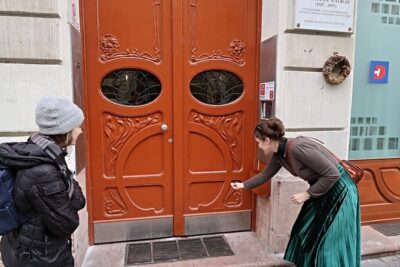
At the bank, the tour spends about 20 minutes discussing the entrance hall and its interior design elements. Pay close attention to the transition from the street into the building. Entrances often tell you how an architect wanted people to experience a building, and this stop gives your guide a compact setting for that discussion.
The bank is also a useful reminder that Art Nouveau was not only for theatres or private mansions. A savings bank could use the style to project confidence, modernity, and a strong national identity. That makes the stop more than an attractive facade. It connects design with the purpose of the building.
Thonet House and Budapest’s famous ceramic tiles
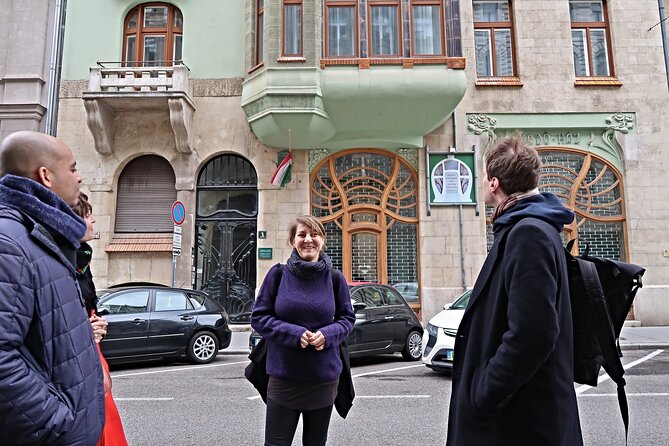
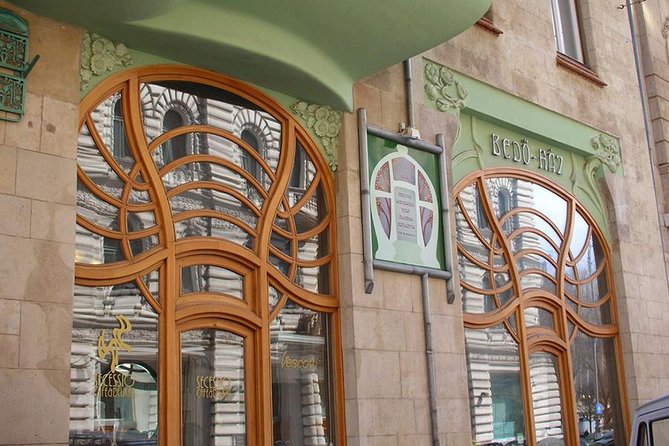
At Thonet House, the focus shifts to facade tiles. Hungarian Art Nouveau became famous for its use of colorful ceramic surfaces, helped by the work of the Zsolnay porcelain and ceramics factory in Pécs, a town in southern Hungary.
This is one of the tour’s most useful stops because tiles are easy to notice but harder to interpret. Your guide can explain how ceramics changed the look of a building. Tiles could add color, shine, texture, and weather resistance. They also allowed architects to create patterns and surfaces that would have been difficult to produce with ordinary stone or plaster.
Thonet House gives you a chance to compare the material choices used across the route. At Gresham Palace, you may focus on scale and ornament. At the Postal Savings Bank, you study Lechner’s design language. Here, the surface itself becomes the main subject.
The stop is planned for about 20 minutes. That should be enough to understand the role of Zsolnay ceramics, but the visit is primarily an exterior viewing stop. If you are especially interested in decorative arts, ask questions while you are here. This is the point where a short explanation can change how you see many other Budapest buildings during the rest of your stay.
More walking tours in Budapest:
- Budapest: Buda Castle Walk with Saint Stephen’s Hall
★ 4.5 · 3,012 reviews - Big Bus Budapest Hop-On Hop-Off Bus and Walking Tour
★ 3.5 · 2,206 reviews - Budapest: Buda Castle District Walking Tour
★ 4.6 · 2,108 reviews - Budapest City Landmarks Walking Tour in 2 Hours
★ 5.0 · 2,048 reviews
Ending at Kazinczy Street Synagogue
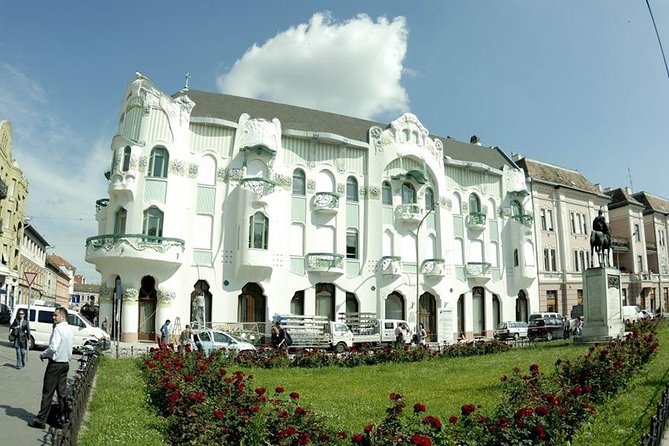
The walk concludes at the Orthodox Synagogue on Kazinczy Street. Its Art Nouveau decoration makes it an unusual and memorable final stop. The building brings the movement into a religious setting, showing that the style could serve more than commercial or civic purposes.
The planned visit takes about 25 minutes. Except on Saturdays, the tour includes the synagogue’s interior when access is available. Admission is not included, and an additional charge applies if the site is open on the day of your tour. Check this detail when planning your budget.
Saturday deserves special attention. The interior visit is not available then, so you should choose another day if seeing the inside is important to you. The exterior remains part of the route, but the experience is different without the interior.
Ending here also gives the tour a pleasing change of mood. You have seen grand public architecture and decorative commercial buildings, then finish with a religious structure where ornament carries a different meaning. That contrast helps show how widely Art Nouveau spread through Budapest.
The official end point is at Kazinczy utca 29 to 31. Since the route finishes in a central part of the city, you can continue exploring afterward, but the tour itself does not include food, drinks, or a planned meal stop.
What the small group changes
The group size is a real advantage. The tour is described as a small-group experience, with a maximum of eight people, while the highlights describe a limit of six. Either way, this is much more intimate than a large city walk.
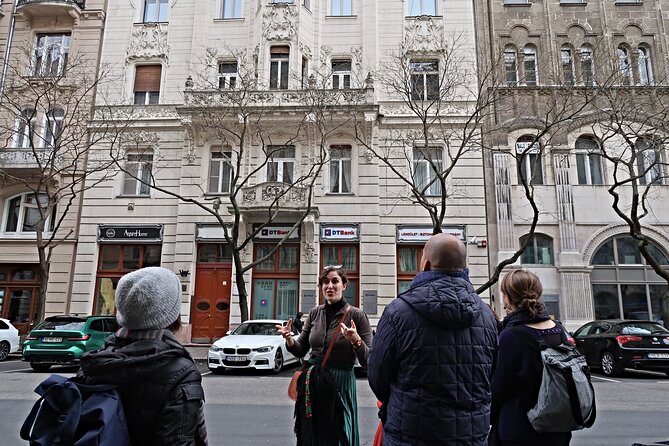
A small group matters on an architecture tour. You can hear explanations more easily, ask about a detail on a facade, and keep moving without waiting for a long line of people. The guide can also respond to your interests. One piece of feedback describes a guide willing to take the group anywhere in the city they wanted to learn more about, suggesting some flexibility in the conversation.
That does not mean the route becomes fully private. The experience has set stops and a three-hour time limit. Still, the format gives you a better chance to ask about a feature that catches your eye.
The guide is described as an historian guide, not simply a person leading a sightseeing route. That distinction matters here. Art Nouveau can seem like a sequence of pretty buildings unless someone explains the political, artistic, and technical choices behind them.
The supplied feedback is especially strong on the guide’s grasp of architecture and history. One comment points to the guide’s ability to explain both the buildings and the stories connected to them. Since no guide name is provided, you should not book expecting a particular individual. Book for the subject and the historian-led format.
Walking, public transport, and timing
You should expect a moderate amount of walking. Comfortable shoes are a practical choice, even if you normally handle city walks without trouble. The tour also uses some public transportation, and passes are not included.
That extra cost is not a major issue, but it is easy to overlook when comparing the headline price. Bring enough money for transport, and allow a little time for moving between stops. The tour is offered in the morning or afternoon, so you can fit it around other Budapest plans.
The three-hour length is well suited to a focused subject. You get enough time to study four major stops without giving up a full day. On the other hand, this is not a general Budapest orientation tour. You will not cover every major sight, and the guide’s attention stays on Art Nouveau architecture.
The route begins at Madal Cafe and ends at Kazinczy Street Synagogue. That one-way format is convenient because you do not have to return to the starting point. It also means you should check how the ending location fits with your next plan.
Is $126.16 a fair price?
At $126.16 per person, this is an expensive walking tour. The price makes more sense if you want an expert explanation of architecture and prefer a small group. It is harder to justify if you mainly want to photograph buildings or can easily read about Budapest Art Nouveau on your own.
The fee includes the historian guide, but not transport passes, food, drinks, or possible synagogue admission. Those exclusions do not make the tour poor value, but they raise the final cost slightly. Add these expenses before comparing it with other Budapest activities.
I would see the price as paying for interpretation, not entry tickets. Several of the stops are viewed without an admission charge. You are paying for the route, the context, and the chance to ask questions in a small group.
That value is strongest for architecture students, design fans, photographers who want to understand what they are seeing, and first-time Budapest visitors who enjoy city walks with a clear theme. If you are working with a tight budget, consider the price carefully. A general walking tour may cover more sights for less money, though it will not offer the same Art Nouveau focus.
Who will enjoy this walk most
You should book this experience if you like buildings, decorative arts, urban design, or the stories behind city streets. It suits a curious first-time visitor and also someone returning to Budapest who wants a fresh subject.
The tour is especially useful if you would otherwise walk past the Postal Savings Bank or Thonet House without recognizing why they matter. A guide gives you a visual checklist that you can use for the rest of your stay.
It is less suitable if you dislike walking, want a fast list of major landmarks, or need a fully private itinerary. It is also not ideal if your only available day is Saturday and the synagogue interior is a priority.
The activity is offered in English. Most people can participate, but you should be ready for a moderate walk, some public transport, and stops where standing outside may be part of the experience.
Practical booking advice
Book at least a little ahead if your dates are fixed. This experience is booked, on average, 36 days in advance, and the small group can fill more quickly than a large bus tour.
Choose the morning or afternoon departure that fits your day, then check the meeting location carefully. Arrive early at Madal Cafe because the area can be busy and the group may be easy to miss.
Wear comfortable shoes and budget for transport. If you want to see the synagogue inside, avoid Saturday and confirm the possible additional admission cost.
Free cancellation is available until 24 hours before the start time. Cancel at least a full day ahead for a refund. Changes or cancellations made within 24 hours are not accepted for a refund, and the cut-off follows local Budapest time.
Should you book the Budapest Art Nouveau Walking Tour?
I would book this tour if Art Nouveau is more than a passing interest. The route covers four different building types, gives Ödön Lechner proper attention, and explains why Zsolnay tiles matter. The small group and historian guide add real value.
I would skip it if $126.16 feels high for a walking tour, if you want interior access guaranteed at every stop, or if your schedule only allows Saturday and the synagogue interior matters to you. For the right audience, though, this is a focused and useful way to see Budapest’s decorative side without treating its buildings as mere backdrops.
FAQ
Where does the Budapest Art Nouveau Walking Tour start?
The tour starts at Madal Cafe, Alkotmány u. 4, 1054 Budapest, Hungary.
Where does the tour end?
The tour ends at the Budapest Orthodox Synagogue on Kazinczy utca 29 to 31.
How long does the tour last?
The experience lasts approximately three hours.
What language is the tour offered in?
The tour is offered in English.
What is the maximum group size?
The additional information gives a maximum of eight people. The tour highlights also describe it as limited to six, so the group is designed to be small.
Is public transportation included?
No. The tour uses some public transportation, but you must pay for your own transportation passes.
Is admission to the synagogue included?
No. Additional admission may apply if the Orthodox Synagogue on Kazinczy Street is open on the day of your tour.
Can I visit the synagogue interior on Saturday?
No. The interior visit is not available on Saturdays.
Are food and drinks included?
No. Food and drinks are not included.
Is the tour suitable for most people?
Most people can participate, but you should expect a moderate amount of walking and wear comfortable shoes.
Can I cancel for a full refund?
Yes. You can cancel at least 24 hours before the start time for a full refund. Changes or cancellations made less than 24 hours before the start time are not accepted for a refund.
Recently added around Budapest
- Budapest: Private Walking Tour with a Local Guide★ 3.6 · 6 reviews
- From Budapest: Guided Tour of Eger with Wine Tasting★ 4.5 · 6 reviews
- Budapest: City Bike Tour with Coffee Stop★ 5.0 · 37 reviews
- Budapest: Danube River Views Bike Ride★ 4.8 · 23 reviews
- Budapest: Vacation Photographer to collect great memories★ 5.0 · 49 reviews
- Walk to recent and aged spiritual sanctuaries near Budapest★ 5.0 · 5 reviews
- Trash Art Museum: Hungary’s First Scrap Metal Exhibition★ 4.3 · 72 reviews
- Budapest: Multilingual Highlights Tour★ 4.8 · 89 reviews
Art Nouveau Tours, compared.
Art Nouveau Tour in Budapest: 3-Hour Private Tour
Read our review →
Art Nouveau Treasures of Budapest – Exclusive Private Tour
Read our review →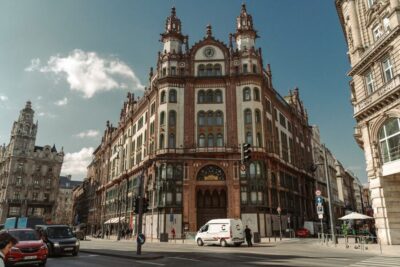
Browse the lists this tour appears in