
Reviewed · ART NOUVEAU TOURS
Budapest Art Nouveau Walking Tour
Budapest’s Art Nouveau is not shy. Its buildings wear bright ceramics, curling lines, floral shapes, and surprising Asian details. This three-hour walk explains why the city’s early 20th-century architects, led by Ödön Lechner, pushed beyond standard European designs and created a distinctly Hungarian style. I especially like the chance to enter parts of Gresham Palace and the former Postal Bank, rather than simply admire their facades from the pavement.
I also like the way the tour connects architecture with applied arts, particularly the colorful Zsolnay porcelain made in Pécs. The main point to consider is that access changes by day: the Hungarian National Bank is closed to visitors on weekends, and the Kazinczy Street Orthodox Synagogue is closed on Saturdays. At $123 per person, this makes the tour best suited to travelers who want expert interpretation, not just a list of pretty buildings.
Key details before you book
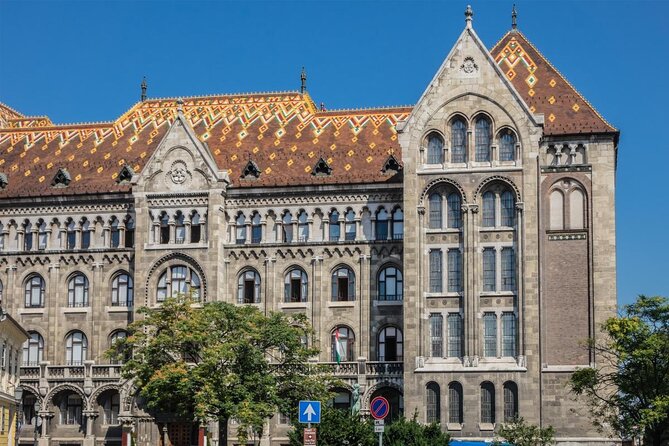
- Ödön Lechner’s Postal Bank: See the flamboyant building often linked with Hungary’s own answer to Gaudi.
- Gresham Palace interiors: Enter the grand entrance hall when access permits and study its Art Nouveau details up close.
- Zsolnay ceramics: Learn why glazed porcelain became a signature material in Hungarian Secession architecture.
- Asian-inspired decoration: Understand how Hungarian national ideas mixed with the wider European taste for Oriental design.
- Small-group or private format: Choose a more personal walk with an English-speaking historian.
- Possible schedule changes: Weekend closures can shift the route toward sites such as Gellért Bath Hotel, the Museum of Applied Arts, or the Geology Museum.
Why Budapest’s Art Nouveau deserves a dedicated walk
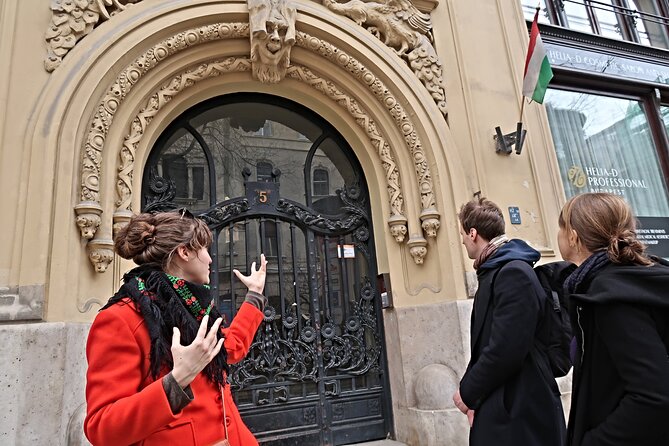
Budapest is packed with architectural styles, and Art Nouveau can be easy to miss if you are moving from the Parliament to the Castle District and checking off major sights. This walk gives you a reason to look up at doorways, study rooflines, and notice small details that are easy to pass without a guide.
Across Europe, Art Nouveau brought architecture, interior design, furniture, glass, metalwork, and fine art together. In Hungary, the movement took a local turn called Hungarian Secession. Architects wanted a style that felt modern but also connected to Hungarian identity.
Ödön Lechner led that effort. His work often uses bold colors, curved forms, floral patterns, and ceramic decoration. Asian motifs appear often, partly because many Hungarian thinkers linked the nation’s origins with the East. At the same time, Budapest’s designers were part of a broader European fascination with Oriental forms.
That context gives the buildings more meaning. You are not simply looking at decorative tiles. You are seeing a period when Budapest was wealthy, ambitious, and eager to announce itself as a modern European capital with its own artistic voice.
More art nouveau walks in Budapest:
- Art Nouveau Tour in Budapest: 3-Hour Private Tour
★ 4.6 · 21 reviews - Private Art Nouveau Tour Budapest
★ 5.0 · 21 reviews - Art Nouveau Treasures of Budapest – Exclusive Private Tour
★ 5.0 · 18 reviews
Bedő House and the smaller details
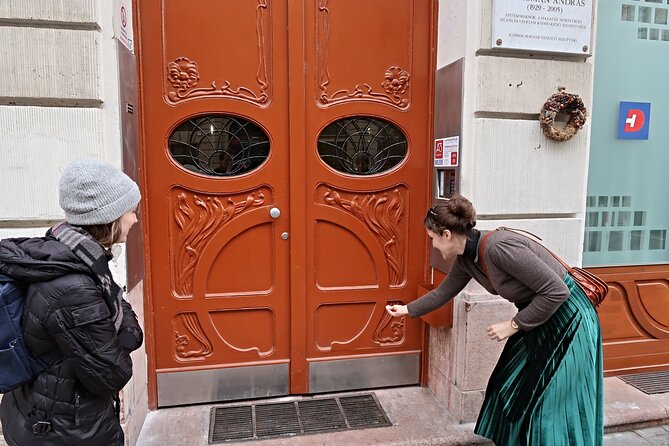
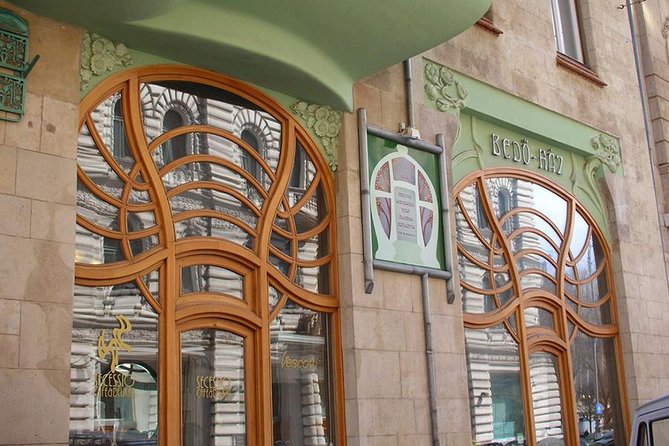
The route includes Bedő House, also known as the House of Hungarian Art Nouveau. This is a useful early stop because it introduces the movement on a more intimate scale than a grand palace or government building.
Here, your guide can point out the way Art Nouveau spreads beyond a building’s outer wall. Look for decorative surfaces, shaped forms, and details that treat the entrance and interior as part of one design. The experience is more satisfying when you understand that the architects were planning a total visual effect rather than adding a few ornaments after construction.
The House of Hungarian Art Nouveau may require an additional fee of 1,000 HUF per person, about $3.50. That extra cost is modest, but you should allow for it when comparing the tour price with a standard sightseeing walk.
This stop also gives you a chance to see how Hungarian Art Nouveau works at a human scale. The grander buildings later in the route can be overwhelming. Bedő House helps you train your eye first.
The Postal Bank and Lechner’s bold experiment
The former Palace of the Royal Post, commonly called the Postal Bank, is one of the tour’s major highlights. Designed by Ödön Lechner, it has the flamboyance that earned him comparisons with Gaudi, though his work has its own Hungarian character.
The facade is the main event. You can expect vivid ceramic decoration, unusual roof forms, and a playful mixture of color and pattern. The building does not aim for quiet refinement. It announces itself with confidence.
Zsolnay porcelain is central to the story. Made in the southern Hungarian town of Pécs, these ceramics could be shaped into architectural details and treated with colorful glazes. They were durable enough for outdoor use while offering a level of decoration that ordinary painted plaster could not match.
Your guide can help you separate the materials from the motifs. The porcelain is practical as well as decorative. The Asian references are cultural and artistic. Together, they create a style that feels both modern and deliberately Hungarian.
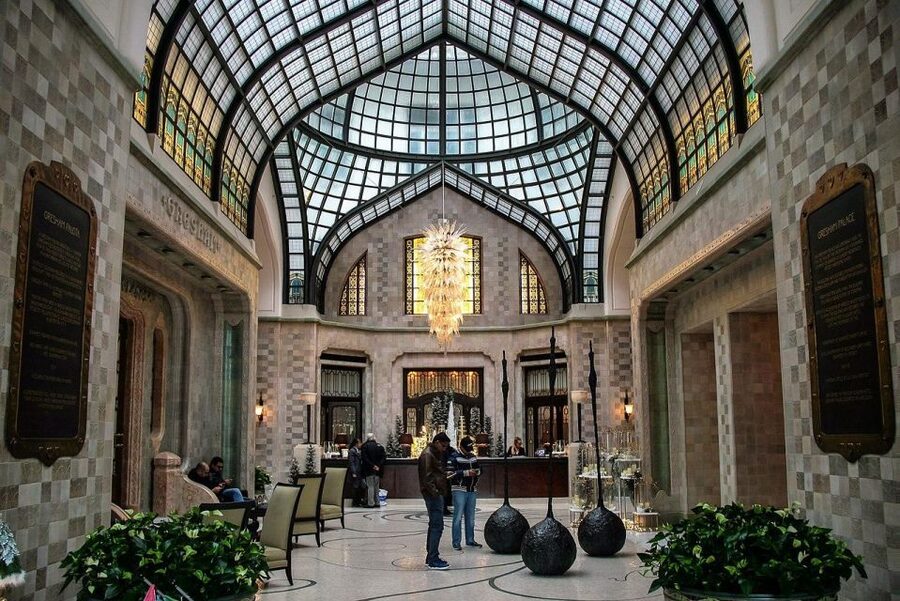
The former Postal Bank is also valuable because you get a look inside the entrance hall when access is available. That matters. Outdoor facades show the public face of Art Nouveau, but an entrance hall reveals how the same ideas continued into stairways, surfaces, lighting, and interior proportions.
Hungarian State Treasury and the role of Zsolnay porcelain
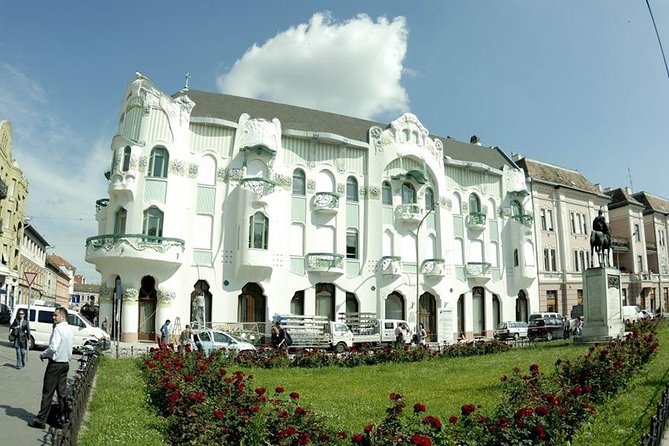
The Hungarian State Treasury is another important Lechner building. Its decoration reinforces the idea that Hungarian Secession was not a restrained style meant to fade into the background.
The building helps explain how a public institution could use architecture to project wealth and national confidence. The shapes and ceramic details are not random decoration. They create a visual identity for the institution and for the city itself.
The tour information also notes that the Hungarian National Bank contains fine examples of Zsolnay porcelain, though it is not open to visitors on weekends. This is one of the key scheduling points. If you want the strongest possible focus on Zsolnay work, a weekday tour gives you the best chance of including that material.
If the site is closed, the guide can adapt the route to other Art Nouveau buildings. That flexibility is useful, but it also means the exact experience depends on the day. I would ask about the planned stops before booking if one particular interior matters most to you.
More walking tours in Budapest:
- Budapest: Buda Castle Walk with Saint Stephen’s Hall
★ 4.5 · 3,012 reviews - Big Bus Budapest Hop-On Hop-Off Bus and Walking Tour
★ 3.5 · 2,206 reviews - Budapest: Buda Castle District Walking Tour
★ 4.6 · 2,108 reviews - Budapest City Landmarks Walking Tour in 2 Hours
★ 5.0 · 2,048 reviews
Gresham Palace, from facade to grand entrance hall
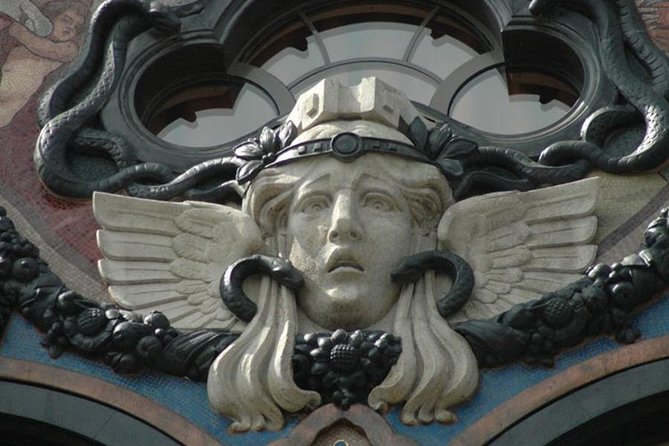
Gresham Palace is the tour’s most polished architectural showpiece. Facing the Danube near the Chain Bridge, it is known for elaborate decoration, elegant surfaces, and a grand early 20th-century sense of arrival.
The exterior rewards a slow look. You may notice ironwork, stone carving, curved forms, and ornamental details that would be easy to miss from a passing car. The guide can explain how these parts fit into the Art Nouveau design rather than treating them as separate decorations.
When entry is permitted, you can see the entrance hall as well. This is one of the best reasons to take the guided walk. You are not limited to a quick photograph from across the street. You can examine how the materials, patterns, and decorative lines continue indoors.
Gresham Palace also provides a useful contrast with Lechner’s more strongly national style. Both buildings belong to the same broad period, yet they express different ideas about modern luxury. One feels more exuberant and specifically Hungarian; the other presents a sophisticated international style suited to a wealthy capital.
Access inside the building can depend on conditions at the time of the tour. Treat the interior visit as an important possibility rather than an absolute guarantee.
Rózsavölgyi utca and Budapest’s commercial interiors
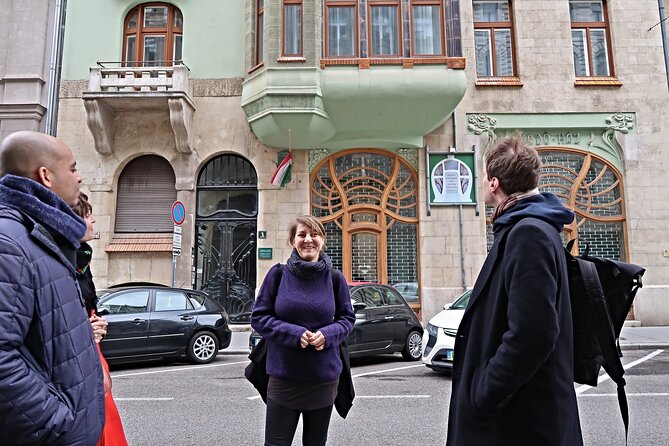
Rózsavölgyi utca introduces another side of the movement: Art Nouveau as a design language for shops, businesses, and daily urban life.
The tour includes a flower shop with its original interior, a department store, and several bank offices. These places are useful because they show that the style was not limited to monumental public buildings. Art Nouveau shaped the spaces where people shopped, handled money, bought flowers, and entered offices.
A preserved shop interior can be more revealing than a large facade. It shows how designers used counters, glass, wood, metal, signage, and decorative patterns to create a complete setting. The details may be smaller, but they help you understand how the movement changed ordinary city life.
This part of the walk also makes the experience less predictable. You are not simply moving from one famous building to another. You are looking at a city center where the style appeared in many forms and at different social levels.
Paris Passage and the pleasure of looking up
Paris Passage, included as a guided stop, adds a commercial and atmospheric note to the route. Passages were designed for movement, shopping, and display, so they are a natural place to see how architecture and commerce worked together.
Here, pay attention to the relationship between light, structure, shopfronts, and decoration. A passage can make Art Nouveau feel less like a formal architectural movement and more like an experience of moving through the city.
This is also where a historian guide earns the fee. Without context, you might notice that a building is ornate but miss why its materials or layout mattered. A guide can draw your attention to the parts that connect architecture with business, fashion, and the growing confidence of Budapest during the Belle Époque.
The Kazinczy Street Orthodox Synagogue
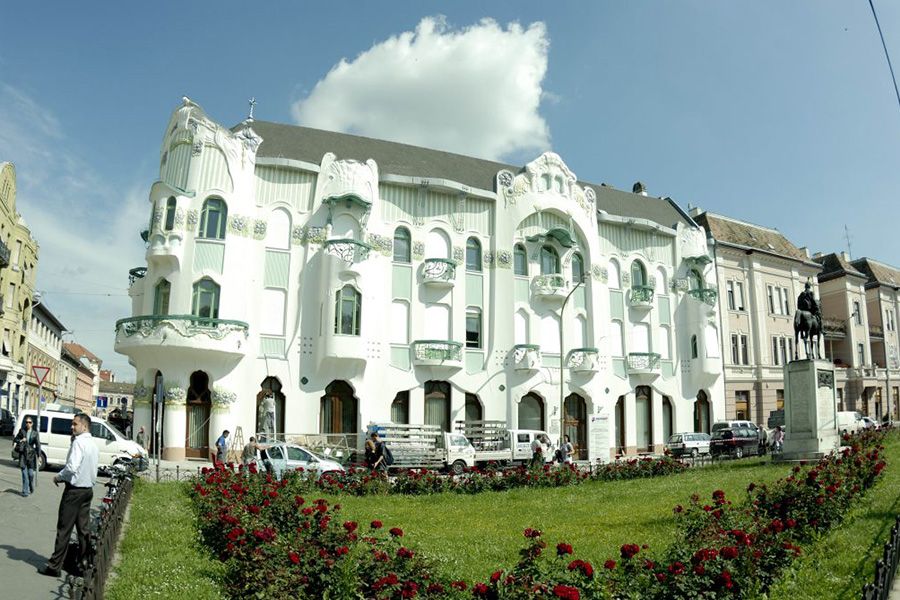
The tour finishes at the Orthodox Synagogue on Kazinczy Street, a small but striking example of Art Nouveau design. Its interior is especially important because it shows how the movement could be adapted for a religious building.
The synagogue’s decoration includes Art Nouveau forms while retaining its own religious and cultural purpose. That combination makes it a strong ending. You have spent the walk learning about national identity, modern design, and international influences, then you see those themes meet in a sacred interior.
The synagogue is closed on Saturdays. If visiting it is a priority, avoid that day. Entry may also require an extra fee of 2,000 HUF per person, about $7.
The tour description also notes that the synagogue can be included as part of an adapted route. Still, I would confirm the plan before booking, especially if you are traveling on a weekend or have limited time in Budapest.
What the $123 price really buys you
At $123 per person, this is not a bargain-priced orientation walk. You are paying for three hours with an art and architecture historian, plus the chance to enter selected buildings and understand what you are seeing.
The value depends on your interests. If you already know a great deal about Art Nouveau and prefer to wander alone, the price may feel high. You can see many exteriors independently, though you may not gain access to the same entrance halls or smaller interiors.
I think the cost makes more sense for a first visit to Budapest when you want a focused subject rather than a broad city tour. It is also a good use of time for anyone who likes design, architecture, decorative arts, or urban history.
Private and small-group options are available. A smaller format should make it easier to ask questions and adjust the pace, though the exact group size and price option should be checked when you reserve. The guide is English-speaking, and Anna has been specifically praised for her friendly manner, art knowledge, Budapest background, and strong German skills. If she is leading your walk, German-language ability may be useful for some groups, but English is the stated tour language.
Timing, transport, and day-of-week planning
The walk lasts three hours. That is long enough to cover several important buildings without turning into an exhausting full-day program.
Tram and metro tickets are not included. Depending on the chosen starting point and route adjustments, you may need public transport to reach or leave part of the walk. Carry a valid ticket rather than assuming transportation is covered by the tour price.
The starting location depends on the option you select. If you do not want hotel or holiday-flat pickup, the central meeting point is Madal Café at Alkotmány u. 4.
Day choice matters more than it might seem:
- On weekends, the Hungarian National Bank is closed to visitors.
- The Kazinczy Street Orthodox Synagogue is closed on Saturdays.
- The House of Hungarian Art Nouveau may have an additional entry fee.
- The Orthodox Synagogue may also require an additional entry fee.
- Other possible Art Nouveau stops include the Gellért Bath Hotel, Museum of Applied Arts, and Geology Museum.
The guide can adapt the route to your interests and the sites open that day. I would book a weekday if you want the fullest selection of interiors.
Who will enjoy this walk most
This tour suits you if you enjoy understanding how buildings work, not just photographing them. It is especially good for visitors who like decorative arts, ceramics, architecture, design, and the cultural debates behind national styles.
You do not need specialist training. A good guide can explain the details in plain language, and the tour includes enough major buildings to keep the subject concrete.
It may be less suitable if you want a general introduction to Budapest, a fast list of famous sights, or a tour centered on the city’s political history. The focus here is narrow by design. You spend time looking at materials, motifs, interiors, and artistic choices.
The walk is also a strong choice for repeat visitors. After you have seen Parliament, Buda Castle, and the Danube, this tour gives you a different way to read the city center.
Should you book the Budapest Art Nouveau Walking Tour?
Book it if you want Budapest’s architecture explained by someone who can connect Lechner, Zsolnay ceramics, Asian motifs, commercial interiors, and religious design in one clear story. The chance to enter Gresham Palace and selected interiors gives the walk more value than a simple facade tour.
Choose a weekday when possible, and confirm whether the Postal Bank, Hungarian State Treasury, National Bank, and Kazinczy Street Synagogue are part of your planned route. At $123, the tour is a considered purchase, but it can be worthwhile for architecture lovers and curious repeat visitors who want details they would probably miss alone.
Skip it if you are mainly looking for a low-cost city overview or prefer complete control over your pace. For everyone else, this is a focused, visually rewarding way to understand Budapest’s most distinctive early modern style.
FAQ
How long is the Budapest Art Nouveau Walking Tour?
The tour lasts three hours.
What language is the tour offered in?
The live tour guide speaks English.
Is the tour private or shared?
Private and small-group options are available.
Where does the tour begin?
The starting or pickup location depends on the option selected. Without personal pickup, the central meeting point is Madal Café at Budapest, Alkotmány u. 4.
Are public transportation tickets included?
No. Tram and metro tickets are not included in the tour price.
Can I visit the Hungarian National Bank on a weekend?
No. The Hungarian National Bank is closed to visitors on weekends, so the route may be adjusted.
Is the Kazinczy Street Orthodox Synagogue open every day?
No. The synagogue is closed on Saturdays.
Are there extra entrance fees?
Possible additional fees include 1,000 HUF per person for the House of Hungarian Art Nouveau and 2,000 HUF per person for the Orthodox Synagogue on Kazinczy Street.
Recently added around Budapest
- Budapest: Private Walking Tour with a Local Guide★ 3.6 · 6 reviews
- From Budapest: Guided Tour of Eger with Wine Tasting★ 4.5 · 6 reviews
- Budapest: City Bike Tour with Coffee Stop★ 5.0 · 37 reviews
- Budapest: Danube River Views Bike Ride★ 4.8 · 23 reviews
- Budapest: Vacation Photographer to collect great memories★ 5.0 · 49 reviews
- Walk to recent and aged spiritual sanctuaries near Budapest★ 5.0 · 5 reviews
- Trash Art Museum: Hungary’s First Scrap Metal Exhibition★ 4.3 · 72 reviews
- Budapest: Multilingual Highlights Tour★ 4.8 · 89 reviews
Art Nouveau Tours, compared.
Art Nouveau Tour in Budapest: 3-Hour Private Tour
Read our review →
Art Nouveau Treasures of Budapest – Exclusive Private Tour
Read our review →
Browse the lists this tour appears in