
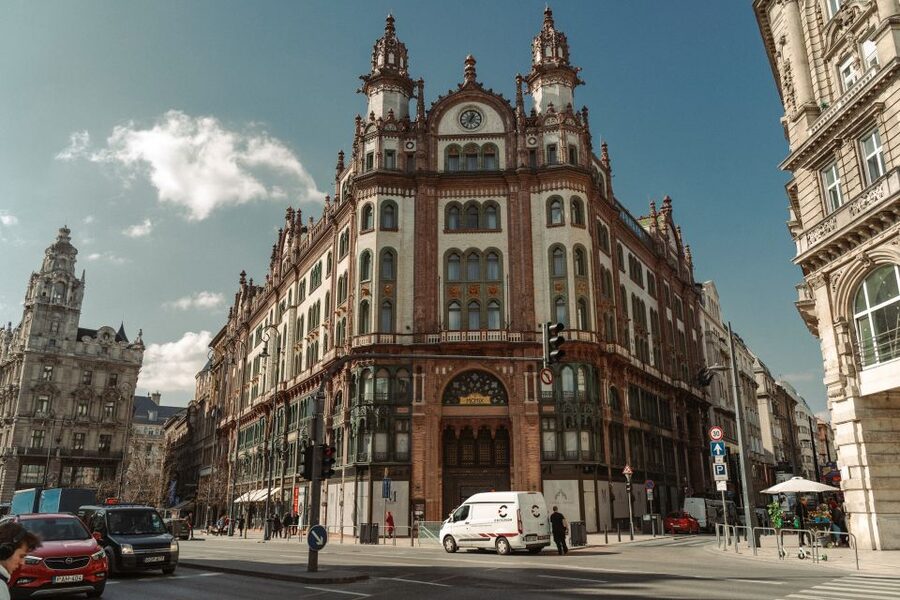
Reviewed · ART NOUVEAU TOURS
Private Art Nouveau Budapest Tour
Budapest’s Art Nouveau is easy to miss if you stick to the main sights, yet it may be the city’s most surprising architectural chapter. This private walk brings you close to Ödön Lechner’s colorful Hungarian style, grand commercial buildings, fanciful rooftops, and stained glass that rarely gets more than a passing glance on a standard city tour. I like the route for two reasons: it links several major buildings with a clear artistic story, and it includes a café stop where the setting is part of the lesson. The main concern is reliability. One recent booking reported that the guide never arrived, so I would confirm the appointment before setting out.
The private format also gives the outing real flexibility. Past guides such as Suzy, Peter Horvath, and Joel have adjusted the route, taken groups into places that are not always open to casual sightseers, and even extended the scheduled four hours. Still, the $377 group price is much easier to justify for a family or party of several people than for one or two guests.
Key points at a glance
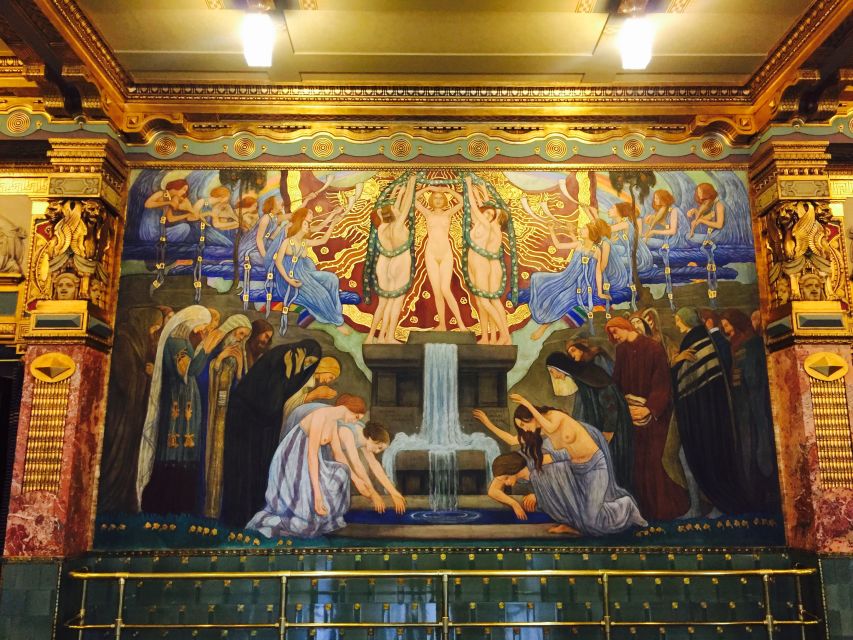
- Ödön Lechner’s Museum of Applied Arts: Begin with one of Budapest’s most memorable buildings, known for its colorful roof and Hungarian decorative style.
- A cross-European art lesson: See how Viennese Secession, Jugendstil, French Art Nouveau, Belgian Art Nouveau, and Hungary’s own national style differ.
- Gresham Palace interior: Step into a luxury landmark near the Danube and compare its elegant public spaces with Lechner’s more playful work.
- Coffee in an Art Nouveau setting: Pause for a coffee or soft drink and cake at the House of Hungarian Art Nouveau.
- Private route and hotel pickup: Start at your hotel, apartment, or another agreed point, with the route shaped by your location and interests.
- Guides with strong art backgrounds: Suzy, Peter Horvath, and Joel have each received especially warm praise for lively explanations and access to unusual places.
Why Budapest Art Nouveau deserves four hours
Budapest’s Art Nouveau period was brief but remarkably productive. It flourished toward the end of the 19th century and into the early 20th century, when architects across Europe were turning away from strict historical copying. They wanted buildings that felt modern, decorative, and connected to local culture.
That movement took several forms. Viennese Secession favored clean geometry and formal ornament. Jugendstil could be more flowing and floral. French and Belgian Art Nouveau often played with vines, curves, and natural forms. Hungarian architects added local motifs, folk patterns, ceramics, and bright color.
I like this tour because it treats the buildings as part of a conversation rather than a string of unrelated photo stops. You are not simply shown a pretty roof, then hurried to the next address. A good guide can explain why one façade feels German, another French, and another distinctly Hungarian.
The four-hour length is sensible. You have enough time to look up, notice details, and hear the story behind them without turning the day into an architecture lecture. You will walk, take a short tram ride, and spend time inside or near several important buildings, so comfortable shoes matter.
More art nouveau walks in Budapest:
- Art Nouveau Tour in Budapest: 3-Hour Private Tour
★ 4.6 · 21 reviews - Private Art Nouveau Tour Budapest
★ 5.0 · 21 reviews - Art Nouveau Treasures of Budapest – Exclusive Private Tour
★ 5.0 · 18 reviews
Starting at the Museum of Applied Arts
The strongest starting point is the Museum of Applied Arts, designed by Ödön Lechner. He is often compared with Antoni Gaudí, though the comparison should not flatten his work into a Hungarian version of Barcelona. Lechner developed a local style using Hungarian folk forms, Oriental influences, bright ceramics, and unusual roof decoration.
The museum is especially striking from the outside. Its roof, with colored tiles and rounded forms, gives the building a playful profile. The surface does not behave like a plain stone wall. It bends, shifts, and gathers decorative detail around windows and entrances.
Your guide can help you read the building in layers. First look at the overall shape. Then notice the roofline, the ceramic ornament, the windows, and the small patterns that might disappear if you only take a quick photograph.
The museum is a strong first stop because it makes the central idea of the tour clear: Hungarian Art Nouveau was not just a copy of a foreign fashion. It was an attempt to create a national architectural language.
The exact route can change depending on where you meet your guide. Hotel, apartment, or another central location can be arranged, but the Museum of Applied Arts is described as the best place to begin. Ask about the starting point when you book, especially if you want the full sequence.
From Váci Street to the city center by tram
After the museum, the route includes a short tram ride back toward the city center. This is a useful change of pace. You are not walking every minute of the four hours, and the tram helps connect the western starting point with the central cluster of Art Nouveau buildings.
The ride also gives the outing a local feel. It is practical transportation, not a sightseeing cruise, but public transit helps you understand how the buildings fit into the modern city. The route then continues around Váci Street, where you can see several newer constructions influenced by the period.
One point needs clarification before you go: transportation costs have not been perfectly clear for every booking. One past guest bought an all-day metro ticket but used public transit only once, and had expected the ticket to be included. The tour description specifically mentions a short tram ride, but does not clearly promise a transit pass. Ask your guide or the provider what ticket, if any, you need and who pays for it.
Gresham Palace and Budapest’s polished side
Gresham Palace offers a different view of the period. Located near the Danube, it is associated with luxury, commerce, and the refined side of Budapest’s early 20th-century architecture.
The building is useful in contrast with the Museum of Applied Arts. Lechner’s work can feel more colorful and national in character, while Gresham Palace presents a grander, more polished urban face. Look for the decorative metalwork, curved forms, glass, and carefully finished details that make the entrance feel ceremonial.
The route includes a chance to enter Gresham Palace and enjoy its luxurious atmosphere, though access can depend on current conditions. That possibility is important. A façade tells you only part of the story, while a lobby or interior lets you see how the same design language continues indoors.
Do not expect a long museum visit here. The value is in comparing the building with the other stops and understanding how Art Nouveau worked in a major commercial setting. Your guide’s interpretation matters more than the number of minutes spent inside.
A few more Budapest half-days to weigh up
- Budapest: City Highlights Cruise with Welcome Drink
★ 4.6 · 35,610 reviews - Budapest: Unlimited Prosecco, Beer and Aperol Spritz Cruise
★ 4.8 · 25,310 reviews - Budapest: Széchenyi Spa Day Ticket with Optional Upgrades
★ 4.3 · 23,911 reviews - Budapest: Nighttime or Daytime Sightseeing Cruise
★ 4.2 · 21,062 reviews
Coffee and cake at the House of Hungarian Art Nouveau
The café break is more than a pause for tired feet. At the House of Hungarian Art Nouveau, you can have a coffee or soft drink and cake in a setting connected to the subject of the tour. The site has a private collection from the period, so the stop adds another layer of decorative art to the architectural walk.
I like this part because it gives you time to absorb what you have seen. Art Nouveau can become a blur of curved windows, tiled roofs, and floral ornament when everything is presented at once. Sitting down in a period setting lets you look again without being rushed.
The café stop is included, but the exact drink and cake selection is not specified. If you have dietary restrictions, ask ahead. The tour lists a coffee or soft drink and a cake, not a full meal, so plan lunch separately if you book a morning or early afternoon departure.
This is also the most relaxed point for questions. Ask your guide why Hungarian Art Nouveau looks different from Viennese Secession, or which buildings are easiest to visit independently later. Guides such as Suzy, Peter Horvath, and Joel have been praised for explaining history with energy rather than reciting dates.
Liberty Square’s concentrated architecture
After the café, the tour explores Liberty Square. The useful thing here is concentration. Several buildings around the square date from the same broad period, allowing you to compare styles without spending another hour crossing the city.
Your guide can point out how the architects handled façades, windows, decoration, and rooflines. The square also helps explain how Art Nouveau fit into a changing capital. These were not isolated country houses. They were part of a growing urban center, surrounded by offices, institutions, and public spaces.
You will get more from Liberty Square if you slow down. Look at the edges of buildings rather than only their main entrances. Notice the way ornament gathers around windows and cornices. Budapest’s Art Nouveau is often best at eye level and above, where the details can be missed by anyone hurrying between major sights.
The route is not built around one indoor museum ticket or a long formal visit. Much of the experience comes from exterior architecture, interpretation, and the possibility of entering selected buildings. That makes the guide especially important.
The Hungarian State Treasury’s remarkable roof
The final major stop is the Hungarian State Treasury, an especially good example of why you should not judge Budapest buildings from street level alone. Its rooftop is famous for its decoration, yet much of it is invisible from below.
The tour brings you close enough to appreciate the roof, which is one of the clearest examples of Hungarian decorative ambition. Colored tiles and patterned surfaces create a strong visual finish, but the building is not designed to reveal everything to a pedestrian standing across the street.
This is the kind of stop that rewards a guide who knows where to position you and what to point out. Without help, you might notice an attractive institutional building and continue walking. With the right explanation, the roof becomes the payoff.
The State Treasury also works well as a final stop because it brings the tour back to the main theme: Hungarian Art Nouveau was decorative, but it was also deliberate. Color, roof shape, folk-inspired pattern, and national identity were all part of the architectural argument.
What the private format really adds
The tour costs $377 per group of up to 25 people and lasts four hours. That is not a low-cost walking tour, but the calculation changes if you are traveling with a family or larger group. Divided among several people, the price can be reasonable for a private guide, hotel pickup, a café stop, and a route built around your interests.
For one or two people, the value is harder to judge. You are paying for personal attention and flexibility, not just admission to a collection of sights. If Art Nouveau is a major reason you came to Budapest, that focus may justify the price. If you only want a general introduction to the city, a less specialized tour may suit you better.
The private format can also affect the depth of the day. A past guide changed the starting time so the group could attend a guided visit at the Music Academy, and the four-hour tour grew to about five and a half hours. That shows the potential benefit of a flexible guide, though you should not assume every booking will include the same extension or extra visit.
Guide quality is central here. Suzy has been praised for combining art history with broader Budapest history. Peter Horvath received especially strong praise for stories, anecdotes, and passionate explanations. Joel has also been singled out for bringing architecture to life and showing places that are not always open to casual sightseers.
At the same time, the service record is not flawless. One June 2024 booking reported that the guide did not appear and that a refund was still unresolved at the time of the complaint. That is a serious concern. Confirm the meeting time, location, guide name, and phone contact shortly before the tour.
Who should book this Budapest architecture walk?
I would recommend it most strongly to you if you enjoy buildings, design, decorative arts, or city history. It is also a good choice if you have already seen the Parliament, Buda Castle, and the central monuments and want a more specialized side of Budapest.
Families can benefit from the private format because the guide can adjust the pace. Larger groups may find the fixed group price attractive. The café stop and tram ride also break up the walking, though the tour still requires enough time on your feet to move between buildings.
This is less suitable if you want a relaxed café morning with only a few sights. The route covers several locations, and the value comes from comparison and explanation. It is also not the best choice if you need a fully fixed itinerary, since the meeting place and route can change.
Book with care if access to interiors is your top priority. The tour may take you inside Gresham Palace and other special places, but entry is not guaranteed at every stop. Much depends on the day, the guide, and current access rules.
Free cancellation is available up to 24 hours before the start, and you can reserve without paying immediately. Those terms provide useful flexibility, but they do not remove the need to confirm the appointment. The language options are English, Spanish, French, Italian, and Portuguese.
Should you book the Private Art Nouveau Budapest Tour?
Book it if you want Budapest explained through its architecture rather than simply photographed. The Museum of Applied Arts, Gresham Palace, Liberty Square, and the Hungarian State Treasury form a strong sequence, and the café stop makes the four hours feel varied.
The best value comes with a group of several people and a real interest in Art Nouveau. Ask in advance who will guide you, confirm the meeting details, clarify public transit costs, and request a guide such as Suzy, Peter Horvath, or Joel if available.
I would hesitate only if you are traveling alone on a tight budget, or if you need guaranteed interior access. For architecture fans, though, this is a thoughtful way to see a side of Budapest that most quick city tours pass by.
FAQ
How long does the Private Art Nouveau Budapest Tour last?
The scheduled duration is four hours. A past private tour lasted about five and a half hours after the guide adjusted the plan, but you should treat that as an exception rather than a guarantee.
What is the price of the tour?
The price is $377 per group of up to 25 people. The fixed group price may offer better value for families or larger parties than for one or two people.
Where does the tour start?
Hotel pickup is included, and you can meet the guide at your hotel, apartment, or another agreed location in the city. The Museum of Applied Arts is described as the best starting point, but the route may change according to your meeting place.
Which buildings are included?
The route can include the Museum of Applied Arts, Gresham Palace, the Hungarian State Treasury, buildings around Liberty Square, and other Art Nouveau sights near Váci Street and the city center.
Is food or a drink included?
Yes. The tour includes a coffee or soft drink and a cake at the House of Hungarian Art Nouveau. It does not list a full meal.
Which languages are available?
Live tours are available in English, Spanish, French, Italian, and Portuguese.
What should I bring?
Bring comfortable shoes. The experience includes walking between buildings as well as a short tram ride.
Recently added around Budapest
- Budapest: Private Walking Tour with a Local Guide★ 3.6 · 6 reviews
- From Budapest: Guided Tour of Eger with Wine Tasting★ 4.5 · 6 reviews
- Budapest: City Bike Tour with Coffee Stop★ 5.0 · 37 reviews
- Budapest: Danube River Views Bike Ride★ 4.8 · 23 reviews
- Budapest: Vacation Photographer to collect great memories★ 5.0 · 49 reviews
- Walk to recent and aged spiritual sanctuaries near Budapest★ 5.0 · 5 reviews
- Trash Art Museum: Hungary’s First Scrap Metal Exhibition★ 4.3 · 72 reviews
- Budapest: Multilingual Highlights Tour★ 4.8 · 89 reviews
Art Nouveau Tours, compared.
Art Nouveau Tour in Budapest: 3-Hour Private Tour
Read our review →
Art Nouveau Treasures of Budapest – Exclusive Private Tour
Read our review →
Browse the lists this tour appears in