
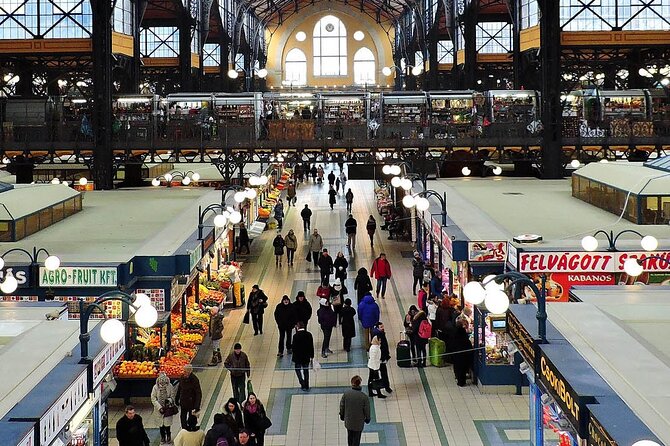
Reviewed · MARKETS
Budapest Great Market Hall Chef‑Led Private Tasting Tour
Budapest’s Great Market Hall is much easier to understand with a local guide beside you. This private tasting tour turns a quick look at paprika and souvenir stalls into a practical lesson in Hungarian food, from crispy langos and pork crackling to sour cherry sweets and fresh strudel. The guide also explains how the market fits into everyday life.
I like the personal pace, since your group can spend more time on food, history, cooking, or shopping. I also like the range of samples, which moves beyond the usual goulash talk and includes pickles, savory pogacsa, cured sausages, Turo Rudi, and even optional homemade palinka.
The main consideration is the price: $78.60 per person is a fair amount for a two-hour private tour, but it makes most sense for people who value a guide and a broad tasting session. The market itself can be visited for free, and the tour does not include transportation to or from the hall.
Key points to know before you book
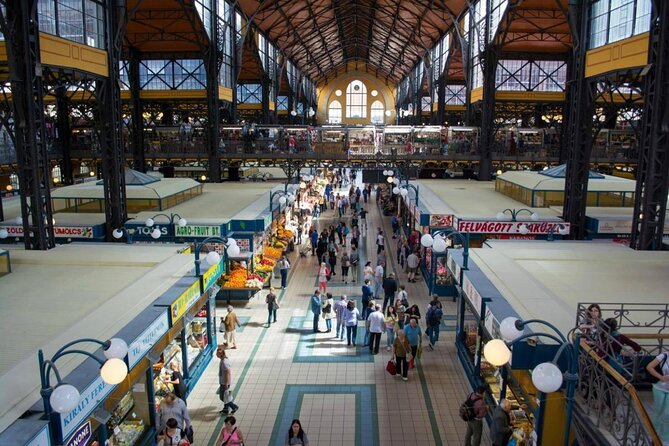
- You get the market to yourself as a group: This is a private experience, so the guide can match the pace and subjects to your interests.
- The tasting list is broad: Expect langos, cured sausage, pickles, pogacsa, strudel, Turo Rudi, Konyakmeggy, and pork crackling, with exact choices based on what is available.
- Former chef guidance adds useful context: The guide explains how ingredients are used, not just what they are called.
- Andrew is the guide most often named: He is described as warm, funny, clear in English, and helpful with buying paprika and gifts.
- The 9 a.m. start matters: You meet at the Central Market Hall and finish there after about two hours.
- Plan ahead: This experience is often reserved about 85 days before the date, so last-minute availability may be limited.
Starting at Budapest’s Central Market Hall
You meet at Budapest’s Central Market Hall at 9 a.m. and finish at the same place. Since transportation is not included, you need to make your own way there, but the meeting point is near public transportation.
The early start is useful. You can see the market before spending a full day sightseeing, and the tasting session works well as a substantial breakfast. It also leaves the rest of your day open for the Danube, Buda Castle, or another meal that does not involve pastry.
The tour lasts about two hours, though one account describes a visit lasting a little more than that. Do not expect a rushed march from one stall to the next. The private format allows questions and lets the guide linger when something catches your attention.
The Central Market Hall is the only formal stop listed, but that does not mean you simply stand in one aisle and eat. The route moves through different sections, with attention to seasonal produce, meats, pastries, spices, pickles, and everyday staples.
More Great Market Hall visits:
- Budapest: Hungarian Cuisine in the Market Hall (german)
★ 4.8 · 146 reviews - Budapest: Central Market Hall Guided Food Tour with Tastings
★ 4.9 · 46 reviews - Gourmet Market Walk at the Great Market Hall of Budapest
★ 4.5 · 18 reviews
A former chef explains what the stalls mean
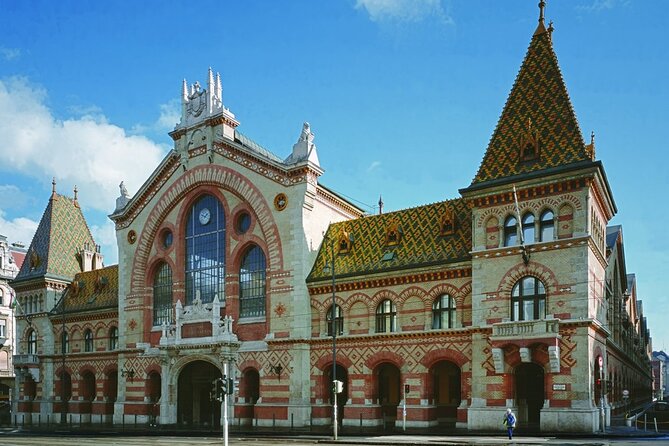
The best reason to pay for this tour is the explanation between tastings. A market can be visually pleasing but confusing. You may see strings of paprika, unfamiliar sausages, tubs of pickles, pastries with names you cannot pronounce, and neatly packaged gifts without knowing what is genuinely useful.
The guide explains how ingredients are used at home, how dishes developed, and how food connects to Hungarian history and culture. The discussion also covers the much-loved paprika story, including why the spice matters so much in Hungarian cooking.
This is practical information, not just a list of dates and food names. You can ask how an ingredient is prepared, what to take home, or how to tell one product from another. The guide is a local former chef with excellent English, and Andrew is the name most often associated with the experience. One account names Brian, so guide assignment may vary.
That private setting makes a difference. A large group often moves on before you can ask a second question. Here, you can steer the conversation toward cooking, food history, shopping, or daily life. If your group has mixed interests, the guide can balance the subjects instead of giving everyone the same fixed speech.
Langos begins the tasting with a Hungarian classic
The opening food is langos, a round of deep-fried dough topped here with sour cream and cheese. It is simple, filling, and not shy about calories. Think of it as a market snack that works best when shared, especially if you plan to keep eating.
Langos is a good first taste because it shows the direct, satisfying side of Hungarian food. The texture and toppings matter more than delicate presentation. You get something hot, rich, and immediately understandable before moving on to more unusual foods.
The portion size and exact preparation can depend on the stall and the day. This is a tasting tour, not a full restaurant meal, but the number of samples can add up quickly. Pace yourself if you want to try everything.
Sausages, pork crackling, and the savory side
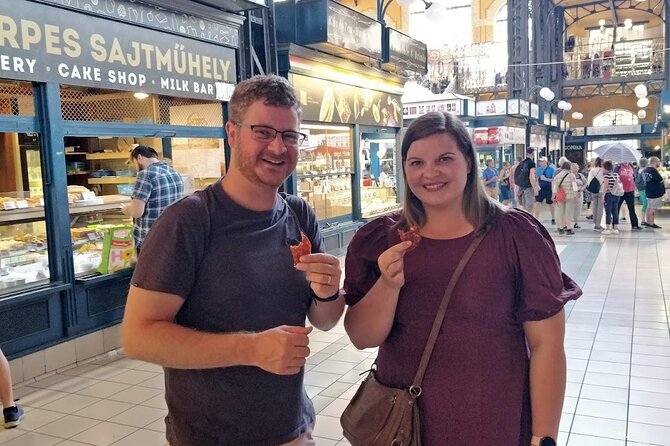
The savory section includes a variety of cured sausages, pork crackling, and three types of pogacsa. The pogacsa selection includes cheese, potato, and pork crackling versions. These small baked savory pastries are useful for understanding the everyday side of Hungarian baking, rather than only its famous sweets.
Cured meats give the guide room to explain how Hungarians shop and cook. You can ask about the differences between products and how they might be served. The pork crackling brings a stronger flavor and firmer texture, so it may be the sample you remember most clearly, even if it is not your favorite.
This part of the tour is also a reminder that Hungarian food is not limited to paprika-heavy stews. Pastry, preserved meat, dairy, and pickled foods all have a place in the national kitchen.
More market walks in Budapest:
- Budapest Cooking Class & Market Tour with Local Guide & Wines
★ 5.0 · 553 reviews - Budapest Food Tour: Market to Tavern with 14+ Tasters & Wines
★ 5.0 · 434 reviews - Hungarian Cooking and optional Local Market Tour
★ 4.5 · 98 reviews - Budapest: Hungarian Cooking Class and Market Walk
★ 5.0 · 91 reviews
Pickles show the market’s less familiar flavors
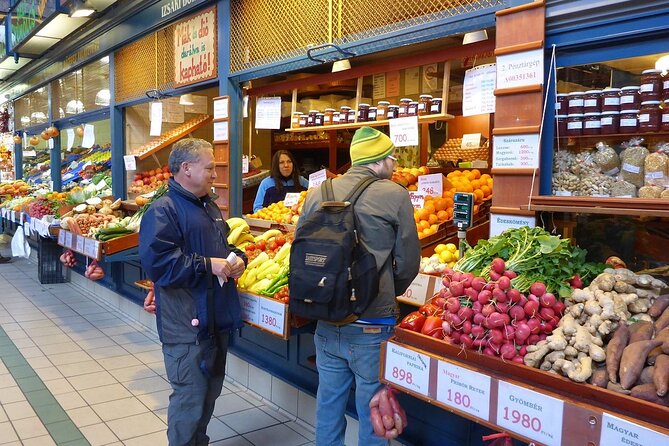
The assortment of pickles can include more unusual items, and one particularly memorable possibility is pickled baby watermelon. That is the sort of food you might walk past on your own without knowing how to approach it.
Pickles give the tasting a useful contrast to fried dough and sweets. They cut through rich foods and show how preservation shapes the market selection. If you enjoy trying unfamiliar foods, this may be one of the most rewarding parts of the morning.
The exact assortment depends on availability, so you should not treat every listed item as guaranteed. The guide can still explain what you are looking at and how such foods fit into Hungarian eating habits.
Strudel and sweets finish the market tour
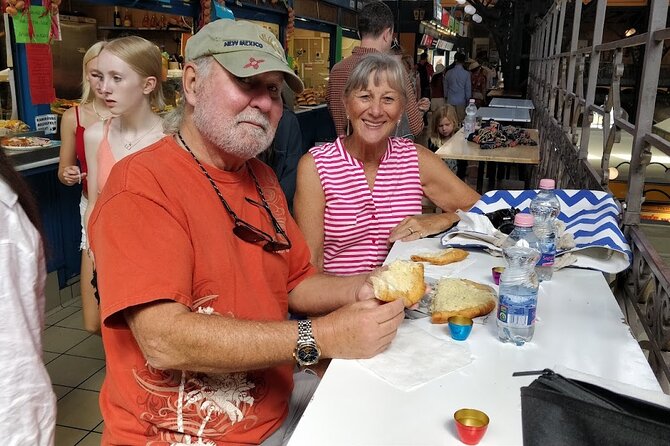
The dessert portion offers fresh strudel with a choice of filling based on what is available. It is made with layers of phyllo and baked on the premises. A sour cherry filling is one possibility, and it gives you a sharper, fruitier finish than a heavy chocolate dessert.
You may also try Turo Rudi, a Hungarian sweet made from cottage cheese with a hint of lemon, covered in dark chocolate. It sounds unusual if you are expecting a standard candy bar, but it is a useful example of a local snack that does not translate neatly into familiar categories.
Konyakmeggy is another distinctive taste: dark chocolate filled with cognac and sour cherry. It brings a stronger alcoholic note than Turo Rudi, so it may not suit everyone. The variety is the point. You are sampling the kinds of small foods that help you understand local preferences, not simply collecting safe international favorites.
Because the tasting includes both savory and sweet foods, this tour can replace a light breakfast for some people. It is wise to avoid scheduling a large brunch immediately afterward.
Paprika shopping and practical souvenir help
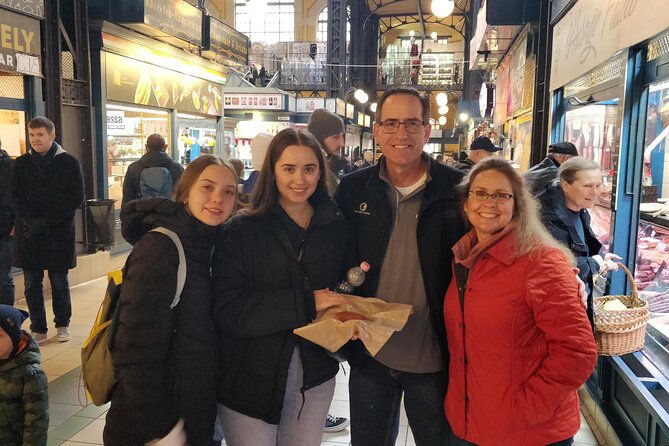
Paprika is one of the most useful subjects for the tour because the market offers many ways to buy it. A guide can help you understand the choices and avoid grabbing the first bright package that looks good.
Andrew has helped people choose paprika as a gift, and he also gives advice about souvenirs such as textiles and embroidery. That shopping help is a real benefit if you want to take home food or crafts but are unsure about quality or value.
The guide can also point you toward vendors who are less forceful about selling. That makes the market easier to enjoy, especially if you prefer to browse without pressure. You remain free to buy or not buy. The tour price does not include souvenirs, so treat shopping advice as guidance rather than part of the package.
One useful feature is the broader look at merchandise. You may learn about local porcelain and embroidery along with food, giving you a better sense of the market as a place for daily shopping and gifts.
What the private format is really worth
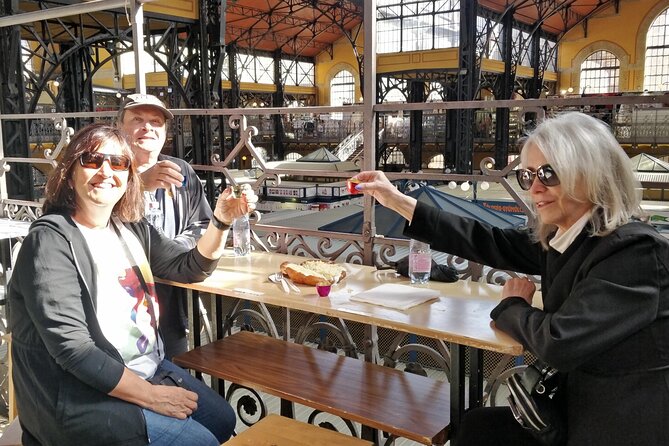
At $78.60 per person, this is not the cheapest way to see the Great Market Hall. You can enter the market without buying a tour, and you could sample some foods yourself for less money.
The price becomes easier to justify if you are traveling as a couple or small private group and want a guide focused only on you. You are paying for the food, the former chef’s explanations, the English-language service, and the ability to ask questions without a crowd waiting behind you.
I would place the value in three areas:
- Food access: You try a wide range of sweet and savory items without guessing what to order.
- Cultural context: You learn how the ingredients connect to Hungarian cooking and daily life.
- Shopping confidence: You get help with paprika, gifts, and unfamiliar market goods.
The optional shot of homemade palinka adds another local touch, but you do not have to drink it. Palinka is strong fruit brandy, so consider your tolerance and the fact that the tasting begins in the morning.
This tour is especially good value if you are new to Hungarian food or want a friendly introduction before exploring restaurants on your own. It is less compelling if you already know the cuisine well and mainly want to wander independently.
The pace, group size, and language
Only your group participates, which is the main difference from a standard market walk. The guide can adjust the pace to your interests, and small groups may receive more attention at each stop.
The tour is offered in English. The guide has been described as speaking perfect English, making it suitable for detailed questions about food and culture rather than basic pointing and naming.
Most people can participate, and service animals are allowed. The supplied details do not describe the exact walking distance, seating, or the physical layout of every tasting stop, so contact the operator if you need specific mobility information.
The experience is scheduled for 9 a.m. and takes place at the market. You should arrive ready to walk and sample several foods over a fairly short period. Comfortable shoes and a light appetite are sensible, though those are practical suggestions rather than stated tour requirements.
Who will enjoy this tour most
I would choose this experience for you if you like learning through food and prefer a personal guide to a large group. It suits first-time visitors who want a clear introduction to Hungarian ingredients, as well as repeat visitors who want to understand the market beyond its postcard image.
It is a strong fit for:
- Couples who want a private morning activity
- Families or small groups with different food interests
- People who enjoy asking questions while they shop
- Visitors who want help choosing paprika or edible gifts
- Anyone curious about less familiar foods such as pickled baby watermelon or Turo Rudi
It may not suit you if you want a long meal, a formal cooking class, or a broad walking tour of Budapest. The experience stays focused on the Central Market Hall, and the food is presented as a series of tastings rather than a sit-down feast.
The market may also feel less lively than you expect at certain times. One account found that it did not have the full, energetic market atmosphere they had imagined. A good guide helps by adding context, but the building itself will not always feel like a nonstop food spectacle.
Booking, cancellation, and planning advice
This experience is often booked about 85 days in advance, so I would reserve early if your dates are fixed. Confirmation is received at booking, and the mobile ticket makes entry details easy to carry.
You can cancel for a full refund up to 24 hours before the start time. Cancellations or changes made less than 24 hours before the tour are not accepted for a refund, and the cut-off follows local Budapest time.
Remember that transportation to the market is not included. The start and end point are both the Central Market Hall, Budapest, 1093 Hungary. Build in enough time to arrive for the 9 a.m. meeting.
Should you book the Budapest market tasting?
Book it if you want more than a quick look around the Great Market Hall. The combination of a local former chef, private pacing, broad tastings, and practical shopping advice gives you a useful first lesson in Hungarian food.
I especially recommend it for people who would otherwise feel lost among the paprika, sausages, pickles, and sweets. The $78.60 price is reasonable for a private experience with food included, but not a bargain if you only want market access.
Skip it if you prefer to browse alone, already know Hungarian cuisine, or want a full city tour. For everyone else, the morning offers a friendly way to understand what you are seeing, eat some memorable food, and leave with better instincts for ordering and shopping in Budapest.
FAQ
Where does the Budapest Great Market Hall tasting tour begin?
It begins at the Central Market Hall in Budapest, located at 1093 Hungary.
What time does the tour start?
The tour starts at 9 a.m. and lasts about two hours.
Is this a private tour?
Yes. Only your group participates, so the guide can adjust the pace and discussion to your interests.
What foods are included?
The tasting can include langos, cured sausages, pogacsa, pork crackling, assorted pickles, strudel, Turo Rudi, and Konyakmeggy. The exact selection depends on availability.
Is palinka included?
An optional shot of homemade palinka is included. You do not have to take it.
Is transportation included?
No. You are responsible for getting to and from the Central Market Hall. The tour begins and ends at the market.
More Food and Drink Experiences in Budapest
- Budapest: Unlimited Prosecco, Beer and Aperol Spritz Cruise
★ 4.8 · 25,310 reviews - Budapest: Unlimited Prosecco, Beer & Aperol Spritz Cruise
★ 4.5 · 3,371 reviews - Budapest: Wine, Cheese, and Charcuterie Tasting
★ 4.9 · 647 reviews - From Budapest: Etyek Wine Tasting Tour with 3-Course Meal
★ 4.8 · 557 reviews
Recently added around Budapest
- Budapest: Private Walking Tour with a Local Guide★ 3.6 · 6 reviews
- From Budapest: Guided Tour of Eger with Wine Tasting★ 4.5 · 6 reviews
- Budapest: City Bike Tour with Coffee Stop★ 5.0 · 37 reviews
- Budapest: Danube River Views Bike Ride★ 4.8 · 23 reviews
- Budapest: Vacation Photographer to collect great memories★ 5.0 · 49 reviews
- Walk to recent and aged spiritual sanctuaries near Budapest★ 5.0 · 5 reviews
- True Crime Walking Tour in the Buda Castle district★ 5.0 · 26 reviews
- Trash Art Museum: Hungary’s First Scrap Metal Exhibition★ 4.3 · 72 reviews
Markets, compared.
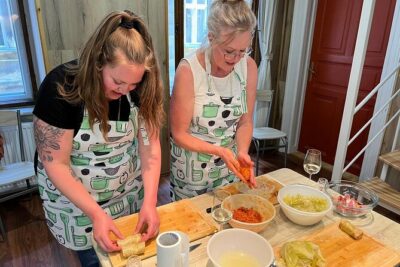
Budapest Cooking Class & Market Tour with Local Guide & Wines
Read our review →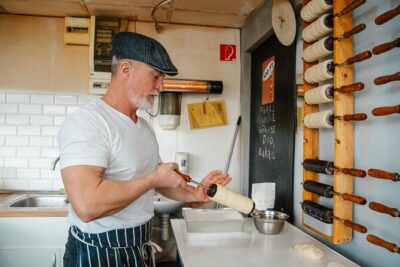
Budapest Food Tour: Market to Tavern with 14+ Tasters & Wines
Read our review →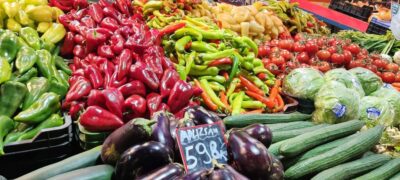
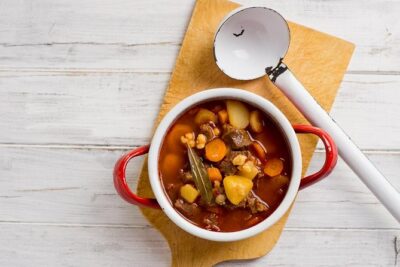
Hungarian Cooking and optional Local Market Tour
Read our review →
Easy Cooking Class Budapest – with Market Walk (local wine & pálinka included)
Read our review →
Central Market Hall Guided Food Tour with Tastings
Read our review →
Budapest Market Tour & Home Cooking Class with local Chef & Guide
Read our review →Browse the lists this tour appears in