
Reviewed · JEWISH HERITAGE TOURS
Budapest: Jewish History Guided Walking Tour with Historian
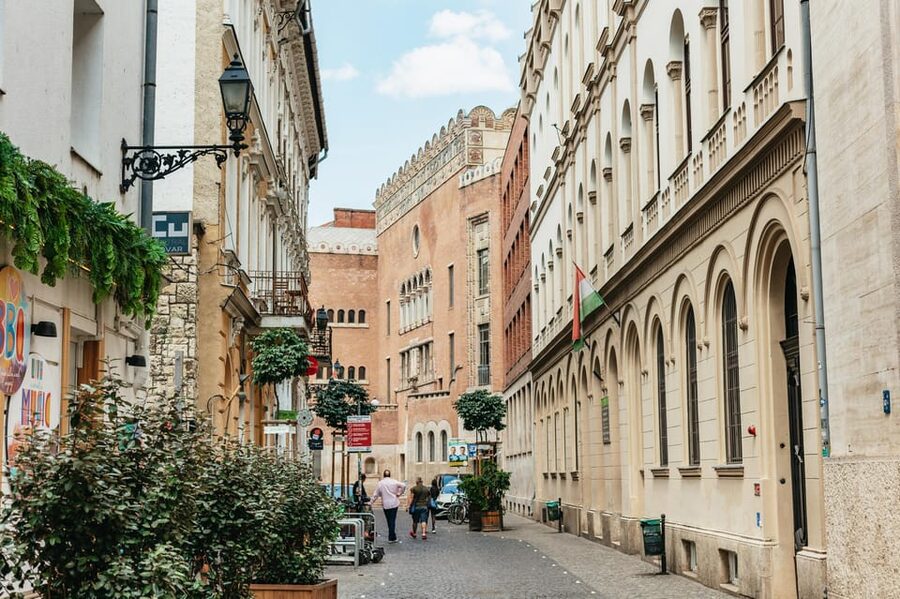
Budapest’s Jewish Quarter is more than a cluster of grand synagogues. It is a place where centuries of Jewish life, the horrors of the 1944 ghetto, wartime acts of courage, modern nightlife, kosher shops, and street art all meet on the same few streets. This 2.5-hour walking tour gives you a clear route through that complicated story with an English-speaking historian.
I like the small group, limited to 10 people, and the way the tour connects famous sights with less obvious details, such as the former ghetto wall and the memorials to Raoul Wallenberg and Carl Lutz. I also like the pause for coffee and flódni, a traditional Jewish cake. The main drawback is simple: you see the three major synagogues from outside only, so you will need a separate visit if you want to see their interiors.
Key points to know before you book
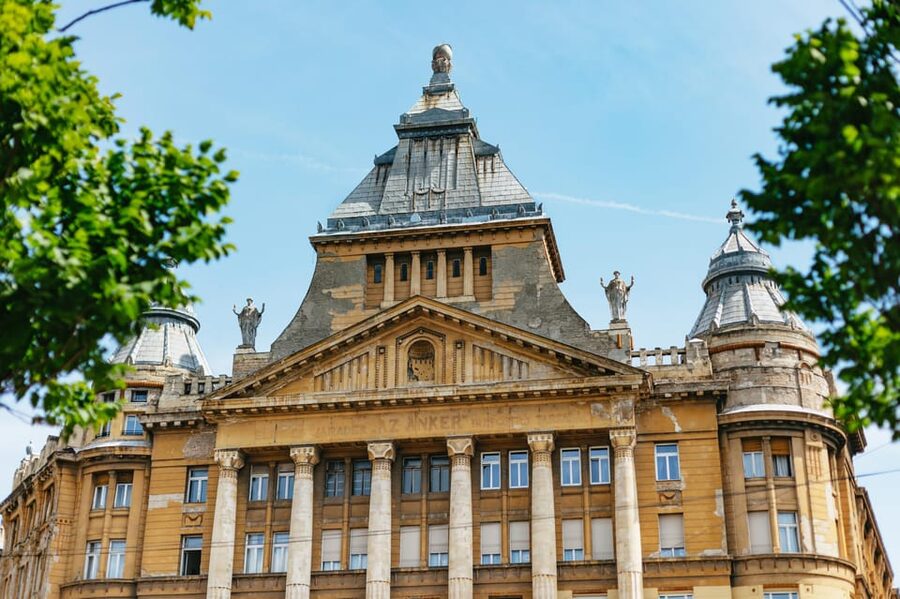
- Three major synagogue exteriors: See the Dohány Street, Rumbach Street, and Kazinczy Street synagogues without paying an entrance fee.
- History told in context: The guide covers Jewish life before World War II, the Budapest ghetto, wartime persecution, and the Jewish community today.
- Small groups help: With no more than 10 people, you can hear the guide and ask questions without shouting across a crowd.
- Rescue stories add a human focus: Memorials to Raoul Wallenberg and Carl Lutz bring attention to people who saved Jewish lives during the winter of 1944 and 1945.
- A local food stop is included: Coffee or a soft drink and flódni provide a welcome break after the main walk.
- The neighborhood is not frozen in time: Gozsdu Passage, ruin pubs, kosher businesses, and street art show how the district functions today.
Starting at Erzsébet Square
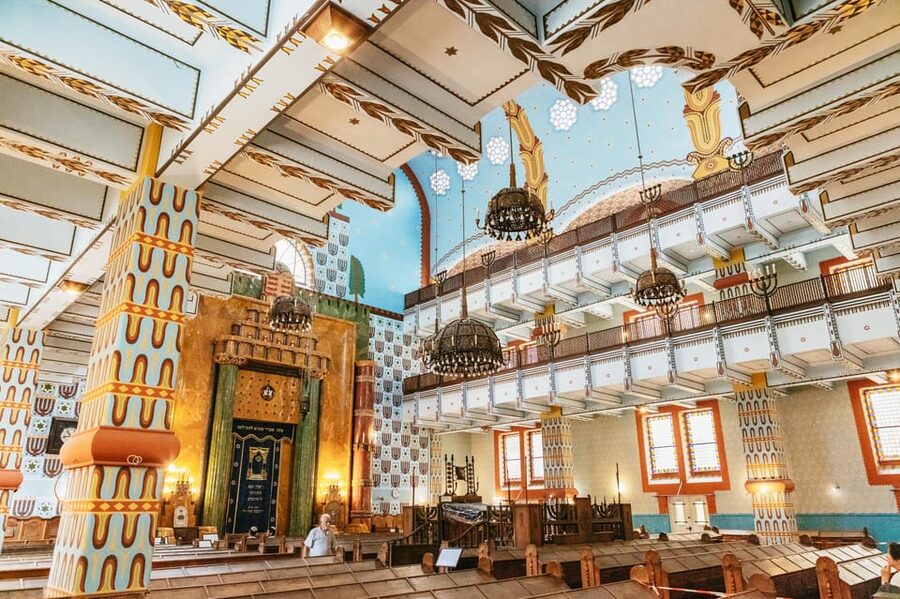
The tour begins in front of the Kempinski Hotel Corvinus Budapest, facing the Ferris wheel in Erzsébet Square. This is a central and easy meeting point, especially if you are using public transport. Deák Ferenc tér is the nearest major transit stop, served by the M1, M2, and M3 metro lines, along with several buses and trams.
I would arrive a few minutes early. The square is busy, and a central meeting point can still take a moment to locate when you are watching for a guide rather than a large tour sign. The group size is capped at 10, so the guide should be easy to identify once you are in the right place.
Wear comfortable shoes. The walk lasts about two hours and 15 minutes before the 15-minute café stop, and the tour runs in all weather. Budapest summers can be hot, while winter streets can be cold and damp. Bring water, and dress for the forecast rather than the season on the calendar.
More Jewish heritage walks in Budapest:
- Budapest Jewish Heritage Memorial Walking Tour & Synagogue Entry
★ 5.0 · 568 reviews - Budapest: Jewish Heritage Guided Tour with Synagogue Ticket
★ 4.8 · 533 reviews - Jewish Quarter of Budapest Walking Tour
★ 4.7 · 369 reviews
Understanding the Jewish Quarter before World War II
The walk takes place mainly in Budapest’s 7th district, often called Erzsébetváros or the Jewish Quarter. Jewish life has been part of this area for more than 200 years, and the guide begins by explaining how Jewish communities developed in Budapest and how Hungarian politics shaped their opportunities and restrictions.
That early context matters. If you only visit the synagogues and wartime memorials, it is easy to see the district solely through the lens of tragedy. A good guide shows you that Jewish Budapest was also a place of worship, trade, family life, education, food, and debate long before the Second World War.
Several people praised guides such as Barbara, Andrea, András, Noémi, Gábor, Judit, Maggie, Daniel, and Zsolt for making this background easy to follow. The strongest part of the guiding style appears to be the mix of dates and personal stories. One guide used a tablet to explain how Hungary’s borders and political position changed over time, which helped put Jewish migration and discrimination into a wider European setting.
This is useful if you know little about Hungarian history. The tour does not assume that you already understand the difference between Hungary’s Jewish religious traditions or the political pressures faced by Jewish residents. You can ask questions as the route unfolds, and the small group makes that much easier.
The Dohány, Rumbach, and Kazinczy synagogues
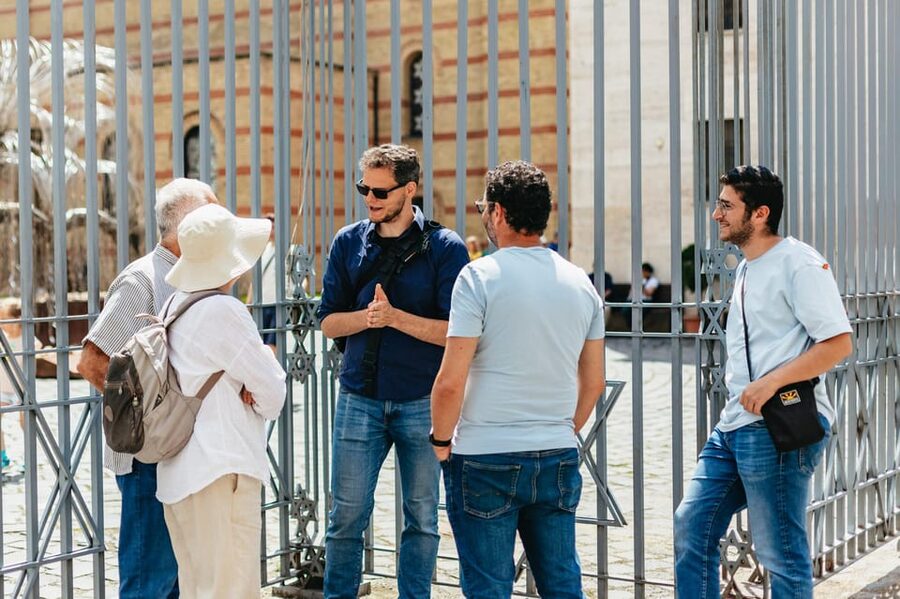
The three synagogues give the walk its visual backbone.
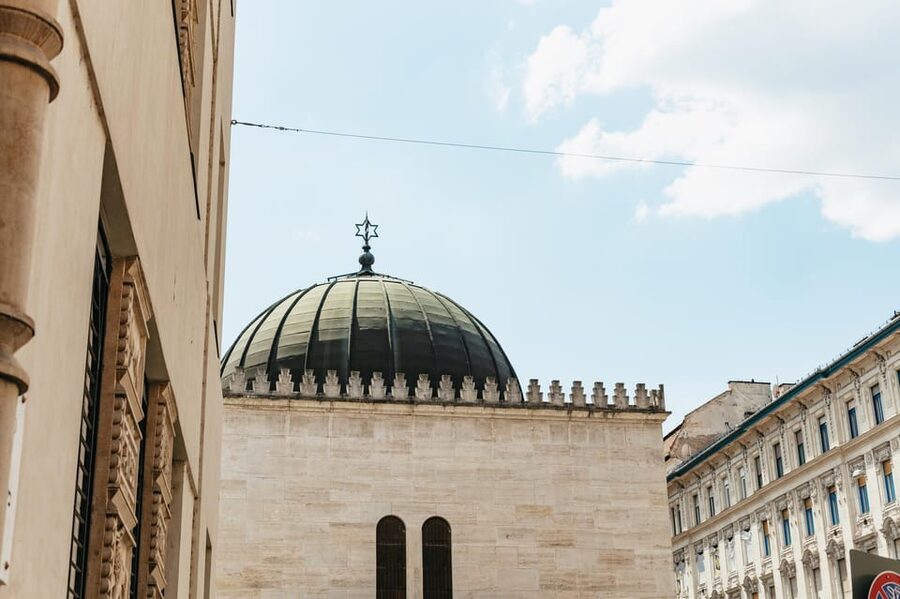
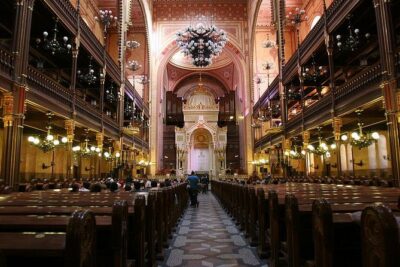
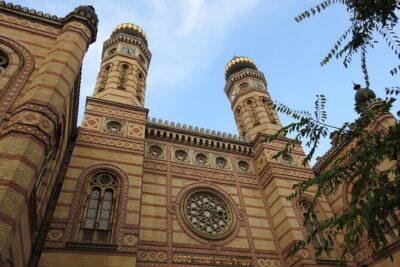
The Dohány Street Synagogue is the most famous and the grandest of the three. Its exterior is hard to miss, and the guide explains its place in Budapest’s Jewish community and its importance in European Jewish life. The building is often described as the largest synagogue in Europe, though the useful point for this tour is not simply its size. Its scale shows the confidence and importance of the Jewish community that built it.
The Rumbach Street Synagogue, built in 1872 by Viennese architect Otto Wagner, has a different character. The guide discusses its design and history from the outside as you walk through the area around Gozsdu Passage. The building helps explain that Budapest’s Jewish community was not uniform. Different religious groups used different synagogues and institutions.
The Kazinczy Street Orthodox Synagogue brings another part of that story into view. Seeing all three in one walk helps you compare their roles and architectural styles instead of treating the Jewish Quarter as a single historic site.
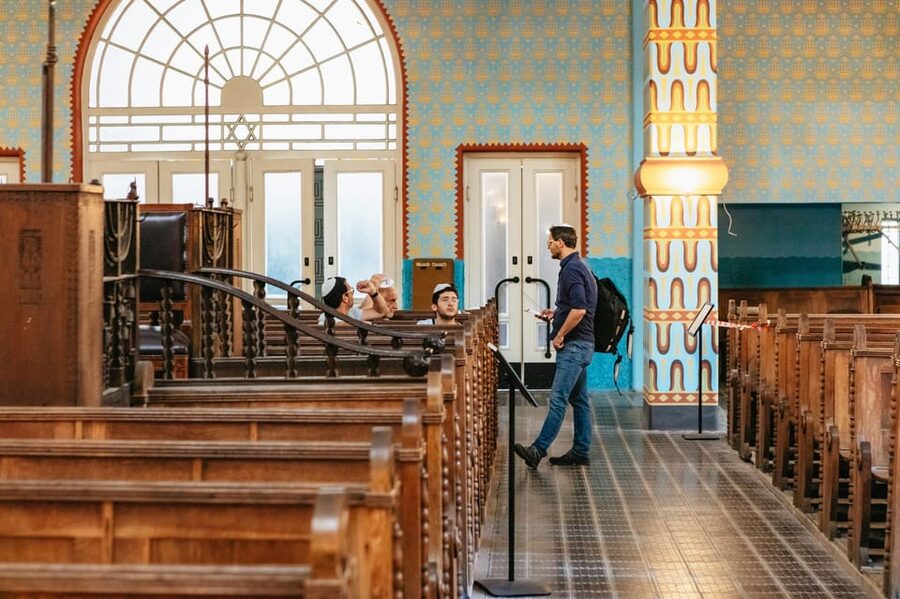
Be clear about the booking details: the visits to all three synagogues are exterior visits only. One past tour experience included an interior visit to the Rumbach synagogue, but that should not be expected on this version of the activity. The guide may point out entrances, details, and nearby institutions, but admission is not included.
If you want to enter the Dohány Street Synagogue or another synagogue, plan that separately. This walking tour works well as an introduction before an interior visit because you will already have the historical framework and will recognize the buildings.
Walking through the former ghetto
The most serious part of the tour comes as you walk through streets that formed part of the former Budapest ghetto. The ghetto existed for less than two months, yet the compressed time makes the story no less devastating. The guide points out a remaining section of the original ghetto wall and explains how the district was changed during the winter of 1944 and 1945.
This is not a light sightseeing walk. The guide addresses Hungarian participation in the persecution of Jews and does not soften the uncomfortable parts of the past. That honesty is one of the tour’s strongest features. You get a clearer picture when the story includes both the crimes committed and the choices people made under pressure.
The guide also explains the earlier restrictions placed on Jewish people, including pressure and incentives to convert. That helps you see persecution as a process rather than a single event that began with World War II. The route links political decisions with ordinary streets, which makes the history easier to grasp.
You should allow yourself some quiet time during this section. The tour keeps moving, but the subject deserves attention. It is best suited to people who want an honest historical account rather than a cheerful overview of Budapest attractions.
More history tours in Budapest:
- Budapest: Historic Cruise with Welcome Drink
★ 4.7 · 6,512 reviews - Budapest Historical Sightseeing – Free Walking Tour
★ 5.0 · 1,302 reviews - Buda Castle District Dark History, Legends and Vampire Night Tour
★ 4.5 · 1,240 reviews - BloodThirsty Hungary: Walking tour & Dark Historical Stories
★ 4.9 · 633 reviews
Raoul Wallenberg, Carl Lutz, and acts of courage
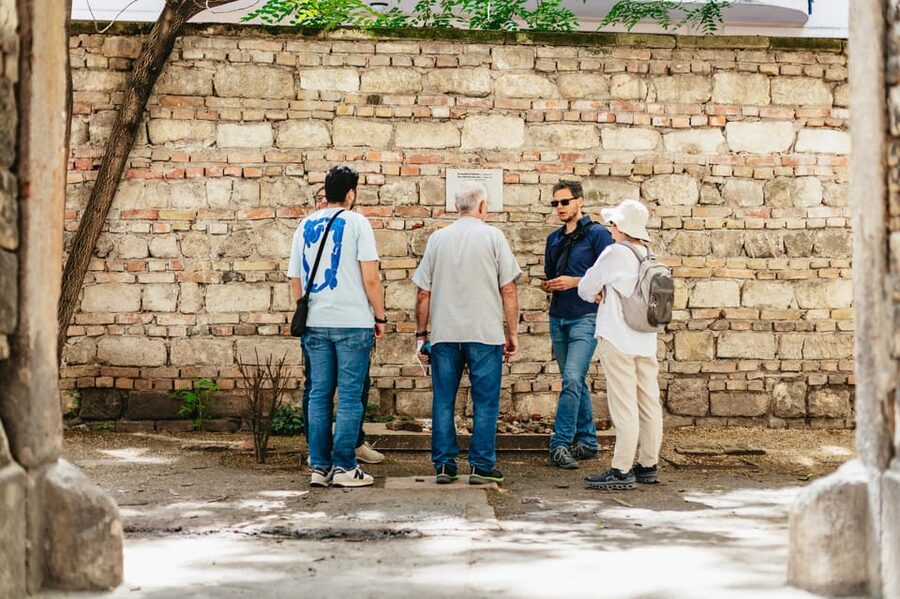
The tour also focuses on people who helped save Jewish lives. At memorials connected with Raoul Wallenberg and Carl Lutz, you hear how these men protected or assisted tens of thousands of Jewish people during the final months of the war.
These stops give the walk a needed human scale. Large numbers can become abstract. A memorial, a street corner, and a story about a specific person make the choices of that period easier to understand.
Wallenberg and Lutz are recognized among the Righteous Among the Nations, a title given to non-Jews who risked themselves to save Jewish people during the Holocaust. The guide places their actions within the larger story without pretending that individual courage erased the surrounding danger.
I especially like this balance. The tour does not present the Jewish Quarter only as a place of victimhood, nor does it turn rescue stories into feel-good decoration. It shows the fear, the political setting, and the moral choices together.
Gozsdu Passage, street art, and modern Budapest
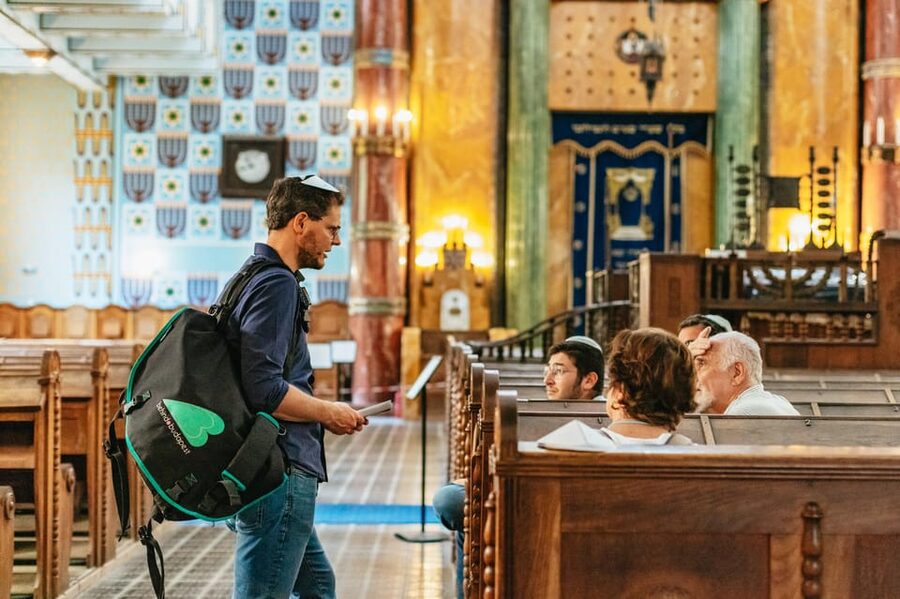
The district is also a living neighborhood. The route passes through or near Gozsdu Passage, a busy series of courtyards and walkways known for food, drinks, shops, and nightlife. You hear about Budapest’s famous ruin pubs and receive local pointers about the area’s evening scene.
That information is useful, but keep your expectations in check. This is not a dedicated nightlife tour, and you will not spend the evening sampling bars. Instead, the guide explains how a district shaped by Jewish institutions and wartime history became one of central Budapest’s main entertainment areas.
Street art adds another modern layer. The guide points out striking murals and other works around Erzsébetváros, including details that are easy to miss when you are focused only on grand buildings. I like this part because it prevents the quarter from becoming a museum set. People live, work, eat, worship, and go out here today.
The route also includes kosher restaurants and shops. These stops may be viewed from the street, but they help you understand that the local Jewish community is active rather than merely historical. The guide discusses current Jewish life as well as the past.
Coffee, soft drink, and flódni
After the main walking portion, you stop at a local café for a coffee or soft drink and a slice of flódni. This takes about 15 minutes.
Flódni is a traditional Jewish cake associated with Central European Jewish cooking. It is a small detail, but it gives the tour a welcome sensory finish. After hearing about religious customs, family life, and community traditions, you get to encounter one part of that culture through food.
Do not think of the café stop as a full meal. It is a short break, not a substitute for lunch. If you book a morning tour, eat beforehand if you need something substantial. The included drink and cake are best understood as a thoughtful extra and a chance to sit down, ask final questions, and compare what you have seen.
The guides and the value of a small group
The guide makes a major difference on a history walk. The experience has been led by several historians and local guides, including Noémi, Gábor, András, Daniel, Maggie, Gabriel, Judit, Zsolt, Barbara, and Andrea. Their styles vary, but the strongest feedback points to the same qualities: clear explanations, enthusiasm, humor when appropriate, and an ability to answer questions.
Several guides were praised for using personal or family stories. That can make difficult history feel less distant, though the tour remains focused on Budapest and Hungary rather than one guide’s biography.
The group limit of 10 is one of the best practical features. You can usually hear the explanation at a street corner, and the guide can adjust the pace or answer questions without holding up a large crowd. One small group even had only three participants, which allowed a more conversational walk.
The trade-off is that the tour covers a lot in a short time. One four-star assessment found the material a little less structured than expected, possibly because synagogue opening information was unclear that day. Another wished for more time to explore the history and ask questions. You should expect a brisk but manageable introduction, not an academic seminar.
Is $63 a fair price?
At $63 per person, this is not the cheapest walking tour in Budapest. The price makes more sense if you value a historian guide, a small group, and a focused subject. You are paying for interpretation and context rather than entry tickets or a long list of attractions.
The price includes the guide, the walking tour, and coffee or a soft drink with flódni. It does not include entry to any synagogue. If you want interior visits, add those costs and time to your Budapest budget.
I think the tour offers good value for several types of visitors. It can orient you to the Jewish Quarter early in your stay, help you decide which synagogue interiors to visit, and give you enough background to understand the memorials and streets you pass later on your own.
It is less suitable if you want a general Budapest sightseeing tour, a museum visit, or a leisurely route with little walking. It is also not the right choice if you only want synagogue architecture and have no interest in political or wartime history.
The activity offers free cancellation up to 24 hours ahead and allows you to reserve without paying immediately, which is useful when you are still adjusting your Budapest plans.
Who should book this walking tour?
I would recommend it to you if you want:
- A serious introduction to Jewish life in Budapest
- Clear explanations of Hungarian history and World War II
- A small group and plenty of chances to ask questions
- A walk that includes modern street art, nightlife, and food culture
- A thoughtful first visit to the Jewish Quarter before exploring it alone
You may want another option if your priority is entering the synagogues, avoiding difficult historical subjects, or limiting your walking. Also remember that the tour runs in bad weather, so choose clothing and footwear with care.
Should you book it?
Book this tour if you want the Jewish Quarter explained rather than simply photographed. The best parts are the honest discussion of Hungary’s past, the memorials to Wallenberg and Lutz, the comparison of three synagogue exteriors, and the way the guide links Jewish history with the district’s present-day cafés, street art, shops, and nightlife.
Skip it if synagogue interiors are essential to your visit or if you prefer a broad city tour. For most visitors interested in Budapest’s Jewish heritage, the small group and strong guides make $63 a reasonable price for a focused, thoughtful walk.
FAQ
How long does the Budapest Jewish history walking tour last?
The tour lasts about 2.5 hours, including roughly 2 hours and 15 minutes of guided sightseeing and a 15-minute coffee and dessert stop.
Where does the tour begin?
It begins in front of the Kempinski Hotel Corvinus Budapest, facing the Ferris wheel on Erzsébet Square.
How do I reach the meeting point?
You can use the M1, M2, or M3 metro lines, as well as several buses and trams. Get off at Deák Ferenc tér.
What language is the tour conducted in?
The live tour guide speaks English.
How large is the tour group?
The group is limited to 10 participants.
Do I enter the three synagogues?
No. The three synagogue visits are exterior visits only, and synagogue admission is not included.
Which synagogues do I see?
You see the exteriors of the Kazinczy Street Orthodox Synagogue, the Rumbach Street Synagogue, and the Dohány Street Synagogue.
Is food included?
Yes. The tour includes a coffee or soft drink and a local Jewish cake called flódni at a café.
Does the tour run in bad weather?
Yes. The tour runs in all weather conditions, so dress appropriately.
Can I cancel the booking?
You can cancel up to 24 hours in advance for a full refund. You can also reserve now and pay later.
More Walking Tours in Budapest
- Budapest: Buda Castle Walk with Saint Stephen’s Hall
★ 4.5 · 3,012 reviews - Big Bus Budapest Hop-On Hop-Off Bus and Walking Tour
★ 3.5 · 2,206 reviews - Budapest: Buda Castle District Walking Tour
★ 4.6 · 2,108 reviews - Budapest City Landmarks Walking Tour in 2 Hours
★ 5.0 · 2,048 reviews
Recently added around Budapest
- Budapest: Private Walking Tour with a Local Guide★ 3.6 · 6 reviews
- From Budapest: Guided Tour of Eger with Wine Tasting★ 4.5 · 6 reviews
- Budapest: City Bike Tour with Coffee Stop★ 5.0 · 37 reviews
- Budapest: Danube River Views Bike Ride★ 4.8 · 23 reviews
- Budapest: Vacation Photographer to collect great memories★ 5.0 · 49 reviews
- Walk to recent and aged spiritual sanctuaries near Budapest★ 5.0 · 5 reviews
- Trash Art Museum: Hungary’s First Scrap Metal Exhibition★ 4.3 · 72 reviews
- Budapest: Multilingual Highlights Tour★ 4.8 · 89 reviews
Jewish Heritage Tours, compared.
Budapest Jewish Heritage Memorial Walking Tour & Synagogue Entry
Read our review →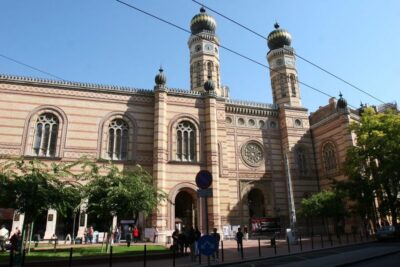
Jewish Heritage Guided Tour with Synagogue Ticket
Read our review →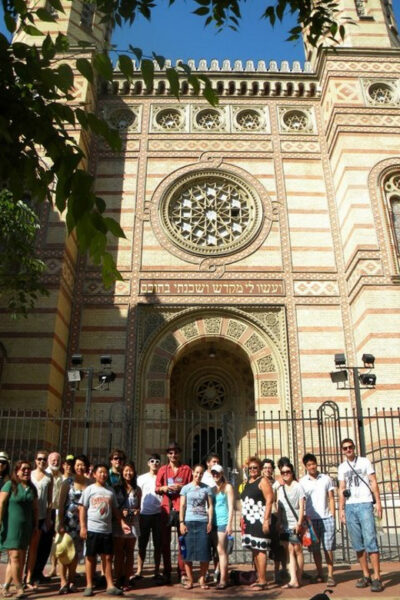
Past and Present of Budapest Jewish District Tour
Read our review →
Budapest Dohany Synagogue & Hungarian Jewish Museum & free extras
Read our review →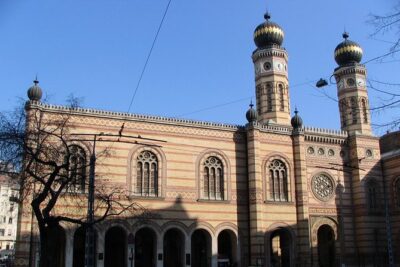
Budapest Dohany, Heroes’, Rumbach synagogues & Jewish Ghetto Tour
Read our review →Browse the lists this tour appears in