
Reviewed · MUSEUMS
Budapest: Mika Tivadar Secret Museum Entry Ticket
Budapest’s Mika Tivadar Secret Museum packs hotels, cabarets, cinemas, wartime stories, and the old Jewish quarter into a small space on Kazinczy Street. The setting is part of the point: you are visiting a local heritage hotel whose walls connect to some of the city’s most curious stories.
I like the audio guide in eight languages, which lets you move at your own pace, and I like the unusual link between museum and cocktail bar. You can take in a chapter, look at the displays, then sit down for a drink in the same building.
The main drawback is size. The museum covers only 140 square meters, and there is no in-person guide. If you want a large national museum or a polished, hour-by-hour tour, this will feel brief and self-directed.
Key points at a glance
- A 140-square-meter time capsule: Follow Budapest from the late 19th century through the years between the two world wars.
- A hotel with several past lives: The site connects to a hotel, Europe’s famous Blue Cat cabaret, Hungary’s first cinema, and a former copper shop.
- Eight-language audio access: Scan the QR code and listen on your own charged smartphone using free Wi-Fi.
- A cocktail bar inside the experience: Pair the museum with a drink, brunch, or meal at the on-site restaurant and bar.
- Stories that cross borders: The displays connect Hungarian events with British, German, Serbian, Mexican, and other international figures.
- A low-cost central stop: At about $5 per person, it works well as a short cultural visit between larger Budapest sights.
Kazinczy Street is part of the exhibit
The Mika Tivadar Secret Museum does not treat its building as an isolated box. It uses the building and nearby properties to explain how Kazinczy Street changed over time.
That matters because this part of Budapest is now known for nightlife, ruin bars, restaurants, and the party district. The museum gives you a different way to read the street. Behind the modern signs and busy evening venues are stories about hotels, baths, entertainment, trade, religion, war, and migration.
The experience focuses on the period from the late 19th century through the years between the two world wars. That is a useful window into a city changing quickly, with new forms of leisure, transport, business, and popular culture.
I especially like the idea of seeing the surrounding buildings as part of the story. You are not only looking at objects in display cases. You are being shown how one address could pass through several identities as Budapest changed around it.
The museum is described as the first Hungarian hotel museum and as a local heritage hotel. Those labels are useful for setting expectations. This is not a grand royal collection. It is a focused place where the history of one property opens onto the history of a neighborhood.
More museums in Budapest:
- Budapest: Cat Museum Budapest Entry Ticket
★ 4.4 · 2,210 reviews - Budapest: Light Art Museum – Immersive New Media Experience
★ 3.9 · 1,269 reviews - Budapest: Budapest Retro Interactive Museum Ticket
★ 4.4 · 373 reviews
Entering the 140-square-meter museum
You begin at the Hotel Mika Downtown reception. Staff greet you, provide a printed flyer, and explain briefly what you can find inside. There is no museum guide or tour guide included, so the experience is yours to organize.
That self-guided format has a clear advantage. You can spend more time with a photograph or story that catches your attention, then move on when you are ready. You are not tied to a group or forced to keep up with a set commentary.
The trade-off is that you need to read and listen actively. The museum is small, but it contains a large amount of information. Give yourself time to scan the QR code, connect to the free Wi-Fi, and get the audio working before you begin.
A charged smartphone is essential. The audio chapters are designed for your own device, and the supplied information does not include a loaner audio player. Bring headphones if you prefer a quieter experience, although that is not stated as a requirement.
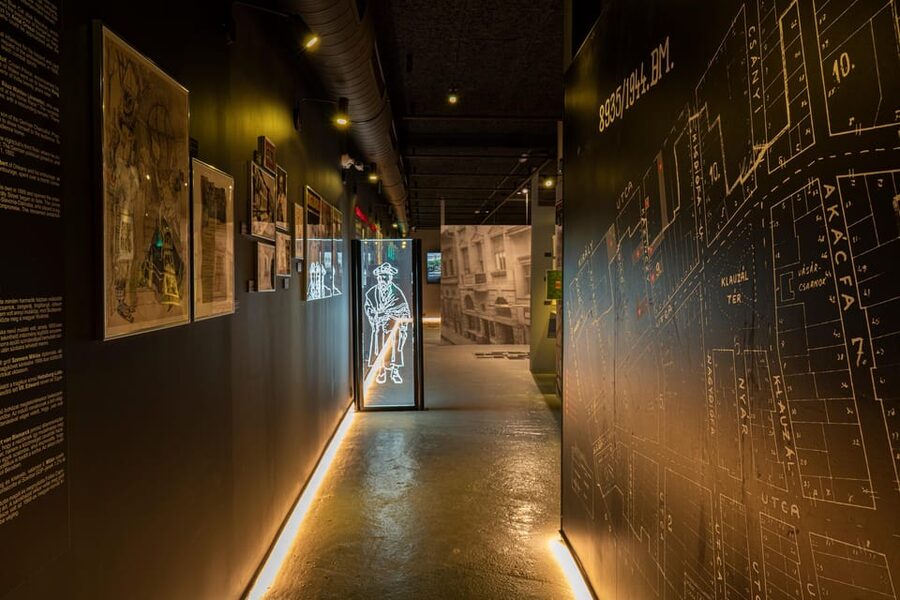
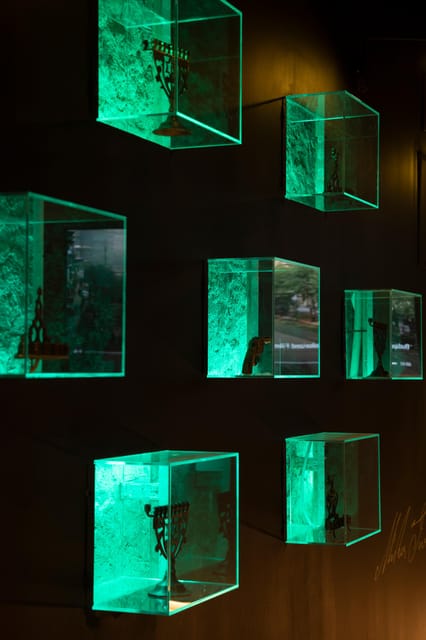
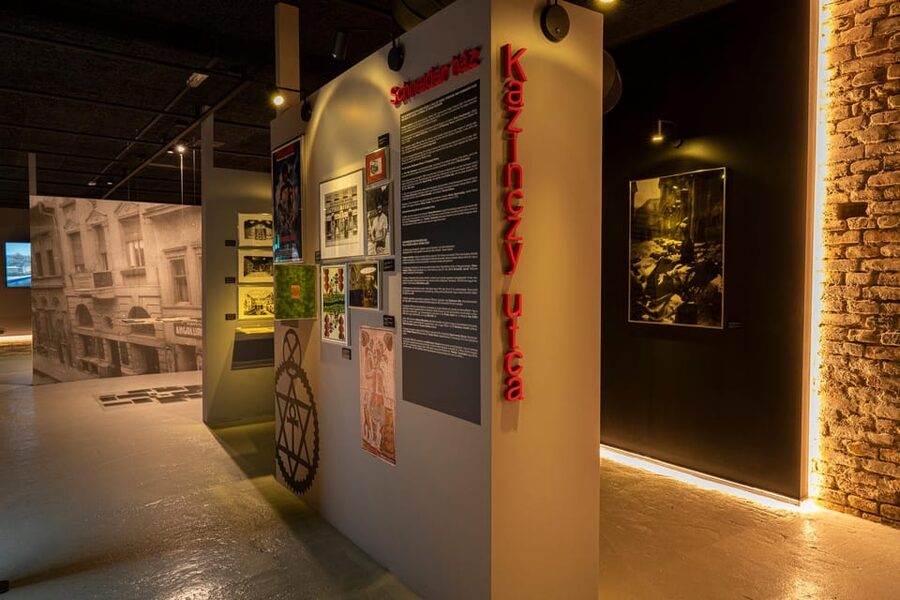
You can expect photographs, written explanations, antique objects, voiceovers, and voice effects. Background music helps set the period while you read and listen. That sound design is a small touch, but it makes the compact rooms feel less like a plain display area and more like a guided trip into another time.
Following the building through its past lives
The strongest part of the museum is the way it layers different uses of the same place. The building has links to hotel life, entertainment, film, business, and wartime Budapest.
The Blue Cat, described as Europe’s most famous cabaret, once operated here. That detail gives the address a lively past, but the museum does not stop at nightlife. Hungary’s first cinema also opened on this spot, and Michael Curtiz began his film career here before later directing Casablanca.
That connection is especially useful for film fans, but you do not need to know Curtiz’s work to enjoy it. It shows how a modest city address could connect to international popular culture.
The museum also explores the old Budapest brothel scene. This is one of the more unusual subjects in the collection, and it helps explain the less polished side of the district’s past. The material is not simply a list of famous names. It looks at the types of business and entertainment that shaped the neighborhood.
Another surprising thread links Sylvester Stallone and Arnold Schwarzenegger with a tiny house on Kazinczy Street. The supplied details do not explain the entire connection in advance, which is part of the fun. You discover how a very small local site can end up tied to much larger cultural figures.
The museum also refers to the Hungarian first steam bath, once located opposite the building, and explains how that site later became a hotel. Details like this help you look beyond the museum entrance and notice that the surrounding streets are part of the story too.
From famous names to ordinary communities
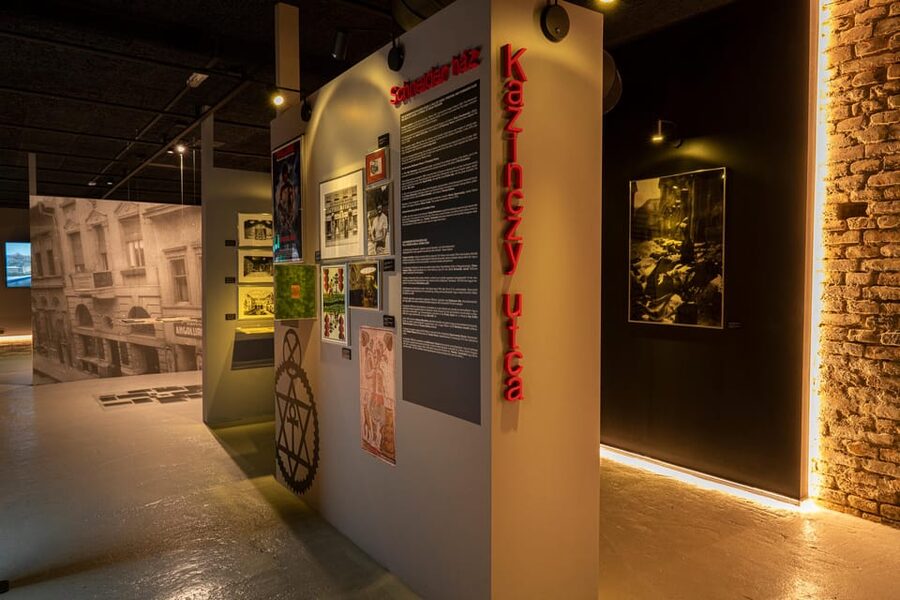
The museum brings in well-known figures, including King Edward VII of the United Kingdom, German statesman Otto von Bismarck, and Milan I of Serbia. These names suggest the international reach of the hotel and its social world.
But the collection also pays attention to the many ethnic communities living in Hungary. That wider view is important. Budapest’s past was not shaped by one group alone, and the museum tries to show how local life connected to the complicated politics and cultures of Europe.
For an international visitor, this approach can make the displays easier to connect with. The stories are not presented only as a national timeline. They also touch on movement between countries, shifting borders, political influence, business, and public entertainment.
One especially unusual thread explains how veterans of the 1848 to 1849 Hungarian Revolution played a role in the Mexican Civil War. It is the kind of unexpected international link that makes a short museum visit worthwhile. You come for a building on Kazinczy Street, then find yourself following people and events far beyond Budapest.
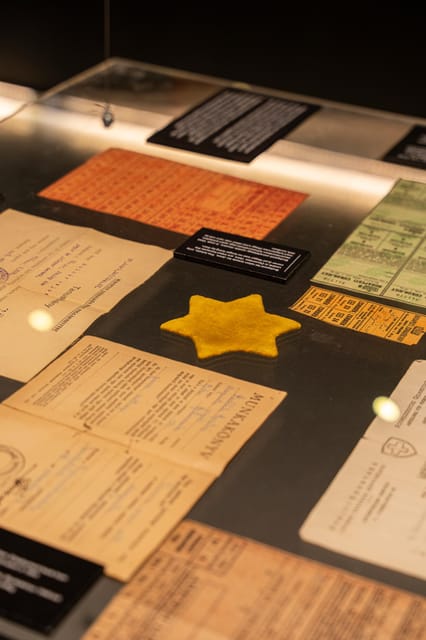
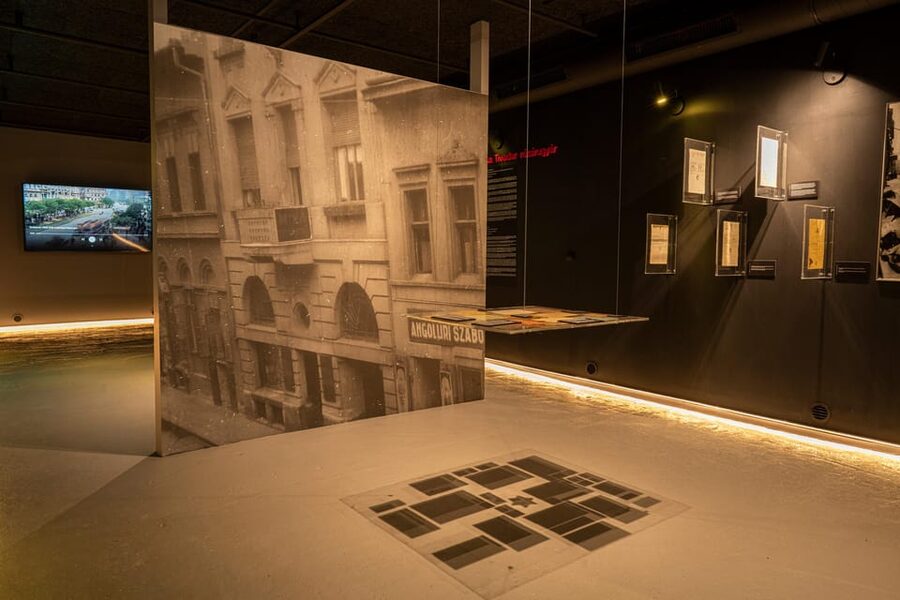
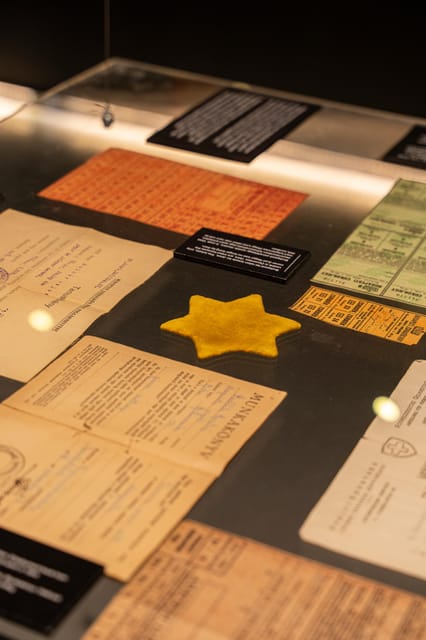
The museum also shows how the property looked during World War II and discusses the Budapest Ghetto. That material adds weight to the lighter stories about cabaret, cinema, cocktails, and famous visitors. The result is not a single mood. You will find entertainment, trade, politics, minority histories, wartime memory, and everyday urban change in the same compact visit.
A few more Budapest half-days to weigh up
- Budapest: City Highlights Cruise with Welcome Drink
★ 4.6 · 35,610 reviews - Budapest: Unlimited Prosecco, Beer and Aperol Spritz Cruise
★ 4.8 · 25,310 reviews - Budapest: Széchenyi Spa Day Ticket with Optional Upgrades
★ 4.3 · 23,911 reviews - Budapest: Nighttime or Daytime Sightseeing Cruise
★ 4.2 · 21,062 reviews
Making sense of the audio guide
The audio guide is one of the best practical features. It is available in eight languages and runs through your own smartphone. You scan the QR code, choose a chapter, and listen while viewing the related photographs, objects, or written material.
This setup suits independent visitors. You can pause, replay, or skip ahead without affecting anyone else. It also avoids the common problem of joining a tour in a language that is not your first choice.
The museum’s voice effects and background tunes add atmosphere, but you should not expect a long, theatrical performance. The information is delivered in short sections that work well with the museum’s small size.
Plan on at least the advertised 30 minutes. If you read everything and listen to each chapter, you may want longer. One account says an hour is possible, and the museum allows you to stay rather than pushing you out after a fixed half-hour slot. The sensible plan is to leave room in your schedule, especially if you want a drink afterward.
Because the guide is on your phone, battery life matters. I would open the audio page before getting fully involved with the displays and make sure your device is charged. Free Wi-Fi is available, which helps, but a dead battery will still end the audio portion of the visit.
The cocktail bar changes the pace
The on-site cocktail bar and restaurant are not just an afterthought. They are part of what makes this place different from a standard small museum.
The bar occupies a space that was once a copper shop during World War II. That is a striking change of purpose. A room connected to wartime trade now serves cocktails and food, while the museum explains how the property has changed over the decades.
You can have a drink while exploring the museum area, or plan a meal and museum visit together. The available information specifically mentions brunch, cocktails, and a restaurant. It does not give a full menu or guarantee that every item is available at all hours, so check on the day if food is important to your plan.
I would treat the bar as an optional bonus rather than the main reason to book. If you only want museum content, the $5 entry price remains attractive on its own. If you enjoy historic interiors and prefer a cultural stop that ends with a drink, the combination gives the visit more character.
The bar also solves one problem common to short museums: the visit does not have to end the moment you reach the final display. You can continue the conversation over a cocktail or meal, though the restaurant and museum experience should still be understood as separate parts of your stop.
Is $5 good value?
At about $5 per person, this is one of the easier Budapest admissions to justify. You get access to 140 square meters of displays, a printed flyer, audio content in eight languages, voice effects, free Wi-Fi, and the chance to use the on-site bar and restaurant.
The value comes from the subject matter as much as the size. The museum covers hotels, cabaret, cinema, the old brothel district, the Budapest Ghetto, the former steam bath, international political connections, and the building’s wartime appearance. That is a lot of ground for a short stop.
Still, low price does not mean it suits everyone. You should not book this expecting a major museum with large collections, formal rooms, or a live expert explaining every object. It is compact and information-heavy. The experience rewards curiosity more than spectacle.
For a first visit to Budapest, I would place it after the major landmarks and larger museums, not instead of them. For a return visit, or for anyone already exploring District 7, it makes an excellent addition to a walk through Kazinczy Street.
Who will enjoy this stop most?
I would recommend the Mika Tivadar Secret Museum to you if you like:
- Urban history: You enjoy learning how one street and building changed over time.
- Film and entertainment: The Blue Cat cabaret and Michael Curtiz connection add strong cultural hooks.
- Unusual social history: The brothel district, steam bath, hotel, and cinema stories go beyond standard sightseeing.
- Independent visits: You prefer your own phone and your own pace instead of a scheduled guide.
- Short cultural breaks: Thirty minutes to an hour fits neatly between meals, nightlife, or other central Budapest sights.
- International connections: You like seeing Hungarian events linked with people and places across Europe and beyond.
You may want to skip it if you need step-free access. The experience is listed as unsuitable for wheelchair users. You may also be disappointed if you want a large collection or a conventional guided tour.
Practical details before you go
The meeting point is the Hotel Mika Downtown reception. The staff provide a short explanation and a printed flyer, but no museum guide or tour guide is included.
Bring a charged smartphone. Free Wi-Fi is available, and the audio guide can be accessed in eight languages through your phone. The experience is listed as lasting 30 minutes, though you can spend longer if you listen carefully and take your time.
The museum is in central Budapest, in District 7, making it easy to combine with other stops in the area. The cocktail bar and restaurant are on site, but admission does not automatically include food or drinks.
You can cancel up to 24 hours before the activity for a full refund, and you can reserve now and pay later. Those flexible terms are useful if your Budapest plans are still moving around.
Should you book the Mika Tivadar Secret Museum?
Book it if you want a low-cost, unusual look at Budapest through one address. The best reasons are the strong local setting, the eight-language audio guide, the stories about cinema and cabaret, and the chance to connect the museum with a cocktail bar and restaurant.
I would not make it your only history stop in Budapest. It is too small for that, and the lack of a live guide means you must bring your own attention. But at $5, it does not need to replace a larger museum. Use it as a focused District 7 stop, allow 30 minutes or more, and stay for a drink if the setting appeals to you.
FAQ
How long does the Mika Tivadar Secret Museum visit take?
The stated duration is 30 minutes. You can stay longer, and allowing up to an hour gives you more time to listen to the audio chapters and read the displays.
Is a tour guide included?
No. Staff greet you at Hotel Mika Downtown reception, provide a museum flyer, and briefly explain what you can discover. The museum is self-guided.
How does the audio guide work?
You use your own charged smartphone to access the audio chapters by scanning a QR code. Free Wi-Fi is available, and the audio guide is offered in eight languages.
What does admission cost?
The listed price is $5 per person. Food and drinks at the on-site restaurant and cocktail bar are not included.
Is the museum wheelchair accessible?
The activity is listed as unsuitable for wheelchair users.
Can I cancel my booking?
Yes. You can cancel up to 24 hours in advance for a full refund. You can also reserve now and pay later.
Recently added around Budapest
- Budapest: Private Walking Tour with a Local Guide★ 3.6 · 6 reviews
- From Budapest: Guided Tour of Eger with Wine Tasting★ 4.5 · 6 reviews
- Budapest: City Bike Tour with Coffee Stop★ 5.0 · 37 reviews
- Budapest: Danube River Views Bike Ride★ 4.8 · 23 reviews
- Walk to recent and aged spiritual sanctuaries near Budapest★ 5.0 · 5 reviews
- Budapest: Vacation Photographer to collect great memories★ 5.0 · 49 reviews
- Trash Art Museum: Hungary’s First Scrap Metal Exhibition★ 4.3 · 72 reviews
- Budapest: Multilingual Highlights Tour★ 4.8 · 89 reviews
Museums, compared.
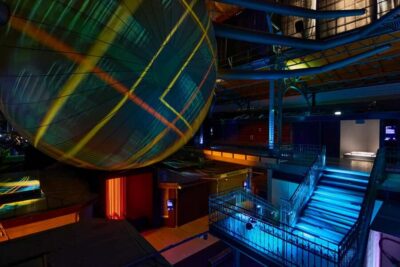
Light Art Museum – Immersive New Media Experience
Read our review →


Budapest Card: Free Public Transport, Spa & Museums with Delivery
Read our review →
Budapest Dohany Synagogue & Hungarian Jewish Museum & free extras
Read our review →
Travelling Galaxy Star Wars Interactive Exhibition
Read our review →Browse the lists this tour appears in