
Reviewed · HISTORICAL TOURS
Historical and Cultural Guided Tour of Budapest
Budapest’s story is easier to grasp when you see its monuments in a sensible order. This private tour links Heroes’ Square, the Jewish Quarter, Parliament, and Buda Castle in one long day, while your guide explains how Hungarian kings, communist rule, the 1956 revolution, Jewish Budapest, and modern city life fit together.
I like the freedom to shape the day around your group, and I like having a private guide rather than being tied to a large coach schedule. Guides György and Rashad Salamon are praised for clear English, strong local knowledge, and adjusting the pace or emphasis to suit their guests.
The main drawback is simple: seven hours is a lot of ground, and the day includes plenty of walking. Entry fees, meals, and transportation are not included, so you should budget beyond the $396.52 group price.
Key points to know before booking
- A private guide for up to 15 people: The price covers the group, not each person, making it more attractive for families and friends traveling together.
- A serious history route: You move from Hungary’s medieval roots to its Jewish heritage, communist period, 1956 revolution, and present-day city.
- Public sights, paid interiors: Most stops are viewed from outside or on foot. Synagogue and Parliament entry fees are extra.
- Flexible planning: The guide can modify the schedule and spend more time on subjects that interest you.
- Hotel pickup is offered: The start time is 9:00 am, with the activity ending back at the meeting point.
- Comfortable shoes matter: One guide-led day covers parks, boulevards, riverfront memorials, Castle Hill, and several stairs or uphill sections.
What this Budapest tour is really designed to do
This is not simply a ride past famous buildings. It is a city orientation day with a strong historical thread. You begin in City Park, continue down Andrássy Avenue, pass through the Jewish Quarter and central Pest, then cross the Danube toward the medieval Buda Castle district.
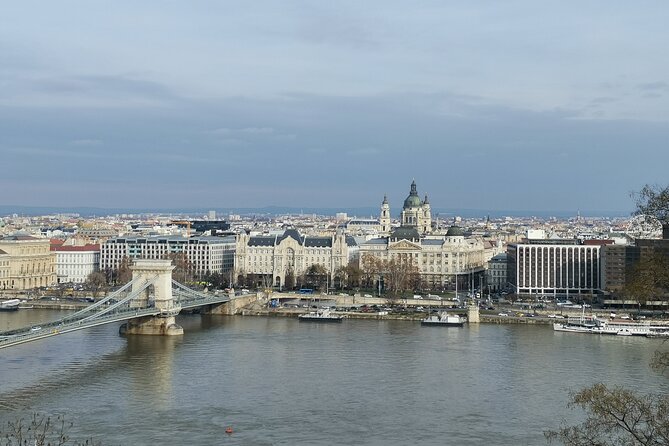
That order helps you understand Budapest as two linked cities. Pest is flatter, more urban, and filled with grand avenues, government buildings, cafés, and Jewish landmarks. Buda rises across the river, with castle walls and lookout terraces that give you a fine view back toward Pest.
The guide is the key part of the experience. György Rashad Salamon is described as friendly, attentive, and able to bring the city’s past into focus. Rashad is also praised for changing the emphasis of the day when a group has a particular interest. That matters here because the route touches subjects that could each fill a full museum visit.
You should tell the guide early if you want more time for Jewish history, the communist period, architecture, religious sites, or city views. The tour has a planned route, but it is not presented as a rigid script.
More history tours in Budapest:
- Budapest: Historic Cruise with Welcome Drink
★ 4.7 · 6,512 reviews - Budapest Historical Sightseeing – Free Walking Tour
★ 5.0 · 1,302 reviews - Buda Castle District Dark History, Legends and Vampire Night Tour
★ 4.5 · 1,240 reviews
Heroes’ Square and City Park: Hungary’s national story
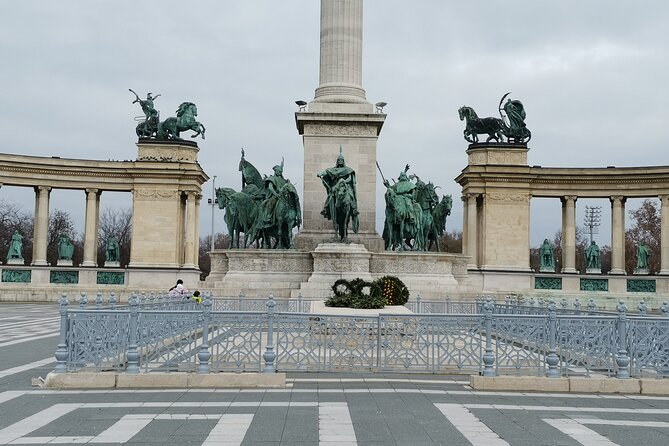
Heroes’ Square is a strong opening because its statues introduce important figures from Hungarian history. It is a broad ceremonial space, built to make national history feel grand and visible. Your guide can help you understand who the figures are and why the monument matters, rather than leaving you to decode a row of statues on your own.
Allow about 25 minutes here. Admission is free, and the stop works well for photographs, though it is more about orientation and symbolism than a long visit inside a museum.
You then walk through City Park for about 45 minutes. The park is one of the world’s first public parks, and it gives the morning a welcome change of pace after the open square. You will also pass the largest spa in Europe during the walk.
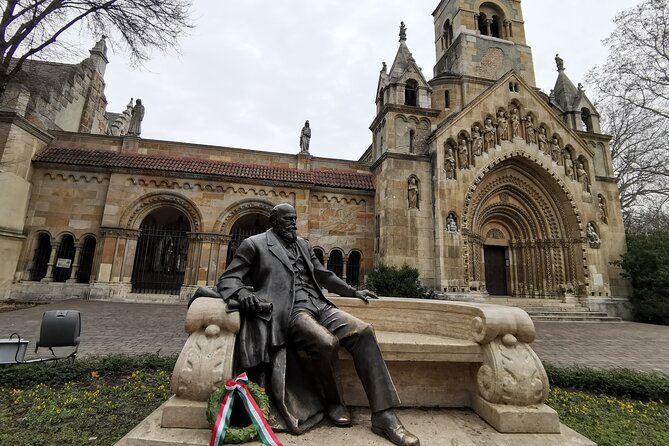
The plan includes Vajdahunyad Castle, a striking building that looks medieval but is actually an architectural display of Hungarian styles from different centuries. The stop is short, about 15 minutes, so think of it as an exterior visit and a history lesson rather than a full castle tour.
Andrássy Avenue and the Opera House
Andrássy Avenue is Budapest’s grand ceremonial boulevard. Neo-Renaissance mansions and townhouses line the route, along with high-end shops, restaurants, and coffee houses. It is often compared with the Champs-Élysées, though the experience here is more about architecture and the changing character of the city than shopping.
The walk or drive along the avenue takes about 30 minutes. Your guide can point out how the boulevard connects the city center with Heroes’ Square and why it is one of Budapest’s most important streets.
A 20-minute stop follows at the Hungarian State Opera House. The building is one of the avenue’s major sights, and the tour gives you a chance to appreciate its exterior and hear about its place in Budapest’s cultural life.
The schedule does not include an Opera House admission ticket. If you want a full interior visit, check the plan with your guide before booking extra activities on the same day. This tour already has a packed route.
The Jewish Quarter, the former ghetto, and modern Budapest
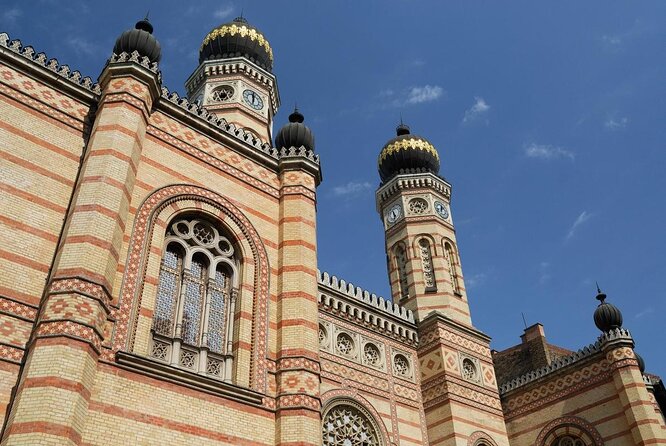
The Jewish Quarter receives about an hour, making it one of the more substantial sections of the day. This area was once Budapest’s ghetto during the Holocaust, and the route includes the largest synagogue in Europe, the Holocaust Memorial, ruin bars, and other local sights.
This is where the tour’s historical and present-day themes meet. You can learn about Jewish Budapest and the destruction of the community, then see how the district has become one of the city’s best-known areas for nightlife and informal restaurants.
The large synagogue and other attractions may require paid admission, and those costs are not included. Since the schedule gives you about an hour, ask the guide what can realistically be visited inside. You may prefer a focused explanation and exterior views, or you may want to arrange a synagogue visit and adjust the rest of the route.
I consider this section especially valuable for first-time visitors because it gives context that can be lost when you simply photograph the ornate façades. It also calls for a respectful pace. This is not only a food and nightlife district. It carries some of Budapest’s most painful history.
A few more Budapest half-days to weigh up
- Budapest: City Highlights Cruise with Welcome Drink
★ 4.6 · 35,610 reviews - Budapest: Unlimited Prosecco, Beer and Aperol Spritz Cruise
★ 4.8 · 25,310 reviews - Budapest: Széchenyi Spa Day Ticket with Optional Upgrades
★ 4.3 · 23,911 reviews - Budapest: Nighttime or Daytime Sightseeing Cruise
★ 4.2 · 21,062 reviews
St. Stephen’s Basilica and the Holy Right Hand
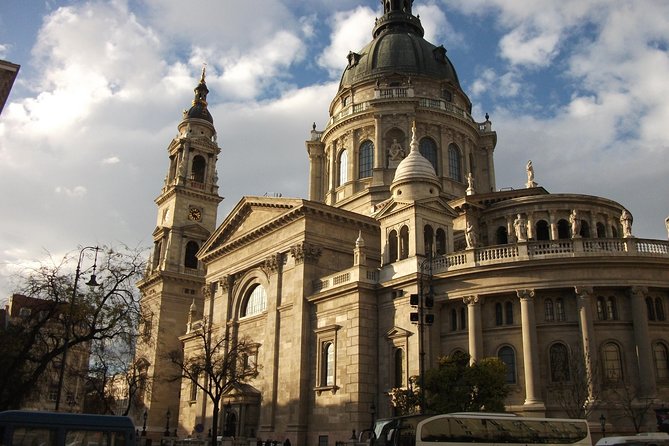
St. Stephen’s Basilica is the largest church in Budapest and is dedicated to Hungary’s first king. The church also houses the Holy Right Hand, the mummified hand of St. Stephen, an important relic in Hungarian history.
The planned stop lasts about 20 minutes and admission is listed as free. That is enough for a concise visit and explanation, but not necessarily enough for a slow architectural inspection or extended time with the relic. If religious history matters to you, mention it to the guide so the stop can receive the attention it deserves.
The basilica also helps explain the importance of St. Stephen in Hungarian identity. It is not just another large church on a sightseeing route.
Parliament and the Shoes on the Danube Bank
The Hungarian Parliament Building is one of Budapest’s most recognizable sights. The tour takes you around the exterior for about 30 minutes and uses the building as a setting for discussing communist Hungary, dictatorship, and the 1956 revolution.
This is an important distinction: an outside visit is included in the route, but a Parliament interior tour is not. If you want to go inside, you must book that ticket online before the day and tell the guide the start time. The schedule can then be changed to fit it in.
That advance planning matters because the Parliament visit could otherwise collide with the rest of the day. Entry is extra, and the tour does not promise an interior ticket.
From Parliament, the route continues to the Shoes on the Danube Bank memorial. The stop is brief, about five minutes, but the subject deserves your attention. The shoes commemorate people who were killed at the river during the Holocaust.
This is a small memorial with a heavy story. The short time allocation reflects the physical size of the site, not the importance of the history. Your guide’s explanation is particularly useful here because the memorial can be easy to pass without understanding what it represents.
Crossing the Chain Bridge to Buda Castle
After the Pest sights, you cross the historic Chain Bridge and head to Buda Castle. The bridge links the two sides of the city and makes the change in character immediately clear.
Buda Castle receives about two hours, the longest stop of the day. It was the residence of Hungarian kings from the 14th century, and the castle district gives you a chance to explore Budapest’s medieval side after a morning of grand boulevards and modern city streets.
The listed visit is free, but that does not mean every museum or interior in the district is included. Paid attractions can add up, so decide in advance if you mainly want the outdoor castle area and views or plan to enter specific buildings.
The castle section is also where the physical demands of the tour become most noticeable. You have already walked through City Park, the Jewish Quarter, central Pest, and the riverfront. Castle Hill may involve uphill walking, and a moderate level of fitness is advised.
Fisherman’s Bastion and the best city views
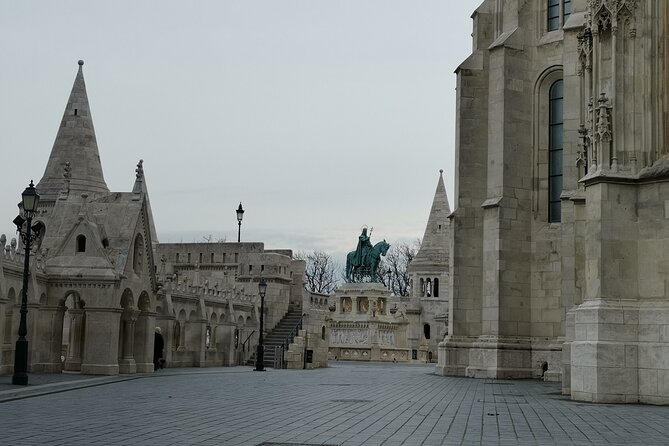
Fisherman’s Bastion is the final listed stop, with about 15 minutes for photographs and panoramic views. From its terraces, you can look across the Danube toward Parliament and the Pest side of the city.
The stop is short, but it provides a satisfying visual finish. You have spent the day hearing how Budapest developed, and here you can see the river, bridges, Parliament, and city districts in one sweep.
If photography is a priority, tell the guide. The timing may be adjusted, although the full route already contains many stops. The view is also a good reason to keep your phone or camera ready throughout the day.
Price, group size, and what you really receive
The cost is $396.52 per group of up to 15 people. For one or two people, that is a substantial private-tour price. For a family or group of friends, the per-person cost can become reasonable, particularly if you value a private guide and a flexible schedule.
You are paying for the guide’s time and attention, hotel pickup, and a private experience. You are not paying for meals, attraction tickets, or transportation between sights. The published details also say transportation to and from attractions is not included, while the experience includes hotel pickup. In practice, confirm the meeting and transport plan before the day.
One past group used a combination of walking, subway, and buses, meeting the guide at a river cruise ship. That gives you a useful picture of the day: this is not necessarily a private car tour. You may use Budapest’s public transport along with your own walking, so wear good shoes and allow for a full day on your feet.
The price makes the most sense if you want historical explanation rather than a quick checklist of monuments. A large group can also benefit because everyone shares one guide fee.
Who should book this seven-hour route?
I would recommend it to first-time visitors who want to understand Budapest quickly. It is also a good fit for people arriving by river cruise, families who want one guide for everyone, and history-focused visitors who prefer conversation to recorded commentary.
The tour suits you especially well if you want to ask questions. Guides György and Rashad Salamon are described as attentive and flexible, and that personal exchange is one of the strongest reasons to choose a private outing.
It may be less suitable if you dislike long days, want extensive time inside museums, or prefer to explore one neighborhood slowly. The route covers a lot, but the short stops mean you will not experience every site in depth.
Book Parliament separately if the interior is important. Also tell the guide if you want extra time for the synagogue, basilica, or Castle Hill. The route can be tailored, but the day cannot hold unlimited interior visits.
Cancellation is free if you cancel at least 24 hours before the 9:00 am start. Changes made inside that window are not accepted, and the paid amount is not refunded.
Should you book it?
Book this tour if you want one well-organized day of Budapest’s major historical sights, with a private English-speaking guide who can explain the connections between them. The strongest features are the broad route, the personal attention, and the ability to adjust the discussion to your interests.
Skip it if your priority is a slow museum day, a food tour, or a private vehicle from door to door. For everyone else, especially a small group splitting the cost, it is a practical way to get your bearings and decide which parts of Budapest deserve a closer look later.
FAQ
How long does the Budapest historical and cultural tour last?
The tour lasts approximately seven hours, beginning at 9:00 am and ending back at the meeting point.
How many people can join the private tour?
The price covers a private group of up to 15 people. Only your group participates.
Is hotel pickup included?
Yes. Hotel pickup is included, although the details also state that transportation to and from attractions is not included. Confirm the transport plan and meeting point before the tour.
Is the tour offered in English?
Yes. The experience is offered in English, with a local professional guide.
Are admission tickets included?
Most listed stops are free to visit from the outside or on foot, but some admissions are not included. This includes the Jewish Quarter attractions and a possible interior visit to Parliament.
Can I visit inside the Hungarian Parliament Building?
You can arrange an interior tour separately, but you must book the Parliament ticket online before the experience. Send the guide the start time so the schedule can be adjusted.
Is food included?
No. Food and drinks are not included in the tour price.
How physically demanding is the tour?
A moderate level of physical fitness is recommended. The day includes substantial walking through parks, city streets, the riverfront, and Buda Castle.
What happens if I need to cancel?
You receive a full refund if you cancel at least 24 hours before the experience start time. Cancellations or changes made less than 24 hours beforehand are not accepted for a refund.
Recently added around Budapest
- Budapest: Private Walking Tour with a Local Guide★ 3.6 · 6 reviews
- Budapest: Danube River Views Bike Ride★ 4.8 · 23 reviews
- From Budapest: Guided Tour of Eger with Wine Tasting★ 4.5 · 6 reviews
- Budapest: City Bike Tour with Coffee Stop★ 5.0 · 37 reviews
- Budapest: Vacation Photographer to collect great memories★ 5.0 · 49 reviews
- Walk to recent and aged spiritual sanctuaries near Budapest★ 5.0 · 5 reviews
- Trash Art Museum: Hungary’s First Scrap Metal Exhibition★ 4.3 · 72 reviews
- Budapest: Multilingual Highlights Tour★ 4.8 · 89 reviews
Historical Tours, compared.

Budapest Historical Sightseeing – Free Walking Tour
Read our review →
Buda Castle District Dark History, Legends and Vampire Night Tour
Read our review →
BloodThirsty Hungary: Walking tour & Dark Historical Stories
Read our review →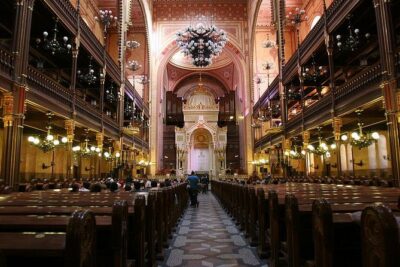
Budapest Jewish Heritage Memorial Walking Tour & Synagogue Entry
Read our review →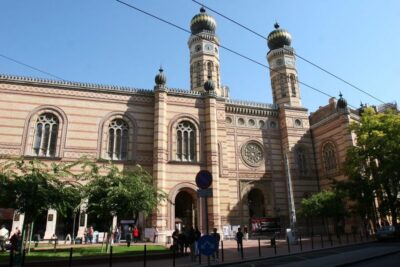
Jewish Heritage Guided Tour with Synagogue Ticket
Read our review →
Budapest Historic Downtown Bicycle Tour in small groups
Read our review →
Historic Downtown ride on E-Bicycles Buda & Pest
Read our review →Browse the lists this tour appears in