
Reviewed · JEWISH HERITAGE TOURS
Budapest Dohany, Heroes’, Rumbach synagogues & Jewish Ghetto Tour
The most moving part of this Budapest Jewish quarter tour is the way beautiful synagogues and Holocaust sites appear within the same compact neighborhood. You move from the grand Great Synagogue to the quiet cemetery in Raoul Wallenberg Memorial Park, then along streets where Jewish life is being rebuilt today.
I like the three distinct synagogue traditions and architectural styles, especially the Moorish Rumbach Synagogue and the Art Nouveau Orthodox center on Kazinczy Street. I also like the guides’ personal approach. Milan, David, Micky, and Daniel are all named in feedback as thoughtful, clear, and willing to answer hard questions.
The main point to check before booking is the route description. The title mentions Heroes’ Synagogue, but the supplied program does not include Heroes’ Square, and Kazinczy Street Synagogue is not always entered. The tour also packs a lot of history into 2 hours 20 minutes, so it suits you best if you prefer explanation and reflection over a slow café stop.
Key points before you book
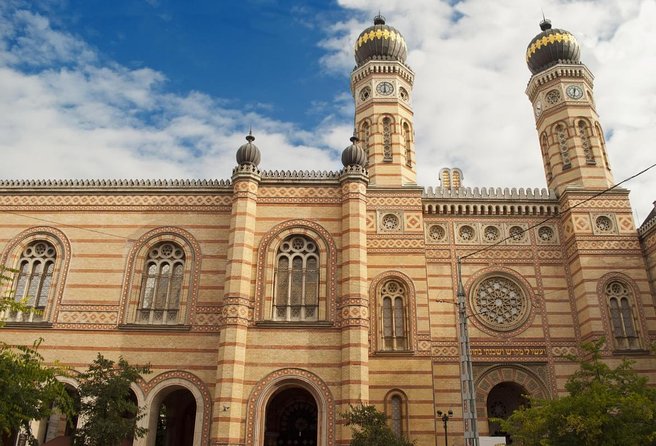
- The Great Synagogue begins the tour with an included visit to Europe’s largest Jewish temple and its impressive 19th-century interior.
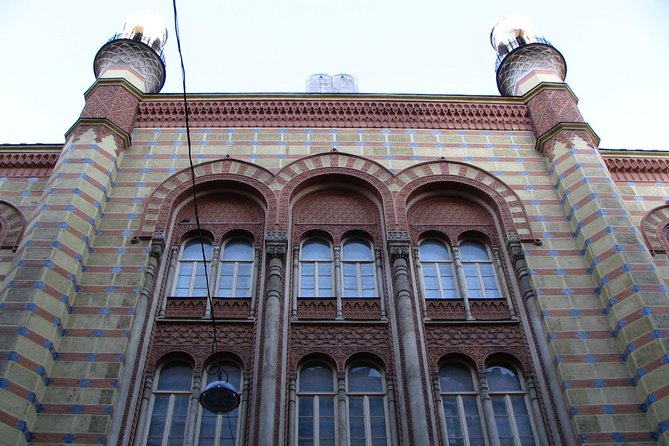
- Rumbach Synagogue is the architectural surprise, a Moorish building by Otto Wagner that reopened after extensive renovation.
- Holocaust history is handled on site, including the Emmanuel Tree of Life, the ghetto cemetery, and the Carl Lutz Memorial.
- Guides bring a personal connection, with Milan and David praised for family stories, cultural insight, and calm handling of difficult subjects.
- The walk is short but talk-heavy, with several brief street stops and substantial time inside the synagogues.
- Dress carefully, with shoulders covered and clothing reaching the knee. Men can receive a head covering at synagogue entrances.
What this Budapest Jewish quarter tour is really about
This is not simply a synagogue-hopping walk. It is a compact lesson in Hungarian Jewish life, religious differences, architecture, wartime persecution, and the neighborhood’s present-day revival.
Your guide starts with the Great Synagogue on Dohány Street. From there, the route moves through streets tied to the former Budapest ghetto, including Király Street, Dob Street, Gozsdu Udvar, and Kazinczy Street. Along the way, you hear how Jewish communities developed in Pest, how different religious movements shaped synagogue design, and how the district changed after the Holocaust.
The tour is offered in English and lasts about 2 hours 20 minutes. A group can include up to 35 people, which is large enough to affect how easily you hear the guide in a busy street or synagogue courtyard. The strongest guide reports describe Milan, David, Micky, and Daniel as clear, warm, and well prepared. Milan in particular is praised for explaining geography, religious differences, and family experiences without losing control of the route.
You should expect a serious tour, but not a gloomy one from start to finish. The route includes present-day Jewish life, food, cultural spaces, and the way the district functions now. That balance matters. You learn about loss without treating the neighborhood as a museum piece.
More Jewish heritage walks in Budapest:
- Budapest Jewish Heritage Memorial Walking Tour & Synagogue Entry
★ 5.0 · 568 reviews - Budapest: Jewish Heritage Guided Tour with Synagogue Ticket
★ 4.8 · 533 reviews - Jewish Quarter of Budapest Walking Tour
★ 4.7 · 369 reviews
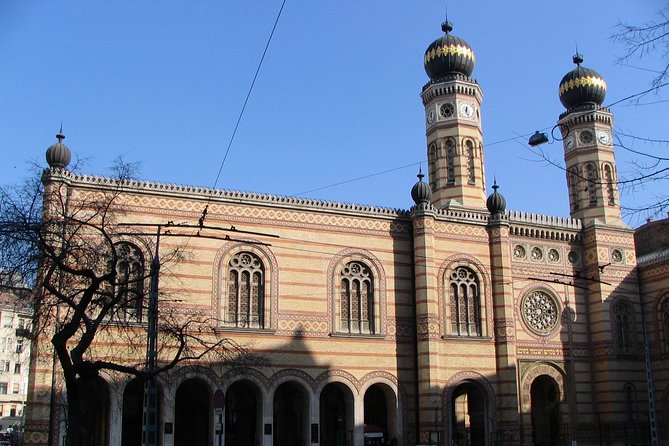
The Great Synagogue on Dohány Street
The tour opens at Budapest’s Great, or Central, Synagogue, at Dohány u. 2 to 4. Admission is included, and you spend about 30 minutes here.
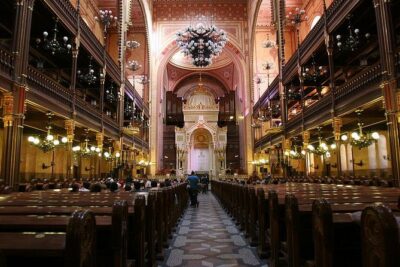
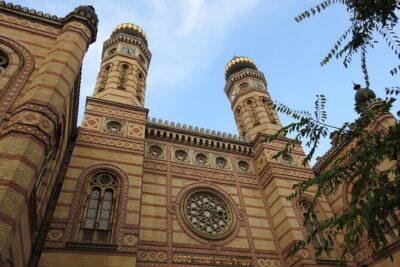
The building dates from the 1850s and is the center of the tour’s discussion of Hungarian Neolog Judaism. Neolog Judaism developed as a Hungarian Jewish movement with its own approach to religious practice and community life. The guide explains how this tradition differs from Orthodox Judaism, which becomes clearer later at Kazinczy Street.
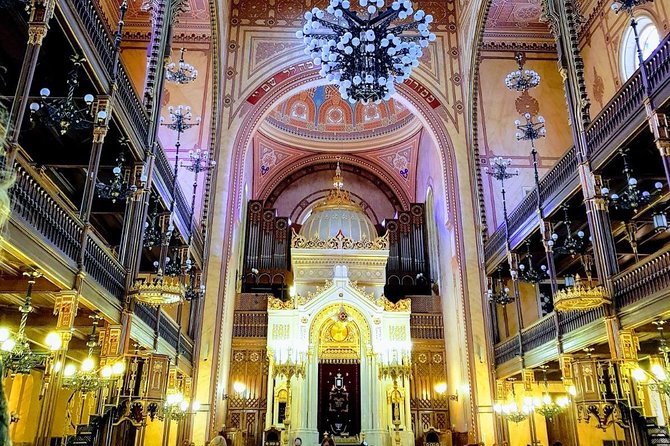
Look up as you enter. The synagogue is known for its grand scale and distinctive mixture of architectural influences. The organ is another notable feature, with Franz Liszt associated with performances on it. Even if you are not interested in religious architecture, the interior gives you an immediate sense of the community’s size and confidence in 19th-century Budapest.
The Great Synagogue visit also introduces the history of Hungarian Jewry, including the damage and disruption caused by the Holocaust. One useful tip comes from a practical complaint: the basement museum may not be highlighted clearly during the visit. If you have time and access is available, ask your guide about it before leaving the complex.
The Great Synagogue is likely the best-known stop, and its admission alone helps explain the $63.52 price. Still, do not judge the tour only by this building. The smaller Rumbach Synagogue and the memorial park provide a more intimate counterpoint.
Raoul Wallenberg Memorial Park and the ghetto cemetery
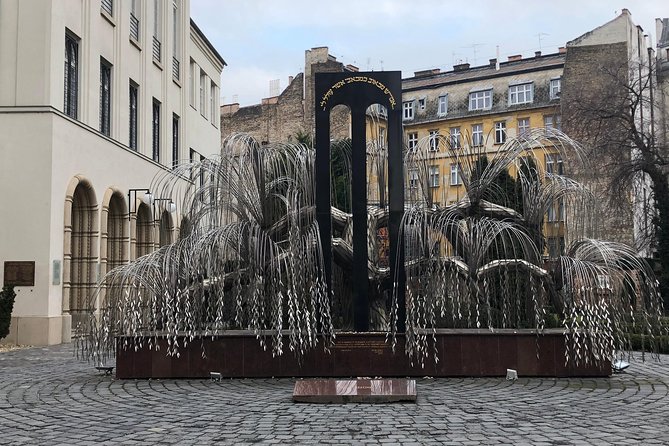
Next comes Raoul Wallenberg Holocaust Memorial Park, with about 20 minutes set aside for the stop. The park contains the Emmanuel Tree of Life, a metal memorial shaped like a weeping willow. Names connected to Holocaust victims are associated with its leaves, turning the sculpture into a memorial you can read at close range rather than simply photograph from a distance.
The park also includes the Holocaust cemetery formed on the site of the Budapest ghetto. More than 2,000 victims are buried there. This is one of the tour’s most important pauses because it connects broad historical figures and dates to a physical place where people died and were buried.
Your guide also discusses the Righteous Gentiles who helped save Hungarian Jews, often at great personal risk. The Carl Lutz Memorial later develops this subject, but the park gives the story a broader setting. You hear not only about mass persecution, but also about individual choices made under extreme pressure.
Allow yourself a quieter pace here. The stop is short, and the tour has much more ground to cover. If you tend to need time at memorial sites, you may find the schedule tight.
Rumbach Synagogue, the tour’s architectural surprise
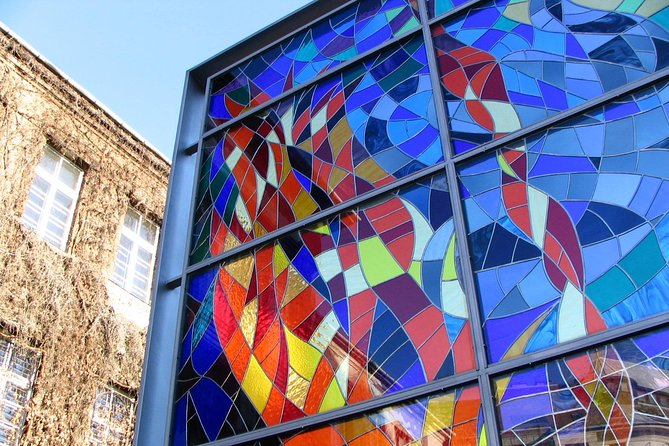
The Rumbach Street Synagogue receives the longest stop, about 45 minutes, and this is where the route becomes especially rewarding for anyone interested in design.
Built in 1872 by Viennese architect Otto Wagner, the synagogue uses a Moorish style with elaborate interior decoration. It reopened after years of renovation, so its condition and visual impact are a major part of the visit. The building feels different from the Great Synagogue, and that contrast helps you understand that Budapest’s Jewish community was never architecturally or religiously uniform.
The guide explains how the building relates to the community that used it and how synagogue design reflected changing Jewish identities in Central Europe. This is where the earlier discussion of Neolog Judaism becomes more tangible.
I would give this stop your full attention. The Great Synagogue is grand and famous, but Rumbach can feel more like a discovery because many visitors do not know it before arriving. The route description says the program ends here, although Kazinczy Street Synagogue also appears later in the schedule. Confirm the exact ending and which synagogue interiors will be entered on your date.
That small uncertainty is worth noting. Some tours may be affected by synagogue closures, services, security rules, or special events. If one synagogue closes without notice, an alternative visiting time may be offered, but a partial closure does not automatically bring a refund.
A few more Budapest half-days to weigh up
- Budapest: City Highlights Cruise with Welcome Drink
★ 4.6 · 35,610 reviews - Budapest: Unlimited Prosecco, Beer and Aperol Spritz Cruise
★ 4.8 · 25,310 reviews - Budapest: Széchenyi Spa Day Ticket with Optional Upgrades
★ 4.3 · 23,911 reviews - Budapest: Nighttime or Daytime Sightseeing Cruise
★ 4.2 · 21,062 reviews
Király Street and Gozsdu Udvar
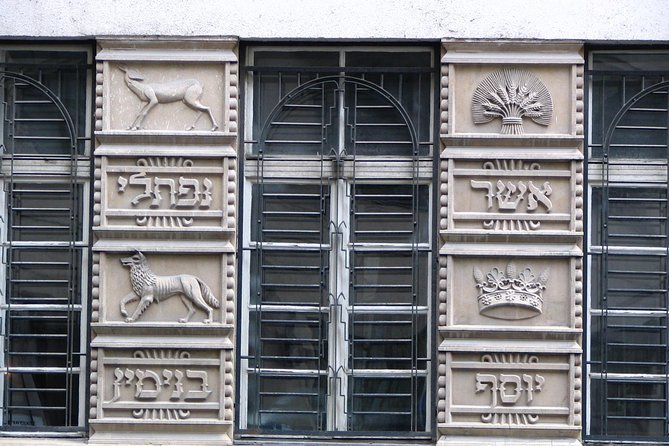
The walk continues through Király Street, once an important commercial road in Pest and a center of Jewish trade and community life. The formal stop is only about 10 minutes, so expect a guide’s explanation rather than a long architectural survey.
Today, Király Street links historic buildings with shops, restaurants, and cultural venues. The point is not to admire one single monument. It is to see how a street that once supported Jewish commerce fits into the district’s current life.
Gozsdu Udvar adds another layer. Its courtyards once held kosher salami shops, food stores, and apartments. Now the passage is associated with dining, art, small stalls, and evening entertainment. The contrast is useful, but you should not expect a dedicated shopping or food break. The schedule is too tight for lingering over flódni, Jewish pastries, or artisan goods without falling behind.
Carl Lutz and Spinoza
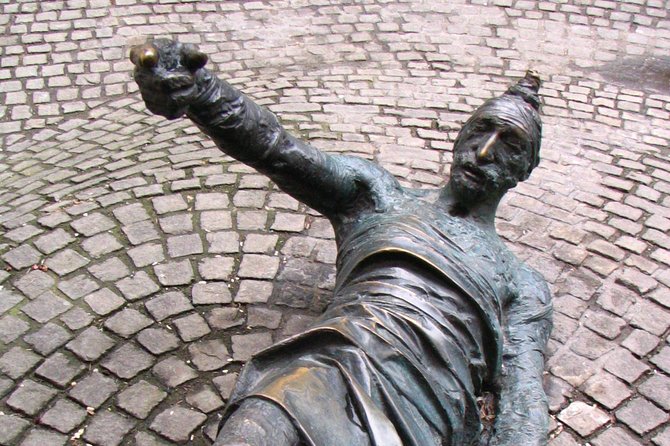
The Carl Lutz Memorial is a brief five-minute stop. Lutz was a Swiss diplomat who helped save thousands of Hungarian Jews during the Holocaust. The memorial gives the guide a chance to explain the role of rescuers and the risks they took.
Because the stop is short, the value depends heavily on the guide. David and Milan are praised for adding personal stories and placing the subject in human terms. Their approach appears to be especially effective for visitors who know the basic Holocaust timeline but want to understand how ordinary people acted within it.
The Spinoza Szinhaz stop is also brief. Named for the Jewish Dutch philosopher Baruch Spinoza, the venue combines a restaurant, gallery, cultural stage, and theater. It represents the district’s continuing Jewish cultural life rather than only its wartime past.
You may also hear about flódni, a traditional Hungarian Jewish layered cake. The route points out a well-known place for it, but there is no guaranteed tasting or food purchase. Plan to return later if sampling Jewish Hungarian specialties is a priority.
Dob Street and Kazinczy Street
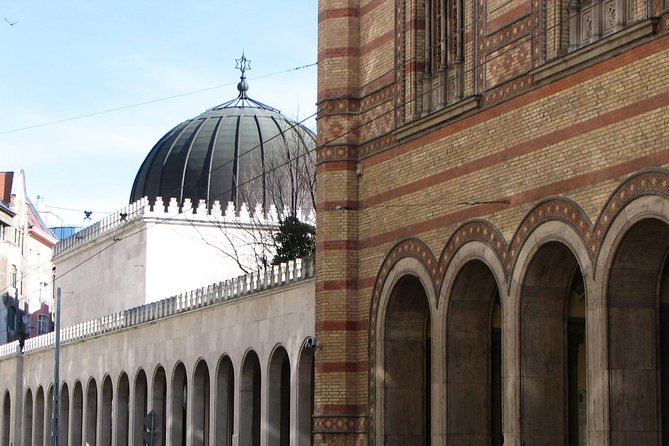
Dob Street runs parallel to Király Street and once sat at the center of the Jewish district and the Budapest ghetto. The stop lasts about 10 minutes, giving you a street-level view of how the former ghetto area fits into the modern district.
The guide also discusses the renewal of Jewish life and Hungarian Orthodox Judaism. This matters because the tour does not present Jewish Budapest as one single community with one uniform tradition.
Kazinczy Street is associated with the Hungarian Orthodox Jewish Center. The area includes a synagogue, mikveh, kosher restaurants and cafés, schools, a kosher butcher, and food stores. The Orthodox synagogue is also an example of Budapest’s early 20th-century Secession style, the local form of Art Nouveau.
The planned visit here is about 15 minutes, but admission is not listed as included. The program information is also not fully consistent about whether you enter this synagogue, so ask your guide at the start. One account specifically notes seeing the interiors of two out of three synagogues and not gaining access to the Chabad synagogue. That makes it wise to think of Kazinczy as a possible exterior and neighborhood stop, not a guaranteed interior visit.
What the $63.52 price buys you
At $63.52 per person, this is not the cheapest way to walk through the Jewish quarter. The price is easier to justify if you want included synagogue admissions, a structured Holocaust history lesson, and a guide who can explain religious and architectural differences as you go.
The Great Synagogue and Rumbach Synagogue are the main value points. You are also paying for the guide’s interpretation, which is particularly important at the cemetery and memorials. Walking these streets alone can show you façades, but it will not necessarily explain Neolog Judaism, Orthodox practice, the ghetto layout, or the meaning of the memorials.
The tradeoff is pace. The group may reach 35 people, and the tour includes many short stops. It is not designed for long photography sessions, shopping, or a relaxed meal. I would book it if you want a focused introduction at the start of a Budapest visit, then return later to the streets and buildings that interest you most.
The tour is highly regarded overall, with a 4.8 rating from 200 ratings and recommendation from 96 percent of participants. The strongest praise centers on guides who explain difficult material with care, humor, personal experience, and a clear grasp of Hungarian Jewish culture.
Practical details that affect your day
Meet at Budapest, Dohány u. 2 to 4, near the Great Synagogue. The program is listed as ending at Rumbach Synagogue, although the route also includes Kazinczy Street, so confirm the final stop with your guide.
Wear regular clothing that covers your shoulders and reaches your knees. A covering can be bought on site if needed, and men can receive a head covering at the entrance. Good walking shoes are sensible, though the route is not described as especially strenuous. One account notes that the walking was manageable even for someone recovering from hip surgery, but the tour still involves standing and moving between sites.
The tour requires good weather. If poor weather cancels it, you are offered another date or a full refund. Otherwise, free cancellation is available until 24 hours before the start time. Synagogues can close without notice, and service animals are allowed.
Is this the right tour for you?
Book this tour if you want Jewish Budapest explained by a guide, not just photographed. It is a strong choice for history-minded visitors, architecture fans, and anyone who wants the Great Synagogue placed in the wider story of Hungarian Jewish communities.
You will get the most from it if you can give serious attention to memorials and listen through long explanations. Milan, David, Micky, and Daniel are all associated with the qualities this tour needs: clear teaching, patience, personal connection, and respect for painful subjects.
Choose another plan if you mainly want Heroes’ Square, a food walk, shopping time, or a quiet self-guided stroll. Also confirm the synagogue access before booking, since the route description does not fully match the stated title and some buildings may close without notice.
For most visitors with a genuine interest in Budapest’s Jewish quarter, I would book it. The combination of the Great Synagogue, Rumbach’s Moorish interior, the ghetto cemetery, and the living Orthodox and cultural district gives you a fuller picture than any one stop could provide.
FAQ
How long does the Budapest Jewish quarter tour last?
The tour lasts approximately 2 hours and 20 minutes.
What language is the tour offered in?
The tour is offered in English.
Where does the tour begin?
It begins at Budapest, Dohány u. 2 to 4, 1075 Hungary, at the Great Synagogue.
Where does the tour end?
The program is listed as ending at Rumbach Street Synagogue, Rumbach Sebestyén u. 13, 1074 Budapest.
Is admission to the Great Synagogue included?
Yes. Admission to the Great Synagogue is included.
Is admission to Rumbach Synagogue included?
Yes. The program includes admission to Rumbach Street Synagogue.
Is admission to Kazinczy Street Synagogue included?
Admission is listed as not included. The exact access should be confirmed with the guide because synagogue entry can vary.
What should I wear?
You should wear clothing that covers your shoulders and reaches your knees. A covering is available for purchase on site, and men can receive a head covering at entry.
Does the tour visit Heroes’ Square?
Heroes’ Square is not listed among the stops in the supplied program, despite appearing in the tour title.
What happens if a synagogue closes unexpectedly?
If one synagogue closes and affects the program, an alternative visiting time may be offered, but a refund is not offered for the partial closure. If all synagogues close, alternative dates or times, or a full refund, will be offered.
Recently added around Budapest
- Budapest: Private Walking Tour with a Local Guide★ 3.6 · 6 reviews
- From Budapest: Guided Tour of Eger with Wine Tasting★ 4.5 · 6 reviews
- Budapest: City Bike Tour with Coffee Stop★ 5.0 · 37 reviews
- Budapest: Danube River Views Bike Ride★ 4.8 · 23 reviews
- Budapest: Vacation Photographer to collect great memories★ 5.0 · 49 reviews
- Walk to recent and aged spiritual sanctuaries near Budapest★ 5.0 · 5 reviews
- Trash Art Museum: Hungary’s First Scrap Metal Exhibition★ 4.3 · 72 reviews
- Budapest: Multilingual Highlights Tour★ 4.8 · 89 reviews
Jewish Heritage Tours, compared.
Budapest Jewish Heritage Memorial Walking Tour & Synagogue Entry
Read our review →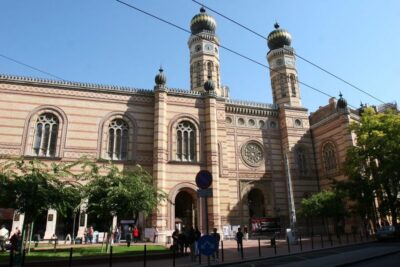
Jewish Heritage Guided Tour with Synagogue Ticket
Read our review →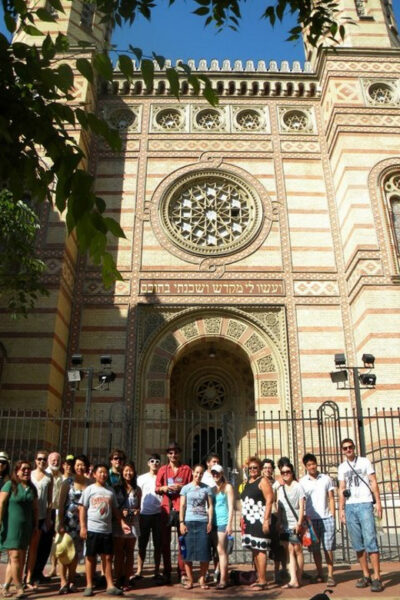
Past and Present of Budapest Jewish District Tour
Read our review →
Budapest Dohany Synagogue & Hungarian Jewish Museum & free extras
Read our review →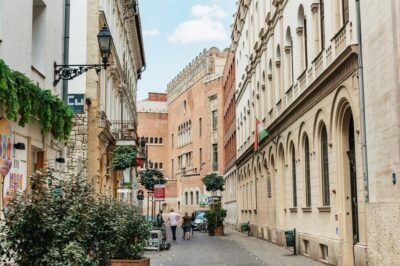
Jewish History Guided Walking Tour with Historian
Read our review →Browse the lists this tour appears in