
Reviewed · JEWISH HERITAGE TOURS
Jewish Heritage in Hungary with a Historian
Budapest’s Jewish Quarter is best understood on foot, where grand synagogues, memorials, cafés, and ruin bars share the same few streets. This 2.5-hour walk links the district’s long Jewish story with its lively present, from Raoul Wallenberg’s rescue work to Szimpla Kert’s battered, brilliant interiors.
I like the small group of no more than 10, which gives you room to ask questions. I also like the historian-led approach: guides such as Gabor, Andrea, Barbi, Noémi, and Andras have been praised for clear, thoughtful explanations, including the painful parts of Hungary’s past.
The main catch is that you do not go inside the Great Synagogue, and admission to the Kazinczy Street Synagogue is not included. If you want a detailed look at the interiors, plan a separate visit and budget for those tickets.
Key points to know before you book
- A 2.5-hour walking tour connects eight centuries of Jewish life with present-day Budapest.
- The group is limited to 10 people, making conversation with the guide easier.
- You see three important synagogues from outside, including the Great Synagogue and Kazinczy Street Synagogue.
- History is not limited to the Holocaust, with time devoted to Jewish life in Hungary across many centuries.
- Szimpla Kert and Gozsdu Udvar show the modern Jewish Quarter, now one of Budapest’s best-known nightlife areas.
- Flódni is included at Solinfo Café, giving you a taste of a classic Hungarian Jewish pastry.
Why this walk gives Budapest’s Jewish Quarter more meaning
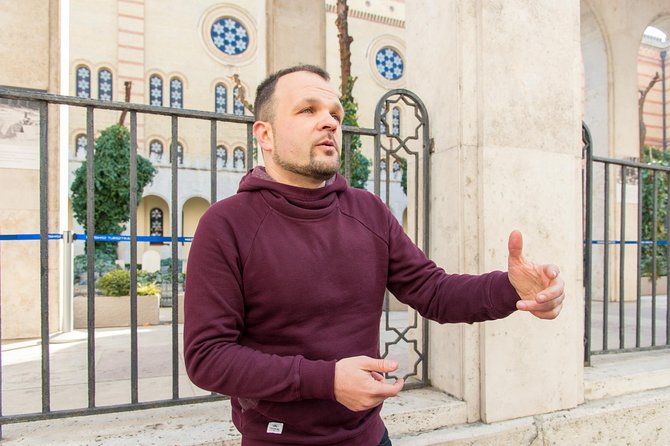
You can walk through the Jewish Quarter on your own and see plenty: ornate façades, colorful street art, food stalls, bars, and old apartment buildings. The trouble is that much of the district’s meaning sits below the surface. A doorway may lead to a synagogue, a memorial may mark a rescue effort, and a fashionable bar may occupy a building with a much darker past.
This tour helps connect those pieces. You move from Erzsébet tér into the former Jewish district, passing Rumbach Street, Kazinczy Street, and Dohány Street. The route deals with Jewish religious life, community divisions, the Holocaust, the actions of rescuers, and the district’s recent transformation.
I especially value the effort to cover more than the grim chapters of the 1940s. The tour also looks at Jewish life in Hungary over roughly 800 years, giving you a better sense of what existed before the destruction and what has continued since.
The format suits you if you prefer conversation to a large group with a guide speaking into a microphone. With a maximum of 10 people, you can stop to ask about a family name, a building, a religious tradition, or a point in Hungarian history that needs clarification.
More Jewish heritage walks in Budapest:
- Budapest Jewish Heritage Memorial Walking Tour & Synagogue Entry
★ 5.0 · 568 reviews - Budapest: Jewish Heritage Guided Tour with Synagogue Ticket
★ 4.8 · 533 reviews - Jewish Quarter of Budapest Walking Tour
★ 4.7 · 369 reviews
Starting at Erzsébet tér and meeting Budapest’s public face
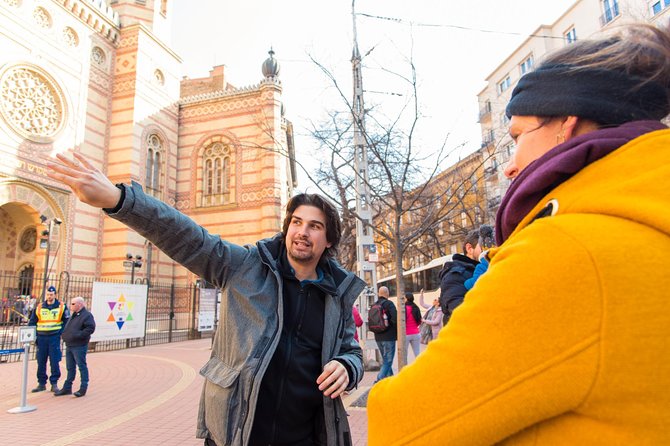
The tour begins at 10:00 a.m. outside the Kempinski Hotel Corvinus Budapest at Erzsébet tér. This is a central Pest location, close to public transportation and easy to place on your sightseeing map.
Erzsébet tér began as a medieval market square and is now one of Pest’s main public spaces. Starting here gives the walk a useful geographic frame. You are not dropped into the Jewish Quarter without context. Instead, you begin in central Pest and move toward the streets where Jewish religious, commercial, and social life took shape.
The opening stop takes about 20 minutes. Admission is free, and the square itself is not the main subject. Its value is as a starting point, helping you understand how the district relates to the rest of central Budapest.
Raoul Wallenberg’s statue and the difficult work of rescue
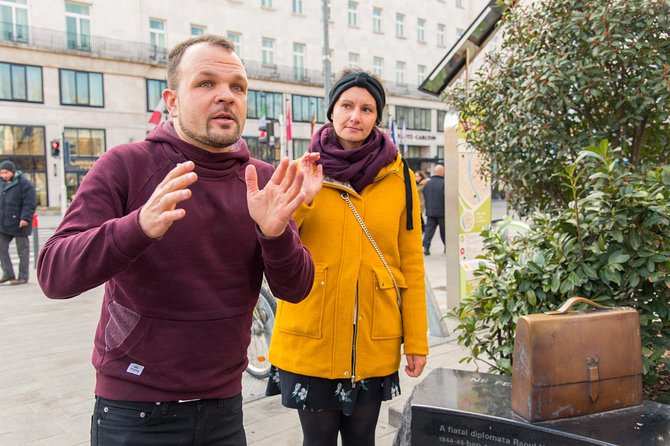
The next stop is the statue of Raoul Wallenberg, the Swedish diplomat who helped save Jewish lives during the Holocaust. You spend about 10 minutes here.
This is a short stop, but it adds an important human scale to the tour. Large historical events can become cold lists of dates and numbers. Wallenberg’s story brings the focus back to individual choices, courage, and the role that foreign diplomats played in trying to protect Hungarian Jews.
The guide also discusses the darker side of Hungary’s past with directness. That matters here. You are not getting a softened version of history, but the tour does not treat the Holocaust as the only subject worth discussing.
Szimpla Kert, where the ruin-bar idea began
Szimpla Kert takes the tour in a very different direction. It is identified as Budapest’s first ruin bar and the place that started the trend now associated with the city’s nightlife.
You spend about 20 minutes here. There is no admission charge listed for the stop, and the visit is mainly about the setting and its place in the modern Jewish Quarter.
Szimpla Kert is useful because it shows how quickly a neighborhood can change. A district once shaped by religious institutions, shops, homes, and wartime trauma is now also known for nightlife and creative reuse of old buildings.
Do not expect this stop to function like a conventional museum visit. It is a living bar, not a preserved historical site. Its value comes from seeing the contrast between the district’s past and its current reputation. If you prefer a tour focused only on synagogues and memorials, this portion may feel less central. If you want to understand the area as it exists today, it belongs in the route.
More history tours in Budapest:
- Budapest: Historic Cruise with Welcome Drink
★ 4.7 · 6,512 reviews - Budapest Historical Sightseeing – Free Walking Tour
★ 5.0 · 1,302 reviews - Buda Castle District Dark History, Legends and Vampire Night Tour
★ 4.5 · 1,240 reviews - BloodThirsty Hungary: Walking tour & Dark Historical Stories
★ 4.9 · 633 reviews
Gozsdu Udvar and the Quarter’s international side
Gozsdu Udvar takes about 10 minutes. The passage is described as one of Budapest’s most international streets, and it gives you another view of the neighborhood’s current character.
This is a brief stop, so the guide cannot unpack every shop, courtyard, or architectural detail. Instead, Gozsdu Udvar helps show how the district now draws people from many backgrounds. The route is not trying to freeze the Jewish Quarter in the past. It shows a place that has been repeatedly reshaped.
That balance is one of the tour’s strengths. You learn about Jewish communities and religious traditions, but you also see the commercial and social life that surrounds those landmarks today.
Kazinczy Street Synagogue and Orthodox Jewish life
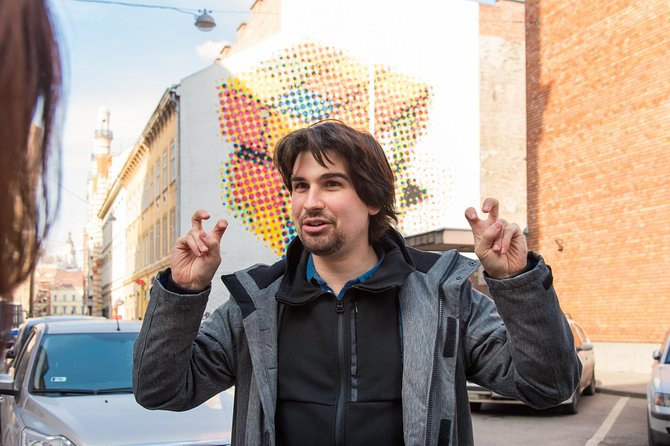
At Kazinczy Street Synagogue, the guide focuses on the Orthodox Jewish community. You spend about 20 minutes here.
This stop is especially helpful if you are not familiar with the differences among Jewish religious traditions. The guide can place the synagogue within the wider story of Budapest’s Jewish communities and explain why several important synagogues exist within a relatively small area.
Admission is not included, so check the current entry arrangements if you want to return inside. The walking tour itself does not promise an interior visit here. That distinction matters because the exterior and the guided explanation are included, but synagogue admission is a separate cost.
The limited time also means you should think of this as an introduction rather than a full religious or architectural study. Still, it gives the neighborhood more shape than simply ticking off a famous building.
The Great Synagogue on Dohány Street
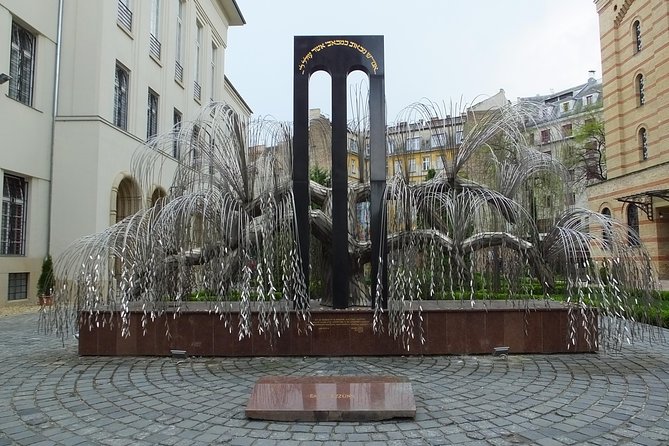
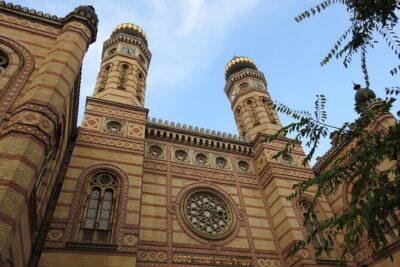
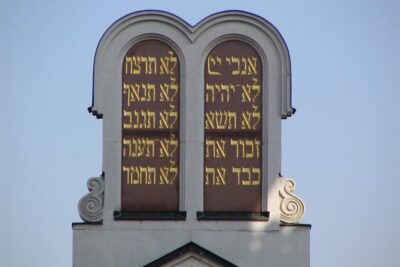
The Great Synagogue, also called the Central Synagogue or Nagy Zsinagoga, receives about 45 minutes of explanation from outside. It is described as Europe’s largest synagogue and has important historical associations stretching across roughly the last 200 years.
This is the longest stop on the walk, which makes sense. The building is central to the story of Budapest’s Jewish community, and the surrounding area carries painful memories from the Holocaust.
The important limitation is clear: you do not go inside during this tour. Admission is not included, and the route ends outside Dohány Street Synagogue at Wesselényi utca 1. If interior architecture, the synagogue grounds, or a closer look at its memorials is a priority, you will need to arrange a separate visit.
Still, an outside explanation can be worthwhile. A guide can point out the synagogue’s role in the city, place it within the district’s history, and help you decide if you want to return for a longer visit. The 45-minute stop also prevents this famous building from being reduced to a quick photo opportunity.
Flódni at Solinfo Café
The tour finishes with flódni at Solinfo Café, and this is one of its most appealing practical touches. Flódni is a traditional Hungarian Jewish cake, and the tasting is included in the tour price.
Food gives historical information a physical connection. You are not only hearing about Jewish life in Hungary, you are also sampling one of its familiar sweet traditions. The stop lasts about 20 minutes, enough for a pause and a final chance to ask questions.
Solinfo Café also offers a comfortable ending after a walk through serious subjects. The experience does not finish at a memorial with everyone quietly dispersing. It ends with a local food tradition and conversation.
The final location is outside Dohány Street Synagogue on Wesselényi utca 1, in the heart of the district. That makes it easy to continue sightseeing, visit the synagogue separately, or explore nearby cafés and bars.
Guides, group size, and the quality of the explanation
The guide is the most important part of a history walk, and the named guides associated with this experience include Andrea, Gabor, Barbi, Noémi, and Andras. Their styles may differ, but the strongest pattern is clear: you can expect an informed, patient guide who is willing to answer questions and discuss both the achievements and failures in Hungary’s past.
Gabor has been singled out for a detailed account of Jewish life from the seventeenth century to the present. Barbi’s approach places the Holocaust within a much wider account of Jewish history in Hungary. Andrea has been described as adapting the walk to the group, while Noémi is noted for enthusiasm and clarity. Andras has been praised for drawing links between historical events and current issues.
Because the group is capped at 10, you have a better chance of having a real exchange rather than listening silently from the back. The tradeoff is that a small-group walk can move at the pace of questions. If the group is curious, the route may feel more conversational than tightly timed.
The tour is offered in English. Service animals are allowed, and most people can participate. Since the route is a walking experience through central Budapest, comfortable shoes are sensible, although the supplied details do not specify the exact walking distance or step-free conditions.
Is $64.71 a fair price?
At $64.71 per person, this is not the cheapest way to wander through the Jewish Quarter. You are paying for a historian guide, a small group, a structured route, and a flódni tasting. You are not paying for entry to the synagogues.
I think the price makes sense if you want context and conversation. A self-guided walk can show you the same streets, but it will not necessarily explain how Orthodox Jewish life fits into the district, why Wallenberg matters, or how ruin bars relate to the neighborhood’s modern identity.
The value is weaker if your main goal is synagogue interiors. In that case, put the tour price alongside the separate admission costs you may pay later. You could also choose this walk for the historical framework, then visit the Great Synagogue independently when you have more time.
The experience is often booked about 42 days ahead, so it is wise to reserve early if your Budapest dates are fixed. Free cancellation is available up to 24 hours before the 10:00 a.m. start time. Changes or cancellations inside that window do not qualify for a refund.
Who should book this Budapest Jewish history walk?
I would choose this tour if you want a focused introduction to Jewish Budapest without spending a full day in museums. It suits first-time visitors who want the district explained, as well as returning visitors who have walked these streets before but missed their deeper context.
It is also a good fit for people who appreciate difficult history presented honestly. The route includes the Holocaust, but it does not define Jewish life only through tragedy. You also get religious history, community traditions, rescue efforts, food, nightlife, and the district’s ongoing changes.
You may want another option if you need an interior visit to every synagogue, a private tour, or a route tailored to family genealogy. The fixed walk has a clear focus and a short schedule. That is useful for most people, but it leaves little room for a long personal research project.
Should you book it?
Book this tour if you want the Jewish Quarter to make sense as a living part of Budapest, not just a row of impressive buildings. The strongest reasons are the small group, the historian-led discussion, the honest treatment of Hungary’s past, and the clever mix of memorials, synagogues, ruin bars, and food.
Skip it if you mainly want interior access to the Great Synagogue. Since that visit is not included, you would still need to arrange it separately. For everyone else, this is a well-shaped morning walk that gives you useful history, local flavor, and a clear sense of where to continue exploring after the guide says goodbye.
FAQ
How long is the Jewish Heritage in Hungary tour?
The tour lasts approximately 2 hours and 30 minutes.
Where does the tour begin?
It begins at 10:00 a.m. at the Kempinski Hotel Corvinus Budapest, Erzsébet tér 7-8, 1051 Hungary.
Where does the tour end?
The tour ends outside Dohány Street Synagogue at Wesselényi utca 1, 1077 Budapest.
Is the Great Synagogue visited inside?
No. The tour discusses the Great Synagogue from outside, and interior admission is not included.
Is admission to Kazinczy Street Synagogue included?
No. Admission to Kazinczy Street Synagogue is not included in the tour price.
Is food included?
Yes. The tour includes a tasting of flódni, a traditional local Jewish cake, at Solinfo Café.
How many people can join the tour?
The tour has a maximum of 10 people.
Recently added around Budapest
- Budapest: Private Walking Tour with a Local Guide★ 3.6 · 6 reviews
- From Budapest: Guided Tour of Eger with Wine Tasting★ 4.5 · 6 reviews
- Budapest: City Bike Tour with Coffee Stop★ 5.0 · 37 reviews
- Budapest: Danube River Views Bike Ride★ 4.8 · 23 reviews
- Walk to recent and aged spiritual sanctuaries near Budapest★ 5.0 · 5 reviews
- Budapest: Vacation Photographer to collect great memories★ 5.0 · 49 reviews
- Trash Art Museum: Hungary’s First Scrap Metal Exhibition★ 4.3 · 72 reviews
- Budapest: Multilingual Highlights Tour★ 4.8 · 89 reviews
Jewish Heritage Tours, compared.
Budapest Jewish Heritage Memorial Walking Tour & Synagogue Entry
Read our review →
Jewish Heritage Guided Tour with Synagogue Ticket
Read our review →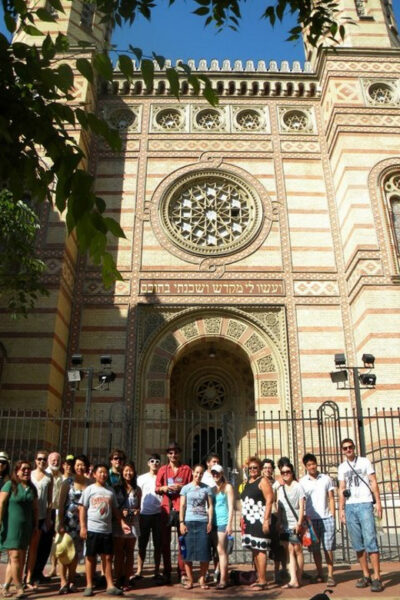
Past and Present of Budapest Jewish District Tour
Read our review →
Budapest Dohany Synagogue & Hungarian Jewish Museum & free extras
Read our review →
Jewish History Guided Walking Tour with Historian
Read our review →Browse the lists this tour appears in