
Reviewed · JEWISH HERITAGE TOURS
Past and Present of Budapest Jewish District Tour
Budapest’s Jewish District is more than a cluster of handsome synagogues and nightlife streets. It is a place where the city’s Jewish life, wartime destruction, postwar silence, modern renewal, and ruin-bar culture all meet. This walk gives you that broad story in about 1 hour 45 minutes, beginning near the Budapest Ferris Wheel and ending at Szimpla Kert.
I like two things especially. First, the route connects the three major synagogues with subjects that are easy to miss on your own, such as the Schutzpass documents that saved lives, the old city wall, kosher traditions, and the final surviving piece of the ghetto wall. Second, guides such as Gary, Eszter, Edith, Dora, Edi, Judith, and David are praised for clear explanations, warmth, humor, and a strong command of the subject.
The main limitation is simple: you do not enter the synagogues. You see the Great Synagogue courtyard and cemetery from outside, and stop outside Rumbach Street and Kazinczy Street synagogues. If you want the interiors, you’ll need separate admission and extra time.
Key points to know before you book
- Three synagogues, all viewed from outside: You learn about the Great, Rumbach Street, and Kazinczy Street synagogues without entering them.
- A serious historical story: The walk covers Jewish life from the Belle Époque through the Holocaust and into modern District VII.
- A practical route through District VII: Start at Erzsébet tér and finish at Szimpla Kert, with plenty of orientation for further exploring.
- Small details add texture: Look for the old city wall, the last piece of ghetto wall, murals, street art, kosher references, and the story of Schutzpass papers.
- The price is nominal, but the tour is donation based: The $3.63 booking fee covers administration. Your guide depends on tips at the end.
- Comfortable shoes matter: You will stand and walk for most of the experience, with a maximum group size of 25.
Starting at Erzsébet tér with Budapest’s Jewish story
Meet your English-speaking guide beside the Budapest Ferris Wheel in Erzsébet tér. This is a central, easy-to-find starting point, and the opening talk sets out the route and the main historical themes.
The guide frames the story around the Jewish community’s growth during the Belle Époque, often called Budapest’s Golden Age, and the destruction that followed. That structure matters. Instead of treating the district as a collection of isolated monuments, you get a timeline that links prosperity, religious division, persecution, survival, and present-day urban change.
The opening section is short, about 10 minutes, so do not expect a full lecture before the walk begins. It works as a map for the rest of the tour. If you arrive with questions about Budapest’s Jewish population, the synagogues, or the wartime period, this is a good moment to ask them.
The guide quality seems to be one of the experience’s strongest features. Gary is praised for passion and a clear sense of historical context. Eszter and Esther receive similar praise for careful organization and warmth. Edi is noted for speaking clearly and keeping a comfortable pace for an older couple. That variety matters because the tour depends heavily on the individual guide’s storytelling style.
More Jewish heritage walks in Budapest:
- Budapest Jewish Heritage Memorial Walking Tour & Synagogue Entry
★ 5.0 · 568 reviews - Budapest: Jewish Heritage Guided Tour with Synagogue Ticket
★ 4.8 · 533 reviews - Jewish Quarter of Budapest Walking Tour
★ 4.7 · 369 reviews
Deák Ferenc Square and the idea of Gaudiopolis
The next stop, Deák Ferenc Square, lasts around 15 minutes. Here the tour turns to Gaudiopolis, or the City of Joy, and the Schutzpass.
Gaudiopolis was a postwar children’s community connected with efforts to care for young survivors. The Schutzpass was a protective document used during the Holocaust period to help save Jewish lives. These subjects add a human scale to a period that can otherwise feel like a list of dates and political decisions.
You also hear about remnants of the medieval city wall and the way Jewish people were excluded from trading within the city limits. That detail helps explain that discrimination did not begin with the Nazi occupation. The tour places the later catastrophe within a longer story of restrictions, legal inequality, community life, and changing political power.
This part of the walk is also a reminder to keep your eyes on the ordinary city around you. Budapest’s history is not confined to a museum room. It appears in street alignments, fragments of walls, building facades, and the route itself.
The Great Synagogue from the courtyard
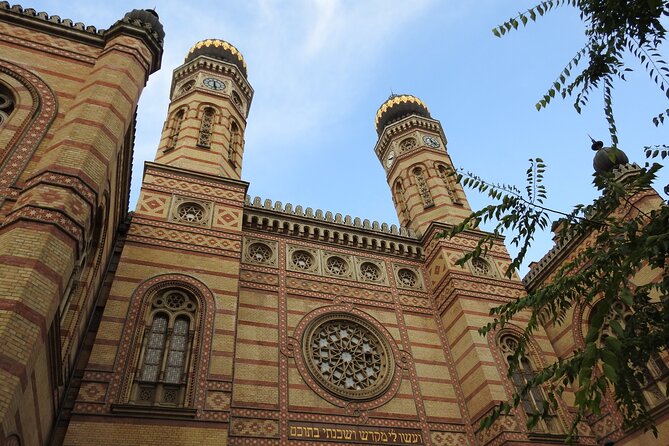
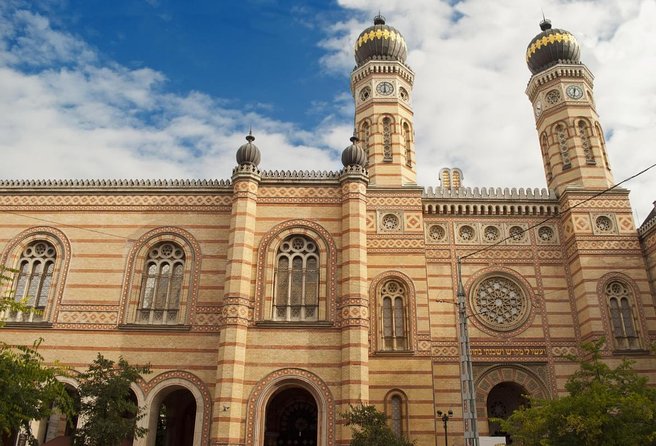
The Great, or Central, Synagogue is the tour’s major landmark. The stop lasts about 20 minutes, but the group does not go inside.
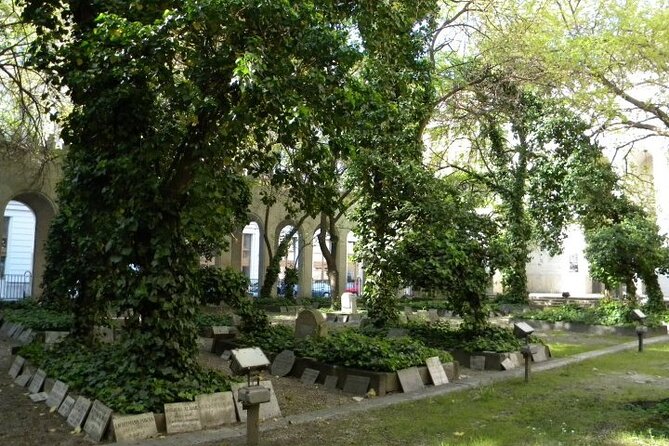
You view the Memorial Courtyard and cemetery from outside while the guide explains the synagogue’s importance, the Neolog and Orthodox movements, and the development of Zionism. The Great Synagogue is associated with the Neolog branch of Hungarian Judaism, and its scale gives you a sense of the size and confidence of Budapest’s Jewish community before the Second World War.
The exterior visit is useful as an introduction, but it is also the point where expectations matter most. The synagogue complex normally requires paid admission for an interior visit, and this walking tour does not include that ticket. If you have limited time in Budapest, you should decide in advance if you want to return for the full visit rather than assume this walk covers it.
The Memorial Courtyard and cemetery carry much of the emotional weight of this stop. The guide discusses the destruction of Hungarian Jewish life during the Nazi occupation and the Holocaust. This is not a light sightseeing walk, and that is part of its value. You get an honest account of loss rather than a polished version of the past.
Several guides are praised for handling this material with care. One guide is described as a history major with particular strength on the Holocaust period. Another is praised for explaining how Budapest’s Jewish community arrived, survived, and sometimes prospered. The quality of the presentation may vary by guide, but the subject remains central.
Rumbach Street Synagogue and the city’s changing face

The Rumbach Street Synagogue receives about 15 minutes. Again, the group stays outside, but the guide explains the building and its restoration.
Rumbach Street is especially useful for understanding the internal variety of Jewish life in Budapest. The city did not have one single Jewish religious identity. The distinctions between Neolog, Orthodox, and other traditions shaped worship, community life, architecture, and institutions.
The stop also brings in murals and urban street art. That combination can seem odd at first, but it is exactly what makes the district worth walking rather than simply visiting one synagogue. New artwork appears against old walls, while restored religious buildings sit beside bars, shops, and apartment blocks.
You should not expect an architectural tour with extensive interior detail, since you remain outside. Still, the guide’s explanation can help you decide if Rumbach Street deserves a separate paid visit. It also gives you a better sense of how restoration has changed the district’s appearance.
A few more Budapest half-days to weigh up
- Budapest: City Highlights Cruise with Welcome Drink
★ 4.6 · 35,610 reviews - Budapest: Unlimited Prosecco, Beer and Aperol Spritz Cruise
★ 4.8 · 25,310 reviews - Budapest: Széchenyi Spa Day Ticket with Optional Upgrades
★ 4.3 · 23,911 reviews - Budapest: Nighttime or Daytime Sightseeing Cruise
★ 4.2 · 21,062 reviews
Gozsdu Udvar, nightlife, and the last piece of ghetto wall
Gozsdu Udvar is the bridge between the district’s past and its current social life. The stop lasts roughly 15 minutes and introduces the passage’s mix of food, entertainment, culture, and market activity.
Today, Gozsdu Udvar can feel lively and commercial. The tour asks you to look beyond its present use and consider how the area has changed since the wartime period and the decades that followed. This is one of the walk’s more useful contrasts: a place now associated with eating and nightlife is also part of a neighborhood shaped by persecution and forced confinement.
You also see the last piece of the ghetto wall. It is a small physical remnant, and its size makes the history more, not less, striking. There is no grand monument here to do all the explaining for you. You need the guide’s context to understand what the fragment represents.
This is a good place to slow down mentally, even if the group is moving through a busy passage. The district’s present-day energy should not erase its past, and the tour generally keeps those two realities in the same frame.
Kazinczy Street and Orthodox Jewish life
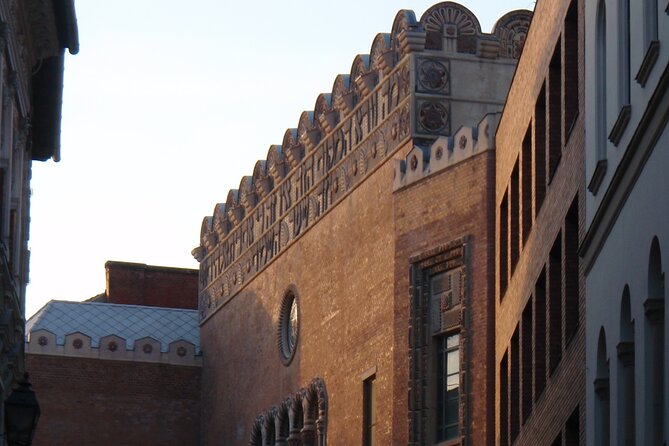
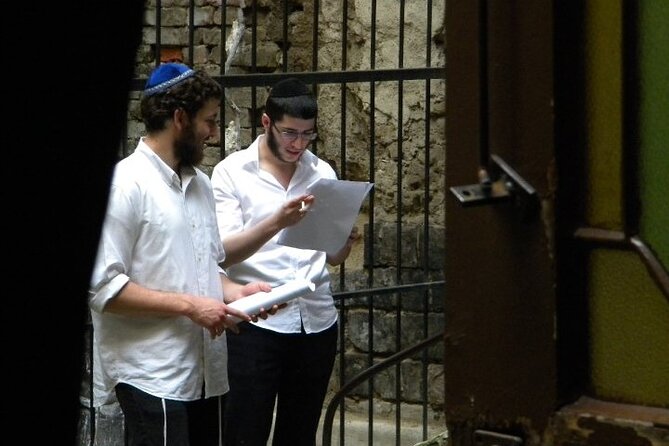
At Kazinczy Street, the tour stops outside the Orthodox synagogue for about 15 minutes. The guide discusses the Orthodox community, said to include roughly 50 to 60 families, along with kosher food and the Jewish ritual bath.
This is one of the more practical cultural stops because it moves beyond wartime history. You learn that Jewish life in Budapest is not only a subject from the past. Religious practice, food traditions, family life, and community institutions still shape parts of the district.
The synagogue itself is not entered, so you will not see the interior or ritual spaces. Still, the exterior stop helps you understand why the district cannot be reduced to memorials and historical tragedy. There is an ongoing community here, even as the neighborhood has also become a major entertainment area.
If food interests you, listen closely during this section. The discussion of kosher food may help you identify places and customs worth exploring later. The tour does not function as a food walk, but it can point you toward a more informed second look at the area.
Ending at Szimpla Kert and modern District VII
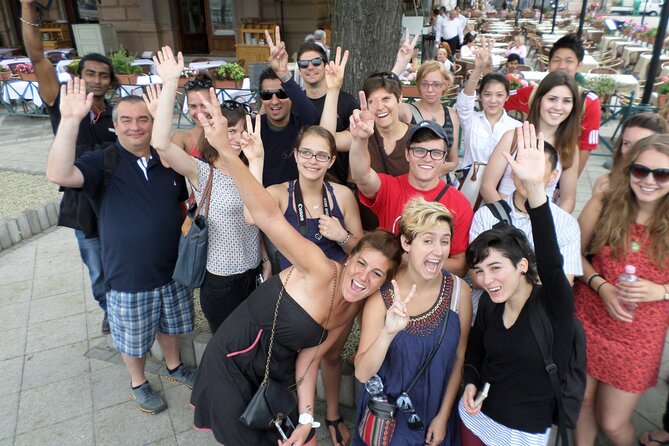
The final stop is Szimpla Kert, one of Budapest’s best-known ruin bars. The tour finishes here after about 15 minutes focused on further murals, street art, pop-up exhibitions, and general orientation.
Ending at Szimpla Kert makes sense. The bar represents the district’s modern reinvention, with culture and entertainment occupying old urban spaces. It also gives you a practical starting point for continuing your own walk through District VII.
You do not pay an entry fee to finish the tour there. The stop is mainly for orientation, so you should not expect a drink, reserved seating, or a guided visit through every part of the bar. You can stay afterward if you wish, but that is separate from the tour.
The walk also points you toward details you might otherwise miss, including small pieces of street art and possible follow-up subjects such as stumbling stones and hidden miniature statues by Mihály Kolodko. These suggestions are useful because the district rewards a second, slower walk.
How the donation price affects the value
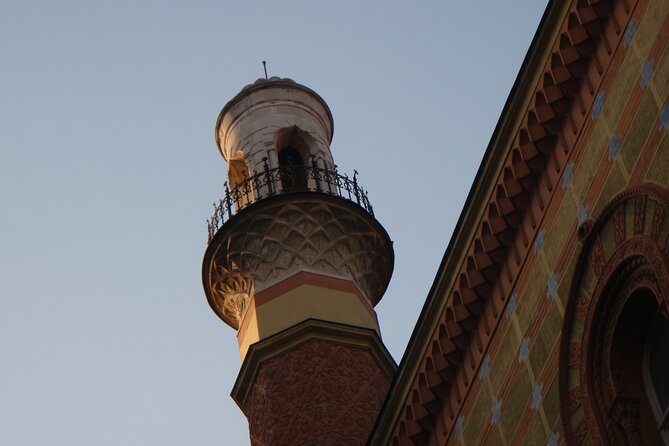
The listed price is about $3.63 per person, but this is not the guide’s full payment. The booking fee goes toward administration, and the guides depend on donations at the end. Your tip is optional and left to your judgment.
That makes the tour inexpensive to reserve, but you should think of it as a pay-what-you-feel walking experience rather than a fully prepaid guided tour. The value depends on the guide you receive, the group’s pace, and how much historical explanation you want.
A 4.9 rating from 264 reviews, with 99 percent recommending the experience, suggests that most people find the format worthwhile. Still, one poor account describes a guide moving too quickly and emphasizing donations. The operator states that rushing groups and compulsory financial pressure are against its policy. I would treat that as a warning to stay aware of the group’s pace and to remember that tipping is your choice.
The strongest praise focuses on clear explanations, enthusiasm, humor, and the ability to answer questions. The weaker feedback asks for more local stories, photographs, and personal detail. If you want a polished private guide with extensive visual material, this may feel too basic. If you want a low-cost orientation before exploring further, the value is strong.
Walking comfort, group size, and timing
The tour lasts approximately 1 hour 45 minutes and can include up to 25 people. You spend much of the time standing while the guide talks, then walking between stops.
Wear comfortable shoes. One person specifically described it as a tour where you should put on your walking shoes, and another noted that the pace was comfortable even for seniors. That said, individual guide style can affect the experience, so stay near the guide and speak up if the group begins to spread out.
The route is near public transportation, and both the starting and ending points are easy to identify. Starting at the Ferris Wheel of Budapest gives you a central meeting place. Finishing at Szimpla Kert places you in District VII, close to food, nightlife, and more walking options.
Service animals are allowed, and most people can participate. The experience is offered in English. Free cancellation is available up to 24 hours before the start time, while cancellations or changes inside that period are not refundable.
Who should choose this Budapest Jewish District walk
I would choose this tour if you want a well-organized introduction to Jewish Budapest before deciding which sites deserve a longer visit. It suits first-time visitors, people interested in Jewish culture and wartime history, and anyone who likes learning through a city walk rather than a single museum.
It also works well early in a Budapest stay. The route gives you practical orientation for District VII and may send you back to the Great Synagogue, Rumbach Street, or other sites with better questions in mind.
You may want something else if synagogue interiors are essential to your visit. You will not enter any of the three synagogues, and one person found the tour too short and generic. A private guide or a paid synagogue visit would offer more depth, personal stories, and time inside the buildings.
The subject is serious. You will hear about persecution, the Holocaust, the ghetto, and the destruction of Jewish life in Hungary. That makes it unsuitable if you are looking only for a light sightseeing stroll, but it is a meaningful choice if you want Budapest’s difficult history presented plainly.
Should you book it?
Book it if you want a low-cost, English-language overview that links Budapest’s three major Jewish synagogues with wartime history and the modern life of District VII. The strongest guides, including Gary, Eszter, Edith, Dora, Edi, Judith, and David, are praised for warmth, humor, passion, and clear teaching.
Go in knowing exactly what you are buying: an exterior-focused walking tour, not synagogue admission. Bring good shoes, expect to stand, keep some tip money in mind, and consider returning later for the interiors. For many visitors, that combination makes this a useful first look at one of Budapest’s most important districts.
FAQ
How long does the Past and Present of Budapest Jewish District Tour last?
The tour lasts approximately 1 hour and 45 minutes.
Where does the tour begin?
The meeting point is beside the Ferris Wheel of Budapest in Erzsébet tér, Budapest 1051, Hungary.
Where does the tour finish?
The tour ends at Szimpla Kert on Kazinczy utca 14, Budapest 1075. Szimpla Kert is a ruin bar, and there is no entry fee for the tour ending point.
Does the tour enter the synagogues?
No. The tour visits the Great Synagogue Memorial Courtyard and cemetery from outside and stops outside Rumbach Street Synagogue and Kazinczy Street Synagogue. Synagogue entry is not included.
Is the tour offered in English?
Yes. The experience is offered in English.
How much does the tour cost?
The listed price is about $3.63 per person. This is a booking fee for administration, and the guide’s earnings depend on optional donations at the end.
Can I cancel for a refund?
Yes, you can cancel up to 24 hours before the experience starts for a full refund. Cancellations or changes made less than 24 hours before the start time are not refundable.
Recently added around Budapest
- Budapest: Private Walking Tour with a Local Guide★ 3.6 · 6 reviews
- Budapest: City Bike Tour with Coffee Stop★ 5.0 · 37 reviews
- Budapest: Danube River Views Bike Ride★ 4.8 · 23 reviews
- From Budapest: Guided Tour of Eger with Wine Tasting★ 4.5 · 6 reviews
- Budapest: Vacation Photographer to collect great memories★ 5.0 · 49 reviews
- Walk to recent and aged spiritual sanctuaries near Budapest★ 5.0 · 5 reviews
- Trash Art Museum: Hungary’s First Scrap Metal Exhibition★ 4.3 · 72 reviews
- Budapest: Multilingual Highlights Tour★ 4.8 · 89 reviews
Jewish Heritage Tours, compared.
Budapest Jewish Heritage Memorial Walking Tour & Synagogue Entry
Read our review →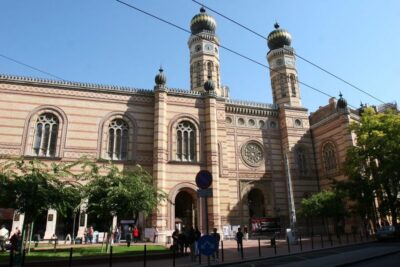
Jewish Heritage Guided Tour with Synagogue Ticket
Read our review →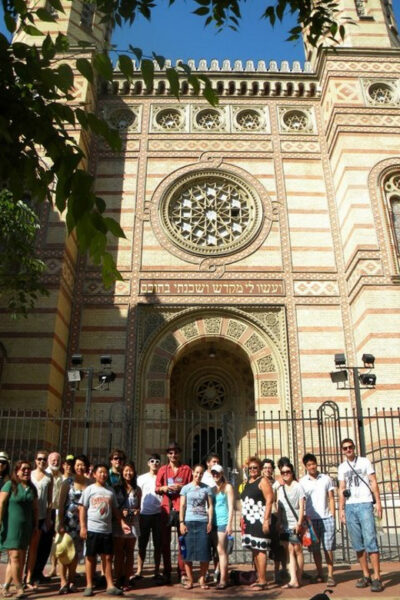
Budapest Dohany Synagogue & Hungarian Jewish Museum & free extras
Read our review →
Jewish History Guided Walking Tour with Historian
Read our review →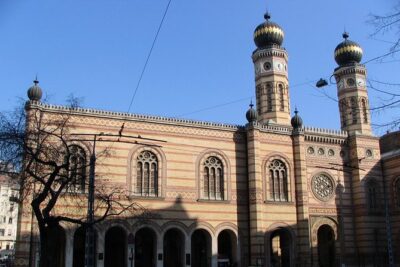
Budapest Dohany, Heroes’, Rumbach synagogues & Jewish Ghetto Tour
Read our review →Browse the lists this tour appears in