
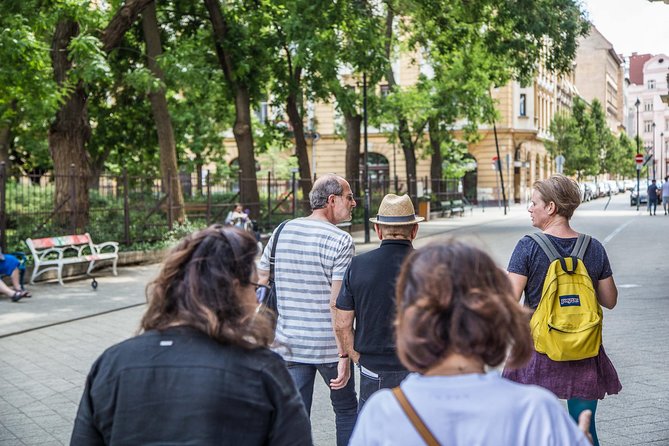
Reviewed · JEWISH HERITAGE TOURS
Budapest Jewish Cuisine & Culture Walk
Budapest’s old Jewish Quarter makes the most sense when you connect its food, buildings, memorials, and present-day street life. This four-hour walk does just that, moving from the Dohány Street Synagogue and World War II sites to pastries, goose dishes, bean stew, wine, and kosher pálinka.
I like the small-group format, which gives your guide room to answer questions and adjust the walk to your interests. I also like the way the tour links Jewish history with today’s cafés, street art, designer shops, ruin pubs, and surviving community life.
The main consideration is the $155 price, especially since admission to the Dohány Street Synagogue is not included. The food, lunch, wine, tastings, and personal guiding help explain the cost, but you should still plan a separate visit if you want to enter the Great Synagogue.
Key points at a glance
- Food with a local story: Taste flodni, turos taska, sausage, goose crackling, soup, solet, wine, and kosher pálinka.
- A serious look at the past: Walk through the former Jewish Ghetto and pause at memorials to those killed during World War II.
- The Dohány Street Synagogue from the outside: See Europe’s largest synagogue, but pay separately if you want to tour its interior.
- A guide-led neighborhood walk: Guides such as Anna, Orsi, Eszter, Daniel, Andrew, Dora, and Elza have been praised for clear explanations and warm, personal service.
- A modern Seventh District: Street art, cafés, shops, ruin pubs, and restaurants show how the area has changed.
- A generous four-hour meal: Eat lightly beforehand. The tour can include enough food to replace lunch, and sometimes even dinner.
Why Budapest’s Seventh District works so well for this tour
The Seventh District is not a museum quarter frozen in the past. It is a working part of Budapest, with old apartment houses, synagogues, food businesses, bars, cafés, and signs of a Jewish community rebuilding its place in city life.
That mix gives the walk its strength. You are not simply moving from one landmark to another. You are learning how a medieval neighborhood became home to a thriving Jewish population, was turned into a ghetto during World War II, and later developed into one of Budapest’s most popular areas for eating and nightlife.
Your meeting point is at Madách Imre tér in central Budapest at 11:00 a.m. From there, your guide leads you through the district on foot. The route is designed for conversation, so this is a better choice if you enjoy asking questions than if you prefer a fast list of sights.
The group size is described as small, with the activity capped at eight people and the tour presented elsewhere as limited to six. The exact number may vary, but the format is clearly meant to be personal rather than a large coach excursion. If only two people book, you may receive something close to a private walk, although the tour requires at least two participants to operate.
More Jewish heritage walks in Budapest:
- Budapest Jewish Heritage Memorial Walking Tour & Synagogue Entry
★ 5.0 · 568 reviews - Budapest: Jewish Heritage Guided Tour with Synagogue Ticket
★ 4.8 · 533 reviews - Jewish Quarter of Budapest Walking Tour
★ 4.7 · 369 reviews
Jewish history among cafés and apartment houses
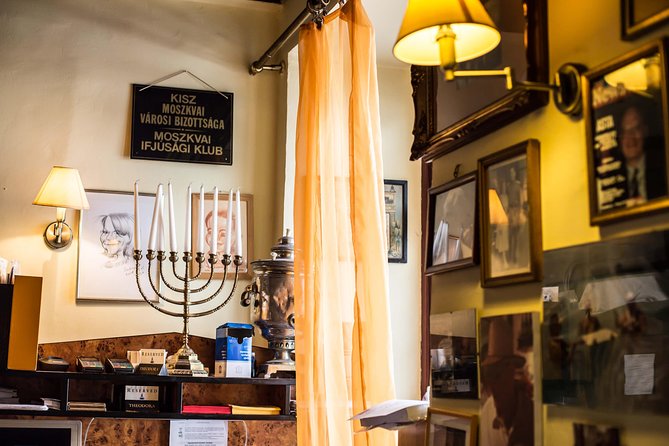
The first part of the walk gives you the background needed to understand the neighborhood. Your guide explains its medieval roots, the growth of Jewish life, and the terrible changes brought by World War II.
The former Jewish Ghetto is not treated as a distant chapter. You walk through the streets where people lived, worked, worshipped, suffered, and tried to survive. Memorials along the route give the history a physical presence, while the guide provides the wider Budapest and Hungarian context.
This is one of the most valuable parts of the experience. Several guides have been praised for explaining not only Jewish history but also the history of Budapest and Hungary as a whole. That broader view matters because the district’s story is tied to the city’s politics, architecture, food, and social life.
The tone should be serious when it needs to be. At the same time, the route also shows how the surviving community helped shape the neighborhood that exists today. You get both the painful history and the present-day story, rather than a walk that treats the area as only a memorial site.
Dohány Street Synagogue and the limits of the included admission
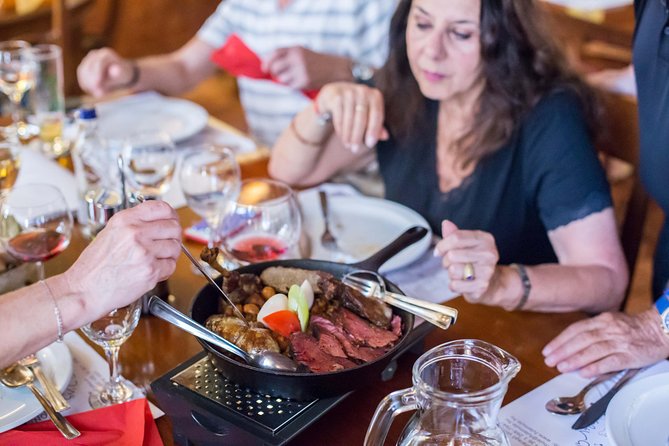
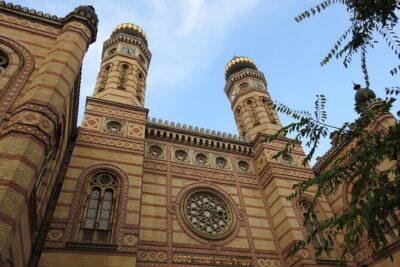
The walk pauses at the Moorish-style exterior of the Dohány Street Synagogue, also called the Great Synagogue. It is Europe’s largest synagogue and one of the most recognizable buildings in Budapest’s Jewish Quarter.
The exterior visit is included as part of the walking route, but the entrance fee to the synagogue itself is not included in the $155 tour price. This is an important detail. If you want to see the interior, museum, cemetery, and other parts of the complex, plan that for another time and budget for a separate ticket.
One person who took the tour on a Saturday knew in advance that the main synagogue and museum would be closed. The walk still continued through the neighborhood, with historic markers and other sites providing plenty to discuss. That makes the tour workable on the Sabbath, but it also means you should not assume the synagogue interior will be available during your walk.
I would schedule a separate visit to the Great Synagogue on another day if it is a priority. The walking tour gives you context and a useful orientation. It is not a substitute for the full synagogue visit.
Flodni, turos taska, and savory Jewish flavors
Food is not added as a token snack at the end of the walk. It runs through the entire experience.
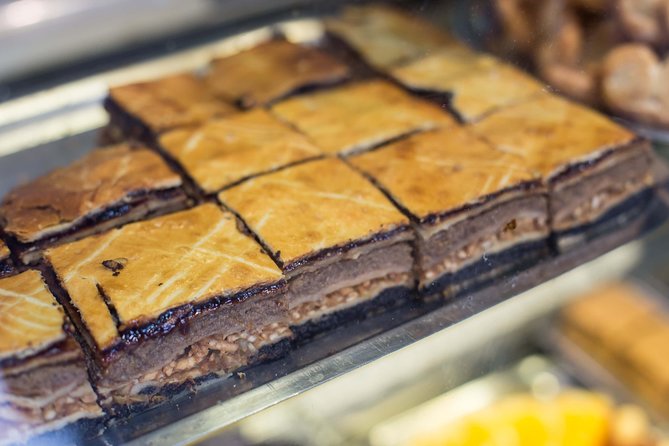
You might stop at different eateries for sweet specialties such as flodni and turos taska. Flodni is a layered pastry associated with Hungarian Jewish baking, while turos taska is a curd-cheese pastry. The exact samples change with the day and availability, so you should think of the menu as a tasting route rather than a fixed restaurant order.
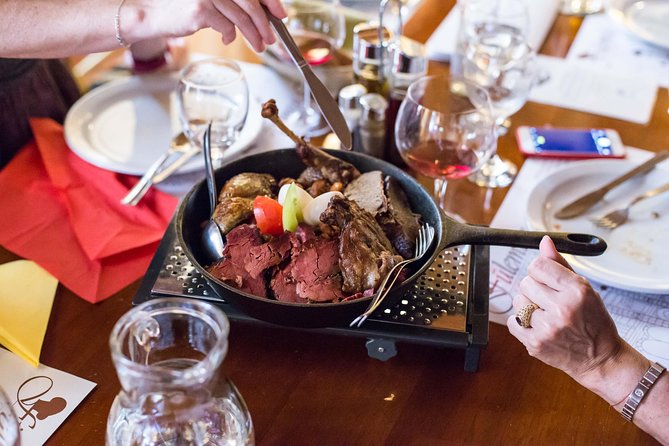
Savory tastings may include sausage and goose crackling. Later, lunch can include goose soup and solet, a Hungarian version of bean stew. Some meals have also included matza ball soup and brisket. Wine accompanies the main meal, and the tour finishes with kosher pálinka at a ruin pub or local wine bar.
The menu is a strength, but it is also the least predictable part of the booking. One person found the lunch selection less appealing, and another felt the small snacks did not match expectations. That is useful to keep in mind. The tour is food-focused, but not every dish will suit every palate.
Dietary requirements should be provided when you book. The available information does not promise that every restriction can be met, so you should explain your needs clearly rather than assume the tasting route can be changed on the day.
More walking tours in Budapest:
- Budapest: Buda Castle Walk with Saint Stephen’s Hall
★ 4.5 · 3,012 reviews - Big Bus Budapest Hop-On Hop-Off Bus and Walking Tour
★ 3.5 · 2,206 reviews - Budapest: Buda Castle District Walking Tour
★ 4.6 · 2,108 reviews - Budapest City Landmarks Walking Tour in 2 Hours
★ 5.0 · 2,048 reviews
Lunch at Tasting Table Budapest
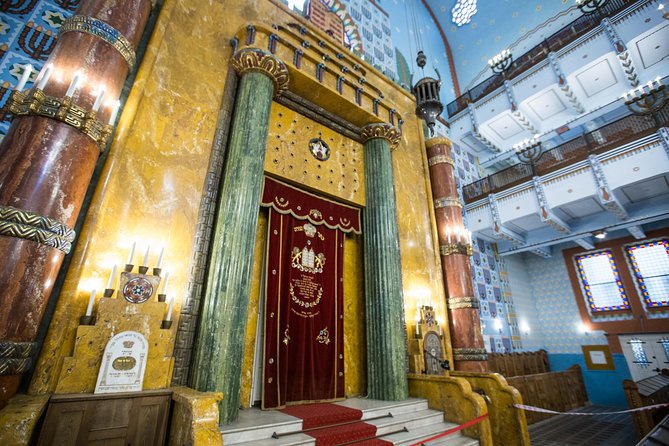
The listed lunch stop is Tasting Table Budapest, where you sit down for a hot meal rather than continuing to eat while walking. The planned dishes include goose soup and solet, with wine and time to talk with your guide and companions.
This pause is important after several tastings. It turns the walk into a proper half-day food experience instead of a succession of tiny bites. You also get a chance to ask about ingredients, customs, and the place of Jewish food within Hungarian cooking.
The food portions can be generous. Several people found there was so much to eat that they skipped dinner, while another suggested having only a small breakfast before setting out. I would follow that advice. Do not arrive after a heavy meal unless you are mainly interested in the cultural side and are comfortable passing on some food.
The restaurant stop also helps you judge the value of the tour. A $155 price is high for a walking tour, but it includes multiple tastings, lunch, wine, drinks, a guide, and synagogue admission as listed in the inclusions, while the separate Dohány entrance remains excluded. Your personal value will depend on how much you would otherwise spend on meals and how much you want the guide’s historical context.
Street art, shops, and ruin pubs
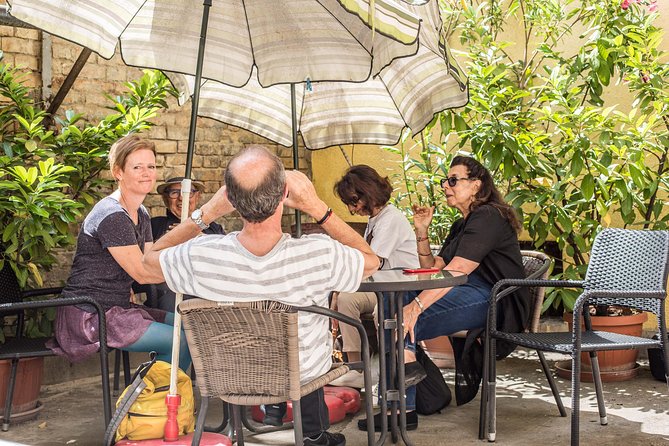
The walk does not end with the historical sites. Your guide points out street art and designer shops that have helped give the district its current reputation.
This part of the route helps explain the contrast at the heart of the neighborhood. The same streets connected with Jewish life and wartime tragedy now contain cafés, restaurants, creative businesses, and nightlife. You see a district that is still changing, not one preserved behind glass.
The final drink is usually kosher pálinka at a ruin pub or a local wine bar. Pálinka is a strong Hungarian fruit brandy, so even a small serving can be enough after a full lunch. If you prefer wine, the itinerary also mentions a local wine bar as a possible ending.
Your guide then returns you to the meeting point and offers suggestions for exploring on your own. This is especially useful early in a Budapest visit. Several people found the food stops and local recommendations helped shape the rest of their time in the city.
What the guides add to the experience
The food and route matter, but the guide is the main reason to book this rather than simply visit the district independently.
Guides named in the feedback include Anna, Orsi, Eszter, Andrew, Daniel, Dora, Elza, and Ana. The strongest praise centers on guides who explain clearly, adapt the walk to the group, and connect Jewish history with modern Budapest.
Anna is repeatedly described as easygoing, informed, organized, and engaging. One tour with her lasted closer to six hours and included extra synagogues, historic sites, restaurants, cafés, and a wine bar. That is longer than the advertised four hours, so you should not count on an extended tour, but it shows that the pace may be flexible.
Orsi was praised for helping people gain a deeper understanding of Budapest, while Eszter was noted for being professional, friendly, and considerate. Daniel took one group to Fulemule Etterem, a restaurant that became a memorable part of the day. Elza was described as warm and willing to show a side of Budapest that might otherwise be missed.
You should still remember that individual guides vary. The consistently strong reports focus on historical explanation, food knowledge, friendly conversation, and careful organization. Those are the qualities to value when comparing this tour with a standard sightseeing walk.
Timing, walking, and group size
The tour begins at 11:00 a.m. and lasts about four hours. It ends back at the starting point, so you do not need to arrange a return transfer from another part of the city.
The activity is near public transportation, and most people can participate. You will be walking through city streets and stopping at several food businesses, so comfortable shoes are a sensible choice. The supplied details do not give a precise walking distance or describe step-free access, so contact the provider if mobility is a concern.
A four-hour start at 11:00 works well for lunch. It also means your first meal of the day should be modest. The schedule may feel long if you are not interested in eating several times, but it is a good length for combining food with serious historical discussion.
The tour is offered in English. Confirmation is provided at booking, and the experience requires a minimum of two people. If that minimum is not met, the provider may cancel and offer another date, another experience, or a full refund.
The cancellation terms are strict: the experience is non-refundable and cannot be changed for any reason once booked. Choose your date carefully.
Who should pay $155 for this experience?
I would recommend this tour to you if you want more than a list of Budapest landmarks. It suits people who enjoy food tastings, local history, small groups, and long conversations with a guide.
It is also a good choice for a first or second day in Budapest. The route introduces the Seventh District, points out places to return to, and gives you practical ideas for food and culture during the rest of your stay.
You may want to skip it if you already know the Jewish Quarter well, dislike rich or unfamiliar foods, or mainly want to enter the Dohány Street Synagogue. In that case, a synagogue visit and a self-guided neighborhood walk may cost less.
The price makes the most sense if you count the meal, wine, tastings, pálinka, and guide together. The experience is not cheap, and the synagogue entrance is an extra cost, but the small-group attention and the chance to ask questions add something you cannot get from a menu or guidebook alone.
Should you book the Budapest Jewish Cuisine and Culture Walk?
Book it if you want a personal introduction to Budapest’s Jewish Quarter that treats food as part of the history, not as a separate activity. The best version of the experience combines strong guiding with a varied tasting route, and the available feedback points especially to guides such as Anna, Orsi, Eszter, Daniel, Andrew, Dora, and Elza.
Go in with a light breakfast, tell the provider about dietary needs, and arrange a separate Dohány Street Synagogue visit if you want to see the inside. With those expectations in place, this is a thoughtful, filling, and useful way to get your bearings in one of Budapest’s most important districts.
FAQ
How long is the Budapest Jewish Cuisine and Culture Walk?
The tour lasts approximately four hours, although individual tours may run longer depending on the guide and the group.
What time and where does the tour start?
It starts at 11:00 a.m. at Madách Imre tér in Budapest’s Seventh District.
Where does the tour end?
The activity ends back at the meeting point.
Is admission to the Dohány Street Synagogue included?
The tour includes a synagogue entrance fee in its listed inclusions, but the entrance fee to the Dohány Grand Synagogue is specifically listed as not included. You should plan a separate visit if you want to tour that complex.
What food might be included?
Possible tastings include flodni, turos taska, sausage, goose crackling, and other Jewish specialties. Lunch may include goose soup, solet, matza ball soup, or brisket. The exact menu varies by day and availability.
Are drinks included?
Yes. Lunch includes wine, and the tour includes drink tastings such as kosher pálinka. The final stop may be a ruin pub or local wine bar.
How many people can join the tour?
The activity has a maximum of eight participants and is presented as a small-group experience limited to six people in its main description. The actual group size can vary.
Can dietary requirements be accommodated?
You should advise the provider of any specific dietary requirements when booking. The available information does not guarantee that every request can be accommodated.
Recently added around Budapest
- Budapest: Private Walking Tour with a Local Guide★ 3.6 · 6 reviews
- From Budapest: Guided Tour of Eger with Wine Tasting★ 4.5 · 6 reviews
- Budapest: City Bike Tour with Coffee Stop★ 5.0 · 37 reviews
- Budapest: Danube River Views Bike Ride★ 4.8 · 23 reviews
- Budapest: Vacation Photographer to collect great memories★ 5.0 · 49 reviews
- Walk to recent and aged spiritual sanctuaries near Budapest★ 5.0 · 5 reviews
- Trash Art Museum: Hungary’s First Scrap Metal Exhibition★ 4.3 · 72 reviews
- Budapest: Multilingual Highlights Tour★ 4.8 · 89 reviews
Jewish Heritage Tours, compared.
Budapest Jewish Heritage Memorial Walking Tour & Synagogue Entry
Read our review →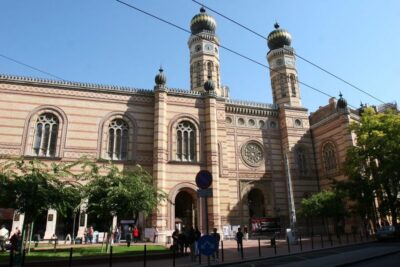
Jewish Heritage Guided Tour with Synagogue Ticket
Read our review →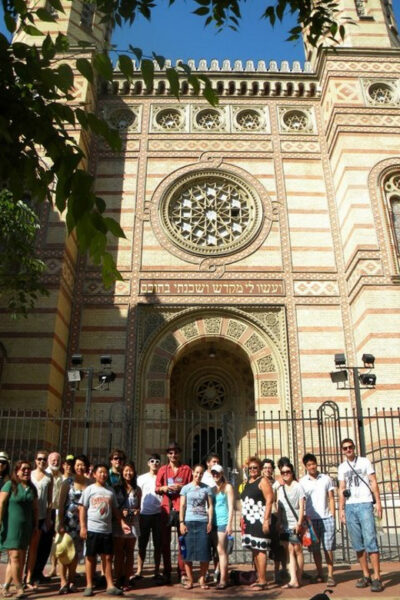
Past and Present of Budapest Jewish District Tour
Read our review →
Budapest Dohany Synagogue & Hungarian Jewish Museum & free extras
Read our review →
Jewish History Guided Walking Tour with Historian
Read our review →Browse the lists this tour appears in