
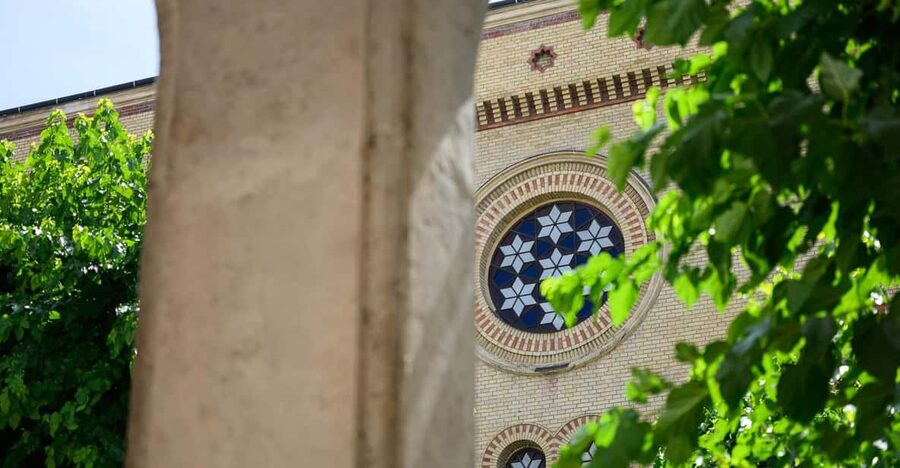
Reviewed · JEWISH HERITAGE TOURS
Budapest: Jewish History with Local Guide & Synagogue Ticket
Budapest’s Jewish Quarter is best understood on foot, where synagogues, memorials, old ghetto walls, and everyday streets sit close together. This two-hour walk links the three synagogues known as the Synagogue Triangle, with an interior visit to Kazinczy Street Synagogue and its normally closed gallery.
I like the clear route and the useful mix of history and local stories. I also like that the $34 price includes the Kazinczy admission, rather than leaving you to pay for several separate sights. The main drawback is that Dohány Street Synagogue and Rumbach Street Synagogue are outside visits only, so this is not the tour for someone wanting full access to all three buildings.
Key points at a glance
- Kazinczy’s gallery is the special access: Your ticket includes a visit to a gallery that is otherwise closed to the public.
- The route covers the Synagogue Triangle: You see Dohány, Rumbach, and Kazinczy synagogues in one compact walk.
- The former ghetto becomes easier to understand: Holocaust memorials and a surviving wall fragment give the history a physical setting.
- The guide adds cultural context: Expect discussion of Jewish holidays, tradition, everyday life, and local Budapest history.
- Dora is one guide to look for: Her clear, interesting explanations have earned particularly warm praise.
- It is short but focused: The two-hour length suits a first visit, though the walk may not suit people with mobility impairments.
Starting at Dohány Street Synagogue
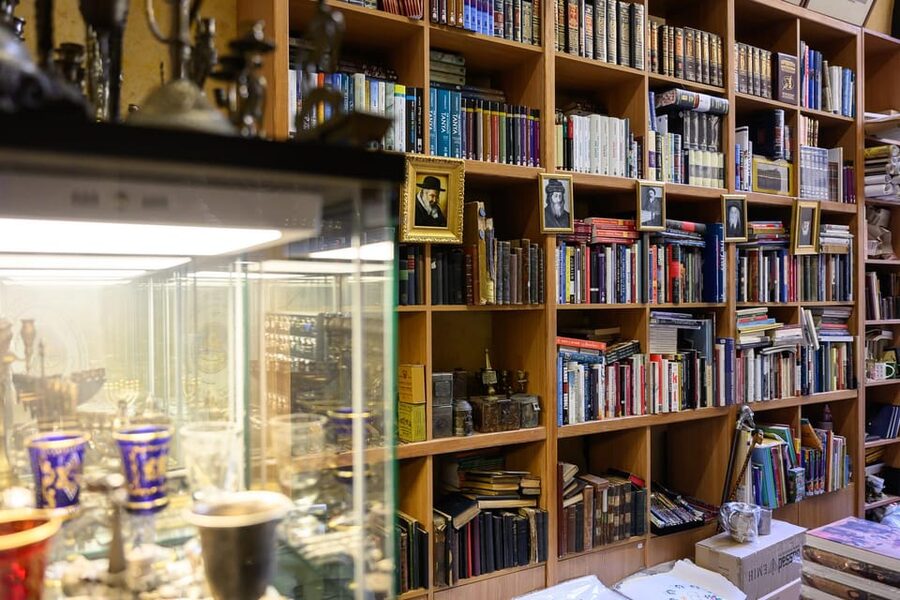
Meet your guide at the Herzl Tivadar sign outside Dohány Street Synagogue. This is a practical starting point because Dohány is one of Budapest’s most recognizable Jewish landmarks and an easy place to find your group.
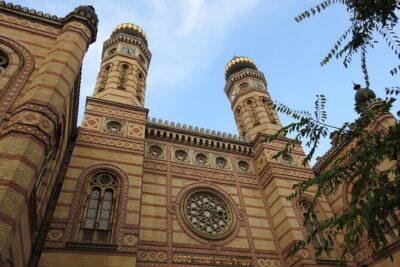
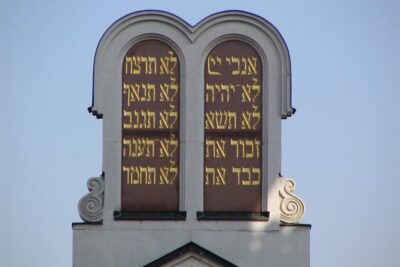
The synagogue is visited from outside on this tour. Your guide uses the building as a doorway into the story of Budapest’s Jewish community, rather than taking you through its interior. Dohány is described as the largest synagogue in Europe and the second largest in the world, so even an exterior stop gives the tour a strong sense of scale.
You will learn how Jewish life developed in Budapest, how religious traditions shaped daily routines, and how the Jewish Quarter changed over time. The emphasis is not only on architecture. It is also on people, customs, holidays, and the events that reshaped the neighborhood.
That approach matters. A synagogue can look impressive while remaining hard to understand. A good guide connects the building to the community that used it, and this is where the tour begins to earn its price.
More Jewish heritage walks in Budapest:
- Budapest Jewish Heritage Memorial Walking Tour & Synagogue Entry
★ 5.0 · 568 reviews - Budapest: Jewish Heritage Guided Tour with Synagogue Ticket
★ 4.8 · 533 reviews - Jewish Quarter of Budapest Walking Tour
★ 4.7 · 369 reviews
Walking through the Jewish Quarter
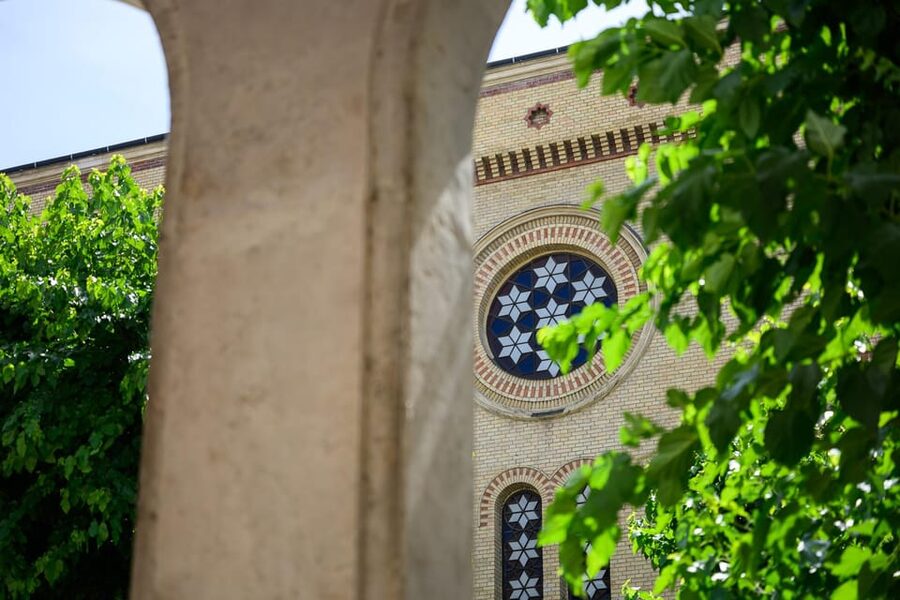
From Dohány, the route continues through the Jewish Quarter. You are not being rushed from one ticket gate to another. The streets themselves are part of the lesson, with the guide explaining how the area functioned and what happened here during the Second World War.
The tour includes discussion of the former Jewish ghetto. This gives you a better sense of how the quarter changed from a neighborhood where people lived, worked, worshipped, and raised families into a place marked by confinement and persecution.
You will also hear about Jewish culture in Hungary. The guide discusses traditions, holidays, and everyday life, helping you see Judaism as a living culture rather than only a subject connected with wartime tragedy.
I particularly like this balance. Budapest’s Jewish Quarter is now one of the city’s popular areas, but a lively restaurant or bar does not tell you what the streets meant to earlier residents. The guide helps separate the modern quarter from its older layers.
The walk is conducted in English only. That keeps the presentation focused, but it also means you should book this experience only if you are comfortable following a full historical explanation in English.
Remembering the past at the Holocaust memorials
The route includes the Raoul Wallenberg Holocaust Memorial Park as a photo stop and pass-by. You do not receive a separate entry ticket for this part, but the stop adds an important reminder of the people who tried to protect Budapest’s Jewish population during the Holocaust.
The tour also brings you to Holocaust monuments in the area. These stops are brief, yet they help put names, symbols, and places around the historical account. I find memorials most useful when a guide gives enough context to explain what you are seeing without turning the visit into a list of dates.
You should expect a serious section of the walk. The subject is painful, and the tour does not treat it as a light sightseeing stop. At the same time, the guide also discusses life before and beyond the Holocaust, which keeps the story from reducing Budapest’s Jewish community to one period of suffering.
This is one reason the local guide matters. A printed description can tell you what a memorial represents. A guide can explain how that memorial fits into the neighborhood and into Budapest’s wider story.
Seeing Rumbach Street Synagogue from outside
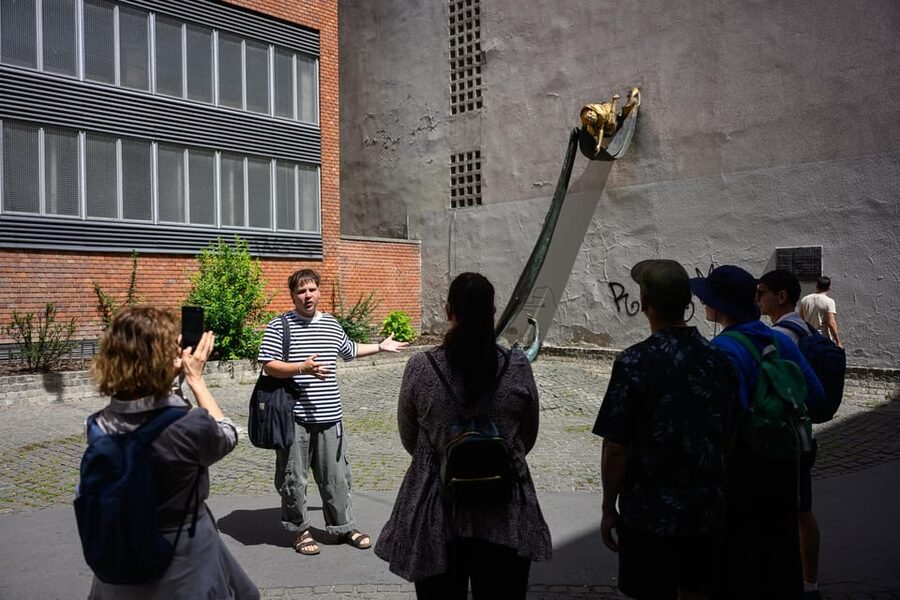
Rumbach Street Synagogue is another outside stop. You can photograph the building and hear about its place in the Synagogue Triangle, but admission is not included here.
That limitation is worth understanding before you book. The route gives you a look at three major synagogues, yet only Kazinczy includes an interior visit. If your priority is seeing the architectural details inside Dohány and Rumbach, you will need separate tickets and additional time.
Still, visiting all three from the street creates a useful comparison. Your guide can point out differences in style, religious tradition, and historical use. The walk is not simply three stops with similar buildings. It shows how different Jewish communities and institutions took shape within a fairly compact part of Budapest.
Rumbach also breaks up the walking route nicely. You move from a major landmark to a smaller street setting, then continue toward the former ghetto wall. That change helps you notice how the district is woven into ordinary city streets.
More history tours in Budapest:
- Budapest: Historic Cruise with Welcome Drink
★ 4.7 · 6,512 reviews - Budapest Historical Sightseeing – Free Walking Tour
★ 5.0 · 1,302 reviews - Buda Castle District Dark History, Legends and Vampire Night Tour
★ 4.5 · 1,240 reviews - BloodThirsty Hungary: Walking tour & Dark Historical Stories
★ 4.9 · 633 reviews
Finding the surviving ghetto wall fragment
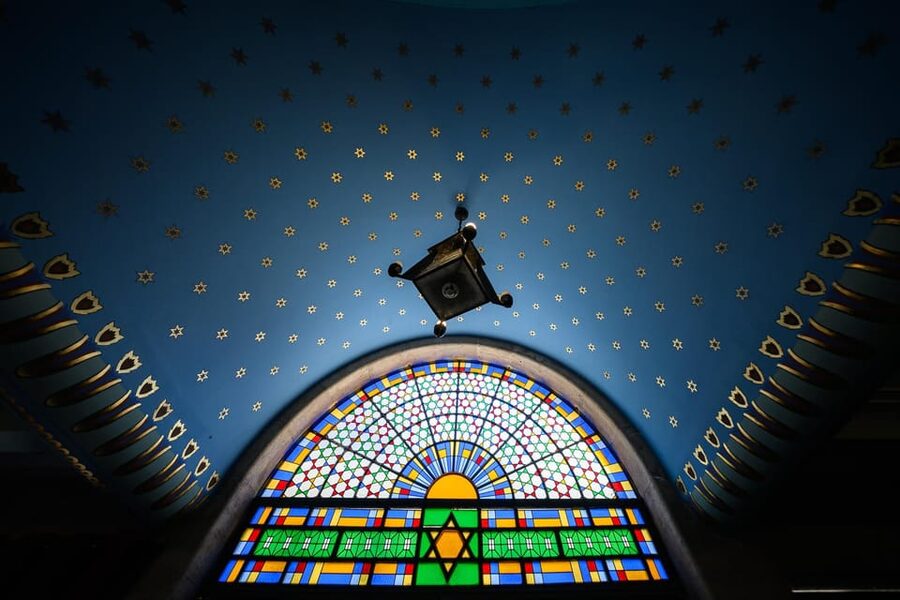
The Jewish Ghetto Wall Fragment is a small but powerful stop. This is a photo stop, not a museum visit, and you should not expect a large preserved structure or a long presentation at the site.
Its value comes from its scale. A fragment can make the history feel less abstract because it is part of the actual built environment. You are looking at a physical remnant connected to the boundaries that confined Jewish residents during the Holocaust.
The guide’s explanation is especially useful here. Without context, a section of old wall may look like any other piece of masonry. With the story attached, it becomes a marker of how the neighborhood was controlled and how ordinary streets were transformed by persecution.
This is also a good point to keep your expectations realistic. The tour moves at a walking-tour pace, so the wall stop will not provide the extended reflection you might get at a museum. Its purpose is to place the history under your feet.
Entering Kazinczy Street Synagogue
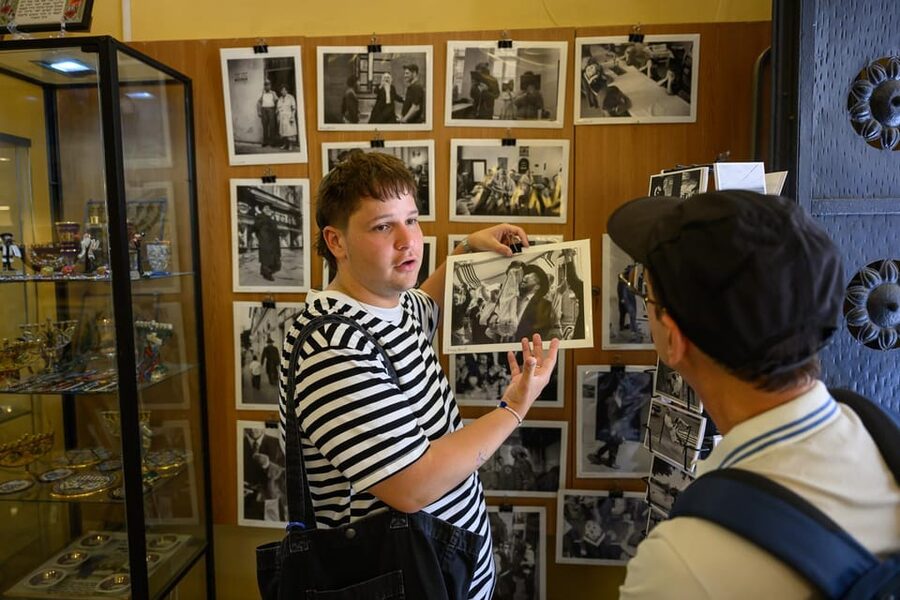
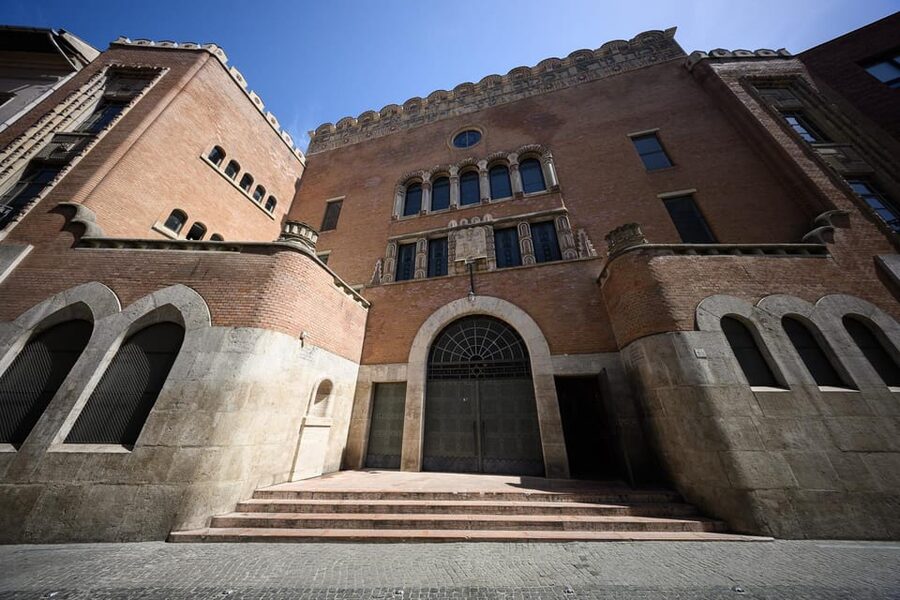
Kazinczy Street Synagogue is the main interior visit and the tour’s clearest advantage. Admission is included, and your guide continues the explanation inside the building.
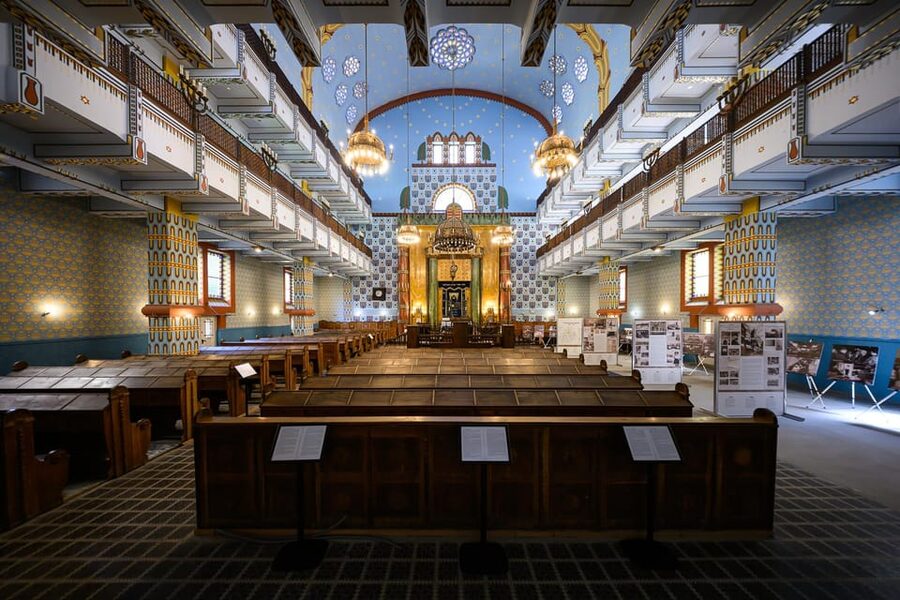
The synagogue was built in the Art Nouveau style and is one of the largest operating Orthodox synagogues in Europe. Its continuing religious use gives the visit a different feeling from touring a building that functions only as a historic monument.
The guide explains the synagogue’s place within Jewish life and tradition, helping you notice more than decorative details. You will also learn how Orthodox practice relates to the wider story of Jewish communities in Budapest.
Because this is an active synagogue, approach the visit with respect. The tour information does not list a dress code, so you should check current instructions when booking or arriving. Pets are not allowed inside, though they are welcome during the walking portion.
The experience ends at Kazinczy Street Synagogue, back at the meeting-point area. That makes the finish convenient if you want to continue exploring the Jewish Quarter afterward. It also means you are not left searching for a distant return point after the final explanation.
The exclusive gallery visit
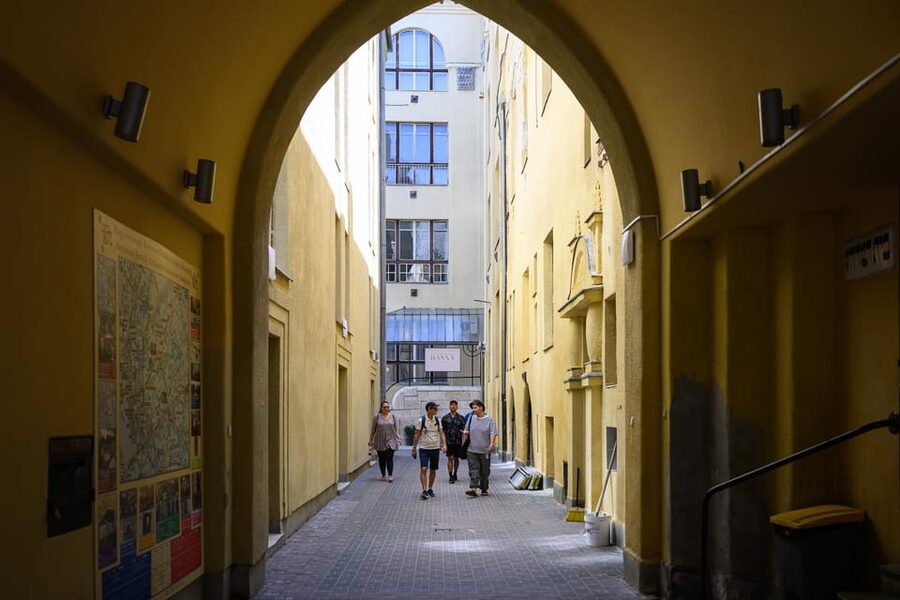
The gallery is the most unusual feature of this experience. It is otherwise closed to the public, but the tour includes access with the guide.
Since the gallery is not described in detail, I would not book this expecting a specific collection or display. Its value is the added access itself, plus the chance to see another part of Kazinczy Synagogue that ordinary visitors may not enter.
This is also where the $34 price becomes easier to assess. You are paying for two hours with an English-speaking local guide, a structured route through several important sites, and admission to Kazinczy with the gallery visit. The two outside synagogue stops do not include entry, but the included access is the part that makes the cost reasonable.
If you already plan to buy tickets for Kazinczy separately, compare the prices and opening arrangements. If you want the guide’s explanation and the gallery access together, the package is simpler and likely offers better value than arranging the pieces on your own.
What the guide adds
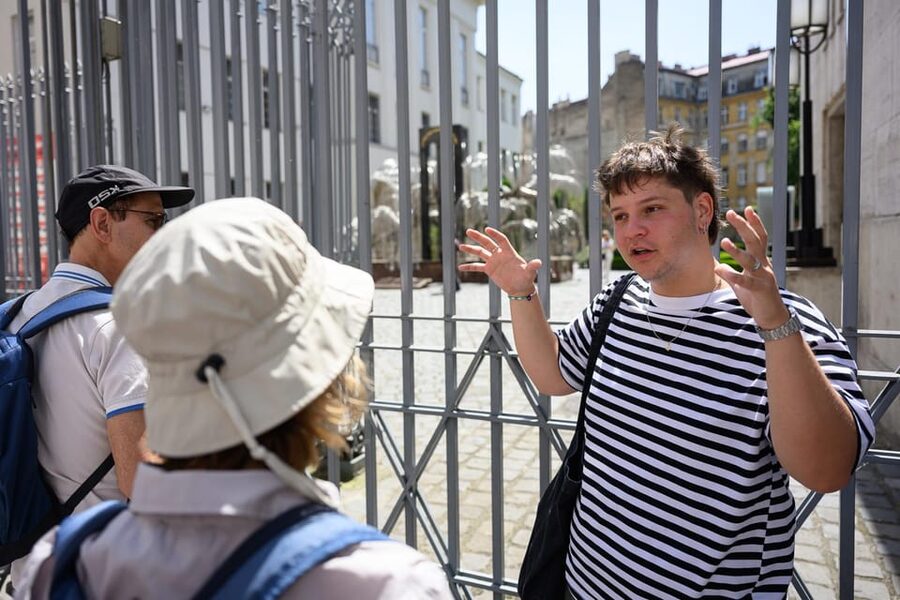
The tour depends heavily on the quality of the person leading it. The strongest praise has focused on guides who explain the subject clearly and make the history easy to follow.
Dora is specifically noted for explaining everything in an interesting way. Another guide is described as pleasant and thorough, with a strong explanation of Jewish history and culture. You should expect the guide to provide more than dates and building names.
The best part of a walking tour like this is the chance to ask questions as you go. The supplied information does not promise a particular guide, group size, or private format, so you should not assume Dora will lead every departure. Still, the guide’s role is central, and the consistently high score of 4.9 from 14 ratings suggests that clear presentation is a major strength.
I would use this tour early in a Budapest visit. The guide can give you a framework for the quarter, after which you can return to any synagogue, memorial, or street that catches your attention.
Timing, pace, and practical limits
The activity lasts two hours. That is long enough to cover the main route without taking half a day from your Budapest plans, but it is short enough that the explanations need to stay focused.
You will be walking between stops, with time for photographs and guided commentary. The activity is not suitable for people with mobility impairments, so consider the route carefully if walking for two hours may be difficult.
The meeting point is the Herzl Tivadar sign outside Dohány Street Synagogue. Check the available starting times when booking, since the tour does not list one fixed departure time.
Pets are not allowed inside the synagogue. They are welcome during the outdoor walking portion, but anyone bringing a pet will need to arrange the indoor visit accordingly.
The tour offers free cancellation up to 24 hours before the start and a reserve-now, pay-later option. Those policies are useful if your Budapest schedule is still shifting, but the more important planning point is to leave yourself enough time to arrive at the meeting point.
Who should book this walk?
I would choose this tour if you want a focused introduction to Budapest’s Jewish Quarter and prefer a guide to connect the sites. It is especially suitable for first-time visitors, history-minded travelers, and anyone curious about Jewish traditions as well as wartime history.
It also suits you if you want to see the three main synagogues but do not have time for several separate admissions. Kazinczy’s interior and gallery visit give the route a clear payoff.
I would choose something else if your main goal is extensive time inside Dohány or Rumbach. Since both are outside visits here, you will need separate visits for a fuller architectural tour. I would also avoid this activity if a two-hour walking route is not practical for you.
Is the Budapest Jewish History walk worth $34?
For $34, this is a well-focused introduction rather than a complete tour of every Jewish site in Budapest. Its strongest features are the local English-speaking guide, the compact route through the former ghetto, and the included entry to Kazinczy Street Synagogue with its normally closed gallery.
Book it if you want context, not just photographs. Skip it if you need full interior access to all three synagogues or prefer to explore the quarter entirely at your own pace.
The best choice is to take it near the start of your Budapest stay. You will leave with a clearer understanding of the streets, memorials, and religious buildings, then have the option to return to the places that deserve more time.
FAQ
How long does the Budapest Jewish history tour last?
The walking tour lasts two hours.
What language is the tour conducted in?
The tour is available in English with a live English-speaking guide.
Where does the tour start?
Meet your guide at the Herzl Tivadar sign outside Dohány Street Synagogue.
Where does the tour finish?
The activity ends back at the meeting-point area, at Kazinczy Street Synagogue.
Is entry to Kazinczy Street Synagogue included?
Yes. Admission and guided access to Kazinczy Street Synagogue are included.
Can I visit the gallery at Kazinczy Street Synagogue?
Yes. The tour includes an exclusive visit to the gallery, which is otherwise closed to the public.
Are Dohány Street Synagogue and Rumbach Street Synagogue visited inside?
No. Both are outside visits and photo stops on this tour. Other entry tickets are not included.
Are pets allowed?
Pets are not allowed inside the synagogue, but they are welcome during the walking portion of the tour.
Recently added around Budapest
- Budapest: Private Walking Tour with a Local Guide★ 3.6 · 6 reviews
- From Budapest: Guided Tour of Eger with Wine Tasting★ 4.5 · 6 reviews
- Budapest: City Bike Tour with Coffee Stop★ 5.0 · 37 reviews
- Budapest: Danube River Views Bike Ride★ 4.8 · 23 reviews
- Budapest: Vacation Photographer to collect great memories★ 5.0 · 49 reviews
- Walk to recent and aged spiritual sanctuaries near Budapest★ 5.0 · 5 reviews
- True Crime Walking Tour in the Buda Castle district★ 5.0 · 26 reviews
- Trash Art Museum: Hungary’s First Scrap Metal Exhibition★ 4.3 · 72 reviews
Jewish Heritage Tours, compared.
Budapest Jewish Heritage Memorial Walking Tour & Synagogue Entry
Read our review →
Jewish Heritage Guided Tour with Synagogue Ticket
Read our review →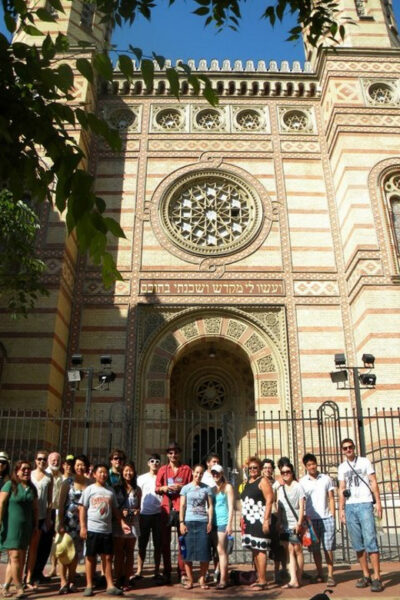
Past and Present of Budapest Jewish District Tour
Read our review →
Budapest Dohany Synagogue & Hungarian Jewish Museum & free extras
Read our review →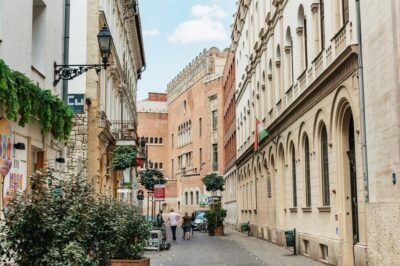
Jewish History Guided Walking Tour with Historian
Read our review →Browse the lists this tour appears in