
Reviewed · JEWISH HERITAGE TOURS
Jewish Quarter of Budapest Walking Tour
Budapest’s Jewish Quarter carries two very different stories at once. You’ll trace the history of Hungarian Jews, the Holocaust, and the people who helped others survive, then finish among street art, nightlife, and the city’s famous ruin bars. I like that the tour does not treat the district as a museum piece. It connects painful history with the neighborhood you see today.
I also like the personal storytelling and the chance to visit the three synagogues of the Jewish Triangle from the outside without paying an entrance fee. Guides such as Judit, Ester, Gary, and Dora are praised for clear explanations, warmth, and thoughtful answers. The main consideration is that the tour does not enter the synagogues, and the 1.5-hour schedule can feel short if you want a detailed account of Jewish daily life before World War II.
Key points
- Three synagogues from the outside: See the Jewish Triangle and learn how the buildings shaped the district.
- History with a human face: Hear about Hungarian Jews, the Holocaust, and the Righteous Gentiles.
- Past and present together: The route links memorial stories with street art, miniature statues, nightlife, and ruin bars.
- A local-style ending: The walk finishes at a pub, often identified as Bar Simplar, before the evening crowds arrive.
- Small booking fee, separate tip: The advertised price is about $2.27, but guides depend on donations and most people tip around €10.
- English level matters: Upper-intermediate English is essential because the tour relies on spoken stories and explanation.
Starting beside the Budapest Eye
The meeting point is beside the fountain at the Budapest Eye ferris wheel. Look for the royal blue flag. This is a handy central starting place, especially if you are already exploring the city center, though the open area around the ferris wheel can be busy and easy to scan past. Arrive a little early so you can find the flag without rushing.
The tour lasts about 90 minutes and returns to the same meeting point. That makes it easy to fit into a first day in Budapest, before dinner or a later night out. You are walking through central streets rather than taking transport, so wear comfortable shoes and be ready to spend much of the time listening outdoors.
The tour is offered in English only. You should have an upper-intermediate level of English to follow the guide, especially during the more serious sections. This is not a tour built around quick facts on a printed sheet. The meaning comes through spoken stories, details, and questions.
More Jewish heritage walks in Budapest:
- Budapest Jewish Heritage Memorial Walking Tour & Synagogue Entry
★ 5.0 · 568 reviews - Budapest: Jewish Heritage Guided Tour with Synagogue Ticket
★ 4.8 · 533 reviews - Budapest: Best of Downtown and Jewish Quarter Tour
★ 5.0 · 312 reviews
The Jewish Triangle and three synagogues
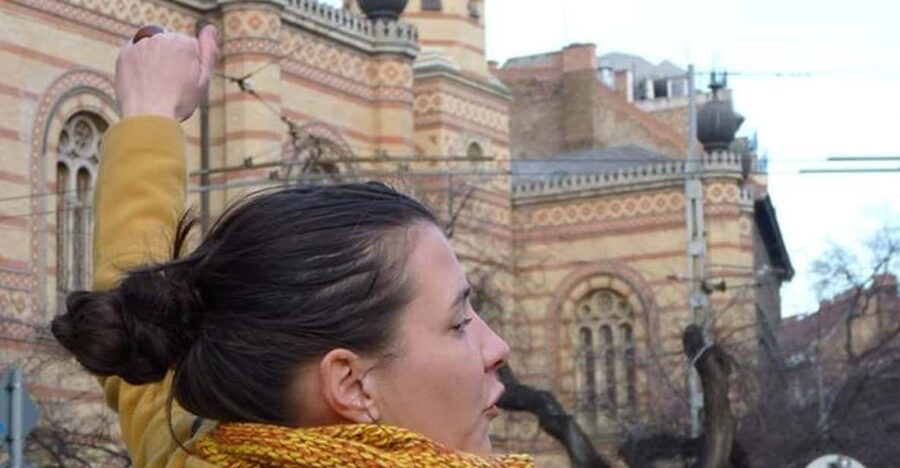
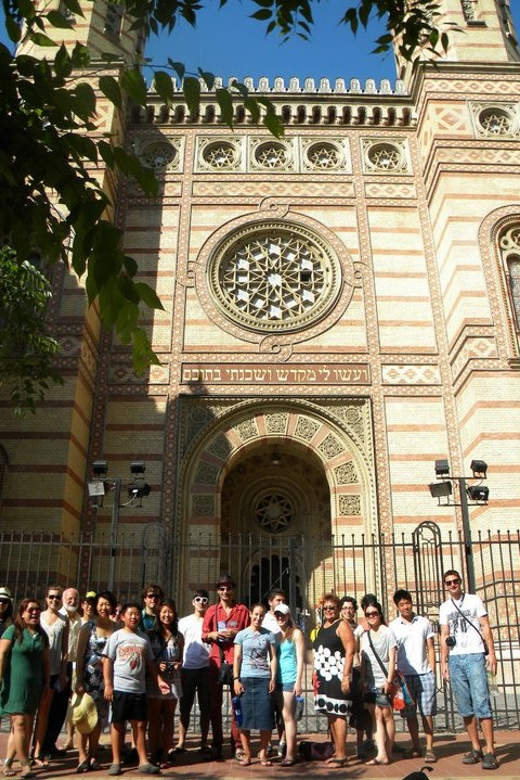
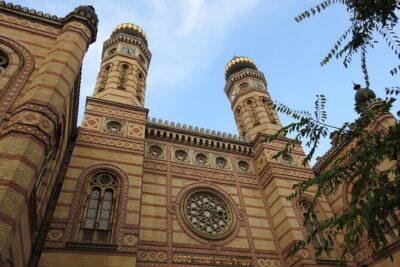
The Jewish Quarter is often understood through its three major synagogues, which form the Jewish Triangle. Seeing all three from the outside gives you a useful sense of the district’s religious and architectural importance, even though the tour does not go indoors.
That limitation matters. If you want to see the interiors, decorations, or exhibitions, you will need to return independently and arrange separate admission. On this walk, the synagogues are reference points for the broader story. The guide explains how Jewish life shaped this part of Budapest, then places the buildings within the wider history of the Hungarian Jewish community.
I like this approach for a first visit because it keeps the tour moving. You see the main landmarks without spending the entire 90 minutes in one building. At the same time, anyone with a strong interest in synagogue architecture may feel that the outside-only format leaves them wanting more.
The guides seem to handle difficult material with care. Judit is praised for patient explanations and a clear speaking voice. Ester is described as a strong storyteller who keeps the group focused. Gary brings energy and adds context about Budapest beyond the Jewish District. Dora is noted for answering questions and giving information in a friendly, attentive way.
Those names matter less than the guide you happen to receive, but they give you a sense of the style to expect: conversational, informed, and willing to pause for questions rather than racing from one stop to the next.
Stories of Hungarian Jews and the Righteous Gentiles
The heart of the walk is the story of Hungarian Jews. You learn about the community’s place in Budapest and the events that damaged or destroyed so much of Jewish life during the Second World War. The subject is painful, and the tour does not try to soften it with a shallow sightseeing script.
The stories of the Righteous Gentiles add an important human dimension. These were non-Jewish people who helped Jews during persecution, often at great personal risk. Including them keeps the history from becoming only a list of dates and tragedies. You are asked to think about individual decisions, courage, and responsibility.
Several guides are praised for treating this subject respectfully. That is especially useful if you are visiting with people who know little about Hungarian Jewish history. The explanations are meant to be understandable without turning the subject into a lecture.
The balance between serious and lighter material also helps. One part of the tour may leave you quiet, while another points out a detail in the street or offers a useful suggestion for the rest of your Budapest stay. The shift is not meant to make light of the past. It reflects the district itself, where memorials, homes, bars, art, and everyday city life occupy the same streets.
What you may miss about Jewish daily life
The tour’s strongest material concerns major historical events, important sites, and personal stories. If you want a close picture of ordinary Jewish life before World War II, such as family routines, work, food, or neighborhood customs, you may find the time too limited.
One visitor specifically wished for more about prewar daily life. That is a fair criticism. A 90-minute walk has to choose between more historical detail, more buildings, and more time for questions. The Jewish Triangle, wartime history, rescue stories, and modern culture already fill the schedule.
I would treat this tour as an introduction rather than a complete study of the district. It gives you a framework. Afterward, you can decide whether to return to a synagogue, museum, memorial, or another Jewish site on your own. The guide can also point you toward places to eat and other things to do in Budapest.
More walking tours in Budapest:
- Budapest: Buda Castle Walk with Saint Stephen’s Hall
★ 4.5 · 3,012 reviews - Big Bus Budapest Hop-On Hop-Off Bus and Walking Tour
★ 3.5 · 2,206 reviews - Budapest: Buda Castle District Walking Tour
★ 4.6 · 2,108 reviews - Budapest City Landmarks Walking Tour in 2 Hours
★ 5.0 · 2,048 reviews
Street art, miniature statues, and the modern quarter
The Jewish Quarter is not presented as frozen in the past. The tour also looks at urban art and the small symbols scattered through Budapest. One guide is praised for explaining the miniature statues found around the city, which adds a playful layer to your walk.
These details are valuable because they train you to look up, down, and around rather than simply follow the main landmark route. You might notice a mural, a tiny figure, or a symbol that would otherwise pass unnoticed. The guide’s job here is less about naming every artwork and more about showing how Budapest uses public space to tell stories.
The contemporary side of the tour also covers nightlife and ruin-bar culture. That contrast is one of the best reasons to choose this particular walk. You are not simply touring old religious buildings, then leaving the district. You see how the area has become one of Budapest’s best-known evening neighborhoods.
Still, keep your expectations measured. The urban-art portion is one part of a history-focused walk, not a dedicated street-art tour. If graffiti, murals, and design are your main interest, you may want a separate art walk later.
Ending at a ruin bar before the crowds
The final stop is a local pub or ruin bar. Several guide descriptions identify the ending as Bar Simplar, and the timing can work in your favor. You arrive before the heavy nighttime crowds, giving you a chance to look around and decide if you want to stay.
This ending is more useful than it may sound. Budapest’s ruin bars can be confusing on a first visit, particularly if you are not sure which entrance is public, what the atmosphere is like, or where to go once inside. Finishing there gives you a practical first look and a natural place to continue your evening.
Some guides also provide restaurant and bar suggestions. Gary, in particular, is praised for recommendations after the tour, while other guides are noted for leaving visitors with ideas for further sightseeing. You should still ask direct questions if you want advice matched to your budget or interests.
The pub stop is not included as a meal or paid activity. Think of it as the final setting for the tour, not a full food-and-drink experience. You can order something if you want to stay, but you are free to leave after the walk.
The real price: $2.27 plus a donation
The advertised cost is about $2.27 per person. That amount is a booking and administration fee, not the guide’s pay. You are expected to decide what the tour was worth and tip at the end, with €10 per person given as the usual amount.
That makes the tour inexpensive only if you understand the payment model. A couple paying the small booking fee but leaving no donation would not be supporting the guide’s work. If the guide gives you a useful introduction to Budapest and handles the difficult history well, budget the tip from the start.
At around €10, the value is strong for a 1.5-hour central walking tour, particularly if you use the recommendations afterward. You are paying for a guide’s time, preparation, storytelling, and ability to connect the sites. The low booking fee should not lead you to expect a completely cost-free activity.
The group rule is also important. Groups of eight or more cannot book this tour, even if members make separate reservations. That keeps the experience aimed at smaller parties and prevents a large organized group from taking over the walk.
Who will enjoy this Budapest walk?
I would choose this tour if you want a focused first look at Budapest’s Jewish Quarter and prefer a guide who explains meaning rather than simply pointing out buildings. It suits first-time visitors, history-minded people, and anyone curious about how Budapest’s past connects with its current nightlife.
It also works well for people who want a short activity. At 90 minutes, the walk does not consume half a day, and the return to the Budapest Eye makes the rest of your schedule easy to manage.
Families can join, but younger children may struggle with the serious subject matter and the need to listen. One guide noted that toddlers are manageable in a stroller only if they remain quiet. That is useful advice: this is a spoken history tour, not a child-focused sightseeing activity.
The route is wheelchair accessible, according to the activity details. Since you are moving through city streets and stopping to listen, it is still sensible to ask about the specific starting time and conditions when booking if mobility is a major concern.
You should think twice if you need synagogue interiors, a long architectural tour, or a detailed account of everyday Jewish life before the war. You may also prefer a private tour if your group wants to set the pace or spend much longer at individual sites.
Timing, language, and practical preparation
Check the available starting times before you book. The tour’s schedule changes by availability, and the most suitable departure will depend on whether you want to see the quarter in daylight or finish near the beginning of the evening.
Bring comfortable shoes and water. Guides have made a point of finding shade and quieter places to speak, but you will still be outside for much of the walk. Budapest can be hot, and standing still while listening can feel harder than walking.
Keep your phone available for the meeting instructions, but do not expect the guide to rely on visuals alone. The tour is built around clear English narration. If you often struggle with spoken English, especially when people speak outdoors, this may not be the right choice.
Cancellation is free up to 24 hours before the start, and you can reserve now and pay later. Those policies are useful if your Budapest schedule is still changing, but the more important planning point is the tip. Have cash or another suitable way to thank the guide at the end.
Should you book the Jewish Quarter Walking Tour?
Book it if you want human stories, major synagogue landmarks, and a taste of modern Budapest in one compact walk. The strongest guides make the history clear without losing compassion, and the final ruin-bar stop gives you an easy bridge from daytime sightseeing to the city’s nightlife.
Do not book it expecting to enter the three synagogues or study every part of Jewish life in Budapest. For that, plan extra time and separate visits. But as a first introduction, this is a thoughtful and well-priced choice, provided you understand the donation system and can follow upper-intermediate English.
FAQ
Where does the Jewish Quarter walking tour start?
Meet beside the fountain at the Budapest Eye ferris wheel in central Budapest. The guide will be holding a royal blue flag.
Where does the tour end?
The activity ends back at the Budapest Eye meeting point, although the final stop is at a local pub or ruin bar.
How long does the tour last?
The walking tour lasts about 1.5 hours. Starting times depend on availability.
Is the tour offered in English?
Yes. English is the stated tour language, and an upper-intermediate level of English is essential.
Does the tour enter the synagogues?
No. The route visits the three synagogues of the Jewish Triangle from the outside. You can visit the synagogue interiors independently.
What historical subjects does the tour cover?
The tour covers Hungarian Jewish history, the Righteous Gentiles, the Jewish District, and Budapest’s changing culture.
Does the tour include a ruin bar?
The walk ends at a local pub or ruin bar. The experience does not state that drinks or food are included.
How much does the tour cost?
The booking fee is about $2.27 per person. This fee covers administration and does not pay the guide.
Should I tip the guide?
Yes. The guides depend on donations, and the usual tip is about €10 per person, though the amount is your choice.
Can groups of eight or more join?
No. Groups of eight or more are not permitted to book, even when members reserve separately.
Is the tour wheelchair accessible?
Yes. The activity is listed as wheelchair accessible.
Can I cancel the booking?
You can cancel up to 24 hours in advance for a full refund. You can also reserve now and pay later.
Recently added around Budapest
- Budapest: Private Walking Tour with a Local Guide★ 3.6 · 6 reviews
- From Budapest: Guided Tour of Eger with Wine Tasting★ 4.5 · 6 reviews
- Budapest: City Bike Tour with Coffee Stop★ 5.0 · 37 reviews
- Budapest: Danube River Views Bike Ride★ 4.8 · 23 reviews
- Walk to recent and aged spiritual sanctuaries near Budapest★ 5.0 · 5 reviews
- Budapest: Vacation Photographer to collect great memories★ 5.0 · 49 reviews
- Trash Art Museum: Hungary’s First Scrap Metal Exhibition★ 4.3 · 72 reviews
- Budapest: Multilingual Highlights Tour★ 4.8 · 89 reviews
Jewish Heritage Tours, compared.
Budapest Jewish Heritage Memorial Walking Tour & Synagogue Entry
Read our review →
Jewish Heritage Guided Tour with Synagogue Ticket
Read our review →
Past and Present of Budapest Jewish District Tour
Read our review →
Budapest Dohany Synagogue & Hungarian Jewish Museum & free extras
Read our review →
Jewish History Guided Walking Tour with Historian
Read our review →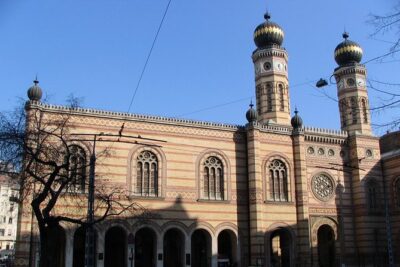
Budapest Dohany, Heroes’, Rumbach synagogues & Jewish Ghetto Tour
Read our review →Browse the lists this tour appears in