
Reviewed · JEWISH HERITAGE TOURS
A Journey through Jewish Budapest – Private Walking Tour
Budapest’s Jewish quarter is best understood on foot, where grand synagogues, ghetto memorials, ruined medieval sites, and lively streets sit close together. This private tour links those places with the painful story of wartime persecution, ending at the Shoes on the Danube memorial.
I like the private format, since your guide can adjust the pace and explain Jewish traditions as well as Hungarian history. I also like the practical hotel pickup, with public transport tickets supplied when needed. The main drawback is cost: at $396.52 for up to 10 people, it is good value for a full group but expensive for one or two guests, especially since synagogue admissions are extra.
Key points to know before booking
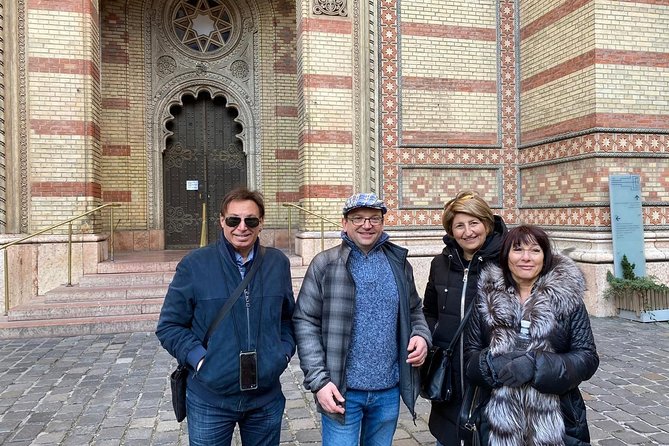
- Dohány Street Synagogue leads the tour, with access to the Temple of Heroes, Jewish Museum, and Memorial Park when tickets are purchased separately.
- A private historian guides only your party, allowing room for questions and a flexible pace.
- Three important synagogue traditions appear in one walk: Neolog at Dohány, Orthodox at Kazinczy, and Status Quo Ante at Rumbach.
- The former Pest Ghetto gives the tour its emotional weight, while the Shoes on the Danube memorial provides a quiet ending.
- Pickup is offered from a central hotel or flat, with the route using foot, metro, or tram as needed.
- Cover your shoulders and knees for visits to Dohány and Kazinczy synagogues, and expect moderate walking.
Why this private walk matters in Budapest
Budapest’s Jewish quarter is not simply a collection of attractive old buildings. It is a place where religious life, working-class neighborhoods, Nazi persecution, postwar neglect, and modern city life overlap within a few blocks.
That makes a private guide especially useful. A sign or facade rarely explains how the city’s Jewish communities differed from one another, or how the wartime ghetto changed the streets you are walking through. A historian can connect those details without forcing you to follow a large group at someone else’s pace.
The tour lasts about three hours. You begin around Dohány Street and finish near the Danube at the Shoes on the Danube memorial. The route is primarily on foot, but your guide may use the metro or tram between places when that makes sense. Pickup from a central hotel or flat is included, which is helpful if you are still getting oriented in Budapest.
Morning departures are available at 10am year round. Afternoon departures operate in certain seasons, so choose the time carefully when booking. Since the tour is private, you can also raise particular interests, such as synagogue architecture, Jewish religious traditions, wartime Budapest, or the changing character of District VII.
More Jewish heritage walks in Budapest:
- Budapest Jewish Heritage Memorial Walking Tour & Synagogue Entry
★ 5.0 · 568 reviews - Budapest: Jewish Heritage Guided Tour with Synagogue Ticket
★ 4.8 · 533 reviews - Jewish Quarter of Budapest Walking Tour
★ 4.7 · 369 reviews
Dohány Street Synagogue and its grand scale
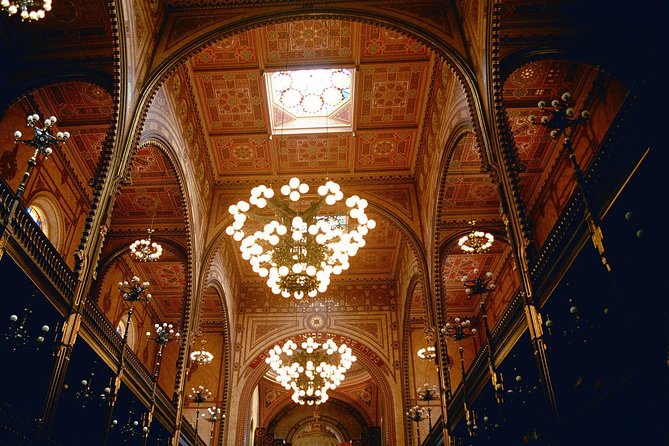
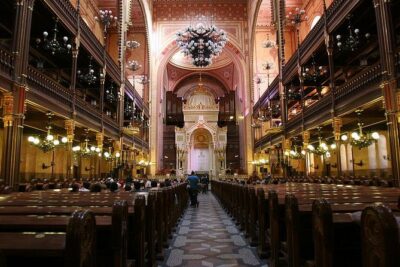
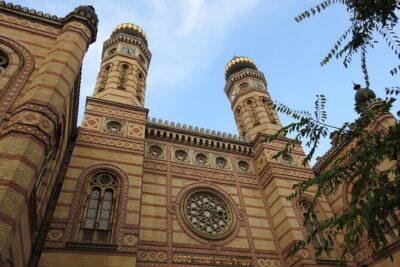
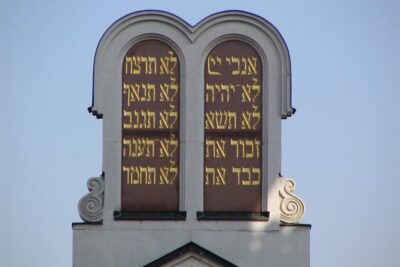
The first major stop is the Great, or Central, Synagogue on Dohány Street. It is described as the largest synagogue in Europe and the second-largest in the world, so scale is the first thing you notice. Its Moorish Revival design is lavish, with a formal exterior that feels closer to a major civic monument than a neighborhood house of worship.
You spend about 30 minutes here. The complex includes the Temple of Heroes, the Jewish Museum, and a Memorial Park, giving your guide several ways to explain Jewish life in Hungary before and during the Second World War.
Admission is not included. That matters because this is not merely an exterior photo stop. If you want to see the complex properly, budget for the ticket in addition to the tour price. The tour information also notes that a Jewish Studies scholar may assist with the synagogue visit, adding useful religious and cultural context.
I like beginning here because the building creates an immediate sense of scale, but you should also know that the visit can feel compressed within a three-hour route. If Dohány is your main reason for booking, ask your guide at the start how much time can be spent inside. The private setting gives you a better chance to shape that conversation than a standard group tour.
Dress rules apply. Shoulders and knees should be covered for visits to Dohány and Kazinczy. Comfortable, respectful clothing is the sensible choice throughout the day.
Kazinczy Street and Budapest’s Orthodox tradition
From Dohány, the walk continues toward Kazinczy Street. This section introduces a different side of Jewish Budapest, including the Orthodox community and the Art Nouveau Orthodox synagogue on Kazinczy Street.
The synagogue is viewed from the exterior unless it is open to the public, and the interior visit is not guaranteed. Admission is also separate. Nearby, you see a luxurious mikve, or Jewish ritual bath, and the Ghetto Wall Memorial, erected in 2014.
The mikve is a useful detail because it shows how Jewish life involved daily and religious practices that are easy to miss when sightseeing focuses only on famous buildings. Your guide can explain the role of ritual bathing and the differences between the various Jewish communities represented in this compact part of the city.
The Ghetto Wall Memorial helps connect the neighborhood to the Second World War. The old Jewish quarter was not only a religious center. It was also a working-class district, and its streets became part of the Pest Ghetto during the final months of the war.
This stop takes about 35 minutes, making it one of the longer sections of the walk. The extra time is welcome, but the possibility of an exterior-only synagogue visit means you should not book expecting guaranteed entry to every building.
Rumbach Street and the Status Quo Ante community
Rumbach Street Synagogue adds a third religious perspective. Here, the focus is the Status Quo Ante stream of Judaism, a Hungarian grouping that developed between the larger Neolog and Orthodox communities.
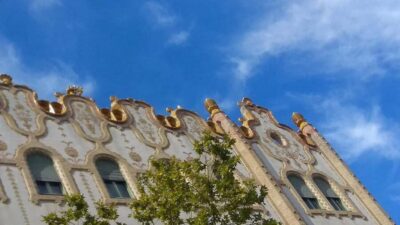
The facade is an impressive sight, and the interior is visited when open to the public. Tickets are not included. The planned stop lasts around 25 minutes, enough for your guide to explain the building’s place in Budapest’s Jewish religious life and to point out architectural details that are easy to pass without context.
I find this three-synagogue sequence one of the strongest parts of the tour. Dohány, Kazinczy, and Rumbach are not interchangeable attractions. Seen together, they help you understand that Jewish Budapest contained different religious traditions, institutions, and social groups.
Entry conditions can change with opening hours, so keep your expectations flexible. The value of the private guide remains even when a building is viewed from outside, but you will want to confirm which admissions are available on your chosen date.
More walking tours in Budapest:
- Budapest: Buda Castle Walk with Saint Stephen’s Hall
★ 4.5 · 3,012 reviews - Big Bus Budapest Hop-On Hop-Off Bus and Walking Tour
★ 3.5 · 2,206 reviews - Budapest: Buda Castle District Walking Tour
★ 4.6 · 2,108 reviews - Budapest City Landmarks Walking Tour in 2 Hours
★ 5.0 · 2,048 reviews
Walking through the former Pest Ghetto
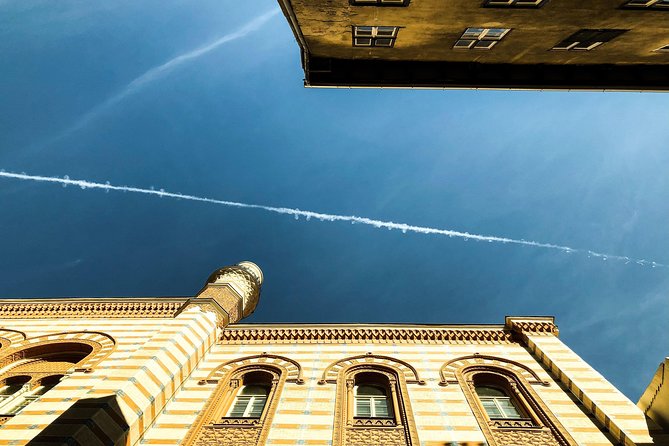
The streets between the synagogues are as important as the buildings themselves. District VII was historically home to Jewish working-class neighborhoods, and the route passes through the area associated with the former Pest Ghetto.
This is where the tour moves from religious architecture to urban history. You are not simply looking at isolated memorials. You are walking through a part of Budapest where homes, workshops, synagogues, and community institutions were caught up in the city’s wartime collapse.
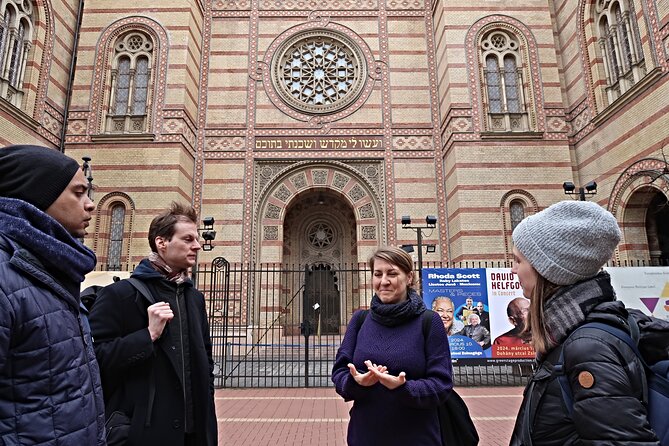
A private guide can make this section feel more personal and less like a list of dates. The three reviews supplied with the tour repeatedly praise the guides for explaining the quarter clearly, with Andrew noted for keeping two teenagers and a pre-teen interested. Oshi is described as a Jewish Studies graduate, and Kata received particular praise for making the history understandable to a group of ten.
That detail is useful if you are traveling with family. The subject matter is serious, but the tour is not presented as a lecture aimed only at specialists. Your guide can adjust the explanation to suit your group, which is harder to do on a large scheduled walk.
The route also mentions ruins of synagogues dating to medieval times on Castle Hill. The exact sequence can be adjusted, so ask your guide how this part fits into your day. The tour’s main stated endpoint is the Pest Ghetto and the Shoes on the Danube memorial, but the private format allows some discussion of related sites along the way.
Ending at the Shoes on the Danube Bank
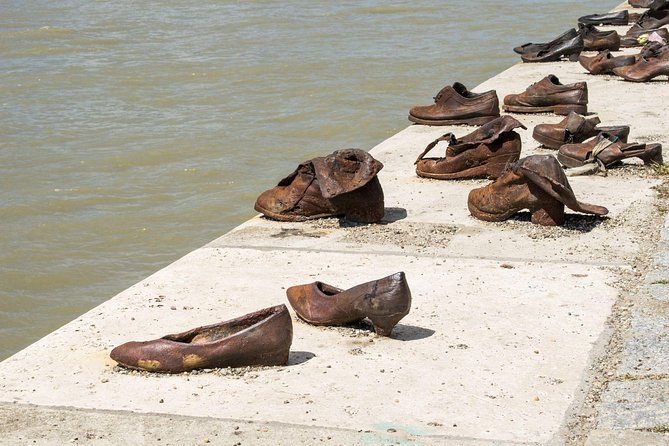
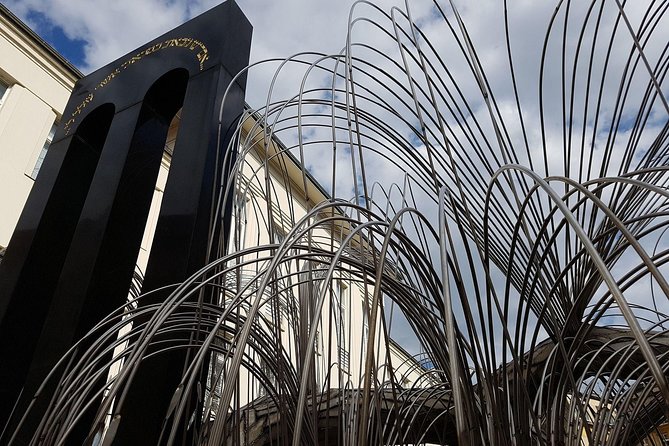
The tour concludes at the Shoes on the Danube Bank, a memorial erected on April 16, 2005, to honor Jews murdered during the Second World War by fascist militia.
The memorial uses cast-iron shoes placed along the riverbank. Victims were ordered to remove their shoes before being shot at the water’s edge, allowing their bodies to fall into the Danube. The shoes represent what was left behind.
You spend about 20 minutes here, and admission is free. The setting beside the river is quiet and direct, with no grand building to soften the meaning. After the synagogues and streets of the Jewish quarter, this ending shifts your attention to the victims and the violence that destroyed much of the community.
The endpoint is convenient for continuing your own sightseeing, but it is not near the starting point at Dohány Street. Plan your next stop from the riverbank rather than expecting to return automatically to your hotel. Your guide can help you orient yourself, but the included tour ends here.
How the private format affects the experience
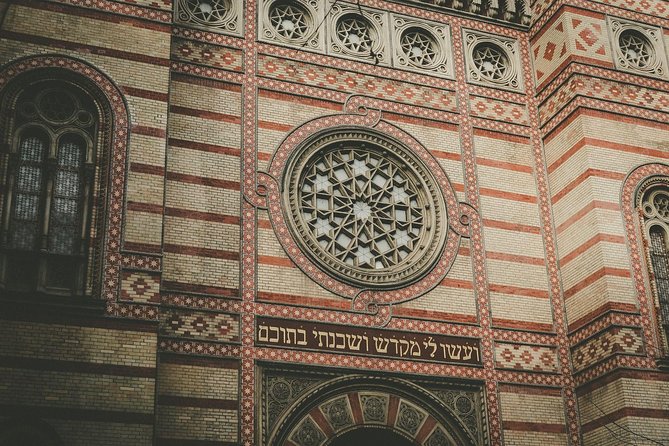
The biggest practical benefit is attention. You are not sharing questions with a busload of people, and the guide can spend more time on subjects that matter to your group. If one person wants more architecture and another wants more wartime history, you have a better chance of balancing both.
The tour is priced at $396.52 per group of up to 10 people. For a full group, that works out to roughly $40 per person before synagogue tickets, which is a reasonable price for three hours with a private historian and hotel pickup. For two people, the same price becomes much harder to justify.
The included pickup adds real convenience. Your guide can meet you at a central hotel or flat and lead you by foot, metro, or tram. If you do not provide an address or prefer to meet centrally, meet 10 minutes before the start at Cafe Synago Kavehaz, formerly Cafe Zenit, at Dohány utca 1/A.
The tour is offered in English and uses a mobile ticket. Confirmation is sent within 48 hours, subject to availability. Free cancellation is available until 24 hours before the start time. After that cutoff, the amount paid is not refunded, and late changes are not accepted.
Walking, timing, and what to wear
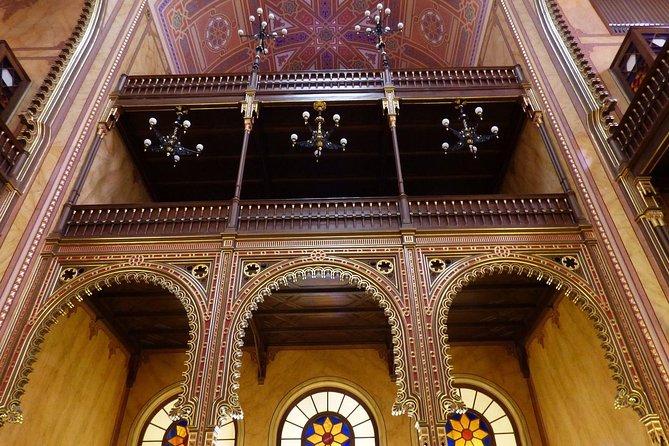
This is a moderate walking tour, not a vehicle-based sightseeing ride. Wear comfortable shoes and clothing, especially because the route combines sidewalks, synagogue visits, and public transport.
The three-hour length is enough to cover the major sites without taking up your whole day. It is also short enough that you may want to spend more time later at Dohány, the Jewish Museum, or another site that catches your interest.
Bring some flexibility. Interior access at Kazinczy and Rumbach depends on whether the synagogues are open to the public, and all three synagogue admissions are separate. You should see the tour as a guided introduction to the quarter rather than a single ticket covering every attraction.
Food and drinks are not included. That is not a problem, since you finish in an area where you can continue on your own. One guide recommended a Jewish restaurant to a family after the walk, and the family found it worthwhile, so ask your guide for a lunch suggestion if you finish around midday.
Who will get the most from this tour
This tour suits you best if you want historical context rather than a quick checklist of Budapest sights. It is a strong choice for families, couples, and small groups who value questions and conversation.
It also suits anyone with a particular interest in Jewish religious traditions. The three synagogues represent different streams of Judaism, and the guide can explain why their roles and designs differ.
Families should consider it seriously. The guide named Andrew kept two teenagers and a pre-teen involved, which suggests the private format can work well for younger visitors when the guide presents the material in an engaging way.
You might choose a different option if you want guaranteed long visits inside every synagogue, a low per-person price for only one or two people, or a tour with little walking. The extra admissions also make the final cost higher than the headline price.
Should you book A Journey through Jewish Budapest?
Book it if you want a focused, human explanation of Budapest’s Jewish quarter and can share the cost with a larger group. The combination of Dohány, Kazinczy, Rumbach, the former Pest Ghetto, and the Shoes on the Danube memorial gives you a strong three-hour route.
I especially like it for families and groups who may ask many questions. Guides such as Andrew, Oshi, and Kata are praised for Jewish Studies training, clear explanations, and keeping younger visitors engaged.
For one or two people, compare the total price with other walking tours before committing. If you do book, wear respectful clothing, budget for synagogue tickets, and treat the endpoint at the Danube as the start of your next Budapest stop rather than the end of your day.
FAQ
How long does the Jewish Budapest tour last?
The private walking tour lasts approximately three hours.
Is hotel pickup included?
Yes. The guide can meet you at a central hotel or flat. If you do not provide an address or do not want pickup, meet 10 minutes before the start at Cafe Synago Kavehaz, formerly Cafe Zenit, at Dohány utca 1/A.
What time does the tour start?
Morning tours depart at 10am year round. Afternoon departures are available during certain seasons, and you select the departure time when booking.
Are synagogue admission tickets included?
No. Tickets for the Dohány, Rumbach Street, and Kazinczy Street synagogues are not included in the tour price.
What should I wear to the synagogues?
Visitors to the Dohány and Kazinczy synagogues are asked to cover their shoulders and knees. Comfortable shoes and clothing are recommended because moderate walking is required.
Where does the tour finish?
The tour ends at the Shoes on the Danube Bank memorial in Budapest. From there, you can continue sightseeing on your own.
Recently added around Budapest
- Budapest: Private Walking Tour with a Local Guide★ 3.6 · 6 reviews
- From Budapest: Guided Tour of Eger with Wine Tasting★ 4.5 · 6 reviews
- Budapest: City Bike Tour with Coffee Stop★ 5.0 · 37 reviews
- Budapest: Danube River Views Bike Ride★ 4.8 · 23 reviews
- Budapest: Vacation Photographer to collect great memories★ 5.0 · 49 reviews
- Walk to recent and aged spiritual sanctuaries near Budapest★ 5.0 · 5 reviews
- Budapest: Multilingual Highlights Tour★ 4.8 · 89 reviews
- True Crime Walking Tour in the Buda Castle district★ 5.0 · 26 reviews
Jewish Heritage Tours, compared.
Budapest Jewish Heritage Memorial Walking Tour & Synagogue Entry
Read our review →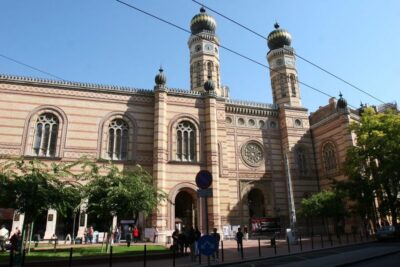
Jewish Heritage Guided Tour with Synagogue Ticket
Read our review →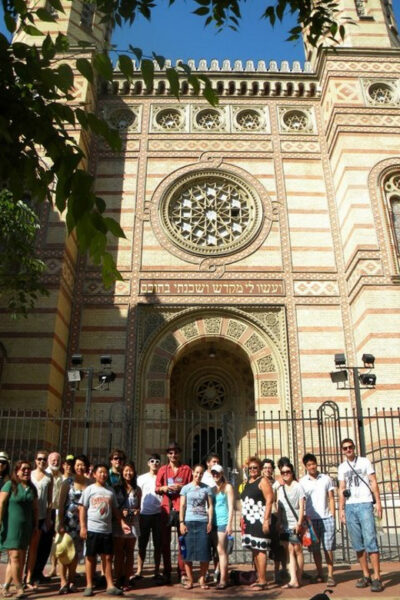
Past and Present of Budapest Jewish District Tour
Read our review →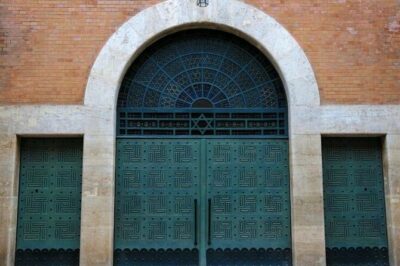
Budapest Dohany Synagogue & Hungarian Jewish Museum & free extras
Read our review →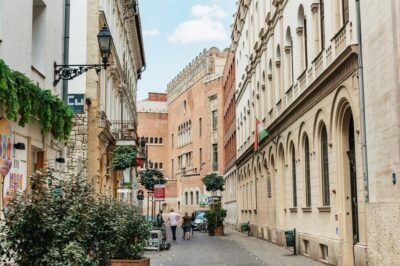
Jewish History Guided Walking Tour with Historian
Read our review →Browse the lists this tour appears in