
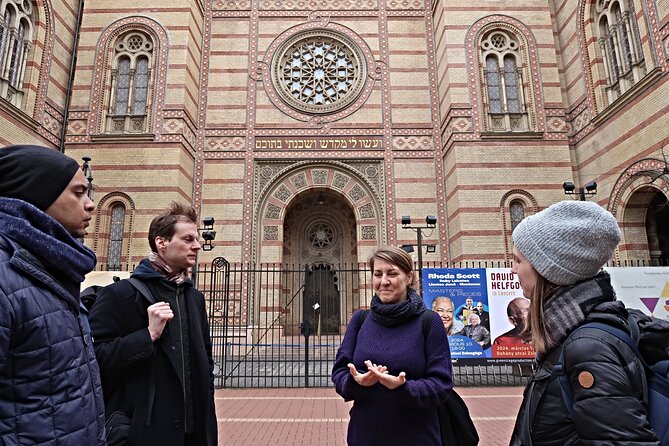
Reviewed · JEWISH HERITAGE TOURS
A Journey through Jewish Budapest – Walking Tour
Budapest’s Jewish story comes into sharp focus on this three-hour walking tour, which links grand synagogues, a former ghetto, ritual life, and the Shoes on the Danube memorial. The route moves from the ornate Dohány Street complex through the VII District and ends beside the river, giving you both cultural context and a clear sense of place.
I especially like the access to three different synagogue traditions and the small-group format, advertised for no more than eight people and often described as a very personal experience. The guides, including Orsolya, Agi, Veronika, and Endre on different departures, bring strong academic and historical backgrounds. The main drawback is cost: at $126.16 per person, this is not a cheap stroll, and synagogue admission is extra.
Key points to know before booking
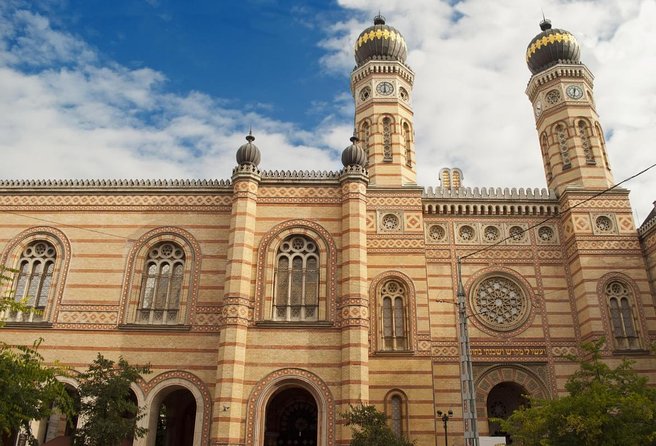
- Three synagogues, three Jewish traditions: Dohány, Kazinczy, and Rumbach each show a different part of Budapest’s Jewish religious story.
- A historian leads the walk: The tour is designed around explanation and context, not just exterior photo stops.
- The route ends at a solemn memorial: Shoes on the Danube gives the tour a serious, reflective finish.
- Small groups make questions easier: The stated maximum is eight people, with the experience also described as limited to six.
- Dress matters: Your shoulders and knees should be covered for visits to the Dohány and Kazinczy synagogues.
- Budget for entrance fees: Admission to Dohány, Rumbach, and Kazinczy is not included in the tour price.
Starting opposite the Great Synagogue
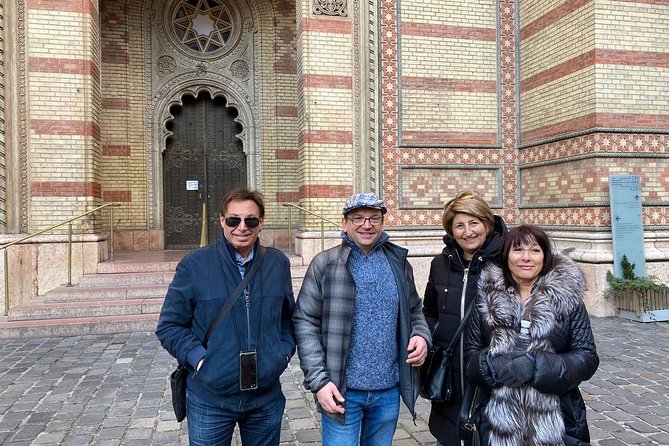
The tour begins at Kamara Café on Dohány Street, directly opposite the Great Synagogue. That is a useful meeting point because the building is easy to identify, and you do not need to search through a side street or large transport hub.
The usual start time is 10:00 a.m., with morning or afternoon departures available. Your guide’s photograph, phone number, and biography are provided after booking, which helps you recognize the right person at the café.
You begin in Budapest’s former Pest Jewish Quarter, mainly around today’s VII and VIII districts. This is more than a walk past handsome buildings. The guide connects streets, places of worship, community life, and the damage caused by the Holocaust. That wider frame is the real reason to take this tour rather than simply visit a synagogue on your own.
The walk is about three hours, so wear comfortable shoes. Most people can take part, and the route is near public transport, but the tour is still a city walk with several stops and periods spent standing.
More Jewish heritage walks in Budapest:
- Budapest Jewish Heritage Memorial Walking Tour & Synagogue Entry
★ 5.0 · 568 reviews - Budapest: Jewish Heritage Guided Tour with Synagogue Ticket
★ 4.8 · 533 reviews - Jewish Quarter of Budapest Walking Tour
★ 4.7 · 369 reviews
Dohány Street Synagogue and the Temple of Heroes
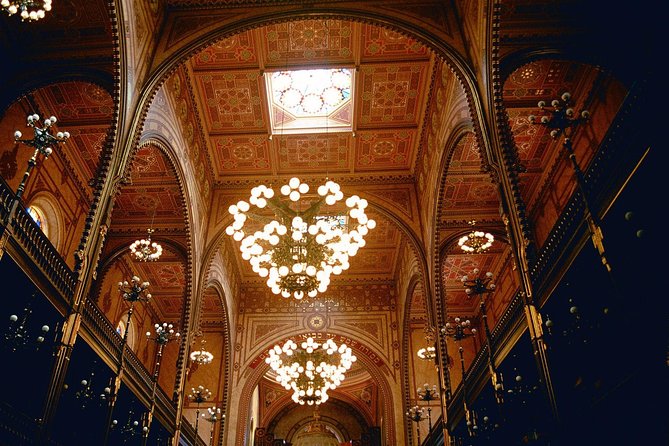
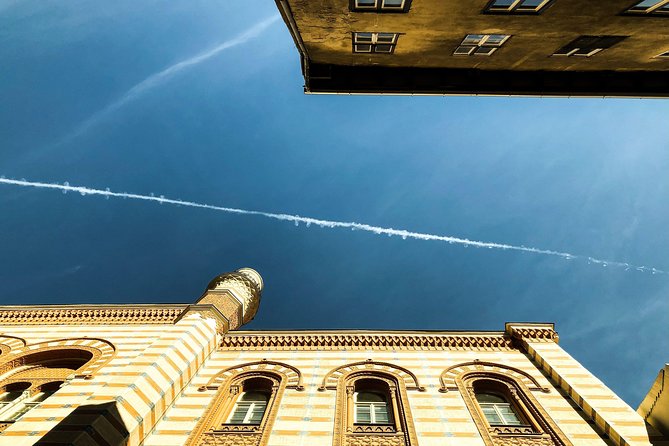
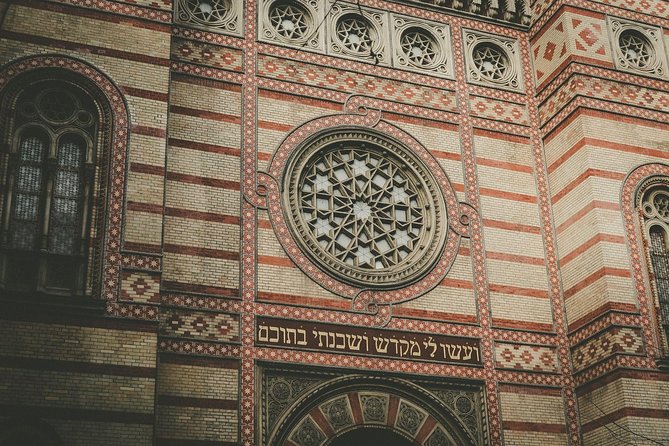
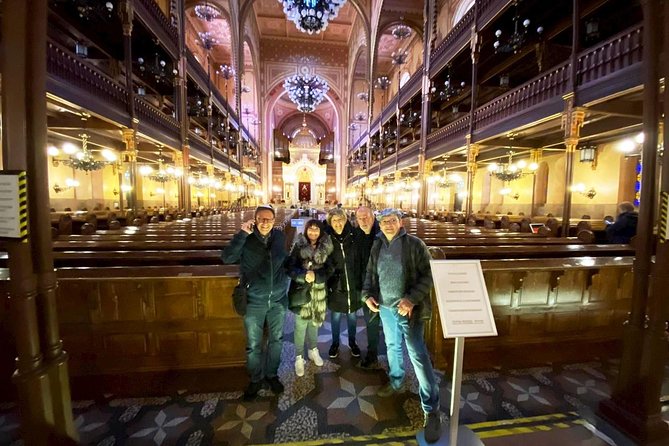
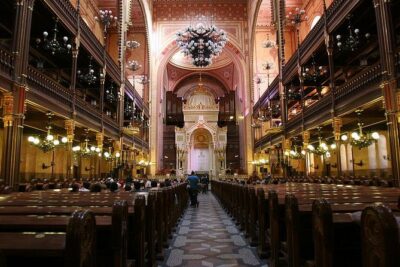
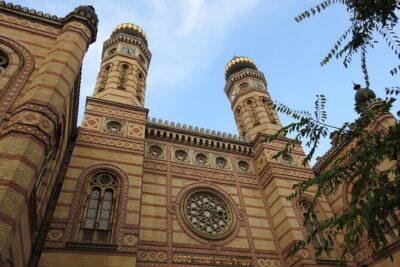
The first major stop is the Dohány Street Synagogue, also called the Great or Central Synagogue. It is described as the largest synagogue in Europe, and the building makes a powerful first impression with its Moorish Revival design, grand scale, and richly decorated interior.
The visit is not limited to the main prayer space. You also see the Temple of Heroes, the Jewish Museum, and a memorial park within the complex. Together, these places help explain how worship, community memory, and public history meet in one site.
I like this opening because it gives you a firm base for the rest of the walk. A guide with Jewish studies or historical training can explain details that are easy to miss when you simply admire the architecture. You learn not only what the building looks like, but also how Budapest’s Jewish community developed and how its story changed over time.
Allow about 30 minutes here. That is enough for an introduction, but it is not a full museum afternoon. The admission ticket is not included, so check the current entrance arrangement when booking. If you want to read every display in the museum at length, you may need to return on your own.
The synagogue is also a place of worship, not just a sightseeing stop. Modest clothing is important, and you should plan to keep your shoulders and knees covered. That small bit of preparation saves you from an awkward start.
Kazinczy Street and the former ghetto wall
From Dohány, the route continues to Kazinczy Street. This part of the walk puts the Jewish Quarter into a more local street setting, away from the grand ceremonial entrance of the Central Synagogue.
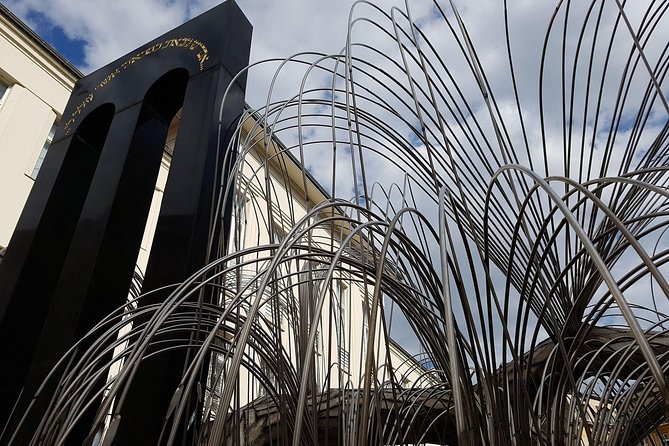
The group passes a Ghetto Wall Memorial erected in 2014. The memorial helps mark the area connected with the former Pest Ghetto and gives the guide a natural point to explain the wartime history of Budapest’s Jewish population.
You also pass a luxurious mikve, or Jewish ritual bath, before reaching the Art Nouveau Orthodox synagogue on Kazinczy Street. If it is open to the public, you go inside. This is an important contrast with Dohány. The route does not treat Budapest Judaism as one single tradition. Instead, it shows the different communities and religious practices that existed side by side.
The Kazinczy stop lasts about 35 minutes. The interior visit depends on public opening arrangements, so you should not assume that every departure will have identical access. Admission is also extra, and shoulders and knees must be covered.
This is one of the points where a small group helps. In a large crowd, questions about ritual practice, Orthodox life, or the ghetto memorial can be rushed. With a maximum of eight people, you have a better chance to ask about details that matter to you.
Rumbach Street and the Status Quo Ante tradition
Rumbach Street Synagogue brings another perspective. Here, the guide introduces the Status Quo Ante stream of Judaism and explains how it fits into Budapest’s religious history.
The building is observed from the route, with an interior visit when the synagogue is open to the public. The planned stop lasts about 25 minutes. That makes it shorter than the Kazinczy visit, but it adds another piece to the religious map rather than repeating the same story.
The three synagogues work best as a set. Dohány gives you the largest and most famous setting. Kazinczy shows the Orthodox tradition and the role of the mikve. Rumbach adds the Status Quo Ante story. You leave with a better sense of why these buildings are not interchangeable.
Admission to Rumbach is not included. Opening conditions can affect what you see inside, so keep your expectations practical. The value here is not only the architecture. It is the comparison, and a guide is especially helpful in making those differences clear.
More walking tours in Budapest:
- Budapest: Buda Castle Walk with Saint Stephen’s Hall
★ 4.5 · 3,012 reviews - Big Bus Budapest Hop-On Hop-Off Bus and Walking Tour
★ 3.5 · 2,206 reviews - Budapest: Buda Castle District Walking Tour
★ 4.6 · 2,108 reviews - Budapest City Landmarks Walking Tour in 2 Hours
★ 5.0 · 2,048 reviews
Food, daily life, and the human side of the story
The strongest guides on this route do more than recite dates. Orsolya, for example, has been praised for linking Jewish history with Hungarian history and everyday life. She has also brought culinary knowledge into the discussion, including a recommendation for flódni, a Jewish Hungarian cake made with layered pastry and fillings.
That food connection matters because it gives you a way to think about culture beyond monuments and tragedy. A useful guide can show how faith, family, neighborhood life, and food traditions overlap. If you want to try flódni during your stay, asking for a current local recommendation could make the tour more useful after it ends.
Other guides named in connection with this experience include Agi, Veronika, and Endre. Their emphasis may vary, as you would expect with different historians and local guides. The common thread is a focus on Jewish life in Budapest from past to present, rather than a narrow account of the Second World War alone.
That balance is important. The Holocaust is central to the route, but it is not the whole story. Jewish communities lived, worshipped, worked, argued, celebrated, and shaped Budapest long before the war. A good three-hour walk gives space to both the long story and its devastating break.
Finishing at the Shoes on the Danube Bank
The tour ends at the Shoes on the Danube Bank, a free memorial beside the river. The installation recalls Jewish people who were murdered there during the Second World War. They were ordered to remove their shoes before being shot at the water’s edge, and their bodies were carried away by the river.
The bronze shoes left along the bank make the violence painfully concrete. You do not need an elaborate monument to understand what happened. The ordinary objects are the point.
The stop lasts about 20 minutes and is a quiet ending to the route. The memorial is free to visit, but its emotional weight is considerable. If you prefer a tour that finishes with a light meal or a cheerful neighborhood stop, this is not that kind of ending.
I think placing the memorial last gives the walk a clear shape. You begin with religious buildings and community institutions, then move through the former ghetto area, and finish with the murder of Hungarian Jews during the war. The guide’s earlier context helps keep the memorial from becoming an isolated photo stop.
What the $126.16 price buys you
At $126.16 per person, this tour asks you to pay for interpretation rather than transportation or entertainment. The price includes a three-hour guided walk and a historian guide. It does not include food, drinks, or admission to the three synagogues and the Dohány complex.
That makes the total cost higher than the headline price. If you plan to enter all three synagogues, check current ticket prices and allow for those additions. The tour is best value for someone who wants a structured explanation and a small group, not for someone who only wants to see the buildings from outside.
The size of the group matters here. The experience is described as limited to six people, while the additional information gives a maximum of eight. Either way, it is much smaller than a standard city coach tour. You can hear the guide more easily, ask questions, and spend less time waiting for a large group to gather.
The price also reflects specialist subject matter. You are not paying for a generic walk through central Budapest. You are paying for a guide who can explain Jewish history, religious traditions, the Holocaust, and the physical layout of the former Pest Ghetto in one connected route.
Practical details that affect your day
You can choose a morning or afternoon departure, with 10:00 a.m. listed as the usual start time. Pickup is offered, but the stated meeting point is Kamara Café opposite the Great Synagogue, so confirm the exact arrangement after booking.
The walk finishes at the Shoes on the Danube Bank, not back at the café. That is useful if you plan to continue toward the riverfront, but it means you should not leave a bag or other item at the starting point.
Wear comfortable shoes and modest clothing. Shoulders and knees should be covered for the Dohány and Kazinczy synagogues. Bring water if you need it, since food and drinks are not included.
The activity is offered in English. Confirmation arrives at booking, and free cancellation is available up to 24 hours before the start time. Changes or cancellations inside that window are not accepted for a refund.
Who should book this walk?
I would choose this tour if you want more than a quick look at the Jewish Quarter. It suits visitors who care about history, architecture, religion, and the human stories behind Budapest’s streets.
It is also a good choice if you are unsure how to approach the subject on your own. The route deals with persecution and murder, but it also explains community life, religious differences, food, and cultural continuity. That range makes the experience feel grounded rather than purely mournful.
Families with older children may find it useful, especially if a child can stay focused during a three-hour historical walk. Most people can participate, but the schedule includes standing and walking, so anyone who needs a slower pace should ask about the route before booking.
I would skip it if you only want independent sightseeing, dislike set schedules, or do not plan to pay extra for synagogue entry. You can walk around the district for free, but you will lose the guide’s explanations and the connection between the separate sites.
Should you book A Journey through Jewish Budapest?
Book it if you want a serious, well-organized introduction to Budapest’s Jewish community and prefer a historian’s explanation to a self-guided walk. The best reasons are the three synagogue traditions, the small group, and the final memorial at the Danube.
Before paying, add up the synagogue entrance fees and decide if the total fits your budget. Also confirm the departure time, dress appropriately, and allow yourself some quiet time after the Shoes on the Danube stop.
For the right visitor, the tour turns a set of impressive buildings into a connected story. That is its real value.
FAQ
How long does A Journey through Jewish Budapest last?
The walking tour lasts approximately three hours.
Where does the tour begin?
It begins at Kamara Café on Dohány Street, opposite the Great Synagogue, at Dohány u. 1b, 1074 Budapest.
Where does the tour end?
The tour ends at the Shoes on the Danube Bank memorial in Budapest.
Are synagogue entrance tickets included?
No. Tickets for the Dohány Street, Rumbach Street, and Kazinczy Street synagogues are not included.
What should I wear to the synagogues?
Visitors to the Dohány and Kazinczy synagogues are asked to have their shoulders and knees covered.
Is the tour available in English?
Yes. The tour is offered in English.
Recently added around Budapest
- Budapest: Private Walking Tour with a Local Guide★ 3.6 · 6 reviews
- From Budapest: Guided Tour of Eger with Wine Tasting★ 4.5 · 6 reviews
- Budapest: City Bike Tour with Coffee Stop★ 5.0 · 37 reviews
- Budapest: Danube River Views Bike Ride★ 4.8 · 23 reviews
- Budapest: Vacation Photographer to collect great memories★ 5.0 · 49 reviews
- Walk to recent and aged spiritual sanctuaries near Budapest★ 5.0 · 5 reviews
- True Crime Walking Tour in the Buda Castle district★ 5.0 · 26 reviews
- Trash Art Museum: Hungary’s First Scrap Metal Exhibition★ 4.3 · 72 reviews
Jewish Heritage Tours, compared.
Budapest Jewish Heritage Memorial Walking Tour & Synagogue Entry
Read our review →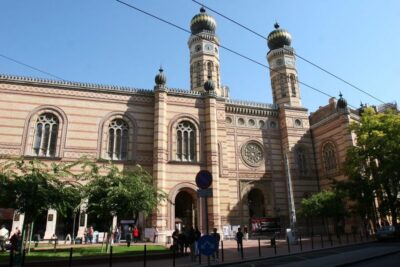
Jewish Heritage Guided Tour with Synagogue Ticket
Read our review →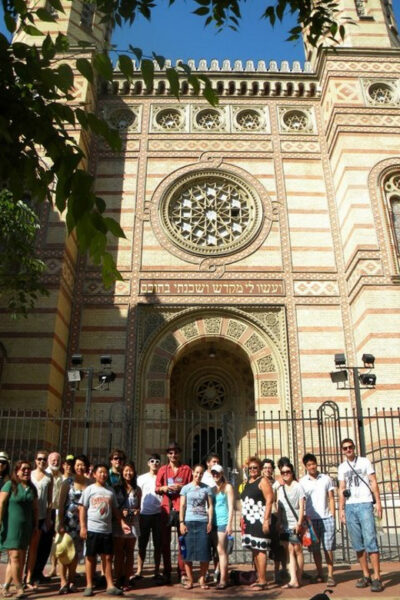
Past and Present of Budapest Jewish District Tour
Read our review →
Budapest Dohany Synagogue & Hungarian Jewish Museum & free extras
Read our review →
Jewish History Guided Walking Tour with Historian
Read our review →Browse the lists this tour appears in