
Reviewed · COOKING CLASSES
Hungarian Cooking and optional Local Market Tour
The best part of this Budapest experience is that you do not just eat Hungarian food, you learn why it tastes the way it does. You chop vegetables for goulash, stir a paprika sauce, make nokedli by hand, and finish with apple strudel. I especially like the hands-on cooking and the steady stream of food stories, wine, and local drinks that turn lunch into a cultural lesson.
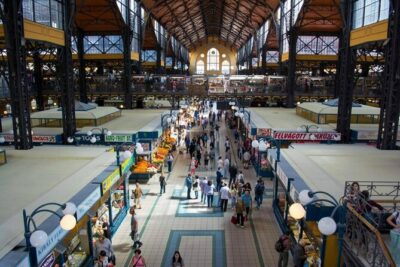
I also like the optional Central Market Hall visit, where you can see Hungarian peppers, meats, cheeses, pastries, and other everyday foods before cooking with them. The main caution is practical: the market option, meeting point, and return transport have caused confusion for some people, so confirm exactly what you booked before setting out.
Five things to know before booking
- You cook three dishes from scratch: The usual menu includes goulash soup, chicken paprikash with nokedli, and apple strudel, with mushroom paprikash or other seasonal changes possible.
- The market visit is optional: It can add useful context and tastings, but the shopping time may be short.
- Instructors make the difference: Vesna, Bernadette, Brigitte, Betty, Sylvia, Adrienne, and other Chefparade teachers have been praised for clear instruction and warm conversation.
- The meal is shared: You prepare food with the group, then sit down to eat with wine or beer and occasional Hungarian spirits.
- Check the finish point: The class ends at the cooking school, either on Páva Street in Pest or Bécsi Street in Buda, despite other meeting-point information referring to Central Market Hall.
Why this class is more than a Budapest lunch
Hungarian food is easy to misunderstand if you only encounter it in a restaurant. Paprika can taste sweet, smoky, or hot. Sour cream softens stews. Nokedli, the small Hungarian dumplings served with paprikash, are best when freshly made. Apple strudel is not just a pastry, but a lesson in thin dough, filling, and patience.
This class gives you a practical way into that food culture. You are not watching a chef prepare a finished plate while standing behind a counter. You take part in the chopping, mixing, stirring, shaping, and baking. That matters because many Hungarian dishes depend on small choices that a printed recipe does not explain well.
A teacher might show you how long to cook onions before adding paprika, how to keep chicken tender, or how to avoid overworking the dough. You also hear about Hungarian customs, family cooking, local ingredients, and the place of food in daily life. That conversation is one of the strongest reasons to choose this over another restaurant meal.
The experience lasts roughly four hours and accepts a maximum of 15 people. That is not a private lesson, but it is small enough for the instructor to help at the workstations. Some sessions are much smaller, and one couple even found themselves alone in class. You should not count on that, but the group size gives the lesson a friendly, shared feel rather than a crowded demonstration.
More cooking classes in Budapest:
- Budapest Cooking Class & Market Tour with Local Guide & Wines
★ 5.0 · 553 reviews - Premium Hungarian Home Cooking Experience with Chef Marti
★ 5.0 · 169 reviews - Budapest: Hungarian Cooking Class and Market Walk
★ 5.0 · 91 reviews
Starting at Central Market Hall
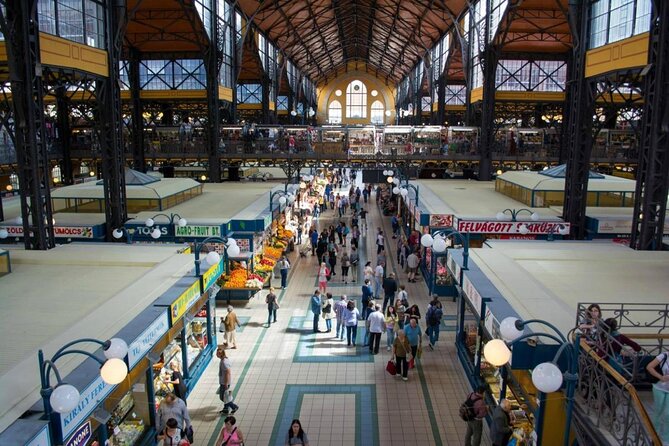
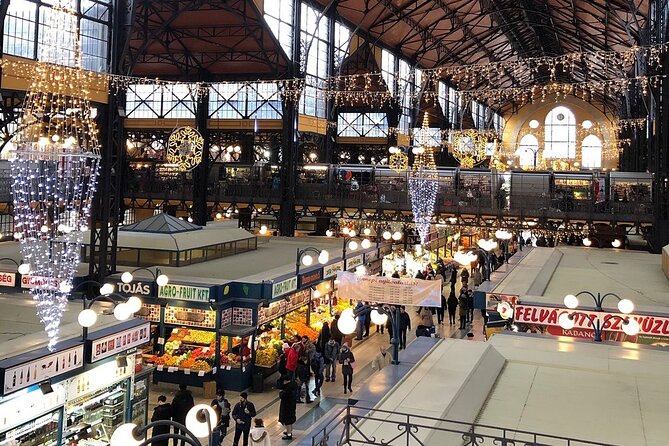
The optional market visit begins at Budapest’s Central Market Hall, a useful location for anyone already exploring the city center. The hall provides a quick introduction to the ingredients that shape Hungarian cooking: paprika, fresh produce, meats, dairy products, pastries, and local drinks.
The point is not simply to walk past stalls and take photographs. A guide such as Vesna may explain how to compare similar products, which peppers work best for cooking, and where quality differs between vendors. Tastings can include Hungarian cheeses, meats, pastries, and other local flavors.
I would choose the market add-on if you want help understanding what to buy in Hungary. It is especially useful if you hope to recreate goulash or paprikash at home and do not know which paprika, spice blend, or condiment to choose.
Allowances are important here. The market portion can be under an hour, and the schedule may not leave much time for independent shopping. One person reported that the visit felt rushed and that much of the time went into warnings about what not to buy. That is not the experience everyone has had, but you should treat the market walk as a guided introduction, not a relaxed shopping trip.
If you want to purchase souvenirs or ingredients, ask at the start how much free time you will have. The market is worth visiting on its own, so you can always return later when you are not working around a cooking class.
Páva Street, Central Market Hall, and the transfer
The supplied meeting information names Central Market Hall, while the cooking school operates at Páva Street 13 in Pest or Bécsi Street 27 in Buda. These are not interchangeable locations, and this is the most important point to clarify before booking.
The market group may continue to the school by taxi. Past arrangements have included shared taxis, and the return to the city center has not always been included in the basic package. Some packages sold elsewhere have included transport, an apron, or a cookbook, while this experience may not.
Do not assume that the activity ends where it begins. The more reliable information is that the cooking session ends at the school. Ask the operator which branch you will use, how you will reach it after the market visit, and how you should return afterward.
This may sound fussy, but it protects a pleasant morning from turning into a transport puzzle. One participant spent part of the class worrying about the trip back. In another case, the group eventually shared a taxi to return to the market area. That problem was solved, but clear information beforehand would have been better.
Cooking goulash, paprikash, and nokedli
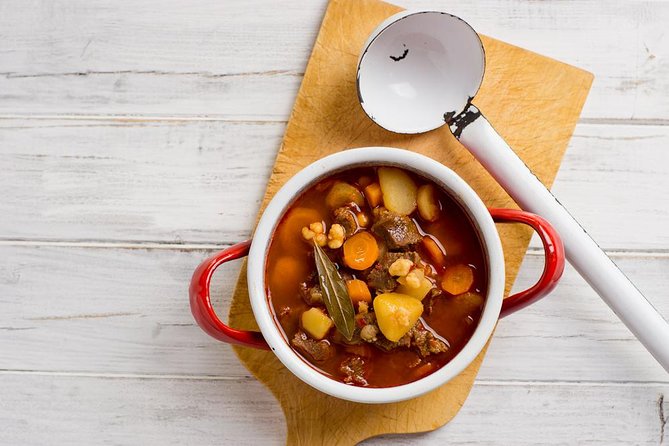
The classic menu begins with goulash soup, a beef and vegetable soup with paprika at its core. It is hearty rather than delicate, and the class shows how the flavor develops through the base, seasoning, and cooking time.
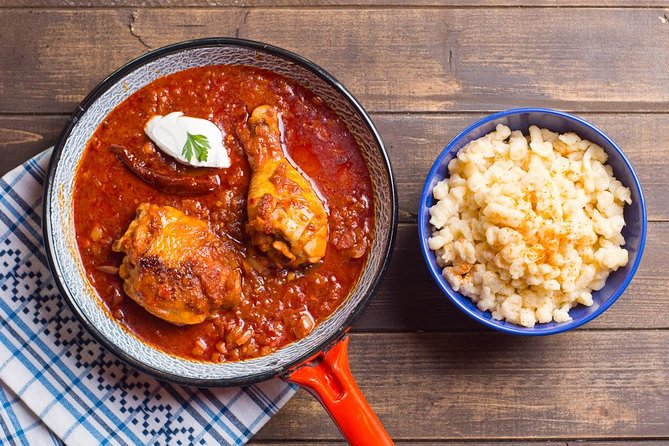
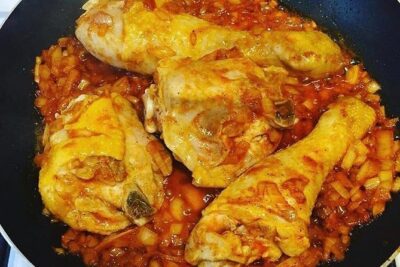
The main course is usually chicken paprikash with nokedli. The chicken cooks in a creamy paprika sauce, while the nokedli are made fresh, similar to small spätzle. This is the dish that gives the class its strongest practical value. You learn a method rather than simply receiving a recipe.
Some sessions have included mushroom paprikash instead of chicken. A vegetarian menu is available upon request, although the operator warns that options for allergies and religious dietary restrictions may be limited. State your needs when booking, not on the day of the class.
Dessert is generally apple strudel, made with thin pastry and a cinnamon apple filling. The class may prepare other traditional dishes on occasion, including potato soup, porkolt, or palacsinta. The exact menu can vary, so check what you will cook if one particular dish is the main reason you are booking.
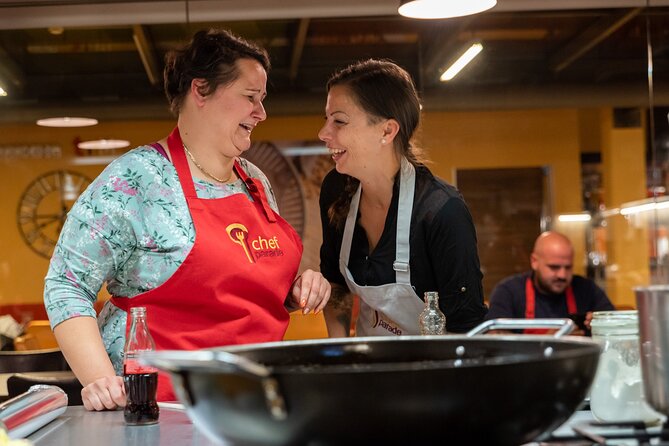
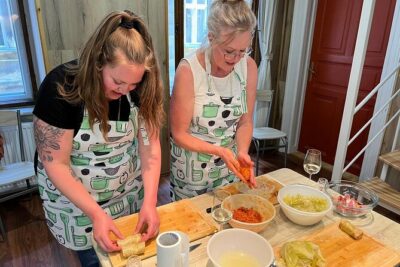
The work is genuinely participatory. You may prepare vegetables, make stock, stir sauce, form nokedli, or assemble strudel. In one especially detailed session, the group spent close to an hour cooking the paprikash and prepared the vegetable stock and strudel by hand. That pace allows the dish to develop, although a larger group can mean that tasks are divided among several people.
More market walks in Budapest:
- Budapest Food Tour: Market to Tavern with 14+ Tasters & Wines
★ 5.0 · 434 reviews - Budapest: Hungarian Cuisine in the Market Hall (german)
★ 4.8 · 146 reviews - Easy Cooking Class Budapest – with Market Walk (local wine & pálinka included)
★ 5.0 · 62 reviews - Budapest Great Market Hall Chef‑Led Private Tasting Tour
★ 5.0 · 61 reviews
Wine, pálinka, and the social side
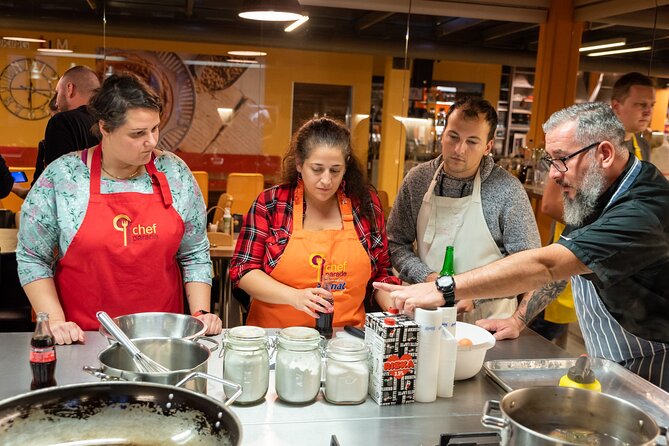
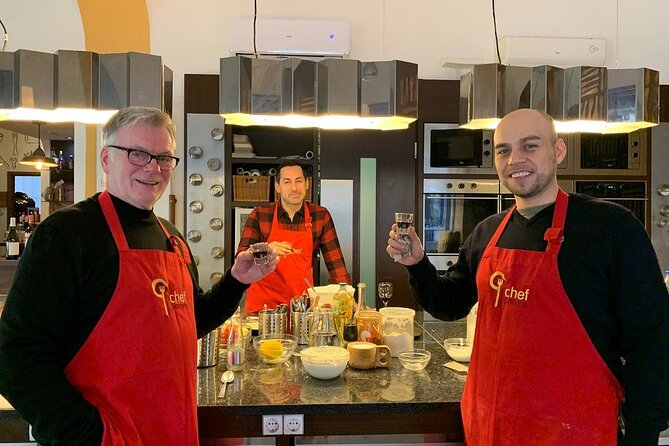
The cooking is paired with local drinks and conversation. Wine or beer is served with the food, and a small pálinka tasting may be included. Pálinka is a strong Hungarian fruit spirit, so approach it as a tasting rather than something to drink quickly.
Some sessions have also ended with Unicum, a bitter Hungarian herbal liqueur. It is not listed as a core part of the program, so consider it an occasional extra rather than a promise.
I like this part of the experience because the drinks help explain how Hungarians eat together. The class is not silent kitchen work. You talk with the instructor and the other people at the table, hear about local customs, and compare the dishes you have prepared.
The social setting is also why this activity works well for couples, families, and friends. You get a shared task, a meal, and a story to take home. Solo participants can fit in easily, though the group format may surprise anyone expecting a private lesson.
The instructors and teaching style
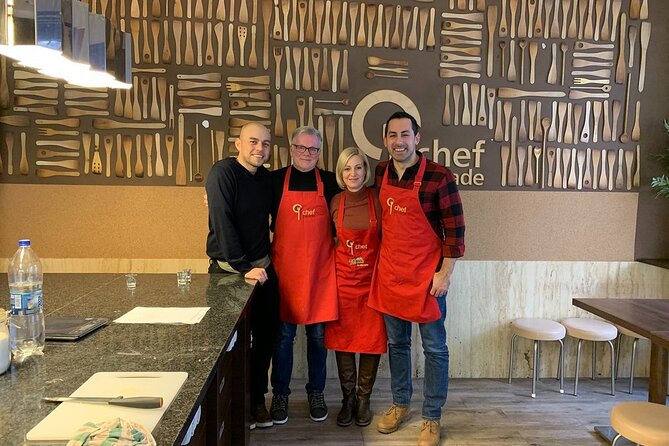
The names associated with the classes include Vesna, Bernadette, Brigitte, Betty, Sylvia, Adrienne, and other Chefparade instructors. The strongest pattern is not a single fixed teacher, but the value of a good instructor who can explain technique in plain English and adjust the pace to the group.
Betty has been praised for explaining methods that can be used in other dishes. Vesna is particularly associated with the market visit, cultural conversation, and patient cooking guidance. Bernadette and Brigitte have also been singled out for clear instruction and a relaxed manner.
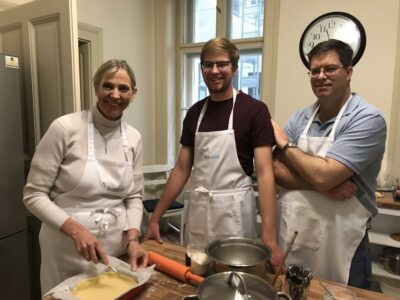
You should expect the instructor to cook alongside you, correct mistakes, explain alternatives, and talk about Hungarian life. The teaching is not limited to following a recipe line by line. A good class explains why an ingredient is used and what you can substitute at home.
English is the stated language. The class has received strong marks for clear communication, and one instructor even helped a late participant find the school. Still, arrive early. Getting lost or arriving late cuts into the cooking time, especially when the class has several dishes to prepare.
How good is the value at $126.98?
At $126.98 per person, this is not a cheap meal. You can eat Hungarian specialties for less at a Budapest restaurant. The price makes more sense when you count the cooking lesson, the food, the drinks, the instructor, the market option, and the recipes you can use later.
I see the best value in the instruction. You are paying to learn a meal you can repeat at home, not simply to eat lunch once. Several dishes require techniques that are hard to understand from a cookbook alone, especially nokedli, paprikash, and strudel.
The value drops if you pay for the market add-on but receive little time there, or if transport details are unclear. Before paying, confirm that the market tour is attached to your reservation and ask what transport is covered. Also check if a cookbook, apron, or ride back is part of your package, since these extras may belong to a more expensive option.
The 4.7 rating from 98 ratings and a 93 percent recommendation suggest that the class usually delivers a strong experience. The less favorable account points to real issues, including a rushed meal, an unsuitable chicken cut, and confusing transport. Those problems do not make the class a bad choice, but they are good reasons to clarify the details and speak up if the pace is too fast.
Who should book this Budapest cooking class?
I would choose this experience if you like food with context. It suits people who want to learn a few dishes, ask questions, and sit down to eat what they have made.
It is especially good for:
- Couples wanting a shared activity beyond museums and sightseeing
- Families with older children or teenagers who enjoy practical activities
- Home cooks who want Hungarian techniques and recipes
- First-time visitors curious about paprika, local produce, and market customs
- Solo visitors who enjoy meeting people in a small group
It may not suit you if you want a slow market morning with lots of shopping time. It is also not ideal if you need strict dietary control and cannot accept limited alternatives. The activity involves cooking, tasting, and shared food, so people with serious allergies should ask detailed questions before booking.
The class is also less suitable for someone who wants a polished restaurant-style lunch with no work. You will be standing, chopping, stirring, and sharing tasks. That is the point, but it is worth knowing.
Booking advice and final verdict
Book at least several weeks ahead if your Budapest schedule is tight. The experience is often reserved well before the date, and confirmation may take longer when you book within one day of departure.
Send dietary requirements when you reserve. Ask for the current menu, the exact school location, whether you have chosen the market option, and what happens after class. Free cancellation is available until 24 hours before the start time. Changes or cancellations inside that window are not accepted for a refund.
I would book this class, especially with the market visit, if you want a useful introduction to Hungarian cooking and do not mind a group setting. The hands-on format, generous food, friendly instructors, and recipes to take home give it more lasting value than a standard meal.
I would book the cooking class without the market add-on if transport or shopping time sounds troublesome. Either way, confirm the meeting and finish points in writing. With that small bit of preparation, this is a fine way to turn Hungarian food from something you order into something you understand and can cook again.
FAQ
How long does the Hungarian cooking class last?
The activity lasts about four hours, including the optional market visit, cooking, tasting, and meal.
Where does the experience begin?
The stated meeting point is Central Market Hall in Budapest, at 1093 Hungary. Confirm the exact meeting instructions because the cooking school may be at Páva Street 13 in Pest or Bécsi Street 27 in Buda.
Where does the activity end?
The class ends at the cooking school. It does not necessarily end at Central Market Hall, so ask about the return journey before booking.
Is the Central Market Hall visit included?
The market visit is optional. If you choose it, a guide takes you through the market and explains Hungarian ingredients, shopping customs, and local flavors.
What dishes will I cook?
The usual menu includes goulash soup, chicken paprikash with nokedli, and apple strudel. Mushroom paprikash and other Hungarian dishes may be offered instead.
Is a vegetarian menu available?
Yes. A vegetarian menu is available upon request. Dietary requirements and allergies should be provided when booking, and alternatives may be limited.
What language is the activity offered in?
The experience is offered in English.
How many people can join the class?
The maximum group size is 15 people. Some sessions may be smaller, depending on bookings.
Recently added around Budapest
- Budapest: Private Walking Tour with a Local Guide★ 3.6 · 6 reviews
- From Budapest: Guided Tour of Eger with Wine Tasting★ 4.5 · 6 reviews
- Budapest: City Bike Tour with Coffee Stop★ 5.0 · 37 reviews
- Budapest: Danube River Views Bike Ride★ 4.8 · 23 reviews
- Budapest: Vacation Photographer to collect great memories★ 5.0 · 49 reviews
- Walk to recent and aged spiritual sanctuaries near Budapest★ 5.0 · 5 reviews
- Trash Art Museum: Hungary’s First Scrap Metal Exhibition★ 4.3 · 72 reviews
- Budapest: Multilingual Highlights Tour★ 4.8 · 89 reviews
Cooking Classes, compared.
Budapest Cooking Class & Market Tour with Local Guide & Wines
Read our review →
Premium Hungarian Home Cooking Experience with Chef Marti
Read our review →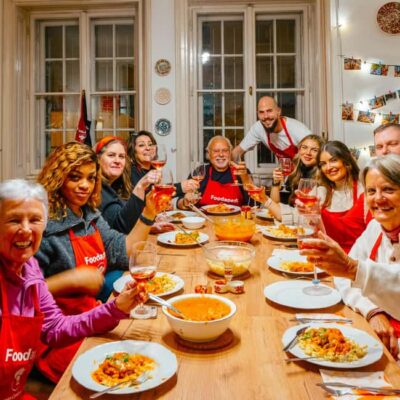
Easy Cooking Class Budapest – with Market Walk (local wine & pálinka included)
Read our review →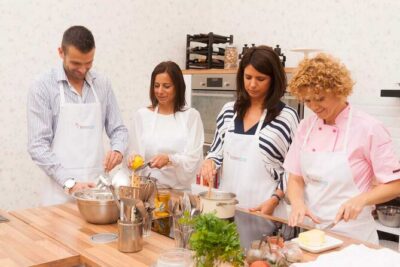
Budapest Market Tour & Home Cooking Class with local Chef & Guide
Read our review →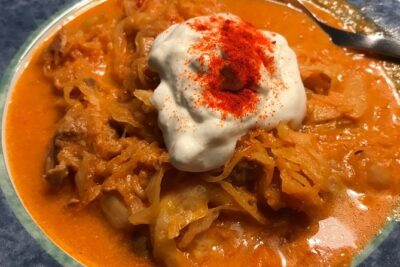
Hungarian Premium Cooking Class with 4-course meal
Read our review →Browse the lists this tour appears in