
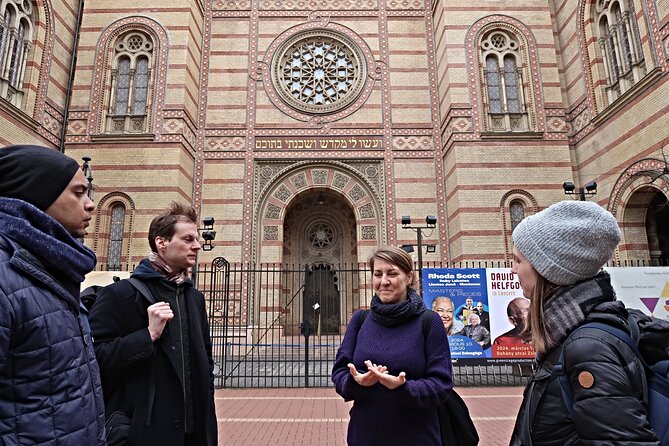
Reviewed · JEWISH HERITAGE TOURS
A Journey through Jewish Budapest – Walking Tour
Before World War II, roughly a quarter of Budapest’s population was Jewish. This three-hour walk helps you grasp what that meant by tracing several Jewish traditions, visiting the Dohány Street Synagogue, and ending at the stark Shoes on the Danube memorial.
I like the range of places covered, from grand worship spaces to a small ghetto wall memorial. I also like the guide-led approach: historians such as Orsolya and Endres have brought care, detail, and a personal touch to this difficult subject. The main drawback is cost, since the $123 tour price does not include the 14,500 Ft Dohány Synagogue ticket.
Key points at a glance
- Begin near Theodor Herzl’s birthplace: The starting area connects modern Zionism with Budapest’s Jewish past.
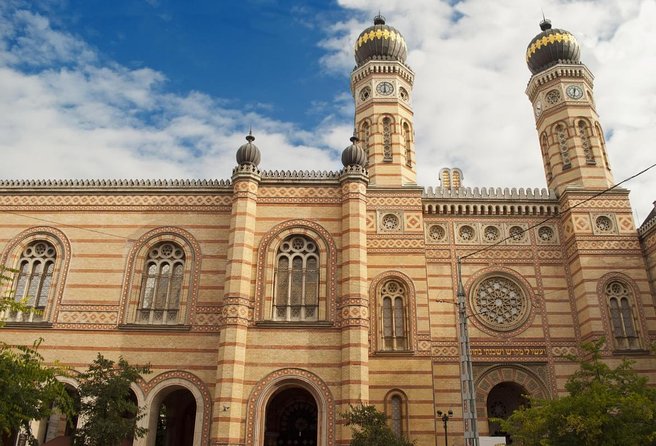
- Enter Europe’s largest synagogue complex: Dohány includes the synagogue, Temple of Heroes, Jewish Museum, and Memorial Park.
- See three Jewish traditions in one neighborhood: Kazinczy represents Orthodox Judaism, while Rumbach reflects the Status Quo Ante stream.
- Visit the 2014 Ghetto Wall Memorial: This modest site gives the wartime story a physical point of reference.
- Finish at Shoes on the Danube: The tour closes with quiet reflection beside one of Budapest’s most powerful memorials.
- Expect a serious history lesson: Guides include historians, professors, doctoral students, journalists, art critics, and published authors.
Why this walk matters in Budapest
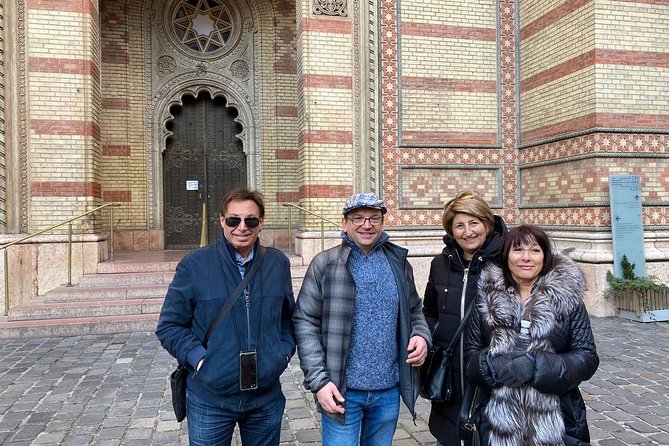
Budapest’s Jewish quarter is easy to reduce to ruin bars, cafes, and colorful street life. This tour asks you to look again. The same streets carry the story of a major Jewish population, its religious divisions, its cultural life, the destruction of the Holocaust, and the community’s renewal today.
That wider view is the tour’s main strength. You are not simply shown one synagogue and handed a few dates. You move through a chain of places that explain how Jewish life worked in the city before the war, how it was split by religious practice, and how the wartime ghetto reshaped the neighborhood.
The subject is painful, so the quality of the guide matters. Here, your guide is an English-speaking historian or another specialist with a serious background in Jewish studies, history, journalism, art, or literature. Orsolya has been praised for being thoughtful and thorough, while Endres has provided unusually detailed explanations of the Great Synagogue and wartime Budapest.
A private or small-group format is available. That matters for this subject. You have more room to ask questions, pause at memorials, and request a little more explanation when a name or event is unfamiliar.
More Jewish heritage walks in Budapest:
- Budapest Jewish Heritage Memorial Walking Tour & Synagogue Entry
★ 5.0 · 568 reviews - Budapest: Jewish Heritage Guided Tour with Synagogue Ticket
★ 4.8 · 533 reviews - Jewish Quarter of Budapest Walking Tour
★ 4.7 · 369 reviews
Starting near Madách Imre Way and Theodor Herzl
The meeting point is Kamara Café at Dohány utca 1/A, close to the start of the Jewish quarter. The walk begins in the square connected with Theodor Herzl, the father of modern Zionism.
This is a smart opening because Herzl’s story immediately shows that Budapest’s Jewish population was not a single, uniform group. Jewish residents had different religious practices, political views, levels of assimilation, and ideas about their future. Some were closely tied to Hungarian society, while others focused on Jewish national identity.
Your guide uses this early stop to set up the rest of the walk. You begin with people and ideas, not only with wartime suffering. That gives the later memorials more meaning.
The tour lasts three hours, so the pace is purposeful. You should be ready to walk between stops and listen for long stretches. Comfortable shoes are sensible, and a small bottle of water will help, especially on a warm day.
Inside the Dohány Street Synagogue complex
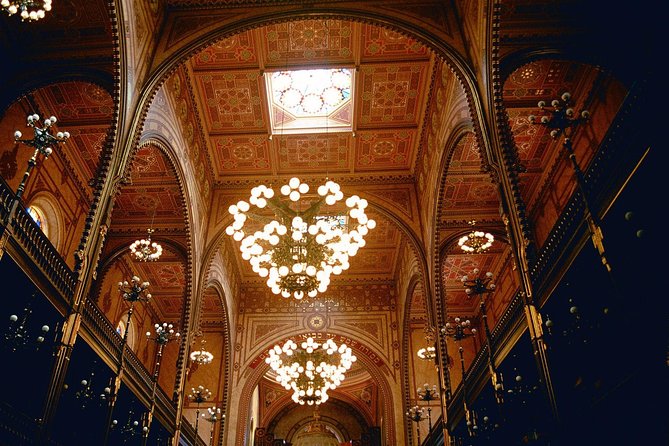
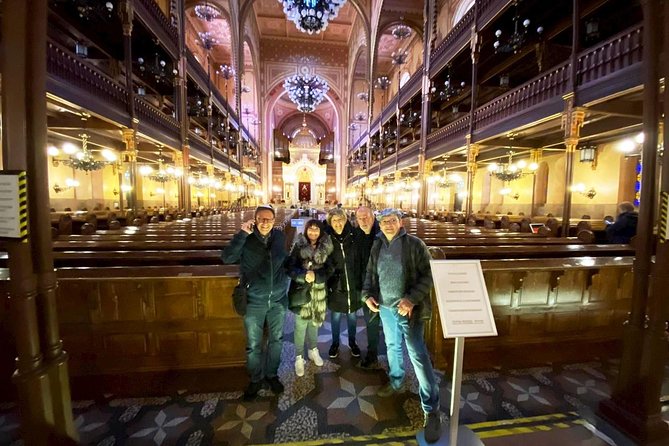
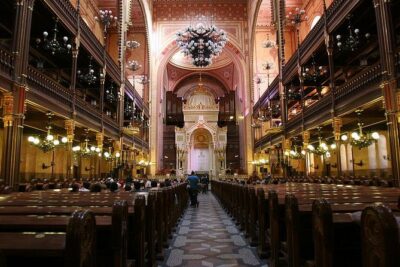
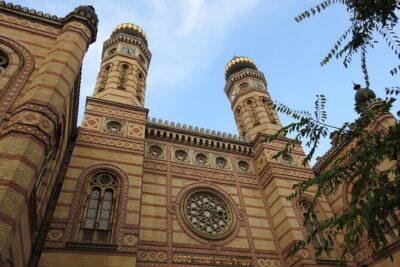
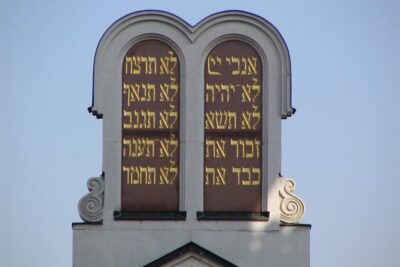
The Dohány Street Synagogue is the centerpiece of the experience. It is described as the largest temple in Europe, and its scale is easy to appreciate once you enter the complex. The exterior and interior use a lavish Moorish Revival style, which may surprise you if you expect a plain synagogue.
The building also introduces an important point about Jewish life in Budapest: the city’s Jewish institutions developed in close contact with wider European culture. The synagogue’s design does not fit a narrow idea of what a Jewish house of worship should look like. Its style reflects the community’s place in 19th-century Budapest and its wish to create a major public institution.
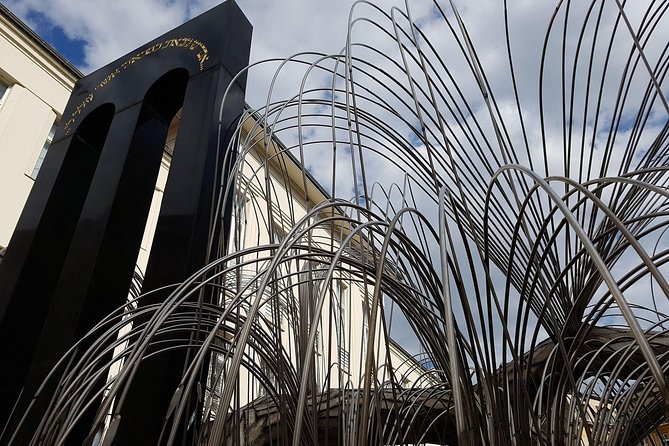
Your visit includes more than the main prayer space. The complex also contains the Temple of Heroes, the Jewish Museum, and a Memorial Park. Together, these spaces move the story from religious practice to memory and loss.
The Temple of Heroes honors Jewish Hungarian soldiers who died in World War I. The museum adds objects and context about Jewish life, while the Memorial Park turns attention toward the Holocaust and the people murdered during the war.
You should plan for the synagogue’s clothing rule. Visitors are asked to cover their shoulders and knees. The rule applies to everyone, so dress with that in mind rather than arriving in beach clothing and hoping for an easy fix.
There is also a practical cost to note. The Dohány Synagogue ticket costs 14,500 Ft per person and is not included in the $123 tour price. That makes the total expense noticeably higher than the headline figure. Still, if you want a guided explanation of the complex rather than a quick self-guided look, the admission is a necessary part of the visit.
The 2014 Ghetto Wall Memorial
After the synagogue complex, the walk continues to the neighboring Ghetto Wall Memorial, erected in 2014. It is a smaller and less ornate place than Dohány, which is part of its value.
Large buildings can make history feel distant. A wall fragment, by contrast, gives you a direct reminder of the restrictions placed on Jewish residents and the confined world created during the war. Your guide can connect the physical remains with the larger story of the Budapest ghetto.
This is also where the tour shifts from community life to persecution. The change can feel abrupt, but it reflects the reality of the period. The same quarter that had been home to religious institutions, families, businesses, and cultural life became a place of confinement and danger.
The memorial does not take long to see, so the guide’s explanation is especially important. A good question to ask here is how the ghetto area related to the surrounding Jewish institutions. On a private or small-group tour, you should have time to ask that without losing the group.
More walking tours in Budapest:
- Budapest: Buda Castle Walk with Saint Stephen’s Hall
★ 4.5 · 3,012 reviews - Big Bus Budapest Hop-On Hop-Off Bus and Walking Tour
★ 3.5 · 2,206 reviews - Budapest: Buda Castle District Walking Tour
★ 4.6 · 2,108 reviews - Budapest City Landmarks Walking Tour in 2 Hours
★ 5.0 · 2,048 reviews
Kazinczy Street and the Orthodox tradition
Kazinczy Street brings you to the exterior of an Art Nouveau Orthodox synagogue. The tour also points out a luxurious mikve, or Jewish ritual bath.
These stops explain why the Jewish community cannot be treated as one block. Different religious streams had different rules, institutions, and styles of worship. The Orthodox community maintained a more traditional approach to Jewish practice, and the mikve was an important part of religious life.
The synagogue’s Art Nouveau facade adds another layer. Budapest’s Jewish buildings are not all grand Moorish structures. Here, religious purpose and local architectural fashion meet in a very different way.
The itinerary lists the Kazinczy Street Synagogue as a guided stop, but the description specifically emphasizes viewing its exterior. That distinction matters if you expect to enter every synagogue. Dohány is the main interior visit, while Kazinczy may be appreciated from the street depending on the day’s arrangements.
I like this part of the walk because it keeps the focus on living communities rather than only memorials. You see how Jewish religious life was organized and how the different streams expressed themselves through buildings and institutions.
Rumbach Street and Status Quo Ante Judaism
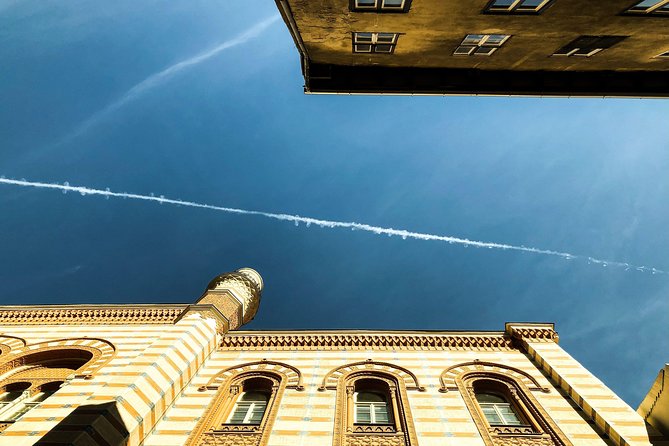
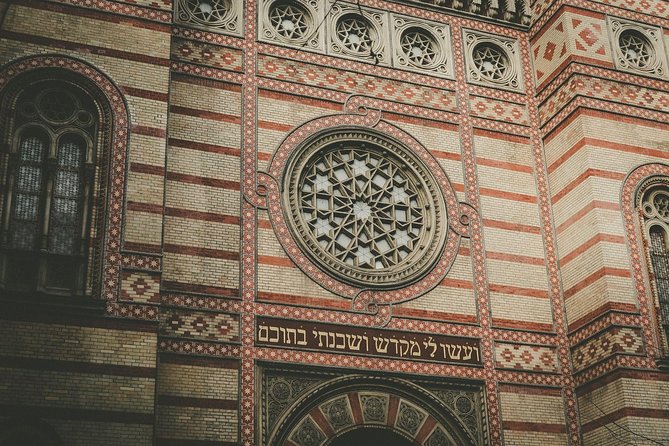
The Rumbach Street Synagogue provides another architectural and religious contrast. The tour explains the Status Quo Ante stream of Judaism while you observe the building’s impressive facade.
Status Quo Ante communities occupied a position distinct from both the Orthodox and Neolog movements. Even if you do not know the divisions before the tour, the guide’s explanation should help you understand why several synagogues existed within a relatively small area.
That is one of the more useful parts of the walk. You are not only looking at pretty buildings. You are learning why they were built, who used them, and how religious identity shaped the city.
The Rumbach stop also helps you read Budapest as a layered city. Architectural details can hint at a building’s role, but they do not tell the whole story. The guide supplies the background that turns a facade into evidence of a community’s choices.
Again, expect the emphasis to be on the exterior rather than a guaranteed interior visit. If entering Rumbach is important to you, ask about access when booking.
Ending at Shoes on the Danube Bank
The tour concludes at Shoes on the Danube Bank, one of Budapest’s best-known memorials. The small iron shoes along the river represent Jewish people murdered there during the Holocaust.
This is a quiet place, and the tour wisely ends with reflection rather than another busy sightseeing stop. The memorial is simple, but its force comes from that simplicity. Shoes are ordinary objects, yet they make the victims feel like individuals who had families, daily routines, and lives interrupted by violence.
Your guide can place the memorial within the wider story of Jewish persecution in Budapest. The tour’s earlier stops make this ending more meaningful because you have already seen the institutions and streets connected to Jewish life.
The final theme is not only loss. The walk also considers the renewal of Budapest’s Jewish community today. That does not soften the history, but it prevents the tour from ending with the false idea that Jewish life in the city disappeared completely.
Give yourself time at this stop. The tour officially ends here, so you may want to remain by the river for a few quiet minutes after the guide leaves.
The guides make the difference
The guide quality is the biggest reason to choose this experience over a basic neighborhood walk. Guides may be professors, doctoral students, historians, journalists, art critics, or published authors. The exact person assigned to your tour can vary, but the intended approach is clearly academic without being limited to a lecture hall.
Orsolya has led groups with a careful, thoughtful style, checking that everyone was comfortable before moving to the next site. That is useful on a private tour, where you may want more time at one memorial and less at another.
Endres has provided detailed explanations of the Great Synagogue and the changes brought by the Nazi era. He has also helped visitors clean stumbling stones honoring Holocaust victims, supplying the needed materials and taking part in the act of remembrance. That activity is not listed as a standard part of this walking route, so you should not assume it is included, but it shows the kind of personal care a guide may bring to the subject.
The most highly praised quality is not entertainment. It is the ability to explain difficult history with warmth, precision, and respect. That makes this tour a better fit for visitors who want context and conversation than for anyone seeking a quick photo walk.
Is $123 a fair price?
At $123 per person, this is not a budget sightseeing walk, especially after adding the 14,500 Ft synagogue ticket. The price is easier to justify if you choose a private or very small group and want a specialist guide who can answer questions.
A basic self-guided visit to the Jewish quarter will cost less. You can see many exteriors on your own, and Budapest has plenty of free memorials. But a self-guided visit will not automatically explain the differences between Orthodox, Status Quo Ante, and other Jewish traditions, or connect the buildings to the city’s prewar population and wartime destruction.
The tour also saves you from treating the Jewish quarter as a collection of unrelated sights. The sequence has a clear shape: Herzl and Jewish identity, Dohány and institutional life, the ghetto wall and persecution, different synagogue traditions, then Shoes on the Danube and remembrance.
For visitors with a strong interest in Jewish history, religious history, or Budapest before World War II, the cost can be worthwhile. For a casual first-time visitor who wants only general sightseeing, it may feel expensive.
Free cancellation up to 24 hours before the start and reserve-now, pay-later booking make it easier to fit into a changing schedule. Starting times vary, so check availability before building the rest of your day around it.
Who should book this walk?
I would choose this tour if you want a serious account of Jewish Budapest and prefer to learn from a specialist rather than read plaques on your own. It suits couples, families with older children, students, and small groups with specific questions.
It is also a good choice for anyone who finds memorial sites difficult to understand without context. The guide can explain what you are seeing and give you space to respond.
You may want a different activity if your priority is interior access to several synagogues. Dohány is the main confirmed interior visit, while Kazinczy and Rumbach are described chiefly through their exteriors. The walk also deals directly with Holocaust history, so it is not light sightseeing.
The 4.9 rating from 26 ratings reflects a consistently strong experience, but the most useful clue is the repeated praise for personal attention and guide quality. Book it for the historian, not simply for the buildings.
FAQ
How long is the Jewish Budapest walking tour?
The tour lasts three hours.
Where does the tour meet?
The meeting point is Kamara Café at Dohány utca 1/A in Budapest.
What language is the tour offered in?
The live tour guide speaks English.
Is the Dohány Synagogue ticket included?
No. Admission to the Dohány Synagogue costs 14,500 Ft per person and is paid separately.
Which major places are included?
The route includes the area near Madách Imre Way, Dohány Street Synagogue, Kazinczy Street Synagogue, the Ghetto Memorial Wall, Rumbach Street Synagogue, and Shoes on the Danube Bank.
Do visitors need special clothing for the Dohány Synagogue?
Yes. Visitors are asked to cover their shoulders and knees.
Can I book a private or small-group tour?
Yes. Private and small-group options are available.
Should you book it?
Book this walk if you want Budapest’s Jewish quarter explained through people, religious traditions, architecture, persecution, and remembrance. The historian-led format is the main value, and the final stop at Shoes on the Danube gives the three-hour route a serious, fitting close.
Skip it if you want a cheap overview, a relaxed cafe-and-architecture stroll, or guaranteed entry to several synagogues. For everyone else, especially visitors willing to pay extra for Dohány and listen closely, this is a thoughtful way to understand one of Budapest’s most important chapters.
Recently added around Budapest
- Budapest: Private Walking Tour with a Local Guide★ 3.6 · 6 reviews
- From Budapest: Guided Tour of Eger with Wine Tasting★ 4.5 · 6 reviews
- Budapest: City Bike Tour with Coffee Stop★ 5.0 · 37 reviews
- Budapest: Danube River Views Bike Ride★ 4.8 · 23 reviews
- Budapest: Vacation Photographer to collect great memories★ 5.0 · 49 reviews
- Walk to recent and aged spiritual sanctuaries near Budapest★ 5.0 · 5 reviews
- Trash Art Museum: Hungary’s First Scrap Metal Exhibition★ 4.3 · 72 reviews
- Budapest: Multilingual Highlights Tour★ 4.8 · 89 reviews
Jewish Heritage Tours, compared.
Budapest Jewish Heritage Memorial Walking Tour & Synagogue Entry
Read our review →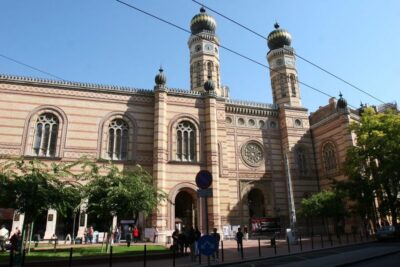
Jewish Heritage Guided Tour with Synagogue Ticket
Read our review →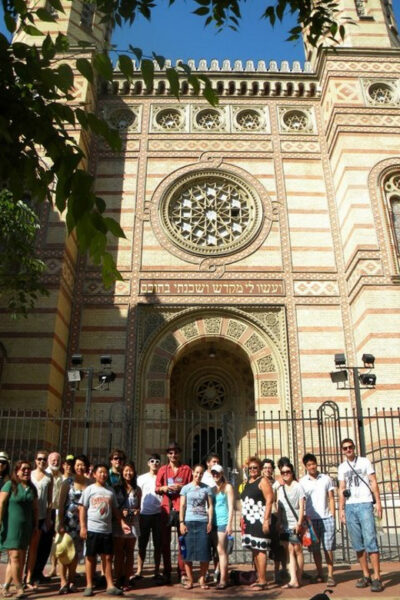
Past and Present of Budapest Jewish District Tour
Read our review →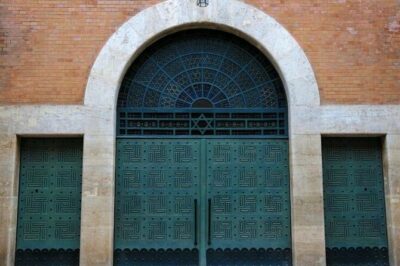
Budapest Dohany Synagogue & Hungarian Jewish Museum & free extras
Read our review →
Jewish History Guided Walking Tour with Historian
Read our review →Browse the lists this tour appears in