
Reviewed · COMMUNIST HISTORY TOURS
Budapest Hammer & Sickle Communist Times Tour
Budapest’s Communist Times Tour makes recent Hungarian history feel personal. You move from wartime politics and Soviet occupation to banana lines, passport troubles, black markets, and a 1960s-style living room filled with the ordinary objects of the period. Then you walk to the places where protests, speeches, shootings, and political change took place.
I like the mix of indoor objects and outdoor sites. I also like the small groups, limited to 10 people, since guides such as George, Laszlo, Tomas, and Rebecca have been able to answer questions and adjust the discussion to the group. The main drawback is that the tour can be hard to hear outdoors, especially during noisy events, and some of the indoor explanation may take more time than you expect.
Key points to know before booking
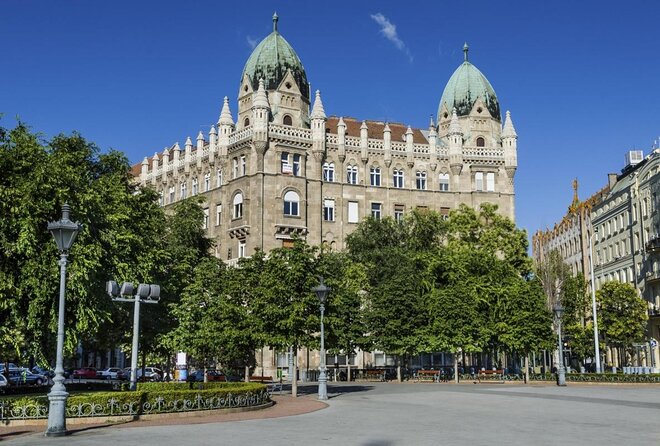
- The tour begins with everyday communist life: Expect a mock-up apartment or basement exhibit with books, games, photographs, news items, drinks, and household objects.
- The 1956 Revolution is the main thread: You visit Parliament Square and memorials linked to protests, Soviet tanks, executions, and the later return to freedom.
- You get more than a communist-era walk: The guide covers World War I, World War II, the Soviet occupation, the seizure of power, and the fall of the Iron Curtain.
- It is a small-group English tour: The maximum group size is 10, and some departures have been private or nearly private.
- The pace is mostly walking: You start at Deák Ferenc Square at 3:00 p.m. and finish near Liberty Square.
- The price is reasonable for history-focused visitors: At $79.65, the value depends on how much you want context, conversation, and the indoor exhibit rather than quick sightseeing.
Why this tour works for understanding modern Budapest
Budapest is full of grand buildings, thermal baths, and postcard views. Those are good reasons to visit, but they do not explain why Hungarian politics and public memory feel so charged. This tour fills in that missing layer.
Your guide begins with Hungary’s place in World War I and World War II. That background matters because the communist period did not arrive in isolation. Defeat, political pressure, Soviet occupation, and the growing power of the Communist Party shaped the country before the 1956 uprising began.
The discussion then turns to how ordinary families lived under one-party rule. You learn about travel restrictions, the difficulty of getting a passport, shortages, unofficial markets, and the famous queues for items such as bananas. The details are useful because they replace vague ideas about communism with the practical problems of daily life.
Guides also bring personal or family memories into the talk. George, Tomas, Laszlo, Anna, Celeste, Bogata, and Rebecca have all been praised for making the subject clear and engaging. The exact guide you receive cannot be guaranteed, but the experience is designed around a live English-speaking guide rather than a recorded script.
More communist history tours in Budapest:
- Budapest: Communist History Tour with House of Terror Option
★ 4.8 · 182 reviews - Budapest: 3-Hour Walking Tour About Communism (Small Group)
★ 4.7 · 70 reviews - Communism in Hungary with a Historian
★ 5.0 · 70 reviews
The basement exhibit makes politics human
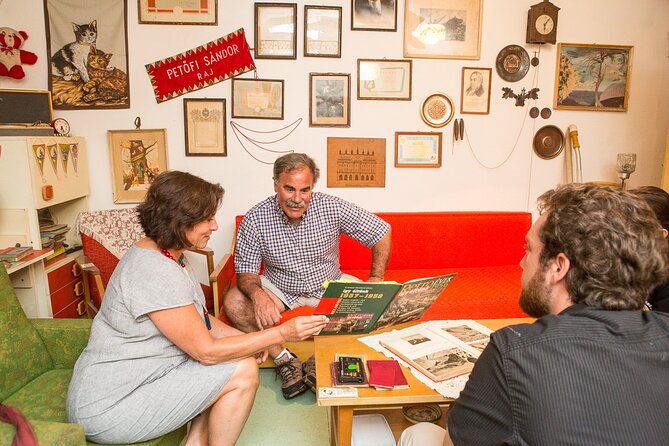
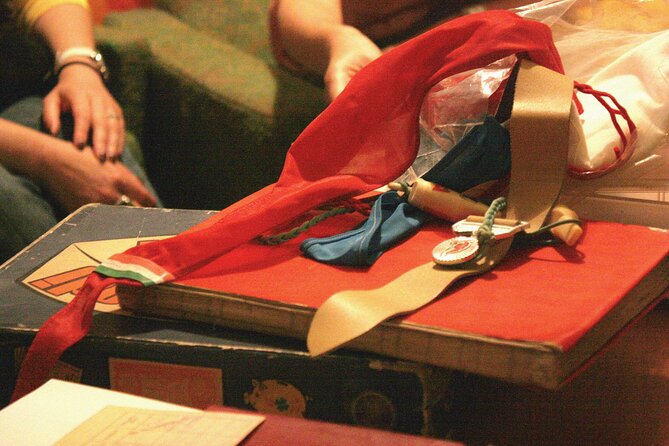
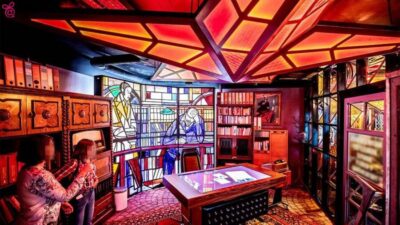
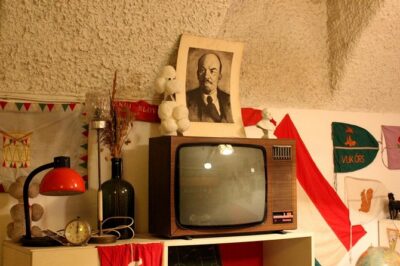
The indoor portion is one of the strongest parts of the experience. Several guides begin in a basement or office space arranged like a communist-era home, sometimes described as a 1960s or early 1970s living room.
You might see old books, board games, photographs, newspapers, drinks, household items, and other objects from the period. The point is not simply to look at vintage things. Your guide explains what they reveal about childhood, family routines, entertainment, work, travel, and access to goods.
This is where the tour earns its keep. A political speech can tell you what a government wanted people to believe. A passport problem, a limited food supply, or a child’s game tells you what life felt like at home.
The exhibit is also helpful if you do not have much background in Central European history. Instead of dropping you beside a monument and expecting you to understand it, the guide first gives you a working picture of daily life.
One practical note: the indoor section may take a large share of the tour. One less satisfied participant felt there was too much time in the communist-era apartment and not enough walking. If you want a fast outdoor tour with a short museum stop, this may feel slow. If you enjoy objects, conversation, and social history, the same feature will likely be a highlight.
Deák Ferenc Square and St. Stephen’s Basilica
Meet at the Lutheran Church on Deák Ferenc Square, at Deák Ferenc tér 4. This central location is easy to reach by public transport and puts you in the middle of Pest.
The first discussion includes St. Stephen’s Basilica and the effect of communism on religious life. You learn how the system dealt with churches and religious practice, rather than treating the basilica only as a beautiful building.
The listed time here is about 15 minutes. Admission to the basilica is not included, so do not expect a formal interior visit as part of the tour. The value of this stop is the political and social explanation outside, not a separate church ticket.
Starting downtown also makes the tour easy to combine with another afternoon activity. Still, remember that the tour begins at 3:00 p.m., so you should arrive ready to go rather than planning a long visit inside the church first.
Liberty Square and the Soviet memorial
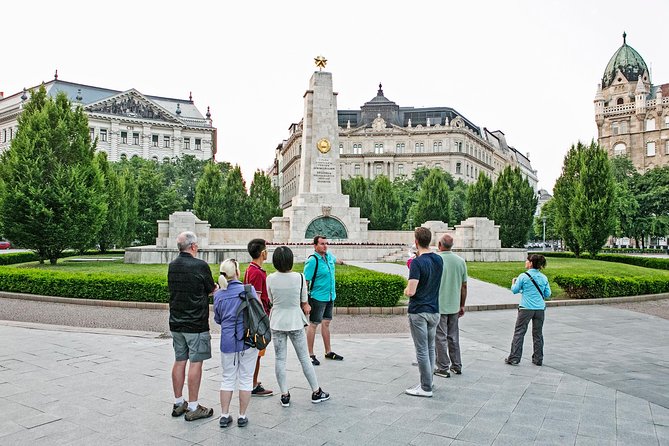
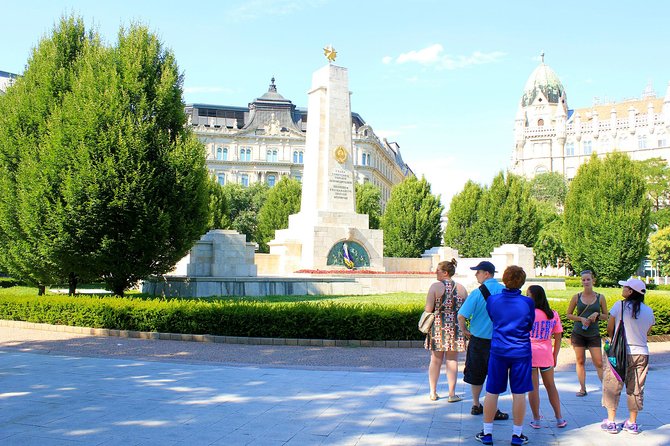
At Szabadság tér, or Liberty Square, the tour examines the end of World War II, the start of Soviet occupation, and the way the Communist Party took control of Hungary.
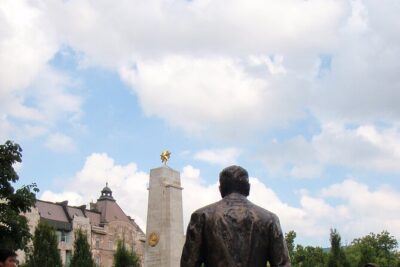
The Soviet memorial is an important stop because it shows how public memory can be contested. The square also includes reminders of different periods of Hungarian politics, and your guide explains how the change from wartime rule to communist government took shape.
You do not need an admission ticket for this stop. The walking time listed is about 15 minutes, though questions and group discussion can extend the visit.
This is one of the places where a good guide matters most. The basic facts are easy to list, but the sequence can be confusing: war, occupation, political pressure, one-party rule, resistance, and later remembrance. A guide such as Bogata or Tomas can connect those steps without turning the tour into a string of dates.
A few more Budapest half-days to weigh up
- Budapest: City Highlights Cruise with Welcome Drink
★ 4.6 · 35,610 reviews - Budapest: Unlimited Prosecco, Beer and Aperol Spritz Cruise
★ 4.8 · 25,310 reviews - Budapest: Széchenyi Spa Day Ticket with Optional Upgrades
★ 4.3 · 23,911 reviews - Budapest: Nighttime or Daytime Sightseeing Cruise
★ 4.2 · 21,062 reviews
Parliament Square and the opening of the 1956 Revolution
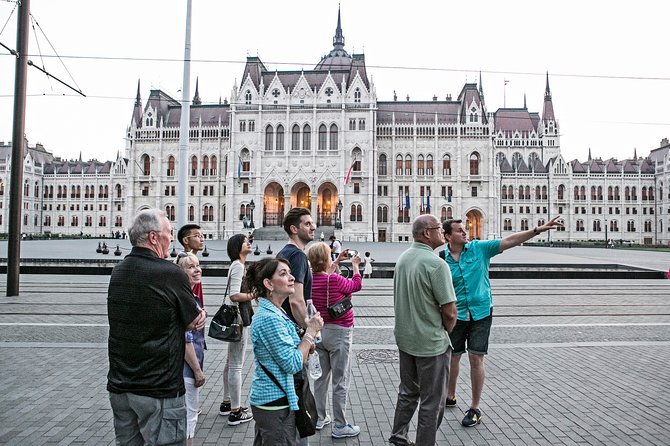
The square in front of the Hungarian Parliament is tied directly to the early days of the 1956 Revolution. Here you hear what led to the uprising, how demonstrations grew, and how the party leadership and Soviet authorities responded.
The tour emphasizes speeches, protests, and marches. It also explains that the first shots of the revolution were fired in connection with the Parliament area. The setting gives weight to the story because you are not hearing about a distant battlefield. You are standing in the center of a political crisis that unfolded in public.
The Parliament building itself is impressive, but this tour is not a Parliament interior visit. Admission is not included, and the itinerary does not promise entry into the building. Think of this as a history stop in the square, with the exterior as the backdrop.
The planned visit lasts about 20 minutes. That is enough for a clear explanation, though people who enjoy political history may wish they had more time. Small groups help here. When only two or three people are booked, guides have been able to slow down, take questions, and focus on personal interests.
The October 25 memorial and the cost of the revolution
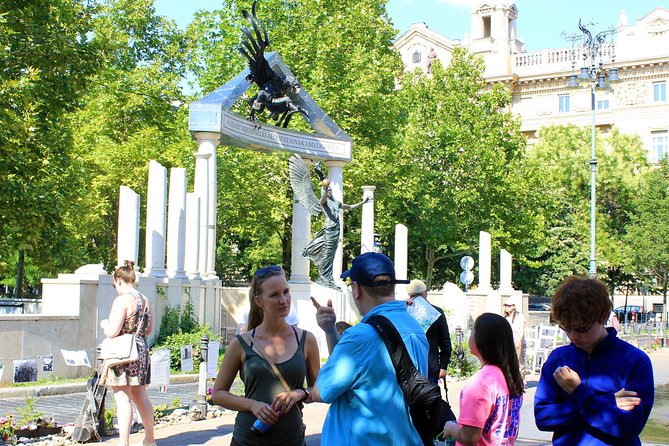
The In Memoriam 1956 October 25 Memorial and Exhibition marks one of the most painful episodes of the uprising. On the second day of the revolution, military forces and Soviet tanks fired on a gathering crowd.
The memorial and exhibition use archive footage and recollections to present the event. This is a serious stop, not a decorative monument added to a sightseeing route. Your guide explains what happened and why October 23 remains Hungary’s national day connected with the 1956 Revolution.
The listed visit is about 15 minutes, and admission is free. The material can be emotional, particularly after hearing about the hopes raised by the demonstrations. The tour handles the subject as part of a wider political story, but you should expect a sober pause rather than a light sightseeing stop.
This is also where the tour’s lack of audio equipment can matter. There are no headphones or personal listening devices. In a quiet square, that is not a problem. During a noisy city event, aircraft display, or heavy street activity, hearing every sentence may be difficult. Stay close to the guide and ask for clarification when needed.
Imre Nagy and the road back to freedom
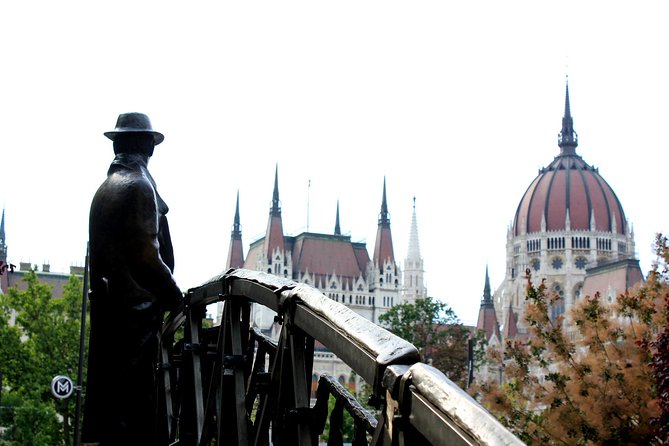
The statue of Imre Nagy adds a human figure to the political story. Nagy was a communist leader who challenged Soviet authority during the 1956 Revolution. He was later executed for treason, and his reburial became an important moment in Hungary’s change of regime.
This stop also helps explain why the end of communism was not just a sudden event in 1989. Memory of 1956, including the treatment of Nagy, remained part of the country’s political life. The guide connects the revolution, its suppression, the later fall of the Iron Curtain, and the return of public remembrance.
The tour is strongest when it shows those links rather than treating each monument as a separate fact. You see how a protest, a memorial, an execution, and a reburial can all matter decades later.
What the walking route feels like
The outdoor portion connects central Pest locations, so you should be comfortable walking and standing for much of the afternoon. The tour lasts about two and a half hours, though some departures have run closer to three hours when the group asked many questions.
There is no hotel pickup or drop-off. The meeting point is at Deák Ferenc Square, and the tour ends near Liberty Square at Szabadság tér 1. That is convenient for continuing into central Budapest, but you will need to make your own way back.
Bring suitable clothing. The tour runs in all weather, and the outdoor stops have little protection from cold, rain, or heat. Comfortable shoes are sensible, even though this is not described as a strenuous walk.
Coffee, tea, or a soft drink is included. Some descriptions of the experience also mention a snack or light food stop, but the formal inclusion is a drink, so do not book it expecting a full meal.
Is $79.65 good value?
At $79.65 per person, this is not a bargain walking tour. You can find free city walks in Budapest, and a visitor focused only on landmarks may prefer one of those.
The value comes from the combination of a specialist subject, a small maximum group, an indoor exhibit, and time with a live guide. You are paying for explanation and conversation as much as for the route. Guides have answered detailed questions about history, politics, family life, and the change from communist rule, which is difficult to reproduce with a map or audio guide.
The tour is especially good value early in your Budapest stay. It gives you context for monuments and public spaces you may pass again. It can also help you understand why the Parliament area, Liberty Square, Imre Nagy, and the 1956 memorials matter beyond their appearance.
I would be less likely to recommend it to someone who wants a broad city introduction, a long Parliament visit, or a relaxed sightseeing loop. The subject is specific, and the mood becomes serious.
Who should book it
This tour suits history-minded visitors, adults, older teenagers, and anyone curious about how political systems affect ordinary households. It is not recommended for children under 14, and younger visitors may find the political detail and memorial material demanding.
It also suits people who like asking questions. Small groups have sometimes turned into private tours, giving the guide room to tailor the discussion. If your group is larger, you still have a maximum of 10 people, which is far more manageable than a big coach group.
The experience may be a good choice for returning visitors who have already seen Budapest’s main sights. It also works for first-time visitors who want to understand the city before exploring more widely.
Should you book the Budapest Communist Times Tour?
Book it if you want to understand Budapest through the 1956 Revolution, Soviet occupation, and daily life under communism. The basement apartment display, archive material, Parliament Square, October 25 memorial, and Imre Nagy stop give the afternoon a clear shape.
Skip it if you want mostly outdoor sightseeing, a quiet self-guided walk, or a tour centered on the Parliament interior. The price is fair for a small, guide-led history experience, but only if this subject interests you.
For most history fans, I would schedule it near the beginning of a Budapest visit. You will leave with more than a list of monuments. You will have a better sense of the people, shortages, fears, hopes, and political memories behind the city you are seeing.
FAQ
How long does the Budapest Communist Times Tour last?
The tour lasts approximately 2 hours and 30 minutes. Some departures have lasted about three hours when the group had many questions.
Where does the tour begin?
The meeting point is the Lutheran Church of Ferenc Deák Square, at Budapest, Deák Ferenc tér 4, 1052 Hungary.
Where does the tour finish?
The tour ends near Liberty Square in central Budapest, at or near Szabadság tér 1, 1054 Hungary.
What time does the tour start?
The scheduled start time is 3:00 p.m.
Is the tour offered in English?
Yes. An English-speaking guide leads the experience.
Is admission to the Hungarian Parliament Building included?
No. The tour discusses the Parliament area and its role in the 1956 Revolution, but Parliament admission is not included.
Is the tour suitable for children?
The tour is not recommended for children under 14. Most older participants can take part, and the activity is near public transportation.
Is hotel pickup included?
No. Pickup and drop-off are not included. You make your own way to Deák Ferenc Square and away from Liberty Square at the end.
What happens if the weather is poor?
The tour operates in all weather conditions, so dress appropriately for the forecast. There is no audio equipment or headphone system, which can make outdoor listening harder during loud events.
Can I cancel the booking?
You can cancel up to 24 hours before the start time for a full refund. Cancellations or changes made less than 24 hours before the start time are not accepted for a refund.
Recently added around Budapest
- Budapest: Private Walking Tour with a Local Guide★ 3.6 · 6 reviews
- From Budapest: Guided Tour of Eger with Wine Tasting★ 4.5 · 6 reviews
- Budapest: City Bike Tour with Coffee Stop★ 5.0 · 37 reviews
- Budapest: Danube River Views Bike Ride★ 4.8 · 23 reviews
- Budapest: Vacation Photographer to collect great memories★ 5.0 · 49 reviews
- Walk to recent and aged spiritual sanctuaries near Budapest★ 5.0 · 5 reviews
- Trash Art Museum: Hungary’s First Scrap Metal Exhibition★ 4.3 · 72 reviews
- Budapest: Multilingual Highlights Tour★ 4.8 · 89 reviews
Communist History Tours, compared.
Communist History Tour with House of Terror Option
Read our review →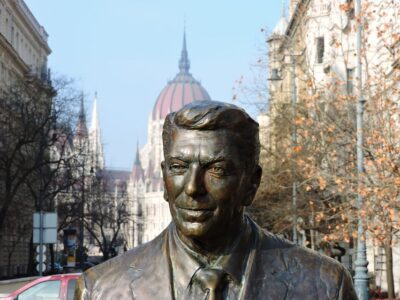
3-Hour Walking Tour About Communism (Small Group)
Read our review →
Lives of Hungarians Under Communist and Capitalist system
Read our review →
Private Budapest Hammer & Sickle Communist Times Tour
Read our review →
Browse the lists this tour appears in