
Reviewed · COMMUNIST HISTORY TOURS
Private Budapest Hammer & Sickle Communist Times Tour
Prague’s prettiest streets tell only part of its story. This private walk follows the city’s darker 20th-century chapters, from a former prison on Bartolomejska Street to the sites of Nazi occupation, the 1948 Communist takeover, the crushed Prague Spring, and the 1989 Velvet Revolution. I especially like the stop at Wenceslas Square, where several turning points in Czech history happened, and the guide’s use of old photos and personal memories to make those events easier to picture.
The private format is another strong point. Your guide can adjust the route and discussion to your interests, as Honza did for one small group that wanted more focus on the Communist era. The main caution is practical: this is a long outdoor walk, with stairs, high curbs, slippery surfaces, and extended periods of standing. Also check the title carefully when booking, since the supplied details name Budapest in one place but describe a tour entirely located in Prague.
Key points to know before booking
- The route covers Prague’s Nazi and Communist past, including Bartolomejska Street, National Avenue, Wenceslas Square, Republic Square, the Old Jewish Cemetery, and Letna Park.
- A private guide leads your group, so you can ask questions and request more attention to World War II, the Cold War, or life under Communist rule.
- Personal history can be a major asset, especially with guides such as Martina, who lived through the Communist period, or a guide who witnessed the Velvet Revolution.
- Expect three to three and a half hours on foot, with much of the storytelling taking place outside.
- The tour suits adults and older teenagers, but it is not recommended for children under 14 because of the subject matter.
- The price is $133.67 per person, with group discounts offered, plus a beverage stop and pickup. Drop-off is not included.
A serious look at Prague’s recent past
I find this tour valuable because it shifts your attention away from Prague’s castles, churches, and medieval lanes. Those sights are essential, but they can make the city feel timeless. This walk shows you a Prague shaped by occupation, fear, protest, censorship, and sudden political change.
The subject is not treated as a quick list of dates. The route links buildings and public spaces to the people who used them, resisted from them, or suffered inside them. That makes the tour useful early in a Prague visit, since it helps you read ordinary streets with more awareness afterward.
At the same time, you should know what you are signing up for. This is a history walk, not a light city stroll. The material includes secret police prisons, Nazi rule, political repression, Soviet tanks, and the loss of freedom under Communism. The tour operator does not recommend it for children under 14.
More communist history tours in Budapest:
- Budapest: Communist History Tour with House of Terror Option
★ 4.8 · 182 reviews - Budapest: 3-Hour Walking Tour About Communism (Small Group)
★ 4.7 · 70 reviews - Communism in Hungary with a Historian
★ 5.0 · 70 reviews
Bartolomejska Street and the former prison
The walk begins in central Prague, with an introduction to the city’s 20th-century story. One of the first important stops is Bartolomejska Street, home to a former World War II prison later used by secret police to torture prisoners.
The location is especially effective because it is not presented as a distant battlefield. You are standing in a normal city street and learning how political violence operated inside the urban fabric. I appreciate this kind of stop because it gives a physical setting to events that can otherwise feel abstract.
Your guide sets the tone here. Strong guides use the place to explain both the Nazi period and the later Communist security system, showing how different regimes relied on surveillance and coercion. Other guides may spend too long talking before the walking really begins, so it is reasonable to ask early on how the route will unfold.
National Avenue and two generations of protest
National Avenue, or Narodni trida, divides Prague’s Old Town and New Town. It also connects two major protest stories.
In 1939, Czech students demonstrated against the occupying Nazis. Decades later, in 1989, another student protest here helped trigger the Velvet Revolution against Communist rule. The same thoroughfare therefore becomes a useful way to compare two very different moments of public resistance.
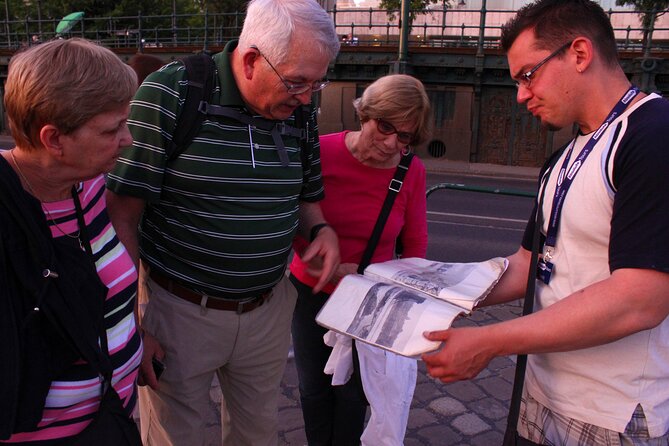
I like this stop because it shows that historical places can gather new meaning over time. Your guide may explain how ordinary students and citizens became part of events much larger than themselves. The tour’s best guides also bring visual material, such as old photographs or articles on a tablet. Mike and other highly praised guides have been noted for using extra images to help connect the present street to its earlier appearance.
Wenceslas Square and the Prague Spring
Wenceslas Square is one of Prague’s essential 20th-century sites. It served as a major public stage for the Czech struggle against foreign control, and the tour uses it to explain the Prague Spring of 1968 and the Soviet invasion that followed.
The Prague Spring was a period of attempted liberalization under Communist rule. Soviet-led forces sent tanks into Czechoslovakia to stop those reforms. Your guide helps you picture the square during the invasion and during the protests that followed.
The square also carries the memory of January 1969, when Jan Palach set himself on fire in protest against the occupation and the retreat from reform. The supplied tour details do not promise a dedicated Palach stop, so ask your guide if this part of the story matters to you.
This is one of the strongest parts of the route because the setting is broad, public, and easy to understand. The drawback is that the square can be a poor place for a long talk if the weather is harsh or your group is standing in an exposed area. Dress for the forecast, and bring comfortable shoes.
A few more Budapest half-days to weigh up
- Budapest: City Highlights Cruise with Welcome Drink
★ 4.6 · 35,610 reviews - Budapest: Unlimited Prosecco, Beer and Aperol Spritz Cruise
★ 4.8 · 25,310 reviews - Budapest: Széchenyi Spa Day Ticket with Optional Upgrades
★ 4.3 · 23,911 reviews - Budapest: Nighttime or Daytime Sightseeing Cruise
★ 4.2 · 21,062 reviews
Republic Square and the 1948 Communist takeover
Republic Square carries several layers of political meaning. It is named for the 1918 proclamation of an independent Czechoslovakia, but the tour also examines its role during World War II and the 1945 Prague Uprising.
The Czech resistance established secret radio stations during the war. Those broadcasts helped organize resistance and communicate during the uprising. Then, in a sharp turn of history, the square became associated with the Communist Party only three years later.
You also see the balcony from which Communist leader Klement Gottwald declared the takeover of the Czech government in 1948. This is a useful stop for understanding how Czechoslovakia moved from wartime liberation to Communist control in a short period.
I like the way this part of the route shows that independence is not permanent by default. Public squares can celebrate freedom in one era and announce its loss in another. The storytelling is strongest when your guide keeps the timeline clear. One guide, Jan, was praised for enthusiasm and expertise, but the route’s issue-by-issue order felt less clear to one participant than a strictly chronological approach. If you prefer a clean sequence, say so at the start.
The Old Town, Einstein, and the Jewish quarter
The walk continues into Old Town and the former Jewish quarter. You see the Old Jewish Cemetery, along with other landmarks tied to Prague’s political and intellectual life.
The tour also points out where Albert Einstein lived while working at Prague’s Charles University. The guide connects his scientific theories to the later development of the atomic bomb. This is an unusual turn in the route, and it broadens the story beyond government buildings and protest sites.
The Old Jewish Cemetery adds another historical layer, but the supplied details do not promise a separate Jewish-history lecture or an interior visit. Think of this portion as part of a wider city walk, not a dedicated Jewish Prague tour.
Some versions of the experience have included extra time in a museum or other indoor site. One person felt too much time went to the museum and would have preferred to visit it independently at the end. That is worth keeping in mind if your main goal is outdoor political history.
Former SS and KGB headquarters
The route includes former headquarters connected with the Nazi SS and the Communist-era KGB. You generally view these places from outside, using the buildings as evidence of how power was organized and enforced.
These stops are less visually dramatic than a castle or monument, but they reward attention. A plain office building can carry a disturbing story when you understand who worked there and what decisions were made inside.
The tour’s value depends heavily on the guide at this point. Martina was especially appreciated for having lived through the Communist era, while Mike and Mikel were praised for explaining what daily life felt like under Nazi and Communist rule. A native Czech guide who grew up in Prague can also add local context that a general European-history lecture may miss.
English ability is worth considering. One participant found a guide difficult to understand, while many others praised their guides’ clarity and patience. Since this is a talk-heavy experience, clear spoken English matters more here than it would on a simple sightseeing walk.
Letna Park and the lost Stalin monument
The final major stop is Letna Park beside the Vltava River. Here you hear about the enormous statue of Stalin built in 1955 and destroyed in 1962.
The statue was once the world’s largest representation of Stalin. Its short life reflects the sudden changes of the period: a giant public symbol of Soviet power was built, then removed after political conditions shifted.
Letna Park gives the tour a more open ending after the close streets of Old Town. You stroll along the riverside before returning to central Prague. The activity description says the tour ends in central Prague and does not include drop-off, so plan your next move from there.
What the private format adds
A private tour changes the experience more than a small group label usually does. Only your group participates, which gives you room to ask questions without holding up a large crowd.
The best examples of this flexibility come from guides who adjusted the walk to match personal interests. One guide changed the emphasis toward Cold War life, the Nazi era, the post-Cold War period, and the fall of Communism. Another took a librarian into Prague’s public library because it matched that person’s interests.
You should tell the guide at the beginning what you want most. You might ask for more detail on the Prague Spring, World War II resistance, Communist daily life, or the Velvet Revolution. The route is already planned, but a private format gives the guide a better chance to shape the discussion.
The tradeoff is price. At $133.67 per person, this is not a budget walking tour. It makes more financial sense for a small private group, particularly since group discounts are offered. For two people, the cost is easier to justify if you care deeply about the topic and would value a tailored conversation. If you simply want a quick orientation to Prague, a standard group walk may offer better value.
Time, walking, weather, and comfort
The supplied information gives the duration as roughly three hours in one place and three and a half hours elsewhere. I would plan for the longer figure. The route includes about two hours of continuous walking, plus stops for explanations and questions.
The ground can include high curbs, stairs, and slippery surfaces. This makes the experience unsuitable for people with limited mobility. It is also not a good choice if you want a relaxed walk with frequent indoor breaks.
The tour runs in all weather. Cold conditions have made long outdoor explanations uncomfortable, and hot weather can be equally tiring when you are standing still. Wear shoes with good grip, dress in layers, and bring protection from rain or sun. A beverage stop is included, but this is not a meal break.
Pickup is offered, and the meeting area is near public transportation. Drop-off is not included. The experience is confirmed at booking, and cancellation is free up to 24 hours before the start time. Changes made inside that window are not accepted.
Who should book this Prague history walk?
I would recommend it to adults and older teenagers who want more than Prague’s famous architecture. It is particularly suitable if you enjoy political history, World War II, the Cold War, the Prague Spring, or the Velvet Revolution.
It is also a good first or second activity in the city. The route helps you understand where major events occurred, and one guide used it to orient a group to Prague as a whole. You can then revisit the squares and streets later with a better sense of what they mean.
I would hesitate to book it for young children, people who struggle with long walks, or anyone expecting a cheerful sightseeing tour. The private format cannot remove the serious subject matter or the physical demands.
Should you book it?
Book this tour if you want a focused, personal look at Prague under Nazi and Communist rule, and if you are willing to spend three to three and a half hours outside. The strongest guides, including Honza, Martina, Mike, Mikel, Martin, and Yonas, have been praised for enthusiasm, personal insight, patience, and the ability to answer questions.
Before paying, confirm that your booking is for Prague, not Budapest, since the supplied location information conflicts with the actual route. Also ask for the meeting point details, state your preferred historical focus, and plan for serious walking.
For history-minded visitors, the private price can be fair when shared by a small group. For a casual introduction to Prague, it is probably too specialized. If the city’s 20th-century struggles are the reason you came, this tour gives you a useful framework and puts those events under your feet.
FAQ
Where does this tour take place?
The route described is in Prague, Czech Republic. One part of the supplied information names Budapest, so confirm the city carefully before booking.
How long does the tour last?
The duration is listed as approximately three hours in one place and three and a half hours in another. Plan on about three to three and a half hours.
Is this a private tour?
Yes. Only your group participates in the activity.
What language does the guide speak?
The tour includes a licensed English-speaking expert guide.
What places are included?
The route includes Bartolomejska Street, National Avenue, Wenceslas Square, Republic Square, Prague’s Old Town, the Old Jewish Cemetery, former SS and KGB headquarters, and Letna Park.
Does the tour include pickup?
Pickup is offered. Drop-off is not included.
Is a drink included?
Yes. The experience includes a refreshment stop with a beverage.
Is the tour suitable for children?
It is not recommended for children under 14 because of the subject matter.
Is the tour suitable for people with limited mobility?
No. The walk includes about two hours of continuous walking, high curbs, stairs, and slippery surfaces.
What happens if the weather is bad?
The tour runs in all weather. You should dress appropriately for the conditions.
Can I cancel for a refund?
Yes. You can cancel at least 24 hours before the start time for a full refund. Cancellations and changes made less than 24 hours before the start time are not accepted.
Recently added around Budapest
- Budapest: Private Walking Tour with a Local Guide★ 3.6 · 6 reviews
- From Budapest: Guided Tour of Eger with Wine Tasting★ 4.5 · 6 reviews
- Budapest: City Bike Tour with Coffee Stop★ 5.0 · 37 reviews
- Budapest: Danube River Views Bike Ride★ 4.8 · 23 reviews
- Budapest: Vacation Photographer to collect great memories★ 5.0 · 49 reviews
- Walk to recent and aged spiritual sanctuaries near Budapest★ 5.0 · 5 reviews
- True Crime Walking Tour in the Buda Castle district★ 5.0 · 26 reviews
- Trash Art Museum: Hungary’s First Scrap Metal Exhibition★ 4.3 · 72 reviews
Communist History Tours, compared.
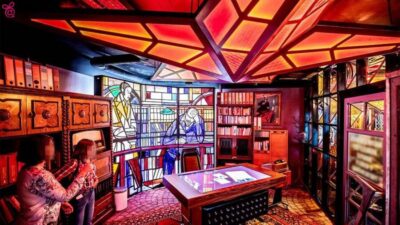
Communist History Tour with House of Terror Option
Read our review →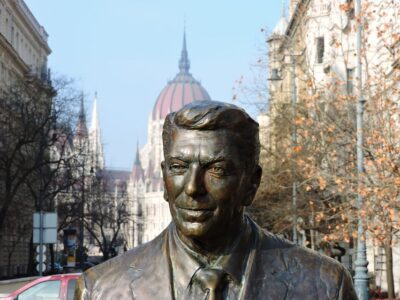
3-Hour Walking Tour About Communism (Small Group)
Read our review →
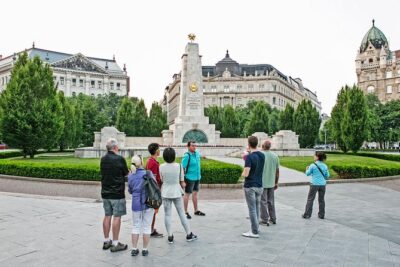
Lives of Hungarians Under Communist and Capitalist system
Read our review →
Browse the lists this tour appears in