
Reviewed · COMMUNIST HISTORY TOURS
Lives of Hungarians Under Communist and Capitalist system
Budapest’s Communist past comes into focus through ordinary subjects: who could travel, how families found housing, what children learned in school, and why some Hungarians still feel nostalgia for the old system. The guide uses personal experience, not just dates, to explain how politics shaped daily life. I especially like the human scale of the tour and its look at both Communism and the years after 1989.
I also like the route, which links central Budapest sights with less obvious stories, including old travel documents, Communist-era cars, controversial monuments, and bullet marks connected with the 1956 uprising. The main drawback is that the small booking price is only an administrative fee. You should plan to tip the guide, with €10 per person given as a typical amount, so the real cost is higher than $4.65.
Key points at a glance
- Personal stories from the Communist period: Guides lived through the era and explain how political change affected family life.
- A walk through central Budapest: The route runs from the Ferris Wheel in Erzsébet tér to Parliament, with no admission tickets required.
- Everyday life, not only political dates: Travel, housing, health care, education, religion, media, sport, and transport all receive attention.
- A serious look at 1956: The Parliament area provides the setting for stories about the uprising, its heroes, and children’s memories of the period.
- A low booking fee with an expected tip: The $4.65 payment reserves your place, while guide income depends on donations at the end.
- Small-group format: The maximum group size is 20, which should make it easier to hear personal stories and ask questions.
Why this walk gives Communist history a human face
Many history tours stay with leaders, dates, and grand political events. This one asks a more useful question: what did the system feel like for an average Hungarian? You hear how government policy reached into the kitchen, classroom, passport office, apartment block, church, and television set.
That approach is especially useful if you are visiting Budapest with teenagers. A school lesson about Communism can feel remote. A guide describing childhood under the system, along with the limits and small workarounds of daily life, gives those events a more concrete shape.
The explanation is not meant to paint the period in one color. You hear about hardship and control, but also why certain people remember parts of the system with affection. That balance matters. Some Hungarians recall predictable employment, subsidized services, or a sense of order, even while recognizing censorship, restricted travel, and political pressure.
The tour also covers post-Communism. That helps you understand why the fall of the old system did not solve every problem overnight. Hungary’s transition changed politics, work, housing, travel, and public debate, but memories of the earlier period continued to influence families and society.
More communist history tours in Budapest:
- Budapest: Communist History Tour with House of Terror Option
★ 4.8 · 182 reviews - Budapest: 3-Hour Walking Tour About Communism (Small Group)
★ 4.7 · 70 reviews - Communism in Hungary with a Historian
★ 5.0 · 70 reviews
Starting at Budapest’s Ferris Wheel
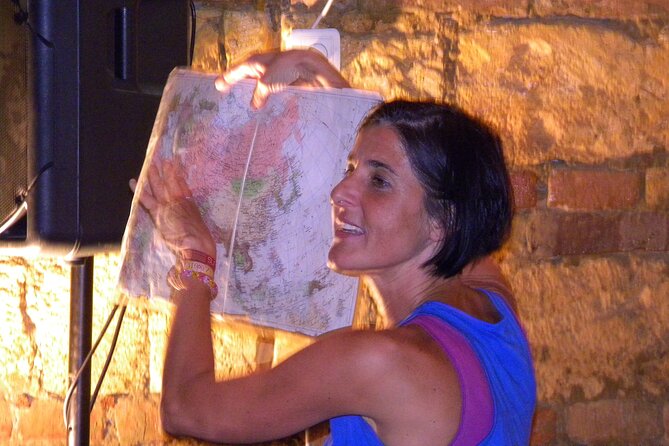
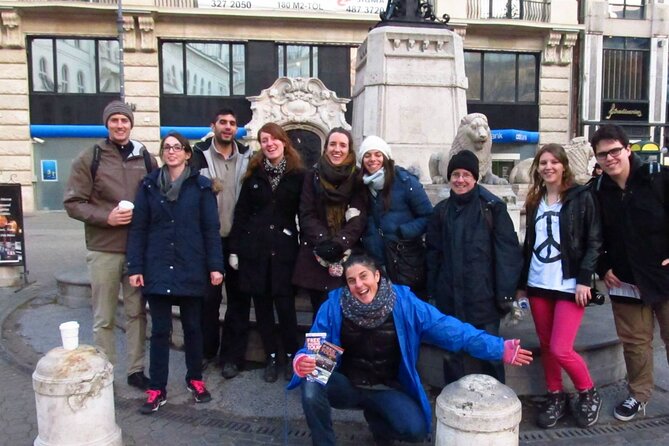
Meet the licensed guide about 20 meters from the Budapest Eye in Erzsébet tér. This is an easy central meeting point, close to public transport and surrounded by cafés and pedestrian streets.
The opening history lesson lasts about 15 minutes. It provides the basic setting for Hungarian and Central European Communism before the walk moves into personal and social topics. I like this structure because you get enough background to follow the later stories without sitting through a long lecture.
The tour is scheduled to begin at 3:30 pm. The supplied timing adds up to about 90 minutes, which matches the stated approximate duration. One part of the description refers to a two-hour itinerary, so allow a little flexibility rather than planning a tightly timed appointment immediately afterward.
Because the route is outdoors, wear comfortable shoes and be ready to walk between stops. No attraction admission is included or needed at the listed stops. The focus is on public spaces, explanation, and what the buildings and monuments reveal.
Fröccsterasz and the old limits on travel
The stop near Fröccsterasz turns travel into a window on the Communist system. You learn about leaving Hungary and entering the country, then see basic travel documents connected with those restrictions.
For many visitors, this is one of the most useful parts of the walk. Modern European travel can make passports and border crossings feel routine. Under Communism, international movement was not simply a personal choice. Documents, permissions, and political conditions could shape where a person could go.
The guide also discusses famous Communist-era car types and other forms of transport. This may sound like a small subject, but cars reveal a great deal about supply, status, waiting, and access. Transport connects political policy with ordinary errands, holidays, work, and family visits.
You should not expect a car museum or a long vehicle display. The value is in the explanation of what these vehicles and documents meant in daily life. If you enjoy social history, this short stop may leave you with more to think about than a standard list of political milestones.
St. Stephen’s Basilica and religious life under pressure
At St. Stephen’s Basilica, the conversation shifts to religion. The guide explains the difficulties faced by different denominations during Communism and shows how religious practice could vary from one family to another.
This is an important correction to the idea that a government policy affected everyone in exactly the same way. A family’s faith, public behavior, and private habits could produce very different experiences. The stop also helps you see the basilica as more than a beautiful church in the center of Budapest.
You should expect about 15 minutes here, not a full church visit or a formal religious tour. The subject is the role of faith under the political system, including the pressure placed on denominations and the way families responded.
I find this kind of stop valuable because it connects a major Budapest landmark with a quieter part of modern Hungarian history. You do not need a special background in religion to follow it. The guide presents the subject as part of social life, not as a separate topic.
A few more Budapest half-days to weigh up
- Budapest: City Highlights Cruise with Welcome Drink
★ 4.6 · 35,610 reviews - Budapest: Unlimited Prosecco, Beer and Aperol Spritz Cruise
★ 4.8 · 25,310 reviews - Budapest: Széchenyi Spa Day Ticket with Optional Upgrades
★ 4.3 · 23,911 reviews - Budapest: Nighttime or Daytime Sightseeing Cruise
★ 4.2 · 21,062 reviews
District V: housing, school, health care, and propaganda
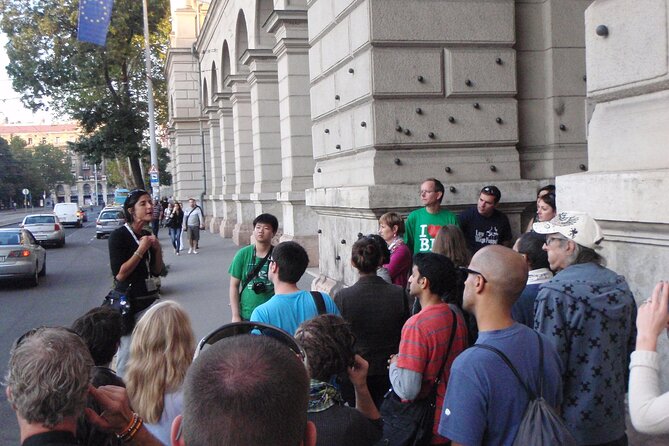
The Inner City section covers the largest number of daily-life subjects. Housing, health care, education, media, propaganda, sport, and the Olympic Games all enter the discussion. This is where the tour most clearly moves beyond monuments.
Housing is a useful place to begin. Under a state-directed system, finding and keeping an apartment worked differently from the private housing market familiar to many visitors. The guide explains the pressures and arrangements that affected families, giving you a better sense of why housing remains tied to memories of the period.
Health care and education are treated in the same practical way. You hear about the public systems people relied on, along with the limits and political conditions surrounding them. The point is not to declare one system entirely good or bad. It is to show how services could be valued even when the wider political structure was restrictive.
Media and propaganda reveal another part of daily life. The tour helps you consider what people saw, heard, and were expected to believe in public. Sport and the Olympics add a different angle, since national achievement could offer pride and international recognition even when ordinary freedom was limited.
This section may be the most information-heavy part of the walk. If you prefer a tour focused only on buildings, it could feel like a lot of material. If you want to understand why memories of Communism remain divided, it is essential.
Szabadság tér and Budapest’s difficult symbols
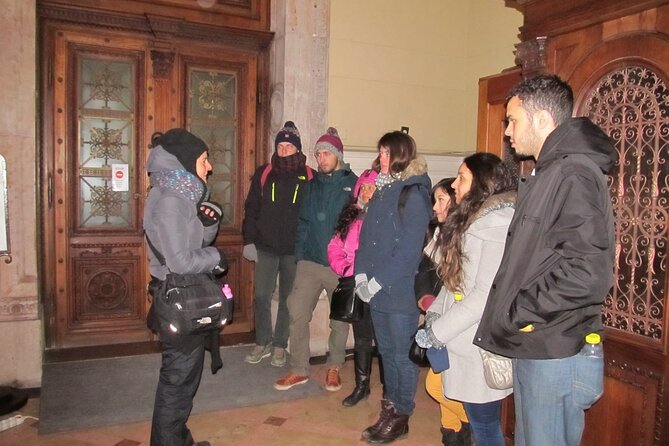
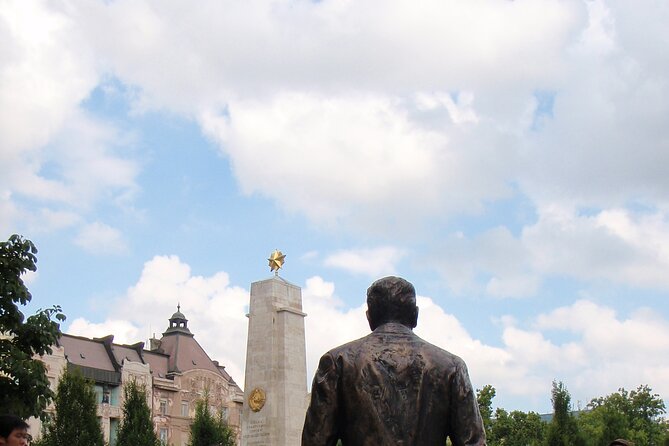
Szabadság tér brings the discussion into a public square filled with political meaning. The guide shows two controversial monuments, urban art and guerrilla statues, and the emergency exit associated with the F4 military nuclear bunker.
The square is a good place to discuss how different versions of history compete in public space. Monuments do not simply record the past. They also show what a government, city, or group wants people to remember, honor, question, or reject.
The bunker reference adds another layer. You learn about the emergency exit of the F4 military nuclear bunker and about the second most guarded building in Budapest, which sheltered a prominent Hungarian person for more than 15 years. The description does not promise entry into these restricted places, so think of this stop as an explanation from the street rather than an interior tour.
The urban art and guerilla statues make the square feel like an ongoing conversation. They provide a modern response to official symbols. I like that the tour does not treat history as finished. Budapest’s public spaces still carry arguments about power, memory, and responsibility.
Parliament and the 1956 uprising
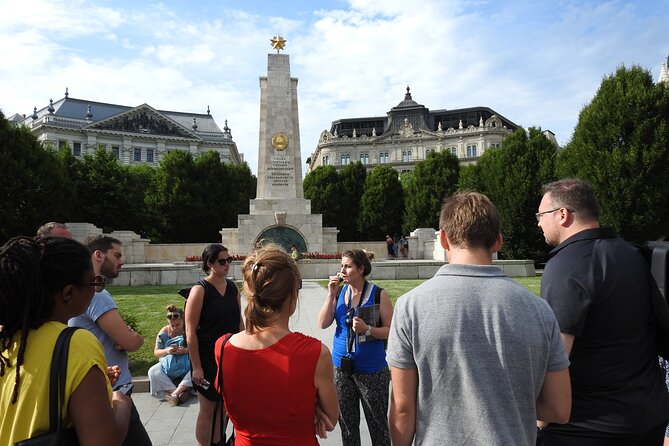
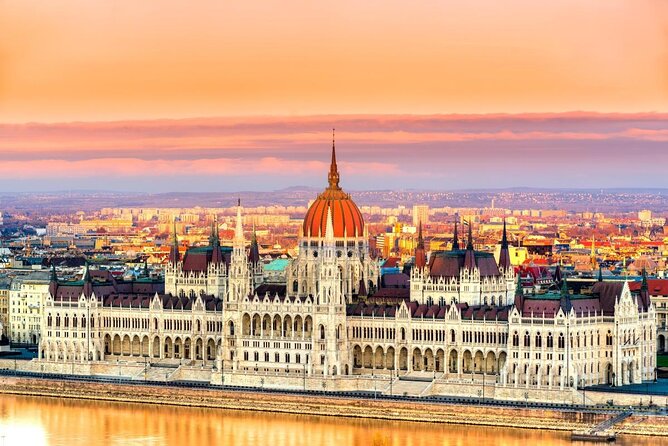
The walk ends at the Hungarian Parliament Building on Kossuth Lajos tér. This is the emotional center of the route, since the guide gives a fuller account of the 1956 uprising and the experiences of people who lived through Communism as children.
You also see bullet holes on the façades of residential buildings near Parliament. These marks make the uprising easier to picture. They are physical traces in an ordinary neighborhood, not just a date in a textbook.
The guide discusses the heroes of 1956 and personal stories from the revolution. This is where the walk’s larger themes come together: government power, public resistance, fear, courage, family memory, and the long effects of political violence.
The ending is practical too. The finish is about 50 meters from Budapest’s M2 red metro line, making it easy to continue sightseeing or return to your accommodation. Parliament itself is not listed as an interior visit, so book this for the historical explanation and street-level setting rather than access inside the building.
What the $4.65 price really means
The $4.65 per-person payment is unusually low, but it is not the full expected cost. It is a booking and administrative fee used to reserve your place. The guide’s earnings depend on tips, and €10 per person is presented as the amount most people give, with some paying more.
That system can be good value if you understand it before booking. You reserve a 90-minute guided walk for a small upfront payment, then decide at the end what the experience was worth. The low fee also makes it easier to fit the tour into a Budapest itinerary without committing to a costly attraction.
Still, do not treat it as a completely free tour. If you want the guide to be paid fairly, budget for the expected tip. The real value depends on how much you want personal context and social history. If you only want photographs of Parliament or a quick overview of Communism, a standard sightseeing walk may suit you better.
The tour has a 4.9 rating from 59 published ratings and is recommended by 97 percent of participants. One particularly useful detail is that a family found the personal explanations helpful for teenagers who had studied Communism in school. That points to a clear strength: the walk can turn an abstract subject into something easier for young people to grasp.
Practical details before you book
The maximum group size is 20. That is not a private tour, but it is small enough that you should usually be able to hear the guide in the central locations. Personal stories work best when you can follow the speaker, so arrive close to the meeting time.
The tour uses a mobile ticket. Confirmation is provided when you book, and service animals are allowed. Most people can participate, and the route is near public transportation.
Free cancellation is available up to 24 hours before the start time. If you cancel less than 24 hours ahead, the payment is not refunded, and changes made inside that period are not accepted. The cut-off follows Budapest local time.
Bring a phone with the meeting information, comfortable walking shoes, and enough time after the finish to continue your plans. The route ends near the M2 metro, but the tour does not include food, museum entry, or transportation tickets.
Who will get the most from this Communist history walk
I would choose this experience if you want to understand Budapest through people’s lives rather than only through grand architecture. It suits first-time visitors who want historical context and return visitors who have already seen the main sights.
It is especially useful for:
- Families with older children or teenagers studying modern European history
- Visitors interested in politics, memory, and everyday social change
- Anyone curious about why nostalgia for Communism still exists
- People who want a short afternoon activity near central Budapest
- Those who prefer a walking tour with personal stories and public landmarks
You may want a different activity if you dislike discussion-heavy tours or want to enter museums and buildings. The route is about explanation from public spaces, not exhibits or interior access.
Should you book it?
Book this walk if you want the human story of Hungarian Communism: restricted travel, family life, religion, education, propaganda, housing, and childhood memories of 1956. The route is short, central, inexpensive to reserve, and strong on personal context.
Just budget for the tip, and keep your expectations clear. You are paying for a guide’s time and interpretation, not a series of admission tickets. For a thoughtful introduction to the forces that shaped modern Hungary, this is a worthwhile 90 minutes.
FAQ
Where does the tour begin?
The tour begins about 20 meters from the Budapest Eye at Erzsébet tér, Budapest 1051.
Where does the tour end?
It ends at the Hungarian Parliament Building on Kossuth Lajos tér. The conclusion point is about 50 meters from the M2 red metro line.
What time does the tour start?
The stated start time is 3:30 pm.
How long does the experience last?
The approximate duration is 1 hour and 30 minutes. The listed stop times total about 90 minutes.
Is admission to the sights included?
No admission tickets are needed or included for the listed stops. The tour discusses the sights from public areas.
How much should I tip the guide?
The guide depends on donations. The suggested typical amount is €10 per person, though you can choose the amount based on your experience.
What is the cancellation policy?
You can cancel up to 24 hours before the start time for a full refund. Cancellations or changes made less than 24 hours before the start are not accepted for a refund.
Recently added around Budapest
- Budapest: Private Walking Tour with a Local Guide★ 3.6 · 6 reviews
- From Budapest: Guided Tour of Eger with Wine Tasting★ 4.5 · 6 reviews
- Budapest: City Bike Tour with Coffee Stop★ 5.0 · 37 reviews
- Budapest: Danube River Views Bike Ride★ 4.8 · 23 reviews
- Budapest: Vacation Photographer to collect great memories★ 5.0 · 49 reviews
- Walk to recent and aged spiritual sanctuaries near Budapest★ 5.0 · 5 reviews
- Trash Art Museum: Hungary’s First Scrap Metal Exhibition★ 4.3 · 72 reviews
- Budapest: Multilingual Highlights Tour★ 4.8 · 89 reviews
Communist History Tours, compared.
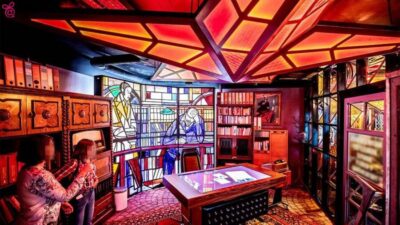
Communist History Tour with House of Terror Option
Read our review →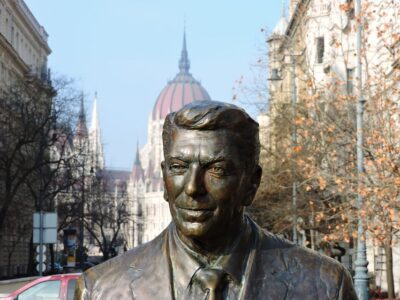
3-Hour Walking Tour About Communism (Small Group)
Read our review →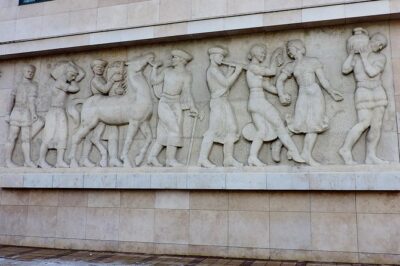
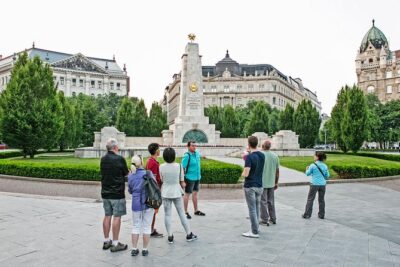
Private Budapest Hammer & Sickle Communist Times Tour
Read our review →
Browse the lists this tour appears in