
Reviewed · JEWISH HERITAGE TOURS
Budapest Jewish Heritage: Synagogues, Shoes, Secrets & Flódni
Budapest’s Jewish heritage comes into focus through its contrasts: grand synagogues, a small Orthodox prayer house, wartime memorials, and a slice of flódni at the end. The tour connects architecture with the lives of Hungarian Jews before, during, and after the Second World War. I especially like the three different synagogues, each linked to a different branch of Jewish life, and the personal guidance offered by Jewish historians such as Gabriella, Miklós, Peter, Edith, and Kata.
I also like the private format, which gives you room to ask questions instead of listening to a fixed speech. The main caution is cost: at $102.95 per person, entrance tickets are not included, so your final bill will be higher if you enter the synagogues. The short 2-hour-45-minute schedule also covers a lot, and some people may want more time for the wartime stories.
Key points to know before you book
- Three synagogues, three traditions: See the grand Dohány Street Synagogue, Moorish Rumbach Synagogue, and colorful Orthodox synagogue on Kazinczy Street.
- A private guide who can adapt: Guides including Gabriella, Miklós, Peter, Edith, and Kata have led the walk, with time for questions and personal discussion.
- Wartime Budapest is treated directly: The route includes the Carl Lutz Memorial, the Shoes on the Danube memorial, and traces of the former ghetto.
- A small-scale experience may be included: Some versions have featured a tenement or house synagogue, offering a more intimate view of Jewish life.
- Flódni closes the walk: You finish with a traditional Jewish-Hungarian pastry rather than simply ending at the last monument.
- Budget for admission fees: The tour price covers the guide and snack, but synagogue entrance tickets and public transport are extra.
Starting at Herzl Square and Dohány Street
The walk begins at Dohány Street, near Herzl Square and the Great Synagogue. This is a useful starting point because you are immediately in the heart of Budapest’s historic Jewish Quarter, in District 7.
The district today is known for restaurants, bars, and nightlife, but the tour asks you to look beneath that modern surface. The Jewish Quarter was once a dense residential and commercial center, and during the Second World War it became the site of Budapest’s ghetto.
I find the opening especially useful for setting the tone. This is not just a tour of handsome religious buildings. Your guide places Jewish life in the wider story of Budapest, including the community’s contribution to the city, the rise of antisemitism, the wartime ghetto, and the fate of Hungarian Jews.
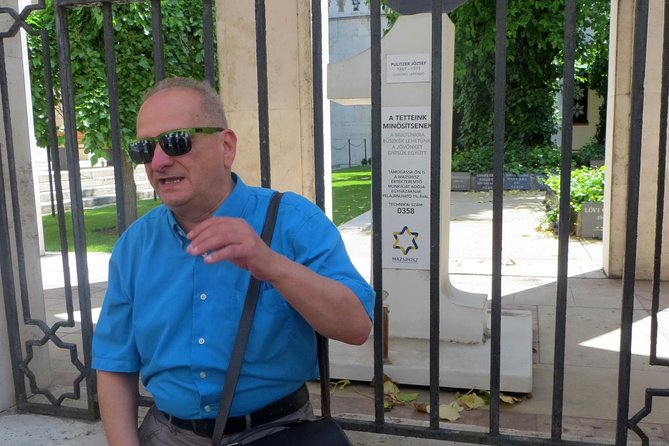
A Jewish guide can also explain customs and community differences from a lived cultural perspective. That does not mean the tour is only for Jewish visitors. One guide, Miklós, began by asking non-Jewish participants why they wanted to take the tour, then shaped the discussion around their interests. That small gesture says a lot about the private format.
More Jewish heritage walks in Budapest:
- Budapest Jewish Heritage Memorial Walking Tour & Synagogue Entry
★ 5.0 · 568 reviews - Budapest: Jewish Heritage Guided Tour with Synagogue Ticket
★ 4.8 · 533 reviews - Jewish Quarter of Budapest Walking Tour
★ 4.7 · 369 reviews
The Great Synagogue: grandeur with a difficult story
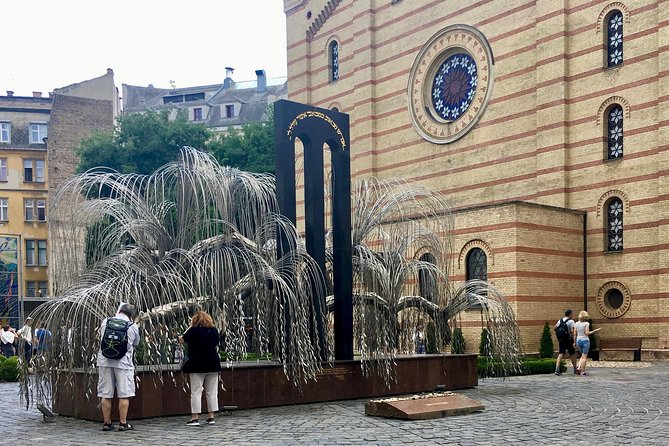
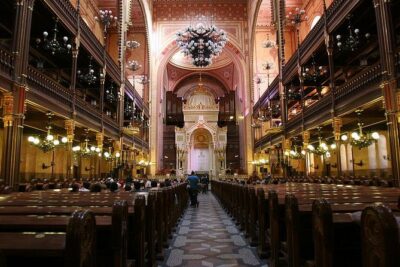
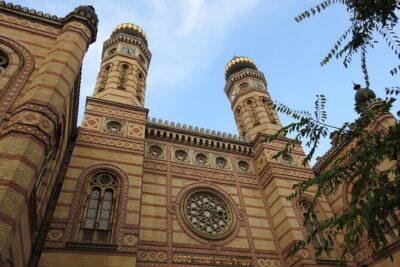
The first major stop is the Dohány Street Synagogue, also called the Great or Central Synagogue. It is the largest synagogue in Europe and can seat about 3,000 people. Its scale alone makes it an important part of Budapest’s cityscape.
The building is associated with Neolog Judaism, the Hungarian Jewish movement that followed a more modern path while retaining Jewish religious life. Your guide explains why the synagogue looks different from the traditional image many people carry in their heads. Its architecture reflects the particular character of Hungarian Jewish communities and their place in 19th-century Budapest.
The visit also brings the wartime story into view. You hear about the destruction of Hungarian Jewry during the Second World War and about famous people of Hungarian Jewish origin in science, entertainment, business, and the arts. Tony Curtis and Estée Lauder are among the names connected with Budapest’s Jewish heritage.
The scheduled explanation here is about 20 minutes. That is enough for a strong introduction, but not enough for a detailed examination of every feature. Admission is not part of the tour price, so check the additional cost before booking if you want to enter.
Rumbach Street Synagogue and the city’s Jewish divisions
A short walk brings you to the Rumbach Sebestyén Street Synagogue. Built in 1872 by Otto Wagner, later known for his work in the Vienna Secession style, it served Budapest’s more moderate Conservative Jewish community.
The building’s Moorish design gives you a sharp contrast with the Great Synagogue. Inside, the restored decorations offer another view of the community’s ambitions and tastes. The synagogue is not simply another stop for photographs. Its purpose helps explain the divisions within Budapest Jewry and why several different synagogues developed so close to one another.
The planned stop lasts about 15 minutes, with admission extra. If you are especially interested in architecture, you may wish the schedule allowed longer inside each building. Still, the quick comparison works well: first the grand Neolog synagogue, then the Moorish Conservative synagogue, followed by the Orthodox synagogue on Kazinczy Street.
Kazinczy Street: a smaller and more colorful Orthodox setting
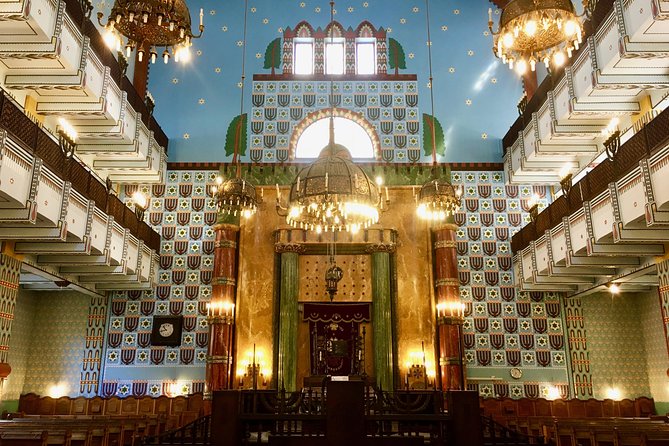
The Kazinczy Street Synagogue is the third major synagogue on the route. Built in 1913, it served Budapest’s Orthodox community and uses a modern design with late Art Nouveau details.
Bright colors and stained glass by Miksa Róth give the interior a different mood from the first two synagogues. The ceiling windows are particularly notable. Your guide explains how the building’s design and community function differ from those of the Great and Rumbach synagogues.
This sequence is one of the strongest parts of the tour because it turns an architectural walk into a lesson about Jewish life in Budapest. You are not seeing three versions of the same building. You are seeing three communities with different religious practices, social ties, and ideas about modern Jewish life.
The visit is scheduled for about 10 minutes, and the entry fee is not included. A short stop can feel rushed if you want quiet time inside, but the guide’s explanation makes the comparison clear.
More history tours in Budapest:
- Budapest: Historic Cruise with Welcome Drink
★ 4.7 · 6,512 reviews - Budapest Historical Sightseeing – Free Walking Tour
★ 5.0 · 1,302 reviews - Buda Castle District Dark History, Legends and Vampire Night Tour
★ 4.5 · 1,240 reviews - BloodThirsty Hungary: Walking tour & Dark Historical Stories
★ 4.9 · 633 reviews
The Carl Lutz Memorial and the people who resisted
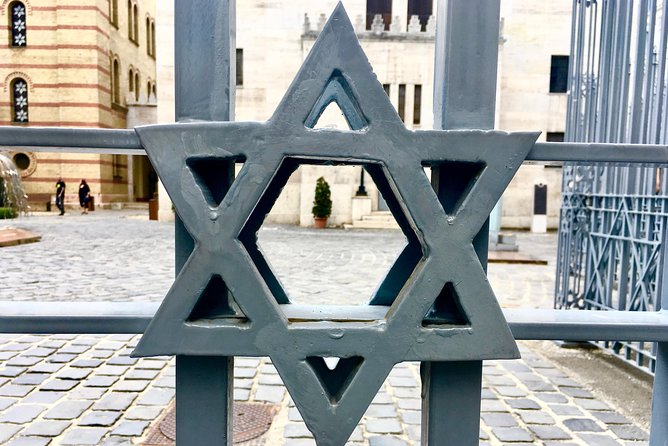
The Carl Lutz Memorial brings the story into the Second World War. Lutz was a Swiss diplomat who helped save tens of thousands of Jews in Budapest from persecution and deportation.
The monument is located in the area of the former ghetto. That setting matters. Instead of treating wartime rescue as an isolated heroic story, the guide places it among the pressures facing Jewish residents and the officials who either helped or harmed them.
This part of the walk can also lead into stories of other rescuers and the complicated choices people faced. The tour includes historical facts, but the private format lets you ask for more detail about particular individuals or events.
The stop lasts around 10 minutes and is free. It is not a large site, so the value comes mainly from the explanation and the connection to the surrounding streets.
Shoes on the Danube: a quiet memorial stop
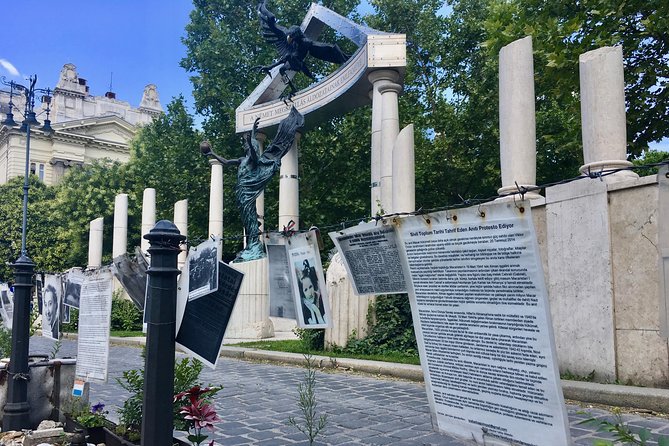
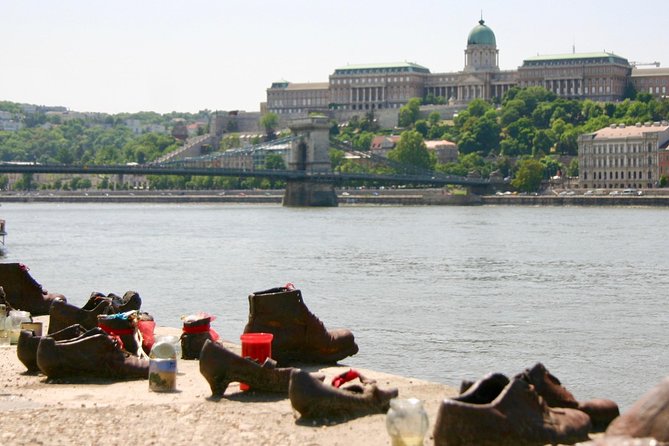
The Shoes on the Danube Bank memorial is one of Budapest’s most affecting places. The sculpture shows iron shoes left along the riverbank, recalling Jewish victims who were forced to remove their shoes before being shot. Their bodies were carried away by the Danube.
The memorial is simple and direct. You do not need a large monument or long inscription to understand what happened there. The tour gives you about 10 minutes to pay your respects and hear the historical context.
This is a serious part of the walk, and the pace should slow here. You may want a little time without conversation. Since the memorial is outdoors and admission is free, it is also one of the easier stops to visit independently later, but hearing the guide connect it to the ghetto and the wider history adds meaning.
The route includes several heavy subjects. If you are looking for a light sightseeing walk, this is not the right choice. If you want Budapest’s Jewish history treated honestly, the memorial is essential.
The former ghetto and the surviving wall
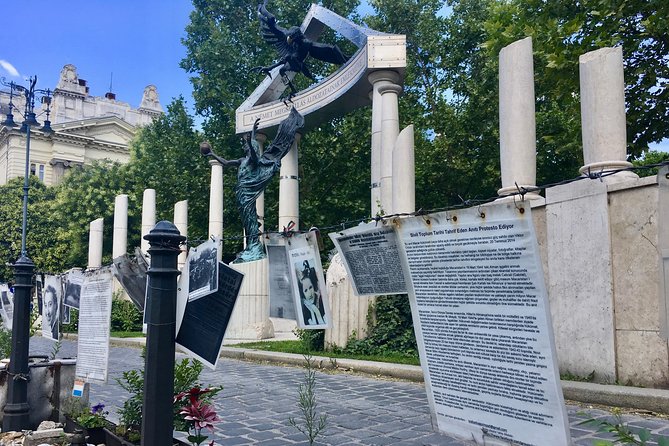
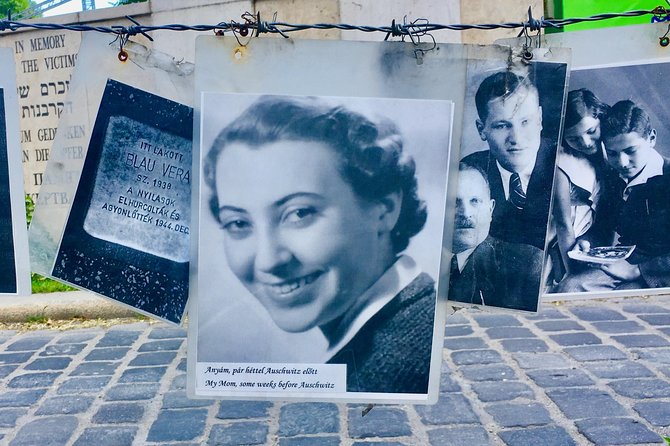
Near the end of the historical portion, the guide points out a remaining section of the Budapest ghetto wall. Only a small part survives, so you should not expect a large preserved complex.
That limitation is part of the lesson. Much of the old Jewish Quarter has changed, and the original wartime setting is difficult to picture from the modern streets. A good guide has to rebuild the scene through stories, maps, and explanation. Guides on this tour have described how families lived between the First and Second World Wars, how the ghetto functioned, and what happened to its residents.
Some versions of the experience have also included a small tenement or house synagogue. This can be a moving contrast with the grand Dohány building: a poorer, more intimate place connected to everyday community life. Because the precise stops can depend on the guide and timing, ask at the start if this is important to you.
Personal stories and a conversational guide
The most praised part of this experience is the quality of the guides. Gabriella is described as warm, passionate, and exceptionally well prepared. Edith combines facts with questions that encourage you to think about what you are seeing. Miklós brings the perspective of a retired educator and has offered historical context about Hungarian Jews as a distinct community rather than treating all European Jewish history as one story.
Kata has shared her own family connection to Hungarian Jewish life, including the effects of the Holocaust and Soviet occupation, as well as the way she is raising her daughter within Hungary’s Jewish culture. Personal stories like these can make the walk feel less like a lecture.
The private setup is important here. You can ask about family history, religion, architecture, the Holocaust, or present-day Jewish life without waiting for a large group to move on. It also helps if you are on a tight schedule. One couple used the private tour while working around a ship departure and appreciated the ability to keep moving at their own pace.
Still, guide quality can vary by individual style. Some guides may focus more on architecture and historical structure, while others may spend more time on personal stories and the Holocaust. If you have a particular priority, say so at the beginning.
Flódni: ending with a taste of Jewish Budapest
The walk ends on Dohány Street with flódni, a traditional Jewish-Hungarian pastry. It is made with layered fillings and gives you a small taste of the culinary side of the community.
This is a smart ending. After nearly three hours of synagogues, memorials, and wartime history, a shared pastry creates a gentler close and leaves room for questions. Some guides have also offered coffee or another drink while discussing the tour, though the stated inclusion is the flódni snack rather than a full café visit.
Do not expect a meal. The pastry is a historical sample, not lunch. If you book a tour near a meal time, plan another stop afterward.
Price, timing, and practical value
At $102.95 per person, this is not a budget walking tour. You also need to pay for synagogue entry separately, and public transportation is not included. Hotel pickup is offered, but the listed meeting point is Dohány Street, so confirm the pickup details when booking.
The value depends on what you want from Budapest. If you only need directions to the three synagogues, you can spend less by visiting independently. You will miss the connections between the buildings, the wartime memorials, and the personal discussion, though.
A private historian-led walk makes more sense for you if you want context, have family ties to Hungary, are studying Jewish history, or prefer asking questions. The tour is also a good choice for a couple or small family who do not want to join a fixed group.
The 2-hour-45-minute length is efficient, but the schedule is full. You walk between several sites and stop for short periods at each one. Wear comfortable shoes and leave room for pauses, since the subject matter deserves more than a quick photo.
The tour is offered in English. Confirmation arrives at booking, service animals are allowed, and most people can participate. Free cancellation is available up to 24 hours before the start time. The activity ends back at the meeting point.
Should you book Budapest Jewish Heritage?
Book it if you want a personal history lesson tied to real places, not just a list of synagogues. The strongest reasons are the private guide, the three distinct Jewish communities represented by the buildings, and the direct treatment of the former ghetto and wartime memorials.
I would especially recommend it to visitors with Hungarian or Jewish family connections, anyone who wants more context than a standard city tour provides, and people who appreciate a conversational guide. The flódni is a nice extra, but the guide and the structure of the walk are what justify the price.
Skip it if your main goal is extensive interior time at every synagogue, since entry fees are extra and the stops are fairly brief. Also skip it if you want a light neighborhood stroll. This is an emotional tour, and its best moments come from listening carefully.
FAQ
How long does the Budapest Jewish Heritage tour last?
The tour lasts approximately 2 hours and 45 minutes.
Where does the tour start and end?
It starts at Dohány u. 1 in Budapest, near the Great Synagogue and Herzl Square. The activity ends back at the meeting point.
Are synagogue entrance tickets included?
No. Entrance tickets are not included in the tour price. Public transportation tickets are also excluded.
Which synagogues are included?
The route includes the Great or Central Synagogue on Dohány Street, the Rumbach Street Synagogue, and the Orthodox Synagogue on Kazinczy Street.
Is the tour private?
Yes. Only your group participates, which allows the guide to adjust the discussion and answer questions more freely.
Is food included?
Yes. The walk ends with an authentic Jewish dessert, flódni. A full meal is not included.
Recently added around Budapest
- Budapest: Private Walking Tour with a Local Guide★ 3.6 · 6 reviews
- From Budapest: Guided Tour of Eger with Wine Tasting★ 4.5 · 6 reviews
- Budapest: City Bike Tour with Coffee Stop★ 5.0 · 37 reviews
- Budapest: Danube River Views Bike Ride★ 4.8 · 23 reviews
- Walk to recent and aged spiritual sanctuaries near Budapest★ 5.0 · 5 reviews
- Budapest: Vacation Photographer to collect great memories★ 5.0 · 49 reviews
- Trash Art Museum: Hungary’s First Scrap Metal Exhibition★ 4.3 · 72 reviews
- Budapest: Multilingual Highlights Tour★ 4.8 · 89 reviews
Jewish Heritage Tours, compared.
Budapest Jewish Heritage Memorial Walking Tour & Synagogue Entry
Read our review →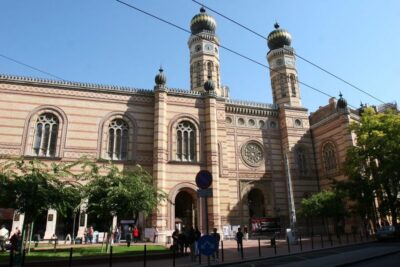
Jewish Heritage Guided Tour with Synagogue Ticket
Read our review →
Past and Present of Budapest Jewish District Tour
Read our review →
Budapest Dohany Synagogue & Hungarian Jewish Museum & free extras
Read our review →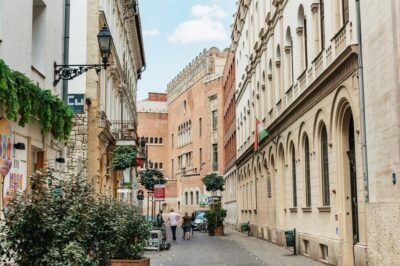
Jewish History Guided Walking Tour with Historian
Read our review →Browse the lists this tour appears in