

Reviewed · JEWISH HERITAGE TOURS
Budapest Old Jewish Quarter History Private Walking Tour
Budapest’s Old Jewish Quarter is not just a collection of handsome synagogues. It is a working neighborhood where Jewish memory, wartime loss, daily commerce, and modern city life meet on the same few streets. I like that this private two-hour walk links the big landmarks with the smaller street-level clues that are easy to miss on your own.
I also like the personal format. Your guide can adjust the pace and spend more time on subjects that matter to you, as Ange did for one guest and Natalia did for another. The catch is important: synagogue admission is not included, and the Ghetto Memorial Wall has a separate 2 euro entry fee, so this is mainly a guided history walk rather than a full interior tour.
Key points at a glance
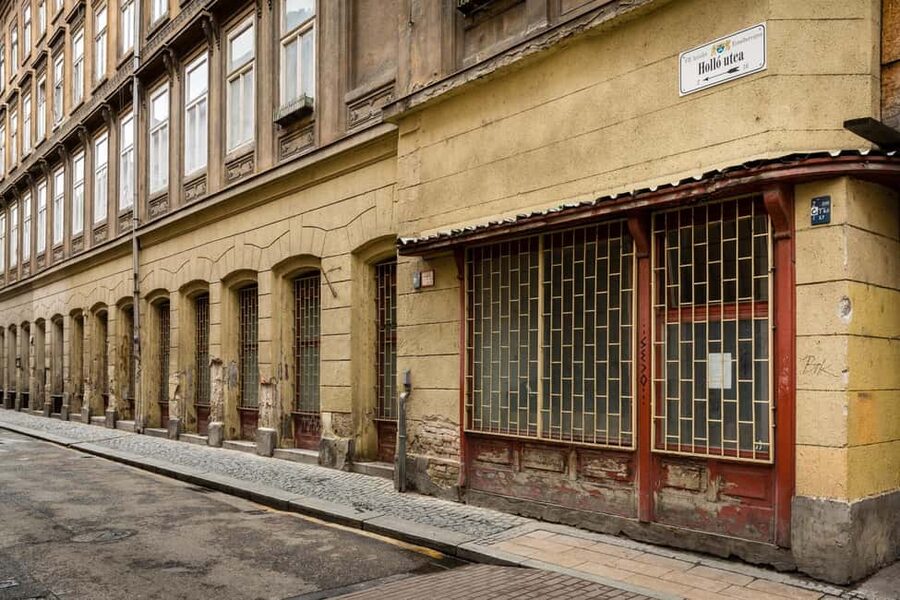
- Three corners of Budapest’s Jewish Triangle: See the Dohány Street, Rumbach Street, and Kazinczy Street synagogues from the outside.
- A sober stop at the Ghetto Memorial Wall: Add the optional 2 euro entry for a closer look at this surviving section of wartime Budapest.
- A guide-led history from Roman times onward: The story covers Jewish life, the Black Death, the Holocaust, Theodor Herzl, and the present day.
- Klauzál tér beyond the monuments: Watch ordinary neighborhood life unfold in one of the quarter’s central squares.
- A market hall finish: End at Klauzál Market Hall, where food and everyday trade provide a useful contrast to the area’s difficult past.
- Private and multilingual: Groups of 1 to 25 can book with a licensed guide in English, German, French, Italian, or Spanish.
Starting beside the Sissi Statue
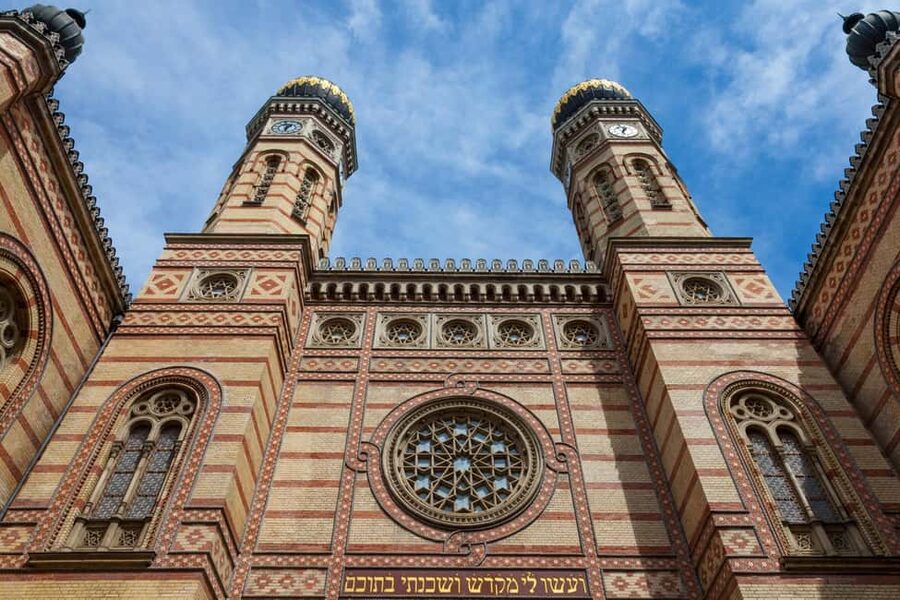
The walk begins beside the Sissi Statue at Madách Imre tér 7. This is a useful starting point because you are already near the Old Jewish Quarter, rather than spending the first part of the tour on transport or a long approach.
Your guide meets you there and leads the group on foot. The route covers about 2.5 to 3.5 kilometers, with some uneven surfaces and steps. Two hours is enough for a focused introduction, but it is not enough for long interior visits at every synagogue and a full study of every historical layer.
That time limit can work in your favor. You get a clear framework before deciding which places deserve a second visit. I would schedule this early in your Budapest stay if the Jewish Quarter is new to you, since the guide’s recommendations can help shape the rest of your sightseeing.
Hotel or accommodation pickup is available within 1.5 kilometers of the meeting point, with the route adjusted as needed. Check your email the day before for the final information from Rosotravel, including any meeting details.
More Jewish heritage walks in Budapest:
- Budapest Jewish Heritage Memorial Walking Tour & Synagogue Entry
★ 5.0 · 568 reviews - Budapest: Jewish Heritage Guided Tour with Synagogue Ticket
★ 4.8 · 533 reviews - Jewish Quarter of Budapest Walking Tour
★ 4.7 · 369 reviews
The Jewish Triangle: three synagogues, three different impressions
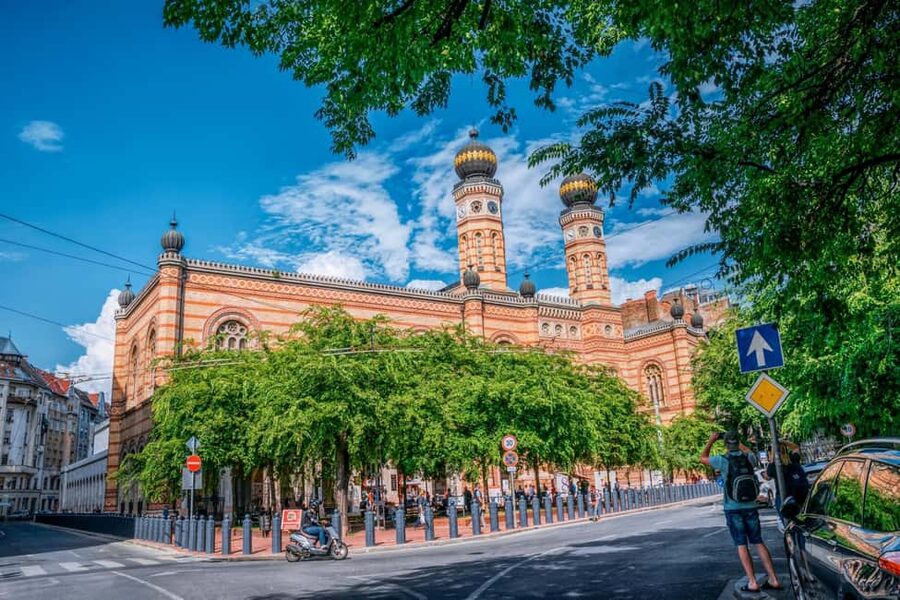
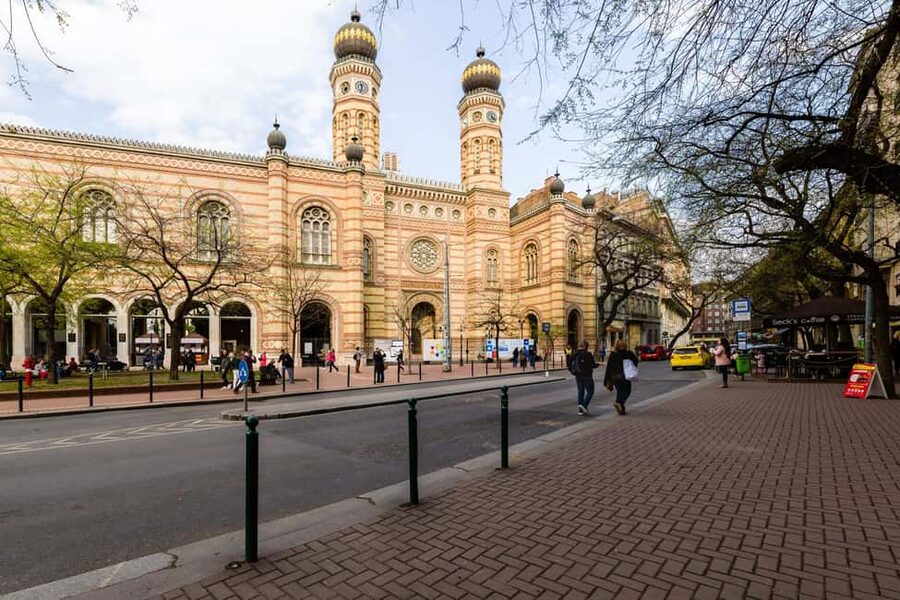
The tour introduces the three main synagogues often associated with Budapest’s Jewish Triangle: Dohány, Rumbach, and Kazinczy. Their close location makes the neighborhood especially good for a walking tour, since you can compare their styles and roles without crossing the city.
Dohány Street Synagogue
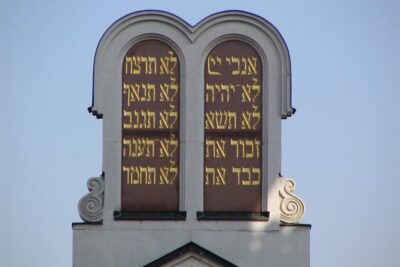
Dohány Street Synagogue is the best-known landmark in the quarter, with tall spires and a strong presence on the street. Even if you only see it from the outside, it gives the guide a natural starting point for explaining the size and importance of Budapest’s Jewish community.
The exterior visit also lets your guide place the synagogue within the wider story of the neighborhood. The point is not simply to admire the building. You learn how Jewish life shaped this part of Pest and how the community’s fortunes changed over time.
If you want to enter the synagogue, plan a separate visit and check its own admission arrangements. This walking tour does not include synagogue tickets, partly because access can be restricted. That is the main limitation for anyone hoping for a complete architectural tour.
Rumbach Street Synagogue
Rumbach Street Synagogue offers a different visual note, with delicate Moorish design. Its decoration gives you a chance to compare the building with Dohány rather than treating every synagogue as the same kind of monument.
The guide can explain how the buildings connect to different chapters of Jewish life in Budapest. You may find that the outside view feels brief, but the comparison is useful: the three synagogues help show that the city’s Jewish community was not a single, uniform group.
More history tours in Budapest:
- Budapest: Historic Cruise with Welcome Drink
★ 4.7 · 6,512 reviews - Budapest Historical Sightseeing – Free Walking Tour
★ 5.0 · 1,302 reviews - Buda Castle District Dark History, Legends and Vampire Night Tour
★ 4.5 · 1,240 reviews - BloodThirsty Hungary: Walking tour & Dark Historical Stories
★ 4.9 · 633 reviews
Kazinczy Street Synagogue
Kazinczy Street Synagogue is presented as a place connected with living Jewish culture. That matters because the Jewish Quarter is not only a memorial district. It remains part of the city’s present, with religious and community life continuing alongside restaurants, shops, apartments, and nightlife.
Again, you see the exterior on this tour. If your priority is interior design, religious practice, or a longer architectural explanation, allow extra time elsewhere. If your priority is context, the three-stop format gives you a useful outline in a short period.
From Roman-era roots to the Holocaust
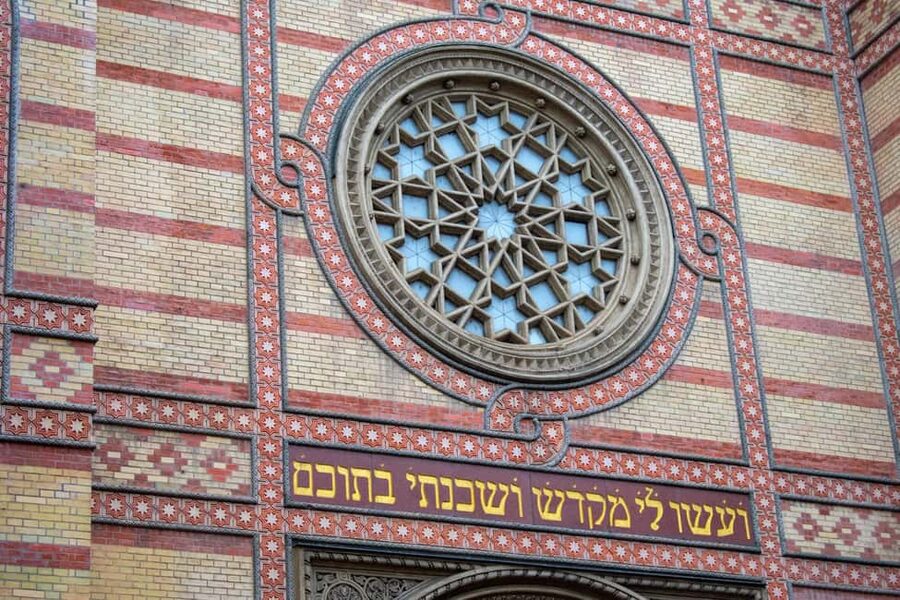
The historical scope is one of the strongest reasons to book a private guide. The walk does not begin and end with World War II. It reaches back to Roman times, then moves through the Black Death, the growth of Jewish life in Budapest, the career of Theodor Herzl, and the Holocaust.
That wide range helps you avoid seeing the quarter only through tragedy. Jewish life in Budapest existed across many centuries, with religious, cultural, and commercial contributions that shaped the city. The guide’s job is to connect those periods without turning the walk into a dry list of dates.
The Black Death is an especially difficult part of European history, since Jewish communities were often blamed during outbreaks. Including that subject shows how the tour places Budapest within larger European patterns of prejudice and persecution.
Theodor Herzl adds another personal connection. He is described here as the spiritual founder of Israel, and his link to Budapest gives the neighborhood a direct connection to a figure whose influence reached far beyond Hungary.
A private format helps with this part of the experience. You can ask for more detail about a period that interests you, or ask the guide to slow down if the sequence of events becomes hard to follow. The strongest feedback for this tour centers on guides who are attentive and flexible, with Ange and Natalia singled out for their kind, personal approach.
The Ghetto Memorial Wall and the weight of 1944
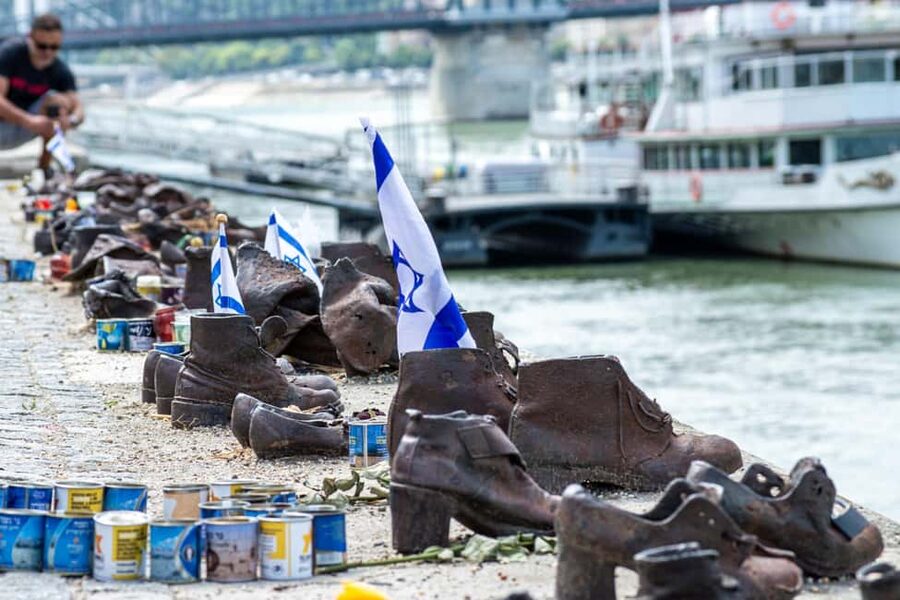
The Ghetto Memorial Wall is the most serious stop. It is the last remaining section of the former ghetto wall, and it gives the Holocaust discussion a physical point in the neighborhood.
This is not a light sightseeing stop. The wall makes the wartime story harder to keep at a distance. You are standing in the same district where the guide has just described generations of Jewish life, which gives the history a stronger local connection.
Entry is optional and costs 2 euros per person. The tour information describes the visit as included in the experience, but also clearly notes that admission is optional and charged separately. Treat the 2 euro fee as an extra if you want to enter the memorial area.
Give this stop your full attention. It is easy to rush through a memorial when you are following a busy city schedule, but the wall is one of the places where the tour’s historical material becomes most direct. Families should decide in advance how much Holocaust history is suitable for younger children.
Klauzál tér, where the past meets daily life
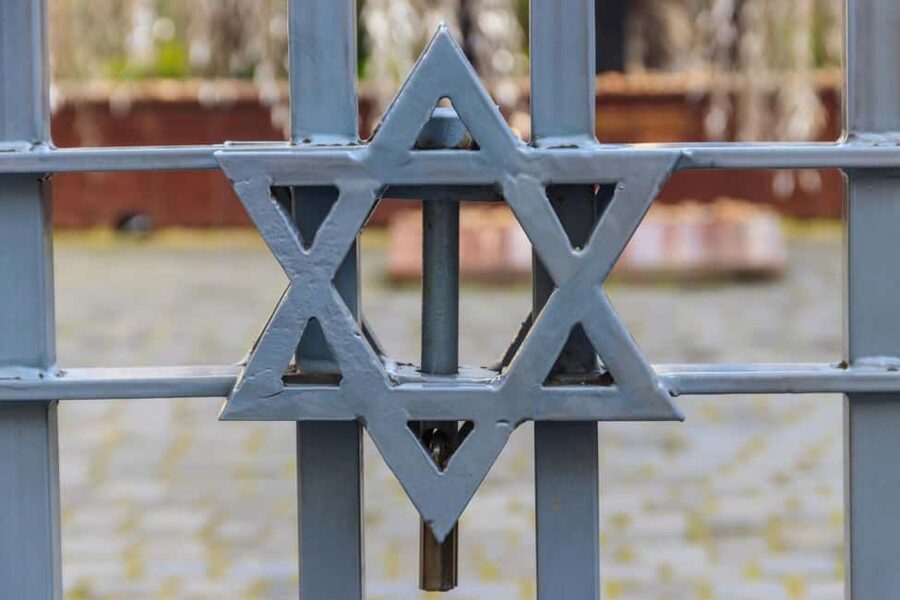
Klauzál tér gives the walk a change of pace. Instead of another formal monument, you see a public square used as part of ordinary city life.
This is one of the details I like most about the route. The square helps you understand the Old Jewish Quarter as a neighborhood, not an open-air museum. People live, shop, pass through, and meet here. The historical story continues, but it does not erase the present.
Your guide can also point out how the quarter’s character has changed. The information provided does not promise specific cafés or shops, so you should not expect a food tour or a planned tasting. Still, the square offers a useful pause before the final stop.
Klauzál Market Hall and the modern quarter
The walk ends at Klauzál Market Hall. Food and drinks are not included, but the market is still a fitting place to finish because it brings the focus back to daily life.
After hearing about persecution, displacement, and community survival, you see a more ordinary side of the district: food, trade, and local routines. That contrast gives the tour a better ending than another solemn site would. You can continue exploring afterward, though the official activity finishes back at the meeting point.
Do not mistake the market stop for a food tour. You will not receive included tastings, and no meal is part of the price. Think of it as a place to orient yourself and perhaps buy something separately after the guide has finished.
What $150 per person buys you
At $150 per person, this is not a budget walk. The value depends heavily on your group size.
For one or two people, the price pays for a private guide, language choice, route planning, and the ability to ask questions without competing with a large group. For a larger private group, the per-person cost may feel more reasonable, especially if everyone shares an interest in Jewish history.
The price includes:
- A private two-hour walking tour
- A licensed five-star guide in your chosen language
- Historical explanations about Jewish Budapest
- A visit to the Ghetto Memorial Wall, with the optional 2 euro entry paid separately
- Recommendations for other things to do in Budapest
It does not include synagogue entry, food, drinks, or the small memorial admission fee. Those exclusions matter because a visitor expecting to go inside all three synagogues could feel disappointed.
I would book this for the guide and the structure, not for admission savings. The walk gives you a coherent account of the district, while a self-guided visit may cost less if you only want to photograph the buildings. The private format is most valuable when you want to ask questions, adjust the pace, or focus on a particular part of the story.
Walking comfort, weather, and group size
The route is moderate rather than strenuous, but you should wear comfortable shoes. Expect 2.5 to 3.5 kilometers, uneven surfaces, and some steps. The tour runs rain or shine, so bring clothing suited to the forecast.
The private group size ranges from 1 to 25 people per guide. That is a wide range. A couple or small family should get a more personal exchange, while a group near the upper limit may feel less intimate. Larger groups can book additional guides.
The guide can adapt the pace to your group. If you have mobility concerns or a disability, contact Rosotravel in advance. The operator says it will accommodate people whenever possible, but the uneven surfaces and steps mean you should discuss your needs before booking.
Language options are English, German, French, Italian, and Spanish. A guide fluent in your chosen language can make a major difference when discussing sensitive history and names that are easy to miss in a quick explanation.
Who should book this walk

I would choose this tour if you want:
- A clear introduction to Budapest’s Jewish history
- A private guide rather than a fixed large-group walk
- A serious look at the Holocaust and the Ghetto Memorial Wall
- Historical context for three major synagogues
- A route that includes ordinary neighborhood spaces, not only monuments
- A chance to ask questions in English, German, French, Italian, or Spanish
It suits first-time visitors who want orientation, as well as returning visitors who want a more focused look at the Old Jewish Quarter. It is also useful for families or friends who prefer to set their own pace.
I would hesitate if your main goal is synagogue interiors. Since entry is not included and access may be restricted, you would need to arrange those visits separately. I would also compare the cost carefully if your group is large and mostly wants a quick exterior walk.
The small set of five-star feedback points to the human side of the experience. Ange is described as kind and attentive, with a personal approach tailored to individual interests. Natalia is also singled out as an exceptional guide. Those comments suggest that guide quality is a major part of what you are paying for, so use the private format: ask questions, mention your interests early, and do not be shy about requesting a slower pace.
Should you book it?
Book this tour if you want the Old Jewish Quarter explained as a living part of Budapest, not just a line of famous façades. The combination of Dohány, Rumbach, Kazinczy, the Ghetto Memorial Wall, Klauzál tér, and the market hall gives you a strong two-hour introduction.
Just set your expectations correctly. This is a walking history lesson with exterior synagogue visits, not a synagogue admission package or food tour. At $150 per person, it makes the most sense for people who value a private guide, a flexible conversation, and a careful account of difficult history. If that sounds like your Budapest priority, it is a worthwhile choice.
FAQ
How long does the Budapest Old Jewish Quarter tour last?
The tour lasts two hours. Starting times depend on availability when you book.
Where does the tour begin?
You meet the guide next to the Sissi Statue at Madách Imre tér 7, 1075 Budapest.
Where does the tour end?
The activity ends back at the meeting point.
Is the tour private?
Yes. It is offered as a private group experience, with groups of 1 to 25 people per guide.
Which languages are available?
The live guide can conduct the tour in English, German, French, Italian, or Spanish.
Are synagogue tickets included?
No. Entry to the Dohány Street, Rumbach Street, and Kazinczy Street synagogues is not included.
Does the tour include the Ghetto Memorial Wall?
The route includes a visit to the Ghetto Memorial Wall. Entry is optional and costs 2 euros per person.
Is food included?
No. Food and drinks are not included in the tour price.
How much walking is involved?
The route covers about 2.5 to 3.5 kilometers and includes some uneven surfaces and steps.
Can I cancel the booking?
You can cancel up to 24 hours in advance for a full refund. The reserve-now, pay-later option lets you book without paying immediately.
More Walking Tours in Budapest
- Budapest: Buda Castle Walk with Saint Stephen’s Hall
★ 4.5 · 3,012 reviews - Big Bus Budapest Hop-On Hop-Off Bus and Walking Tour
★ 3.5 · 2,206 reviews - Budapest: Buda Castle District Walking Tour
★ 4.6 · 2,108 reviews - Budapest City Landmarks Walking Tour in 2 Hours
★ 5.0 · 2,048 reviews
Recently added around Budapest
- Budapest: Private Walking Tour with a Local Guide★ 3.6 · 6 reviews
- From Budapest: Guided Tour of Eger with Wine Tasting★ 4.5 · 6 reviews
- Budapest: City Bike Tour with Coffee Stop★ 5.0 · 37 reviews
- Budapest: Danube River Views Bike Ride★ 4.8 · 23 reviews
- Budapest: Vacation Photographer to collect great memories★ 5.0 · 49 reviews
- Walk to recent and aged spiritual sanctuaries near Budapest★ 5.0 · 5 reviews
- Trash Art Museum: Hungary’s First Scrap Metal Exhibition★ 4.3 · 72 reviews
- Budapest: Multilingual Highlights Tour★ 4.8 · 89 reviews
Jewish Heritage Tours, compared.
Budapest Jewish Heritage Memorial Walking Tour & Synagogue Entry
Read our review →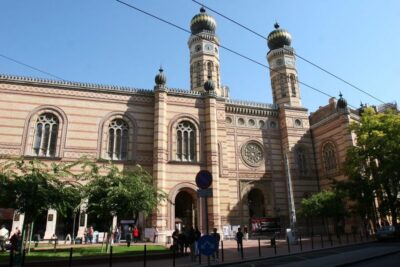
Jewish Heritage Guided Tour with Synagogue Ticket
Read our review →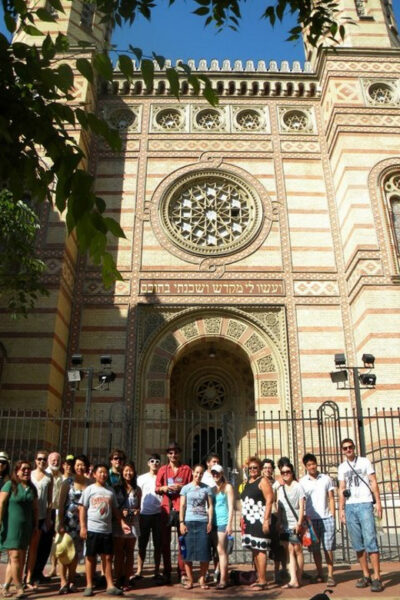
Past and Present of Budapest Jewish District Tour
Read our review →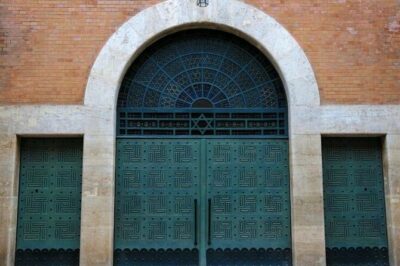
Budapest Dohany Synagogue & Hungarian Jewish Museum & free extras
Read our review →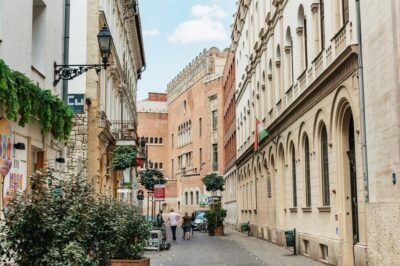
Jewish History Guided Walking Tour with Historian
Read our review →Browse the lists this tour appears in