
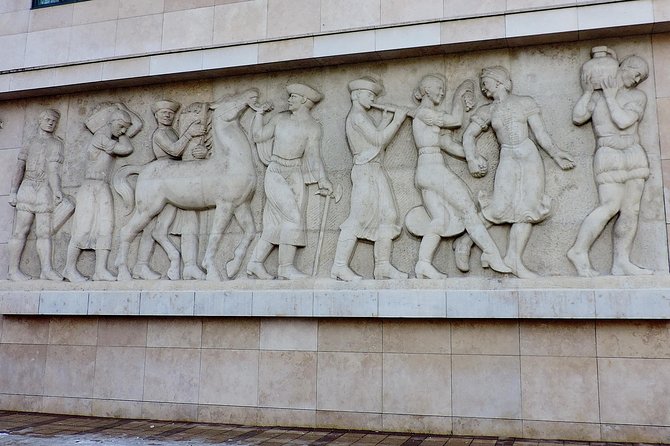
Reviewed · COMMUNIST HISTORY TOURS
Communism in Hungary with a Historian
Budapest’s Communist past comes into focus on this compact walk through both Pest and Buda. You move from former Stalin Square to the Parliament, stopping at memorials, embassies, churches, a bunker exterior, and a café that opened in 1961. The guide connects public monuments to private lives, including forced nationalization, church pressure, housing changes, and the fear of being reported.
I like the small group limit of 10, which gives you room to ask questions. I also like the use of personal family stories from guides such as Raymond, Judit, Gábor, Greg, András, and Virág. The main drawback is that several stops are outdoor talks rather than interior visits, so cold or wet weather can make the afternoon harder.
Key points at a glance
- Start at former Stalin Square: Elizabeth Square introduces the political symbols and changing names of central Budapest.
- Follow the story through Pest: See St. Stephen’s Basilica, Szabadság tér, nearby embassies, memorials, and a bunker section from outside.
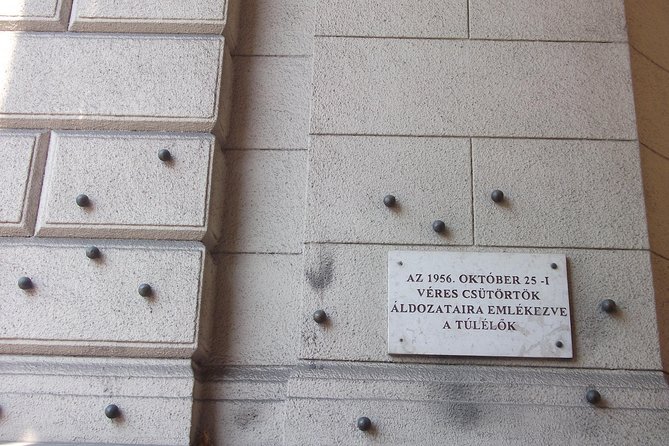
- Understand Bloody Thursday: The Parliament stop explains one of the most important and tragic moments of the 1956 uprising.
- Ride the metro with tickets included: Public transport helps connect the two halves of the tour without wasting time.
- Finish at Bambi Café: The classic Buda café dates to 1961 and gives the tour a fitting, conversational ending.
- Expect a history-first walk: The value comes from explanation and discussion, not from entering major buildings.
Why this Communist-era walk is different
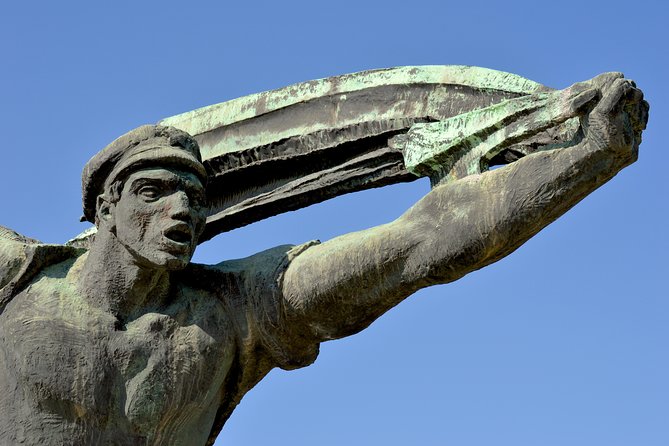
Many Budapest sightseeing walks focus on grand architecture, the Danube, royal Buda, or the city’s Jewish quarter. This one asks you to look again at familiar streets and consider what they meant under a one-party state.
The guide does not treat Communism as a string of dates and slogans. You hear about work, housing, religion, education, family businesses, and the pressure to conform. One especially powerful story concerns a family business that was taken by the state. The former owner’s grandfather was then forced to work in his own factory for low pay under a party loyalist who lacked the needed skills.
That sort of detail helps you understand the system at street level. You also hear about families losing apartments and being assigned smaller quarters with other households, along with the fear that a neighbor or colleague might report a careless remark.
The guides bring different strengths. Raymond and Judit have used family experiences to explain how public policy affected ordinary homes. Gábor is praised for making the period easy to follow while keeping the discussion balanced. Virág has studied the subject closely and wrote a thesis on it. Greg, András, Gabriel, Daniel, and Peter are also associated with particularly clear and engaging tours.
Guide assignments can change, so you should not book expecting one named person. What you can expect is a historian-led approach, with time for questions and a willingness to connect Hungary’s Communist period to the interwar years, the Second World War, and current politics.
More communist history tours in Budapest:
- Budapest: Communist History Tour with House of Terror Option
★ 4.8 · 182 reviews - Budapest: 3-Hour Walking Tour About Communism (Small Group)
★ 4.7 · 70 reviews - Budapest Hammer & Sickle Communist Times Tour
★ 4.5 · 68 reviews
Elizabeth Square and the memory of Stalin Square
The meeting point is outside the Kempinski Hotel Corvinus at Elizabeth Square. The tour begins at 2 p.m., a useful time if you want a relaxed morning for the market, a museum, or a first look around central Pest.
Elizabeth Square is not just a convenient place to gather. The guide discusses its former identity as Stalin Square and the monuments and political stories tied to it. This opening gives you a quick lesson in how public places were renamed, redesigned, and used to communicate official power.
The first stop lasts about 15 minutes and costs nothing to enter. It is more of a scene-setting talk than a major sightseeing stop, but that is the point. You begin by learning how a city center can carry several layers of political meaning at once.
The group then continues on foot and by metro. Metro tickets are included, so you do not need to work out the fare while listening. That small convenience matters because the tour is short, and time spent navigating would take away from the discussion.
St. Stephen’s Basilica and religious life under Communism
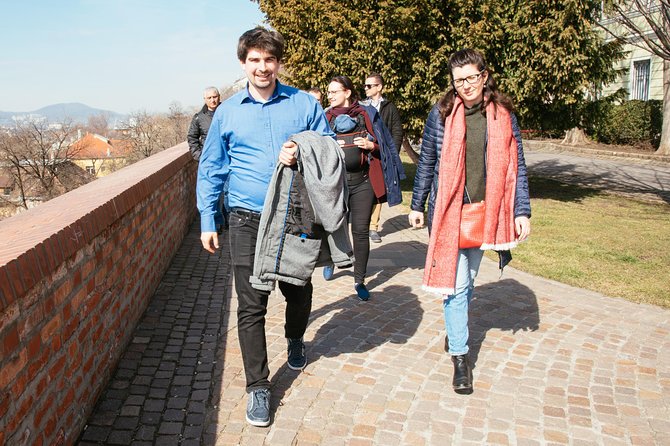
At St. Stephen’s Basilica, the guide talks about churches and religious life during the Communist period. You view the basilica from outside, so this is not a church interior tour and the admission fee is not included.
The stop is valuable because it moves beyond statues, government buildings, and revolution sites. Religion was not simply removed from Hungarian life, but it operated under pressure and supervision. The guides explain this through family stories, including the claim that churches sometimes had to make financial concessions to the party.
That personal angle helps you see why religious life could survive while still being tightly controlled. You are not just hearing that the state opposed independent institutions. You are considering how clergy, families, and congregations managed daily life under those conditions.
If you want a detailed visit inside the basilica, plan that separately. Here, the church serves as a setting for the explanation rather than as a full sightseeing stop.
Szabadság tér and the city’s political symbols
Szabadság tér is the longest listed stop, at about 45 minutes, and it is likely the intellectual center of the walk. The square brings together memorials, statues, embassies, and reminders of the city’s wartime and Communist-era conflicts.
The guide points out remnants of the period and even part of a bunker from the outside. You will not be touring a bunker interior, but the visible fragment gives the discussion a physical anchor. It is easier to understand fear, surveillance, and military power when the evidence is built into the surrounding streets.
This is also where the tour benefits most from a good storyteller. Several guides are praised for explaining both sides of political questions rather than forcing a simple good-versus-bad script. That balance matters in Hungary, where the period involved repression and shortages, but also memories that can be more complicated than a standard Cold War summary suggests.
You may hear about working conditions, education, political loyalty, and the fear of being turned in. The guide can also connect these topics to the Second World War and the years before Communist rule. If you have already read about 20th-century Hungary, this stop should add local texture. If you know little about the subject, it gives you a clear framework.
A few more Budapest half-days to weigh up
- Budapest: City Highlights Cruise with Welcome Drink
★ 4.6 · 35,610 reviews - Budapest: Unlimited Prosecco, Beer and Aperol Spritz Cruise
★ 4.8 · 25,310 reviews - Budapest: Széchenyi Spa Day Ticket with Optional Upgrades
★ 4.3 · 23,911 reviews - Budapest: Nighttime or Daytime Sightseeing Cruise
★ 4.2 · 21,062 reviews
Parliament and Bloody Thursday in 1956
The Parliament stop focuses on Kossuth Square and Bloody Thursday, one of the key events of the 1956 revolution. The building itself is not visited inside on this tour, and no Parliament admission is included.
Still, the setting carries weight. The guide explains what happened in front of Parliament and why the event became such a painful part of Hungary’s modern memory. Standing in the square helps place the uprising in a real civic space rather than leaving it as an abstract chapter in a textbook.
This stop lasts about 15 minutes, so do not expect a full lecture on every stage of the 1956 revolution. Instead, you get a focused explanation of one major event, followed by the broader question of how Hungarians sought freedom and how that struggle shaped later life.
If Parliament is a priority for you, combine this tour with a separate interior visit. This experience is designed to explain the politics around the building, not to show off its ornate rooms.
Crossing to Buda and ending at Bambi Café
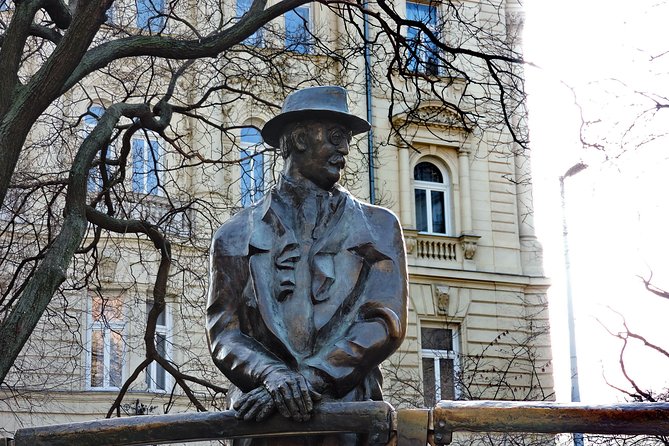
The tour usually ends at Bambi Café on the Buda side, near Margaret Bridge and the central part of the city. Bambi opened in 1961 and has kept much of its old character, making it an unusually fitting place to finish a tour about everyday life under Communism.
Coffee is included, and the café gives you a chance to sit down and discuss what you have seen. Some tours end with a drink or two and a conversation about how the past relates to current events, but the confirmed inclusion here is coffee. You should not assume that every additional drink is covered.
This ending is one of the tour’s best ideas. A café is less formal than a monument or museum, and it shifts the mood from guided explanation to conversation. You can ask about housing, work, party control, religion, or the political changes after Communism.
On colder or wet days, the tour often ends back on the Pest side, near the starting area. That is practical, though it means the Bambi Café finish is not guaranteed in poor weather.
What the three hours feel like
The advertised duration is about three hours. That is enough time for several focused stops without turning the afternoon into a full-day commitment.
You should expect regular walking, standing outdoors, and movement between central locations. The metro ride breaks up the walking, and tickets are included. The route covers both Pest and Buda, so wear comfortable shoes and bring an extra layer if the forecast is uncertain.
The tour is capped at 10 people. I see this as a major advantage for a subject that depends on questions and conversation. A guide can respond when you ask how nationalization affected a particular kind of business, or what daily life felt like for a churchgoing family. In a large group, those questions are harder to manage.
The pace is generally described as easy to follow, including for people who are not fully confident in English. One guide was specifically praised for speaking slowly and clearly. Still, the tour involves political and historical terms, so you will get more from it if you are ready to listen closely.
Price and value at $59.13
At $59.13 per person, this is not the cheapest way to see Budapest’s central sights. You are paying for a specialist guide, a small group, metro tickets, coffee, and three hours of explanation rather than for admission to a major attraction.
The value is strongest if you want context. A standard city walk may show you Parliament, St. Stephen’s Basilica, and the central squares, but it may not explain forced nationalization, shared housing, religious pressure, party surveillance, or the personal cost of political change.
The price is less compelling if you mainly want interiors, photographs, or a fast overview of Budapest. There are no confirmed interior visits to the basilica, Parliament, or bunker. The tour works best as a focused history experience, not as a replacement for Budapest’s main attraction tickets.
The 10-person limit improves the value. You have a better chance of hearing the guide clearly and getting direct answers. For anyone interested in the Second World War, the Cold War, 1956, or the transition away from Communism, the cost is reasonable for the level of discussion promised.
Who should book this walk
I would choose this tour if you like asking questions and want to understand how political systems affect ordinary life. It suits adults, older children, students, and anyone who has already seen Budapest’s famous buildings and wants a new way to read them.
It is especially useful for people interested in:
- Hungary’s Communist period and the 1956 revolution
- Cold War politics and daily life behind the Iron Curtain
- Personal stories about work, housing, religion, and family businesses
- The links between the Second World War, postwar rule, and modern Hungary
- Small-group walking tours with a discussion-based style
I would look elsewhere if you want a museum-style visit with many indoor exhibits, or if you dislike standing outside while a guide explains events. The route also asks you to accept some uncertainty about the final location in bad weather.
Free cancellation is available up to 24 hours before the start time. The tour is near public transportation, service animals are allowed, and most people can participate.
Should you book Communism in Hungary with a Historian?
Book it if you want Budapest to make more sense after you leave. The best part is not a single monument. It is the link between a square, a church, a bunker fragment, Parliament, and a café where people still gather.
The tour is particularly worthwhile early in your Budapest visit, since it can change how you understand places you see later. Give yourself comfortable shoes, dress for the weather, and arrive ready to ask questions.
Skip it if you want a conventional sightseeing route or guaranteed interior access. Choose it if you prefer clear explanations, personal stories, and a small group that treats recent history as something still connected to daily life.
FAQ
Where does the tour begin?
It begins at Kempinski Hotel Corvinus Budapest, at Erzsébet tér 7-8 in Budapest’s 1051 postal district.
What time does the tour start?
The scheduled start time is 2 p.m.
How long does the experience last?
The tour lasts approximately three hours.
What language is the tour offered in?
The tour is offered in English.
How large is the group?
The maximum group size is 10 people.
Are metro tickets included?
Yes. Metro travel during the tour is included.
Is coffee included?
Yes. Coffee is included, usually as part of the ending at Bambi Café.
Does the tour enter St. Stephen’s Basilica or Parliament?
No. The tour discusses both sites from outside, and admission fees for them are not included.
Where does the tour finish?
It usually ends at Bambi Café at Frankel Leó út 2-4 on the Buda side, near central Budapest and Margaret Bridge. On colder or wet days, it often ends on the Pest side near the starting area.
Recently added around Budapest
- Budapest: Private Walking Tour with a Local Guide★ 3.6 · 6 reviews
- From Budapest: Guided Tour of Eger with Wine Tasting★ 4.5 · 6 reviews
- Budapest: City Bike Tour with Coffee Stop★ 5.0 · 37 reviews
- Budapest: Danube River Views Bike Ride★ 4.8 · 23 reviews
- Budapest: Vacation Photographer to collect great memories★ 5.0 · 49 reviews
- Walk to recent and aged spiritual sanctuaries near Budapest★ 5.0 · 5 reviews
- True Crime Walking Tour in the Buda Castle district★ 5.0 · 26 reviews
- Trash Art Museum: Hungary’s First Scrap Metal Exhibition★ 4.3 · 72 reviews
Communist History Tours, compared.
Communist History Tour with House of Terror Option
Read our review →
3-Hour Walking Tour About Communism (Small Group)
Read our review →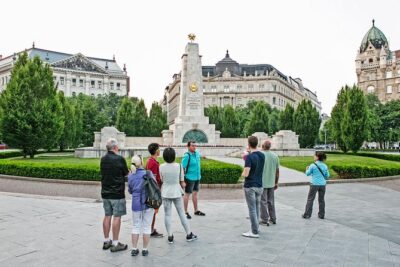
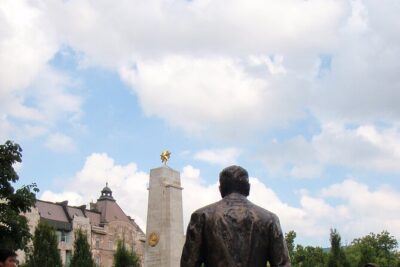
Lives of Hungarians Under Communist and Capitalist system
Read our review →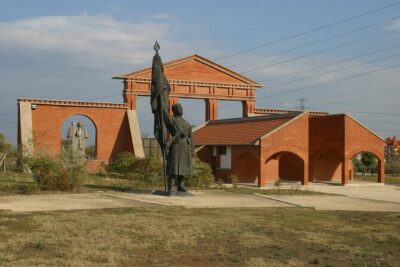
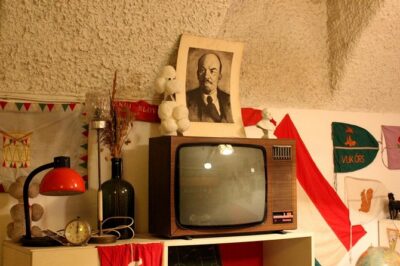
Private Budapest Hammer & Sickle Communist Times Tour
Read our review →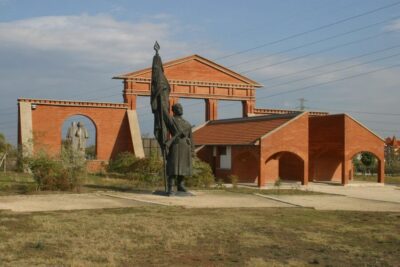
Browse the lists this tour appears in