
Reviewed · COMMUNIST HISTORY TOURS
Budapest: Communist History Tour with House of Terror Option
Budapest’s Communist past is easiest to grasp when you see it on the streets, not just behind museum glass. This two-hour small-group tour links Parliament, Soviet memorials, Cardinal Mindszenty’s exile site, a Cold War bunker, and places tied to the 1956 uprising before taking you to either the Budapest Retro Center or the House of Terror Museum.
I like the choice between a lighter, object-filled museum and a serious account of dictatorship. I also like the small groups, limited to 10 people, and the strong English-speaking guides, including Alexandra, Flora, Noémi, Bea, and Kati. The main drawback is that the House of Terror option can be emotionally heavy, while the walking route requires you to keep up with the group.
Key points to know before booking
- Two different endings: Choose the playful Budapest Retro Center in the morning or the darker House of Terror Museum in the afternoon.
- A street-level history lesson: The walk connects Parliament, Liberty Square, the Soviet Liberation Memorial, Cardinal Mindszenty’s windows, and 1956 sites.
- Small groups matter: With no more than 10 people, you have a better chance to ask questions and hear personal stories.
- Strong local perspective: Guides explain the gap between official Communist slogans and daily life under Soviet military occupation.
- Good value for history fans: At $58 per person, the price includes the guide, the themed walk, and the selected museum ticket.
- Plan for difficult material: The House of Terror covers interrogation, torture, deportation, labor camps, and political trials.
Why this Communist history tour is worth your time
Budapest is full of grand architecture, thermal baths, and café stops. This tour takes you into a less polished part of the city’s story: the 45 years of Communist rule under Soviet military occupation.
That period shaped modern Hungary in ways you can still see and feel. The tour does not treat Communism as a vague Cold War footnote. It places the system in real streets and buildings, then explains how it affected religion, politics, family life, work, education, and public speech.
I especially like the way the route begins at the Hungarian Parliament. This is a fitting starting point because the building represents democratic government, while the nearby memorials recall people who suffered under dictatorship. The contrast gives you useful context before the tour moves into the city center.
The experience is led in English by a local guide trained in history. The best guides add personal or family stories, which can make the subject more immediate than a string of dates. Guides such as Alexandra, Flora, Noémi, Bea, and Kati have been praised for explaining difficult events clearly and patiently, while answering questions at the level of the group.
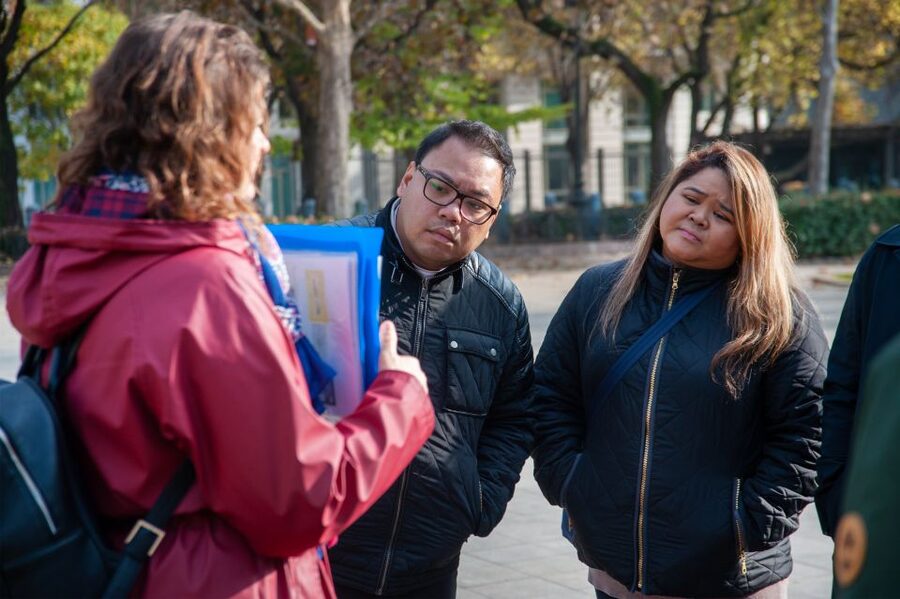
The group size is limited to 10 people. That is a real advantage here. Communist history raises awkward and detailed questions, and a small group gives you more room to ask about daily life, religion, propaganda, the 1956 revolution, or what changed after 1989.
More communist history tours in Budapest:
- Budapest: 3-Hour Walking Tour About Communism (Small Group)
★ 4.7 · 70 reviews - Communism in Hungary with a Historian
★ 5.0 · 70 reviews - Budapest Hammer & Sickle Communist Times Tour
★ 4.5 · 68 reviews
Starting at Parliament and the memorials of dictatorship
The first part is a walking tour through central Budapest. Exact meeting points vary by option, so check your booking details carefully rather than assuming every group begins in the same place.
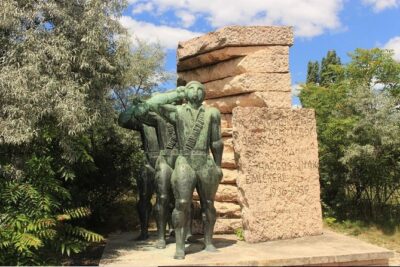
The walk includes the magnificent Hungarian Parliament and nearby monuments connected with the victims of the Red dictatorship. These sites help separate Hungary’s national story from the standard image of the Soviet bloc.
Your guide explains the political shift after World War II and how Soviet power shaped Hungary. The point is not simply to label the era as bad. You learn how a one-party system took hold, how state power was used, and why ordinary people often kept their private thoughts away from public life.
This is also where the guide can explain the difference between official memory and family memory. Public monuments may present one version of events, while older Hungarians may remember shortages, fear, forced silence, or small acts of resistance. The tour is at its best when it lets you see those layers together.
Liberty Square and the last Soviet monument in its original place
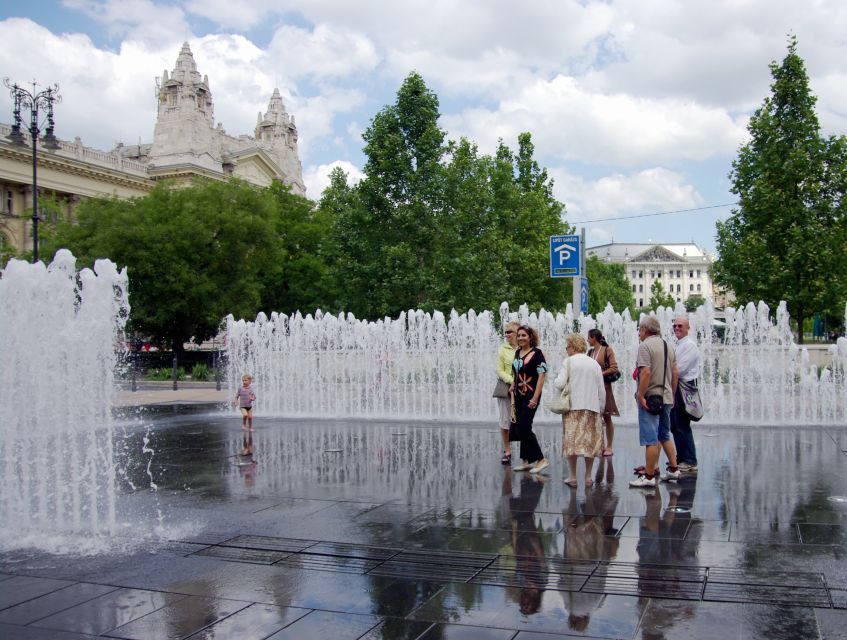
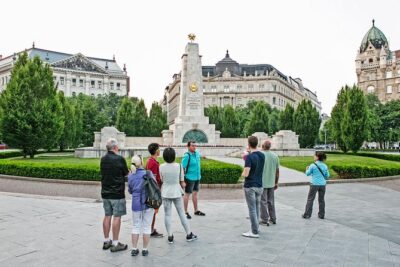
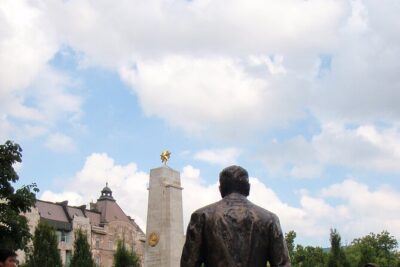
The walk continues to Liberty Square, home to the Soviet Liberation Memorial. It is described as the last Communist monument in Budapest still located in its original place.
That detail makes the stop especially useful. Monuments are not just decoration. Their survival, removal, or relocation tells you how a country has chosen to handle its past.
Your guide can also explain why the memorial remains a point of argument. Hungary’s modern public memory includes both the defeat of Nazi Germany and the later Soviet occupation. Those two parts of the story overlap, but they are not the same, and the memorial brings that tension into public view.
Liberty Square also helps you understand how political symbols remain active long after the system that created them has ended. I would allow time to look closely, take photographs, and ask questions instead of treating it as a quick photo stop.
Cardinal Mindszenty and the cost of religious opposition
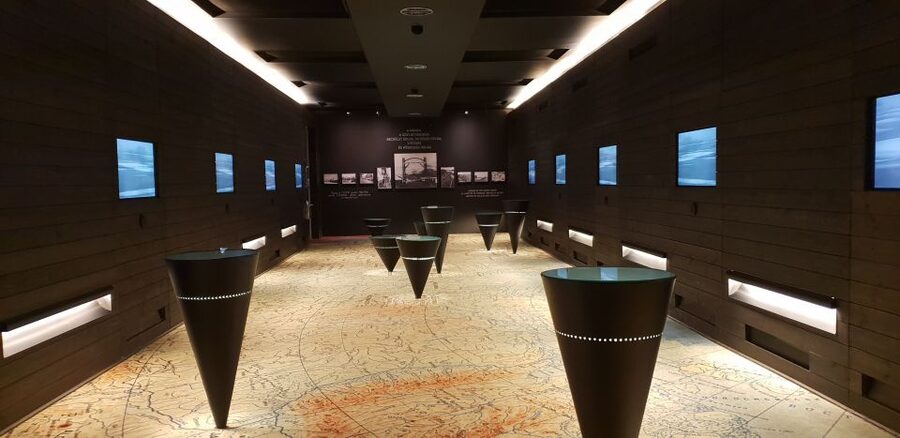
Another stop is the famous set of windows where Cardinal József Mindszenty spent years in exile. Hungary’s anti-Communist Catholic Church leader became a symbol of opposition to the regime.
The guide uses this site to explain how the Communist government treated organized religion and public dissent. Mindszenty’s story is not a side note. It shows how the state dealt with people who held influence outside the party structure.
This part will appeal to you if you want more than a military or political account of the Cold War. The tour also considers faith, conscience, and the personal cost of refusing to cooperate.
The site itself is easy to miss if you walk through central Budapest alone. That is one of the walk’s practical strengths: it points out places that look ordinary until you know what happened there.
More history tours in Budapest:
- Budapest: Historic Cruise with Welcome Drink
★ 4.7 · 6,512 reviews - Budapest Historical Sightseeing – Free Walking Tour
★ 5.0 · 1,302 reviews - Buda Castle District Dark History, Legends and Vampire Night Tour
★ 4.5 · 1,240 reviews - BloodThirsty Hungary: Walking tour & Dark Historical Stories
★ 4.9 · 633 reviews
The Cold War bunker and the practical side of fear
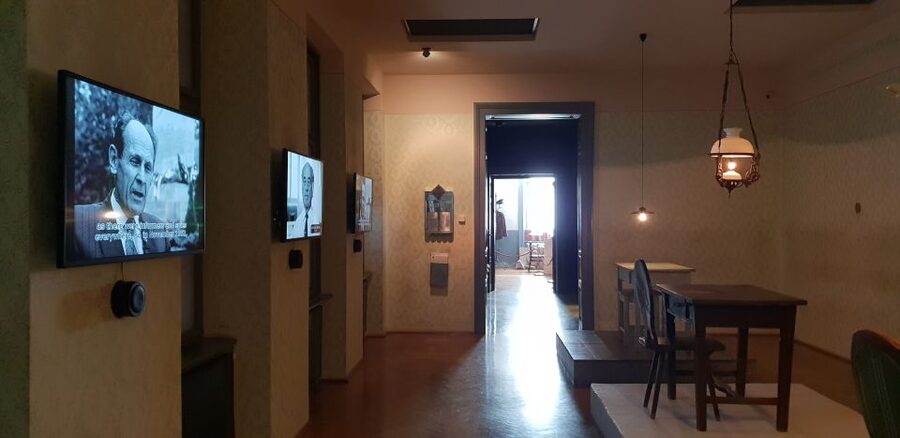
The route includes the ventilation channels of a secret underground nuclear bunker built during the Cold War. You should not expect a long bunker visit based on the information provided, but even the visible ventilation system gives the guide a way to discuss Cold War fears.
This stop shifts the focus from police control and political trials to the threat of nuclear war. It shows how the period affected the physical structure of the city, not only its laws and institutions.
I like this kind of detail because it makes history tangible. A nuclear bunker can sound like a distant military subject. Seeing part of its ventilation system reminds you that governments were preparing for catastrophe beneath the streets where people lived ordinary lives.
The 1956 revolution and its consequences
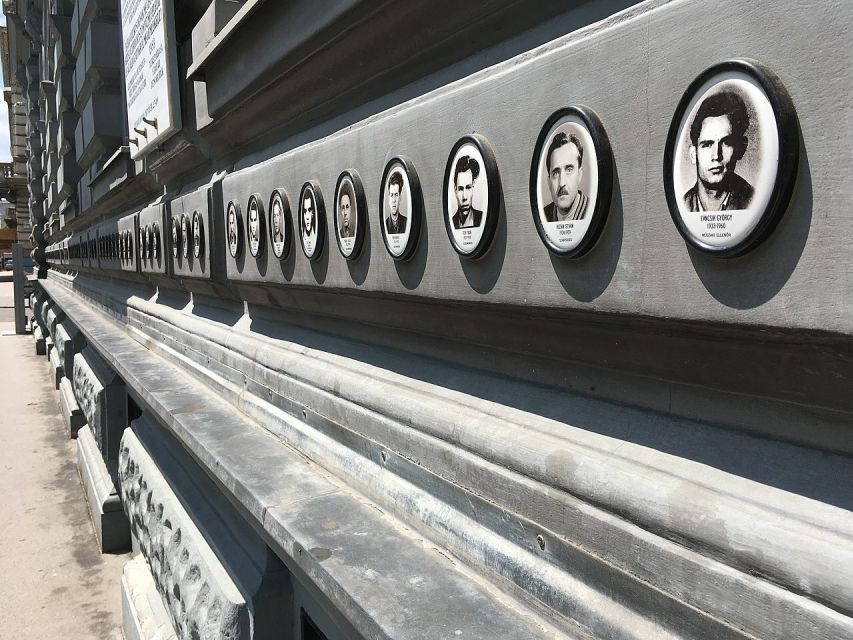
The walk also visits sites connected with Hungary’s anti-Soviet revolution of 1956. Your guide explains what led to the uprising, how people challenged Soviet control, and what happened after the revolt was crushed.
This is likely to be one of the most important sections for anyone studying the Cold War. Hungary’s revolution was brief, brave, and internationally significant. It also had painful consequences for the people who took part or were associated with it.
A good guide will help you follow the sequence rather than presenting 1956 as a single dramatic event. The tour connects the uprising to the wider Communist system, then carries the story toward the eventual end of Communism in 1989.
The walking pace is described as steady, with time to stop, take photographs, and listen. Still, you should wear comfortable shoes and be ready to walk between locations. One person who had trouble keeping up because of illness could not see every part of the route, so this is not the best choice if you need frequent pauses.
Morning option: Budapest Retro Center
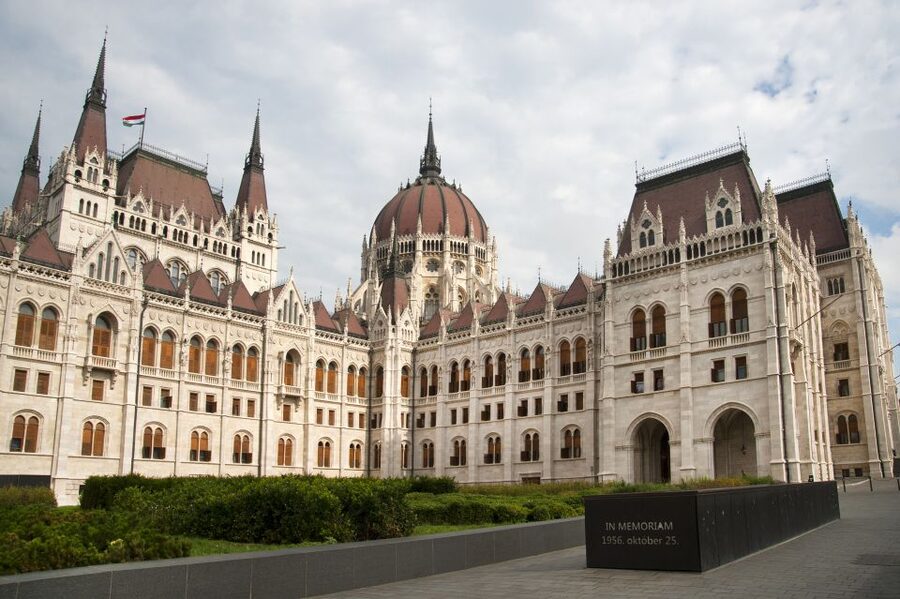
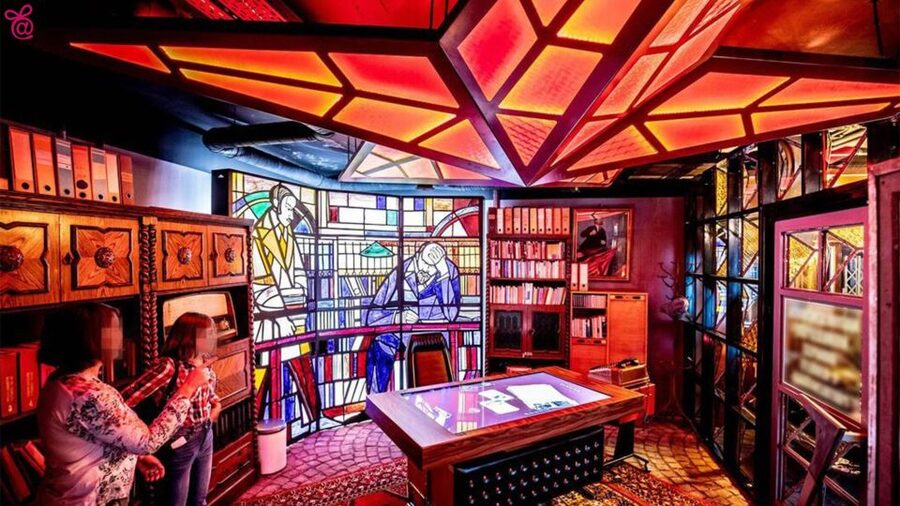
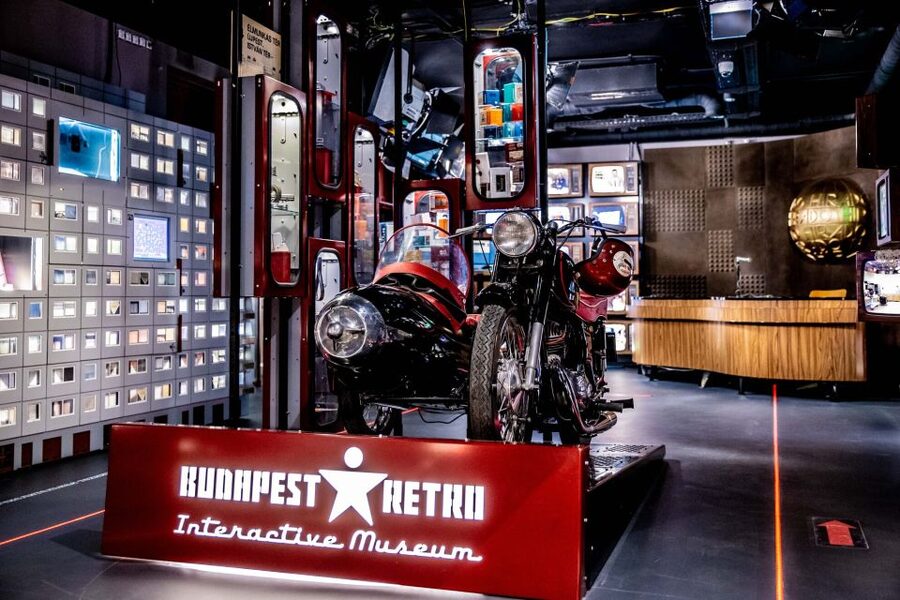
Choose the morning tour if you prefer history with a lighter finish. After the Communist-themed walk, you receive a guided visit to the Budapest Retro Center, a three-floor collection focused on everyday life from the 1960s through the 1980s.
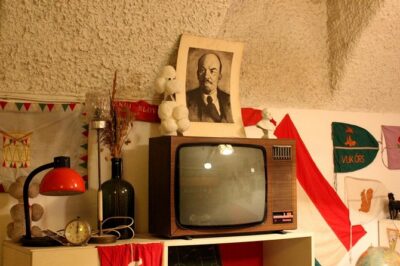
This is not a museum built only around political leaders. It recreates street scenes, homes, transport, television, technology, and popular culture. You can see typical vehicles, Soviet-Hungarian space-flight material, household interiors, and thousands of objects from the period.
The interactive touches make this option accessible if you are traveling with teenagers or with someone who does not want a grim museum. You can dress as a Communist comrade or try presenting the news as a television announcer from the era.
The Retro Center is also valuable because it explains the ordinary side of the system. Political history tells you what the government did. Household objects and street scenes help you picture how people actually lived.
Do not choose this option expecting the same emotional weight as the House of Terror. It is playful by design, though the guide can still explain the limits and contradictions of life under Communism.
Afternoon option: House of Terror Museum
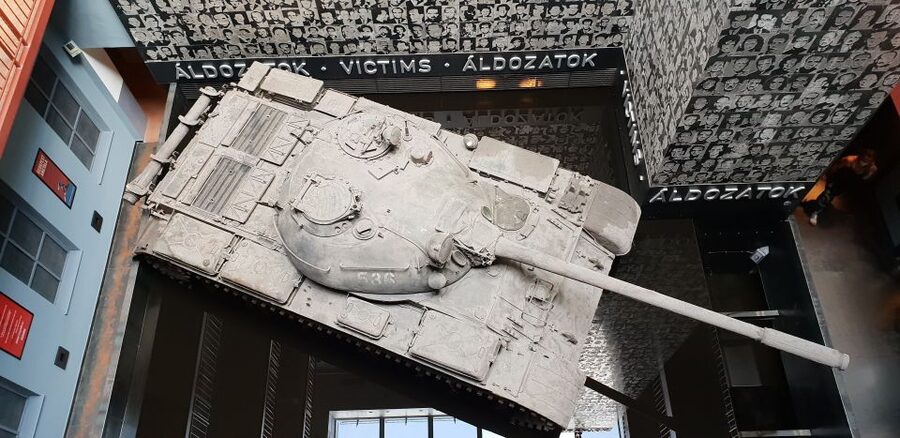
The afternoon route offers a ticket to the House of Terror Museum, located in the former headquarters of the ÁVO State Protection Police, Hungary’s local version of the Soviet KGB.
This is the more serious choice. The building was restored as a memorial to people who suffered under the dictatorships of the 1940s and 1950s, and the exhibits cover both Nazi rule during World War II and the later Communist occupation.
You can expect displays about the economy and daily life of the 1950s, political trials, mass deportations, labor camps, interrogation, torture, and the office of the feared director. The museum also follows the 1956 revolution and the long path toward the end of Communism in 1989.
There are two House of Terror formats in the options. In one, you visit the museum on your own after the walking tour. In another, a guide accompanies you through the museum and explains the exhibits.
I would choose the guided museum visit if this is your main reason for booking. The museum contains powerful material, and a good guide can explain names, dates, and political context that may not be clear from the displays alone. A history teacher who took the guided option found it useful enough to bring new material back to the classroom.
The museum can also be emotional. If your family has Hungarian connections, the personal stories and political violence may hit especially hard. That is not a reason to avoid it, but you should choose it with open eyes.
How the guides shape the experience
The guide is the most important part of this tour. The route has strong locations, but the meaning comes from the explanation between them.
Several guides have been singled out for clear delivery, patience, and personal insight. Alexandra has been praised for giving a well-paced tour and adjusting for people using walking aids. Flora has been noted for answering questions carefully and handling emotional moments with compassion. Noémi has been described as extending a museum visit so the group could see more of the important exhibits.
Other guides, including Bea, Kati, Veronika, Adam, and Catelin, have brought personal memories or family stories into the discussion. That kind of first-hand connection can help you understand why certain events still matter in Hungary.
The tour is offered in English. One guide even handled a group with both English and Hungarian speakers, but you should not assume bilingual guiding is included. The normal language is English, and the group may contain people with very different levels of background knowledge.
Is $58 a fair price?
At $58 per person, this is not the cheapest way to spend two hours in Budapest. The value depends on how much you want help making sense of the subject.
The price includes a professional guide, the Communist-themed walk when that option is selected, and admission to either the Budapest Retro Center or the House of Terror Museum. You are also paying for a small group of no more than 10 people, rather than a large crowd gathered around a flag.
For a casual look at Communist-era objects, the Retro Center alone may be enough. For someone interested in politics, family history, the Cold War, or modern Hungary, the combination of street sites and museum admission makes the price more reasonable.
I would especially consider it good value if you have limited time in Budapest. In two hours, you get a focused route through central locations and a museum choice that matches your interests.
Practical advice for choosing your option
Choose the morning Retro Center option if you want everyday objects, vehicles, home interiors, and a more relaxed ending.
Choose the afternoon House of Terror option if you want police-state history, political violence, torture, deportation, and the 1956 revolution.
Choose the guided House of Terror visit if the museum is your priority and you want help interpreting the displays.
Wear comfortable shoes for the walking portion. The pace is generally manageable, but the route involves moving between several central sites. The meeting point changes with the option you book, so check the specific instructions before leaving your hotel.
You receive the museum ticket from the guide, not from the museum ticket office. That matters because looking for a separate ticket collection point could waste time.
Free cancellation is available up to 24 hours before the start, and you can reserve now and pay later. Those terms help if your Budapest plans are still shifting.
Who should book this tour?
I recommend this experience to you if you want to understand Budapest beyond its grand buildings and tourist center. It suits Cold War enthusiasts, history students, families tracing Hungarian roots, and anyone curious about how dictatorship shaped everyday life.
The Retro Center makes the tour easier to share with a mixed-age group. The House of Terror is better for adults and older teenagers who can handle disturbing material.
I would skip it if you want a purely scenic walk or if you dislike serious political history. The subject is not decorative, and the museum option can be grim. You should also think twice if walking for two hours without regular long pauses is difficult.
FAQ
How long does the Budapest Communist History Tour last?
The listed duration is two hours. The morning option includes a one-hour guided visit to the Budapest Retro Center after the walking portion.
What language is the tour offered in?
The tour is offered in English with a live English-speaking guide.
How large is the group?
The group is limited to 10 participants.
Which places are included in the walking tour?
The walk includes the Hungarian Parliament, memorials connected with the Communist dictatorship, Liberty Square, the Soviet Liberation Memorial, Cardinal Mindszenty’s exile site, Cold War bunker ventilation channels, and sites linked with the 1956 revolution.
What is the difference between the Retro Center and House of Terror options?
The Budapest Retro Center focuses on everyday life from the 1960s through the 1980s, with vehicles, home interiors, television, space-flight material, and interactive displays. The House of Terror covers Nazi rule, Communist occupation, political repression, torture, deportations, labor camps, the 1956 revolution, and the end of Communism.
Is the museum ticket included?
Yes. The selected option includes an entry ticket to either the Budapest Retro Center or the House of Terror Museum. Your guide gives you the ticket, so do not look for it at the museum ticket office.
Can I cancel the booking?
You can cancel up to 24 hours in advance for a full refund. The activity also allows you to reserve now and pay later.
Should you book it?
Book this tour if you want a focused, human account of Hungary’s Communist period rather than a quick look at old Soviet objects. The strongest choice depends on your mood: the Retro Center gives you a playful look at daily life, while the House of Terror confronts the machinery of fear and repression.
For most history-minded visitors, I would choose the guided House of Terror option. For families, mixed-age groups, or anyone wanting a less heavy afternoon, the Retro Center is the wiser pick. Either way, the small group and strong local guides make this a useful way to connect Budapest’s streets with the difficult events that shaped modern Hungary.
Recently added around Budapest
- Budapest: Private Walking Tour with a Local Guide★ 3.6 · 6 reviews
- From Budapest: Guided Tour of Eger with Wine Tasting★ 4.5 · 6 reviews
- Budapest: City Bike Tour with Coffee Stop★ 5.0 · 37 reviews
- Budapest: Danube River Views Bike Ride★ 4.8 · 23 reviews
- Budapest: Vacation Photographer to collect great memories★ 5.0 · 49 reviews
- Walk to recent and aged spiritual sanctuaries near Budapest★ 5.0 · 5 reviews
- Trash Art Museum: Hungary’s First Scrap Metal Exhibition★ 4.3 · 72 reviews
- Budapest: Multilingual Highlights Tour★ 4.8 · 89 reviews
Communist History Tours, compared.

3-Hour Walking Tour About Communism (Small Group)
Read our review →
Lives of Hungarians Under Communist and Capitalist system
Read our review →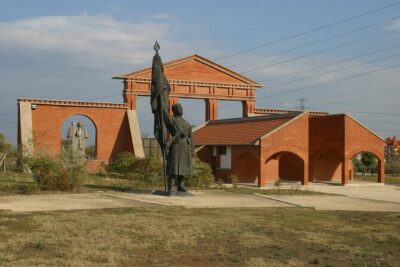
Private Budapest Hammer & Sickle Communist Times Tour
Read our review →
Browse the lists this tour appears in