
Reviewed · COMMUNIST HISTORY TOURS
Born Under The Red Star – Communist tour with Coffee in a Retro Bar
Budapest’s communist past is not tucked away in one museum. It appears in squares, statues, government buildings, and arguments over what should be remembered. This three-hour walk connects those pieces, then gives you time for a classic soda in a Communist-themed bar, where the setting keeps the subject from becoming a dry history lecture.
I like the way the tour links the 1956 revolution with the Soviet memorials rather than treating each monument as an isolated photo stop. I also like the small-group limit of 15 and the practical follow-up advice, including maps and suggestions for places to visit on your own. The main drawback is that several important buildings are viewed from outside, and museum or church admission is not included.
Key points to know before you book
- Communist-era Budapest in three hours: Cover major political landmarks without spending a full day on a formal museum tour.
- A retro bar stop: Coffee or tea and a classic soda are included, with the drink served in a Communist-themed setting.
- A strong 1956 focus: The route explains the Hungarian Revolution and War of Independence through its memorial and nearby civic spaces.
- Mostly an outdoor walk: The House of Terror, St. Stephen’s Basilica, and Parliament are included as places to see, but entrance fees are not part of the tour.
- Small English-speaking group: The maximum group size is 15, a useful limit for questions and discussion.
- Useful starting and ending points: Begin at the Hungarian State Opera on Andrássy út and finish at Liberty Square.
Why this walk helps explain Budapest
A city tour about communism can easily become a parade of gray statues and grim dates. This one has a clearer purpose: it shows you how Hungary remembers foreign occupation, dictatorship, resistance, and national independence in the same central area.
That matters because Budapest’s political story is not simple. Soviet soldiers helped defeat Nazi Germany and reached Budapest in 1945, yet Soviet control later became the force many Hungarians resisted. A good guide has to explain both facts without reducing the city’s past to heroes on one side and villains on the other.
The route also helps you read Budapest after the tour ends. A memorial that seems like a quick photo stop may make more sense when you understand who built it, who objected to it, and what it says about the government or movement behind it. I value that kind of context more than a long list of dates.
The walk is offered in English and lasts about three hours. That is enough time for a useful introduction to the subject without turning your entire day into a history course. The group limit of 15 should help keep the conversation manageable, though the exact feel will depend on the size of your group on the day.
More communist history tours in Budapest:
- Budapest: Communist History Tour with House of Terror Option
★ 4.8 · 182 reviews - Budapest: 3-Hour Walking Tour About Communism (Small Group)
★ 4.7 · 70 reviews - Communism in Hungary with a Historian
★ 5.0 · 70 reviews
Starting at the Opera House on Andrássy út
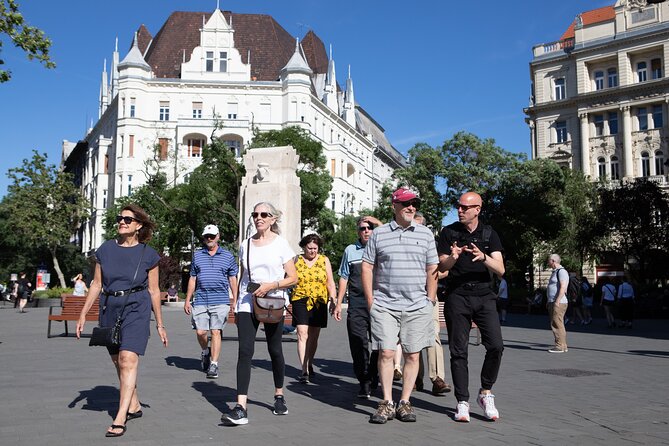
You meet at the Hungarian State Opera, at Andrássy út 22. This is a convenient central starting point, and the location gives the tour an immediate sense of place: you begin among Budapest’s grand avenues and cultural landmarks before moving toward the political center.
The guide’s role is especially important here. The tour is not simply a walk between monuments. You are paying for interpretation, connections, and recommendations. Ferenc is specifically identified as one guide associated with the experience, and the personal attention possible in a small group can make a difference when the subject involves contested memories.
The meeting point also makes this a good choice early in your Budapest stay. You receive maps and further suggestions for independent sightseeing at the end, but you can also ask your guide about where to go next while the city is still fresh in your mind.
The Soviet Heroic Memorial in the park
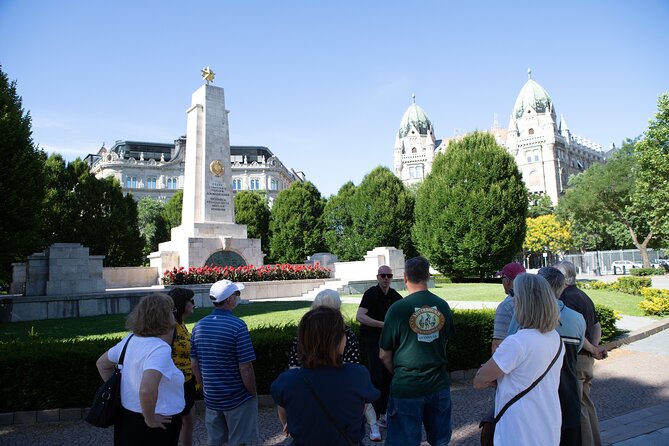
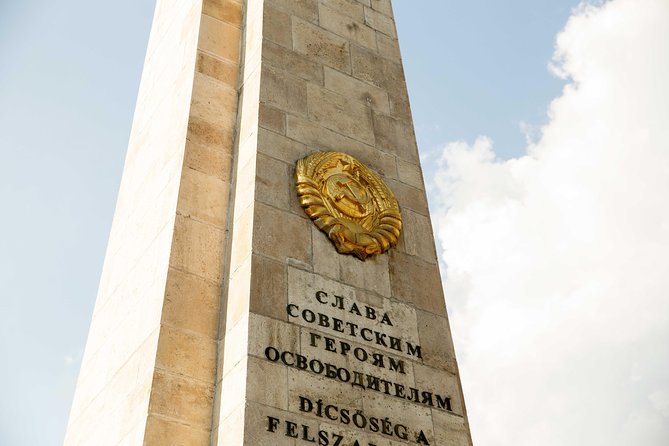
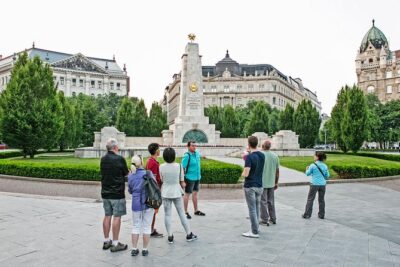
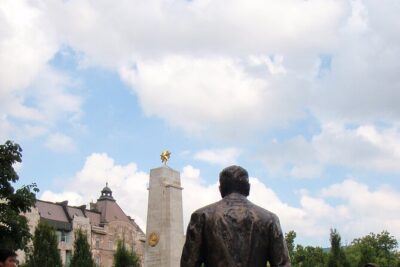
The first stop is a white obelisk set in a landscaped park. It commemorates Russian military personnel who served during World War II, and it introduces one of the central tensions of Hungarian 20th-century history.
You have about 15 minutes here, with no admission fee. That may sound brief, but it is enough for the guide to explain the memorial’s purpose and for you to look closely at its setting and design.
The value of this stop is not the monument alone. It gives you a starting point for understanding why Soviet memory in Budapest is complicated. The memorial recalls the defeat of Nazi forces, but later generations also associated Soviet influence with a loss of political freedom. You need both parts of that story to understand the arguments surrounding Budapest’s public monuments.
This is also a reminder that the tour is designed for interpretation rather than long visits inside buildings. If you prefer to spend 30 minutes studying one monument, the pace may feel quick. If you want a broad framework for the city, the short stop works well.
The House of Terror and the limits of a 15-minute stop
The House of Terror Museum occupies Andrássy út 60, a building connected with both the fascist and communist regimes in Hungary. Its exhibitions address detention, interrogation, torture, and the deaths of people held there. It also serves as a memorial to the victims.
The tour allows about 15 minutes at this location, and admission is listed as not included. In practical terms, you should treat this as an exterior and orientation stop rather than a museum visit. You will not have enough time during the walking tour to explore the full exhibition.
That is not necessarily a weakness. The House of Terror can take a substantial part of your day, and its subject matter is heavy. A short introduction with your guide may help you decide if you want to return independently with a paid ticket and more time.
I would not book this tour expecting a guided visit through the museum galleries. Book it for the context around the building and for advice on how it fits into the wider story of Hungary’s authoritarian past.
More coffee house stops in Budapest:
- Grand Segway Tour of Budapest – Private Tour with Coffee Stop
★ 5.0 · 163 reviews - Budapest: City Bike Tour with Coffee Stop
★ 5.0 · 37 reviews - Castle District tour with Matthias Church Ticket & Cake & Coffee
★ 5.0 · 31 reviews - Buda Castle Walking Tour with Matthias church entry, Cake&Coffee
★ 4.5 · 21 reviews
St. Stephen’s Basilica adds a different Budapest
St. Stephen’s Basilica is a Roman Catholic church named for Stephen, Hungary’s first king. His right hand is kept in a reliquary, a detail that connects the building to Hungary’s older religious and national identity rather than its 20th-century political struggles.
The basilica gives the route useful contrast. After memorials and political repression, you see a major religious landmark tied to the foundation of the Hungarian state. That contrast helps show that Budapest’s story did not begin in the communist period.
About 15 minutes are set aside here, and admission is not included. You should expect to see the building as part of the walk, not take a full interior tour. If entering the basilica matters to you, plan for that separately and check the conditions when you arrive.
For me, this is one of the route’s more useful transitions. It prevents the tour from becoming narrowly focused on Soviet symbols and shows how different layers of Budapest sit close together.
The Liberty Statue on Gellért Hill
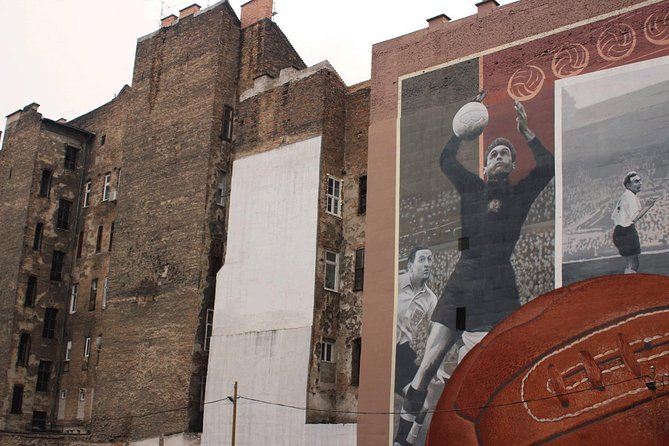
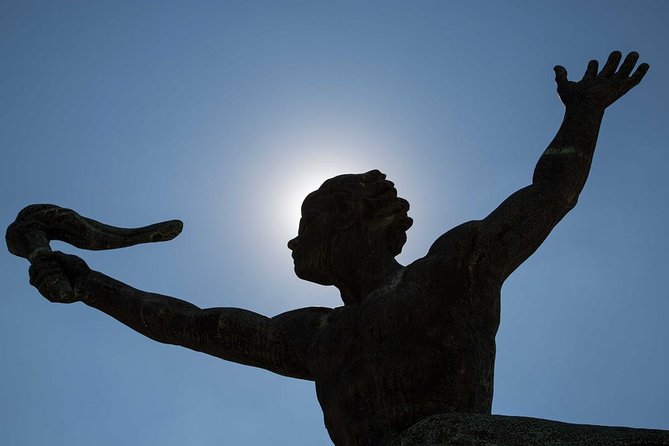
The Liberty Statue, also called the Freedom Statue, is located on Gellért Hill. It commemorates people who sacrificed their lives for the independence, freedom, and prosperity of Hungary.
The supplied tour details do not give a separate time allowance or admission information for this stop. You should therefore expect it to be part of the route’s outdoor sightseeing rather than a long, fixed visit.
The statue’s meaning connects directly with the tour’s main questions. What does freedom mean after military occupation? Who gets to define national sacrifice? How does a monument change meaning when the political system around it changes?
The stop is especially useful when paired with the discussion of 1956. The two locations approach independence from different angles, giving you more to think about than a simple list of dates and statues.
Liberty Square and its competing memories
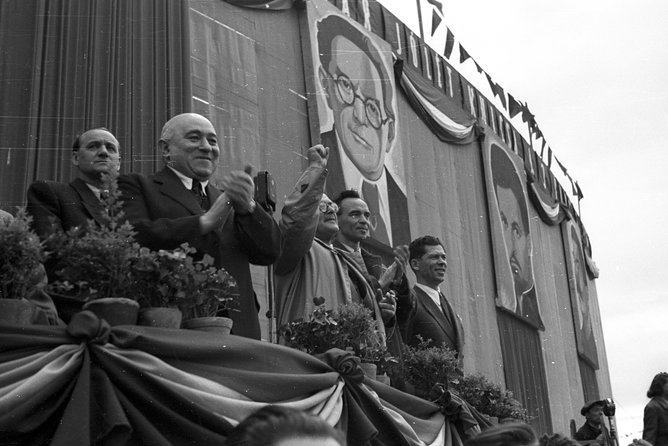
Liberty Square, or Szabadság tér, is the final meeting point and one of the most politically charged places on the walk. It contains two controversial memorials: one dedicated to Hungarian Jewish victims of the Holocaust and another commemorating Soviet soldiers who liberated Budapest from the Nazis in 1945.
The square also sits near the United States Embassy and the historicist headquarters of the Hungarian National Bank. Those buildings add a modern political setting to a place already crowded with arguments about national responsibility, foreign power, and public memory.
This is where the tour’s different subjects come together. The Soviet memorial is not just about military history. The Holocaust memorial is not separate from later political debates. The embassy and bank remind you that power, money, and international relationships remain part of the square’s identity.
The tour ends here, which is sensible. You finish at a place that rewards further thought and independent exploration. Since maps and additional recommendations are included, Liberty Square can also serve as a useful point from which to continue your Budapest sightseeing.
The 1956 memorial and Hungary’s failed uprising
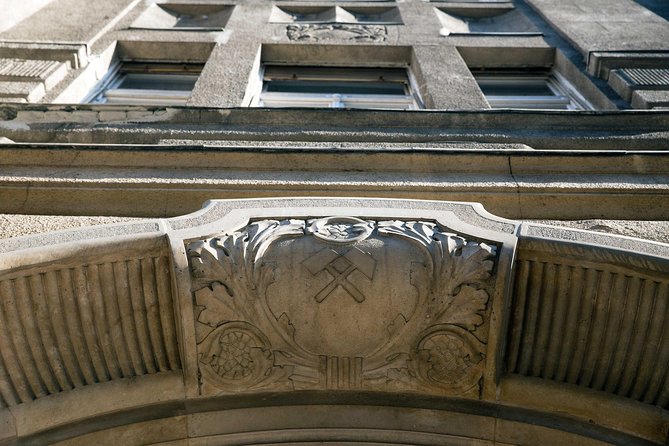
The memorial to the 1956 Hungarian Revolution and War of Independence honors the people who rose against the communist regime. The uprising is one of the key events needed to understand Hungary’s relationship with Soviet control.
The memorial helps move the discussion from symbols to action. You are no longer looking only at what governments built. You are considering what ordinary people tried to change, and what it cost them.
The tour’s strength is the way it places this subject among other reminders of occupation and freedom. The meaning of 1956 becomes clearer when you have already seen the Soviet Heroic Memorial and discussed the changing interpretation of monuments.
This is also the kind of stop where a guide can make the experience worthwhile. A plaque alone may give you a date and a name. A good explanation can show why the uprising mattered, why it was defeated, and how it remains part of Hungarian identity.
Parliament from the outside
The Hungarian Parliament Building is one of Budapest’s best-known landmarks and the seat of the National Assembly. Its Hungarian name, Országház, translates as House of the Country or House of the Nation.
Parliament is included in the route, but admission is not. The tour therefore gives you a chance to understand its political role and see the building as part of the city’s civic center, rather than providing an interior visit.
That distinction matters when you compare this experience with a standard Budapest sightseeing tour. You are not booking a Parliament admission package. You are getting a political-history walk that uses Parliament as one of its most important reference points.
If the interior is a priority, arrange that separately. On this tour, the building’s main purpose is to anchor the discussion of government, national identity, and the transition from communist rule to modern Hungary.
Coffee, tea, and a classic soda in a retro bar
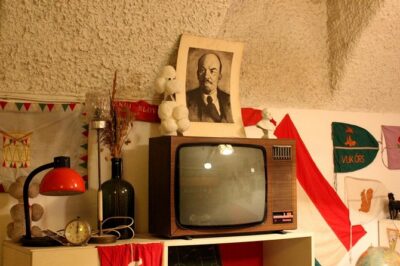
The drink stop is a smart part of the design. You receive coffee or tea and a retro soda in a bar decorated with Communist-themed objects and imagery.
This is not just a refreshment break. A relaxed stop gives you space to ask questions after seeing several memorials, and the setting offers another way to think about how the communist period is remembered today. The tone can be more conversational than it would be beside a formal monument.
Food and other drinks are not included unless specifically stated, so do not expect a meal. The included items are coffee and/or tea plus the classic soda. If you need more than that, budget separately.
I also like the fact that the bar stop keeps the tour from feeling relentlessly solemn. The subject includes dictatorship, torture, war, and failed resistance. A short pause in a themed setting gives the walk some variety without losing its focus.
Is $90.31 a fair price?
At $90.31 per person, this is not a bargain-priced orientation walk. The value depends on what you want from a guide.
You are paying for roughly three hours of English-language commentary, a small group capped at 15, the retro soda, coffee or tea, maps, and follow-up recommendations. The price also covers the guide’s work in connecting sites that you could technically reach on your own.
You are not paying for entry to the House of Terror, St. Stephen’s Basilica, or Parliament. That means the cost makes the most sense if you want interpretation and a focused route, not a collection of admission tickets.
For a couple or small group interested in Hungarian political history, the price can be reasonable because the experience may shape the rest of your stay. One direct account describes a husband and wife ending up with only Ferenc as their guide, which shows how personal the experience can feel when demand produces a very small group. You should not assume your group will be that small, but the 15-person limit is still helpful.
The tour is booked an average of 18 days ahead, so I would not leave it until the last minute if your schedule is fixed. Group discounts may also affect the total cost for larger parties.
Who should book this experience?
I would recommend it to you if you like city walks that explain political events through public spaces. It suits first-time visitors who want a framework for Budapest, as well as returning visitors who have seen the main sights but want to understand the 20th century more clearly.
It is a good match for adults and older children who can handle serious subjects. Children must be accompanied by an adult, and the subject matter around the House of Terror may not suit every young person.
You will get the most from it if you are willing to look beyond the postcard view. The route is about contested monuments, changing meanings, and the marks left by occupation and resistance.
I would choose something else if you want extensive museum time, a Parliament interior visit, or a relaxed sightseeing pace with long stops. Several locations receive about 15 minutes, and the experience is built around movement and explanation.
The tour is near public transportation, service animals are allowed, and most people can participate. It also requires good weather, so a poor-weather cancellation may result in another date or a full refund.
My call: book it for context, not entry tickets
Book this tour if you want Budapest’s communist past explained as part of the city you are walking through. The strongest elements are the connection between Soviet memorials and the 1956 uprising, the stop at Liberty Square, and the chance to continue the conversation over a retro soda and coffee.
Go in knowing what you are buying. This is a guided outdoor history walk with several exterior visits, not a museum admission bundle. If that suits your style, the three hours can give you a sharper understanding of Budapest than a standard landmark checklist.
FAQ
How long does the Communist tour last?
The tour lasts approximately three hours.
Where does the tour begin?
It begins at the Hungarian State Opera, Budapest, Andrássy út 22, 1061 Hungary.
Where does the tour end?
The tour ends at Liberty Square, or Szabadság tér, in Budapest.
Is the tour offered in English?
Yes. The experience is offered in English.
What drinks are included?
Coffee and/or tea and a classic soda at a Communist-themed retro bar are included. Other food and drinks are not included unless specified.
Are entrance fees included?
No. Admission is not included for St. Stephen’s Basilica, the House of Terror Museum, or the Hungarian Parliament Building. The Soviet Heroic Memorial and Liberty Square have no admission charge listed.
What is the cancellation policy?
You can cancel at least 24 hours before the experience starts for a full refund. Changes or cancellations made less than 24 hours before the start time are not accepted for a refund. If poor weather causes the tour to be canceled, you will be offered another date or a full refund.
More Drinks Tours in Budapest
- Budapest: Unlimited Prosecco, Beer and Aperol Spritz Cruise
★ 4.8 · 25,310 reviews - Budapest: Unlimited Prosecco, Beer & Aperol Spritz Cruise
★ 4.5 · 3,371 reviews - Budapest: Bar Crawl with a Local Guide
★ 4.9 · 1,112 reviews - Budapest: Ruin Bar Pub Crawl with Entry Tickets
★ 4.7 · 1,028 reviews
Recently added around Budapest
- Budapest: Private Walking Tour with a Local Guide★ 3.6 · 6 reviews
- Budapest: City Bike Tour with Coffee Stop★ 5.0 · 37 reviews
- Budapest: Danube River Views Bike Ride★ 4.8 · 23 reviews
- From Budapest: Guided Tour of Eger with Wine Tasting★ 4.5 · 6 reviews
- Budapest: Vacation Photographer to collect great memories★ 5.0 · 49 reviews
- Walk to recent and aged spiritual sanctuaries near Budapest★ 5.0 · 5 reviews
- Trash Art Museum: Hungary’s First Scrap Metal Exhibition★ 4.3 · 72 reviews
- Budapest: Multilingual Highlights Tour★ 4.8 · 89 reviews
Communist History Tours, compared.
Communist History Tour with House of Terror Option
Read our review →
3-Hour Walking Tour About Communism (Small Group)
Read our review →
Lives of Hungarians Under Communist and Capitalist system
Read our review →
Private Budapest Hammer & Sickle Communist Times Tour
Read our review →
Browse the lists this tour appears in