
Reviewed · COMMUNIST HISTORY TOURS
Budapest: Hammer & Sickle Communism Walking Tour
Budapest’s communist past comes into focus on this walking tour, which moves from everyday details, such as school, passports, work, and Trabant cars, to the 1956 Revolution and the final Soviet memorial in Liberty Square. I like the mix of personal daily life and major political events, since it helps you understand more than dates and slogans. I also like the route through central Pest, ending near Parliament rather than confining the tour to a museum.
The main drawback is the price: $72 per person for 2.5 hours is a serious spend for a walking tour. The subject also demands attention, and one past assessment found the guide short on enthusiasm and organization. This is best for adults and older teenagers who want an informed history lesson with a human side, not a light sightseeing stroll.
Key points at a glance
- A 50-year story in 2.5 hours: The tour covers communist rule in Hungary, from daily routines to the system’s collapse.
- The 1956 Revolution gets real attention: You visit a small exhibition about the uprising and hear how early protests began.
- Daily life is part of the lesson: Passports, school, work, spirits, and Trabant cars help turn politics into something understandable.
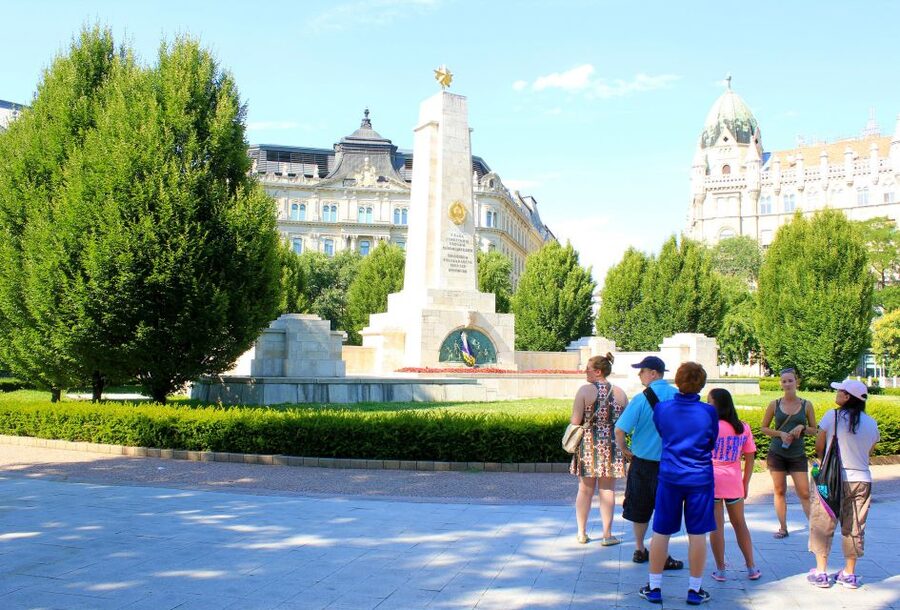
- The route reaches Parliament and Liberty Square: You see the Hungarian Parliament area and the last Soviet monument in the city.
- English-speaking guides lead private or small groups: George received particular praise in one past tour, while guide quality can vary.
- Plan for continuous walking: About two hours are spent on foot, in all weather, with comfortable shoes essential.
Why communist Budapest is worth an afternoon
Many visitors see Budapest through grand buildings, thermal baths, cafés, and the Danube. Those sights are important, but they do not explain what daily life felt like during the decades when Hungary sat behind the Iron Curtain.
This tour gives you that missing layer. You hear how people handled ordinary tasks under a political system that controlled travel, education, work, and public speech. A question such as how to obtain a passport can reveal more about the period than a long list of political leaders. School life, workplace habits, and the popularity of Trabant cars show how the system shaped routines at home and in public.
I find this approach useful because communism can otherwise become a vague chapter between the Second World War and the fall of the Berlin Wall. Here, the past is tied to streets you can walk through today. The tour also helps explain why 1956 remains such an important date in Hungary.
The subject is serious. The tour is not designed as a comedy walk or a quick collection of colorful anecdotes. Still, details about spirits at work, limited consumer choices, and the familiar Trabant car can make the period easier to picture without turning hardship into a joke.
More communist history tours in Budapest:
- Budapest: Communist History Tour with House of Terror Option
★ 4.8 · 182 reviews - Budapest: 3-Hour Walking Tour About Communism (Small Group)
★ 4.7 · 70 reviews - Communism in Hungary with a Historian
★ 5.0 · 70 reviews
Meeting at Deák Ferenc Square
The meeting point is in front of the pale yellow Lutheran Church at Deák Ferenc tér, at 1052 Budapest, Deák Ferenc tér 4. You meet on the church steps, in the center of downtown Budapest.
This is a practical starting point because Deák Ferenc Square is one of the city’s main central gathering points. If you choose the standard meeting arrangement, you do not need to arrange transportation to a distant neighborhood. Pickup from centrally located accommodation may be available if you provide the details when booking, but pickup is optional.
Arrive ready to walk. The tour includes roughly two hours of continuous walking within the 2.5-hour experience, so sturdy shoes matter more than stylish footwear. There is no promise of a seated break during the route, although a coffee, tea, or soft drink is included.
The tour runs in all weather. Bring suitable clothing for the forecast, since rain or a chilly day will not automatically move the experience indoors.
From everyday routines to state control
The early part of the tour sets up the basic experience of life under communist rule. You learn how residents managed school, work, travel documents, and other everyday needs while living under a restrictive government.
The passport topic is especially useful. For many people today, international travel means checking a document, booking transport, and leaving. During the communist period, getting permission to travel could be a political and administrative matter. Hearing about that process gives you a sharper sense of what the Iron Curtain meant in practical terms.
School is another helpful entry point. A discussion of education shows how political ideas reached children and families, rather than remaining confined to government offices. The same is true of work. The tour describes a society where workplace customs could include drinking spirits, a detail that helps you picture the social rules of the era.
You also hear about Trabant cars, which became a familiar symbol of life in Eastern Europe. The car itself is a small object, but it points to larger issues: limited choice, long waits, and the difference between owning something and being able to choose freely among many options.
A past version of the experience included coffee and a traditional Hungarian dessert at Trabant 60, according to one detailed account. Treat that as a possible feature rather than a guaranteed stop, since the stated inclusion is a coffee, tea, or soft drink, and food is not included.
The 1956 Revolution and the first protests
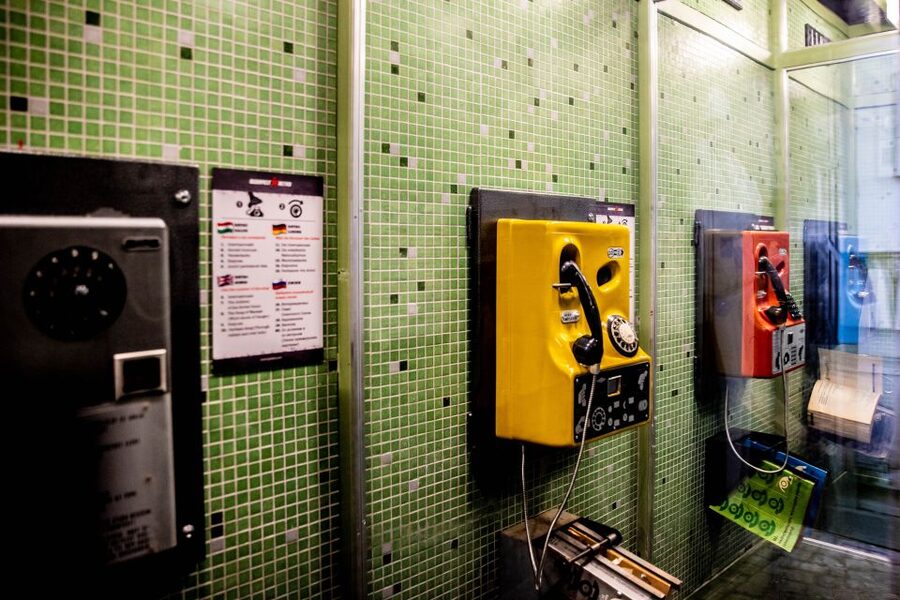
The tour then turns to the 1956 Revolution, the major event at the center of Hungary’s modern political memory. You visit a small exhibition commemorating the uprising and hear about the first protests against what was seen as an unethical regime.
This part gives the tour its strongest historical focus. The exhibition is not presented as a huge museum visit, so do not book this expecting a full afternoon inside a major institution. Its value is in the setting and the guide’s explanation. You see a compact display connected to the events, then hear how the movement developed.
The walk helps put the revolution into a city setting. Rather than hearing only about dates in a lecture room, you move through streets in downtown Pest where political action took place. That physical connection can make the subject easier to follow.
The tour is also careful to place 1956 within the wider period of communist rule. You are not getting a standalone revolution tour. The discussion links the uprising to life before it, the first signs of resistance, and the long years that followed.
I would pay close attention here and ask questions if the guide allows time. The subject is complex, and two and a half hours cannot cover every political shift in equal detail. The value comes from getting a clear framework that you can build on during later visits to museums or memorial sites.
More walking tours in Budapest:
- Budapest: Buda Castle Walk with Saint Stephen’s Hall
★ 4.5 · 3,012 reviews - Big Bus Budapest Hop-On Hop-Off Bus and Walking Tour
★ 3.5 · 2,206 reviews - Budapest: Buda Castle District Walking Tour
★ 4.6 · 2,108 reviews - Budapest City Landmarks Walking Tour in 2 Hours
★ 5.0 · 2,048 reviews
Walking through central Pest to Parliament
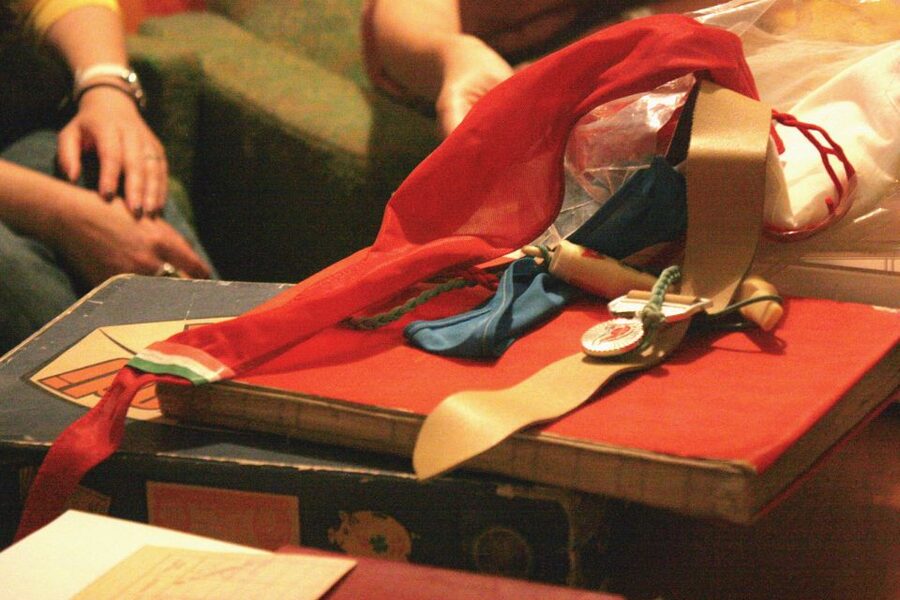
After the exhibition, you follow smaller streets through downtown Pest. The route is designed around places where events happened, so the walk is not simply a transfer between two indoor stops.
The streets themselves may not look dramatic at first. That is part of the point. Political change often took place in ordinary urban spaces, not only in grand halls. Walking through them while hearing about protests and public reaction can make Budapest feel less like a collection of postcard views and more like a city shaped by conflict.
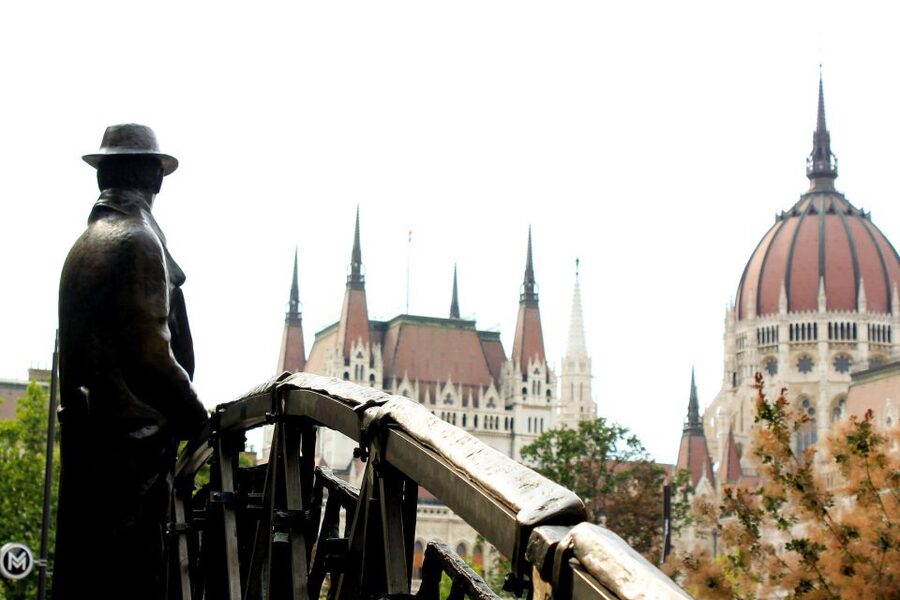
The route continues toward the square of the Hungarian Parliament. Parliament is one of Budapest’s most recognizable buildings, but this tour uses it as a political setting rather than just a photo stop. You learn how the area relates to the country’s modern political story and the tension between official power and public protest.
Do not expect a long interior visit to Parliament. The supplied plan describes a walk to the Parliament area and the surrounding square, not an entrance tour. If you want to see the building inside, that requires a separate arrangement.
This part also suits visitors who want to combine the tour with other central Budapest sights. Because the walk begins and ends in central Pest, you can continue sightseeing afterward. The exact ending point and timing may depend on the route and the guide, so leave a little flexibility in your schedule.
Liberty Square and the last Soviet memorial
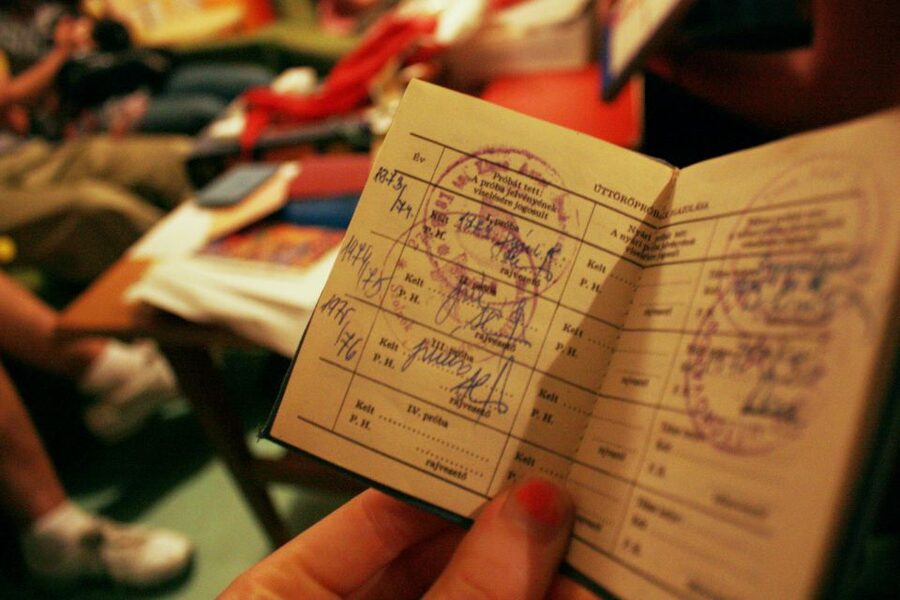
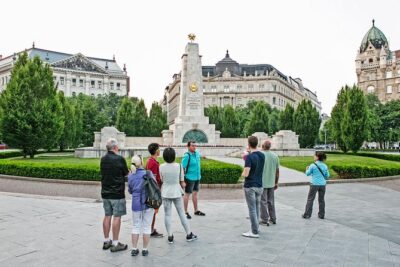
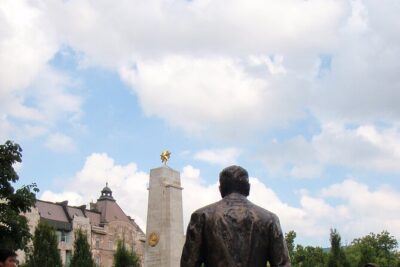
Liberty Square, or Szabadság tér, provides one of the tour’s most meaningful stops. Here you see the last Soviet monument in Budapest and hear how the site fits into the city’s contested memory.
A Soviet memorial can be difficult to understand from a photograph alone. Its meaning depends on who built it, what it commemorates, and how local people view it after the end of communist rule. The guide’s explanation is important because the monument is not simply an old object. It represents the power that shaped Hungary for decades and remains part of the city’s public space.
This is also where the tour’s themes come together. You have heard about restrictions, routine life, protest, and the 1956 Revolution. Liberty Square gives those subjects a physical endpoint. You are looking at a surviving symbol of Soviet influence while standing in present-day Budapest, a city that has changed greatly since that period.
The stop is best approached as a history lesson rather than a quick photo opportunity. If you want only famous buildings and easy sightseeing, this may feel too serious. If you enjoy asking why a monument remains, who remembers it positively or negatively, and how public spaces carry political meaning, it is likely to be one of the strongest parts of the walk.
What the guides add to the experience

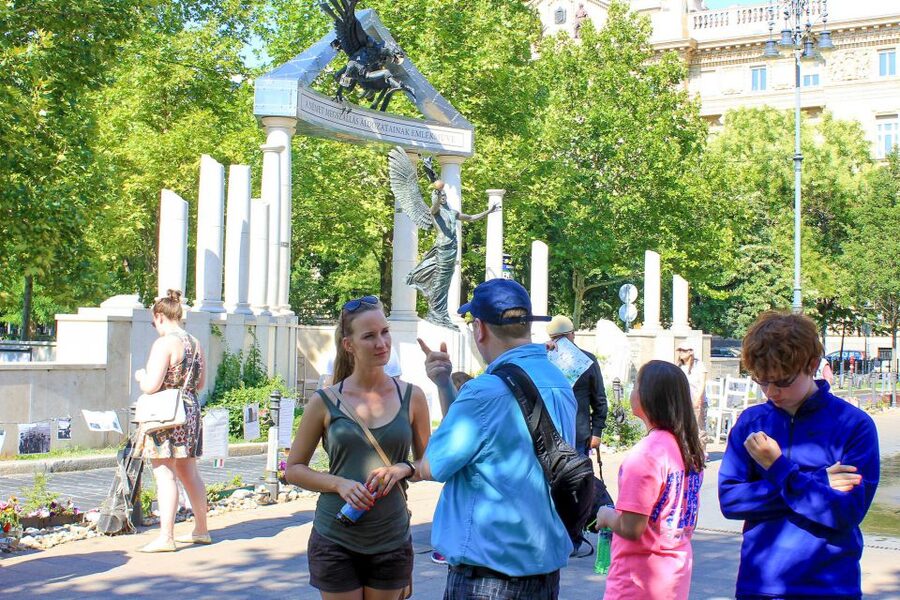
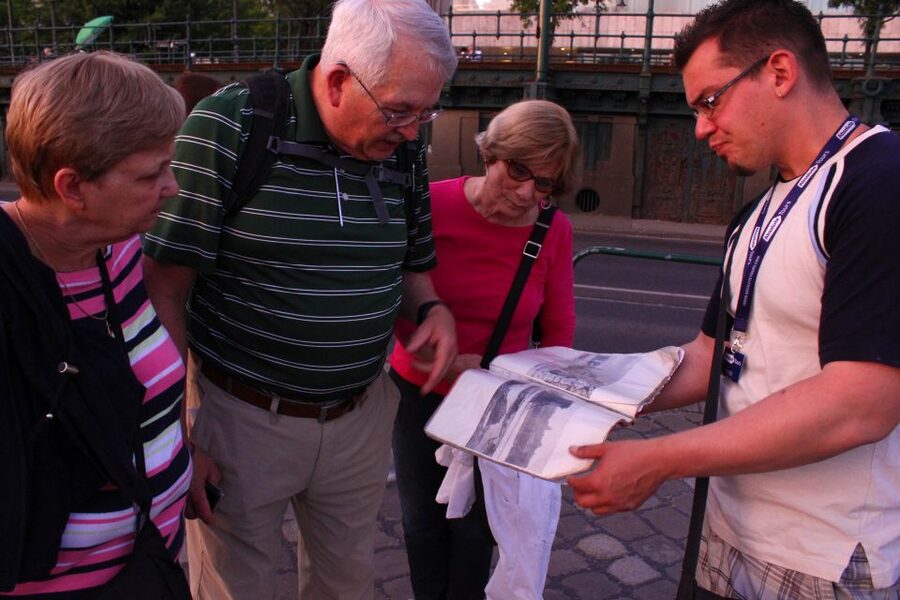
The guide matters a great deal on a tour like this. The route itself is easy to walk, and the memorials can be seen without joining a group. What you are paying for is the explanation, the order of events, and the connection between public sites and private life.
One guide named George received particularly warm praise for explaining Hungarian communism and for creating a friendly walk. Another highly rated guide was described as personable, well prepared, and informative, with an inside view of Hungary before the country visitors see today. Those comments point to the best version of this experience: a guide who can explain politics clearly while keeping the discussion connected to ordinary people.
The record is not perfectly consistent. One lower assessment called for more information, a clearer sequence, and greater enthusiasm. That is worth considering because the tour covers a lot in a short time. A guide who jumps between events can make the period hard to follow, especially if you know little about Hungary.
The private and small-group options may help if you want to ask questions or adjust the pace. The booking information confirms that these formats are available, but it does not specify the maximum group size or guarantee a particular guide. If guide choice matters to you, check what is available at booking.
The tour is conducted in English. You receive an English-speaking licensed guide, and the experience is aimed at people aged 14 and older because of the political subject matter.
Is $72 a fair price?
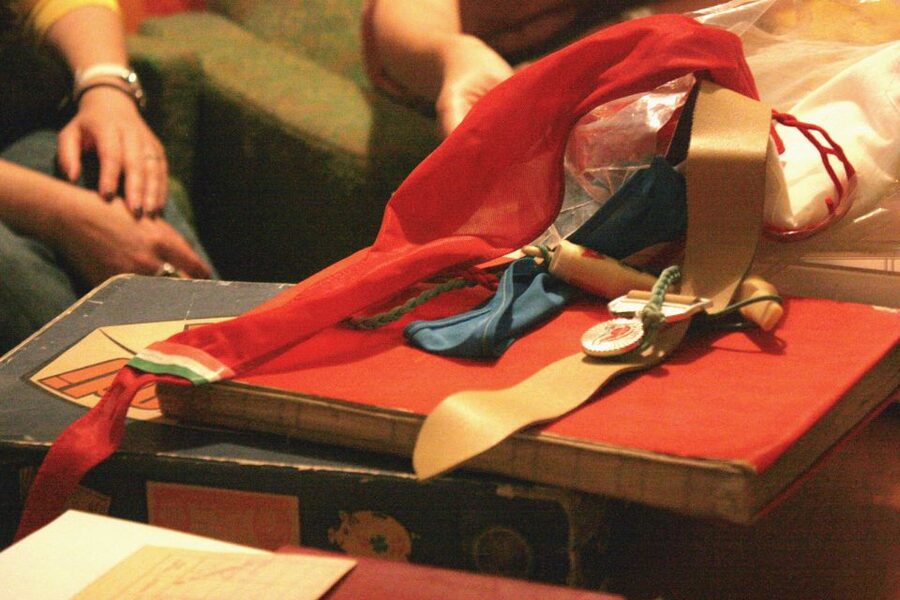
At $72 per person, this is not a budget walk. You are paying for 2.5 hours, a licensed expert guide, a small refreshment, and the chance to visit several politically important locations without planning the route yourself.
The value depends on how much you want interpretation. If you already know Hungarian communist history well, the tour may repeat familiar material unless you choose a private format and use the guide for detailed questions. One past assessment also felt the price was high for the experience.
For someone with limited background, the price is easier to justify. You receive a clear introduction to a difficult subject, and you do not have to piece together the story from separate museums, plaques, and guidebooks. The tour also combines a historical exhibition with an outdoor walk, so it offers more variety than a standard lecture.
I would book it when communist-era history is a major reason for your Budapest visit, or when you want to understand the city beyond its imperial architecture. I would skip it if your priority is low-cost sightseeing, indoor comfort, or a relaxed walk with little discussion.
Free cancellation is available up to 24 hours before the start, and you can reserve now and pay later. Those terms are useful if your schedule is still moving, but they do not change the basic question of value: this is a specialist history tour, not a general introduction to every major Budapest sight.
Who should book this walk?
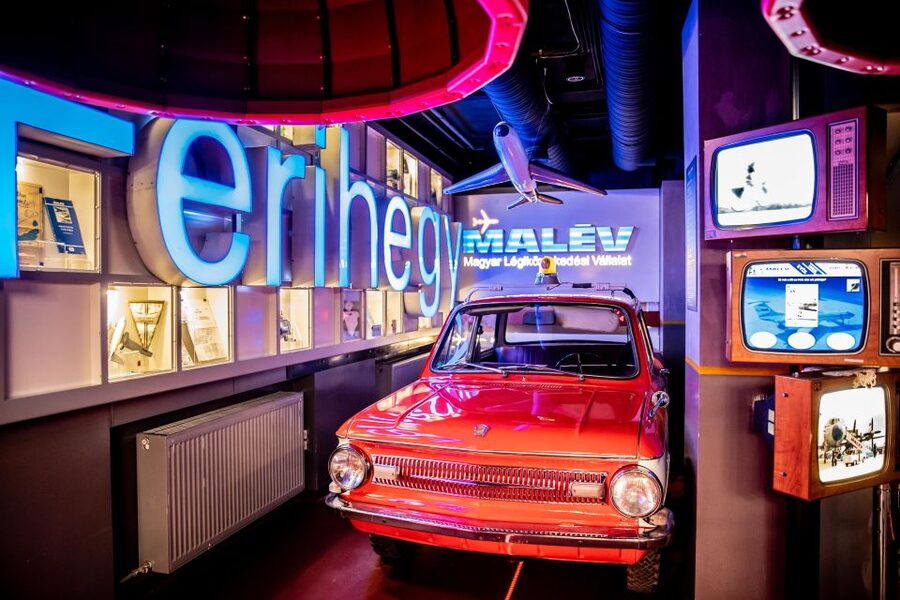
This experience suits adults, history students, politically curious visitors, and anyone who wants to understand how ordinary Hungarians lived behind the Iron Curtain. It also works well for people who have already seen the main Budapest sights and want a more focused subject.
The tour may appeal to families with older teenagers. One past family group found that both an 11-year-old and a 17-year-old stayed engaged, but the current guidance says the tour is not recommended for children under 14. I would follow that advice, especially because the subject involves political repression, protest, and the experience of living under an unethical regime.
You should be comfortable walking for about two hours. The tour is not suitable for people with mobility impairments, and there is no weather exception. Rain, heat, or cold can affect your comfort, so dress for the day rather than assuming Budapest’s central streets will provide shelter.
Should you book the Hammer & Sickle Communism Walking Tour?
Book this tour if you want a serious, place-based explanation of Hungary’s communist years. The combination of daily life, the 1956 Revolution exhibition, the Parliament area, and Liberty Square gives you a useful framework in a short period. The most praised guides have been clear, personable, and able to connect political events with ordinary life.
Think twice if $72 feels high for a walking tour, or if you want a tightly scripted experience with guaranteed high energy. Guide quality can shape the result, and the tour covers a large subject in only 2.5 hours.
My practical advice is to choose a private or small-group option if you can, wear comfortable shoes, and arrive with a few questions about travel, school, or work under communism. That is where this tour can move beyond dates and monuments and become a more personal look at Budapest’s recent past.
FAQ
How long does the tour last?
The tour lasts 2.5 hours, with about two hours of continuous walking.
What language is the tour conducted in?
The tour is conducted in English with a live English-speaking guide.
Where do I meet the guide?
Meet at 1052 Budapest, Deák Ferenc tér 4, in front of the pale yellow Lutheran Church, on the church steps.
What locations does the tour visit?
The walk includes a small exhibition about the 1956 Revolution, streets in downtown Pest, the Hungarian Parliament area, and Liberty Square with its last Soviet monument.
Is hotel pickup available?
Pickup is optional. You can enter the details of centrally located accommodation when booking, or meet the guide at Deák Ferenc Square.
Is the tour suitable for children?
The tour is not recommended for children under 14 because of the subject matter.
What should I bring?
Bring comfortable shoes, comfortable clothing, and weather-appropriate clothing. The tour operates in all weather conditions.
Recently added around Budapest
- Budapest: Private Walking Tour with a Local Guide★ 3.6 · 6 reviews
- From Budapest: Guided Tour of Eger with Wine Tasting★ 4.5 · 6 reviews
- Budapest: City Bike Tour with Coffee Stop★ 5.0 · 37 reviews
- Budapest: Danube River Views Bike Ride★ 4.8 · 23 reviews
- Budapest: Vacation Photographer to collect great memories★ 5.0 · 49 reviews
- Walk to recent and aged spiritual sanctuaries near Budapest★ 5.0 · 5 reviews
- Trash Art Museum: Hungary’s First Scrap Metal Exhibition★ 4.3 · 72 reviews
- Budapest: Multilingual Highlights Tour★ 4.8 · 89 reviews
Communist History Tours, compared.
Communist History Tour with House of Terror Option
Read our review →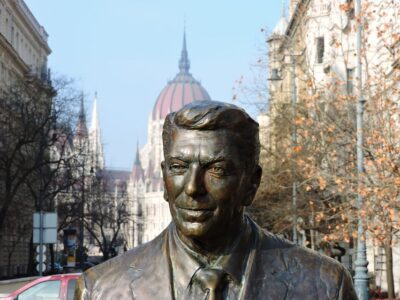
3-Hour Walking Tour About Communism (Small Group)
Read our review →
Lives of Hungarians Under Communist and Capitalist system
Read our review →
Private Budapest Hammer & Sickle Communist Times Tour
Read our review →
Browse the lists this tour appears in