
Reviewed · COMMUNIST HISTORY TOURS
Budapest: Memento Park and Icons of Communism Guided Tour
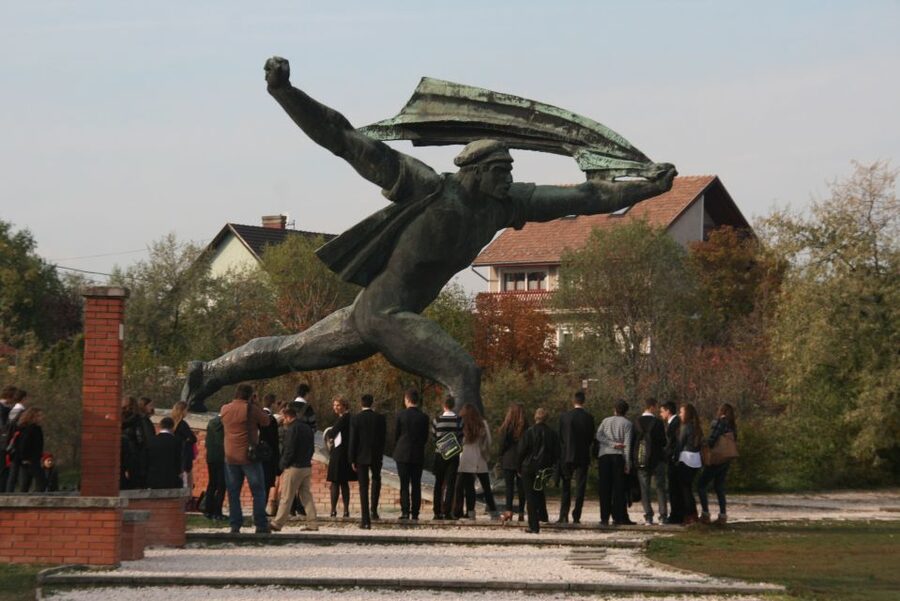
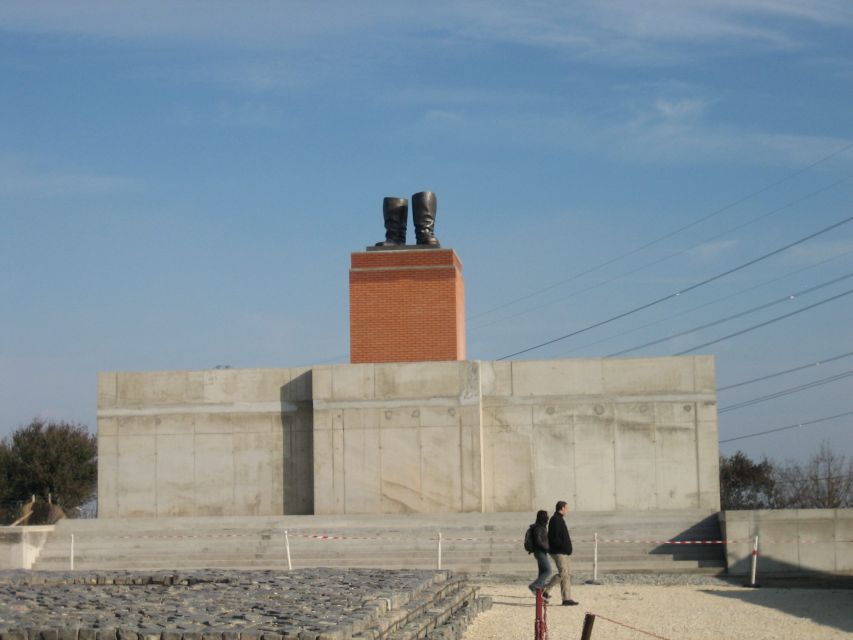
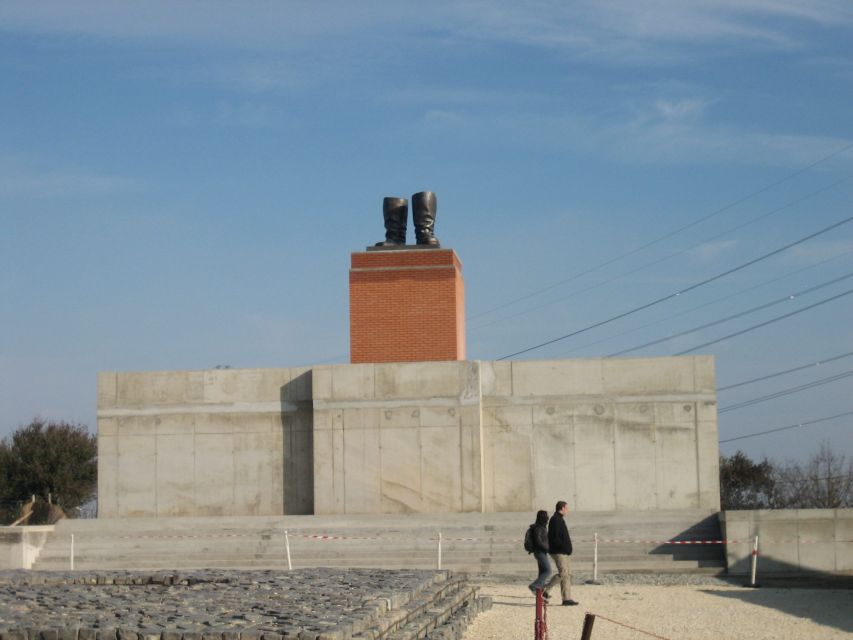
Memento Park is not a cheerful museum, and that is exactly its value. Outside central Budapest, 41 statues of Marx, Engels, Lenin, and other Communist figures sit together in an open-air museum, stripped of their old political power and placed where you can look at them with a clear head. The most striking sight is Stalin’s boots, the only remnant of a huge statue pulled down by angry Hungarians.
I like the private car ride, which removes the hassle of reaching a museum 16 kilometers from the center. I also like the small group, limited to seven people, because this subject needs room for questions. The main drawback is the travel time: 45 minutes each way means only about 90 minutes at the park itself, so this is a focused history visit rather than a full-day outing.
Key things to know before you book
- Stalin’s boots tell the story of a revolution: You see the remains of the hated dictator’s statue and learn why it was destroyed in 1956.
- The guide supplies the missing context: The statues make much more sense when you understand propaganda, changing laws, intimidation, and secret police recruitment.
- Transport is part of the value: A private car takes you from Batthyány Square to the park and back, rather than leaving you to manage the trip alone.
- The group stays small: No more than seven participants makes it easier to ask direct questions about life under Communism.
- You get time for photographs: Your guide can take pictures of you beside the oversized monuments at no extra charge.
- The experience is serious but approachable: The strongest feedback centers on Victor’s clear explanations, friendly manner, and ability to engage both adults and teenagers.
Why Memento Park belongs on a Budapest history day
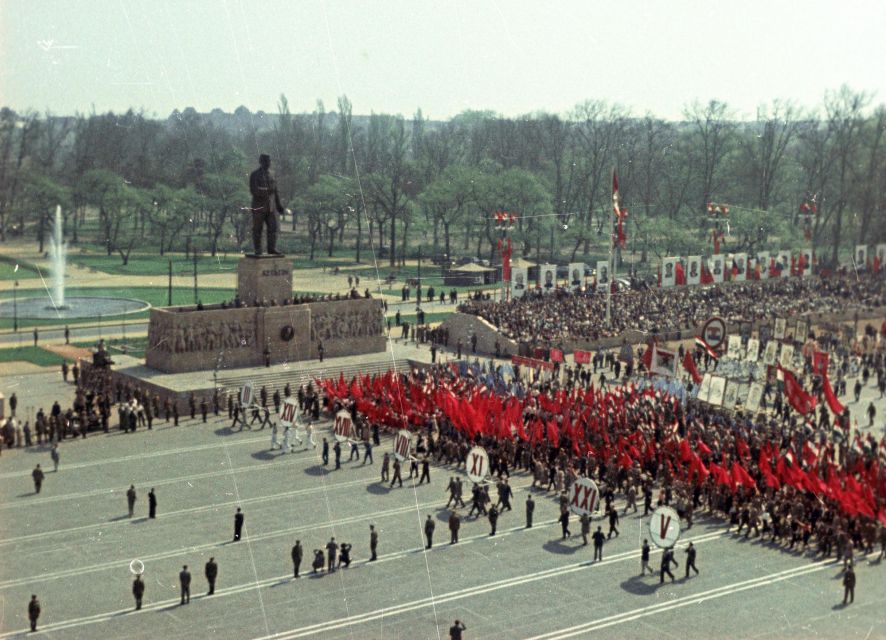
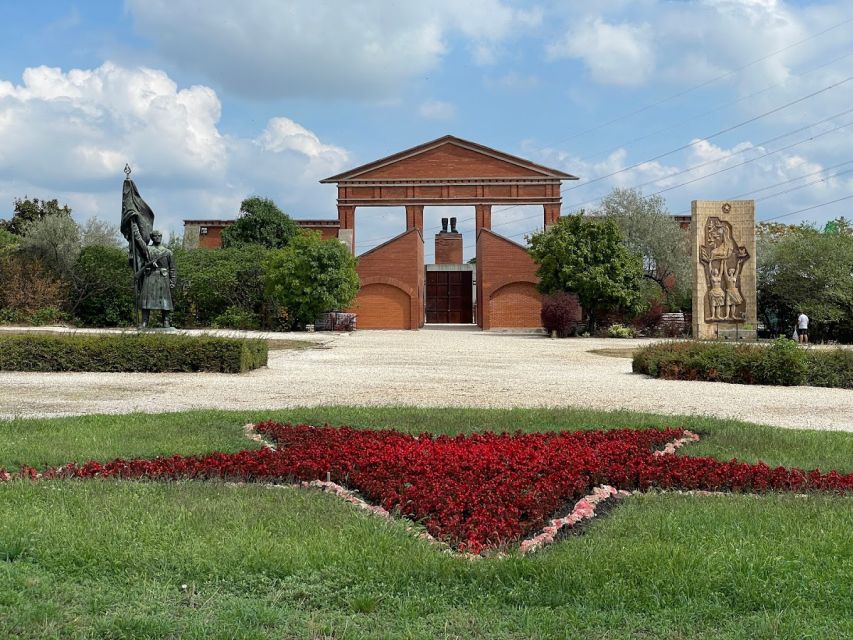
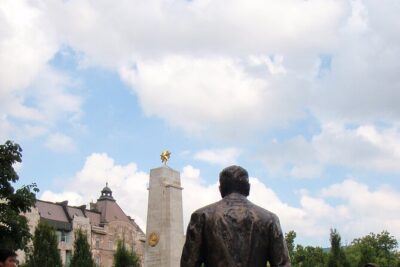
Memento Park gathers the public monuments of Hungary’s Communist period in one place. During the socialist era, statues like these were not simply decoration. They sent political messages every day, showing citizens which leaders, ideas, and historical events the state wanted them to honor.
Placed together after the fall of the system, the monuments feel different. A statue of Lenin or Marx no longer controls a city square. You can examine its size, pose, and expression while thinking about the power it once represented. That change in setting is the heart of the museum.
I find the park useful because it gives physical form to an otherwise hard-to-picture subject. Words such as ideology, propaganda, and dictatorship can feel abstract. Here, giant figures and public memorials show how political ideas were placed in front of ordinary people and repeated until they became part of daily life.
The tour also asks an important question: why did Communism last for roughly 40 years in Hungary? The answer is not presented as a simple story about one leader or one political party. You learn how postwar conditions created room for Communist rule, how the rule of law changed after the Communists took power, and how the propaganda machine shaped public thinking.
This makes the experience a good match for anyone who wants more than a quick photo stop. You will not simply see old statues. You will learn how a political system tried to influence what people believed, feared, and accepted.
More communist history tours in Budapest:
- Budapest: Communist History Tour with House of Terror Option
★ 4.8 · 182 reviews - Budapest: 3-Hour Walking Tour About Communism (Small Group)
★ 4.7 · 70 reviews - Communism in Hungary with a Historian
★ 5.0 · 70 reviews
Meeting at Batthyány Square beside the Danube
The tour begins at Batthyány Square, a practical meeting point on the Buda side of the Danube. Look for St. Anne’s Church, recognizable by its two towers. The meeting point is in front of the church, and you can reach the square by Metro Line 2 or trams 19 and 41.
Give yourself enough time to find the church. This is not a pickup from your hotel, so you need to make your own way to the square. The location is well connected, and meeting beside the Danube gives you an easy starting point if you are already exploring Buda.
From there, you travel by private car or van to Memento Park. The park is about 16 kilometers from the city center, and the scheduled ride takes around 45 minutes each way. That is a sizeable part of a three-hour activity, but the transport is also one of the tour’s practical strengths. You do not need to work out the route to an outlying museum or worry about finding the return connection.
The ride gives the guide time to introduce the subject and answer early questions. It also lets you see a little more of Budapest beyond the central sights, though the main purpose is getting to the museum.
A close look at 41 Communist monuments
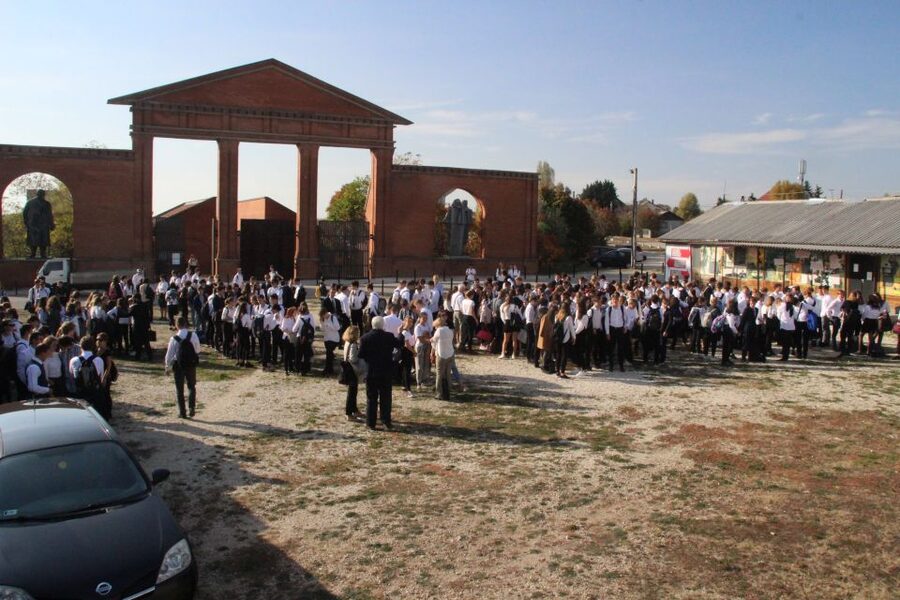
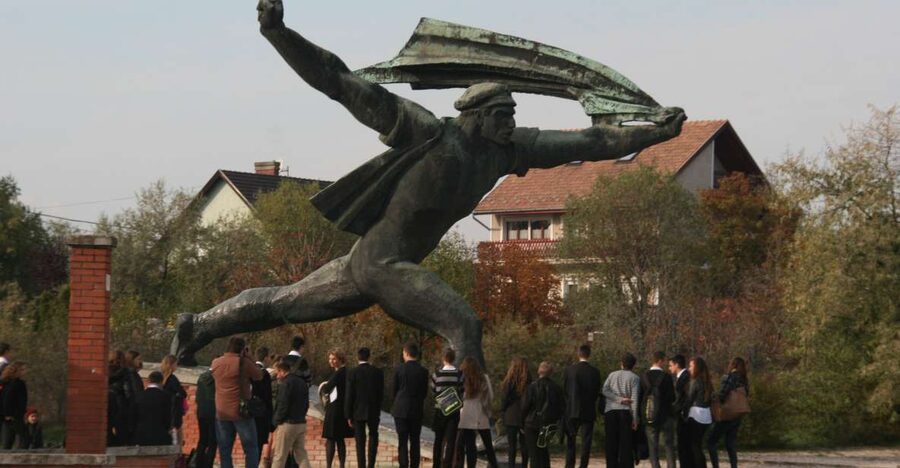
At Memento Park, you spend about 90 minutes on a guided walk, with time for sightseeing and your own photographs. The collection includes 41 statues and memorial pieces connected with Hungary’s Communist past.
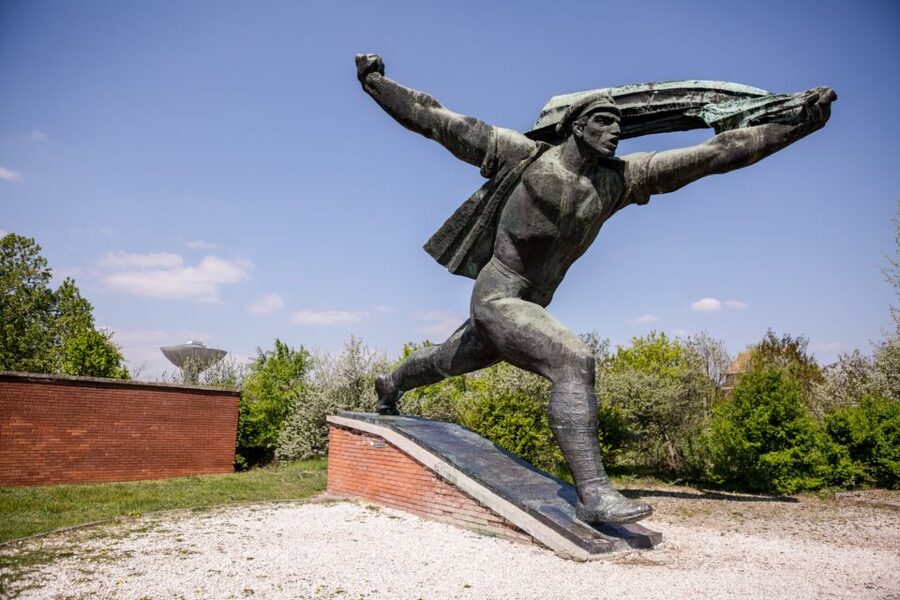
The scale matters. These were designed to impress. Large stone and metal figures made political leaders appear permanent, powerful, and worthy of public respect. Standing close to them, rather than seeing them from a passing car or in a textbook, helps you understand how public art supported state power.
The park includes figures associated with Marx, Engels, and Lenin, along with other monuments from the period. The guide explains what the figures represented and why they were placed in public spaces. You also learn how the meaning of the monuments changed after the system collapsed and the statues were removed from their original locations.
I would not expect every monument to be individually explained in equal detail. With only about 90 minutes at the park, the guide has to select the most useful examples. That is a fair trade, since a good explanation of several key pieces is more helpful than rushing through every statue with a name and date.
The open-air setting also makes this different from a traditional indoor museum. You walk between the monuments, see them from several angles, and can take photographs. The statues are large enough to create striking images, and the guide is happy to help take your picture with them.
Stalin’s boots and the memory of 1956
The most memorable stop is Stalin’s Grandstand and the nearby boots of Stalin. Before the statue was pulled down, the grand figure of Stalin represented Soviet authority in Hungary. During the 1956 uprising, angry Hungarians toppled the statue, leaving only the boots behind.
Those boots are more than an unusual photo opportunity. They represent the moment when a symbol of control was physically rejected by the people below it. The guide connects the scene to the wider longing for freedom, making the remains easier to understand than a simple museum label could.
You can imagine the huge statue being attacked and brought down, but the story is not presented as a tidy victory tale. The tour uses the monument to explain the pressure, anger, and political fear surrounding Communist rule. That approach gives the boots their proper weight.
If you enjoy history through objects, this is likely to be the strongest part of the visit. A small surviving fragment communicates the collapse of a much larger system.
A few more Budapest half-days to weigh up
- Budapest: City Highlights Cruise with Welcome Drink
★ 4.6 · 35,610 reviews - Budapest: Unlimited Prosecco, Beer and Aperol Spritz Cruise
★ 4.8 · 25,310 reviews - Budapest: Széchenyi Spa Day Ticket with Optional Upgrades
★ 4.3 · 23,911 reviews - Budapest: Nighttime or Daytime Sightseeing Cruise
★ 4.2 · 21,062 reviews
How propaganda shaped ordinary life
The tour’s main strength is the link between objects and daily life. You learn how Communist leaders used public ceremonies, statues, slogans, and official stories to shape the way people understood their country.
The statues were meant to show confidence and unity. They suggested that the political system was permanent and that its leaders deserved loyalty. The guide explains how that message worked, and also how people learned to live with the gap between official claims and private reality.
This is where a personal guide adds real value. An audio guide can identify a statue, but it may not answer the question you are actually asking: how did an ordinary person respond to this kind of pressure? A live guide can adjust the explanation and connect the broad political story with everyday behavior.
The tour also covers how the rule of law changed once the Communists gained power. You hear how legal structures could be used to control people rather than protect them, and how intimidation became part of the system. The aim is not to turn the visit into a political lecture. It is to show how ideology affected real choices.
Secret police, fear, and the people who resisted
Another part of the visit focuses on the secret police and the way new members were recruited under Soviet rule. You learn how an ordinary person could be pressured or intimidated, and how the state used fear to maintain control.
This subject can be uncomfortable, but it is important. Political repression rarely depends on one dramatic act alone. It can work through surveillance, threats, forced cooperation, and the fear that a neighbor, colleague, or official might report you. The guide explains how people navigated that environment and how the brave ones found ways to escape or resist.
I appreciate that this gives the park a human scale. The statues represent leaders and political theories, but the questions are about ordinary people: what could you say, what could you refuse, and how could you protect your family?
The tour also explains how a theory associated with Marx could become a nightmare for millions. You are encouraged to consider the distance between an idea on paper and the way it was enforced by a state. That makes the visit useful even if you already know the basic facts of European history.
What makes the small group worthwhile
The group is limited to seven participants, a useful size for a subject that invites questions. You can ask about a statue, request clarification about Hungarian history, or bring up a comparison with Communist rule elsewhere in Europe without interrupting a large crowd.
The strongest guide feedback centers on Victor. When Victor leads the visit, he is described as friendly, clear, funny, and able to explain difficult material in an easy-to-follow way. His local connection also helps the story feel personal rather than like a generic political history lesson.
Several visitors have found that his approach works well for teenagers, too. That matters if you are visiting with older children who may lose interest in a formal museum. The statues provide visual interest, while the guide gives them a story with conflict, risk, and human choices.
The guide may also add a few sights on the return journey, depending on time and conditions. Gellért Hill and the Poets’ Circle have been included as extra points of interest. Treat these as possible additions, not guaranteed stops, since the stated program is transportation to Memento Park, the guided visit, and the return to Batthyány Square.
Is $63 a fair price?
The cost is $63 per person. I would judge that as reasonable if you value convenience and interpretation, rather than only the entrance ticket.
The price includes transport from central Budapest and back, admission to Memento Park, an English-speaking licensed guide, a bottle of water, and help with photographs. Reaching the park independently might cost less, but you would still need to organize the trip and then make sense of a political collection that benefits greatly from explanation.
The private car is especially useful for a short city break. You give up less of your day to route planning, and the return to Batthyány Square is built into the schedule. A group limited to seven also gives you a more personal experience than a large coach outing.
The value is lower if you prefer to spend several hours alone at a museum or want a broad tour of Communist-era Budapest. The park visit is focused, and about 90 minutes on site may feel short if you want to study every monument. You are paying mainly for the guide and the transport, not for a long independent museum visit.
Souvenirs, pictures, and postcards are available at the museum shop, but food is not included. Bring anything you may need for the three-hour outing, though a bottle of water is provided.
Practical details for planning your visit
The full activity lasts three hours, including the car ride in both directions and the time at the park. Starting times vary, so check availability when you book.
Wear comfortable shoes. The main visit involves walking around an outdoor collection, and the experience is built around seeing the monuments at close range. The park is a historical site rather than a restaurant stop, so eat before or after the tour if you need a meal.
The activity is conducted in English and includes a live guide. Admission is included, and the tour has skip-the-ticket-line access. The advertised group size is no more than seven participants.
You can cancel up to 24 hours before the activity for a full refund. A reserve-now, pay-later option is also available, which helps if you are still arranging the rest of your Budapest schedule.
Who should book this experience?
I would choose this tour if you are interested in 20th-century European history, political change, or the way governments use public images to shape behavior. It is also a good choice if you want a serious cultural stop outside the standard Budapest circuit.
Families with teenagers may find the combination of giant statues, revolution, secret police, and personal stories easier to follow than a conventional museum display. The small group gives the guide a chance to adjust the explanation to the people in front of him.
I would think twice if your priority is architecture, food, or scenic views. Memento Park is intentionally stark, and the subject is often grim. The ride also takes 90 minutes in total, so you need to be willing to spend part of your Budapest day away from the center.
Should you book the Memento Park tour?
Book it if you want the Communist period explained by a local English-speaking guide rather than left to labels and guesswork. Stalin’s boots, the giant statues, and the discussion of secret police pressure give the visit a clear emotional and historical focus.
The tour is especially good value for a first visit to Memento Park, since the private transport and small group solve the two main problems: getting there and understanding what you are seeing. Just keep your expectations realistic. You get a concentrated 90-minute museum visit, not a leisurely afternoon at the park.
If Victor is available, his friendly and engaging style is a strong reason to choose this particular outing. If you want an accessible, thoughtful introduction to life under Hungarian Communism, this three-hour experience earns its place in your Budapest plans.
FAQ
Where does the tour begin?
It begins at Batthyány Square in front of St. Anne’s Church, the church with two towers beside the Danube.
How can I reach Batthyány Square?
You can use Metro Line 2 or trams 19 and 41 to reach the meeting point.
How far is Memento Park from central Budapest?
Memento Park is about 16 kilometers, or 10 miles, from central Budapest.
How do I get to Memento Park?
The tour includes transport by private car or van from Batthyány Square to the park and back to the same meeting point.
How long is the whole activity?
The activity lasts three hours, including the journey to the park, the guided visit, and the return journey.
How much time do I spend at Memento Park?
The planned visit at the park lasts about 1.5 hours and includes a guided walk, sightseeing, and free time.
Is entrance to Memento Park included?
Yes. The entrance fee is included in the tour price.
Is the tour conducted in English?
Yes. It includes a live English-speaking licensed guide.
How large is the group?
The activity is offered as a small-group tour limited to seven participants.
Can I take photographs at Memento Park?
Yes. You can photograph the statues, and the guide will gladly help take pictures of you beside the monuments.
Is food included?
No. Food is not included, though a bottle of water is provided.
Can I cancel the booking?
You can cancel up to 24 hours in advance for a full refund. A reserve-now, pay-later option is also available.
Recently added around Budapest
- Budapest: Private Walking Tour with a Local Guide★ 3.6 · 6 reviews
- From Budapest: Guided Tour of Eger with Wine Tasting★ 4.5 · 6 reviews
- Budapest: City Bike Tour with Coffee Stop★ 5.0 · 37 reviews
- Budapest: Danube River Views Bike Ride★ 4.8 · 23 reviews
- Budapest: Vacation Photographer to collect great memories★ 5.0 · 49 reviews
- Walk to recent and aged spiritual sanctuaries near Budapest★ 5.0 · 5 reviews
- Trash Art Museum: Hungary’s First Scrap Metal Exhibition★ 4.3 · 72 reviews
- Budapest: Multilingual Highlights Tour★ 4.8 · 89 reviews
Communist History Tours, compared.
Communist History Tour with House of Terror Option
Read our review →
3-Hour Walking Tour About Communism (Small Group)
Read our review →
Lives of Hungarians Under Communist and Capitalist system
Read our review →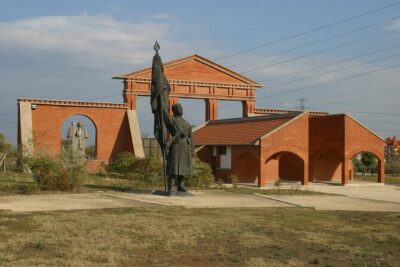
Private Budapest Hammer & Sickle Communist Times Tour
Read our review →
Browse the lists this tour appears in